"Sometimes, history needs a push" - Vladimir Lenin
The above quote touches on a long debated historical question: can history be explained by the outsized impact of “great” people or heroes? Or do bottom-up human and social dynamics govern the course of events?
Leo Tolstoy had a strong opinion on the matter, as a major theme in War and Peace is about the limits of leadership and an outright rejection of the great man theory. Karl Marx is known for his theory of history called historical materialism, which also rejects the great man theory and instead explains history through changes in class and labor.
I use Tolstoy and Marx as examples because of their obvious proximity to this story, but also because the events that occurred in Russia up until 1917 can easily be explained through their theories. It was only a matter of time before the societal changes happening at the beginning of the 20th century were going to bring about an end to the monarchy.
However, what happened in November of 1917 can only be described as the great man theory at work. As you will see, our world would look a lot different if Vladimir Lenin was not around to “push” history.
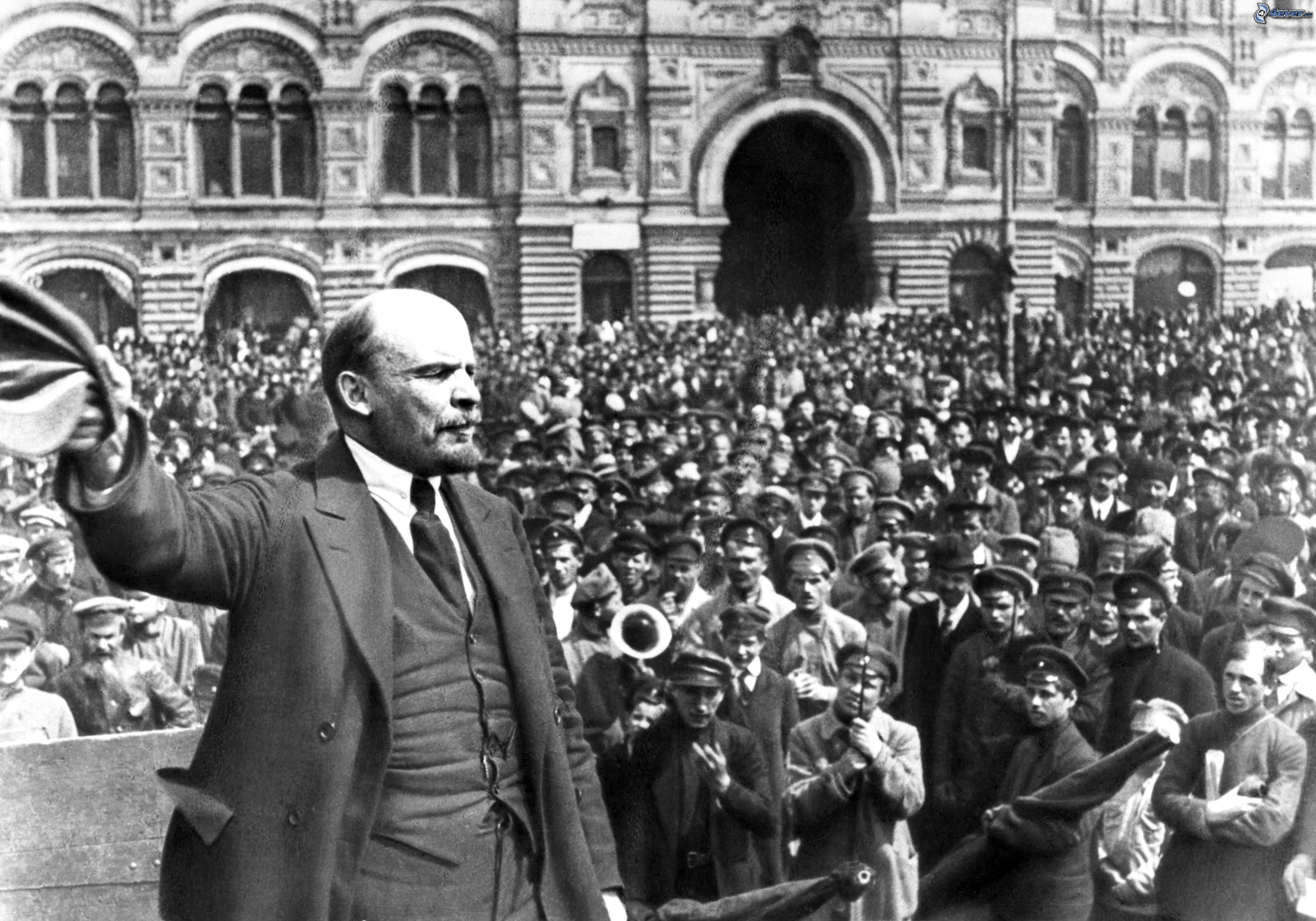
Lenin addresses a crowd during 1917
This essay will be a book review of A People’s Tragedy by Orlando Figes, one of the most coveted books on the Russian Revolution. As Figes apologizes in the introduction of the book, I will do the same here: I am sorry for the length.
I also want to note that there is a reason the book is not called A People’s Fortune. There will be some disturbing quotes from the book that I felt were necessary to relay the tangibility of the atrocities.
Let’s dive in.
Part I: The Decline of the Romanovs
The Russian emperor’s inability to deal with the modernization of their country is ultimately what led to their downfall. They were unwilling to cede their autocracy to an alternate system like what had been occurring in Europe for the last few hundred years. Combined with a particularly weak leader, there was not much hope for the Romanovs.
The Romanovs were the ruling family of the Russian Empire for more than 300 years (1613 to 1917). The family has a great cast of characters that you may be familiar with: Peter the Great, Catherine the Great, and Ivan the Terrible. The word for emperor in Russia is tsar (or tsarina). In Gothic, it would look like Kaiser, but its origin is Latin, and would look like Caesar.
Over their 300-year rule, the Romanovs had some highly effective conquerors, who grew the Russian Empire significantly. By 1895, they had the third largest empire of all time (beaten out only by the Mongols and the British), accounting for 17% of the area of the world. This included 16 modern day nations including modern day Russia, Poland, Finland, Ukraine, and more.
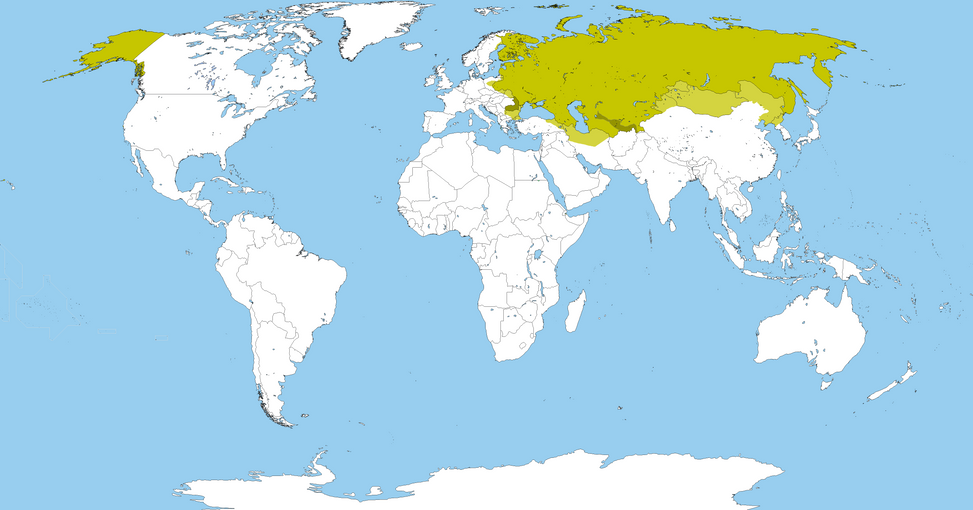
The Russian Empire roughly at its peak
However, after 300 years of relative prosperity, the effectiveness of the tsarist regime began to falter.
Our story begins with the Russian Famine of 1891. Caused by a series of unfortunate weather events and some government mismanagement, the famine resulted in 375,000 to 400,000 deaths. Figes writes about the famine:
In short, the whole of society had been politicized and radicalized as a result of the famine crisis. The conflict between the population and the regime had been set in motion and there was now no turning back. In the words of Lydia Dan, the famine had been a vital landmark in the history of the revolution because it had shown to the youth of her generation 'that the Russian system was completely bankrupt. It felt as though Russia was on the brink of something.’
The tsar during this time was Alexander III, a conservative compared to his father, he opposed any reform that would threaten his autocratic rule. He was a strong ruler but died of kidney disease in 1894, making his 26-year-old son Nicholas II the new tsar of Russia.
Nicholas gets a lot of attention in this story because he was a below-average leader and a deeply tragic figure. He loved his family deeply and did not want the throne, but felt he had to maintain his ancestors 300-year streak of unadulterated autocratic rule. Whether you feel bad for him or not, it's hard to argue that Nicholas didn’t expedite the fall of the monarchy.
Revolution and War
One of Nicholas’ first big blunders was the 1904 Russo-Japanese War, caused by rival ambitions in Manchuria. This war is historically significant because it was one of the first conflicts with modern weapons. Artillery cannons begin to look closer to something you would see today, as opposed to a cannon you would see in the revolutionary war. Additionally, machine guns and turrets became widely used.
However, most of this modern weaponry was being used by the Japanese.
The biggest problem was the sheer incompetence of the [Russian] High Command, which stuck rigidly to the military doctrines of the nineteenth century and wasted thousands of Russian lives by ordering hopeless bayonet charges against well entrenched artillery positions.
The war can be summed up in a mental image of Russian cavalry charging on Japanese artillery. If you also consider that the war was 6,000 miles away from the Russian capital, being supplied by faulty railroads, there was never really much of a chance for Russia. The numbers vary, but roughly 60,000 Russian soldiers died in the conflict.
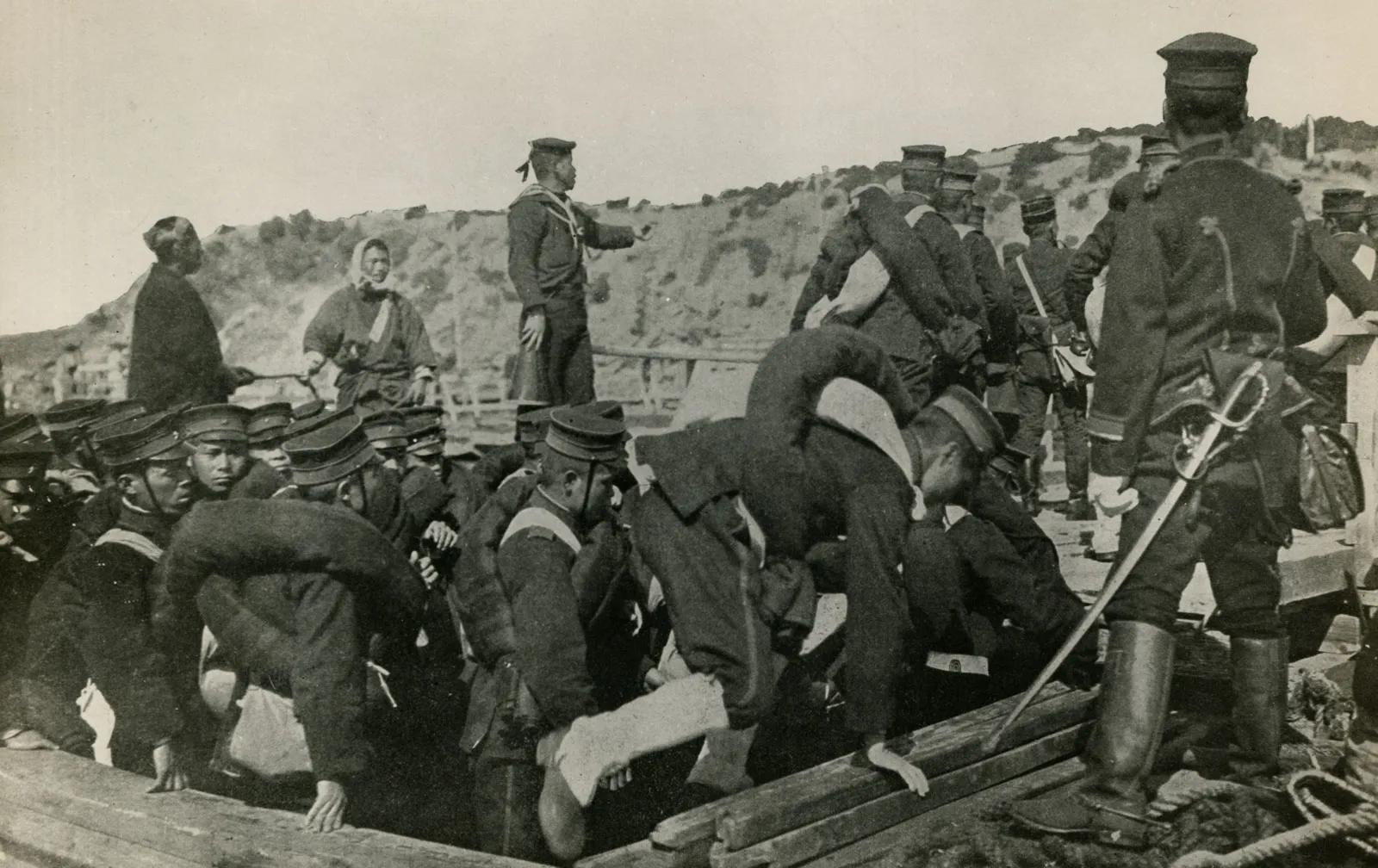
Soldiers during the Russo-Japanese War
In January of 1905, mass demonstrations began at the Russian capital of St. Petersburg sparked by the trifecta of humiliation of the war with Japan, hunger, and peasant exploitation. To quell the demonstrators, state police opened fire on the crowd and killed hundreds of civilians. The day became known as “Bloody Friday''. In June of the same year, peasants also began rioting by seizing land and tools in protest of the bureaucracy imposed on them. Throughout the year, the tsarist regime executed 15,000 people and exiled 45,000, which didn’t make the situation better.
The revolution had been truly born, and it had been born in the very core, in the very bowels of the people. In that one vital moment the popular myth of a Good Tsar which had sustained the regime through the centuries was suddenly destroyed.
These events collectively make up the Revolution of 1905, which culminate in the October Manifesto, a document begrudgingly issued by Nicholas that promised basic civil rights and an elected parliament.
This is a key part of the story. So far, the events look like what happened in, say, the United Kingdom, where the people slowly chip away at the rights of the monarch until they end up with a system that is democratic. But did the Manifesto and ensuing constitution go far enough?
This was, in truth, the main dilemma that the liberals faced after the October Manifesto - whether to support or oppose the government. So far the revolution had been a broad assault by the whole nation united against the autocracy. But now the Manifesto held out the prospect of a new constitutional order in which both monarchy and society might — just might — develop along European lines.
The new government body, called the Duma, ended up not having much power at all, which again set Russia up for eventual revolution 12 years later.
Revisionists look at this part of the story very closely. If Nicholas had ceded more power to the Duma, there may have not been the need for a revolution. Additionally, a parliamentary government may have avoided entering WWI, which would have changed the entire history of the 20th century.
It's also worth looking at why the 1905 revolution failed. Why was the tsar able to remain in power? First, the various opponents failed to unify politically or tactically. The striking workers, rebelling peasants, and armed service mutineers didn't coordinate much at all. Second, and perhaps most importantly, the military largely remained faithful to the tsar. History shows that it's hard to have an internal revolt without the full support of the military.
Lastly, there was no aligned vision on what the replacement government should be. On one hand, it's easy to blame Nicholas for not ceding enough power to the Duma, but on the other hand you could blame the revolutionaries for not proposing a comprehensive replacement. There was a wedge created within the opposition around the October Manifesto. The liberal socialists felt it didn’t go far enough and wanted to continue the revolution, whereas the center-left democrats thought it was a good first step towards political reform.
But in large, the people were blinded by the hopium.
Most of the Duma members shared [the] faith that Russia had at last won its House of Commons' and would now move towards joining the club of Western liberal parliamentary states. The time for tyrants was passing. Tomorrow belonged to the people. This was the Duma of National Hopes.
Nonetheless, the leader of the Duma was assassinated in September of 1911, wiping out the dreams of traditional political reform. We will never know what could have been if this had been successful, but it’s sure entertaining to theorize.
The Great War
Fast forward to June 28th 1914 and there is another relevant assassination. A radical Serbian named Gavrilo Princip shoots the heir to the Austro-Hungarian empire, Archduke Franz Ferdinand, as he is visiting Sarajevo. This leads Austria-Hungary to declare war on Serbia, which causes the two stronger allies of each country, Germany and Russia, to declare war on each other. The most cited cause of World War I is the web of military alliances across Europe. While true, double clicking into Russia gives us a better picture as to why this struggling nation decided to go to war.
One way to view Russian history is to see a country deeply confused about its identity. It so badly wants to be European (specifically, German) but it feels like it can’t shake its Asian-ness. Russia at this time has what I can best describe as Stockholm Syndrome in regard to German culture. Figes focuses on this for quite some time:
This fear of Germany stemmed in part from the Russians' cultural insecurity - the feeling that they were living on the edge of a backward, semi-Asian society and that everything modern and progressive came to it from the West. There was, as Dominic Lieven has put it, 'an instinctive sense that Germanic arrogance towards the Slavs entailed an implicit denial of the Russian people's own dignity and of their equality with the other leading races of Europe.’
It’s relevant to note that Germany was the cultural and scientific epicenter of Europe at the time. The unification led by Otto Von Bismark in 1871 set Germany up for 40+ years of dynamic success. Many of the greatest minds of the day were either from or lived in Germany, including philosophers like Marx, Hegel, and Nietzsche, along with scientists such as Einstein and Planck.
But let’s not forget that Russia’s decision to enter the war was ultimately on the shoulders of Nicholas, who had personal motives outside of alliances and cultural insecurities. For starters, Nicholas was cousins with the leader of Germany, Wilhelm II (they were both also cousins of George V of England).
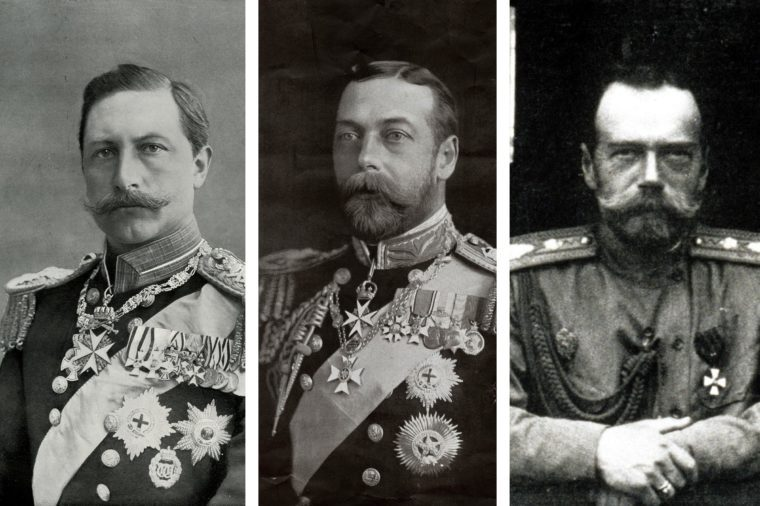
I know Wilhelm is on the left. I think the middle one is George but he looks so similar to Nicholas it's hard to tell.
So, the real reason Nicholas went to war was that Wilhelm insulted the size of his mustache. (I kid, I kid)
In reality, I think Nicholas was probably making his decision to enter the war based on what was best for preserving his power. Figes believes that instead of looking at the war opportunistically, he was choosing between the lesser of two bad options.
This placed Nicholas in an impossible situation. If he went to war, he ran the risk of defeat and a social revolution; but if he didn't, there might equally be a sudden uprising of patriotic feeling against him which could also result in a complete loss of political control.
Whatever the real reason, he began to mobilize the military, prompting Germany to declare war on Russia in August 1914.
Tensions had been high for a long time in Europe, especially with Germany. The Germans were squeezed in between two powers that they were not on the friendliest terms with: France and Russia. For this reason, Germany devised a plan decades before called the Schlieffen plan, to defeat both France and Russia if they ever went to war. The plan is based on the concept that Russia is strong but extremely slow. If Germany could quickly invade France and knock them out within a few weeks, then they could move their undivided focus to Russia, ensuring they don’t have to sustain a two-front war.
As described in the Schlieffen plan, the Russian military has historically been characterized as strong but slow. This characterization is largely correct; however, Russia’s problems in the first world war went much deeper than just slowness.
The Russians got completely destroyed in World War I. They hadn’t learned as much as they should have from the war with Japan, such as focusing too much on cavalry (yes, like horses). Their supply lines were non-existent and hence they were unable to arm, cloth, or feed their men.
Without artillery or supplies of ammunition, they held out as best they could, suffering heavy losses. Many men fought with nothing but bayonets fixed to their empty rifles.
Additionally, most of the military was made up of peasants being led by landowners. These were the same landowners who the peasants had been actively rebelling against for the last ten years. The social issues of the country carried over to the army, which preserved the feudal customs such as soldiers addressing officers by their honorary titles and cleaning their boots. This led to constant mutinies and desertions.
The sole redeeming facet of the Russian military effort in World War I was their general Aleksei Brusilov, who was unbelievably able to deliver some decisive victories against the Austro-Hungarians. Despite being a pretty optimistic chap, Brusilov eventually realized the effort was hopeless.
Brusilov had shown that under competent commanders the imperial army was still capable of military success. Had it not been undermined by Stavka, his offensive might have served as the springboard for the restoration of the army's morale, perhaps even one day leading towards its eventual victory. But it is doubtful whether even this would have been enough to save the tsarist regime, such was the extent of the political crisis in the country at large. In any case, with the failure of the offensive it now became clearer than ever, even to a monarchist like Brusilov, that, in his own words, Russia could not win the war with its present system of government. Victory would not stop the revolution; but only a revolution could help bring about victory.
A fun revisionist hypothetical to play with is if the Russians were even half-way competent, and Brusilov had been given everything he needed, there is a strong chance the US would never have needed to enter the war.
The last relevant event that occurred before 1917 was the death of Rasputin. If you’re wondering why I haven’t brought up Rasputin yet, it’s because I don’t feel like he matters that much to the story. He feels more like a symptom than a cause.
By the time we get to 1917, any trust remaining with the monarchy was hanging by a thread. But as the last breaths of power left the Romanov Dynasty, a new ideology was rising in the west.
Part II: The Rise of Communism
Fueled by the Industrial Revolution, life began to change rapidly in the 1800s. Young farmers were leaving their farms, moving to cities, and working in factories. The below chart shows the percentage of the labor force working in agriculture over time (note: Russia isn’t on the chart, but it would most closely resemble Poland given Poland was part of Russia during this time).
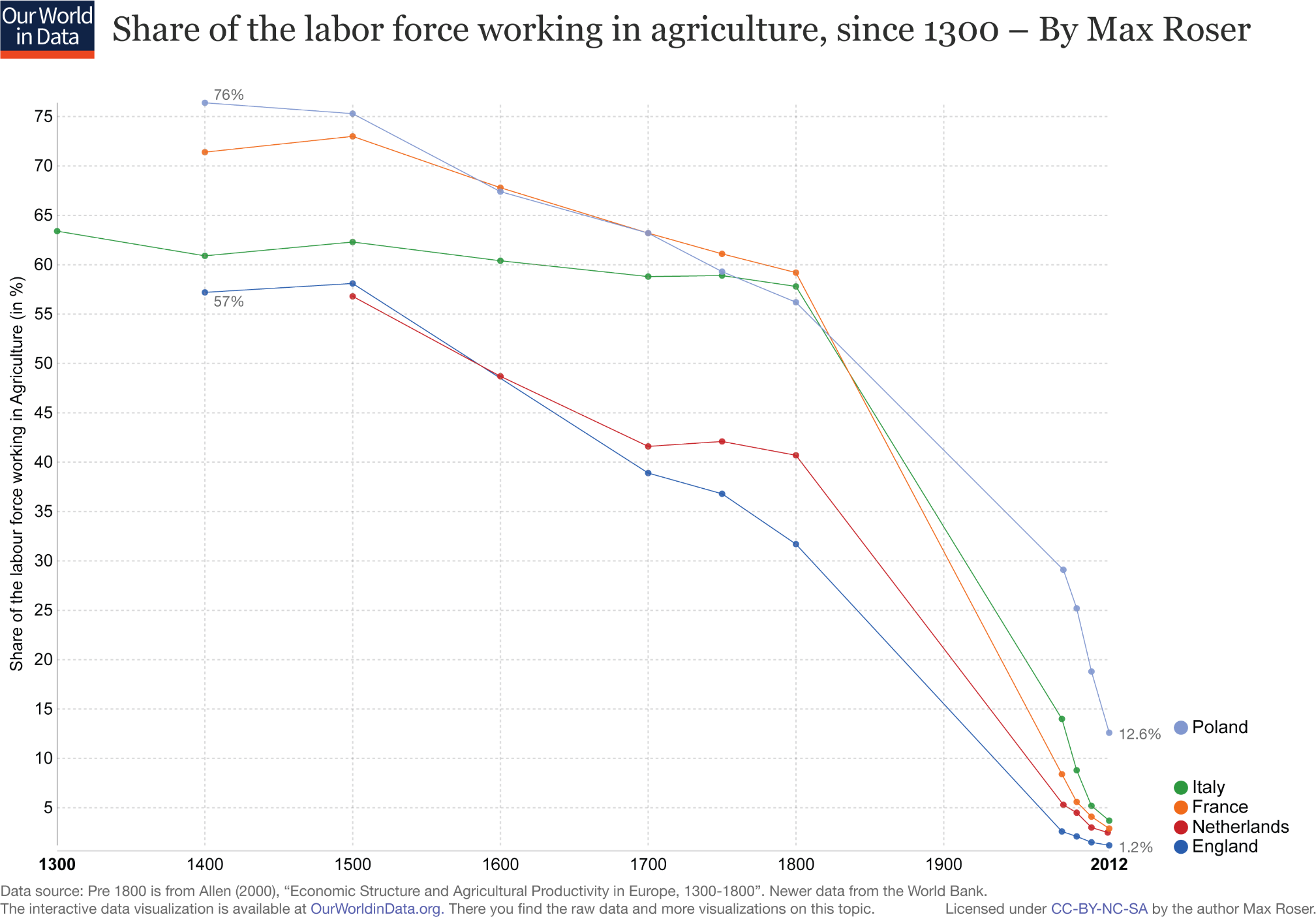
This chart shows the Industrial Revolution in action; the rate of change from 1800 to 1900 is staggering. I said at the beginning of Part I that the tsarist regime's ultimate failure was its inability to handle the consequences of modernization. This is what I mean by modernization.
It is at this point that capitalism came to the forefront. In purely agrarian societies, farmers are mostly independent and don’t need much capital to feed themselves and their families. The farmers (that weren’t serfs) owned the means of production, whereas the workers did not.
The mass migration of people to cities, with no labor regulations to speak of, led to some awful working conditions and a tremendous amount of inequality. However, bad working conditions and inequality alone are not usually enough to start a revolution. People need something to rally behind.
Literacy and Ideas
At the start of the 1800s, only 5% of the Russian population could read, compared to England at 50% and France at 30%. However, by 1897 this rate had grown to 21%, and by 1917 it had reached 43%.
Figes spends a lot of time on this:
The link between literacy and revolutions is a well-known historical phenomenon. The three great revolutions of modern European history, the English, the French, and the Russian all took place in societies where the rate of literacy was approaching 50 per cent… Ironically, in its belated efforts to educate the common people, the tsarist regime was helping to dig its own grave.
As they were educating the population, the tsars ironically decided to heavily censor the reading material allowed inside the country. Interestingly, society often thinks about communists as the ones restricting ideas. However, this censorship was always a part of how Russia operated. Despite the censorship, ideas would naturally make their way through the population - legally or not.
The censor forbade all political expression, so that when ideas were introduced there they easily assumed the status of holy dogma, a panacea for all the world's ills, beyond questioning or indeed the need to test them in real life. One European intellectual fashion would spread through St Petersburg: Hegelianism in the 1840s, Darwinism in the 1860s, Marxism in the 1890s and each was viewed in turn as a final truth.
The above quote touches on an interesting phenomenon that is worth spending some time on, because it could explain the rise of communism in a relatively succinct manner. If your society only gets a few ideas, does that make people more likely to latch on to the few ideas they get? It makes sense to me - and this is what Figes heavily implies at this part in the book.
The problem though with something like communism, which is substantially more subjective than Darwinism, censorship can stymie the natural debate that needs to occur. There is a free speech lesson here.
The origins of communism trace back to when Karl Marx dropped his magnum opus, The Communist Manifesto in 1848, as a critique of capitalism, telling the workers of the world to unite. This was obviously censored by the Russian government, right?
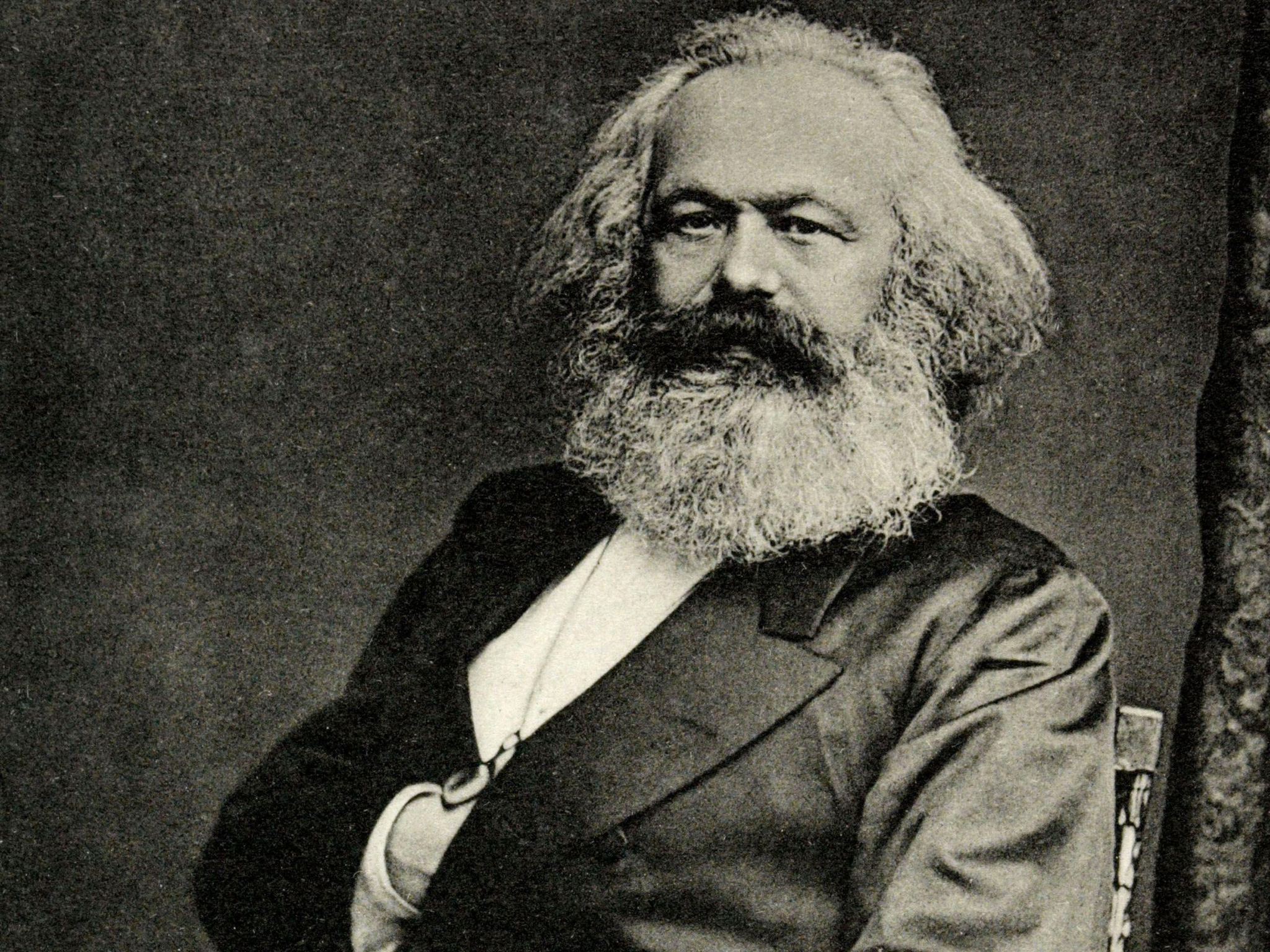
Karl Marx
Wrong. In one of those amazing little quirks of history, for some reason the censors decided NOT to block The Communist Manifesto because they thought no one would understand it. Of course, in a land devoid of ideas with an exploited population, something as landmark as Marx spread like wildfire.
Many people have argued that Marxism acted like a religion, at least in its popular form. But workers believed with the utmost seriousness that the teachings of Marx were a science, on a par with the natural sciences; and to claim that their belief was really nothing more than a form of religious faith is unfair to them. There was, however, an obvious dogmatism in the outlook of many such workers, which could easily be mistaken for religious zealotry… This dogmatism had much to do with the relative scarcity of alternative political ideas, which might at least have caused the workers to regard the Marxist doctrine with a little more reserve and skepticism.
I think I buy this argument: you have a tremendous scarcity of ideas, you get some top notch ideas like Darwinism that strongly take hold in the population, and you're getting the worst form of capitalism with awful conditions and bad inequality. It’s no wonder The Communist Manifesto became religious dogma (or scientific fact) to many people in Russia.
But Figes goes into a final reason:
When people learn as adults what children are normally taught in schools, they often find it difficult to progress beyond the simplest abstract ideas. These tend to lodge deep in their minds, making them resistant to the subsequent absorption of knowledge on a more sophisticated level. They see the world in black-and-white terms because their narrow learning obscures any other coloration. Marxism had much the same effect on workers. It gave them a simple solution to the problems of 'capitalism' and backwardness without requiring they think independently.
Does becoming literate and/or educated as an adult cause you to become “resistant to the subsequent absorption of knowledge on a more sophisticated level”? If that’s true it would seem pretty significant. I tried to look it up but I couldn’t find exactly what he’s talking about. Is it related to the phenomenon we see of more political polarization at higher levels of education on both sides of the aisle? Help me ACX, you’re my only hope.
Despite this, Marxism became a simple solution for a complex set of problems broadly labeled as capitalism.
The February Revolution
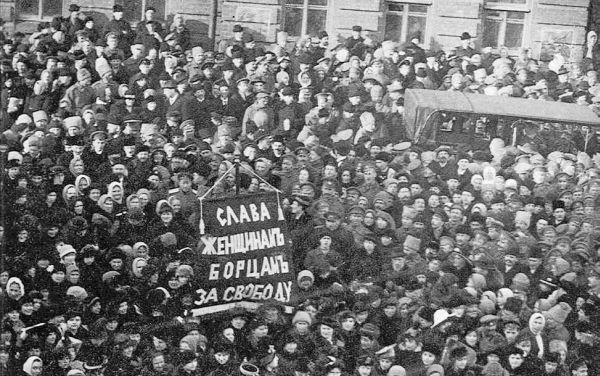
Picture of the February Revolution in St. Petersburg
Getting back to our story, riots broke out March 8th, 1917, to protest the food rationing imposed as a wartime necessity. 250,000 men and women took to the streets to express their dissatisfaction with the food shortages, the war, and autocracy.
(If you're confused by “The February Revolution” being in March it's because the Russians at this time used a Julian calendar. The dates for them were in February, but on a Gregorian calendar it would have been in March.)
But one key difference between this protest and the one in 1905 is that the soldiers joined the side of the protesters.
The soldiers, by contrast, were seen as 'ours' - peasants and workers in uniforms - and it was hoped that, if they were ordered to use force against the crowds, they would be as likely to come over to the peoples side. Once it became clear that this was so - from the soldiers' hesitation to disperse the demonstrators, from the expressions on the soldiers' faces, and from the odd wink by a soldier to the crowd - the initiative passed to the people's side. It was a crucial psychological moment in the revolution.
The February Revolution was a protest against the monarchy, and after decades of trying it finally worked. On March 15th, 1917, Nicholas II anticlimactically abdicated the throne, ending 304 years of Romanov rule. The ease with which the tsar was overthrown was representative of how far his power had declined. The current parliamentary leaders in the Duma then formed the Provisional Government, which was to be democratic. Within the Provisional Government there were a handful of left-wing parties vying for power, one of which was the Bolsheviks, and on April 16th, their leader returned to St Petersburg.
Vladimir Lenin was born in 1870 to an upper middle-class family. Radicalized by his brother’s execution in 1887, he began leading various socialist groups in and out of Russia. He was exiled many times and prior to 1917 was living in Switzerland waiting for his moment to return.
The February Revolution is exactly what Lenin was waiting for: an opportunity to implement his reforms. But by the time Lenin arrives in Russia he is practically a stranger. Aside from a brief stay in 1906, he had spent the previous seventeen years exiled abroad. Virtually none of the workers chanting his name upon his arrival even knew what he looked like. “I know nothing of Russia”, Lenin once said to a friend. Yet it did not matter, Lenin had complete domination over the Bolshevik party.
No other political party had ever been so closely tied to the personality of a single man. Lenin was the first modern party leader to achieve the status of a god: Stalin, Mussolini, Hitler and Mao Zedong were all his successors in this sense. Being a Bolshevik had come to imply an oath of allegiance to Lenin as both the leader and the 'teacher' of the party.
As Lenin was leading the Bolsheviks, another party competing for power in the new government was the Mensheviks. In general, the Mensheviks were not as radical, and felt a more gradual approach to Marxism was the best way forward.
The Mensheviks were democrats by instinct, and their actions as revolutionaries were always held back by the moral scruples which this entailed. This was not true of the Bolsheviks. They were simpler and younger men, doers rather than thinkers. They were attracted by Lenin's discipline and firm leadership of the party, by his simple slogans, and by his belief in immediate action to bring down the tsarist regime rather than waiting, as the Mensheviks advised, for it to be eroded by the development of capitalism. This, above all, was what Lenin offered them: the idea that something could be done.
The Bolsheviks had a generational leader and a much simpler message. Whereas the Mensheviks' argument required nuance, something that was greatly lacking in Russia in 1917. For example, here was how they wanted to approach socialism:
Both the Mensheviks and the SR adhered rigidly to the belief that in a backward peasant country such as Russia there would have to be a 'bourgeois revolution' (meaning a long period of capitalism and democracy) before Russian society, and the working class in particular, would be sufficiently advanced for the transition to a socialist order.
Too nuanced god damnit.
The Rise of the Bolsheviks
Lest we forget, Russia is still fighting in World War I, and the new Provisional Government has decided to initiate another offensive against the Austro-Hungarians. Historians see this as the key mistake that ultimately leads to the downfall of the new government. The leaders gambled everything on this offensive hoping the country might rally behind them in a national defense of democracy. It's not clear to me why they thought the war would go any better than it had under the tsar - the soldiers were still under supplied and poorly motivated after spending three years fighting.
But do you know who wanted to end the war? The Bolsheviks.
As Brusilov saw it, the soldiers were so obsessed with the idea of peace that they would have been prepared to support the Tsar himself, so long as he promised to bring the war to an end. This alone, Brusilov claimed, rather than the belief in some abstract 'socialism', explained their attraction to the Bolsheviks. The mass of the soldiers were simple peasants, they wanted land and freedom, and they began to call this Bolshevism' because only that party promised peace.
Additionally:
The soldiers wanted only one thing - peace, so that they could go home, rob the landowners, and live freely without paying any taxes or recognizing any authority. The soldiers veered towards Bolshevism because they believed that this was its programme. They did not have the slightest understanding of what either Communism, or the International or the division into workers and peasants, actually meant, but they imagined themselves at home living without laws or landowners. This anarchistic freedom is what they called Bolshevism.
I want to drive this point home. It's easy to look at the parties vying for power after the fall of the tsar, and think that the people of Russia were rationally debating the pros and cons of who they wanted to support. This is entirely the wrong way to think about it. People complain about the average voter in the US today - but more than half of the population of Russia at that time couldn’t even read.
Here is Figes again writing about a Menshevik speaking to some soldiers:
Sometime during March a Menshevik deputy of the Moscow Soviet went to agitate at a regimental meeting near Vladimir. He spoke of the need for peace, of the need for all the land to be given to the peasants, and of the advantages of a republic over monarchy. The soldiers cheered loudly in agreement, and one of them called out, 'we want to elect you as Tsar', whereupon the other soldiers burst into applause. ‘I refused the Romanov crown', recalled the Menshevik, 'and went away with a heavy feeling of how easy it would be for any adventurer or demagogue to become the master of this simple and naive people.'
Come July, the failed offensive causes violent anti-war protests to break out in the streets of St. Petersburg, in what is called the July Days. The Provisional Government (correctly) blamed the Bolsheviks for fueling the anti-war sentiments. This caused Lenin to flee, feeling that the entire Bolshevik cause had failed. 800 members of the party ended up behind bars, including one Leon Trotsky.
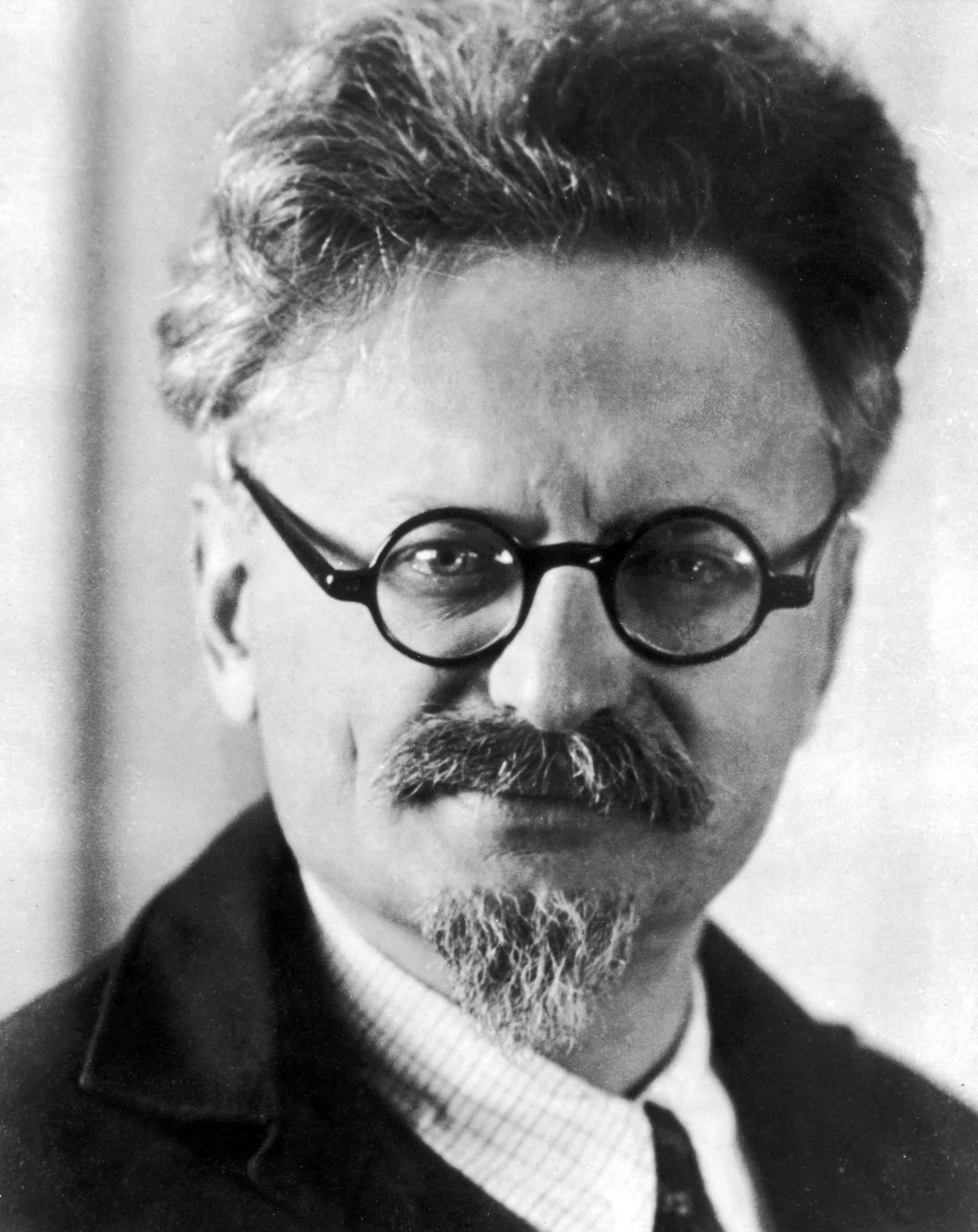
Leon Trotsky
Trotsky joined the Bolsheviks only a few months before this, in what I can only imagine was the 1917 Russian version of Lebron James’ “The Decision”. Trotsky was the most well known revolutionary in the country and a master orator. While Lenin continued to act as the grand strategist, Trotsky became the primary source of public representation.
Come October, Lenin was beginning to believe that the only way for the Bolsheviks to succeed was to take power by force. This was a hot take among the Bolshevik leadership - many believed they should take over through democratic means: winning seats and getting a majority in the Provisional Government. Yet Lenin pushes back:
‘We must not be deceived by the election figures: elections prove nothing... The majority of the people are on our side.’ Reminding his comrades of Marx's dictum that 'insurrection is an art’, Lenin had concluded that ‘it would be naive to wait for a "formal" majority for the Bolsheviks. No revolution ever waits for that... History will not forgive us if we do not assume power now.’
This is Lenin at his absolute best, and an event that demonstrates the decisive effect of a single individual on the course of history. If Lenin had not been around to lead the party during these few weeks, the chance for a coup would have come and gone.
On November 7th, 1917 the Bolsheviks stormed the scantily defended Winter Palace, and took control of the government.
The Great October Socialist Revolution, as it came to be called in Soviet mythology, was in reality such a small-scale event, being in effect no more than a military coup, that it passed unnoticed by the vast majority of the inhabitants of Petrograd. Theatres, restaurants, and tram cars functioned much as normal while the Bolsheviks came to power. The whole insurrection could have been completed in six hours, had it not been for the ludicrous incompetence of the insurgents themselves, which made it take an extra fifteen.
The truth was, the insurrection was only supported by a minority of the population, even being opposed by many of the Bolshevik leaders themselves. This is a classic misconception about the revolution: that the Bolsheviks took power with overwhelming support of the populace.
Why was the government so easy to overthrow? No one bothered to send any military opposition, the anti-Bolshevik forces in the capital were almost non-existent. In the end, anyone who could summon such a force quite simply assumed an immediate collapse of the Bolshevik government. No one initially decided to do anything about the Bolsheviks because they assumed failure was imminent.
Part III: The Bolsheviks in Power
On March 3rd, 1918, the Bolsheviks moved forward with their most popular “campaign” promise: ending the war. The fighting finally stops, but in doing so Russia loses almost all of its European territory, cutting their total population down by a third. If they had been able to hold on for a little longer things would have looked much different, the Germans would of course surrender only 9 months later.
Russian losses in World War I were staggering. Military deaths reached around 2,000,000 with direct and indirect civilian deaths totalling an additional 3,000,000. For reference, about 1,700,000 Americans have died in all US wars, combined.
A few days later the capital was moved from St. Petersburg (which was renamed to Petrograd, because St. Petersburg was “too German”), to Moscow. This move represents Russia’s separation from Europe, Petrograd was a European city, whereas Moscow embraced Russia’s Asiatic traditions.
Soon after the Bolsheviks take over, a general terror begins on anyone deemed to be wealthy. “Loot the Looters” was the phrase used to justify the looting of anything owned by the bourgeois. Doctor Zhivago does a good job depicting what this was like - there is a scene where the main character comes home to dozens of people living in his flat.
Soviet officials, bearing flimsy warrants, would go round bourgeois houses confiscating typewriters, furniture, clothes and valuables 'for the revolution'. Factories were taken out of private ownership, shares and bonds were annulled, and the law of private inheritance was later abolished.
The Fight for the Soul of Russia
Sadly, peace doesn’t last long, as a civil war kicks off with those that want to bring down the Bolsheviks. The opposition force was called the White Army and their goal was to return Russia to the pre-revolutionary order.
The army that the Whites put together was hilariously top-heavy. Out of the first 3000 troops recruited, only 12 were non-officers. The Bolshevik Red Army on the other hand had the opposite problem, they had too many rank-and-file soldiers, but a lack of officers to lead them. The Whites were better trained, and pound for pound would have decisively defeated the Reds in any battle if it were not for the Red’s tremendous numerical advantage. The Red Army could sometimes outnumber the Whites 10 to 1.
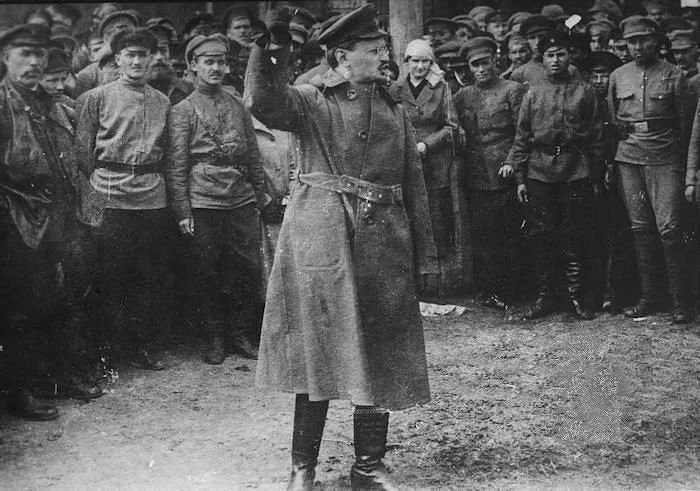
Trotsky addresses soldiers of the Red Army
It is also worth noting that the Whites had the backing of the Allies. At first glance this looks like an early attempt by the West to bring down communism, but that is a complete mis-read of the situation. Don’t forget that by the time the civil war started, World War I was still raging. The Allies wanted Russia to re-join the war, and a victorious White army would do just that. (On a side note, the great irony of the Schlieffen plan was that the opposite ended up happening - the Germans eventually got their single-front war, just not the one they were expecting.)
One development around this time was “war communism”, the economic system Trotsky implemented for the purposes of winning the war. This is one of the first parts of the book that Figes begins to go into the economic system and its underlying philosophy. War communism was the prototype of Stalin’s economy - all private trade was abolished, all major industries were nationalized, the government assumed control of the labor market, and agriculture was collectivized. This was the most extreme economic experiment ever run. Even socialists outside of Russia were not sure what was happening:
Foreign socialists were shocked by the violence of the Bolsheviks' hatred of free trade. The Bolsheviks did not just want to regulate the market - as did the socialists and most of the wartime governments of Europe - they wanted to abolish it. 'The more market the less socialism, the more socialism the less market' that was their credo.
Ok, what’s going on here? The ungenerous interpretation is that the Bolsheviks were all extremists and this was Lenin’s goal from the start. The more generous read is that this was a war-time necessity to ensure the army had the supplies it needed, like a Defense Production Act on steroids. However, Figes explains that the key motivation behind war communism was to wage war against the enemies of the Bolsheviks. Remember that the previous owners of industry were all likely actively assisting the Whites, this was the best way to neutralize them.
Aside from war communism, the Bolsheviks used another tactic in the war against the Whites, which has become known as the Red Terror. However, the Red Terror was preceded by two events that it is worth briefly diving into.
First, we return for a final time to Nicholas, who had been on house arrest for the last year. The Bolsheviks debated about putting him on trial, which Trotsky would have won decisively, but they eventually decided against it. Taking learnings from the French Revolution of 1789, putting the tsar on trial presumed that he could be innocent, “leaving the moral legitimacy of the revolution open to question”. On July 17th 1918, Nicholas and his entire family were shot in the basement of the house they had been confined to. The only member of the family to survive was the spaniel, Joy.
The second event that directly kicked off the Red Terror was an assassination attempt on Lenin on August 30th. In order to understand the magnitude of this, we have to remember that Lenin at this point is a quasi-deity. Lenin's close call with death made the Bolsheviks realize there were too many enemies within their midst, hence kicking off the Red Terror.
Anything that was labeled as “counter-revolutionary behavior” could put you in bars, exiled, or shot; and any burden of proof was non-existent, it was guilty before proven innocent. Lenin had said that it was better to arrest a hundred innocent people than run the risk of even one enemy going free. The enforcers of the Red Terror were the Cheka, the secret police force that would turn into the KGB a few decades later. The atrocities of these guys feels like it's out of the middle ages, remember this was only 100 years ago:
The ingenuity of the Cheka's torture methods was matched only by the Spanish Inquisition. Each local Cheka had its own speciality. In Kharkor they went in for the glove trick' - burning the victim's hands in boiling water until the blistered skin could be peeled off, this left the victims with raw and bleeding hands and their torturers with human gloves'. The Tsaritsyn Cheka sawed its victims' bones in half. In Voronezh they rolled their naked victims in nail-studded barrels. In Armavir they crushed their skulls by tightening a leather strap with an iron bolt around their head. In Kiev they affixed a cage with rats to the victim's torso and heated it so that the enraged rats ate their way through the victim's guts in an effort to escape. In Odessa they chained their victims to planks and pushed them slowly into a furnace or a tank of boiling water. A favourite winter torture was to pour water on the naked victims until they became living ice statues. Many Chekas preferred psychological forms of torture. One had the victims led off to what they thought was their execution, only to find that a blank was fired at them. Another had the victims buried alive, or kept in a coffin with a corpse. Some Chekas forced their victims to watch their loved ones being tortured, raped or killed.
An estimated 100,000 people were executed in the Red Terror.
Just so you don’t go thinking there are any good guys in this story, the White Army was also committing atrocities against a group that they felt was their biggest enemy: the Jews. Anti-semetism had always been pretty bad in Russia, but it spiked to even higher levels by the counter-revolutionaries since most of the Bolshevik leaders outside of Lenin were Jewish. The accusations followed the traditional anti-semetic playbook, that the Jews were pulling the strings controlling everything. Figes writes:
Many pogroms were accompanied by gruesome acts of torture on a par with those of the Red Terror. In the town of Fastor the Cossacks hung their victims from the ceiling, releasing them just before they choked to death: if their relatives, who watched this in terror, could not pay up the money they had demanded, the Cossacks repeated the operation. The Cossacks cut off limbs and noses with their sabres and ripped out babies from their mothers' wombs. They set light to Jewish houses and forced those who tried to escape to turn back into the fire. In some places, such as Chernobyl, the Jews were herded into the synagogue, which was then burned down with them inside. In others, such as Cherkass, they gang-raped hundreds of pre-teen girls. Many of their victims were later found with knife and sabre wounds to their small vaginas. One of the most horrific pogroms took place in the small Podole town of Krivoe Ozero during the final stages of the Whites' retreat in late December. By this stage the White troops had ceased to care about world opinion and, as they contemplated defeat, threw all caution to the winds.
The Whites killed more than 150,000 jews.
By April 1920, the Whites had lost the war. Their lack of numbers appears to be the primary cause, but the core issue was their inability to put politics over tactics. They didn’t realize that the fight was for the soul of the nation, not a war against an army. A battle of ideologies, not soldiers. The Whites failed to rally nearly any peasants to their cause, and the ones that did join, soon left in mutiny. The peasants didn’t like the Bolsheviks, but the Reds at least stood for something different, for change, which was more than the Whites could say. The Whites just promised to bring things back to the way they were, and the people wanted nothing to do with that.
The Bolsheviks in Charge
After the civil war ends, we are able to look at an unencumbered version of Bolshevik Russia. For starters, they ironically develop a massive upper class. Top members of the party were living in compounds previously owned by the nobles of the monarchy. In a similar vein, the bureaucracy ballooned to epic proportions, under a complete command economy, the number of “officials” exploded. By 1920 there were 16 factory officials for every 100 factory workers, and in the most extreme example, 71% of the workers at the Putilov metal plant were petty officials and clerks. “All the strikes of these years complained about factory officials living off the backs of the workers.”
It’s also worth noting that a few months after the war, Lenin implemented the New Economic Policy (NEP). The NEP was an adjustment to war communism that allowed individuals to own small and medium sized businesses, although the state continued to maintain control of all large industries. Around the same time, Lenin looked to science as the way to control human behavior to turn people into “cogs of the state”. According to legend, Lenin goes to the house of Ivan Pavlov, of salivating dog fame, to see if it would be possible to remove the individualistic tendencies of the Russian people. While any work with Pavlov failed to materialize (or most likely never occurred), a party leader named Aleksei Gastev developed many theories in line with the cogs of the state approach:
Gastev's aim, by his own admission, was to turn the worker into a sort of 'human robot' (a word, not coincidentally, derived from the Russian verb to work, rabotat). Since Gastev saw machines as superior to human beings, he thought this would represent an improvement in humanity. Indeed he saw it as the next logical step in human evolution. Gastev envisaged a brave new world where 'people' would be replaced by proletarian units' so devoid of personality that there would not even be a need to give them names. They would be classified instead by ciphers such as 'A, B, C, or 325, 075, 0, and so on'. These automatons would be like machines, 'incapable of individual thought', and would simply obey their controllers. A 'mechanized collectivism' would 'take the place of the individual personality in the psychology of the proletariat'. There would no longer be a need for emotions, and the human soul would no longer be measured 'by a shout or a smile but by a pressure gauge or a speedometer.
A few comments on this. First, it's really easy to see where Rand and Orwell’s inspiration was coming from. But it’s not clear to me how much of this was just the idealistic vision of some leaders, or something that was widely implemented en masse. On one hand, inspired by what Ford had done in America, they are just trying to perfect factory efficiency, which is something I can get behind. I don’t really have an issue of turning a worker into a robot, at work. Although the latter half of the paragraph makes me want to get my Guy Fawkes mask and spray paint “who is John Galt?” onto my nearest government building.
Despite moderate success with the workers who lived in the cities, the Bolsheviks failed to get any success with the peasants. They looked at the villages of poor farmers as backwards, representing the type of place that Russia wanted to get away from. The root of the issue was that they were never able to split the peasantry along class lines. The peasants didn’t see themselves as poor and their neighbors as rich, they just saw each other as fellow villagers. They became highly skeptical of the city intelligentsia telling them they should despise their neighbor.
Part of the Bolshevik tactic to break the peasants was to attack the only other institution vying for power in Russia during the 1920s: religion. The goal was to replace G-O-D with G-O-V. Things then got a little weird…
In private life, as in public, religious rituals were Bolshevized. Instead of baptisms children were ‘Octobered’.
There was also an atheist art - one especially blasphemous poster showed the Virgin Mary with a pregnant belly longing for a Soviet abortion and an equally iconoclastic theatre and cinema of the Godless.
…and indeed for adults who also changed their names - were drawn from the annals of the revolution: Marx; Engelina; Rosa (after Rosa Luxemburg); Vladlen, Ninel, Ilichand Ilina (acronyms, nicknames or anagrams for Lenin); Marlen (for Marx and Lenin); Melor (for Marx, Engels, Lenin and October Revolution); Pravda; Barrikada; Fevral (February); Oktiabrina (October); Revoliutsia (Revolution); Parizhkommuna (Paris Commune); Molot (hammer); Serpina (sickle); Dazmir (Long Live the World Revolution); Diktatura (Dictatorship); and Terrora (Terror).
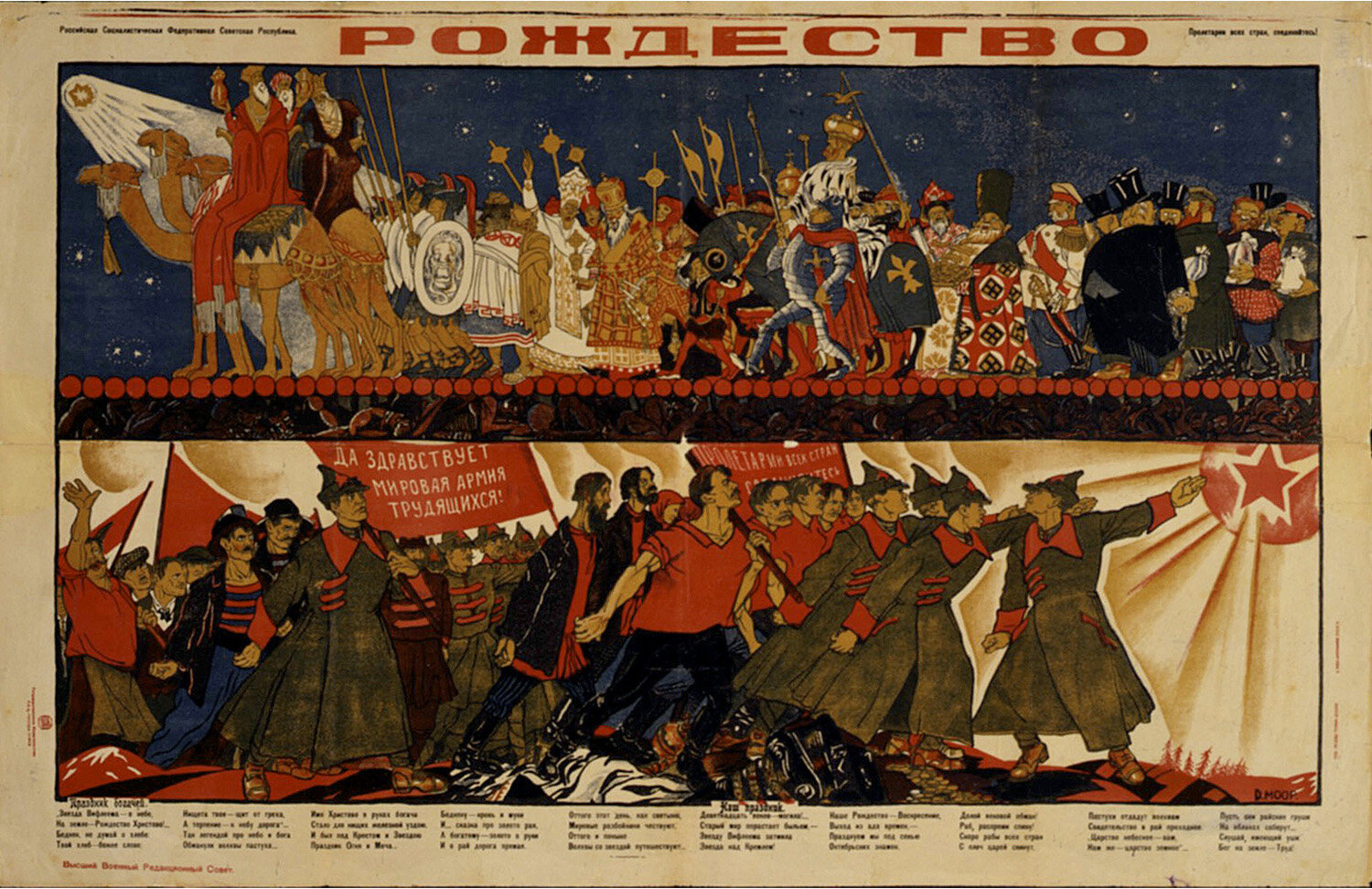
1921 poster contrasting the march of the three kings to Bethlehem (top), with the march of the workers towards communism (below).
It is worth noting that the Boksheviks were exceptionally progressive when it came to social issues normally tied up in religious debate. They were the first world government to legalize abortion and make it available upon request, and decriminalized homosexuality.
This cultural war against religion eventually turned hot, when the Bolsheviks began shutting down churches and shooting priests. In the end, the effort was completely unsuccessful, and if anything rallied people closer to their religion. (This feels especially obvious in hindsight).
Due to some bad weather in late 1920 and early 1921, we close this story with one of the worst famines in history. The Russian Famine of 1921 was exacerbated by the rules the Bolsheviks had employed to win the civil war. Since they were taking all the peasant’s food stockpiles to feed the soldiers, there was nothing left to tide them over after a particularly bad winter. In the end 5,000,000 people died. Full blown cannibalism ensued, along with the rest of the things you would expect after a famine of that magnitude. The US actually sends temporary aid, which the Bolsheviks begrudgingly accept.
The story ends with Lenin's health declining quickly towards the end of 1921. He had a series of three strokes over the last few years of his life, each one leaving him more and more debilitated. Over this time Stalin had plotted his move to take over the government, which occupies most of Lenin's time in his final days. In a series of letters titled Lenin’s Testament, he spoke at length about his succession, heaping criticism on the current leaders, specifically Trotsky and Stalin. Suppressed for a time, but eventually read, the letters failed to prevent Stalin from taking over. Stalin then exiled Trotsky and ended up unencumbered at the top of the Soviet system.
After a final stroke, Lenin died in January 1924 at the age of 53. Stalin made sure that his body was embalmed and put under a massive monument in Moscow. In the same way as having Alexander the Great's body gave credibility to Ptolemy, the soul of the country was still with Lenin, whose power only grew with death.
Conclusion
I want to conclude this essay with some of my high level takes about the book and the lessons I took from the revolution as a whole. Overall, I really enjoyed this book. Figes wrote it in a compelling way that kept my attention. He analyzed the “why” of situations and didn’t just focus on the “what”, which I feel is important in an 850-page history book.
Which gets us to the length. There were times when it felt way too long, and times when it felt way too short. It’s probably the right length for the breadth it captures, but there are parts of the story that I am interested in diving deeper into, primarily Lenin and Leninism. It’s also worth noting that Figes is a Brit writing in 1996 about Communist Russia, so his slant towards capitalism and the West is a given. I thought he mostly represented issues fairly, but I don’t know if I would even recognize what that looks like. The metaphor is a lifelong atheist listening to another lifelong atheist attempting to steelman the views of a devout religious person. It might be a good steelman, but do I really know? I wonder what looks different if a socialist writes this book; but it seems hard to argue that the revolution wasn’t a huge mess.
Although to make sure I give credit, many times throughout the story Figes would present two theories on why someone did something (usually left vs. right), proceed to explain why they are both wrong and then present a third theory that seems to be correct. Overall, I highly recommend this book for anyone interested in the Russian Revolution.
So, what are the big lessons of the revolution?
I don’t consider myself a modern day socialist or communist, but I’ll stick up for them here: what we saw in Russia in the 1920s was not socialism or communism. The Bolshevik version of marxism (who coincidentally left no implementation details), strayed far from the original ideals of socialism. So when someone says “we tried communism and it failed”, it feels like a strawman to me: no one is suggesting 1920s bolshevism gets tried again.
I say this as an aspiring revisionist historian because I would love to have seen the results if the Mensheviks had been the ones to take power instead of the Bolsheviks. It’s not very often that we get to try different methods of human coordination on scales like this, and their nuanced take may have been successful. The first large-scale implementation of communism happened to fall flat on its face, but it's never good to throw the baby out with the bathwater.
On a side note, it doesn’t help that these words all largely remain interchangeable and therefore useless, even after reading an 850-page book I still can’t coherently define them: communism, socialism, marxism, leninism, and bolshevism.
Another lesson would be to look at what the dangers of excessive inequality can do to a society. Inequality is just a number until the people go hungry and tear the upper-class out of their homes. This revolution was started how revolutions usually start, not by over-regulation or excessive pronouns, but by inequality, atrocities, and hunger. On the other hand, this story also shows how badly a group of intellectuals armed with theories can screw things up. Most of the Bolshevik leadership were from high class families, heavily educated, and never stepped foot into a factory. They fought for what was best for the workers & peasants but didn’t involve any in the process.
We also see what happens when society becomes too progressive too quickly. I like the metaphor of a game of tug of war, conservatism on one end and progressivism on another. Society works best when we are slowly inching our way along. But when one side trips, we get pulled too far to the other side, and chaos ensues. The Russian Revolution gives us a clear picture into how ugly things can get when the rule of law breaks down. The number of “unnatural” casualties in Russia in the early 20th century were greater than 15 million people across war, famine, and genocide.
However, perhaps the biggest takeaway is how powerful an idea can be, especially when society is ready for that idea and there exists great characters capable of selling it. To again emphasize this last point, I want to end with a quote from Aldous Huxley, the author of Brave New World.
“It is possible to argue that the really influential book is not that which converts ten millions of casual readers, but rather that which converts the very few who, at any given moment, succeed in seizing power. Marx and Sorel have been influential in the modern world, not so much because they were best-sellers, but because among their few readers were two men, called respectively Lenin and Mussolini.”