A Thousand Ways to Please a Husband
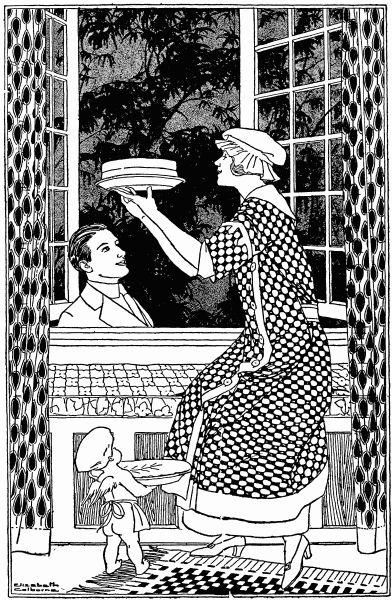
A Thousand Ways to Please a Husband (published in 1917) is the most interesting cookbook I have ever encountered. It is, to be sure, a cookbook first and foremost. I’d be willing to bet money that for Louise Bennett Weaver and Helen Cowles LeCron, when they were writing it more than a century ago, the recipes were the important bit. But in the grand tradition of recipe bloggers—whose origins are evidently quite ancient!—they threw in some narrative content as a convenient vehicle, so it’s actually fun to read.
The book is (almost) literary. It has an immense collection of recipes, some of which are decent. And it might shine a little light upon the social mores of the past—might even be useful in understanding some aspects of the present. Why, the fine folks at Project Gutenberg saw fit to digitize the thing. We might as well read it.
-
The Food of Bettina’s World
Our frame story for A Thousand Ways to Please a Husband is that of the relationship between Bob and Bettina, a newlywed couple just moving into a place of their own. They are very cute. That’s to be expected from a metafictional level; no cookbook author is going to embellish their content with a gripping tale of infidelity, betrayal, and alcoholism. C’mon now. Of course they’re happily married.
It’s Bettina whose steps we follow, she being the cook of the household and this being a cookbook. In fact, at the very beginning it becomes clear that Bettina has already started preparing: she has established an “emergency shelf” where she keeps kitchen essentials, and which she may use in the event that she needs to whip something up right quick. The emergency shelf contains a diverse array of ingredients. Plenty of canned goods, of course, including what I consider to be an excessive amount of pimientos. (Perhaps she likes pimentos more than I do.) 2 pkg. of macaroni, not bad, though I personally would have laid in a larger supply. And 3 pkg. marshmallows—wait, did she buy more marshmallows than macaroni?
Well, to be fair to Bettina, she immediately uses some of the marshmallows to make hot chocolate. Hot chocolate is nice.
The rest of the book continues from there. For each recipe, there’s a cute little story at the beginning about what Bettina was doing on that particular day, then the ingredients and directions. We’re supposed to get a year’s worth of recipes, although obviously we don’t see every meal that Bettina prepares. People are allowed to repeat a menu now and then. There’s a hundred and fifty-two chapters, which is a hefty number for any cook to learn.
So how are the recipes? They’re fine, I guess. Throughout the book, economy is the watchword of the day. Many dishes are designed to use up leftovers; stale breadcrumbs are pressed into service in pastries, and in timbales, and in other cunningly devised meals. After a pineapple is eaten, its core is cooked in water and the extracted juice is added to lemonade. “I like economizing,” Bettina says, for “it gives me an opportunity to use all the ingenuity I have.”
The book was written at the tail end of World War I. America had largely avoided getting blown all to hell, but the necessities of wartime meant that influential Americans were working on the project of keeping enough food available for the troops overseas. Efficiency, efficiency, efficiency. Bettina and her Bob aren’t stratospherically rich, though they’re certainly not destitute, and it makes sense that they’d have some strategies to get the most out of food. Plus, it’s helpful for the book’s readers, who are no doubt hoping to pick up precisely the kind of domestic tips that Bettina uses.
Not all of it is food-related. From this book, you can learn how to get out grass stains (“Moisten with alcohol or camphor, allow to stand five minutes, and wash out with clear water”) and grease stains (rub with lard, then after an hour wash with warm water and soap). You learn from Bettina that putting grains of rice in a salt shaker absorbs moisture, and that a kitchen sink should be 36 inches off the ground, not the standard 32 which is inconveniently low. You learn to put olive oil on burns, which is actually not something you should do but science marches on, I guess.
There’s also interesting information on how to select the perfect ice-box, and how to use a fireless cooker. Bettina does love her fireless cooker; as a device which keeps cooked food warm, and which allows for cooking food with less fuel, it is obviously something which appeals to the economically-minded Bettina.
“Do you use your fireless cooker often?”
“Every day of the year—I do believe. I cook breakfast food in it, and all kinds of meats except those that are boiled or fried. Then it is splendid for steaming brown bread and baking beans, and oh, so many other things! Mother keeps hers under the kitchen table, but I find it more convenient here at the right of the stove—on a box just level with the stove.”
But the food, yes, the food. It seems there was a trend, at the time, for dishes which are creamed (cooked in white sauce) or “escalloped” (gratin, think scalloped potatoes). And it’s interesting to see what else was trendy, then—Wikipedia says that Thousand Island dressing was probably invented around 1900 or shortly thereafter, and sure enough, Bettina serves it as a fashionable accompaniment to salad. There’s even a recipe—although I can’t remember ever making Thousand Island dressing myself. Maybe I should give it a try.
It’s also curious that Bettina indicates at one point that mayonnaise—which, like Thousand Island dressing, any person today can buy at the grocery store—is expensive. But then that’s to be expected; mayonnaise goes bad quickly without refrigeration and in her day would likely have to be made fresh each time. Bettina also notes that she thinks it’s best to get milk from a neighbor, so you could be sure it was good milk; without a certified dairy in town, that was the safest opinion, and she’s dismayed that some people would buy meat and milk from whomever. (Clearly, we are many years away from Rav Moshe Feinstein’s landmark ruling on Chalav Yisrael in the modern world!)
The discourse on milk, by the way, occurred in the context of Bettina making cream of wheat, which Bettina served cold with raspberries to entice a picky child. This, Bettina explained to her sister-in-law Polly (the child’s mother), was because she’d cooked the cream of wheat the other day, and then placed it in moulds in the refrigerator, for convenience’s sake. Honestly? I’d give it a try. Hot cereal that’s been chilled with fresh berries sounds delicious. My curiosity has also been aroused by her description of Apple Tapioca Pudding, which is exactly what it sounds like—tapioca pudding poured over finely sliced apples + sugar and baked. I need to try that one, too. I have been fascinated with tapioca ever since I was a kid and I read a book about the fate of the whaleship Essex, and how its survivors resorted to cannibalism while attempting to reach safety.[1] Some of the survivors, once eventually rescued, were given tapioca, which was apparently a good choice for starvation victims because it’s easily digestible and contains some fats and such which would be badly depleted as a result of starvation. Which is all just to say that I’ve long treasured tapioca pudding.[2]
Those are a couple of fine examples. There are many more; some adaptation may be required for a modern kitchen, but it should be relatively straightforward for an experienced cook. Bettina has good reason to be proud of her skills. Indeed, she encourages Bob to invite guests over so that she has more people to dazzle with her cooking. “It isn't very hard to make a meal for three out of a meal for two,” she says, and so Bob fairly regularly invites people to the house, where they enjoy a meal prepared by Bettina.
It’s one such visit which sets off what I view as the main thread of the book’s plot. This cookbook does have a narrative element, remember?
-
The People of Bettina’s World
I suppose I could list a lot of the dramatis personae at this point. There’s Bettina and Bob, of course, and their respective families—Bettina’s parents stop by to visit, while Bob has a suffragette Aunt Elizabeth and an Uncle Eric who’s a queer old bachelor—and their respective circles of friends. Their friends are mostly interchangeable, except for Alice and Harry (Mr. Harrison), friends to Bettina and Bob respectively, who are two rather strong-willed individuals. Naturally, once introduced to each other they swiftly fall in love and get married.
I’ll get more into that later. Where this book truly shines (in terms of having a coherent plot, with conflict and a resolution) is in the account of Bettina’s encounter with Mr. and Mrs. Dixon. Frank and Charlotte Dixon are a married couple whom Bob knows, evidently through work, and he invites them out for a picnic. Bettina, of course, is able to quickly convert her planned evening meal to outdoor use, much to Bob’s delight.
“You are the best little housekeeper in this town,” said Bob as he kissed her. “I don’t believe anyone else could have managed a picnic supper on such short notice. Come on out and meet Mr. and Mrs. Dixon. May I tell them that they have a fine spread coming?”
“Don’t you dare, sir. It’s a very ordinary kind of a supper, and even you are apt to be disappointed.”
But he wasn’t.
Okay, enough of that, you lovebirds. Anyways, the next day Mrs. Dixon drops by to visit Bettina. She’s apparently been having some marriage issues. Nothing too serious, it’s just that she’s lived in a hotel all her life (only child, mother with health problems) and she’s continued to do so with Mr. Dixon. But now they’re looking into finding a house, and what is she going to do then? It looks like Mr. and Mrs. Dixon have been getting stressed out over the planned move, and Mr. Dixon may be drifting away.
“You must be dreadfully unhappy,” interrupted Bettina, wondering what she could say, since she disliked particularly to listen to any account of domestic difficulties. “But why not try keeping house? Maybe that would be better. Why, Bob doesn’t like to be away from home any evenings at all.”
“But you’ve just been married!” said Mrs. Dixon, tactlessly. “Wait and see how he’ll be after a few years!”
Fortunately, Bettina’s to the rescue, and keeping house is easy if you have a friend like her. Why, all you have to do is to follow her advice; everything will be fine! Mrs. Dixon, essentially, is the audience stand-in, so that Bettina has another reason to explain basic steps to someone. This is how we learn that with leftover egg yolks, you should beat them with a little water and put them in the fridge, while for leftover egg whites you just refrigerate them directly. When you buy cantaloupe, you can chill it in the fridge, but do be careful to put it in a paper sack first, to prevent the scent and flavor from entering other foods.
Mr. and Mrs. Dixon become recurring characters thereafter, and are the source of much sentiment—and occasionally comic relief. “It’s Mrs. Dixon, Bettina,” Bob says in one chapter, having answered the telephone. “Much excited. Panicky. House afire. Hurry.” (Mrs. Dixon needs to prepare two “company meals” at short notice to impress her husband’s aunt, which with Bettina’s help she does marvelously.) And everything goes well!
The real trouble, I think, was that the Dixons simply weren’t spending enough time together. Mrs. Dixon confides in Bettina that she’s had some “dreadful failures” while cooking, but that Frank doesn’t mind. Hm, maybe the secret to a happy marriage really is just…liking your spouse. Who knew!
Right, so that’s the Dixons, and then there’s the other characters. I have a special fondness for Bob’s somewhat eccentric Uncle Eric, who shows up with less than a day’s notice by telegram, and who detests breakfast cereals. Fortunately, Bettina knows how to make a variety of cereal-less breakfast options, and Uncle Eric proves to be a lovable old fogey, bless him. (But it really is polite to give at least a day’s notice before you drop by to visit someone for multiple days!)
Actually, now that I mention Uncle Eric, I am reminded of another running joke of sorts, where someone—Bob, in this case—starts getting worried about dinner, because the mealtime’s fast approaching and it seems like there’s hardly any preparation to be seen. Then it’s revealed that Bettina had the foresight to get things done beforehand, and everything’s ready in the fireless cooker. (She really does love the fireless cooker.) Every time it happens, I chuckle to myself and say something like, “hell yeah Bettina, you show ‘em how it’s done.” It never gets old.
Speaking of unexpected comic moments, I do also like the relationship between Alice and Harry, who (after a tumultuous start) get along like a house on fire. There was a brief passage that I will quote verbatim for its comic (and sentimental) properties:
...Harry was showing Fred and Bob his own private den whither he might retire from the worries of domestic life. “Only,” observed Fred sagaciously, “since it opens off the living room, you can’t retire very far. I predict that married life will make you rather a sociable person, Harry.”
Harry shrugged his shoulders, and said nothing. “Old bear!” cried Alice, entering the room at this point. “You don’t need to be a sociable person! I like you just as you are!”
Relatable, right? And that’s all very well. One more anecdote—because the story follows Bettina and Bob, perhaps another data point for their relationship would be nice. There’s a very cute scene in one of the chapters where Bob returns home early instead of going on a trip (which had been canceled due to inclement weather) and finds that Bettina, instead of going to visit her mother, had also canceled her plans to avoid getting caught in the downpour. Bob is delighted: “Well, I’m glad you’re here! I was expecting to come home to a cold, dark house, and this is much more cheerful.” And then, “I don’t care what you give me, just so it’s hot. My walk through the rain has given me an appetite. I’ll help you get supper and wash the dishes, Bettina, and then afterward we’ll pop corn and toast marshmallows by the fire. What do you say?”
The two get to spend a pleasant night in, Bettina whips up some celery au gratin and emergency biscuits and scrambled eggs, and her cooky-jar is full of rocks (I am intrigued by the fact that “cookie” was once spelled with a y, and by the fact that old-style rock cookies lack a Wikipedia article).
It’s nice, I guess, that they obviously care for each other and enjoy doing things together.
-
The Values of Bettina’s World
There’s an idea common in certain Abrahamic religions—mostly Christianity, although similar trends exist elsewhere—that men and women have distinct roles to play, that men do male things and women do female things, often in the context of marital responsibilities or societal expectations. The term for this is complementarianism, because ideally male and female roles complement each other, and while each gender does different things they both do what G-d has set aside for them to do. Men are to be like Peter, and women are to be like Mary. Something along those lines.
Of course, not all Christians believe that. Plenty of Christians abide by Christian egalitarianism, and others are somewhere in the middle, and then you get the sects that sought to abolish gender entirely. Whatever. Point is, complementarianism is still pretty influential today: if you’re a member of a denomination which restricts the priesthood to men (e.g. the Catholic Church) or if you’re a member of a denomination which ordains both men and women (e.g. the Episcopal Church, the Church of England) you may have opinions on the issue.
Regardless of your specific opinions on how things should be today, you may have the idea that circumstances were different in the past. A lot of people—conservatives who want to return to the good ol’ days, progressives who want the option to not do that—will tell you that in days gone by, gender roles were a lot stronger and people more readily acknowledged that there was a “man’s world” and a “woman’s world” which did not intersect. The idea is promulgated by Handmaid’s Tale-esque fiction and by influencers whose tradwives are probably going to murder them in their sleep someday.
After reading A Thousand Ways to Please a Husband, I don’t think that’s a helpful framework to understand the past.
Please don’t get me wrong—I’m not saying that the past was an idyllic paradise, that there weren’t systemic legal handicaps for women in most U.S. states such that domesticity was the only possible route. A lot of people deride the Temperance movement and the subsequent Prohibition era and forget that a lot of its supporters were women, newly enfranchised, who were mobilizing and casting votes on the principle of “my husband is a violent alcoholic who beats the shit out of me and I’d rather not die, thank you.” A hundred years ago, things sucked.
All the same, I don’t think that modern ideas about complementarianism—an ideology with old roots but which was first articulated fully during the late-1900s culture wars—were necessarily practiced back then. And I think that Louise Bennett Weaver and Helen Cowles LeCron, the authors of this book, would have fundamentally disagreed with the idea that complementarianism was a good thing at all.
You can learn a lot about a society from its cookbooks. Mrs. Beeton’s was a staple of Victorian British households and, despite being somewhat ramshackle and containing rampant plagiarism,[3] is profoundly useful for understanding domestic life of that era. Part of it is from what is emphasized, what attracted attention from readers and was thus expanded in later editions, and so forth. Part of it is from Mrs. Beeton’s own commentary, found in the introduction and throughout the text, which may have been occasionally provincial or ignorant but reflected, one would assume, common prejudices or misconceptions of her time. And to be fair, Mrs. Beeton’s Cookery Book was a step above the somewhat disorganized recipe books of the past, so it’s probably better to regard it as sort of a transitional product. Taking potshots at Mrs. Beeton is like criticizing Shakespeare for his spelling.
Let us turn back to A Thousand Ways to Please a Husband, to our good friends Bob and Bettina. On the surface, they do seem to occupy “traditional” gender roles. Bob is the household’s breadwinner, and Bettina takes care of cooking and other domesticity. But of course, we are reading a cookbook, so narratively we’re going to expect to read about someone who enjoys cooking. We don’t see Bettina being a proto-flapper, focusing on her career and parties and automobiles and sex, because otherwise she wouldn’t be cooking delicious food.
Even in the culinary sphere, though, the ideas of complementarianism plainly do not apply. We don’t see much of Bob’s world, save from those work colleagues he occasionally brings home, because why would we expect such a thing in a cookbook? But whenever Bob wanders into the kitchen, he proves to be an apt student and a useful helper. Bob knows how to save watermelon rinds for pickles. Bob volunteers to make popcorn balls when Bettina plans an evening’s entertainment with the Dixons. Bob suggests making penoche[4] one night after dinner, and sets out himself to wash the dishes. And it’s clear that he pays attention to Bettina! When Mrs. Dixon asks how to cook cabbage without filling the house with cabbage odor, it’s Bob who knows the answer—because of Bettina’s teaching!
This all goes to show why I reject complementarianism as a good model for gender roles. In order to live as harmoniously as Bettina does with Bob, you’ve obviously got to cross into the “other” sphere now and then. And I have no truck with people who say, oh but complementarianism works, you’ve just got to do it right. Respectfully, that’s bullshit. Actual practitioners of complementarian gender dynamics have a hard time eliminating the failure mode which is husbands dominating their wives and insisting that G-d set them on earth to do this or that. At the end of the day—what was it that Gottman and his ilk have said?—maybe you just need to like your spouse.
And it’s clear that Bettina and Bob very much like each other, and they’re willing to drop everything and pitch in if necessary, because that’s just what you do. Mr. and Mrs. Dixon also learn to cooperate and work together, after the initial struggles; Mr. Dixon gets delegated the task of menu planning and making things like salad dressing, and they’re happy. Sure, there’s still some language about gender and such that reads a little funny to my ears. A character, for example, remarks that he likes drinking tea, “although perhaps that isn’t considered a manly sentiment in this country.” And then there’s Bob, who says things like “I tell you what, Bettina, I call this a regular man-size meal!” Someone saying that today would sound faintly ridiculous. But language changes; this book came out in 1917, remember. One thing that Paul Fussell noted, in his book The Great War and Modern Memory, was that an innocent society produces some prophylaxis of language. Before World War I, it was not uncommon for authors to write things that today sound like double entendres, but which were not thought of as such in those days. Fussell blames it on World War I shattering the collective innocence of the participant societies; nowadays, if you write the words “he ejaculated breathlessly,” it sounds like you’re writing a pornographic script, not a Sherlock Holmes pastiche with period-accurate language.
I dunno. Maybe Bob’s just a regular guy whose suffragette Aunt Elizabeth inculcated some decency into him. Maybe Bettina’s an idealized figure constructed by her authors, two women who created a woman who enjoys herself and is good at what she does. Maybe it’s all a castle in the air and we shouldn’t be reading too much into a book like this. What the hell do I know.

[Caption: Presented without context or comment.]
All I know is that we’re here to be nice to each other and to actually like our domestic partners. Maybe Bob and Bettina could say it better than I can:
“And a whole year has gone since then,” said Bob, as his eyes met Bettina’s across the little table set for two.
“That’s the queer part of it,” Bettina replied. “That year seems unbelievably short in some ways and unbelievably long in others, and stranger yet, I don’t feel that it is really gone. I feel as if we had it, captured, held forever, with all of its fun and all of its little sad times. We own it, even more than we own a collection of snapshots in a camera book—because that year is a part of us now.”
“And the little hard places only make the bright spots all the brighter by contrast. Do you know, Bettina, that I've found you wiser than I ever imagined a young wife could be?”
“Bob,”—and Bettina laughed and blushed at the same time.
“Don’t interrupt. This is our anniversary and I’m making a speech. You are wise because from the first you’ve realized that we get out of life just what we put into it. You’ve faced things. You’ve realized that marriage isn’t a hit-or-miss proposition. It’s a business——”
“A glorified business, Bobby. Dealing in materials that can’t all be felt and seen and tasted, but that are, nevertheless, just as real as others. More truly real, I sometimes think. I know that the more love we give the more we receive, but we can't forget that we were given intelligence, too. So we mustn’t turn the rose-colored lights of romance too beautifully low to let us see the wheels go round. And after all, romance is really in everything that we do lovingly, and intelligently. I find it in planning and cooking the best and most economical meals that I can, and in getting the mending done on time, and in keeping the house clean and beautiful. And—in having you appreciate things.”
“If you knew how I do appreciate them!” said Bob. “Let’s make our second year even happier than the first. If that is possible!”
Footnotes
- ↩
One of the darkest notes of irony was that the Essex’s crew had the opportunity to sail for either the Marquesas Islands or the Society Islands, which were relatively close at hand, but did not—for fear of the islanders being cannibals. This was an incorrect assumption; the islanders of the time were actually very friendly to the crew of passing ships.
- ↩
I realize now that this is perhaps a macabre digression for what’s supposed to be a review of a cookbook.
- ↩
The Wikipedia article highlights several amusing blunders which can be verified for one’s self. My favorite is how, on the same page, we are told that the tomato is “a wholesome fruit, and digests easily” but then in the next paragraph the tomato is denounced for its “disagreeable odour, and its juice, subjected to the action of the fire, emits a vapour so powerful as to cause vertigo and vomiting.” Make up your mind, Mrs. Beeton!