Adult Gymnastics: How Falling On Your Butt Repeatedly Makes Everything Else in Life Easier
The best sport is more accessible than you think
I started training and competing in gymnastics 13 years ago at age 24, and I haven’t stopped since. I've come to believe it's objectively the best sport, at least according to the completely unbiased metric of "how much fun I've had and time I’ve spent doing various sports." I think a lot of people don’t even consider it as an option when thinking about how best to be physically active and I think that’s a mistake. Hopefully this review will give you an idea of why I think gymnastics is so great AND why you (yes even YOU!) could and should join the increasing number of adult gymnasts and go find an adult gymnastics class near you to try it out.
The Bar is Lower Than You Think
Not the high bar, that’s inarguably rather high. But actually most gyms have an adjustable height bar that you can put as low as you want. In any case, I’m talking about the metaphorical bar of “how _____ you need to be to do gymnastics”. The most common response I get when I pitch people on adult gymnastics is some combination of “I’m not flexible” and “LOL I’m too weak”. I think people imagine starting gymnastics to be something like getting put up on a set of rings and being told to try to do an iron cross.
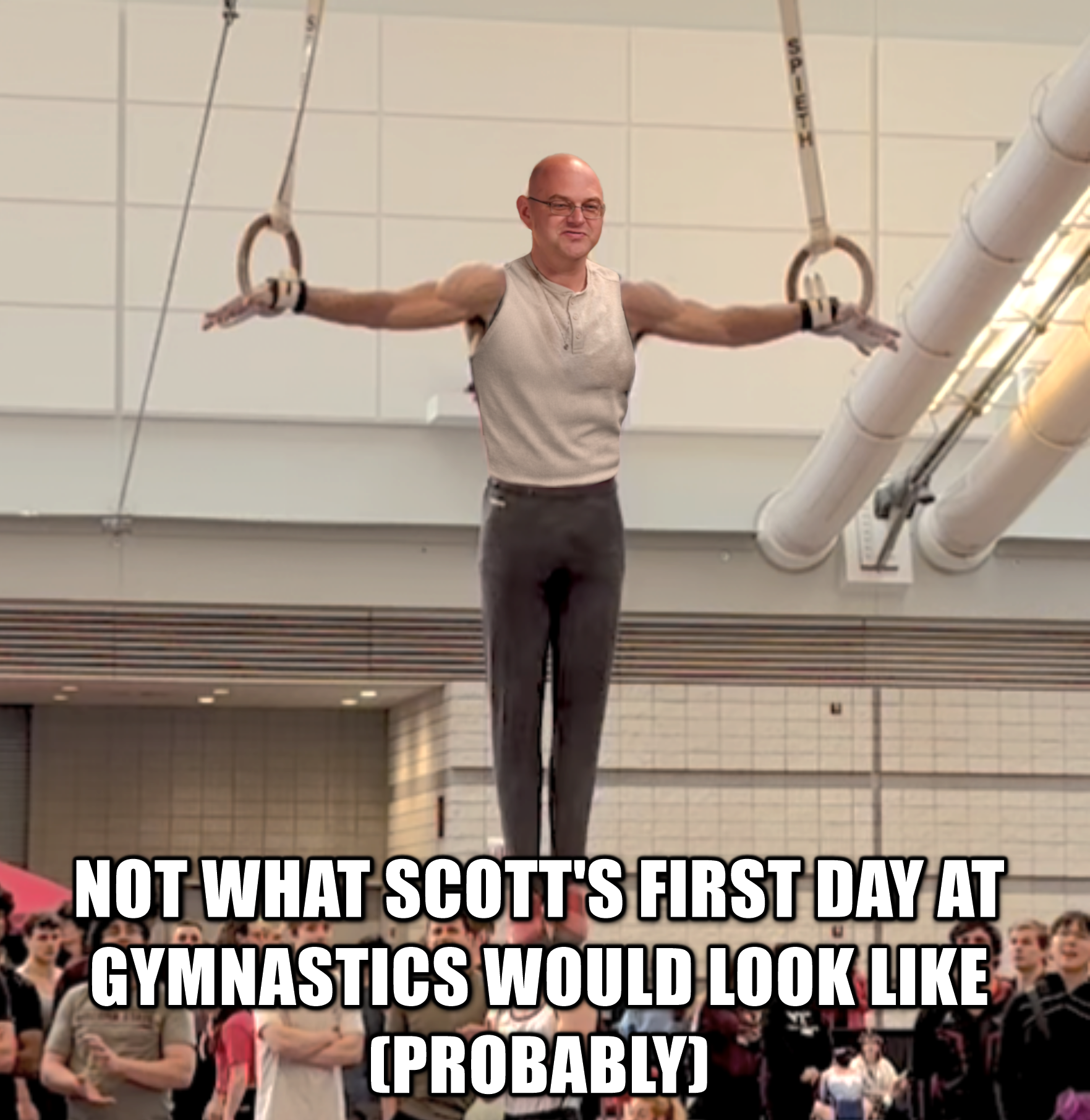
This would be insane, and I agree that you likely aren’t flexible or strong enough to do that. But you also aren’t fast enough to keep up with marathon world-record-holder Kelvin Kiptum in a race or tall enough to shoot hoops with LeBron, but people don’t seem to balk at the idea of going out for a jog or joining a pickup game at the local basketball court. Similar to how you’d start running for the first time, you start gymnastics with skills, drills, and basics that are appropriate to whatever your fitness and capability levels are right now, and those exist even for very very beginner level adults. Good adult coaches can meet you where you’re at, even if where you’re at is face down on the mat. I’ve taught beginner classes to people who have literally never done a sport in their lives, and they left the class in one piece, with a smile on their face, and a desire for more (and to be fair also a fair amount of sweat and soreness).
CrossFit, But With Less Cult and More Flips
The specialized nature of most physical activities creates what you might call "fitness asymmetries." Runners develop impressive cardiovascular capacity but often neglect upper body strength. Weightlifters build impressive force production but may lack mobility. Rock climbers develop grip strength that would make a gorilla jealous but might have comparatively underdeveloped lower bodies. But gymnastics really does use pretty much every muscle in your body. The sheer variety of movements and loads you need to master if you’re training all 8 different apparatus (across all the men’s and women’s events) is pretty unmatched across other physical activities I’m aware of. The phrase “I’m sore in places I didn’t even know I had muscles” is not uncommon in the gymnastics gym! And while gymnastics doesn’t push that far into the endurance realm of things (floor routines generally don’t go longer than 90 seconds), it’s not purely anaerobic and does a good job of working strength, power, and medium length strength-endurance.
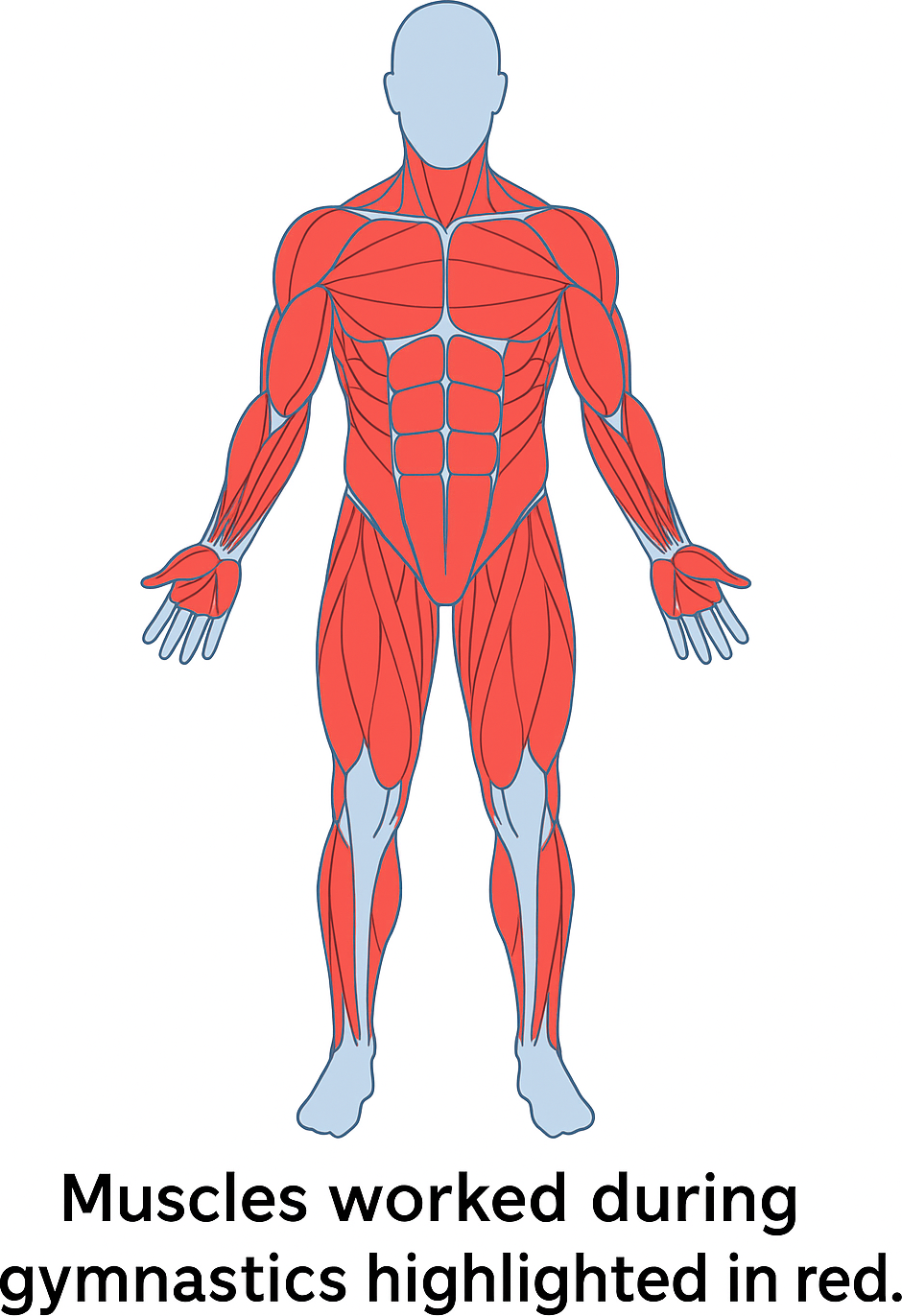
Beyond just being fit for the sake of being fit, one benefit I’ve found is that being fit across many domains (upper and lower body, power/strength/endurance, balance) means that when you want to try a new physical activity, you’re generally well prepared to jump right in. So even if you end up moving to a different activity (or simply supplementing your newfound gymnastics hobby), chances are good that the fitness you’ve gained in the gym will translate well to any new sport or activity. Beyond the realm of other sports, it’s becoming increasingly clear that whole body fitness is important for increasing your “healthspan” (a term coined by Peter Attia in his book “Outlive”) - how many years you have in a body that can do most of what you want it to do. Put differently: gymnastics doesn't just make you good at gymnastics; it makes you better at being a human with a body.
Boredom's Antidote: The Infinite Skill Tree
You could replicate much of gymnastics’ physical benefits by going to the gym and lifting weights, doing plyometrics, and hitting the treadmill. The problem with that is that it’s SUPER BORING. Gymnastics, on the other hand, is like solving a physical puzzle while accidentally getting ripped. Most of the time in gymnastics you’re either trying to figure out how to get your body and brain to do what you know they need to or figuring out what you need to do in the first place. And if you get bored, frustrated, or stuck on a given skill? Lucky for you, there are thousands of other things you can work on! Even better, when you come back to the skill you paused on, the other things you’ve learned and the strength and flexibility you’ve gained in the meantime will likely have increased your chances of progressing on the original skill. I pole vaulted for 6 years before picking up gymnastics, and while the two sports have a lot in common, the lack of variety in pole vaulting meant that mental or physical stumbling blocks were a lot more frustrating and disheartening than they’ve been in gymnastics. Same thing with distance running, soccer, and every other sport I’ve tried. On a similar note, the infinite variety means that if you really don’t like a given apparatus or skill, you can just not do it! There’s plenty of other things to dive (roll) into, and no one is forcing you to do anything!
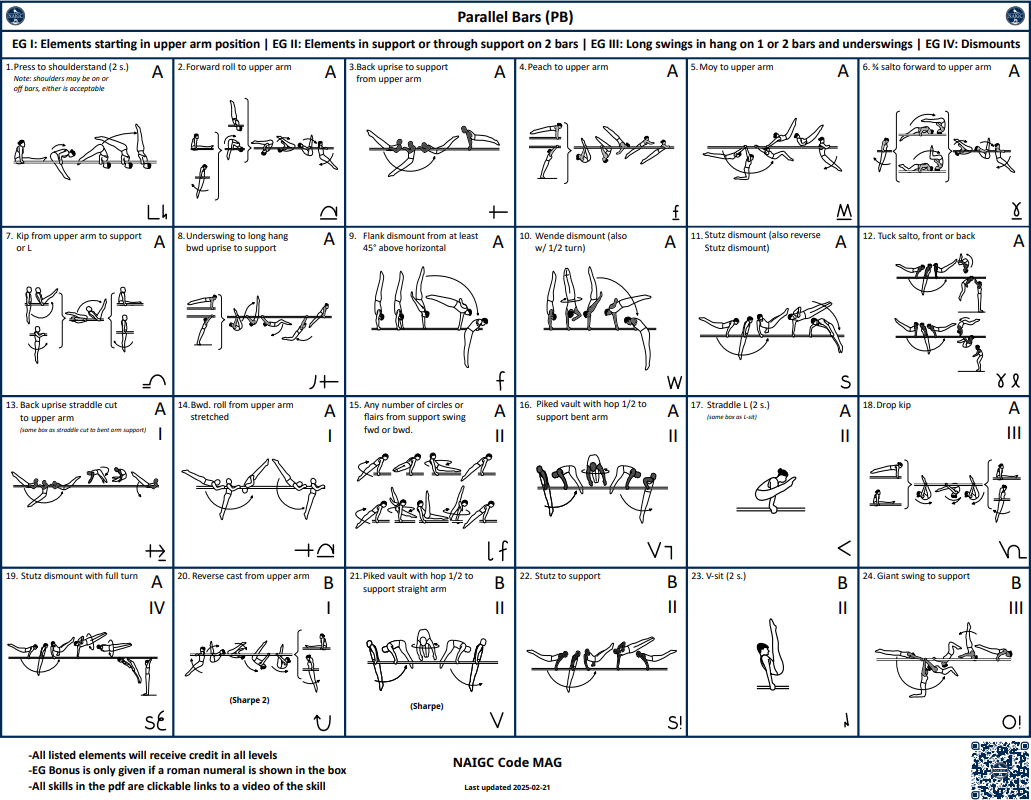
There are hundreds of pages like this, filled with skills to try - and you can always make up your own if something isn’t already in there!
I Think You Should Try Defying Gravity
There’s a reason so many people dream about flying - it’s fucking awesome. Gymnastics is the safest, cheapest way to satisfy this craving without investing in skydiving gear or joining NASA. The psychophysical experience of momentary weightlessness creates a neurological reward that’s difficult to replicate through other means. That split second of flight during a flip activates proprioceptive and vestibular systems in ways our evolutionary history simply didn’t prepare us for. At first, you’ll probably be distracted by the fact that you have no idea what’s going on and your brain is trying to process way too much novel sensory input, but once you start filtering all of that out, all that’s left is the flight. The feeling of flipping through the air or swinging around a steel bar over and over just can’t be beat, and every time I get back in the gym after some time off I’m just so thankful I get to experience such a sublime feeling.
Controlled Terror as Cognitive Medicine

Yes, fear is good, and there are three main reasons:
-
Mandated Mindfulness: When part of your brain (whether rationally or irrationally, you’ll experience both in this sport) is worried you might be about to die, instinct takes over and shoves all other thoughts aside. I guarantee you won’t be ruminating about that project that’s overdue at work, or the fight you got in with your partner last night, or any of the other myriad stresses and worries that plague our everyday lives. So while some people meditate to clear their minds, I recommend something way more fun: controlled and repeated exposure to situations where part of your brain is screaming “AHHHHHHHH!!!”. I have found it to be extremely healthy and “mentally refreshing” to have a dedicated, regular block of time where I won’t (and can’t) think about all the other things going on in my life.
-
Adjusting the Fear Baseline: The principle of hedonic adaptation is that our brains eventually get used to even the most amazing feeling things, causing them to eventually become less enjoyable as your brain recalibrates to fit the new range of experiences into the standard spectrum. This has the downside of making things that used to feel quite good feel less good in comparison as the spectrum of feeling gets compressed and shifted. Down on the negative end of the spectrum, however, this can be a positive outcome! When you flip backwards and risk landing on your head (don’t worry you don’t do this on day one!) regularly, this gets pegged as the new “oh my god I’m so scared” end of the spectrum, and having that stressful talk with your boss to ask for a promotion no longer feels quite so scary. As with everything in this review, your mileage may vary, but at least in my experience this has made mundane “scary” activities much more approachable.
-
Humility and Empathy via Brain Betrayal: In most of our lives, it seems like we’re in full control of our bodies: when you want to pick up your phone, your hand does exactly what you want and reaches out and grasps the phone. But it becomes glaringly obvious that things aren’t quite that simple when you do any fear-adjacent activity like gymnastics. You might be fully physically capable of a skill, have done it multiple times in the past, know that if you do the correct technique it will be safe and easy, and know that if you do the wrong thing it’ll get more dangerous. And yet when you go to do the skill, your brain (or at least my brain) regularly goes “HOLD MY BEER!” and grabs control of your body and does the instinctual “oh my god I’m upside down and falling and twisting” thing, which unfortunately almost always makes things worse.
Imagine if everyday life was like this: you go to take a pot of pasta off the stove, you’ve done it plenty of times, and you know that you just need to grab the handle where it won’t be too hot. Then as you reach out, for some reason instead you just slap your hand against the bottom side of the pot and burn yourself. That’s what happens all the time when you’re learning new skills you’re afraid of. Don’t worry, you set up mats and spotting and harnesses and belts and whatnot to make the consequences non-disastrous. Experiencing things like this regularly makes me more aware and thankful that the rest of my life operates so smoothly!
Another side effect of this awareness (at least for me) is an increased level of empathy for others who are seemingly acting against their own interests. In my everyday life, I’m pretty good at doing things that are good for me, but experiencing first hand obviously self-defeating behavior in the gym gives me a better idea of what it might be like for those who do similar things in more conventional settings.
Accidental Abs: Aesthetic Side Effects May Occur
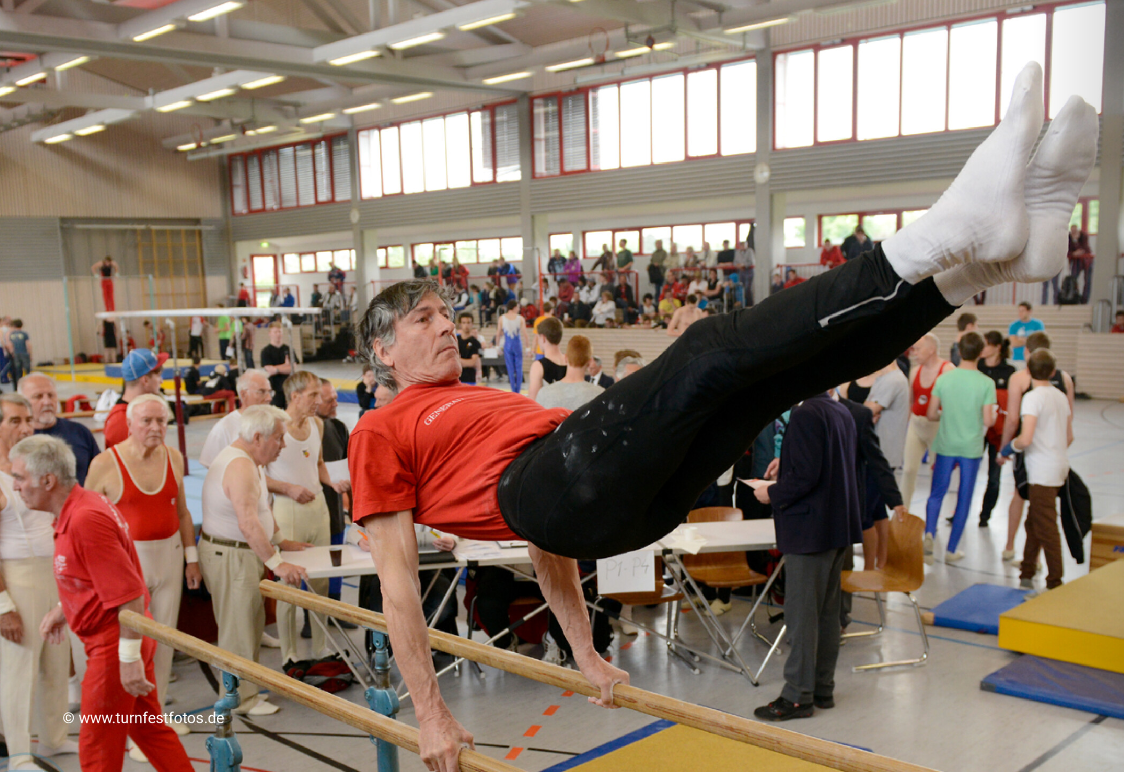
I’d be remiss if I didn’t mention the impact of this very physical activity on what your body looks like. As a consequence of the whole body workout described in the second section above, gymnastics can make you look really fit (as a consequence of being really fit). People frequently ask what kind of weight lifting I do and are surprised to learn that for the most part the only thing I lift is my body, not dumbbells. That being said, I think it’s also important to note that you don’t have to look like this to do gymnastics:
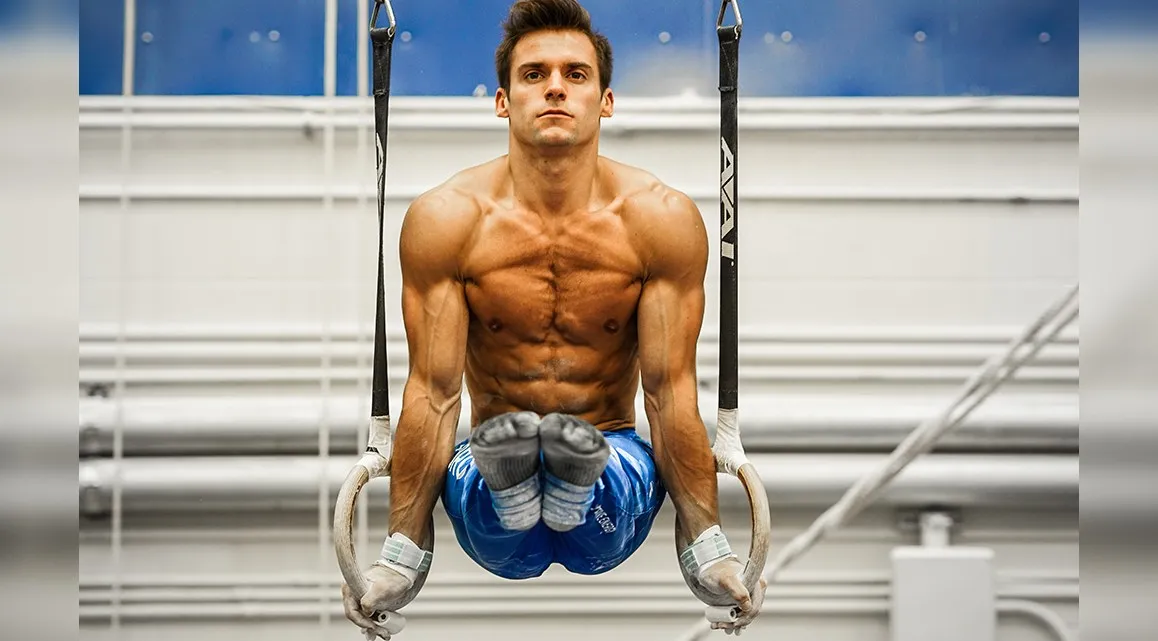
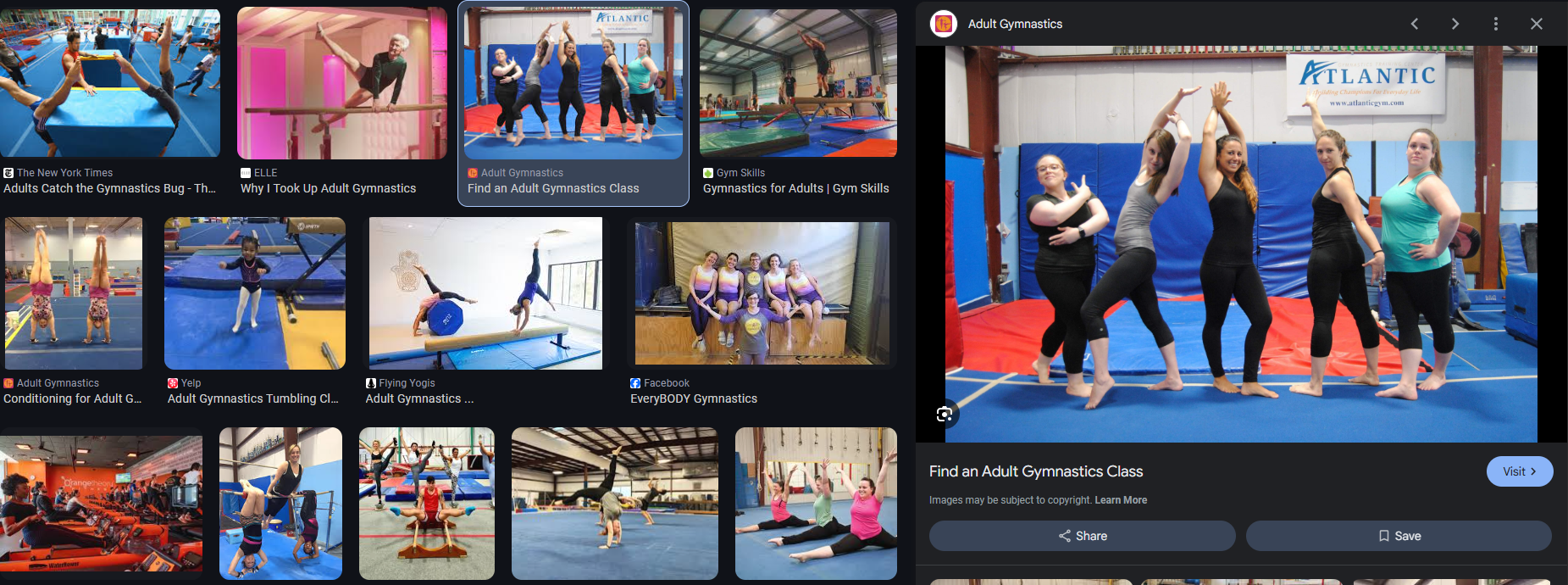
As a counterpoint, all of these people also do gymnastics and obviously have a wide range of body types:
Addressing the Elephant in the Gym: Injury Risk
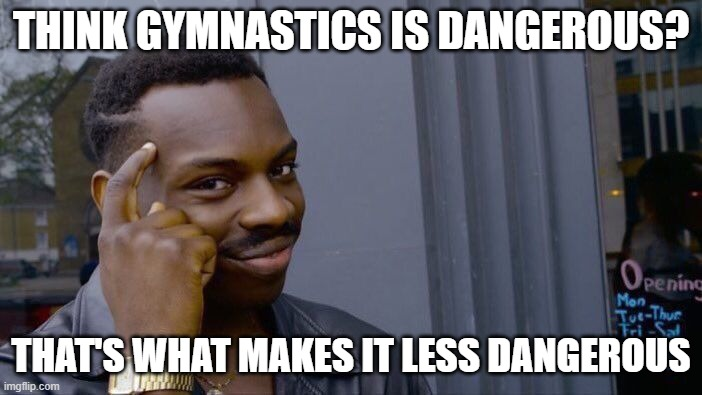
When most people think of gymnastics, they might imagine catastrophic injuries - snapped tendons, broken bones, concussions. This perception isn't entirely unfounded; gymnastics does involve risk. However, to borrow a concept from Patrick McKenzie, the optimal amount of injury risk is non-zero. At one end of the spectrum, if you sit around and never are active, you risk all sorts of health related issues from low physical fitness. At the other end, if you are constantly engaged in high intensity athletic activity then your risk of overuse and acute injuries is going to be rather high. Most people want to be somewhere in the middle, and gymnastics is probably closer to the low impact end of the spectrum than you think - there are lots of soft mats and springs involved in this sport! For way too many examples of me failing but not getting injured, see here.
The perceived risk of gymnastics is high because the movements look dangerous, but proper instruction and progression management can substantially mitigate actual risk. Compare this to running, which has a deceptively high injury rate (up to 79% of runners experience injuries annually according to van Gent et al., 2007) despite appearing low-risk. The principle at work here is that visible risk often leads to better risk management. When an activity looks dangerous, we approach it with appropriate caution. By contrast, activities that appear safe often lull us into overconfidence, leading paradoxically to higher injury rates.
Sticking the Landing
So is gymnastics for everyone? Maybe not, but I think it’s probably a better fit for more people than you might think, and you might just be one of those people. You don’t need to be strong, flexible, or fearless (although those things do increase your rate of progress!), you just need to be willing to try.
Even if you don't enjoy it, the cost is minimal: a few classes and some time spent exploring a new activity, perhaps with a friend. If you do like it, the upside is tremendous: a lifetime of engaging physical challenges, improved body awareness, and a constantly recalibrating fear response. Most people have an adult class in their area, all it takes is a quick web search. I promise the barriers to entry are more likely to be psychological rather than physical. The first few classes will probably be awkward, might be embarrassing, and will definitely be humbling, but basic competence comes more quickly than you’d expect.
What I’ve found particularly valuable about gymnastics, especially for adults, is that it offers a template for approaching other daunting challenges. Learning to manage fear, embrace temporary incompetence on the way to long term goals, and breaking down seemingly intractable problems into more bite-size chunks are capabilities that transfer to countless domains outside of the gym. So while the physical benefits of gymnastics are substantial, the mental impacts are just as transformative. Few activities offer better preparation for the perpetual beginner’s mindset that our increasingly face paced society demands.
So take a leap of faith, check your ego at the gym door, and join the ranks of adults who’ve discovered that while gymnastics might not be the easiest path to fitness, it ultimately teaches you how to better navigate the balance beam of life and stick the landing (eventually).