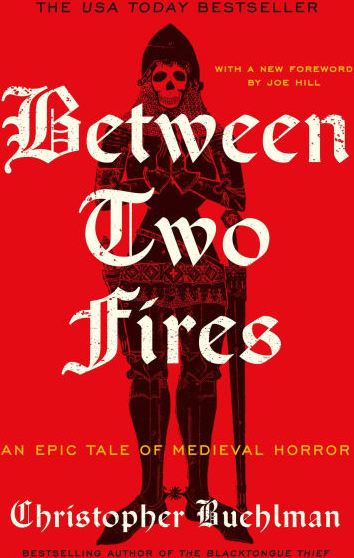
The medieval European peasant lived in an enchanted world. Today, one would classify their belief system as akin to a profound certainty in the existence of the supernatural. Yet that is not precisely correct: using the proper terminology, it would be more correct to say that your average medieval peasant (or nobleman) was in frequent contact with the preternatural.
We derive this term from Thomas Aquinas, who in his Summa contra gentiles outlined what is essentially a threefold classification. There are occurrences which are natural, in that they take place within the ordinary course of things -- a river floods, a person sickens and dies (or recovers). There are occurrences which are supernatural, in that they are so extraordinary that they can only be accomplished via the direct use of divine power -- creation ex nihilo, for example, something which should be impossible by nature’s laws. But in between there is a middle ground: that which is beyond the natural order of things, praeter ordinem naturalibus inditum rebus, certainly not natural but not necessarily divine. A monstrously deformed child is born and dies; vast numbers of unidentified shapes are seen in the vicinity of the sun, engaged in what onlookers describe as an aerial duel. And so on, and so on.[1]
It is the preternatural which would be cause for greatest concern. The natural is straightforward enough; as for the supernatural, Aquinas is clear that it can only proceed from one source. But consider the preternatural: omens and portents may well be a warning from the divine (who is obviously free to act via natural or preternatural means as needs must) but might also be of demonic origin. After all, lesser beings might lack the ability to outright violate the laws of nature, but they might nonetheless be able to cleverly manipulate natural laws in ways unexplainable to mortal minds. Leave it to someone with the learning of Aquinas to distinguish these categories. That’s why Aquinas was declared a Doctor of the Church, and not you or I.[2]
Between Two Fires is a tale of the preternatural.
To be sure, there is plenty of the outright supernatural in the book’s narrative. When demons walk the Earth, angels might do so as well, in secret, doing what they can to alleviate the suffering of mankind, distributing sacred relics and performing miracles. And as for the natural, well, it’s a novel set amidst the ravages of the Black Death. A great many of the people who suffer and die throughout the book do so through entirely natural causes (although the book depicts the plague itself as the creation of the fallen angels, who seek to devastate the Earth as part of their war against Heaven).
But the preternatural occupies the heart of the narrative. Magic is real, but is it good? Who, exactly, is responsible for an apparent miracle? Anything less than the truly divine is suspect; you may trust no one.
The novel didn’t seem to make much of a splash when it was first published in 2012. It was republished, I believe, in 2026; the beneficiary of a surge in popularity from BookTok. The cover art which opens this review was what caught my attention; I bought it from Barnes and Noble, read it that night, and the next day gave it away in a book exchange at a good friend’s birthday party. (Books, after all, are meant to be shared.)
For what it’s worth, I liked it. If you’re interested in medieval horror, supernatural -- excuse me, preternatural -- horror, then you could do far worse. I have read the 2026 edition, and then I perused a PDF copy of the original 2012 edition, and I think I prefer the updated edition more than I do the original. There have been some edits, some tightening of the narrative and general improvements, scenes tweaked or even excised. But the plot remains the same.
The people of the world suffer and die, their lives cut short by a deadly plague.[3] No cure is efficacious. To those left alive, it seems like their God has abandoned them, that demons have been given license to do as they will. And in the seeming, it is so: to the characters of this novel, demons and spirits are as real as the nose upon your face.
Mr. Buehlman, I think, did a fine job with the basic mechanics of his craft. I have no critiques on that score. I would like to address what I see as the two main facets of verisimilitude, which I shall approach using the appropriate entries from TvTropes.
1. The Translation Convention
Obviously it would make no sense to render all of the dialogue in period-accurate French (and specifically of the dialects spoken in the various areas the characters visit -- whether it’s Normandy, Paris, or Avignon), nor would it make sense to translate their speech into period-accurate English (there are a few minor characters who are, in fact, English). This is what some commentators call the Translation Convention, and it is vitally important unless you wish to write the most inaccessible manuscript to ever exist. Tolkien famously made use of the technique with his characteristic thoroughness, hence why “Samwise Gamgee” is (supposedly) the narrator’s reconstruction from first principles of the Westron name “Banazîr Galbasi,” rendered as a name with parallel English etymology.
Honestly, this is a low bar to clear (which Mr. Buehlman successfully accomplishes). As long as the speech of your characters isn’t too colloquial, it’s fine. Avoid obviously anachronistic phrases. I recall once reading a story set during the Renaissance era in which a character mentions “not being in the right headspace.” That was definitely a choice. But then one must consider: how far does one go in purging anachronistic speech?
If characters in a fantasy setting are drinking champagne, does that mean that France exists? If they eat Wensleydale cheese, does that mean that England exists? If they engage in the act of sodomy --
You get the picture.
I did a bit of googling to see what other people thought of Between Two Fires and at least one person took issue with the speech. I don’t see it; in fact, I thought both the dialogue and narration were appropriate to the setting. Of course, I was so excited to see a story deal properly with the preternatural that I mostly didn’t care about the dialogue.
I liked it, anyhow. And at the beginning of each section (not every chapter, the book is also divided into larger parts), the narration zooms out from the storyline to give an update on the war in Heaven. For example:
To engender life had been reserved unto the Lord of Hosts, and the numbers of the alchemy of life had been hidden from the angels.
Yet on the eve of the New War, the fallen under Lucifer had set their hands to the task of creation, and tried to bring forth fresh invention; but so far below the Lord were they that they could not quicken any new thing, but only the dead; and they wedded dead flesh together with the souls of the damned and made both live again; and they took the fishes of the sea and river and the creatures of the mountain and woods and corrupted them, made them monstrous in size and quick to do harm; because none of these could propagate, save by killing, the devils set their hands to each one, working in secret until they made an arsenal of unclean flesh against the day they might release their bestiary into the world of men.
That day had come.
What a passage. Incidentally, it perfectly describes the preternatural, and the limits of that category of power. A far better job than the historical fiction writers who (sigh) depict their medieval European characters eating dishes containing potatoes.[4] Mr. Buehlman did his homework, and I would forgive far greater sins for that. He could have written in leetspeak and I would have said “well, at least he really nailed the conception of the preternatural.”
So the characters talk like medieval characters -- with the translation convention in mind -- they walk about and do the things one would expect within a world system where the preternatural is taken to be factually real.
But how do they think?
2. Values Dissonance
A lot of people don’t like reading stories with notable Values Dissonance. Or, to put it more charitably, they identify with the characters, they want to relate to them. If a character is super into doing bad things, that’s fine -- villain protagonists are common enough. But it can be grating to realize that the characters simply don’t share your values. A lot of this boils down to the skill of the author at creating compelling characters. Sometimes the effect is deliberate. It can be played for dramatic effect.
Not every author has the guts to go for broke. Bad deeds are easy enough in the abstract. You can write that so-and-so killed a hundred men, and that’s fine. Nothing more than numbers. But viewpoint characters who are viscerally bad, who are unpleasant, well, it’s not easy. Authors put a lot of themselves into their characters. Much simpler, in many ways, to have characters who are, underneath it all, decent sorts of people.
The ultimate culmination of the trend is for protagonists to end up annoyingly modern in their outlook. A character makes some period-appropriate remark, only for the hero to nobly declare that hey, Jews are people too. It gets a bit smug, I think you’ll agree. Don’t forget the author is the one creating both the protagonist and the loser that they end up educating; done poorly, it feels like the author is teeing up an easy shot to make the protagonist look good.
I’m not necessarily limiting it to morality, either. Take, for example, the Sherlock Holmes stories. A lot of people writing Sherlock Holmes pastiche today try to make everything 100% factually accurate. They introduce historical characters, who interact with Holmes in various ways, which can be fun but there’s only so many tales you can tell before the act gets stale. Besides, Doyle made stuff up. He had Holmes and Watson meeting the “King of Bohemia,” who is obviously not a historical person.[5] The title, of course, was (from a Watsonian perspective) fictionalized in order to avoid giving offense. Fine. Very well. And, of course, there are stories where it’s heavily implied that Holmes met the real-life Queen Victoria and other members of the British royal family, though it’s not explicitly stated. Important to be discreet and all.
But apart from this business of nailing things down to biographical certainty, we also have latter-day Holmes writers giving him unparalleled scientific acumen. He would never stoop to fields now known to be pseudoscientific; he always needs to be ahead of his time. Authors are reluctant to simply hand-wave things like Doyle shamelessly did (e.g. Holmes’s infallible method for the detection of hemoglobin). Try not to be stupid about it, but also feel free to make things up![6] As another example, I’ve noticed that in a lot of medieval-themed or fantasy fiction, every healer is brewing willow bark tea. C’mon, now. If you’re going to come up with folk remedies, choose something other than the one that was developed into aspirin.[7]
Your protagonist (and other characters) should act like they’re residents of their native setting. They shouldn’t be able to cheat by drawing from knowledge in your mind. Whether it’s a character who is uncharacteristically tolerant of something that was forbidden in the past, or a character who is uncharacteristically intolerant of something that was accepted in the past (but is forbidden now), the result is the same: you end up looking like the D&D player whose characters keep miraculously inventing gunpowder.
Mr. Buehlman has an elegant solution to the problem: the character who is super wise to the point of otherworldliness is a girl who is (apparently) receiving divine inspiration. (To be fair, her inspiration is vague at first and only strengthens as time goes on.) A weakness presents itself? Double down, and ask if anyone has the guts to call. Audacity, more audacity, always audacity.
Wait a minute, a girl who is (apparently) receiving divine inspiration? Is this, like, religiously heterodox or what?
3. This book is actually pretty close to accepted Catholic teaching, actually
Look at me, I’m putting in another heading that is thematically unrelated to the previous two.
Don’t get me wrong, if you’re looking at this book with the intent of nitpicking theology, maybe you should be doing something else with your time. The book doesn’t contradict stuff from mainstream Christian thought; it adds some stuff, belief in which is probably not permitted by the various authorities, but that’s nothing new. I heard this fellow named Dante wrote a self-insert fic where he ended up touring the realms of Hell, Purgatory, and Heaven accompanied by awesome cool OCs and very little of this, astonishingly little, is anywhere close to being supported by...anything. It’s very much Rule of Cool turned up to the max. And yet lots of highly-placed church officials liked the book, and Dante’s conception of the Inferno ended up pretty much saturating the popular consciousness.
As we have already learnt, given the sheer diversity of folk beliefs in rural Europe (and France specifically) during the medieval era made made it very unlikely that people would be able to avoid saying something heretical -- especially if the person in question was an unlettered peasant girl -- and yet, it happened at least once, in real-life history. Of course, as the characters of Between Two Fires quickly realize, just because the girl is (probably) right doesn’t mean she couldn’t still be a witch. Or that other people, desperate or hateful or whatever, wouldn’t assume that she was a witch.
But does she say anything heretical by the standards of her time, or backwards by the standards of ours? I don’t think so. Well, she does imply that a particular individual recognized as a saint by the Catholic Church is a false saint who went to hell. But Dante put various popes in there, too, so it’s not like it’s anything new.
(Incidentally, I also liked the character of the pope.)
The book, I think, has a little something for everyone. If you’re a nerd for medieval religious culture, I think you’ll like this book. If you’re looking for something vaguely in the vein of A Song of Ice and Fire but much more grounded in reality, I think you’ll like this book. If you’re a trad influencer whose profile pic is a marble statue or a religious icon, you’re probably going to hell. I assume actual TradCath types would like this book.
I don’t have a unifying theme to tie this off, and I don’t intend to offer anything of the sort. This is a book review, after all. About the only negative thing I can say about the book is that it seems to have risen through the ranks of BookTok, and I am not much a fan of the BookTok crowd. I hate TikTok. But this novel kicked ass, and if I were any less stubborn then perhaps I’d have been persuaded to create a TikTok account and join them.
I won’t, of course. Maybe in an alternate timeline, where angels are real and the Black Death was caused by the machinations of Lucifer. But probably not even then.
Your message is stored now and emailed to the author after the contest ends. The author can reply to you, but their identity stays hidden unless they choose to respond.
Footnotes
- ↩
For a more in-depth analysis, I recommend the highly readable monograph Wonders and the Order of Nature, 1150–1750 by Lorraine Daston and Katharine Park.
- ↩
Specifically, most of Eurasia and the like. The book’s narrative specifically focuses on the plague’s ravages across medieval France.
- ↩
You might be aware that potatoes were originally cultivated in the Andes Mountains. They would not reach Europe until after sustained transatlantic contact; thus, a medieval European eating potatoes would be anachronistic.
- ↩
The monarch bearing the Bohemian crown during this time was, of course, Franz Joseph I, to whom this was only one of many subsidiary titles accumulated by the Hapsburg dynasty. However, the plot of “A Scandal in Bohemia” likely drew upon the Mayerling incident, a real-life scandal involving members of Franz Joseph’s immediate family.
- ↩
If you want a modern writer of Sherlock Holmes fiction who does things correctly and has produced excellent narratives, I recommend Lyndsay Faye. Her novel Dust and Shadow presents a very well-done “Holmes vs. Jack the Ripper” story which I quite enjoyed; her short story collection The Whole Art of Detection contains many tales told by Watson (and a few by Holmes, as was occasionally done in the original Doyle stories); and her short story collection Observations by Gaslight does the same but from the perspective of other Holmes-universe characters. Quite nice. And while we’re on the subject, check out her novel Jane Steele if you can. I enjoyed that one very much as well.
- ↩
Mr. Buehlman does accomplish this in Between Two Fires.