Bishop’s Castle, a Roadside Attraction
Introduction
The Statue of Liberty is thought to be America’s greatest monument to freedom. But there’s more than a shred of irony in having a monument to liberty in the middle of a rocky island, accessible only by one state-sanctioned ferry, only to those with advance reservations. It’s as if liberty herself is bound to a sort of Alcatraz. This monument is a gift from the elites of one nation to the elites of another. This statue of freedom isn’t free in any sense.
It’s a good thing, then, that America has hundreds of true monuments to liberty. They are scattered all across its breadth. They exist in every state, in cities and in unknown expanses, in rich areas and poor areas alike. These are the roadside attractions that fill up empty bands of highway everywhere in the country. There is hardly anything more American than the roadside attraction: hardly any other country has a population affluent enough, territory vast enough, and highway infrastructure robust enough, to sustain a road trip industry. Most importantly, no other country has enough crazies to fill the fields with weird junk.
For the uninitiated, roadside attractions are odd little diversions private citizens set up on their land, usually in the middle of nowhere, to give travelers something to do amid the monotony of driving through America’s interstates. Among these are such venerable icons as the world’s largest ball of twine (Cawker City, Kansas), the world’s largest bobblehead (Belville, Ohio), the world’s largest ball of paint (Alexandra, Indiana), and even wonders that are wonderful for reasons other than their largeness, like the May Natural History Museum (Rock Creek Park, Colorado)
In my home state of Colorado, there’s one roadside attraction that stands above the rest in fame. It’s a place of pilgrimage for many residents; an important gem in Colorado’s snow-capped crown of mountain diversions. The creator just passed away last year. Throughout his life, from youth to death, he built the largest one-man castle in the world. This is Bishop’s Castle.
I: The Highest Point in Custer County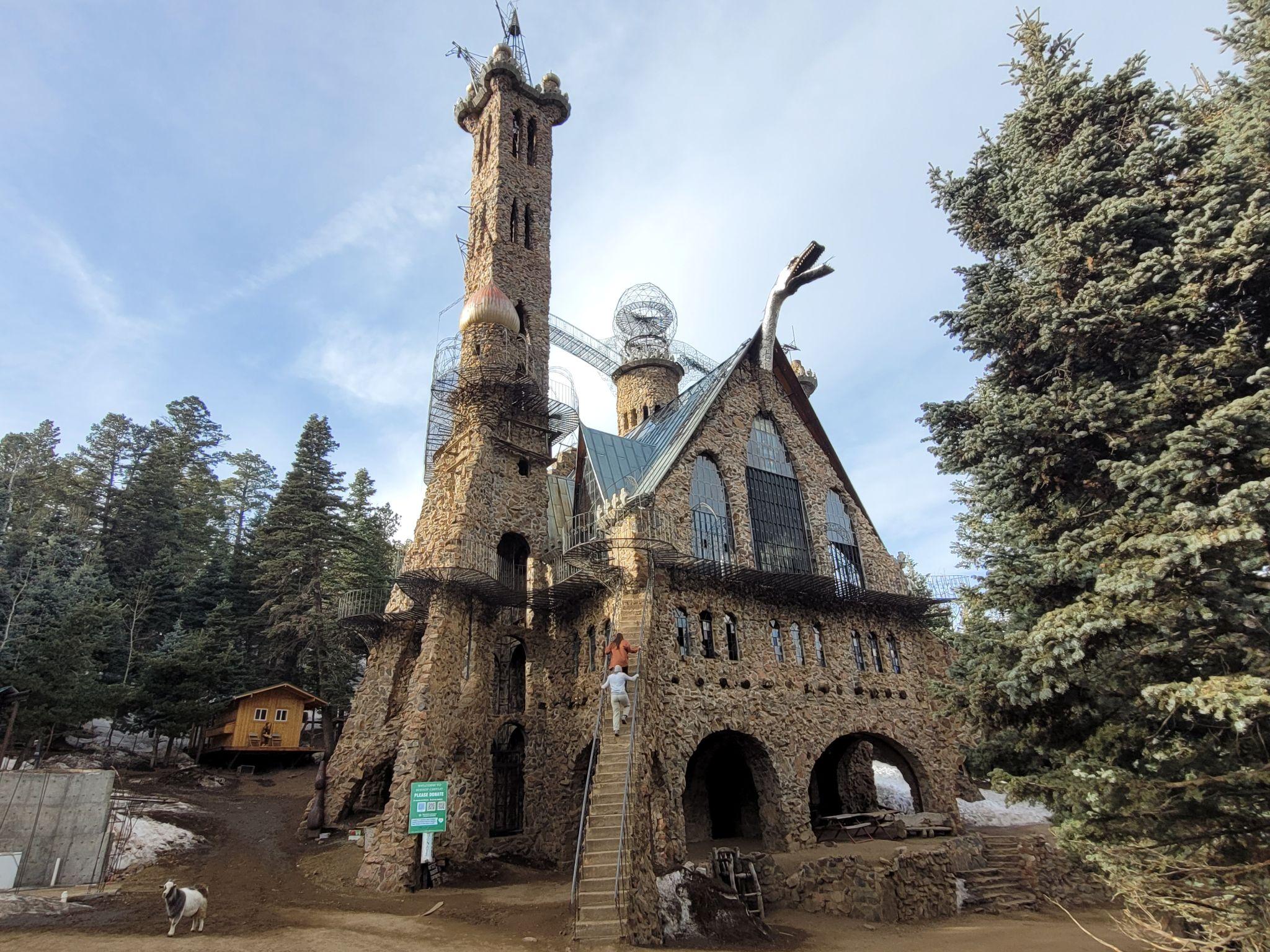
“Freedom. It's a word that gets mentioned a lot when talking about Bishop Castle, an attraction that has already outlasted several previous attempts to explain it.”
-- Roadside America
While many roadside attractions are strategically placed between towns, Bishop’s Castle is out of the way. Thirty miles and over a strip of mountains from Pueblo, it lays along a road of no importance between nowhere and nothing in particular. The castle isn’t a brief distraction on your way to something else. It is a deliberate choice.
As your car climbs the Wet Mountains, surrounded by dense forest on both sides, the temptation to turn around and seek the castle in one of the many side roads pulls at you. Despite the fort’s great height, the trees hide it until you’re only a few feet away. For this reason, the castle doesn’t loom in the distance and steadily crawl closer. It leaps out of the trees like a pouncing bobcat.
The first impression of the castle reveals its lack of military value. This is an architectural fancy-- its primary purpose is to exist. This is a Neuchwenstein, not a Krak des Chevaliers. The castle’s design looks like something out of a Roald Dahl novel-- twisty metal paths swing around the exterior. A long stone staircase reaches out like a spider’s leg to move visitors to the great hall. Meanwhile, the castle itself seems to peer out at visitors through a shining dragon’s head. In the back, the second-largest tower tops out with an incomplete geodesic dome and a staircase to nowhere.
The second thing you’ll notice when you look at the castle is its material. There are no gray cut stones to be found here. Every wall is made of irregular orange cobbles from the mountains stuck together. The castle blends into its surroundings because it’s made of them-- its orange hue matches that of the mountains that shelter it.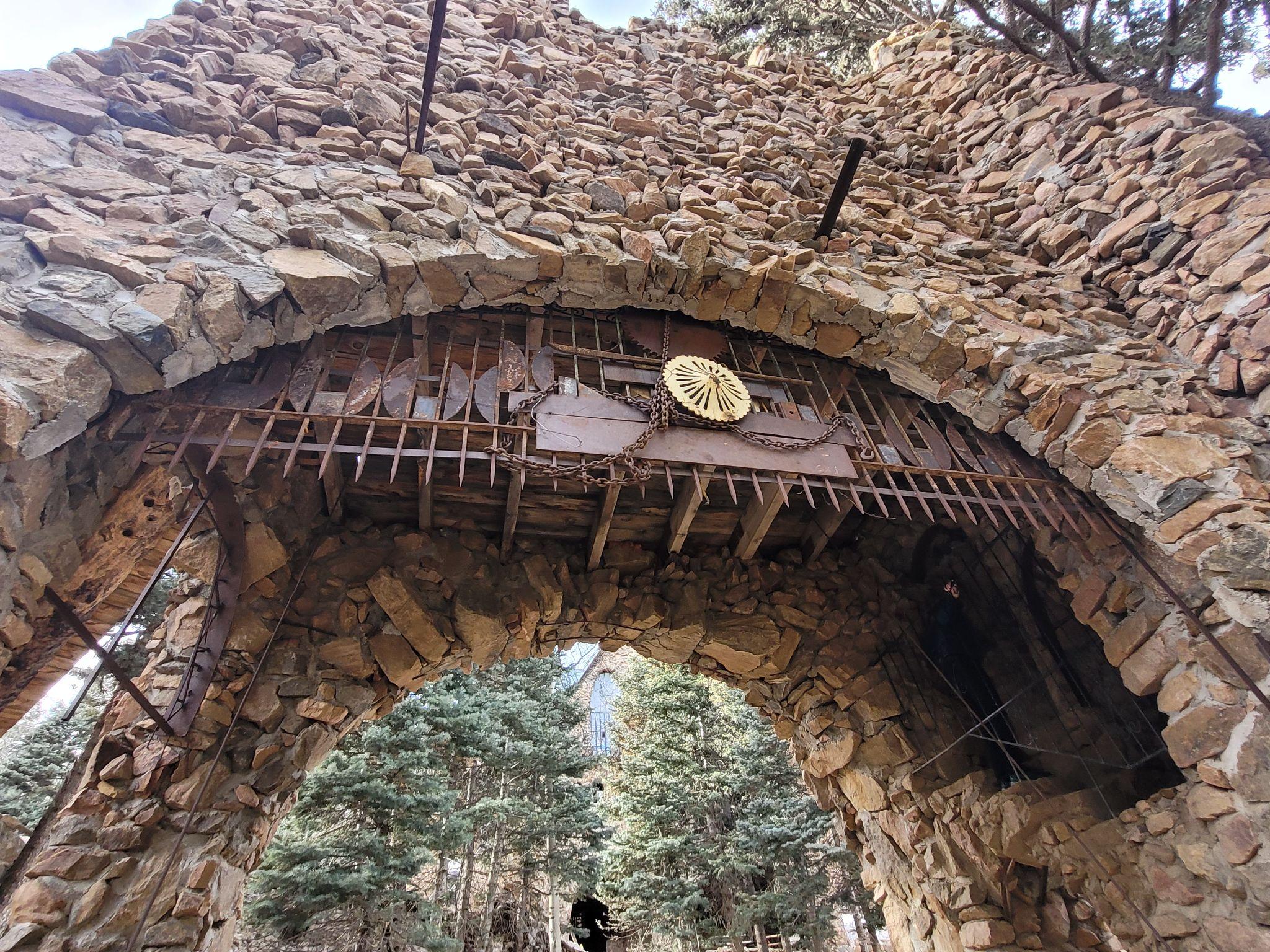
Aside from its remoteness, Bishop’s Castle is set apart from other local attractions by its lack of an entry fee. There isn’t even a fence surrounding the structure. The visitor gets the impression that the castle isn’t a commercial enterprise, but rather a part of the landscape, like just another rocky crag. However, a closer approach bursts that fantasy and reveals a few signs of human occupation. The entry gate is flanked by signs:
“ENTER AT YOUR OWN RISK,” one sign reads, “WE ARE NOT RESPONSIBLE FOR YOUR SAFETY! BISHOP CASTLE IS UNDER CONSTRUCTION! WE RESERVE OUR RIGHT TO FREEDOM OF SPEECH AND EXPRESSION! YOU MIGHT EXPERIENCE STRONGLY EXPRESSIVE BEHAVIOR!”
This is how most people first learn about the forceful personality of the castle builder. More on him later.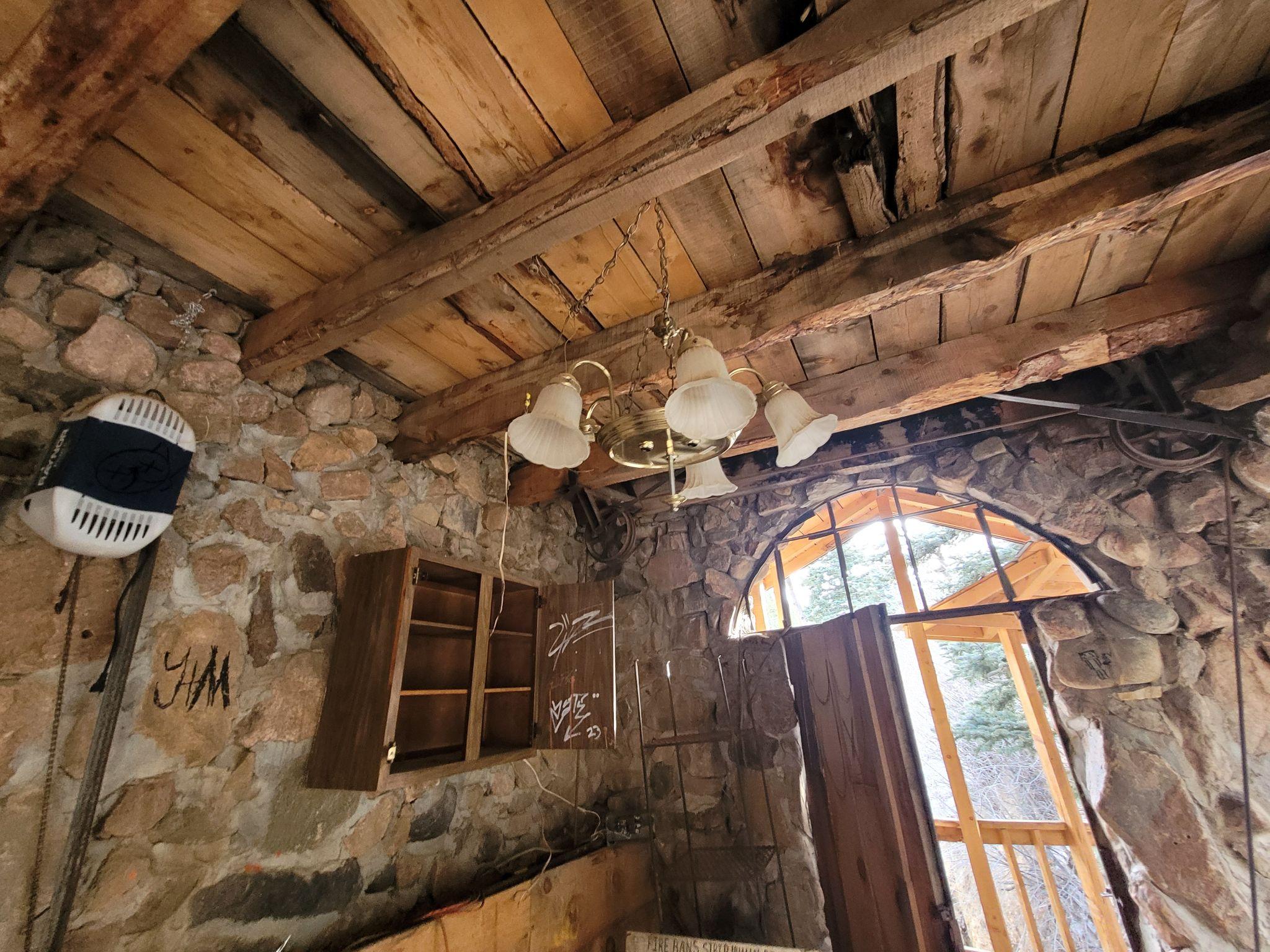
Other than the signs, there are very few symbols of regulation in the place. You don’t see the owners. There are no waivers to sign, no liabilities, no handrails, and no guides. You are left alone with the castle and your wits. This is what gives the castle such excitement.
Another big mark of the castle is impressive metalworking, and visitors first see this at the gatehouse. There’s a beautiful (if probably immobile) portcullis with gears, chains, and wheels. The gatehouse itself has a room inside it, accessible via a tiny stone staircase. It looks like a quarter-finished foyer.
Once you go into the castle itself you can first explore the bottom floor, which is a dungeon-like series of caverns divided by rocky posts that hold up the entire castle. Climbing up one of the spiral staircases will bring you to the great hall, which is the largest room of the castle and its body. This is also well decorated. The floor is surprisingly clean and bright, and the iron works with the rock even better here to deliver a beautiful effect. Everything is bathed in multicolor light from the stained glass that forms the siding of one of the walls of the great hall.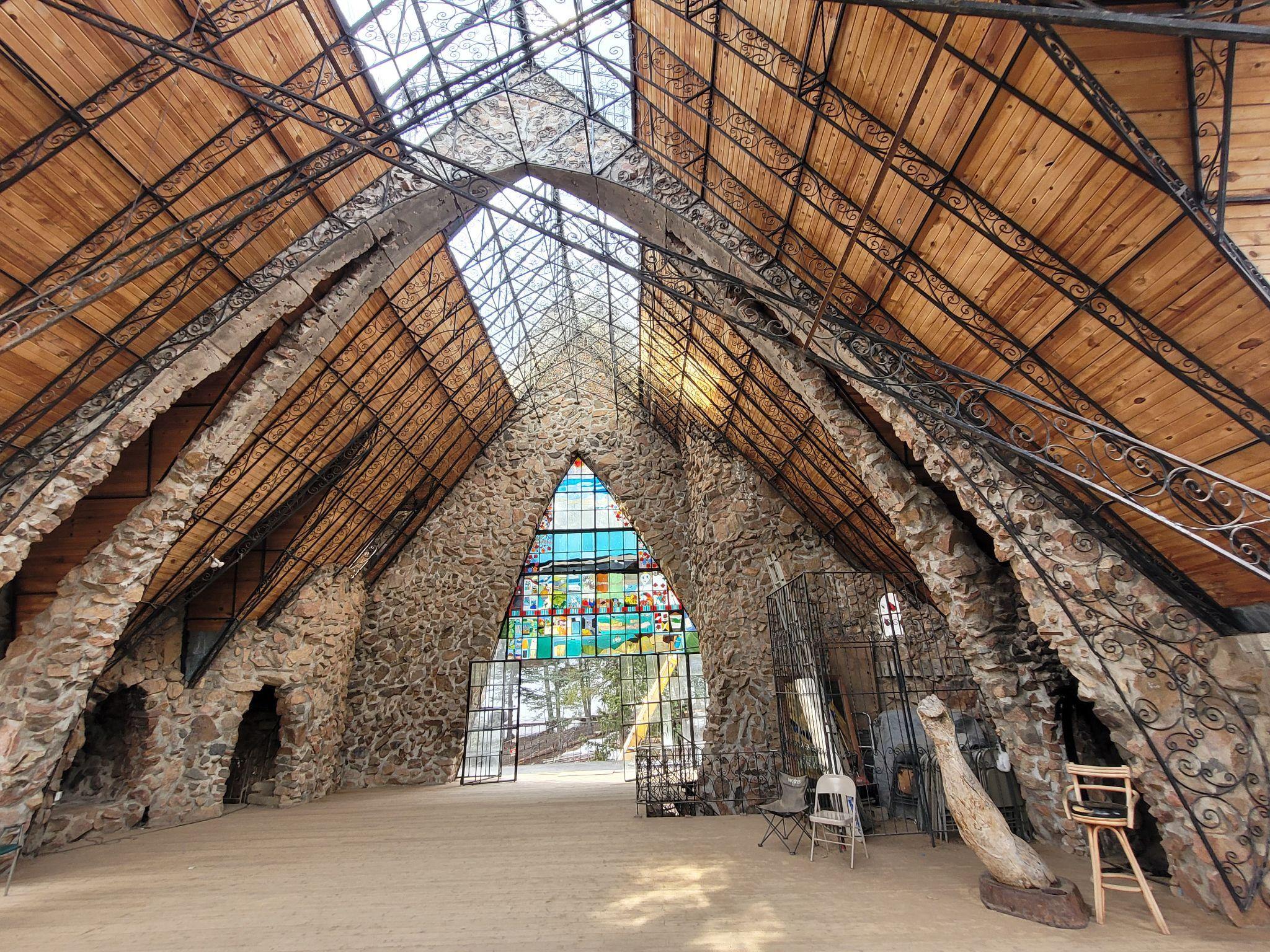
You might also see in the great hall other visitors peeking at you from atop ledges on either side. These are accessible from stairs. The lack of rails on these ledges once again reveals part of the philosophy of the builder, which is heavy on pomp and light on safety.
How did all this come to be? It wouldn’t be easy to tell if you only visited the castle itself, since they don’t make you watch a thirty-minute history video or anything. The seeker of the castle’s history must do a little bit of investigation. They will find a fascinating tale, a tale well representative of midcentury America, a tale of genius and madness. It is impossible to understand the castle without understanding the story of the castle builder.
II: The Castle Builder
“This will be a free Disneyland. This will be a Disneyland without the money. The wire services could pick up on that.”
--- Jim Bishop, 1989, Denver Post
In 1959, Jim Bishop, a 15-year-old Colorado nobody and high school dropout, paid $450 for a two-and-a-half acre plot of land adjacent to the Greenhorn Highway and surrounded by San Isabel National Park. This became an annual camping spot for the Bishop family. As he grew up, Bishop began to earn a living by working in the ironworking trade with his father and installing patios. By 1969, he had started using the money he earned to build a cabin, then a water cistern that he surrounded with rocks from the nearby area. These rocks would come to haunt him later.
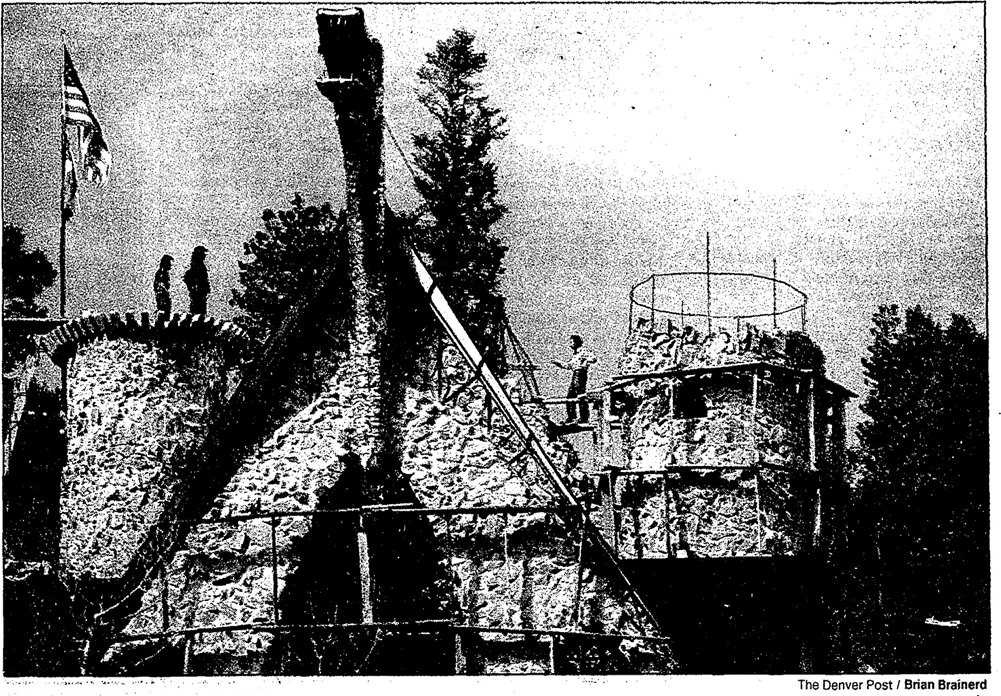
As the story goes, the cobblestone cottage and the rocky turret surrounding the cistern resembled a castle, family members, friends, and local ranchers kept asking Bishop if he was building one. He denied it at first, but apparently this question came with such frequency that it planted an idea in his brain. One day, his answer switched to “yes.” He would give the public their castle. He chose not to stop when he finished the cabin. He kept building… and building… and building.
As the rocky roadside edifice grew, it became a local attraction. For eight years, people offered to help with the castle. Bishop got frustrated when no one made good on their offers, though, and this led him to declare his castle a one-man project.
Bishop had been frustrated as a kid when he wasn’t able to go to attractions and amusement parks because his family couldn’t afford the ticket. To keep the castle accessible, he charged no entrance fee and financed the project on a shoestring budget. He stacked rock over rock, hoisting them each up one after the other with a pully system powered by his truck’s engine. His forging skills helped him decorate and support every stone with wrought iron.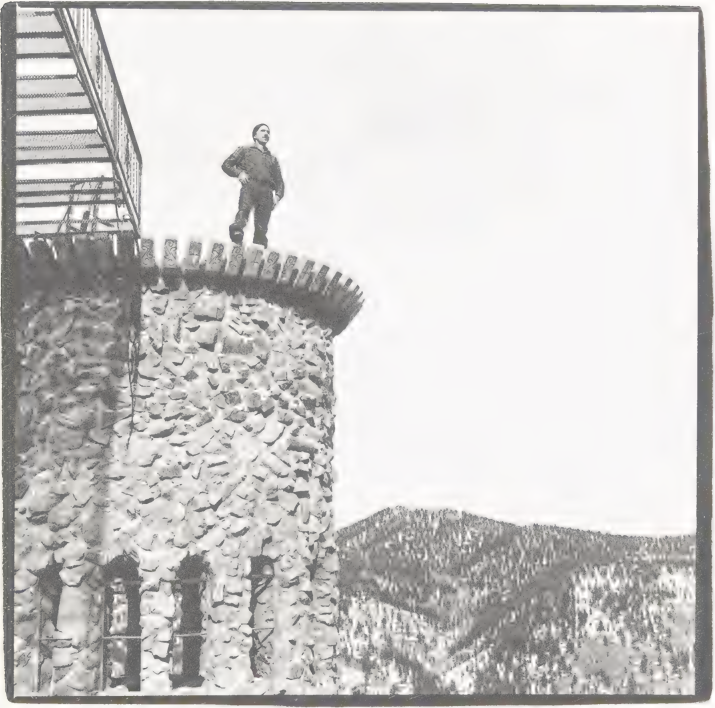
Despite no architectural experience or plans, Bishop’s sheer industry kept the castle growing and stable. When he built a wall that needed to be eight feet thick, Jim made it 16. He hauled every rock, fell every log and milled it into lumber, built scaffolding for every tower, built every arch out of railroad ties. He designed complex pulley systems to hoist lumber for use as floorboards. He burrowed holes dozens of feet into the ground, then filled these with mortar he mixed and carried to the site himself. The castle is anchored deep in mountain bedrock, better rooted than the trees. Stone by stone, he built his dreams.
To Jim’s industriousness was added a flair for publicity. For decades, he fought to keep the castle in the public eye. Among the best victories in this campaign was the construction of the dragon figurehead. To build this. Bishop riveted thousands of steel warming plates around a steel frame to make the dragon’s scales. The figurehead is rigged to belch fire from a recycled hot-air balloon burner. Today, the beast hovers eighty feet high, perched on the front of the grand ballroom, looking over the courtyard like a loyal sentinel.
The castle’s construction was not without problems however, and one tragedy left a deep mark on Jim. In 1988, his son Roy was playing in the forest near the castle. After running around in the woods, Roy tired himself out and took a nap in a tree trunk. Bishop was cutting down a nearby tree, and only realized where his son was when he heard a horrible sound as the log fell. The boy was crushed to death at the age of 4.
After that tragedy, Jim’s wife, Phoebe, distanced herself from the castle. But for Jim, the tragedy made his desire to finish it burn ever-brighter. “He loved the place,” he would say. “What am I gonna do, give up?”
The only tower completed at the time was rechristened “Roy’s Tower.” The castle became a memorial. Many speculate that this incident, and the shame that it came with, fed Bishop’s monomania to complete the castle. Jim worked even harder, the seeds of his later madness planted in his mind.
This castle grew without any plans more substantial than back-of-the-napkin drawings. The architecture therefore gives an impression of six styles glued together. Flying buttresses reinforce a nordic great hall that itself lays on crude stone shafts that look pre-medieval. Inside the great hall, stained glass appears alongside cheap lawn chairs. As a visitor, you need to allow yourself to be impressed not by the coherence of the place but by the fact that it exists at all.
If you live nowhere near Colorado and want to experience going inside the castle, this video is a good digital tour.
The castle’s existence doesn’t seem at all guaranteed. It was a strange combination of events that led to the castle’s existence: in a slightly different timeline it would never be. The castle has faced fierce, structural opposition throughout its history. At the same time Bishop was building the castle, he was waging a legal war for its existence.
III: The Forty-Year Siege
“In the early times the castles gave in to gunpowder and battering rams and siege equipment. They were slighted by rulers and also lost to modern means of warfare. In more recent times, castles lost their battles to laws, rules, regulations, zoning codes, building permits, and control by diabolical and insidious politicians, lawyers, and bureaucrats.”
-- Jim Bishop, Castle Building as I See It
The lofty ambition of the castle builder, like the pride of Daedalus, led to disasters. Unlike that doomed inventor, however, Jim Bishop was always able to reforge his wings.
Poverty forced him to think outside the box. He built the walls out of granite rocks gathered from ditches in and around San Isabel National Forest. He considered clearing the ditches a public service. The Bureau of Land Management thought differently and interrupted him during a collection to ask for a commercial rock permit. Bishop’s insistence that his was a tax-exempt nonprofit held no water. He couldn’t afford the prices the BLM demanded.
How to overcome this? It is in this experience that Bishop originated the philosophy that animated the rest of his life – the “the power of the public.” Bishop came to believe that the “real” government was the people, not bureaucrats. As long as the people supported his work, bureaucrats had no right to stop it, and Bishop had every right to fight dirty. In his book,Castle Building as I See It, Bishop says he found the BLM “doing something unethical” and blackmailed them as leverage during negotiations. A settlement was made in which the BLM agreed to sell the rock for only 10 cents a ton.
Years of bureaucratic churn later, in the late 70s, the BLM raised the price to 50 cents a ton. Bishop was enraged but charitable. He agreed to the new price, but swore that if it went up one penny more, he’d go back to taking the rock for free.
Guess what the BLM did next.
Bishop resorted once again to the power of the public. By this point in history the castle was a minor tourist attraction. He planted a sign on the castle grounds asking visitors to call the BLM and tell them exactly what they thought about price gouging. The BLM office was effectively shut down by phone calls. They crawled back to the negotiating table, and the rocks were never a problem after. .
Did taking the rocks hurt the environment? Some people worry about this when they hear the castle’s story. I asked an environmental engineer friend of mine, and here’s basically what she had to say:
If the forest service thought it was okay, it’s probably justified. Removing rocks from roadside ditches has a bundle of benefits because it improves the channeling of excess water through the ditches. Furthermore, fewer rocks means more room for plants to grow that slow the water’s flow, preventing rapid streams that erode the ditches and make them more shallow. One downside may be removing shelter for certain animals.
In summary: it’s complicated, but using local rocks was probably okay.
Other materials for the castle included cement hauled up from Pueblo or occasionally Cañon City. Over time, the materials used grew more complex and an ever-greater proportion of them came from sympathetic donors.
In 1974, as tourism grew, so did Bishop’s marketing efforts, leading to a parallel battle with the government. One day the government told Bishop he needed to take his homemade sign down and apply for one in accordance with Ladybird Johnson Highway Beautification Act of 1965. The fact that this rule did not apply_de facto_ to certain wealthy ski resorts irritated Bishop. He had a big ego and was always irritated by unequal rules.
Subversion was his answer. Bishop rebuilt his mailbox into the shape of a castle and painted on it an arrow leading to the property. Since the act technically only applied to signs, the government couldn’t use it to remove the mailbox. They tried anyway: after a month they demanded the mailbox be gone, forcing Bishop to draw once again his most fatal weapon. He set up another grievance sign for the public. The highway patrol was inundated with phone calls and relented days later.
It would be wrong to assume that the government was uniformly hostile to Bishop’s ambitions. Government in America is no monolith, but a series of interlocking layers like gears on a bicycle, each driving its own chain at its own proper rate. Some layers took a liking to Bishop. The Greenhorn Valley Chamber of Commerce, the economic leaders of the nearby hamlet of Colorado City, encouraged Jim to parade his 1/16th scale model of the castle (which of course built himself), through the town. This brought some extra publicity to the castle but didn’t last long. Jim never stuck with any activity he saw as distracting him from his castle-building. He kept poking, though, and persistence paid off. The government did finally install a sign in 1995. That little metal band is a powerful symbol of official recognition. As you drive by, take a moment to its honor. It is the product of immense struggle.
After the great hall was completed in the late 90s, Bishop held events there. These ranged from baptisms, weddings, and charitable society meetings to concerts. The latter proved especially difficult. After their first heavy metal concert they swore “never again.” They swapped the concerts out with now-legendary all-night raves. These were orderly affairs compared to the metal concerts, but they were still drug-filled and got pretty wild, especially with hundreds of people attending. These parties helped Bishop raise enough money to refloor the great hall.
It wasn’t to last. Neighbors complained about noise, trash, and the destruction of the forest. They eventually succeeded in asking a county judge to forbid any more parties. It was these same neighbors who later started the most perilous assault on the castle. After years of parties, they spurred Custer County to issue a legal injunction against the castle for violating building codes and permit laws. This seems honestly reasonable to me, since every brick screams “safety code violation!” However, for years Bishop got away with it for a couple of reasons. First: he never charged for entry to the castle, and so it isn’t a business and therefore isn’t subject to consumer safety laws. Second: when Bishop started building in 1969, Custer County was little more than half-dozen farms and didn’t yet have zoning rules.
However, the Custer County of the 1990s thought differently than the Custer county of the 60s. Officials told Bishop he couldn’t build anything over 25 feet high, 135 feet less than the square tower at the time. Bishop invoked laches doctrine, stating that if the county does not assert their rights to enforce zoning laws within seven years, they’ve given up those rights. For 39 years, the county had allowed Bishop’s castle to exist. Exist it would in perpetuum.
It was this long series of government battles that made Bishop a libertarian. He hated the government for trying to stop his life’s work. A soul marked by strong creativity and cantankerousness rarely plays well with bureaucracy.
IV: The Merrill Affair
“"Jesus Christ of Nazareth paid the ransom in blood for me on the cross and my motorcycle is part of the eternal inheritance in general”
- David Merrill
Like any good castle, Bishop’s Castle had an attempted cult siege.
David Merrill came into the lives of the Bishop family after a fire ban ticket. Bishop was ticketed for having a fire on his own property near national forest, and David Merrill stepped in to help him successfully dispute it.
He seemed valuable at first, not just as a friend but as an ally. He had a knack for navigating and subverting the court system and used this to help the Bishops with their perennial government fights. This was made possible in part by his unusual sovereign citizen beliefs. To those blissfully unaware, a sovereign citizen believes that most of what the government does is unconstitutional and that, by refusing “consent” to government rules, they can make those rules not apply to them. While most sovereign citizen tactics have no legal standing, Merrill’s belief in them may have given him confidence useful in stare-downs with county officials.
Unfortunately, Bishop’s relationship with Merrill soured over time as Merrill’s beliefs spiraled further away from sanity. Merrill started to mumble about dark spirits, UFOs, and conspiracies. After a run-in with the law made him lose his motorbike, Merrill sued the Sanhedrin and Jesus Christ himself [link] to get it back.
Merrill’s delusions led him to manipulate others. Jim had a bout with cancer in 2014, and this further hurt his mental health that was already battered by dementia, stress, and nonstop work. As his monomaniacal devotion to the castle thrust him into a brief madness, he was diagnosed with various mental disorders. In 2018, Merrill convinced the weakened Bishop to sign over the trusteeship in the hopes that Merrill could help maintain the castle.
Bishop got way more than he bargained for. Merrill barred the Bishops from entering, redecorated, and renamed it to the “Castle Church for the Redemption of the Office Bishop.” He intended to make it the headquarters for his pseudochristian cult. The Bishop family incited a movement to retake the castle. Every major Colorado news outlet reported on the battle, and the internet burst aflame with support. Merrill responded to media criticism with this strange rant, which I have reproduced here in very abbreviated form:
“There are several key reasons for an irrevocable trust in this case. One is the longevity of the castle itself. Jim built it of granite, not concrete. The concrete holds the granite in place but it is the granite that denies the ravages of gravity. Jim left no bubbles in the mortar too, so moisture and frostwedging may take centuries to take their toll…. That castle was never owned by Him and Phoebe. … Think forgive instead of redemption – CASTLE CHURCH – For the Forgiving of the Office BISHOP. The Bishop of Rome is the Pope. The true message of Jesus CHRIST was of unity, peace, joy, and love. The popes monetizing of guilt prevents one from stimulating the Kingdom of Heaven from within. Fear and seperation are illusions causing judgement, anxiety, and fear.” [sic]
This is from a YouTube comment to one of Merrill’s old videos, all of which have unfortunately since been taken down, so they’re now lost media. He also apparently had a manifesto which I also have not been able to find. Dear reader, if you have any information about David Merrill’s philosophy or writings, let me know. I still don’t fully understand what drove the man to do all this.
This story has a happy ending. After much hullabaloo, a judge ruled that Merrill’s actions were not done in trust and everything he tried to do was simply undone.
During my interview with Jim’s son, Dan Bishop, I asked him where Merrill is now. He told me not to contact him-- it would just rile him up. Merrill has since been charged with assaulting his mother and may be in a mental institution now. The castle is safe from him and back in friendly hands.
V: A Challenge to its Visitors
“Do you know right now there’s traffic on that interstate, and they're going to Buffallo Bill’s Lookout Mountain Grave, they're going to see things in Denver and Colorado Springs. How many people are here? The three of us! It ain’t any good unless somebody’s here to see it! If somebody ain't gettin’ any enjoyment out of it, then it’s just a pile of rocks!”
Now that we understand castle history, I’d like to speak a bit more on what the castle is like to visit. I am always dazzled by the bent metal that spikes through nearly every stone. Jim being a metalworker by trade, he excelled in welding and scroll bending. The castle is full of spirals, wheels, twists, and stairs of cold steel. As the visitor climbs upward, they see parts of the castle that were built later when the architect was more skilled, and these decorative metal elements become increasingly structural. The square tower was the first to use steel reinforcements as far down as the foundation.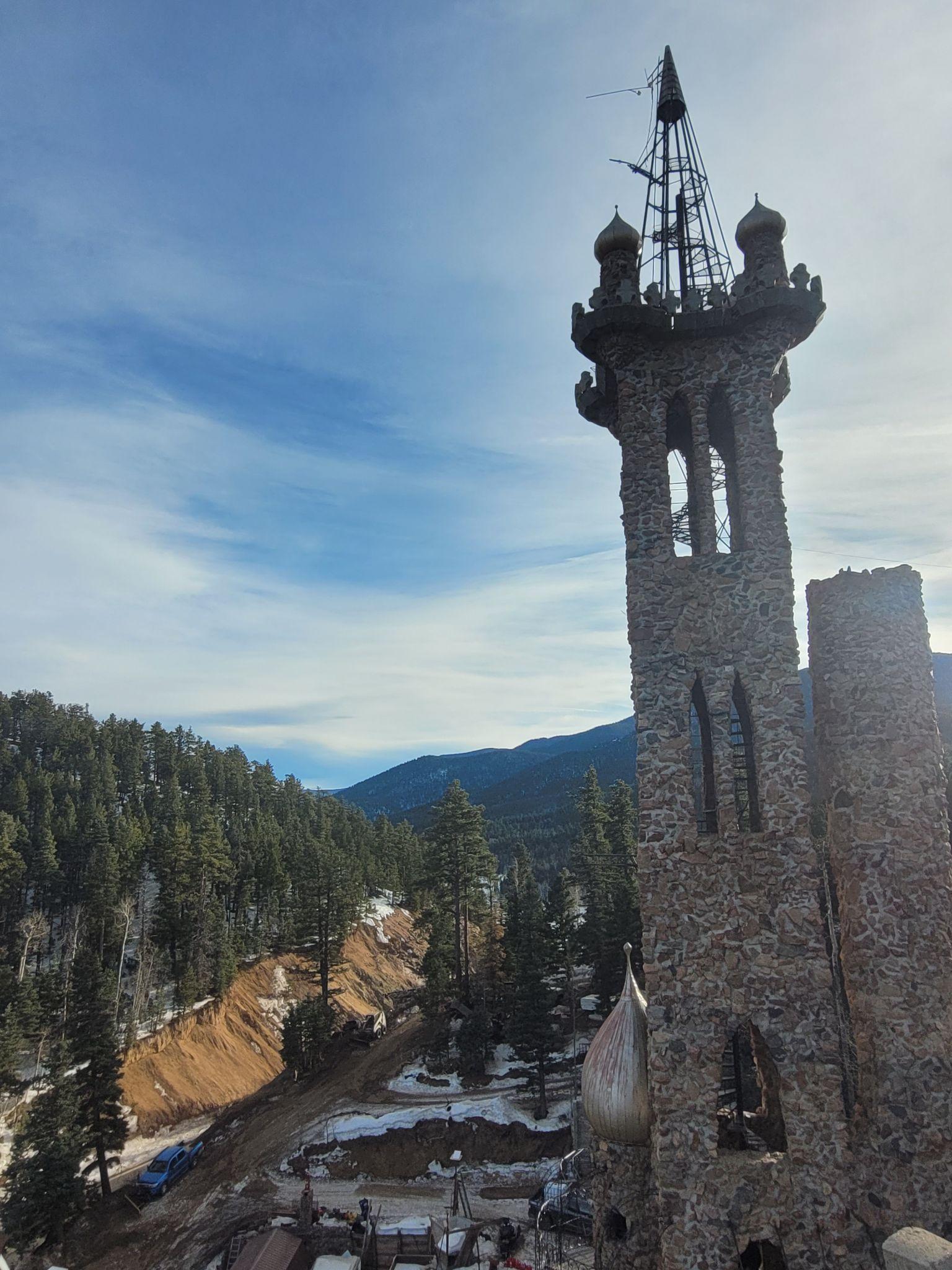
By far the most impressive ironwork, and something I have seen nowhere else, is the floating path of iron that snakes around the castle walls. You can use this to go from tower to tower and catch some great views of the mountains. I used them to take many of the pictures you see now. You really have to trust in the craftsmanship though, because you can see right through them over 100 feet down to the ground. It’s common to see tourists cling to an outer wall as they shakily step along one of the paths.
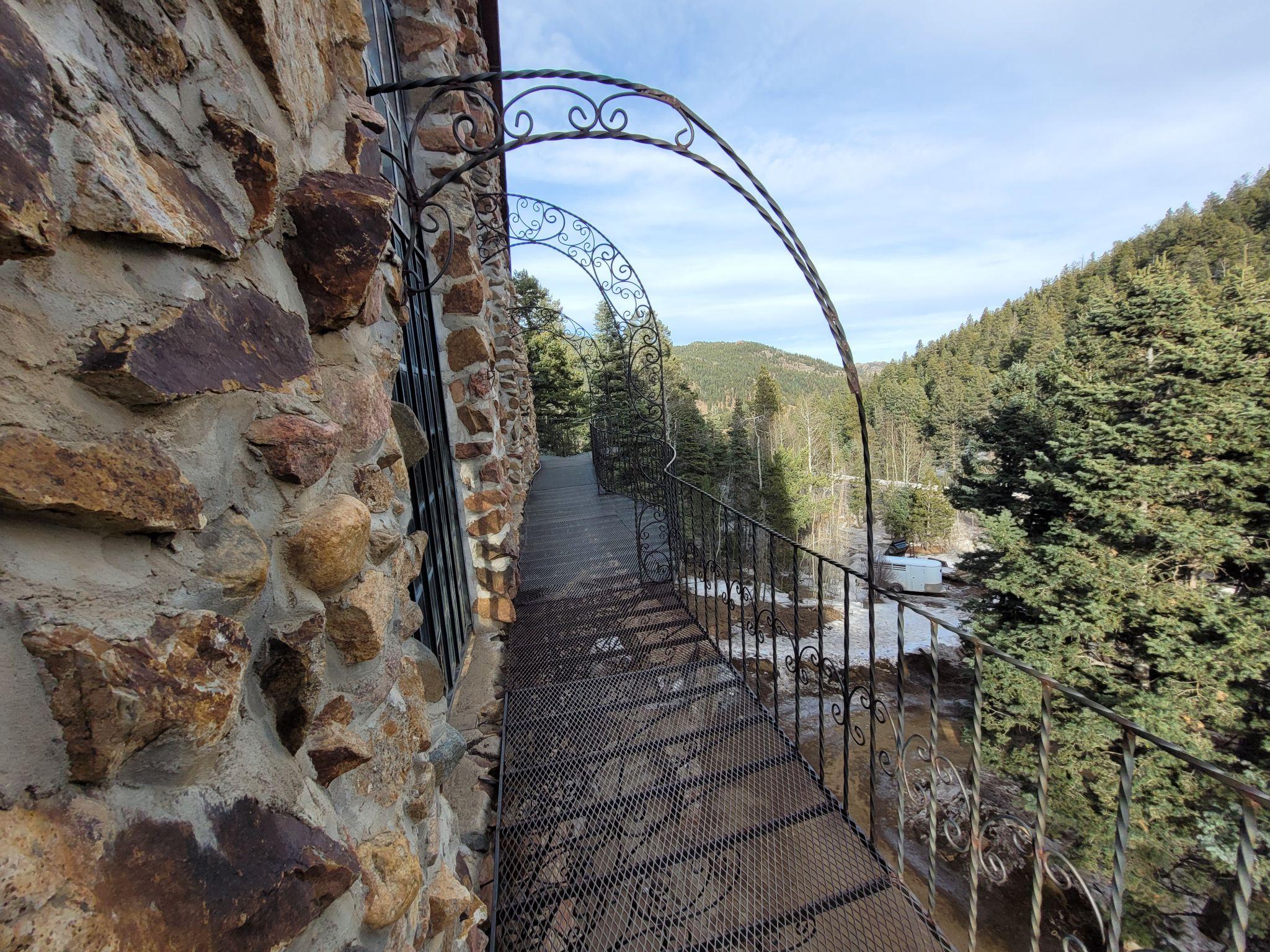
I like these floating paths because you wouldn’t see anywhere else, probably because they’re a legal hazard They’re almost certainly not up to codes, so no “real” attraction would ever have them. But Bishop’s Castle has them and lets people make their own decisions about whether to use them or not. It is up to you what risks you want to take, not regulators.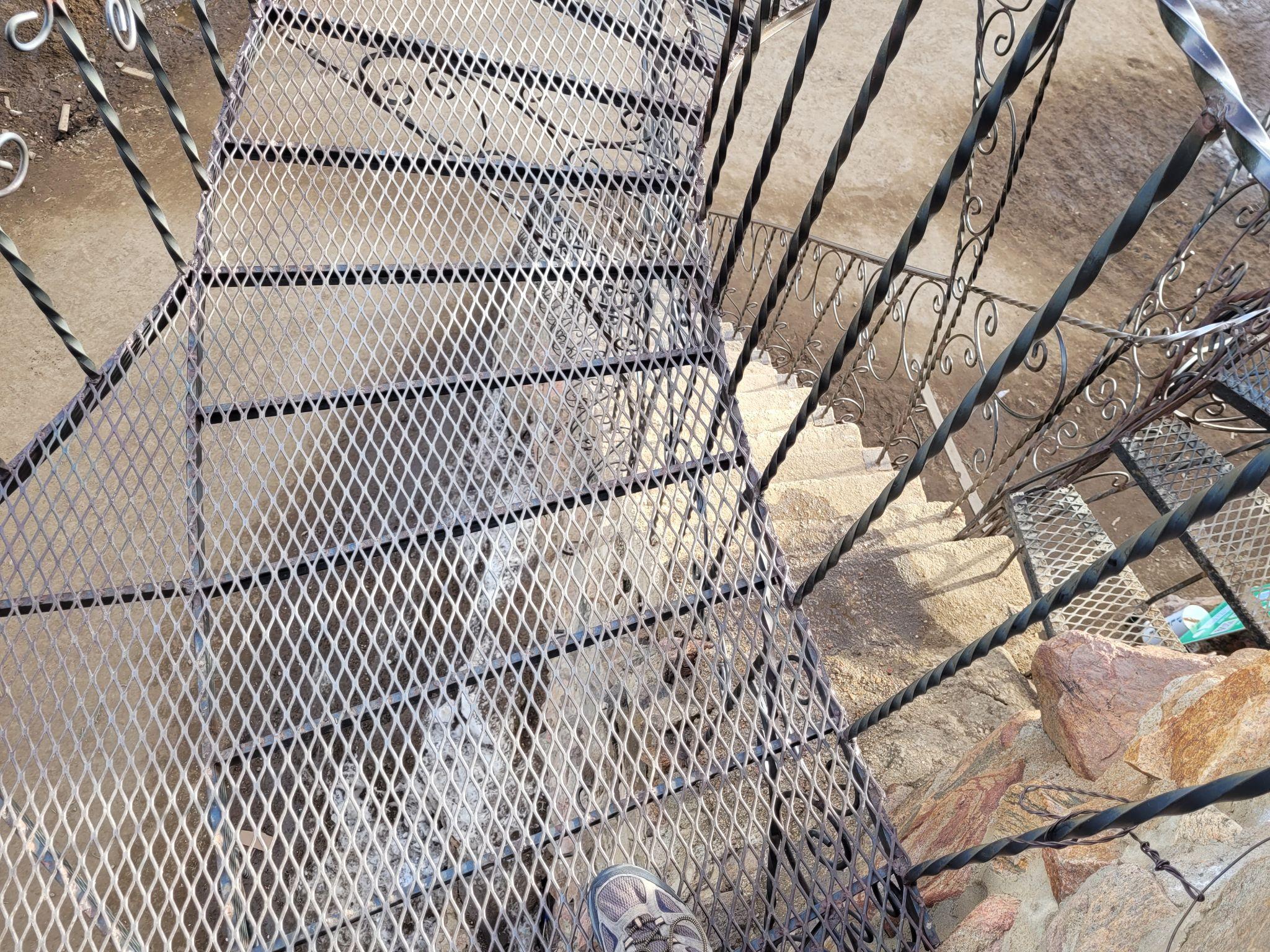
You can climb to the very summit of the castle, but it really is a nail-biting experience. There’s no elevator, no handrails, and no guarantees that you will even make it out alive. It’s just you and the wind. To go to the top is a feat of daring that I recommend you try, just to show yourself what you’re capable of.
The last time I went to the castle, I made the harrowing trek up to the very highest part of the highest tower. The square tower– as if to playfully exaggerate its own height – is topped with a pointy hat-like structure made of metal that tapers up and needles the sky. To say you made it to the top, you have to climb up the pyramid. This is the scariest part. The metal, not totally tied down, shivers from the wind. You’re on a tiny crag amidst a sea of void. Nothing will stop you from falling hundreds of feet to your death. But as far as is known no one has.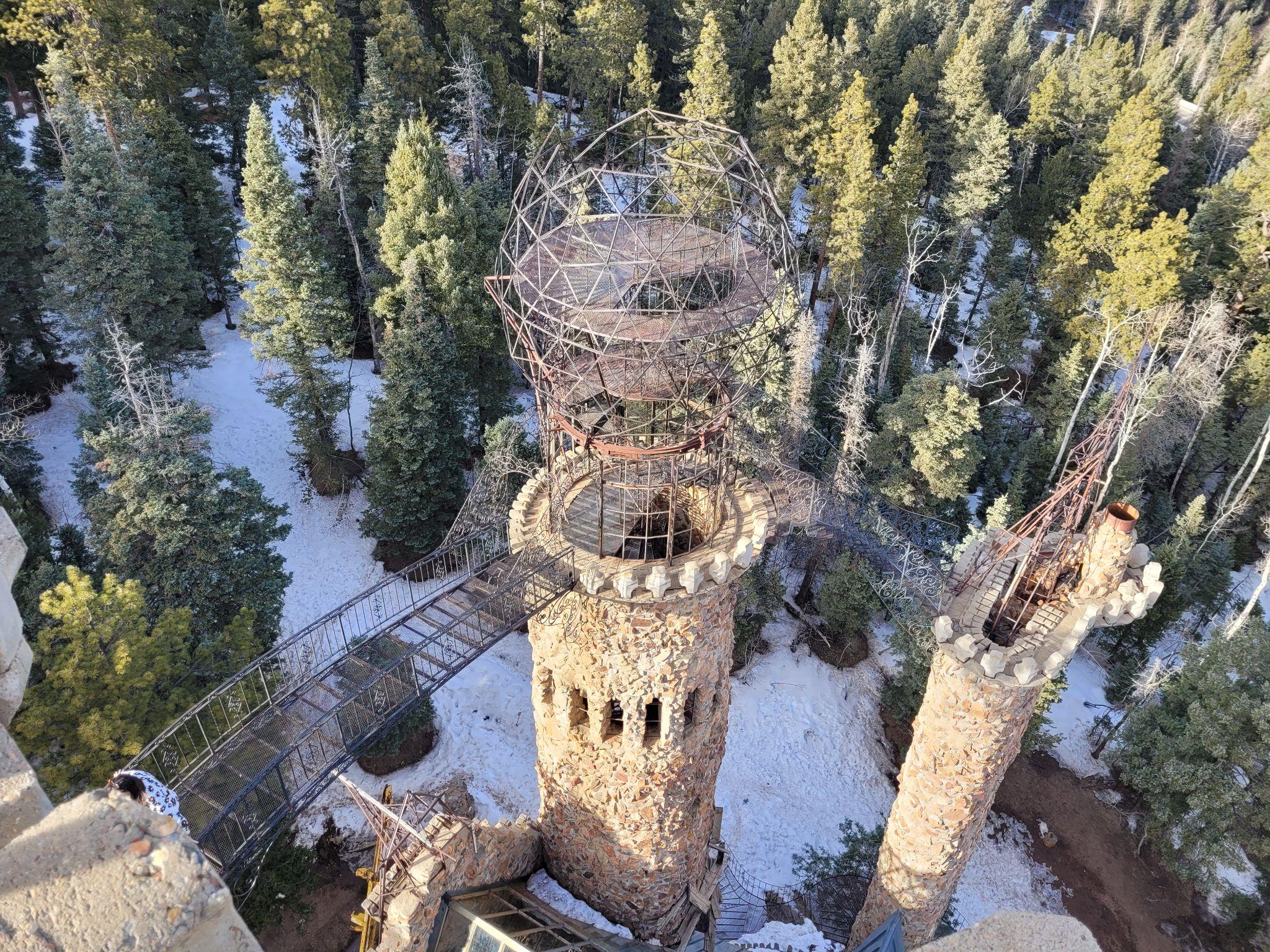
I managed to get to the top but only after a storm of stress. The gales howled around me. The metal creaked and shook. I trusted in the castle and was rewarded.
On my way down, I noticed the castle is quirky enough to have a nonfunctional elevator shaft. I later read that Bishop wanted to construct a solar-powered elevator inside the castle for accessibility. I suppose an elevator could be possible: if these stones are strong enough to support the massive tower above them, they are strong enough to support an elevator. Bishop, in his book Castle Building as I See It, describes further his vaulting ambition for the castle: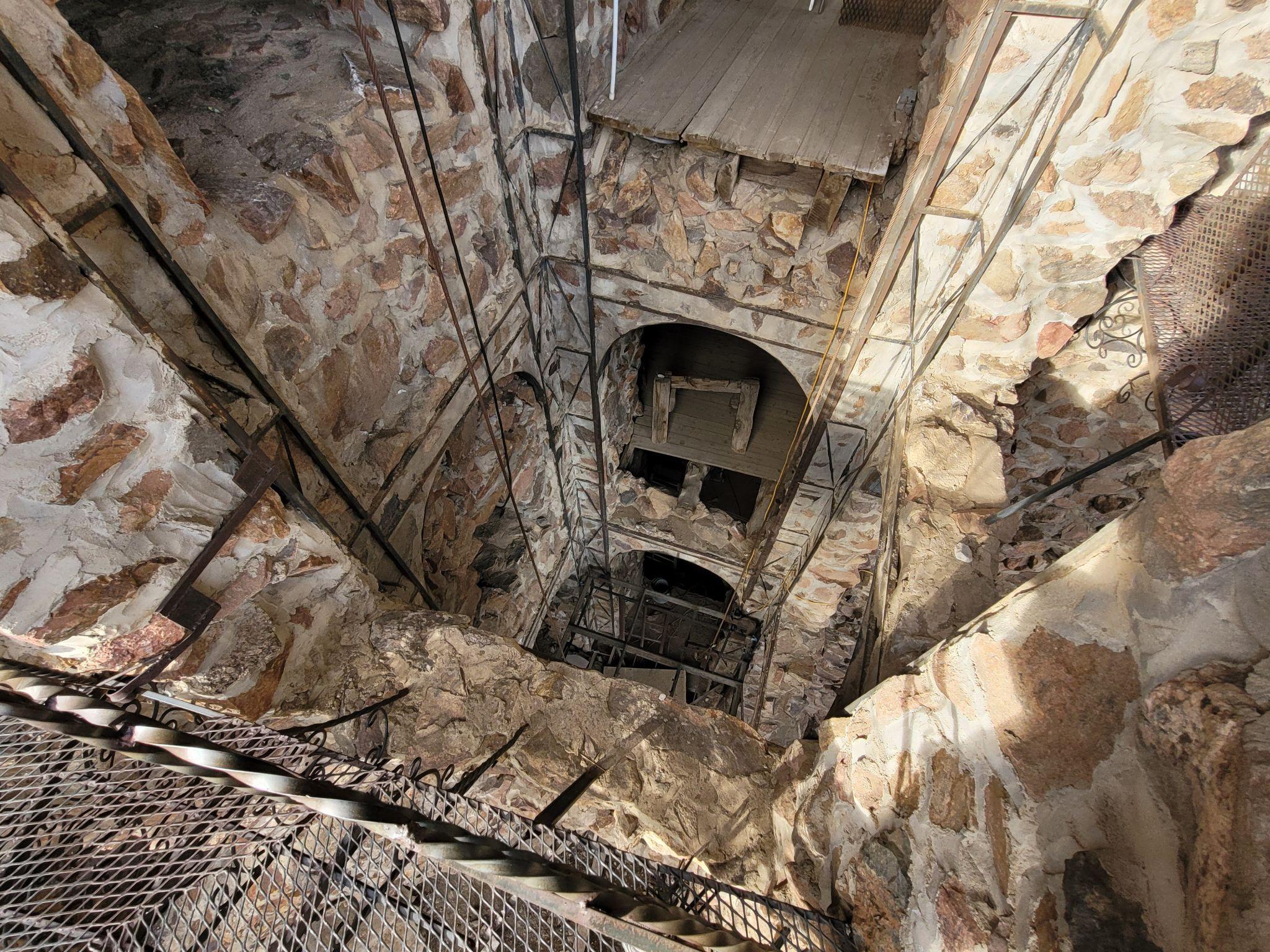
“The museum and library will be on the second floor, with a mausoleum addition in the back. On the third story, in the tall front gable, will be the pipe organ and interfaith chapel… from the roof rafters, above the third level, in the west-end of the great hall, will be a hanging bedroom for people to use, on a drawing basis.”
Suffice it to say, none of this was built. All the same I think holding his expectations so high helped Bishop build what he did. It is good to make your highest ambitions very high indeed. Just like stretching a rubber band a great distance results in greater tension in the cord, stretching your ambitions as high as possible inspires more ardent action.
VI: Place of Liberty
“The rich and poor equally have to obey the law.”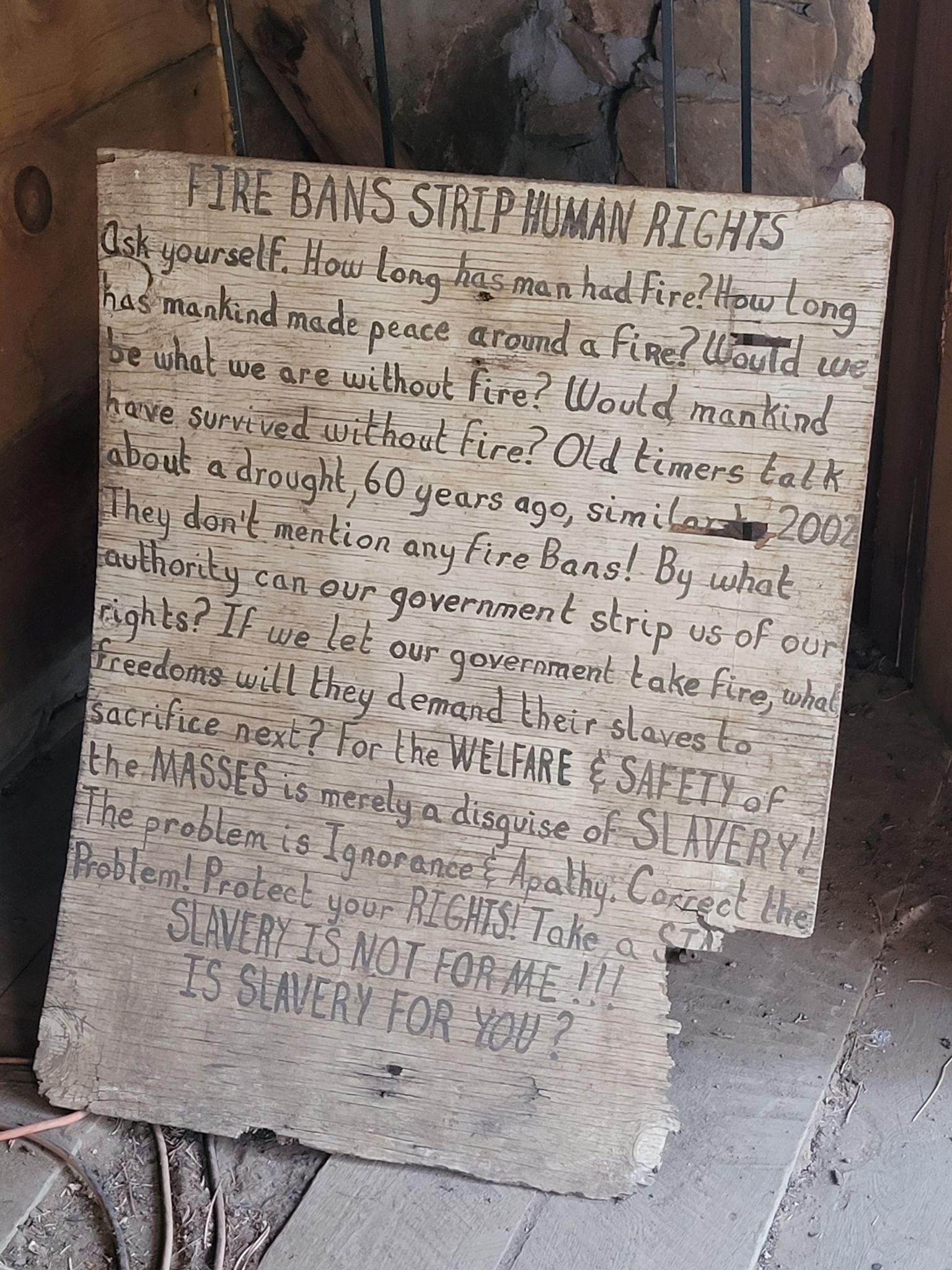
Bishop hoped that the castle would be “a place of freedom, hope, and justice.” I have already mentioned how the bureaucratic attacks on the castle led him to see it as a monument to the people.
While this attitude at times bled into insanity, I still have to admit how impressed I am by his dogged devotion to the people. He felt the idea for the castle belonged to the public and so never charged for entry. The castle has served the public many times: by 1980, there had already been nine weddings, two baptisms, a wedding anniversary, a funeral, and an internment. People have bought engraved stained-glass panels in the castle as memorials for their loved ones. I think the castle lives up to its reputation as a populist monument.
That being said, Bishop’s extreme libertarian views do grate at times. The signs strewn about the grounds serve as mouthpieces for Bishop. While some are reasonable, like the one warning visitors to be careful in the castle, others are eye-rolling, like the one comparing campfire regulations to literal slavery.
Dan told me that his father’s views became more extreme over time and bled into his mental instability as he aged. It got to the point where he would wear his family out with loud antigovernment rants that rambled on and on. People increasingly found him difficult to be around. In the late 2000s and 2010s, some tourists reported that he screamed incoherently at them. Warnings about these jeremiads became a staple of guidebook entries about Bishop’s Castle. Once in a while, a tourist would rile him up on purpose by telling him that he couldn’t do something or defending regulation.
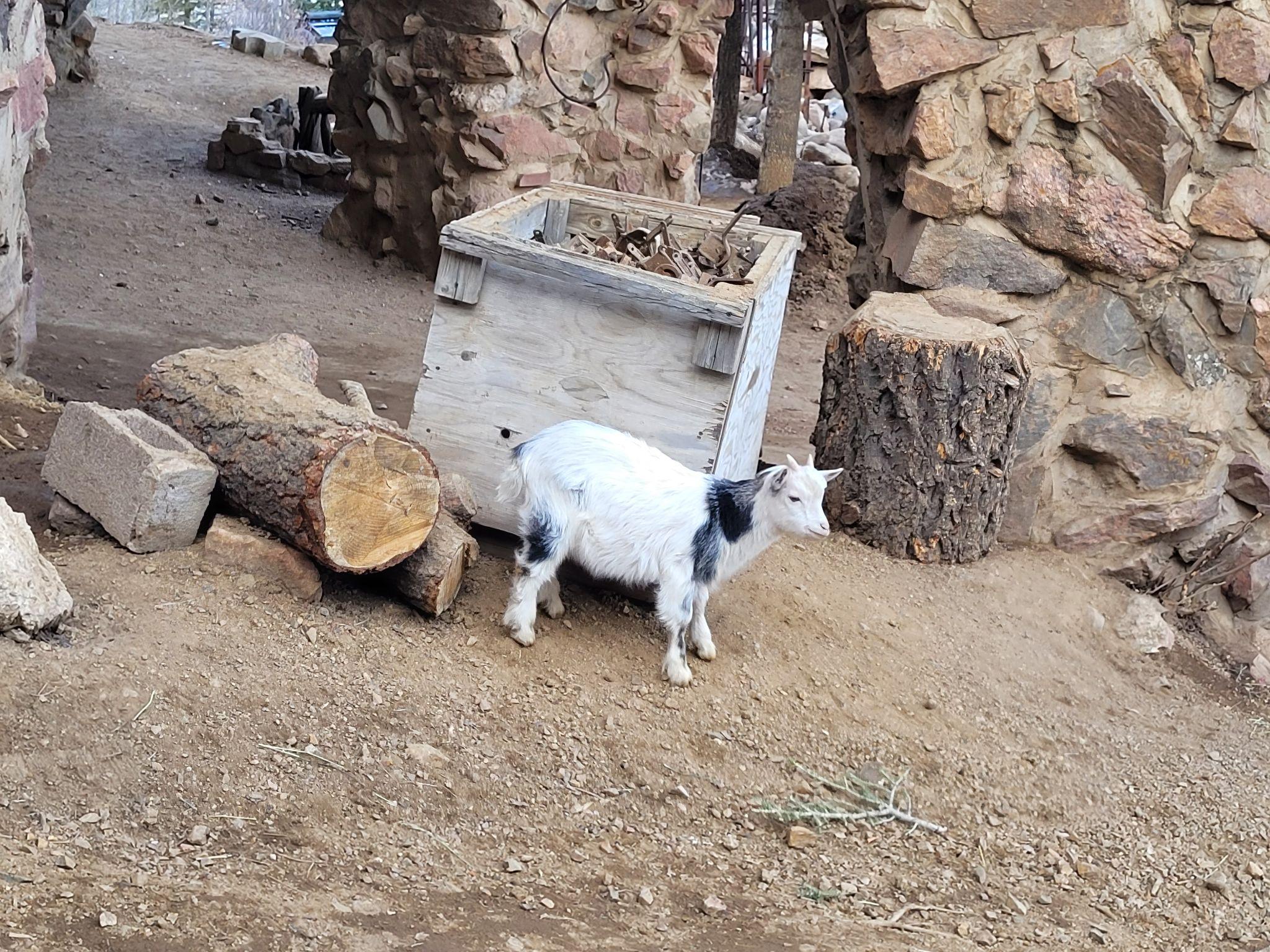
The most aesthetically libertarian aspect of the place is the animals running around. There are dogs, cats, goats, and chickens just hanging out without any cage or fence. I don’t know why and the family doesn’t seem to really know, either. You can just reach out and pet the goats, and this was one of the very few times that I’ve pet a goat that wasn’t on the other side of a fence. They’re adorable.
VII: Builder’s Madness and What is To Come
“He’s obsessed, he’s committed. He’s almost fanatical about it. It upsets him when he has to quit when the weather comes. It’s his life, it’s his reason for being.”
-- Phoebe Bishop, 1989
Some will argue that the castle is less a monument to freedom and more a monument to Bishop’s own ego. Certainly that was always a motivating factor. Bishop relentlessly pursued publicity, to the point that he got angry for the absurd reason that the governor of Colorado, Roy Romer, didn’t visit the castle during his 1989 tour of the state. The castle was a way for Bishop to draw attention to himself when otherwise he would have stepped through life unknown.
As he grew older, Bishop fell under the yoke of dementia and other mental illnesses. He was diagnosed with bipolar disorder, anxiety, and Parkinson’s disease. These may have had as much to do with his lifestyle and monomaniacal thinking as his age. He thought of nothing but the castle-- for months on end, he’d leave his wife alone in Pueblo to pursue solitary labor. He took many knocks to the head during construction.
In the rare times when he was at home, he was increasingly difficult to live with. His rants grew ever-longer and less sensical, and he would fly into rages whenever anyone questioned him.
Maybe Bishop had to go mad in order to build the castle. Would he even have been able to do something so quirky and so offbeat and so useless if he was sane? I believe not. Sane people live in the cage of conformity and would not have had the creativity, dedication, or sheer insane grit required to build the castle and defend it from attackers.
Bishop was never totally sane. From the start he was driven by his ego and a wild inner fire. He was able to mostly contain this fire until then end, when old age, cancer, and other ills drove him to final madness.
Jim Bishop retired in 2023 and in 2024 died of cancer. His wife also died of cancer shortly after. The funeral was held in 2024 and made news statewide. The proprietor is now Dan Bishop, and he plans to continue building.
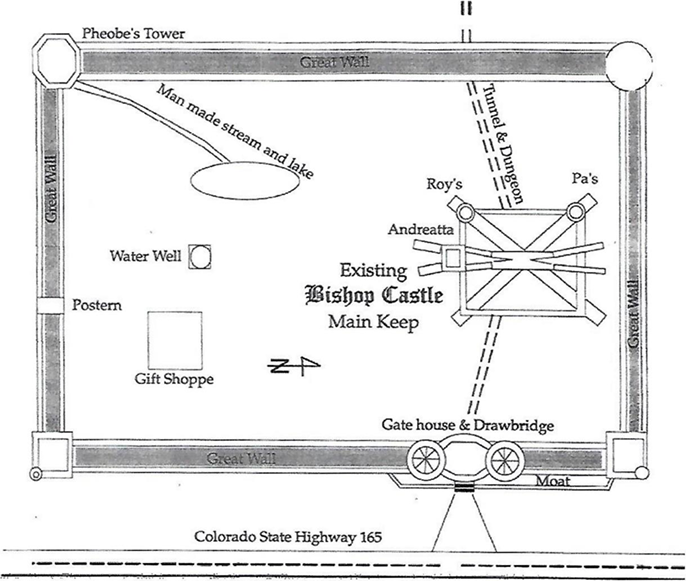
There’s so much still to be done. The current edifice, remarkable as it is, does not come close to reaching the heights of soaring ambition that Jim originally planned. There’s a big rectangular clump of rock outside that hints at plans for a full perimeter wall. Dan wants to realize that plan. Additionally, in the summer of 2024 he added more steelwork to the shortest tower to lay the foundation for a steel bridge that will connect the two towers. He also wants to landscape the yard to make it safer and more accessible. It’s important for Dan to carry on his father’s work. “People want to see someone working on the castle, they want to come home to their relatives and tell them the castle is still being built,” he said to me during the interview. “What I most care for right now is to let the people know that I love them and need them and want them to have my back. The people for the people, the power of the people.”
Hundreds showed up to Jim’s funeral, and the castle is doing well financially. It doesn’t look like the people will stop loving Bishop’s Castle any time soon.
Conclusion: In Praise of Munchkinry
“My idea towards success, is, never quit climbing the ladder… As long as you have a project ahead of you, you will always be successful. When you reach the top you can remain successful. But, you have to be real careful.”
In the course of writing this, I’ve asked myself a couple of times where my interest in the castle comes from. What’s so special about this pile of rock? Why obsess over just another American roadside attraction?
Here’s an attempt at an answer. Going to Bishop’s Castle has always felt like a pilgrimage. It’s far enough away that the trip takes real effort, but not so far away that I never feel like going. Whenever I visit, I breathe in a spirit. It is the spirit of weird daring. It is the spirit of uncanniness embodied in pure, vigorous act.
I call this spiritmunchkinry.
A munchkin achieves greatness just by being who they are, just by existing. Their very self is drawn to do great things like a beaver is drawn to build dams. To do something great, and not be haughty about it; not to hold it above others, but to do it with an impish grin. That’smunchkinry. To be great, not even necessarily to improve the world, but just ‘cuz it’s fun. That’s munchkinry. The munchkin is the type of person who answers “why?” with “why not?” They’re dragged along by an extremely strong inner sense of purpose. To us, they seem to possess infinite energy and firm self-discipline. To them, it’s just Tuesday.
I’ve met a few munchkins. Nothing gives me a taste for life quite like they do. Every time, I leave convinced that they draw close to the bones of what it is to be human. That they understand better than anyone why we’re here. Maybe you’ve met a munchkin. Maybe you are one.
Society needs munchkins to explore the borderlands of possibility space. They are the wild ones in the forest, scouting new paths. They are the goal-makers and the thrill-seekers. Nearly all will fail, but those who don’t will succeed hard enough to justify every failure. It’s the same logic startup funders use. Was Bishop’s Castle a victory for munchkinry? Maybe, maybe not. But there’s no doubt that it was an attempt by a munchkin.
Preserving the pursuit of happiness and keeping it a true pursuit requires some legal and social slack in society. We need to tolerate our munchkins and let them be weird. They carve out the space of what can be done, allowing more thorough souls to fill it in with work and innovation.
When Bishop started the castle, America was a munchkinland. A country with way more space than finger-waggers will always be a munchkin’s paradise. Now an older, more crowded society, America today fails its munchkins. We as a society attacked Bishop relentlessly and the castle endured only because of his own hardiness and sheer arrogance. What of the more tender-hearted munchkins? Their projects stay unfinished. Society makes sure of that.
If Bishop had started building today in 2025, he’d face a much more daunting task. Adjusting for inflation, Jim paid about $2000 per acre for the land in 1959. Todaya comparable lot goes for $41,000 per acre, a twentyfold difference.
But let’s say our hypothetical 21st-century Bishop made some well-timed Bitcoin investments. He’d have to pay much more for the rocks, assuming he could legally obtain them. Materials would eat more of the budget, as would property taxes. Custer County zoning regulations would force the project to be about 100 feet less ambitious. After all this, it would take a truly hardy munchkin to not give up. The only element of 21st-century castle-building that would be easier is marketing. With the internet, you don’t need road signs. Bishop’s castle amazes us in part because it’s a symbol of his triumph over busybodies and naysayers. But it’s also a symbol of the more informal world that has passed. Our world today is institutional and digital, and has little room for castle-builders.
Sometimes, I even wonder if the castle will last much longer. The family has been lucky so far, but it only takes one death or injury to result in a shutdown. When I mentioned this possibility to Dan, he had this to say:
“Ultimately, we don’t have any game plan. … Your question is the same one people have asked since we started. There’s always somebody wanting to plant the idea that it’s not going to work. That they’re going to take it from you.
You just can’t let the fear of the future stop you from doing what you want to do. The thing you gotta be careful of is: Is it for the right reason? I believe that as long as I’m up there, not trying to get rich, not trying to steal from everybody, giving it away, than the God I and my Dad believed in will do what he needs to keep it going. I also believe that if it’s not happening anymore… that was God’s will as well.
I will go when God tells me I’m done here. I live by that because I watched it work for him. That there were years of no one managing to stop it is a pretty good testament of how long you can get away with doing the right thing.”
Dan tells us here what the castle means. The castle might not teach us much about architecture or environmental engineering, but it reminds us to let hope and not fear guide our lives. It reminds us that the true munchkin doesn’t always lay out plans like railroad tracks but digs, digs, digs through the mountain of destiny in a frenzy of joyful doing.
None of us know whether the castle will stay decades or centuries hence. But as long as the castle stands on the mountainside, it whispers to those who visit: “why not?”