The World’s Coolest Dictator.
Close your eyes and imagine this:
‘Some kind of best-case-scenario version of Trump who wants to purge all of the institutions in a creepy strongmannish way but is also competent, honest, and preserves a fig leaf of rule of law’. [1]
Open your eyes: Meet the world’s ‘Coolest Dictator’, Bukele of El Salvador.
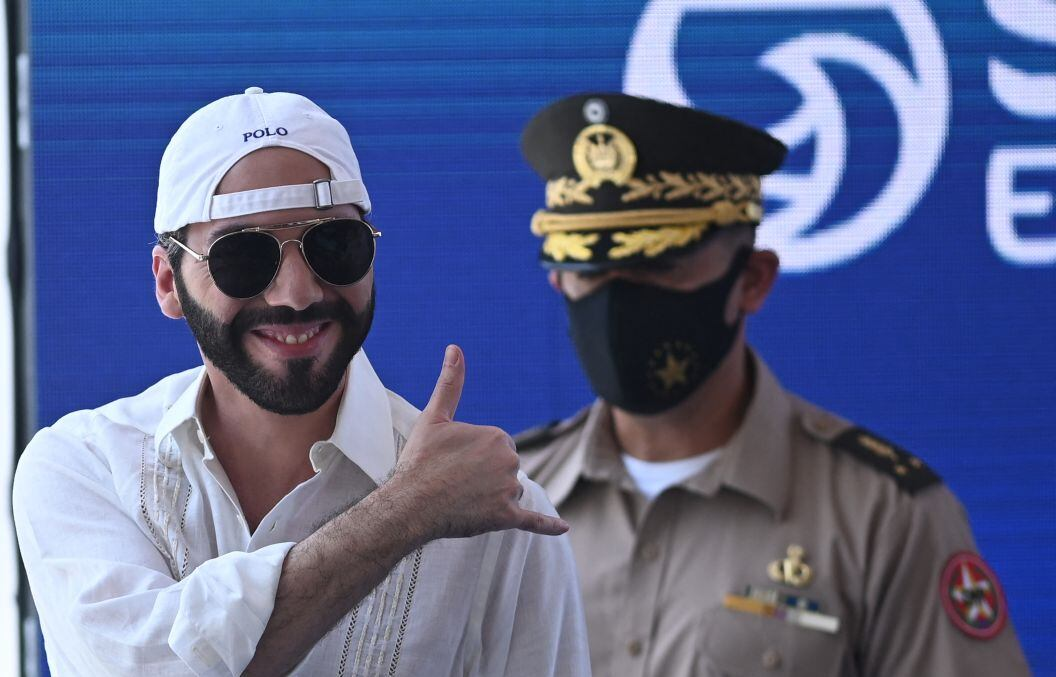 Bukele at a surf contest in May 2021. Courtesy of Marvin Recinos / AFP
https://elcomercio.pe/mundo/centroamerica/nayib-bukele-los-dos-anos-del-presidente-de-el-salvador-en-el-poder-apoyo-popular-y-reproche-internacional-noticia/
What?
This is a non-Book review of Bukele’s rise and his presidency. At the time of writing, he has been making the rounds on the English internet as a new Viktor Orbán: Loved by the right, hated by the left. However, he himself would rather be seen as the new Lee Kuan Yew.
As a good Bayesian, you should know by the end of this review whether to adjust your worldview to become more Bukele-pilled, or more Bukele-skeptic.
In 2021, Alexander Scott wrote that Bukele might one day make a great Dictator Book Club entry [2]. Four years later, there still aren’t any non-hagiographical biographies on Amazon. Luckily for me, I need none, because I’ve witnessed the fall of the Republic myself:
- In 2012, one of my high school classmates was already a Bukele fan, back when he was just a small-town mayor. Now, that classmate is part of the Bukelist ‘New Ideas’ Party.
- In 2017, a pro-Bukele college group (Team Nayib) tried to recruit me. The classmate who approached me is now a congresswoman for ‘New Ideas’. Another became a mayor.
- In 2022, I attended a farewell party for the wife of a journalist – the couple was preparing to self-exile due to a scholarship abroad. They were not planning to return.
So, did I courageously fight in defense of the Republic? Or did I jump in the Bukelist bandwagon to enact ‘change’ – and harness power and wealth for myself?
Neither.
In high school, I was a firm believer that “Nothing Ever Happens” (before it was a meme). In college, I was a firm believer that if my country took the one-way ticket to dictatorship, we were more likely to end up in Turkey than in Singapore. I couldn’t support the corrupt Ancién Regime either. So instead of protesting, I became an electoral observer, where I could witness with my own eyes that the elections were the textbook definition of ‘free-but-not-fair’.
Now, in the early years of my career, when I’m trying to start a family and not get displaced by the increasing unaffordable housing market, I’m tired of believing firmly. I want to ‘make things happen’.
But the best that I can do is this: Review Bukele, for the entertainment of a wealthier, foreign audience.
That might be better than it sounds:
As I write this, the destiny of a real country is in the hands of a man who has been trying to become the modern-day Lee Kuan Yew - and who is known for marketing his country to rich foreigners [3]: First, to the libertarian-adjacent Bitcoin community, to whom he gave Bitcoin as legal tender; and then, to the MAGA right, to whom he gave CECOT.
Instead, we need to get Bukele (or his brothers) to notice the Silicon Valley based rationalist community. If we got the ratsphere talking about how to turn El Salvador into a software hub and an ‘economic miracle’, we might actually influence policy in an actually-existing government, and nudge it into a more efficient, less-authoritarian direction.
Then, if the rationalists can get El Salvador to actually achieve the good ‘Singapore’-ending, instead of the bad ‘Turkey’-ending, this would be great for my home country. It could also be great for the rationalists, as it might translate into greater political influence inside America.
I. INTRODUCTION
Understanding El Salvador seems pretty straightforward:
- The country used to be a military dictatorship from 1929 – 1979, and it took a brutal, 12-year-long, Civil War to shake off its last remnants.
- In 1992, the war ended and El Salvador was officially recognized as a democracy. But much like the Weimar Republic, our democracy was a failure: corrupt, slow-growing, unequal, and riddled with crime.
- In 2019, after three uninterrupted decades of rule by parties born out of the Civil War, my country seemingly voted to turn itself back into a dictatorship, but a civilian-led one this time. Progress!
Reality is more complex than this, but only slightly.
***
By 2019, as some people were openly calling for a return to the military dictatorship, Bukele looked like the opposite: A cool young politician who had managed to bring crime down on his small town without militarization, while also promoting youth sports and urban art (rap, skaters, graffitti). Many of my center-left classmates saw him as an Obama figure.
During the 2019–2021 period, when the sclerotic opposition-controlled Congress tried to pull the same obstructionist playbook that the GOP pulled on Obama, Bukele fully embraced the tough-on-crime and institution-smashing role that the people demanded.
Back in 2019, some people had warned that Bukele’s disdain for the norms were foretelling of authoritarian tendencies. When Bukele first called himself ‘The World’s Coolest Dictator’, he was trying to mock those Cassandras: Contrasting the idea of ‘Coolness’ and children smiling, versus the idea of ‘Dictatorship’ and tyranny.
I didn’t believe those Cassandras. Neither, apparently, did the prestigious journal El Faro: In the 2019 elections, they seemed to endorse Bukele with a favorable interview, while criticizing the conservative La Prensa Gráfica for its blatant bias toward the right-wing billionaire candidate. Think NYT vs WSJ.
But by 2022, El Faro had become one of Bukele’s fiercest critics. And by 2023, they had self-exiled to Costa Rica—one of the few opposition voices still standing.
In hindsight, was ‘The World’s Coolest Dictator” actually playing 4-D chess, trying to shift the Overton window into ‘maybe we should actually elect him as dictator’? No one knows.
A ‘dictator’ was, originally, a position in the Roman Republic: A man who suspended Constitutional liberties and took complete power, as a response to an emergency or war. In 2022, Bukele effectively became a ‘dictator’, at least according to this original definition.
The war was internal, against the gangs.
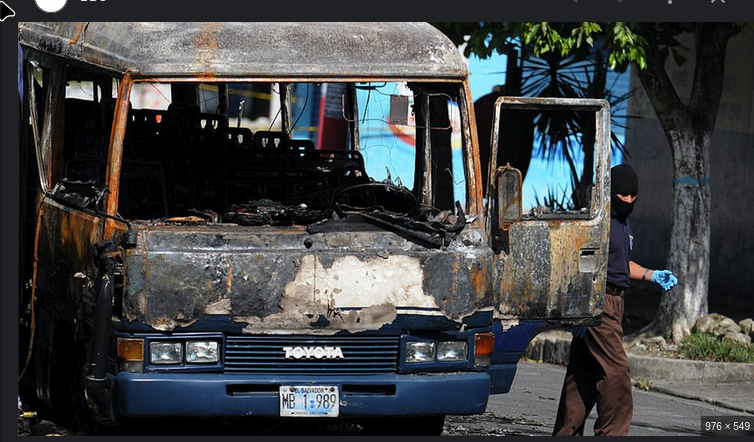 Pictured: Mejicanos Massacre, 2010. credit: BBC.
https://www.bbc.com/mundo/noticias-america-latina-53074759
II. EL SALVADOR’S BACKGROUND.
All you need to know El Salvador’s history is in Matt Lakeman’s excellent massive blogpost ‘Notes on El Salvador’. [4]
If you read it, you will see statistics similar to these.
-
On Corruption:
- Out of the 6 presidents in the post-Civil War period, one is in jail for corruption; two died while being investigated for corruption; two more have self-exiled while they stand accused of corruption; and the remaining one died before he could be formally accused of corruption. [5]
-
On the Economy:
- After the end of the Civil War (early 1992) until 2019, El Salvador grew at a pathetic average of 2.1% / year, which is less then the so-called ‘Hindu rate of growth’ of 3% / year. [6]
- In 2011, the Obama administration got together a group of technocrats to decipher: ‘Why doesn’t El Salvador grow? How can we make it grow to keep them from sending their people to America?’ What was the conclusion of these geniuses? It was all about crime. [7].
-
On Crime:
- In 2010, a faction of the 18th Street Gang (18-Revolucionarios) burned down two passenger buses in a working-class neighborhood, killing 19 of them, including women and children. This was known as the Mejicanos massacre [8]
- In 2015, El Salvador became ‘the world’s murder capital’, by reaching the highest murder rate outside of a war zone.
- Between 2015 and 2019, there was a sort of ‘asymmetrical war’ between the gangs and the State, which managed to gradually decrease the murder rate, at the cost of extrajudicial executions carried not by the gangs, but by the police, such as the San Blas massacre. [9]
In this period, the “vibes” were as bad as the statistics would have you believe. El Salvador truly felt like a real-life Gotham City.
In the words of a taxi driver: “La vida no vale nada en este país” (Life is worthless in this country). Back in 2016, this was especially true for the working class, who began to openly call for the return of the military dictatorship, or for someone like the Philippines' Duterte.
Sure, dictatorship is bad, but if you will literally likely die soon anyways, you might as well just burn it all down.
My own college classmates, who were otherwise very liberal people, felt betrayed by the government providing free food and healthcare to inmates, while the social-security net for the working class remained anemic, almost nonexistent.
Our resentment against the elites worsened after it was revealed by El Faro that both major political parties had bribed the gangs with money in exchange for the votes of their neighborhoods in the 2014 election.
In other countries, the criminals bribe the politicians; in El Salvador, the politicians bribed the gangs.
By the late 2010’s the Salvadoran population itself became one of the most disillusioned with democracy in Latin America [10]. But hope remained in the form of one man.
A savior.
III. THE RISE TO POWER.
When Bukele first stepped into politics, he seemed like the modern-day Bruce Wayne: The ‘cool’ young heir of a millionaire family who, when he wasn’t busy in the club, he was busy trying to stop crime.
The Bukele family was part of a significant group of migrants who had come from modern-day Palestine, back when it was still in the Ottoman Empire. Even if many of these migrants had made it big as merchants, they still suffered discrimination coming from the traditional ‘oligarchy’ due to their ethnic origin. The Bukele family was singularly hit by this discrimination because they, unlike other Christian or Jewish Palestinians, were actually muslim. As a result, the Bukele were special amongst the millionaires for their sympathy to the left-wing party, the FMLN.
Bukele himself studied law at a prestigious, left-leaning university, before dropping out to run the private business of his family - which included a nightclub. Eventually, he found his calling in marketing, which led him to run several campaigns of the FMLN.
In his thirties, he had enough of running campaigns for other people, and decided to run under the FMLN flag as mayor of a small town. He, like Erdogan and Modi, ‘did good jobs as administrators, plus had the PR skills to make it look like they did an even better job than they did’.
He successfully marketed himself as the herald of a renewed, rejuvenated El Salvador:
- The name of the town, Nuevo Cuscatlán, means ‘New El Salvador’. [11]
- Instead of using the colors of his party, he adopted a bright cyan, which if you squint kind of looks like a more energetic, youthful, version of the national colors: Blue and white.
- The logo of the town, a bright ‘N’ inside a circle, could be interpreted either as being the initial of his first name, ‘Nayib’; or the initial of what was then his movement ‘Nuevas Ideas’.
On the one hand, he tried to appeal to moderate voters by promoting the need for national unity across the political spectrum to face the challenges that the country was facing. After all, even if was a left-winger, his family were millionaires, so many people doubted that he would implement ‘21st century socialism’. He also marketed himself to the predominantly Christian population by portraying himself as a bearded, Christian 30-year-old, whose family literally came from Bethlehem.
On the other hand, he also retained the support of his base by proclaiming that he was a left-winger at heart, praising Marx, Chavez, and Castro. And also by picking up fights against the right-wing newspaper, La Prensa Gráfica.
Much like India’s Modi, the attacks of the right-wing media on him were ‘so vicious and baseless that they made ordinary Salvadorans, who didn’t like or trust them, think he was on their side’. Bukele incentivized that animosity by attacking the right-wing newspapers for not paying taxes [12].
But most importantly, he actually governed well: His small town truly did have low crime, and like India’s Modi, he had ‘a reputation as the least corrupt person in the Salvadoran government’.
From my viewpoint, his big break came from what I call trashgate: In 2014, the garbage collectors in Mejicanos (another locality inside the metropolitan area) were on strike against the right-wing mayor, leading to trash accumulating on the streets. Bukele went ahead and, alongside another mayor, literally cleaned up the streets. This established his reputation as a young politician who rejected outdated rules in favor of ‘Getting Shit Done’. [13]
His meteoric rise continued by getting elected as mayor of the capital, just three years after having started his political career. There, he undertook the seemingly titanic task of revitalizing the historic downtown, which had become synonymous with crime, dirt, and poverty.
He managed to ‘clean up’ a lot of the downtown without violence, partly by creating a new market where he relocated several of the street sellers, and partly by just breaking historic conservation laws that his own party had passed. This solidified his reputation as the institution-smasher who could ‘Get Shit Done’.
In hindsight, we now know that by this period, Bukele’s people were negotiating with the gangs: Carlos Marroquin, a city official, would provide the gangs with favorable spots on the new market meant for street sellers, in exchange for the gangs diminishing murders downtown. As a result, the gangs were very favorable towards Bukele, even if they grew more hostile against what was then his party, the left-wing FMLN.
What was Bukele 's alias in these illegal negotiations? Batman. [14]
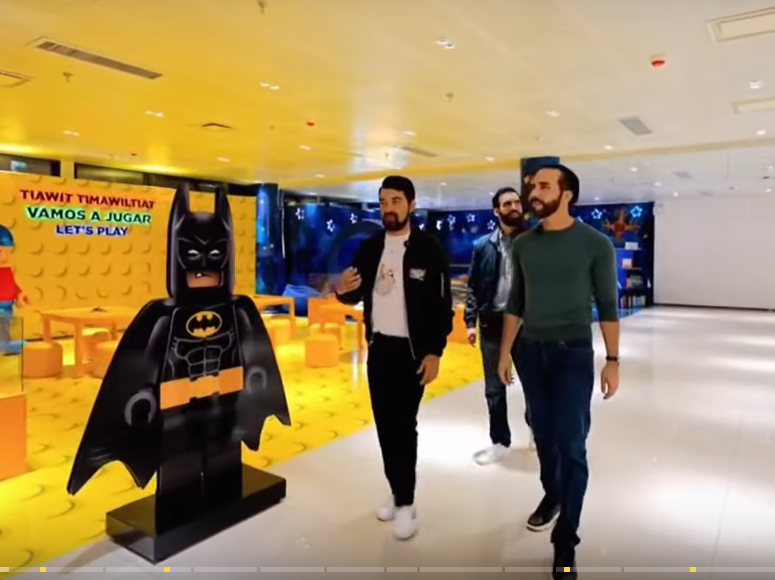 Pictured: Bukele in 2023 touring the National Library.
Source: https://www.youtube.com/live/9SMTnbnzReU?si=ljnHqwI6qwFF0ydB&t=747
In fact, the more popular Bukele became, the more he fell out of favor with the FMLN. Eventually it became obvious that the left-wing party wouldn’t give him the nomination for the next presidential election. He intensified his criticism, which eventually led to him being expelled.
In late 2017 it was far from obvious whether Bukele could win with a third party, even if he was the most popular politician:
- First, he started organizing his own party, but he couldn’t register it by the deadline.
- Then, in 2018, he attempted to use the center-left Cambio Democrático party, only to have the Supreme Court cancel this party due to their low vote share in the past election. This was a shameless power-grab by the Supreme Court.
- At the last possible minute, he joined the center-right GANA party. This was a party which, unlike the 2018 Bukele, had always defended socially conservative and tough-on-crime measures, even while being one of the most notoriously corrupt parties itself. The American embassy had described it as ‘a party for sale’.
If GANA was a party for sale, Bukele had the money, and he bought them: He successfully rebranded the party, changing its colors to a darkened version of the Bukelist cyan. Yet, at least one of my left-wing friends decided not to vote for Bukele because of this switch.
In the end, the attempts by the Supreme Court to block him may feel justified in hindsight, but they actually backfired, by making him even more popular. Forcing him to join the right-wing GANA party might have been beneficial too, as this party had a presence in the rural areas, where Bukele was weaker.
Near the midnight of February 3rd, 2019, Bukele surprised the entire country by winning the 2019 presidency with a landslide 53.1% of the vote. My entire family and myself weren’t surprised that he won, we were surprised that won in the first round.
It was the end of an era, and the dawn of a new day.
IV. THE DICTATORIAL POWER-GRAB.
The new President seeked to staff the entire executive branch of the government with loyalists who actually knew how to govern. This was seemingly something hard to do, given that he had alienated both formerly major parties.
So, what did mr. President do?
He ended up relying on former friends and associates. Much like in Hungary, ‘the rank order of how rich and powerful you are in today’s El Salvador, and the rank order of how close you sat to Bukele in the cafeteria of his elite high school, are more similar than anyone has a right to expect.’
Bukele moved on to shamelessly run the government-owned TV Station and radio channel as propaganda. More importantly, he created a new Government newspaper, ‘Diario El Salvador’. In theory, this newspaper was meant to be run ‘as a private enterprise’, creating a profit and paying taxes. In reality, by selling it at $0.25, it seemed like the actual purpose was to undercut all competing newspapers. In El Salvador some of the media -but not all- saw ‘which way the winds were blowing’ and voluntarily self-censored.
Next: The police and military. Recruitment was increased with the objective of doubling the size of the military over the next 5-year period. The police officers over 60-years-of-age were forced to retire. For those who remained, Bukele doubled their salary.
The last part, coupled with the fact that the already-diminishing murder rate continued to plummet from the very day he took office, meant that Bukele had earned the enduring loyalty of the entire State repressive apparatus.
In hindsight, we see that he also had the loyalty of the gangs, who saw in Bukele a more constructive way out of the asymmetrical warfare that had been the norm during the previous administration. Now, I believe that the goal of the gangs during this 2019 - 2022 period was to evolve into a more ‘sophisticated’ and less self-destructive criminal organization; while the goal of the government was to bite their time until they could effectively destroy them.
At the same time, Bukele’s public rhetoric morphed to one of complete warfare against the gangs: He closed off all communication between the jails and the outer world. He ‘mixed’ the members of different gangs. He destroyed the graffiti and defaced the tombs of gang members. He praised the police and army as ‘heroes’, while decrying Human Rights defenders as ‘defenders of criminals’.
Then came the turning point. On February 9, 2020, Bukele summoned Congress to discuss a security loan. When opposition deputies refused to show up, he entered Congress with armed soldiers on live TV. He prayed, sat in the president’s chair, and hinted at dissolving the Legislative branch. In the end, he decided to wait for the next elections, to defeat the opposition in the ballot boxes.
That day, I retweeted a quote from the opposition, decrying what had happened as an attempted autogolpe. In the following weeks, I learned that the public largely supported it: It proved to them that Bukele wasn’t ‘just another politician’, and that congressmen were “lazy” people who wouldn’t work on weekends.
When Covid came, El Salvador swiftly became one of the most hawkish pro-lockdown governments, going as far as ignoring Supreme Court rulings against the lockdown, affirming that to obey them would be like ‘murdering Salvadorans’.
The following year, Bukele’s ‘New Ideas’ Party won the 2021 legislative elections with a landslide 66.5% of the popular vote. The Bukelist vote share actually increased from the 2019 election on every single ‘departamento’. This was enough for his party to achieve a ⅔ ‘supermajority’ in congress, and not have to rely on the opposition for governance.
The new legislature’s first move: remove Supreme Court justices, replacing them with loyalists. Checks and balances were gone overnight.
I went back to my retweet that was critical of Bukele’s autogolpe, and promptly deleted it. I haven’t posted publicly about politics ever since.
Alexander Scott argues that ‘all dictators get their start by discovering some loophole in the democratic process.’ What Bukele found was that he could just win all the votes and acquire all the power.
Other dictators, like Erdogan, had to find innovative ways in which to ‘hack the checks-and-balances system requiring 2/3 majorities’. Bukele found the best hack of all: To just actually win, at least once. That was all he needed to gerrymander his way into earning supermajorities, seemingly forever:
- In the 2019 election, Bukele earned 53.1% of the vote. In 2021, his party won 66.5% of the popular vote, which led to a ⅔ supermajority.
- In 2024, Bukele himself increased his vote share to 84.7%, but his Party underperformed at 70.6% of the vote. However, his party now commands 90% of the Congress, due to gerrymandering.
Bukele then launched an ‘anti-corruption’ campaign targeting rivals, including former San Salvador mayor Ernesto ‘Neto’ Muyshondt— who lost the 2021 elections, and was arrested a few months later. By 2023, his mind had deteriorated so much because of his imprisonment, that he was transferred to the psychiatric hospital.
In this way, El Salvador is becoming like Singapore, at least in becoming a one-party-state.
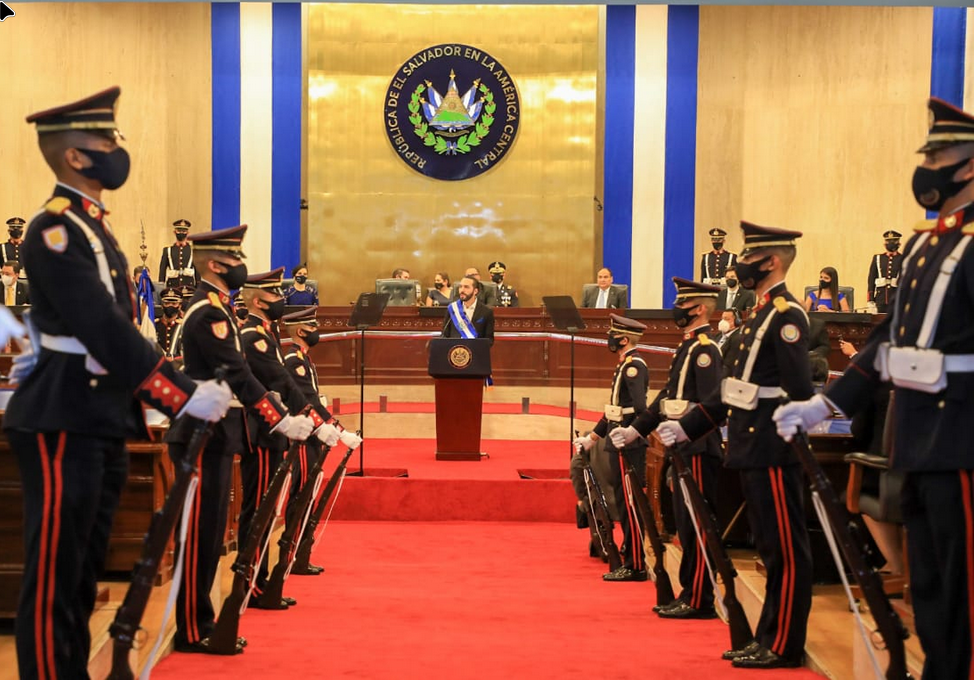 Pictured: The equivalent of a State of The Union Address.
Source: https://www.asamblea.gob.sv/node/11257
How did the local ‘oligarchy’ react to these abuses of power? By jumping into the Bukele bandwagon:
During the pandemic, Bukele met with the wealthiest businessmen in order to coordinate the lockdowns. In the collective imagination, that was the day when the oligarchy ‘descended from Olympus’ and seemingly made peace with Bukelism.
After the pandemic, Carlos Calleja, the right-wing billionaire who had competed against Bukele back in 2019, had made so much money that his business group could afford to buy the South American ‘Grupo Exito’ for over a billion dollars, in one of the largest transactions of Latin America. Roberto Kriete, possibly the wealthiest man of the country, recently inaugurated a new engineering-focused University, and Bukele himself gave the opening speech.
So, during the 2019 – 2022 period, Bukele took effective control of:
- The media.
- The police and military.
- Congress.
- The courts.
It turns out that the real superpower was being basically-an-elected-monarch all along.
Then and only then, with the tacit blessing of the oligarchy, he managed to successfully crackdown on the gangs.
In 2022, Batman killed Bruce Wayne.
V. BETWEEN TURKEY AND SINGAPORE.
2024 - present
In 2024, Bukele seemed to be surfing on success:
- He consolidated absolute power.
- He basically won the war on gangs.
- He successfully re-elected himself for the 2024 - 2029 period.
However, he had only one problem: It’s the Economy, Stupid!
Back in 2021, he had tried to jumpstart the Salvadoran economy by promoting the country as a prime tourist destination for surfing, and establishing Bitcoin as legal tender. This had great success in increasing tourism, but less so in actually establishing a Bitcoin economy.
He eventually got distracted by the whole ‘war-on-gangs’ thing, but when that issue was solved, that gave rise to a real-estate boom. Yet the rest of the economy lagged far behind.
This meant that actual Salvadorans were facing both increasingly unaffordable housing as well as the post-Covid 19 inflation, with only meager increases in our incomes.
So, just like Erdogan did in the 2000s, Bukele asked himself ‘what would a real center-right President do?
Even if Bukele hasn't spent the past five years mangling the Constitution to make it impossible to ever not elect him, he probably still would have won elections in a landslide.
The moment where I knew that for sure was in 2022, when he went on national TV to denounce merchants for high food prices, threatening to ‘jail any merchant who charges above a certain amount’.
At that time, I was offended, yet several of my family members were relieved to see their suspicions that the merchants were ‘overcharging’ were seemingly justified. Later on, Bukele went on to not jail anyone, instead choosing to implement a government-subsidized farmer’s market.
This is the political genius of Bukele: To adopt a populist rhetoric like Chavez, but then going and adopting moderate, technocratic policies. This approach has the triple benefit of:
- Increasing Bukele’s approval rating.
- Baiting the opposition into defending unpopular postures.
- Effectively avoiding the flaw of democracy in which candidates can ‘temporarily increase their popularity by doing things which are popular even though they’re bad ideas’.
Maybe this is because, unlike Chavez, Bukele doesn’t have ‘enough oil money to defy gravity for a very long time’ [15].
After winning the 2024 re-election in a landslide, he proclaimed that his next challenge was to jumpstart the economy. To do this, he has recently been approved on a long-negotiated IMF loan that will hopefully see the Government reach fiscal sustainability without sacrificing long-term investing in infrastructure.
Ironically, as Bukele adopted more moderate, center-right positions, he became more well known abroad as a far-right leader.
And, just like Orbán, ‘it also catapulted him to fame in the wider world. Rightists across the continent began hailing him as the savior of Latin America, the man who stopped crime when no one else could. Now, Bukele started having grander plans, plans of becoming a beloved model for the world.’
So, is Bukele going the way of Singapore’s Lee Kuan Yew, or of Turkey’s Erdogan?
Only time will tell. My intuition tells me that the difference between LKY and Erdogan will come down to whether Bukele succeeds at creating an ‘economic miracle’, or not.
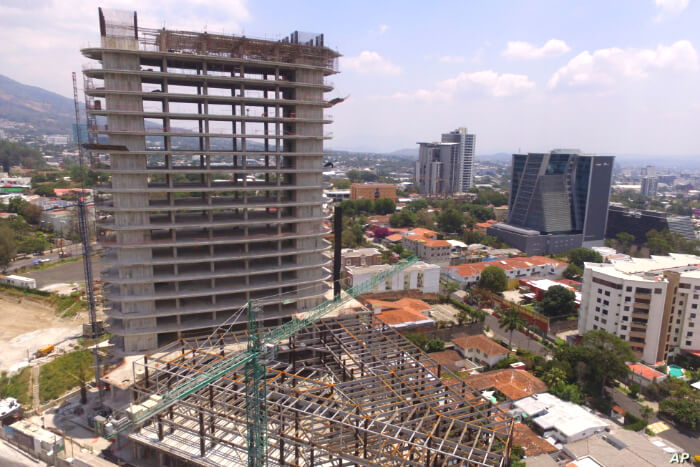 Pictured: San Salvador, a city under construction.
Source: https://republicainmobiliaria.com/editorial/el-salvador-inversiones-us1200-millones/
VI. COULD IT HAPPEN IN AMERICA?
Absolutely
First, our aspiring dictator needs to ‘Get Shit Done’.
Which means he (or she) needs to get power in a small region and prove that you can solve a problem that no one else at the national level has been able to solve. This could mean going to Detroit and solving crime. Or it could mean going to San Francisco and solving homelessness, as the current mayor seems to be doing. Or going to the midwest and solving the opioid crisis.
The most important thing is to do this in a non-authoritarian, compassionate way, because that would give permission to all Americans to support this man.
Second, the dictator needs to position himself as a moderate.
Remember that the dictator wants to take over ⅔ of the votes in order to change the laws. It’s not enough to do as Trump did and take complete control of one party, because there are some people who would never vote for that party.
I believe that in a system so resilient as America, what separates an aspiring dictator from a ‘normal’ President is that the dictator needs to create his own third-party that he controls completely, which is actually capable of contesting the national elections.
You might think that it’s impossible for a third party to win nationally in America. So did Bukele. By the time that he came into the political scene, the bases of both major political parties had become fed-up with the establishment.
Getting expelled instead of resigning was key: In the 2019 election people saw him as an outsider and a fighter against the establishment, despite the fact that by then, he had been in politics for almost a decade.
It’s not enough to just ‘stand there and be worthy of absolute power’, as Curtis Yarvin would argue. You also need to actively harness the forces that want to give you power.
Third, our aspiring dictator needs to harness the power of the Presidency to acquire absolute power.
The key pillar of Bukele’s power was basically ‘bribing’ the military and police by literally doubling their salary, which used to be close to the minimum wage. But it wasn’t just about the money: Bukele made the police and military feel proud of themselves. He publicly called them ‘heroes’, and attributed to them the decline in homicides.
In comparison, the US Armed Forces seem to be already well-paid, and to have a lot of respect for America's 200-year old Constitution. Also, El Salvador is a 6 million people country with one national police force. America is a 300+ million people country with a different police force in each major city, so it would be even more difficult to capture their loyalty.
Fourth, our dictator’s new political party needs to win supermajorities in Congress, and immediately use that power to pack the Court.
In El Salvador, the Supreme Court was indeed worried that Bukele would try to impeach them, but they never expected it to be literally the first thing that the New Ideas Congress did.
When it finally happened, the Salvadoran Supreme Court already had a draft ruling making their own impeachment illegal, but they struggled to communicate it because the Government had already taken control of the Supreme Court’s website, social media, and even their building.
In the subsequent days, the Government intensified the pressure on the Supreme Court Judges to resign, by doing things like having the cops show up at their home and giving them barely veiled threats against their ill family members. Eventually, they all resigned.
This was a blitzkrieg that surprised the old Supreme Court, and it was only made possible by its speed. Similarly, the 2022 crackdown on gangs was also a stab-in-the-back of the gangs.
The only thing that might make this difficult in America is the fact that no single election can deliver a majority in the Senate. However, the capitulation of the GOP Senators to MAGA is unsettling.
Fifth, this aspiring dictator needs to prove that he can ‘Get Shit Done’ on the national level, too.
Many readers of the Dictator Book Club are familiarized with the idea that dictators basically ‘hack’ the laws in order to make it impossible for their own party to win. However, what isn’t obvious is that this would be accompanied by massive protests and repression, unless the dictator is proving that he can ‘Get Shit Done’.
There will always be some people who are willing to protest against dictators, even if it’s risky. But this is less likely if the new regime is perceived as objectively better than the old, because then, the ‘revolutionary freedom-fighters’ will be perceived as ‘reactionaries ’protesting in favor of the ‘old’ establishment.
Finally, the aspiring dictator can never let his guard down.
Being dictator is a curse, not only for your nation, but for yourself as well.
During all of this essay, I’ve been referring to Bukele through his self-styled ‘World’s Coolest Dictator’ moniker. But, much like Hugo Chavez, it isn’t clear how much of an actual dictator he is.
Personally, I refer to Bukele as ‘Schrödinger’s Dictator’: If he loses elections, is he ever going to pull-off a Maduro and turn the State machinery used for the war on gangs against his own citizenship? We might never know, because he could just always win all elections for real.
I’m not going to deny that Bukele has already used lawfare against his political enemies, such as ‘Neto’ Muyshondt. However, there still remains a fig leaf of ‘due process’. After all, Neto was obviously a corrupt politician, who is literally on-tape negotiating cash-for-votes with the gangs.
Contrast that to what El Salvador experienced before and during the Salvadoran Civil War: The military literally shooting protestors on-sight, opposition activists executed by death squads. Nothing of that sort has happened. Yet.
If this all looks like a very tiring job, it’s because it is: Bukele recently published that he only sleeps ‘two hours’ a day.
Maybe what separates a dictator from a leader is their laziness. It must be easier to just suspend all elections, as in China, and just focus on governing; instead of actually competing.
Luckily, Bukele is young: He seems to enjoy the thrill of fighting, as long as he always keeps an ace up his sleeve.
VI. A VISION FOR THE FUTURE.
So, should you be more Bukele-skeptic, or more Bukele-pilled?
Neither. Instead, you should become more Bukele-curious, as I have over the last 3 years [16].
I believe that my nation is currently at an inflection point: Bukele could either become more like Singapore’s Lee Kuan Yew, or more like Turkey’s Erdogan; and I will become more or less Bukele-pilled depending on which direction he takes.
If you want to know how I plan to measure this, and to forecast the future of Salvadoran democracy, then you should help me win the contest so that I can pitch Scott on future posts.
After all, if Bukele proves to be more like Erdogan, then I’ll be taking a real material risk just by writing this review which acknowledges the gang truce as real. That’s a risk that I’m not willing to take without the protective mantle of pseudonymity.
History hasn’t ended yet. We can take part in writing it ourselves. Maybe that’s what true democracy looks like.
Footnotes
- ↩
Thanks to Scott Alexander for gifting me the perfect intro with this comment: https://www.astralcodexten.com/p/moldbug-sold-out/comment/115152269
- ↩
The Wall Street Journal affirms that Bukele “comes from a marketing background” and has been quite skillful at using social media to rebrand both his country, and himself. https://youtu.be/vZAPzdvOIg4?si=ekfI3ErEAV8MMW4z&t=162.
- ↩
As a Salvadoran, I found this essay quite complete and accurate in many aspects. https://mattlakeman.org/2024/03/30/notes-on-el-salvador/
- ↩
In jail: Antonio ‘Tony’ Saca, from ARENA. Died while being investigated: Francisco Flores and Mauricio Funes, from right-wing ARENA and left-wing FMLN, respectively. Self-exiled: Alfredo Cristiani and Salvador Sánchez Cerén, the first president from ARENA and the last president of the FMLN, respectively. Dead before he could be accused: Armando Calderón Sol, ARENA.
- ↩
For the ‘Hindu rate of growth’, I took Scott’s estimate on the Modi essay. For the El Salvador data, I took the World Bank estimate starting from 1992, given that the Civil War ended in January of that year. https://data.worldbank.org/indicator/NY.GDP.PCAP.KD.ZG?end=2019&locations=SV&start=1992.
- ↩
From the report: “The Team has arrived at consensus that El Salvador‘s growth seems to face at least two binding constraints: crime and security, and low productivity of the tradables sector”.
If an economist claims slow economic growth is explained by low productivity, then that’s just like a doctor claiming that the cause of death is that “the heart stopped beating”. The full report used to be available at USAID, but it got DOGE’d, so instead it can be accessed here: https://dataspace.princeton.edu/bitstream/88435/dsp017w62fb59v/1.
- ↩
I remember this well: It happened on a Sunday evening, and the next day at my private school everybody was talking about it. The next Saturday, when I went to French classes, everybody was still talking about it. It felt like a display of savagery worthy of a medieval society, and it shocked the entire country, from the lower to the upper classes.
In fact, it was this very massacre the one that got the Salvadoran government to officially proclaim all gang-members as “terrorists”, with a law whose purpose was to make possible a gang crackdown similar to what Bukele would actually do in 2022. However, the Supreme Court made it impossible because it deemed such a crackdown to be… unconstitutional. Over a decade later, Bukele would go on to simply suspend the constitutional. English wikipedia page here: https://en.wikipedia.org/wiki/Mejicanos_massacre.
- ↩
El Faro spent years revealing crime both on the streets and in government. Now, Bukele attacks them by arguing that, with the plummeting crime rate, they are “out of a job”, much like a doctor who finds himself in a world without diseases.
I still find El Faro to be an excellent news source, but it does have an undeniable editorial bias. Notice that one of the journalists in the source below is ‘Roberto Valencia’, who seems to have been ‘pushed out’ of the journal because he opposed the extreme anti-Bukele editorial line that El Faro started to adopt from 2020 onwards.
2015 El Faro report on police brutality (pre-Bukele): https://salanegra.elfaro.net/es/201508/cronicas/17289/Police-Massacre-at-the-San-Blas-Farm.htm
- ↩
From the ‘Journal of Democracy’: ‘By 2018, a remarkable 82.3 percent of Salvadorans said that there were no meaningful differences between Arena and the FMLN. Only 27.7 percent said they preferred democracy over any other type of government—the lowest percentage of any country that Latinobarómetro surveyed’ at https://www.journalofdemocracy.org/articles/latin-america-erupts-millennial-authoritarianism-in-el-salvador.
- ↩
Cuscatlán is sometimes used as another name for El Salvador, because it 's the nahuatl version of the indigenous name for much of the country. The actual indigenous name is ‘Kushkatan’, but the pronunciation that became mainstream is that of the native tribes who supported the Conquistadores.
- ↩
The tax exemption of the newspapers is literally in our Constitution, justified on free speech grounds. Basically all of the newspapers have always been right-wing (the whole ‘military dictatorship’ thing wasn’t very good for the growth of alternative viewpoints), so this used to be basically a handout for right-wing propagandists.
However, during the post-Civil War period, a more moderate and professional journalist profession was starting to emerge. That wasn’t enough for Bukele’s populist campaign, which proposed (over Twitter) to exempt food staples from taxes, just like the newspapers were exempt. Currently, in the sixth year of Bukele’s presidency, those old tweets have largely been forgotten.
- ↩
Sorry that there’s no English source, probably because it was mostly a local issue. However, it was this kind of headline-grabbing actions on issues that mattered to people, which were the key to Bukele’s popularity. Spanish source here: https://www.laprensagrafica.com/elsalvador/Alcades-enfrentados-por-recoleccion-de-basura-en-Mejicanos-20140704-0071.html.
- ↩
You can watch the most recent reports here:
- ↩
Bukele does seem desperate to find the equivalent of unlimited oil money: First, by adopting bitcoin, and later, by promoting gold mining.
- ↩
Unless you look at Singapore and honestly believe that you’d rather die than live in such an authoritarian country, regardless of its standard of living. At that point, maybe you’re just against the very idea of authority itself.