When I was a little kid, I had some recordings of the Dr. Demento Show that I listened to a great many times. Dr. Demento is a radio (and in recent years, internet) DJ who specialized in parody and novelty songs. Among other things, he’s widely credited with having a key role in bringing “Weird Al” Yankovic to national attention.
Two of the songs on the tape caught my attention for how thematically and structurally similar they were. Each song featured a framing device of the narrator attending someone’s deathbed, hearing the dying man give a speech in which he proclaimed his final requests. The meat of the song was a verbatim recounting of the dying man’s speech. Both of these songs framed the material seriously in broad strokes, but irreverently and absurdly in the details.
Later, as an adult, I came across other songs which followed similar formats, but were serious from beginning to end. The songs I’d heard from Dr. Demento were parodying a long-established mini-genre, it seemed. I did a bit of digging and found that this mini-genre is conventionally attributed to a tree of variants and derivative works of a single song, The Unfortunate Lad, although some recent scholarship disputes major aspects of this interpretation. The Roud Folk Song Index assigns the song an index of 2 and catalogues 425 published references of it, not counting variants outside of the Roud Index’s scope nor variants that are different enough to have their own entries. The very low index number (2 out of 25,000) doesn’t mean it’s the second-most-important or influential English-language folk song archetype, but it does indicate that it’s up there.
I will not be attempting to review all 425+ variants, nor am I attempting to rigorously and comprehensively trace the evolution of the songs. Instead, I will be focusing on a selection of songs chosen to include major variations of four or five of the most important variations along with a few more that have happened to catch my interest. I’ll try to follow the general sweep of the history of these songs as I understand from what I know of the literature supplemented by some perhaps-original analysis, and give my subjective impressions and ad hoc analysis of each individual song I’m looking at.
I will also give some thoughts on the mini-genre as a whole, trying to offer some ideas as to why I find it compelling enough to write several thousand words about and perhaps why others find it compelling enough to write and perform so many variations and derivative works.
Bury Me in My Shades
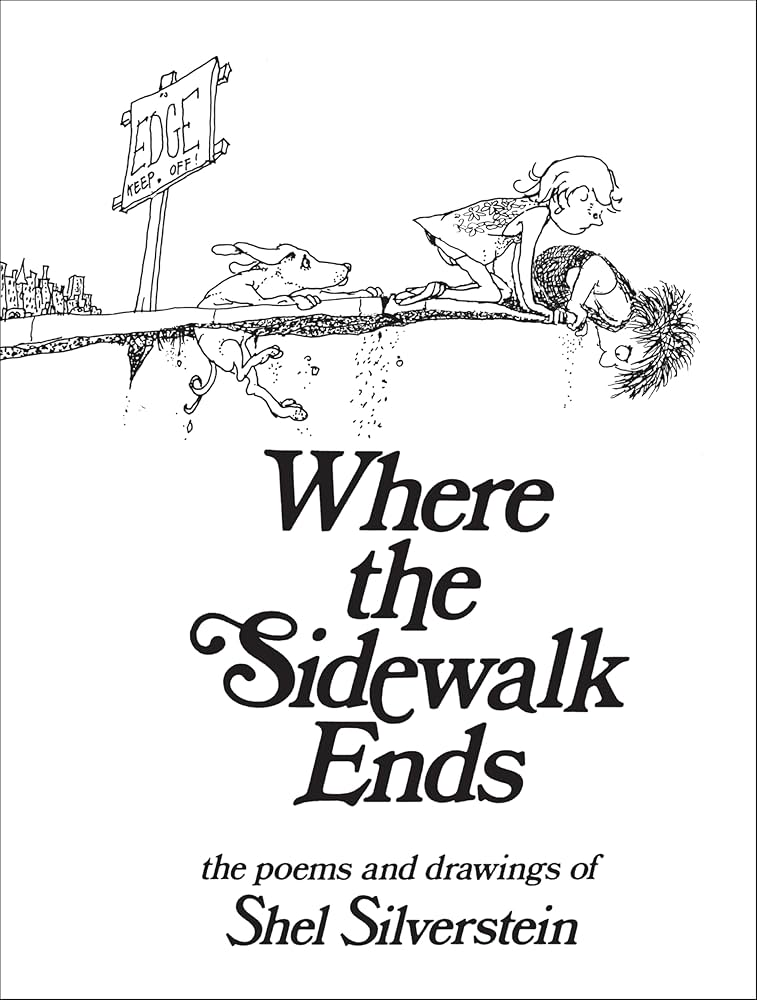
I’ll begin with my first exposure to these songs, Shel Silverstein’s Bury Me in My Shades (1962). Silverstein is probably best known today as a beloved author of poems and stories for children, but this was only one facet of the man and his career. He also had a notable career writing articles and drawing cartoons for Playboy and other magazines and another career as a singer and songwriter. Some songs he wrote for other, better-known performers, most notably Johnny Cash: Silverstein wrote Cash’s famous “A Boy Named Sue”, for which both Cash and Silverstein won Grammy awards in 1970. Other songs, he performed himself. His songs were generally characterized by a similar whimsical absurdism as his childrens’ poems. Some of them were straightforward musical adaptations of those poems. More of his songs applied that whimsical absurdism to “mature” themes, some drawn from his own very colorful personal life and others serving as satirical commentary on politics or culture. It can be jarring for people of my generation who grew up reading Where the Sidewalk Ends to hear the same man singing songs like I Saw Polly in a Porny or I Got Stoned and I Missed It, on the same album as a musical adaptation of Sarah Cynthia Sylvia Stout Would Not Take the Garbage Out.
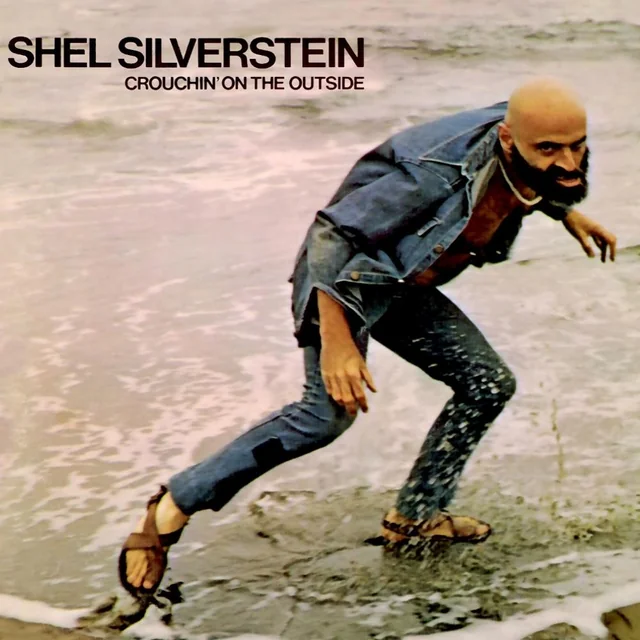
Bury Me in My Shades is one of his songs, satirizing the libertine Beatnik (proto-Hippie) culture of which he was a participant. The narrator of the song recounts how he and other “junkies and loners and coffee shop owners” gathered around as “the last of the hipsters [1] lay dying”.
The narrator then quotes the dying man as he dictates how his meagre possessions should be disposed of. Some bequests carry homey nostalgic overtones:
Send my sandals home to Mom
Hang my T-shirt away
Others show charitable, or at least sharing, impulses:
Give my pad to some needy lad
And tell him the rent is all paid
Another stanza, instructing them to “Give my Brooklyn chicks away, to any chap who needs them”, could also be chalked up to charitable impulses, but it’s also jarring in how it seems to imply a women-as-property attitude: presumably the Brooklyn chicks would have some say in whom they date after the Hipster passes. I hope my discomfort here is the intended result of deliberate satire on Silverstein’s part.
Yet other bequests indicate regret for unfulfilled potential:
Burn my guitar in Washington Squar',
'Cause I never learned how to play
Or unrecognized accomplishment:
Give all of my poems away
To anyone who'll read 'em
The dying hipster also gives instructions for his funeral:
Dig me a grave 'neath the coffeeshop
And let a sad folk song be played
Get everyone high on the moment I die
But bury me in my shades
That last line, the title of the song, is repeated at the end of each verse and multiple times in the chorus, making the Hipster’s most emphasized request that he wants to be buried in his shades. We are told in the intro that he was wearing his shades on his deathbed, “so like no one could tell, like whether or not he was crying”.
Sadly for the Hipster, the narrator and the other deathbed associates prove less than faithful to his wishes, as the narrator recounts in the final verse:
We threw his sandals out in the hall
We left his T-shirt lay
We sold his guitar at the corner bar
To someone who knew how to play
We smoked all his stash
And spent all his cash
And threw all his poems away
And Bob got his records and Ed got his books
And I got the poor beatnik’s shades
Musically, the song follows a folk song pattern, but with a syncopated rhythm [2]. The song uses a very loose variant of Ballad Meter, which as its name implies is commonly used in folk ballads. Ballad Meter is closely related to Common Meter (alternating lines of iambic tetrameter and iambic trimeter, recognizable by the test of “Can you sing it to the tune of Amazing Grace or the Gilligan’s Island Theme Song”), but is less regular and may insert additional unstressed syllables.
Silverstein takes the irregularity a step further and often starts lines spoken by the Hipster with a stressed syllable, making his lines trochaic or dactyl instead. This gives them a sense of emphasis and urgency, and also is useful in distinguishing the narrator’s words from those of the Hipster, similarly to how in Dr. Seuss’s Green Eggs and Ham, the protagonist speaks in iambic meter and Sam-I-Am speak in dactyl.
Like many of Silverstein’s other songs, Bury Me in My Shades is silly, but also clever and rather sad. I’ve always liked it, and I don’t think I would have gone down this rabbit hole had Shades not engaged my attention as strongly as it did. Silverstein uses his usual singing style, which is goofily bombastic and rather rough. This emphasizes the silliness and undermines the tragedy of the situation, but also (through careful enunciation) makes sure the lyrics are understood and can be considered by the listener.
The satirical message can be understood as a cautionary tale. The Hipster seems to be regretting what he has failed to pursue and accomplish. He's looking for solace in his community and hoping to accomplish one or two last things in his final requests, only to be betrayed by that same community. The junkies and loners did nearly the opposite of what he wanted, turning his life and death into a mere footnote apart from the song itself.
Rating: 7/10, recommended
Tie Me Kangaroo Down, Sport
The other Dr. Demento song that got me started was Rolf Harris’s song Tie Me Kangaroo Down, Sport. Rolf Harris was a popular Australian children’s entertainer, famous as the host of Rolf Harris Cartoon Time (1979–1989) and Rolf Cartoon Club (1989–1993). In 2014, Harris was convicted of multiple counts involving sexual abuse and child pornography.
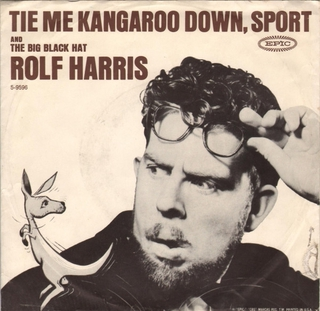
Kangaroo has had enough perennial popularity to have been covered by a number of other singers, most notably The Beatles (c. 1963) during a joint appearance with Harris in a TV special. It also appeared in a 2000 album by the modern children’s music group “The Wiggles”. While Harris wrote it in 1957, five years before Shades, it didn’t catch on outside of Australia until a few years later (1960 in the UK and 1963 in the US), making the songs roughly contemporary.
The events described in Kangaroo follow pretty closely the same story structure as Shades, but with “An old Australian Stockman” taking the place of the “Last of the Hipsters”, attended by “his mates” and giving them his final requests which are recounted by the narrator.
These requests are almost all instructions given to one or another of his mates about what to do with various Australian animals in his care. Various friends are told to tie down his kangaroo, watch his wallabies feed (because “they’re a dangerous breed”), keep his cockatoo cool, and take his koala back (“he lives somewhere out on the track”). Most of these instructions make little actual sense, serving merely to provide amusing imagery and a bit of clever wordplay. Probably the cleverest is this one:
Mind me platypus duck, Bill
Mind me platypus duck
Ah, don't let 'im go running amok, Bill
There’s also one verse, present in the original version and now generally omitted, which casually makes the shocking revelation that the Stockman apparently keeps Australian natives as slaves, but is now instructing his friend Lou to “let [them] go loose” because “they’re of no further use”.
The last two verses have the Stockman telling his friend Blue to “play your didgeridoo” while he passes, and giving Fred the unorthodox funeral instruction to “tan me hide when I’m dead”. As in Shades, the song closes with the narrator describing the outcome of the Stockman’s requests. This part is much briefer than in Shades, and Fred at least heeds the Stockman’s instructions better than the Hipster’s associates did:
So we tanned his hide when he died, Clyde
And that's it hangin' on the shed!
The song is very simple and repetitive, with most verses consisting of a single line repeated three or four times with minor variations and interjections. Similarly to Shades, it alternates between iambic meter when in the narrator’s voice and trochaic when in the Stockman’s.
The music is cheerful, upbeat, and fast-tempoed, inspired by Harry Belafonte’s calypso music which was just then becoming extremely popular. To my ears, the fast, regular beat mixed with the tightly-rhymed lyrics remind me of a comic opera “Patter Song”, such as Gilbert and Sullivan’s Modern Major General from The Pirates of Penzance.
The lyrics are inspired by a much older (first collected in 1905) Australian folk song The Dying Stockman, which is listed in the Roud Index as Roud No. 7994, separately from The Unfortunate Lad, despite thematic similarities. I will not be analyzing The Dying Stockman in detail, except to say that Kangaroo has a number of similarities to Shades (already mentioned) and other songs I’ll be reviewing that Stockman lacks. It’s my suspicion that the intro was the main part of Dying Stockman from which Harris took inspiration while the rest was a mix of Harris’s original work and the Unfortunate Lad tradition.
Kangaroo is a fun and enjoyable song, but not in any way a deep one. I used to rather like it, but less so than Shades and several of the other songs I’m reviewing, and learning of Harris’s crimes has rendered it thoroughly unenjoyable for me.
Rating: 5/10, fun but lacking substance.
The Streets of Laredo
Now we move on from parodies to serious songs, and from songs that are included in the review because of their significance to my own history of discovering this mini-genre, to songs that are significant more objectively and generally to the genre’s history.
The Streets of Laredo is an American traditional cowboy ballad. It has its own Roud Index number (23650, with 337 recorded references), almost as many as The Unfortunate Lad has directly. Its origin and authorship are uncertain, but it’s old enough to be attested in Cecil J. Sharp’s collection of folk music (compiled 1889-1923) as The Western Cow Boy [sic]. It’s been covered by a great many artists over the years, including Johnny Cash, Marty Robbins, and Arlo Gunthrie. I will be focusing on Cash’s version (1965), since that is the one I’m most familiar with.
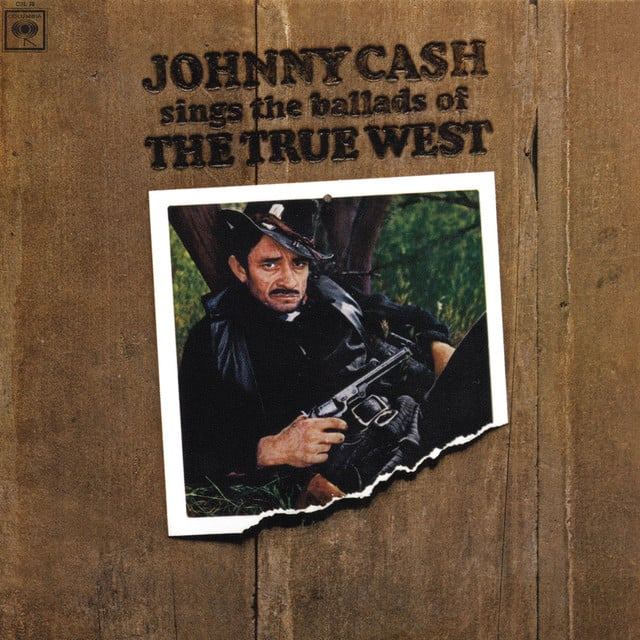
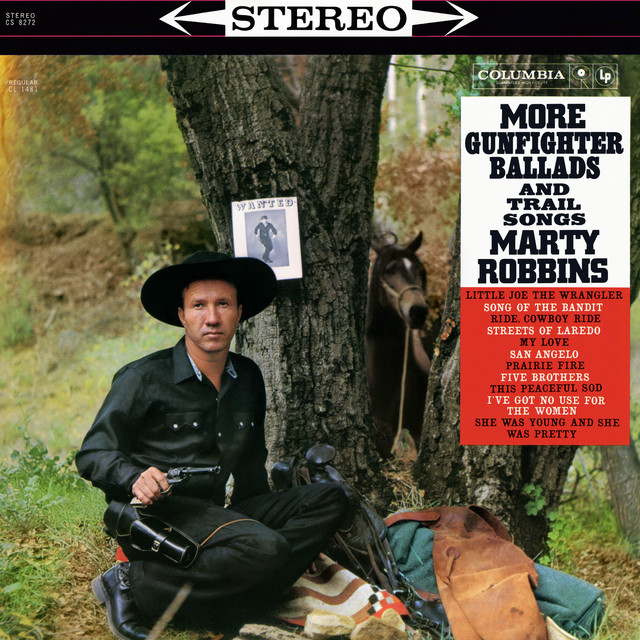
This song, too, follows the now-familiar story structure of the narrator arriving at a man’s deathbed, witnessing his dying speech which is recounted in the song and consists mainly of last requests, and concludes with the narrator telling how those requests were honored. Unlike Shades or Kangaroo, where the narrator is a long-time friend or associate of the dying man, the narrator of Laredo is a chance-met companion who hears and heeds the speech as an act of charity to a stranger. Cash’s version and many others start with the story of the chance meeting with “a poor cowboy wrapped in white linen [...] as cold as the clay”. The cowboy addresses the narrator, announcing that “I see by your outfit that you are a cowboy” and inviting him to “sit down beside me and hear my sad story”. The Cowboy recounts how he used to live a dashing life of riding, gambling, and frequenting “Rose’s” (which might be either a tavern or a brothel) before being “shot in the breast” and mortally wounded.The next three verses contain the cowboy’s dying requests. Two verses of these concern his funeral arrangements:
Get six jolly cowboys to carry my coffin.
Six dance-hall maidens to bear up my pall.
Throw bunches of roses all over my coffin.
Roses to deaden the clods as they fall.Then beat the drum slowly, play the fife lowly. [3]
Play the dead march as you carry me along.
Take me to the green valley, lay the sod over me,
I’m a young cowboy and I know I’ve done wrong.
And the next verse instructs the narrator to write a letter to the Cowboy’s mother informing her of his passing. It closes by cautioning the narrator thus:
But please not one word of the man who had killed me.
Don’t mention his name and his name will pass on.
This can be read two different ways. It may be intended to treat the Cowboy’s killer to Damnatio Memoriae [4], or it might be the Cowboy renouncing thoughts of being avenged, forgiving his killer, and focusing on his own shortcomings. I quite like the latter for its own sake, and moreover I am tempted to endorse it for the sake of drawing parallels between the Cowboy’s killer’s fate in Laredo and the Hipster’s own fate in Shades. But the themes of Laredo seem to cut towards the other interpretation, with the repeated line that “I’m a young cowboy and I know I’ve done wrong” and the subtext that the Cowboy seems to be presenting his death as a cautionary tale for the narrator’s benefit, which the narrator is taking to heart.
The second to last verse describes the Cowboy passing away around sunset as he finishes his tale, the streets also growing “as cold as the clay”, and then the narrator and some unnamed companions (implied by the use of the pronoun “we” without elaboration) carry out the Cowboy’s funeral arrangements precisely as requested, with the final verse being a reprise of the middle verse, identical except for substituting pronouns:
We beat the drum slowly and played the Fife lowly,
Played the dead march as we carried him along.
Down in the green valley, laid the sod o’er him.
He was a young cowboy and he said he’d done wrong.
The meter of the song follows a similar Ballad Form structure to Shades, but is adhered to much more closely and applied more regularly than Silverstein did. The minor Jazz and Blues influences of Shades are absent, for the obvious reason that Laredo predates either genre and comes from a separate musical tradition. The iambic/trochaic switch-up employed by both Silverstein and Harris is almost entirely absent in Laredo.
Notably, the chord progression of Laredo is almost identical to that of Shades, once you adjust for transposition of keys.
About half of the earliest versions in the Roud Index seem to contain some variation of the framing story of the chance meeting. The other half starts cold with what in Cash’s and Robbins’s versions is the third verse, beginning “It was once in the saddle, I used to go dashing” or something very much like it. The first Roud Index record with a framing story (the second record of the song archetype overall) is from 1929 and begins identically with “As I walked out on the streets of Laredo”, but there are also several other versions from the 1930s which set the framing story in other locations, most often “Tom Sherman’s barroom”, “Lathian’s barroom”, or minor variants thereof. By the mid-20th century, the version with the Laredo framing story appears to have been very firmly established.
Marty Robbins’s version (1960, five years prior to Cash’s) has fewer verses, omitting the instructions to inform the Cowboy’s mother and the “Six jolly cowboys” verse of the funeral instructions, while the “play the drum slowly” verse is used as a chorus rather than as a reprised verse. The verse describing the Cowboy’s death is similar, but has the notable difference that it occurs as the narrator is fetching him a glass of water, not at dusk with the narrator present.
The oldest version I can find in full is a recording by Dick Devall, released in a CD compilation published in 1996 [5] of African American music of the 1920s and 1930s, apparently recorded in 1929 [6]. I couldn’t find this recording in the Roud Index, although I did find a different recording by Devall there dated 1946. Devall’s rendition takes place in “Tom Sherman’s barroom” rather than Laredo, and largely follows the same structure as Robbins’s later rendition with the “play the drum slowly” verse as chorus. The verse about bearing news to the Cowboy’s mother, present in Cash’s version and absent in Robbins’s, is also present here in recognizable but modified form. The most significant change is saying “Don’t forget a word that I’ve told you” where Cash’s Cowboy said “But please not one word of the man who had killed me.” Devall uses a very loosely related melody for the song, which unlike that used by Cash or Robbins is syncopated in a similar pattern to the one Silverstein uses in Shades.
Overall, this is a beautiful song with effective and tragic imagery.
Rating: 10/10, no notes, for Cash’s version; 8/10, strongly recommended, for Robbins’s version; 6/10, recommended with reservations, for Devall’s version.
As a minor additional note, there are at least two direct parodies on Laredo which I think are worth mentioning in passing. One, performed in very similar form by the Smothers Brothers and the Kingston Trio c. 1961-2 (not sure which originated the bit, or if both were drawing on a third source), performs the first verse and the first line of the second verse identically to the standard form, but changes the second verse thus:
Singer 1: “I see by your outfit that you are a cowboy”
Singer 2: “I see by your outfit you are a cowboy, too.”
In unison: “We see by our outfits that we are both cowboys. If you get an outfit, you can be a cowboy, too.”
The song ends there.
Also in 1962, Alan Sherman released The Streets of Miami, which takes the tune of Laredo and substitutes lyrics about two New York lawyers visiting Miami for a working vacation, where the narrator gets into an argument with his partner over their expense accounts. This escalates into a Western-movie-style duel at High Noon where the narrator kills his partner and is allowed to escape back to New York. The final verse, sung in a minor key (an innovation of Sherman’s), is a tale of regret at being exiled to the icy wastes of New York for his crimes, finishing on a note of envy for his later partner whom he presumes to be in a Heaven that resembles the luxury hotel whose bill triggered the quarrel.
The Unfortunate Lad
Next, we look back to the long-promised ancestral song, The Unfortunate Lad, Roud Index No. 2. Even more so than Laredo, this song’s origins are lost in the mists of time. It has quite the variety of titles associated with it. “Lad” is sometimes replaced with “Lass” or “Girl” or “Soldier” or “Sailor”, depending on the identity of the dying person upon whom the song is centered. It’s also referred to (like Laredo being called The Cowboy’s Lament) as something like The Sailor’s Lament or A Young Girl Cut Down in Her Prime, in either case with other subjects variously substituted. It’s also given various titles derived from its opening lines or from its location. But Unfortunate Lad seems to be the best-attested form, as of the latter half of the 19th century when the record starts becoming clear.
There seem to be two competing interpretations of the song’s origin [7]. The conventional view is that The Unfortunate Rake is the older version of the song, dating back to Ireland in the early 19th century or before. At least one recent publication [8] claims to trace it to a c. 1800 Irish broadsheet called The Buck’s Elegy or The Buck’s Lament, which I will treat separately. Another recent publication [9] argues that the conventional view is badly mistaken, with many load-bearing pieces of evidence for the narrative being very old mistakes or speculation that have been uncritically accepted in the meantime. In particular, Jenkins and others have argued that The Unfortunate Rake, as a variant of The Unfortunate Lad, is a mid-20th century phenomenon inadvertently created by careless folklorists who came across older references to an unrelated Irish ballad, which coincidentally had a similar title to The Unfortunate Lad and, lacking detail about the song’s contents, assumed it to be an earlier form of the same song. Those assumptions fed back into popular culture because musicians informed by the folklorists’ conclusions started performing variations of the song under what they thought was the “original” title.
The oldest clearly-attested and unambiguously identifiable versions of the song date from English publications c. 1864, titled The Unfortunate Lad. I’ll be primarily analyzing one of these, a broadsheet ballad published by H. P. Such of London [10].
The narrative structure of the song is virtually identical to the first three quarters of the pattern of Shades, Kangaroo, and Laredo: the narrator is recounting a visit to the bedside of a dying man, reciting a verbatim account of that man’s dying speech. Like all three, a large part of that speech concerns funeral arrangements. The song ends there, omitting the final return to the framing story which details how the narrator and his companions honored the dying man’s request.
The dying man is encountered in a “lock hospital”, i.e. one dedicated to the treatment and quarantine of odious diseases. Karen Heath’s commentary on the song [11] explains that the original Lock Hospital was a 17th century institution in London for treating leprosy, but by the mid 19th century the term had shifted, referring instead to similar institutions targeted at sexually transmitted infection [12]. Unlike the Hipster from Shades or the Stockman from Kangaroo, whose causes of death were obscure, or the Cowboy from Laredo, who was mortally wounded in a gunfight, the titular Unfortunate Lad was most likely dying of syphilis. This implication is confirmed in the chorus, when the Lad laments his lover’s failure to tell him she’d infected him in time for him to take “salts and pills of white mercury”, which at the time were the standard treatment for syphilis. Evidence for its effectiveness is spotty at best, but at the time there was no clearly effective treatment and mercury was prescribed out of desperation.
The Lad is described as being “wrapped in white flannel”, nearly identical to how the Cowboy was “wrapped in white linen”. Like the Hipster and the Stockman but unlike the Cowboy, the Lad is not a stranger to the narrator, but rather the narrator’s “own dear comrade”. In the second and third verses, the Lad tells the narrator how he came to be “injured and sadly disordered” by his sweetheart and goes on to lament failing to heed his father’s chidings against the Lad’s “wicked ways”.
The last three verses give the funeral instructions. The first of these verses is nearly the same as would later appear in Cash’s rendition of Laredo. The six men and women who are to carry the coffin and pall are “jolly fellows” instead of “jolly cowboys” and “pretty maidens” instead of “dance hall girls”. The bunches of roses are given to the maidens so “That they may not smell me as they go along” instead of piled on the coffin. The next verse says to pile lavender and roses on and around the coffin and instructs them to say “here goes a young man cut down in his prime.” And the final verse is recognizably the forerunner of the chorus of Laredo:
Muffle your drums, play your pipes merrily,
Play the dead march as you go along,
And fire your guns right over my coffin,
There goes an unfortunate lad to his home.
There are a number of modern renditions that use the same tune Cash and Robbins used for Laredo, but we have no idea what tune was used in the 19th century. This was an example of a “Broadsheet Ballad”, a common publication format at the time that contained lyrics but no music. The metrical form of a ballad, as I alluded to in my discussion of Shades, was and is standardized enough that any ballad that follows the form can be sung, with relatively minor modifications, to any ballad tune. The most regular sub-form, Common Meter, allows the lyrics of such diverse songs as Amazing Grace, The House of the Rising Sun, Oh Little Town of Bethlehem, and the theme song from Gilligan’s Island to be sung to one another’s tunes without modification. The modern Laredo tune is borrowed from the otherwise unrelated traditional Irish ballad The Bard of Armagh.
Cecil Sharp’s handwritten notes, published in the Roud Index, do contain a fragment of sheet music for a 1904 version of Lad, under the title Sailor Cut Down In His Prime, along with Sharp’s note that the tune is the same as that of Henry Martin, a traditional Scottish ballad. This tune appears to be unrelated to the Bard of Armagh and as far as I know, we have no particular reason to think Henry Martin was a standard or even a common tune for Lad and its variants.
Rating: Incomplete, since we literally have no notes, making it hard to grade this as a song. Judging on the words alone, it’s not as tightly written a piece as its later Laredo incarnation. In particular, the morality tale aspects are too heavy-handed, the tone of resentment towards the “young woman” from whom the Lad caught the disease (while understandable) is less sympathetic than the Cowboy’s attitude of coming to peace with his demise, and I prefer the Laredo version of the imagery of the funeral verses.
The Buck’s Elegy
This is another broadsheet ballad, undated but probably from around 1800, about 60 years before the earliest known extant version of The Unfortunate Lad. As I’ve already mentioned, Bishop and Roud identify this as an early form of Lad, and Karen Heath is inclined to agree [14]. I am also inclined to concur with this assessment: Buck fits the pattern of Lad almost exactly, with only details changed. As with Lad, the narrator meets an old friend, here “my dearest comrade”, wrapped in flannel, although the color is unspecified and the meeting place is Covent Garden, now a touristy shopping district in central London, but then a notorious den of prostitution. The Comrade, like the Lad, wishes he had discovered his disease in time to treat it with white mercury, but doesn’t blame a particular woman for failing to tell him, nor does he include a verse about disregarding cautions against his wicked ways. In the third verse, the Comrade instructs the doctors to discontinue treatment as he prepares to die.
The last three verses, like Lad, concern funeral arrangements. The first of these three verses has no direct parallel:
When I am dead, wrap me up in funeral fine,
Pinks and fine roses adorning my head,
Come all gallows whores that do mourn after me,
Let them all follow me unto my grave.
The next two are much closer to their counterparts in Lad and Laredo. The six men carrying the coffin are replaced with two named captains to serve as pallbearers, and I suppose the “gallows whores” of the previous verse could be seen as the forerunners of the “pretty maidens” or “dancing girls” who would bear up the pall. And like Lad, he instructs a gun salute over his coffin. The “beat the drums” verse is also present in embryo:
Come bumble your drums, bumble them with crapes [sic] of black,
Beat the dead march as we go along.
Come draw up your merry men, draw them in rank and file,
Let them fire over me when I lay low.
Rating: Also incomplete, due to the same lack of notes. I slightly prefer it to Lad overall. Lad does improve on the funeral imagery, but I think Buck does a better job of conveying the same cautionary message without being quite so ham fisted about it.
St. James Infirmary Blues and Gambler’s Blues
Prior to The Unfortunate Lad, the trail gets murky. Before The Buck’s Elegy, it goes cold entirely [15], so we will proceed forward in time once more. Starting in the early 20th century, references to songs with titles like St. James Hospital or St. James Infirmary start showing up in folklore and folk song collections, including the same Cecil Sharp collection where The Streets of Laredo first definitively appeared. Many of these are categorized by the Roud Index as variants of either Lad or Laredo. Sharp lists St. James Hospital both as a variant of Lad and as an alternate title for Laredo. Heath (Ibid) notes, and the Roud Index confirms, that the early St. James versions are almost exclusively collected in the US or Canada, while the non-St. James versions of Lad are mostly British.
In the 1920s, a cluster of related Blues songs started showing up in the repertoires of several Jazz and Blues singers called Gambler’s Blues or St. James Infirmary (Ibid). The later title, or the minor variant St. James Infirmary Blues very quickly became standard. The former was published as sheet music in 1925 and as a record in 1927 by Phil Baxter and Carl Moore, while the latter was first recorded in 1928 by Louis Armstrong [16]. Since then, it’s been performed and recorded by countless artists. Cab Calloway, who first recorded the song in 1930, is probably the most iconically associated with the song. More recently, it’s been recorded by Arlo Gunthrie (2007) and Hugh Laurie (2011).
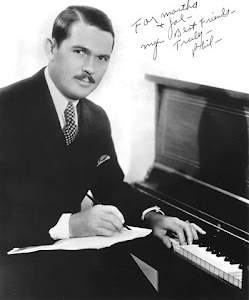
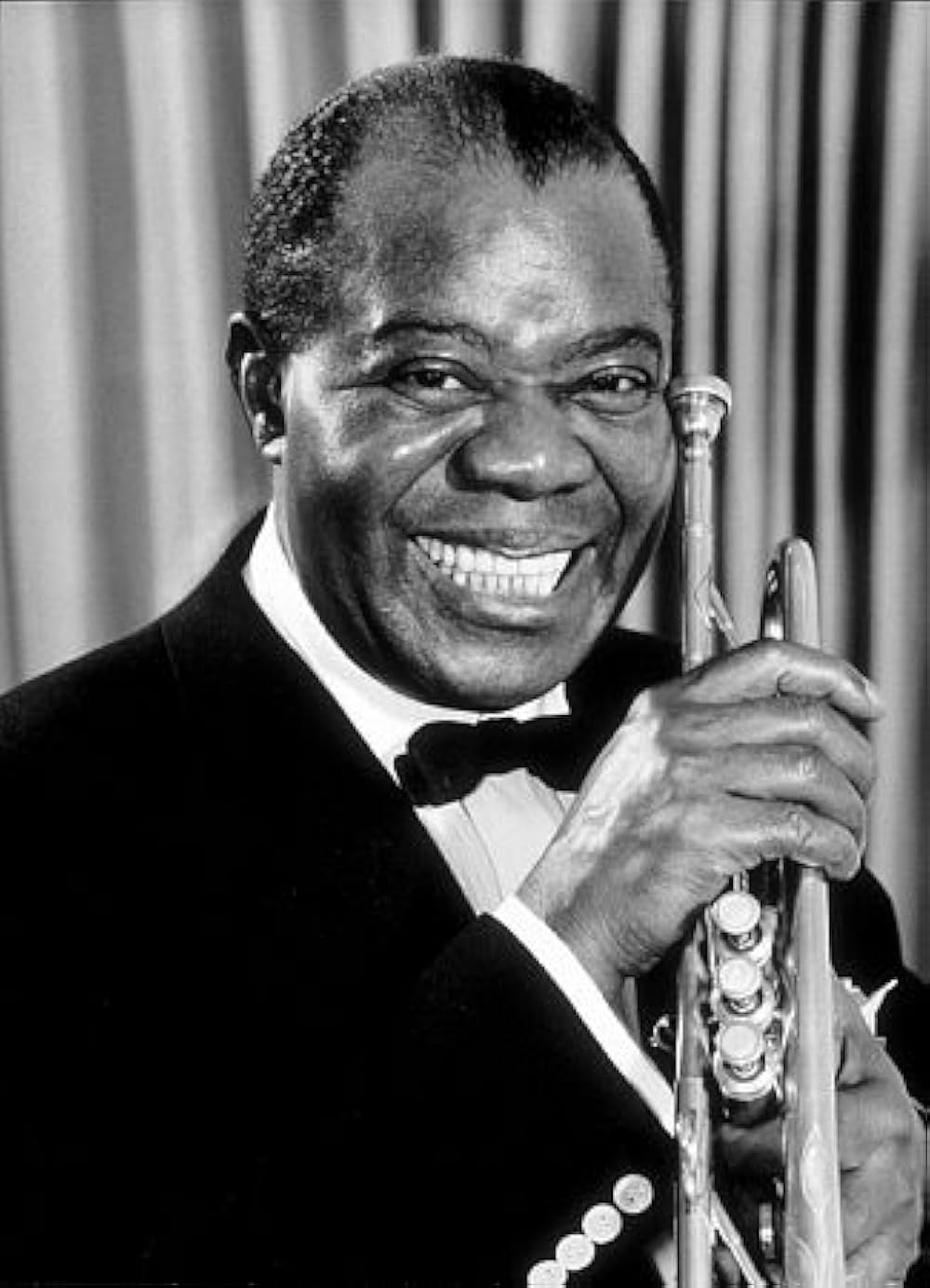
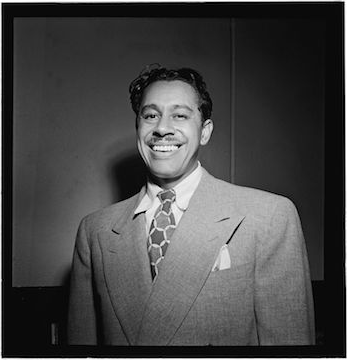
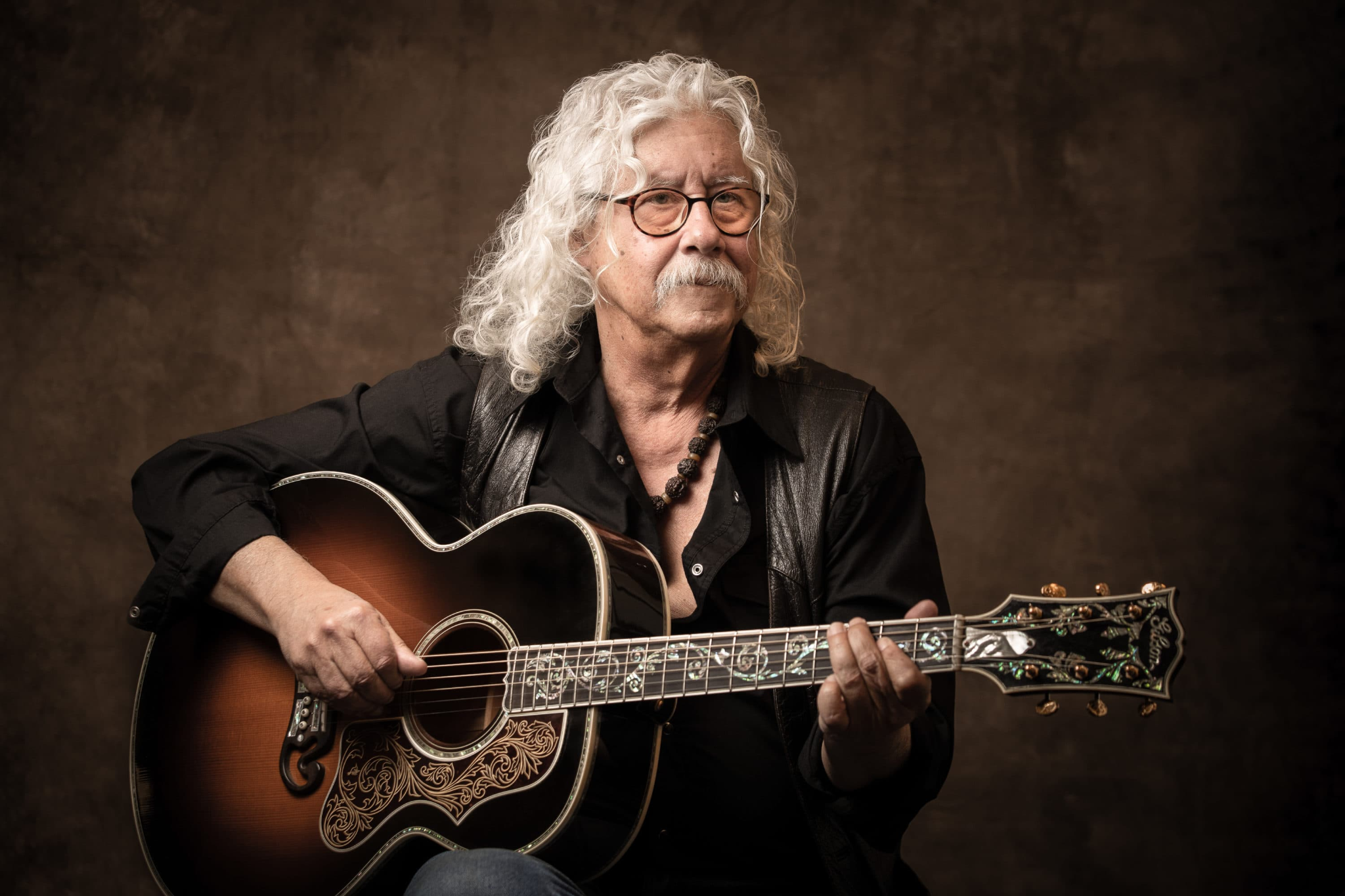
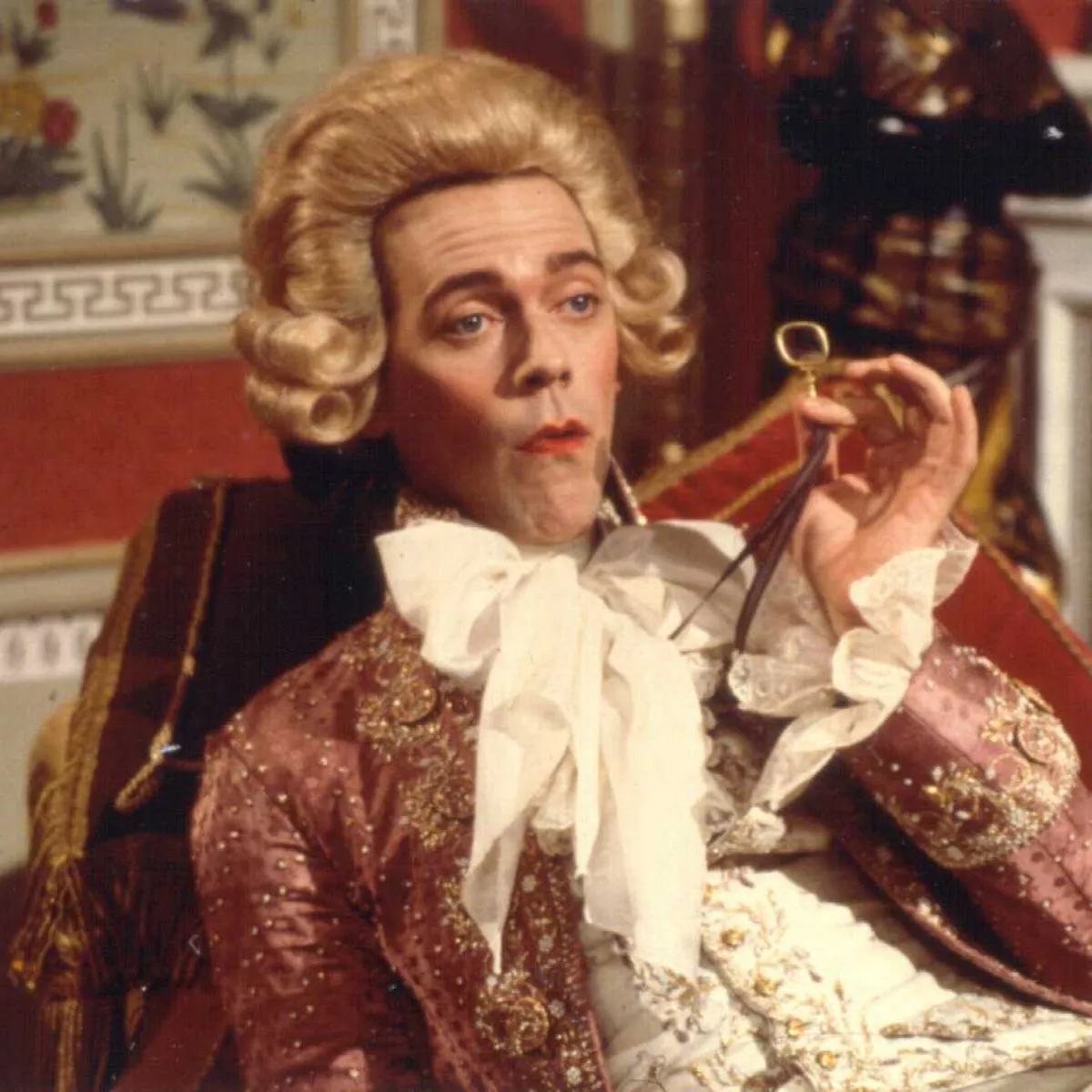
Top Row: Phil Baxter, Louis Armstrong, Cab Calloway Bottom Row: Arlo Gunthrie, Hugh Laurie
The original Baxter/Moore version used something close to a “talking blues” vocal style, accompanied by a tune that as far as I know is original. Louis Armstrong’s performance set the song instead to a different tune, extremely similar to an instrumental jazz piece recorded in 1924 by The California Ramblers, under the title Charleston Cabin [17]. Calloway, Guthrie, Laurie, and every other recording I’ve heard has used minor variants of the Armstrong tune.
Armstrong’s version of the song is lyrically short and simple, consisting of three verses. In the first, the narrator describes going down to the titular St. James Infirmary and finding his “baby” (presumably his girlfriend or fiance) there, apparently dead or nearly so:
Stretched out on a long white table
So sweet, so cold, so fair
The second verse, confusingly, shifts gears to talking about her as if she’s not dead, merely departed:
Let her go, let her go! God bless her
Wherever she may be
She can look this wide world over
She'll never find a sweet man like me
I can imagine a few interpretations of this apparent contradiction. The narrator might not be thinking clearly under the weight of his shock and grief and is slipping in and out of a fantasy that his sweetheart is alive and well but has left him; or, she might actually have left him and the bereavement of the previous verse is the fantasy; or he might be fully lucid of the situation but is rehearsing a lie he’s considering using to avoid talking about his grief again later.
The final verse tells how the narrator wants to be prepared for burial when he dies, dressed to the nines and employing some gambling symbolism:
When I die, want you to dress me in straight lace shoes
Box-back coat and a Stetson hat
Put a twenty dollar gold piece [18] on my watch chain
So the boys will know that I died standing pat [19]
Calloway adds two more verses at the end of this, one reminiscent of but distinct from the pallbearer verse familiar from Laredo, Lad, and Buck:
Then give me six crap-shooting pallbearers
Let a chorus girl sing me a song
Put a red hot jazz band at the top of my head
So we can raise Hallelujah as we go along
The final verse has the narrator addressing the audience, requesting “another shot of booze”, and telling them:
If anyone should ask you
Tell 'em I've got those St. James Infirmary blues
This neatly bookends the song with its title at beginning and end.
Laurie performs nearly identical lyrics to Armstrong’s version. Gunthrie’s is significantly different. He uses the two verses present in Calloway’s version but absent in Armstrongs and also adds two more verses at the beginning:
It was down by old Joe's barroom
On the corner of the square
The drinks were served as usual
And the usual crowd was thereOn my left stood Big Joe McKennedy
And his eyes were bloodshot red
And as he looked at the gang around him
These were the very words he said
In the context of the pattern we’re reviewing, this is enormously important. WIthout this verse, the nested first/second person narrative structure of all five other songs we’ve looked at is missing from St. James, but with it the structure is present. The scene being set in “old Joe’s barroom” is similar to Dick Devall’s version of Laredo, which takes place in “Tom Sherman’s barroom”. There’s still an interesting wrinkle, that in all previous songs, it’s the speaker being quoted by the narrator who is dying, but here it’s a third character, the second character’s “baby” who seems to be dying, triggering the second person (Big Joe McKennedy in Gunthrie’s version) to consider his own mortality.
Heath [20] has an interesting interpretation of this modification. She believes the same thing was implied in Lad where the dying man was encountered “by” or “near” the Lock Hospital rather than inside of it, and that since these hospitals primarily treated women suffering from syphilis, the man must have discovered his wife or sweetheart among the afflicted. If she had it, then his death was sure to follow. If St. James is taken to be a retelling of the same story as Lad, then the same thing is happening here: Big Joe has discovered his sweetheart dead or dying of a communicable disease [21] and realized that he was also mortally ill of the same disease. This also suggests another interpretation of the “let her go” verse: for his sweetheart to have caught syphilis and given it to Big Joe suggests that she got it from somewhere else. So perhaps Big Joe is accepting his late sweetheart’s newly-revealed infidelity at the same time he’s processing his grief over her death.
Crucially to the history of the song, the “Old Joe’s barroom” verse was not original to Gunthrie, nor were the pallbearers and “another shot of booze” verses original to Calloway: both were present in the Baxter/Moore original version. It appears that Armstrong trimmed more than half of the Baxter/Moore lyrics, which were gradually reintroduced into the song’s tradition by other artists over the following years and decades. There are several minor differences between the original lyrics and those of later versions: many spoken asides, the second person being named Sam Jackson instead of Big Joe McKennedy, and various minor differences in wording. But the structure of the story and most of the phrasing of Calloway’s and Gunthrie’s versions are closely derived from the Baxter/Moore version.
There is one more verse that’s present in the Baxter/Moore original and in Gunthrie’s cover, but not any of the other versions I’ve listened to. Immediately after the verse where Big Joe or Sam Jackson sees his sweetheart, he describes her funeral procession, where her hearse is pulled by “Seventeen coal-black horses”, and describes
Seven girls going to the graveyard
And only six of them are coming back
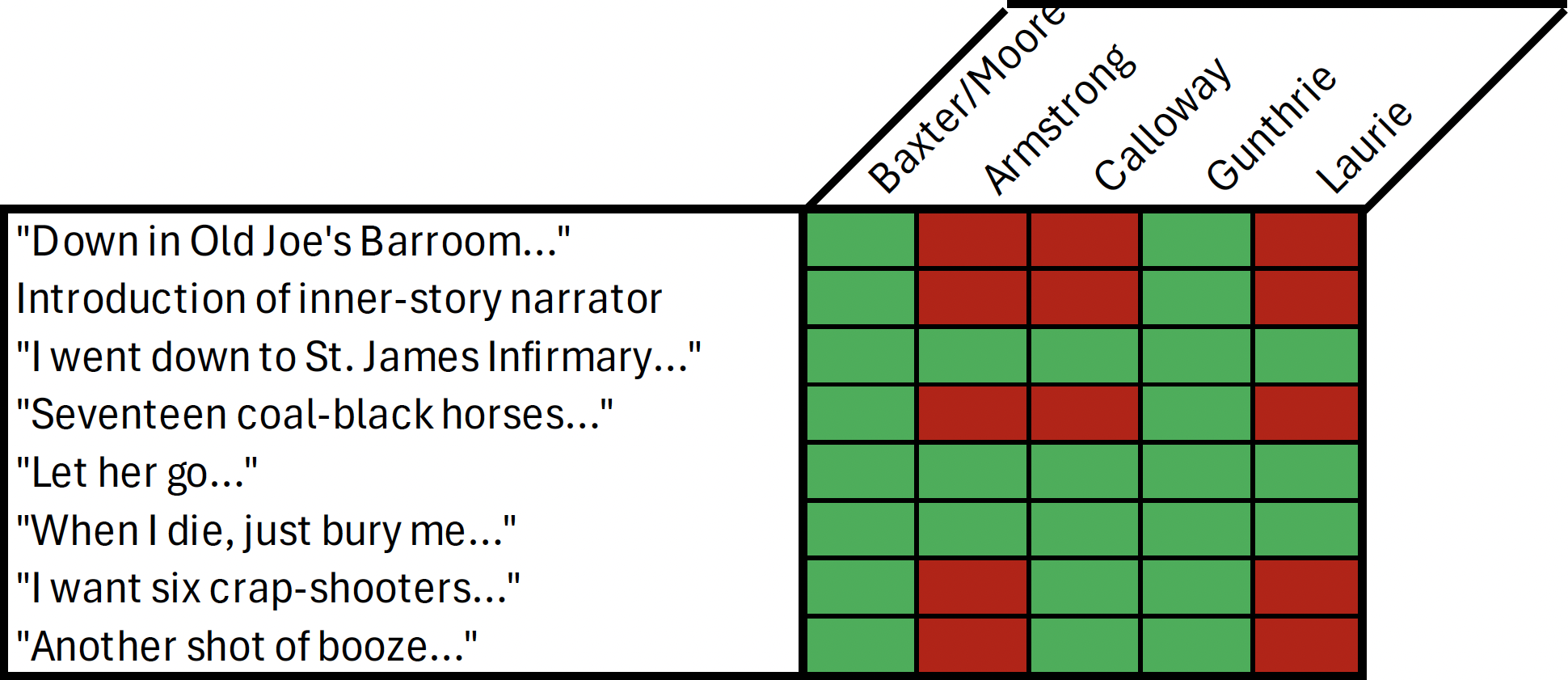 Green indicates which verses were in each version of the song
The tune Baxter wrote for his and Moore’s original version of the song is unique among these five recordings of the song. It's an extremely slow and somber jazz melody which puts me in mind of the baroque song Dead March from the third act of Handel’s 1738 oratorio Saul. The latter song is very commonly played at state funerals in many countries, including Britain and the United States, and I expect it is the same Dead March referred to in Laredo, Lad, and Elegy. If this resemblance was deliberate on Baxter’s part and not merely coincidence or figment of my imagination, it seems a very significant link between St. James and the Lad tradition.
The tune Armstrong used and which became standard for St. James, which as previously mentioned seems to be closely derived from Charleston Cabin, is faster paced and more upbeat than Baxter’s version. Armstrong uses his signature style of alternating between playing the melody on the trumpet and singing verses while his band plays accompaniment. Calloway sings the lead vocals with few pauses, accompanied by his orchestra. Laurie plays an extended piano intro and starts singing along with it about halfway along. After a brief intro, Guthrie sings throughout the rest of the performance, accompanying himself on his guitar. These arrangement choices probably go a long way towards explaining the omitted verses: Armstrong and Laurie pare the lyrics to the bone in order to make room for the instrumental segments. Calloway’s vocals take center stage, so he can fit more verses while still keeping it in his standard song length of a little less than three minutes. Gunthrie can fit even more in because he’s comfortable recording much longer songs: his most famous original song, Alice’s Restaurant (1967) [22], clocks in at eighteen and a half minutes.
All five versions of the song are solid interpretations of hauntingly beautiful lyrics. Baxter’s music fits the mood of the lyrics perfectly, while the music used by Armstrong et al is a stronger tune in its own right. This was my first and only exposure to Baxter and Moore, but I’ve been at least a casual fan of Armstrong, Calloway, Laurie, and Gunthry as musicians for quite some time [23], and they’ve all lived up to their usual standards with their renditions of this song.
Rating: 8/10 strongly recommended, overall. Which performance is best is a matter of taste; my ranking would place Gunthrie’s first, followed by Calloway’s.
Dying Crapshooter Blues
Dying Crapshooter Blues is another song that cropped up in the historical record in the 1920s. It’s conventionally attributed to the great early Blues singer Blind Willie McTell, who first recorded the song in 1940 and then re-recorded it in 1956 with a spoken intro claiming that he’d written it over the four year period from 1929 to 1932. This claim is seemingly contradicted by several recordings by different performers (Martha Copeland being the first) in 1927, which Max Haymes [24] attributes to misrecollection of dates on McTell’s part. Robert Harwood [25] has a different interpretation, considering it a settled fact that Crapshooter was written by Porter Grainger, who was the credited songwriter on Copeland’s recording.
There are a number of covers of Crapshooter after McTell’s recordings, but it doesn’t seem to be anything like the major genre standard that St. James became. My favorite of these is by The Wiyos, recorded in 2007. The song appears to be strongly associated with McTell, and if it was at all popular as a live performance in the 20s and 30s, this does not seem to be attested in written or recorded sources.
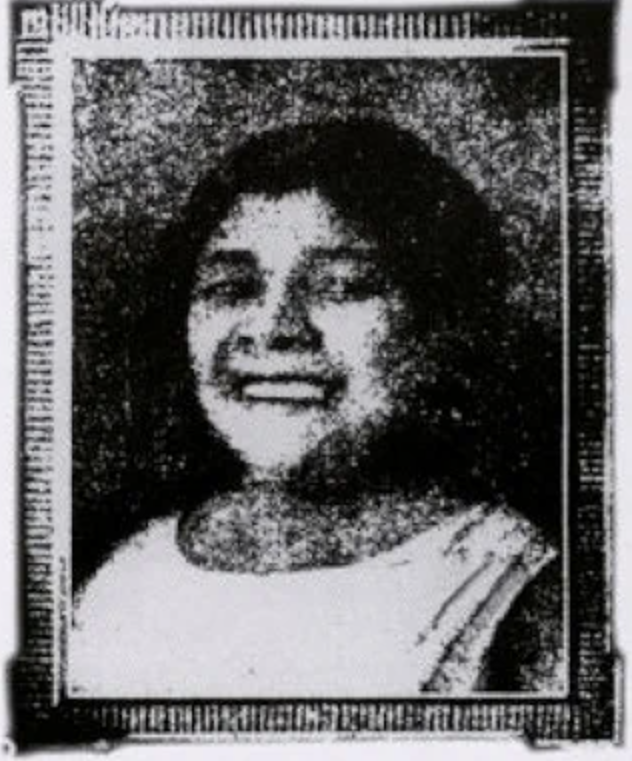
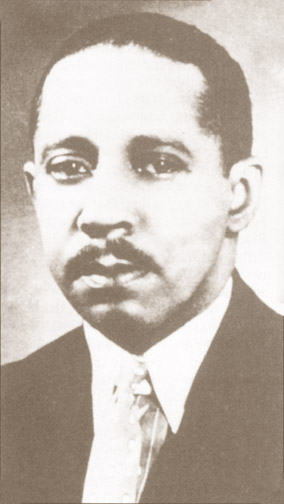
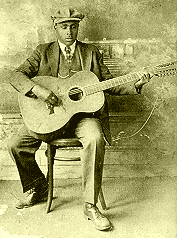
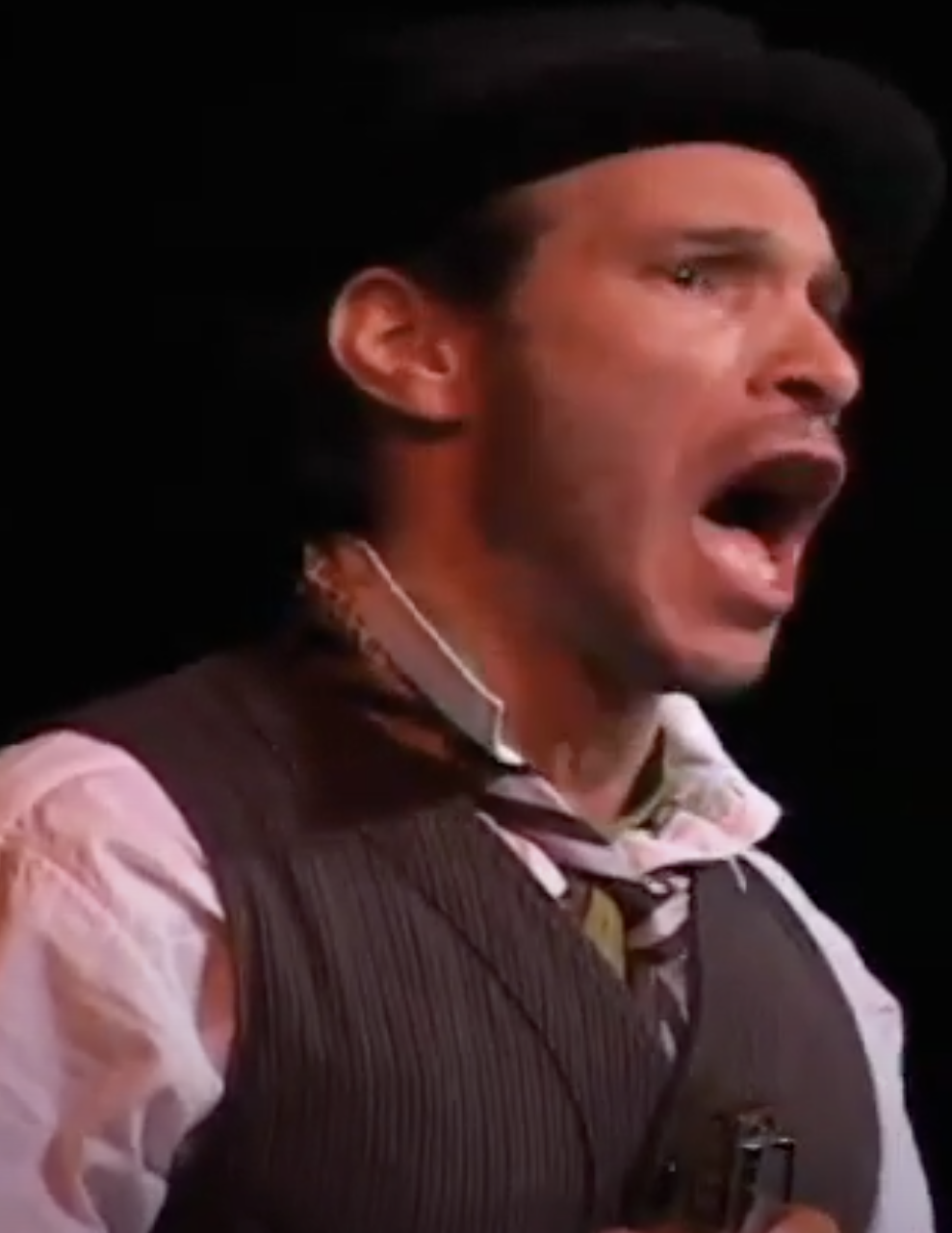
Left to right: Martha Copeland, Porter Grainger, Blind Willie McTell, and Michael Farkas (Wiyos)
In McTell’s version, the narrator begins by introducing the main character, Jesse, whom he refers to as his “buddy” but describes in unflattering terms. Jessie was a “wild, reckless gambler” who “used crooked cards and dice”. The narrator tells how Jesse won and spent a great deal of money, ruining many other gamblers in the process and turning Jesse’s own heart to stone, “hard and cold as ice”.
Then Jesse had a very bad day. First “Sweet Loreta” leaves him and breaks his heart, which presumably took some doing given what we just heard about the organ in question. Then Jesse gets shot by police.
A “gang of crapshooters and gamblers” gather around Jesse’s bedside as Jesse announces that he is dying and describes his desired funeral:
Eight crapshooters to be my pallbearers
Let 'em be veiled down in black
I want nine men going to the graveyard, bubba
And eight men comin' back
This goes on for a total of six verses of dying oration. The second of these verses seems to be repentance for his card-cheating and dice-cheating ways and a request for shows of forgiveness from his fellow gamblers:
I want a gang of gamblers gathered 'round my coffin-side
Crooked card printed on my hearse
Don't say the crapshooters'll never grieve over me
My life been a doggone curse
He also makes understandably spiteful requests for the police, sheriff, mayor, judge, and prosecutor who had persecuted his underground gambling career and jailed him fourteen times, to participate in the funeral procession, with the sheriff playing blackjack and the judge placing a pair of dice in Jesse’s shoes as he’s laid to rest.
The last two verses of Jesse’s requests contain a list of large numbers of people he wants to participate in the procession: sixteen each of crapshooters, bootleggers, and “racket men” (gangsters); and 22, 26, and 29 women respectively from various hotels and cities (I’m assuming dance troupe performers).
The song closes with the narrator saying how Jesse “went to Hell bouncing and jumping” and instructed the attendants to dance the Charleston in his final moments. Then the final verse tells how the narrator and present continued this dance in the immediate aftermath of Jesse’s death, as they carried away his body:
One foot up, a toenail dragging
Throw my buddy Jesse in the hoodoo wagon
Come here mama with that can of booze
The dyin' crapshooter's - leavin' the world
The dyin' crapshooter's - goin' down slow
With the dyin' crapshooter's blues
The Grainger/Copeland version of the song has two major lyrical differences from McTell’s. One is that the police shooting doesn’t appear, nor does the song take place at Jesse’s deathbed. Instead, Jesse says:
I feel so doggone blue
I want to die today
The devil told me what to do
But I ain’t had my say
This then segues into Jesse telling the narrator and others, “I guess you all should know / how I want to go”, introducing the funerary instructions. The other change is that the theme of the devil and damnation, mentioned only in passing in McTell’s version, is alluded to several times throughout the Grainger/Copeland version. There are also many minor changes in phrasing that don’t do much to change the meaning or the story structure.
The two songs are radically different musically. The Grainger/Copeland is set to a slow, sad, dirge-like song with jazz elements, which I think is original but reminds me both of the tune Baxter wrote for his and Moore’s Gambler’s Blues and (especially in the piano accompaniment) of Chopin’s funeral march. McTell’s is a solo performance, with “talking blues” vocals and accompanied by blues guitar harmony. I hear some resemblance between McTell’s guitar accompaniment and the vocals sung by Copeland, but it’s a fairly distant one. McTell also employs a noticeable shift in rhythm and vocal style between when the narrator is quoting Jesse and when he’s speaking on his own account; this element is absent from Copeland’s performance.
The Wiyos cover the song with a third distinct musical style. The tune and accompaniment are clearly derived from McTell’s, but are arranged for a three-piece band rather than a solo performance and shift it to a fast-paced danceable jazz style that feels very different from McTell’s blues guitar. Like Copeland and unlike McTell, they fully sing the vocals. They use and further emphasize McTell’s distinction in vocal style between Jesse’s and the narrator's voices. The Wiyos stick closely to McTell’s lyrics, but with a number of minor edits. Their one major lyrical change is verse in which Jesse is shot, where they omit any mention of “Sweet Loretta” and instead describes the shooting (which happened under unspecified circumstances in McTell’s version) as occurring during a police raid on an illegal gambling event.
Apart from the musical genre shift, I believe the core distinction between the three different performances is the subtext of the song. The Grainger/Copeland version is a story of the narrator’s sorrow at her (former?) friend’s damnation. The McTell version is about the narrator’s grief for a lost friend despite Jesse’s sins. The Wiyos version focuses on the vibe of Jesse’s incongruous requests for a celebratory atmosphere as he dies and is buried.
On the question of authorship, I think Harwood has the better of it in attributing it to Grainger. He seems to be basing his conclusion on studies of Grainger’s life and a recorded interview where Copeland talks about the origin of the song, while Haymes seems to be relying almost exclusively on information by and about McTell.
On the closely related question of McTell’s honesty, I think both Harwood and Haynes might be misreading McTell’s 1956 intro. In this intro [26], McTell describes finishing the song for the 1932 funeral of his friend Jesse Williams. Williams was dying after being shot by police and requested McTell play it at his funeral. McTell says that he arranged most of the funeral pomp described in the song, paid for by Williams’s father, except for the girls from North Atlanta, which was too far away to arrange. Crucially, McTell says the following in the intro:
I had to steal music from every which way to get it, to get it, to get it to fit. But I, I, messed it up in a way just to suit him. I finally played what he wanted…
To me this sounds like McTell was explicitly not claiming the song was original. At most, he’s claiming credit for an arrangement made of elements he says himself that he stole from others. He says in the same intro that Jesse Williams was buried in New York, which was where Grainger lived and where Copeland recorded her version of the song. I can imagine a sequence of events where Williams had heard the song performed by Copeland or another of the artists who got it from Grainger and described it to McTell. McTell in turn made an arrangement based closely on Grainger’s lyrics (as relayed by Williams, possibly supplemented by unattested derivative works that McTell heard on his own) set to music that started out as an unfinished original composition that McTell had come up with a few years previously. The way McTell described it, I expect it was an iterative process with him playing improvised versions of the song for the dying Williams while Williams gave him feedback.
Crapshooter is still a much more serious song than Shades or Kangaroo, but its tone contrasts with the last several songs (Laredo, Lad, Buck, and St. James), the former three of which are as serious as a proverbial heart attack, and the last of which is lightened only by being arranged to an upbeat jazz tune in most renditions. Crapshooter still covers a dark subject matter and treats it tragically, but employs absurd imagery that carries undercurrents of laughter in the face of death.
Rating: 7/10 recommended for both the McTell version and the Grainger/Copeland version; 9/10 very strongly recommended for the Wiyos version, which is an absolute banger, brilliantly performed and building excellently on the writing of Grainger and/or McTell.
Green Fields of France
We reach the last major song that is conventionally considered to be part of the Unfortunate Lad tradition [27]. As a change of pace from the last few songs, its origin is clearly attested and undisputed. This is No Man’s Land, written by the Scottish-Australian folk musician Eric Bogle in 1975-6, It’s also known as Willie McBride or The Green Fields of France [28]. It’s been covered by a number of other performers, including The Dropkick Murphys, The High Kings, The Clancy Brothers, and John McDermott of The Irish Tenors. All the covers I’ve heard stick very close to the original, which simplifies my task as a reviewer.
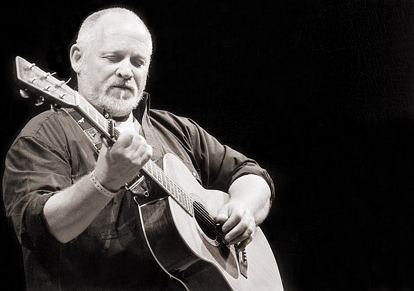
This song is quite a significant departure from the familiar story structure. The narrator is walking through France and stops to rest at the grave of a fallen soldier from the First World War, a private named William (or Willie, in most covers) McBride who died six decades before the song was written. Based on the name and circumstances, McBride was likely an Irishman [29] enrolled in the British Army. It’s more likely than not he died in the Battle of the Somme, but soldiers died of bullets, shells, accidents, and disease even in “quiet” areas of the front.
And I see by your gravestone that you were only nineteen
When you joined the glorious fallen in 1916
Well I hope you died quick and I hope you died clean
Or, William McBride, was it slow and obscene?
Interestingly, and in contrast to our other songs, the narrator is addressing his remarks to the late Pvt. McBride, not to the audience. In the next verse he wonders who yet survives who knew and misses McBride, if he had a “wife or sweetheart” who still carries memories of her young lost love in her heart [30], but he also considers the alternative:
Or are you a stranger without even a name,
Forever enshrined behind some glass pane,
The third verse contrasts the landscape in which McBride died, a horrifying landscape of guns, barbed wire, poison gas, and trenches, with the green freshly-ploughed fields of modern France, leaving the war graveyards as the only reminder of the carnage of six decades prior:
But here in this graveyard that's still No Man's Land
The countless white crosses in mute witness stand
To man's blind indifference to his fellow man.
And a whole generation who were butchered and damned.
Left: Part of the Somme battlefield (Deville Wood) in July 1916
Right: The Rancourt (British) Military Cemetery, one of many graveyards and memorials on the Somme battlefield.
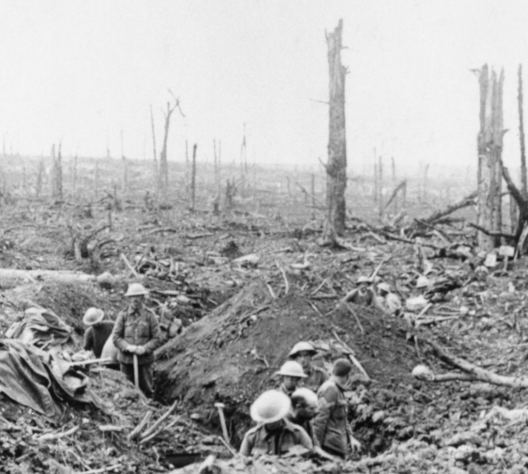
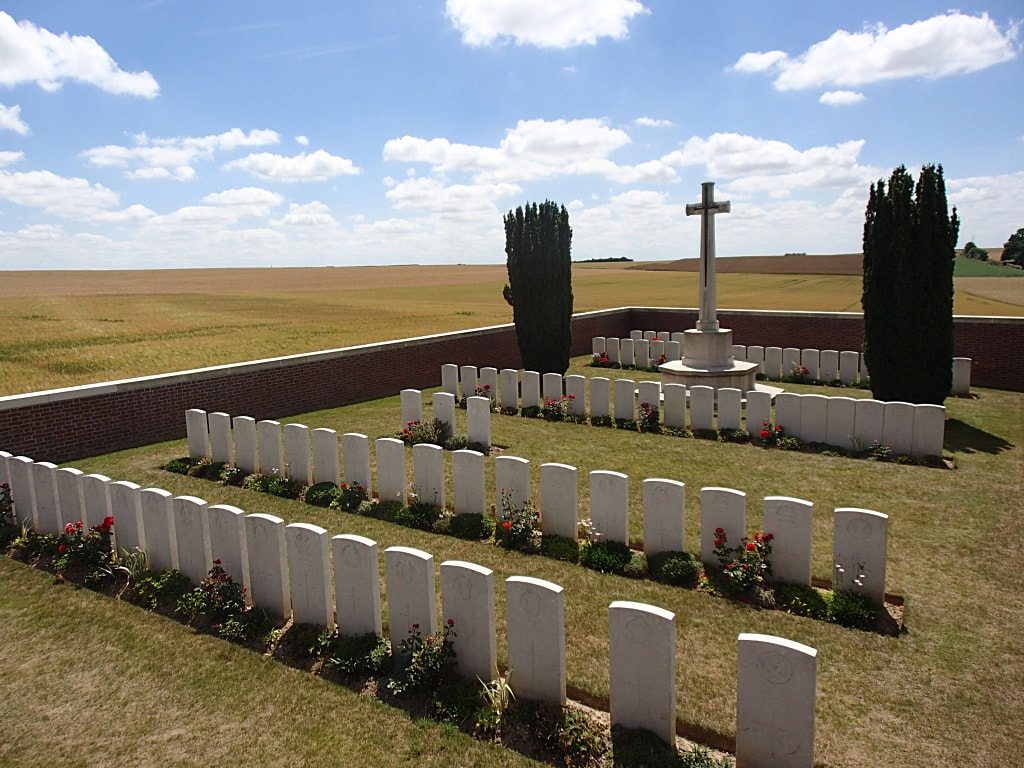
In the final verse, the narrator wonders what McBride thought about the reasons for the fighting, if he and his fellows “knew why they died”, if they believed in “the cause”, if they believed that the war would end wars. The narrator sadly informs them that the last hope in particular was soundly disproven by history, that
Well the suffering, the sorrow, the glory, the shame
The killing, the dying, it was all done in vain,
For Willie McBride, it all happened again,
And again, and again, and again, and again.
Between the verses, Bogle uses a variation of the verse recognizably shared between Laredo, Lad, and Buck as the chorus:
Did they Beat the drum slowly, did they play the pipes lowly?
Did the rifles fire over you as they lowered you down?
Did the bugles sound The Last Post in chorus?
Did the pipes play The Flowers of the Forest?
Besides changing tense and pronouns and rephrasing the instructions as questions, Bogle also reorders the lines and changes the Dead March for two songs commonly used in British and Commonwealth military funerals. At least some covers, such as McDermott’s, re-inserta close variant of Dead March in the second line, making it “Did they sound the Death March as they…”
Bogle performs the song to a tune closely derived from the same Bard of Armagh traditional Irish ballad tune that has become the standard tune for Laredo and Lad. I might be imagining it, but I think Bogle might also have worked in some motifs from Flowers of the Forest as minor elements. Between the choice of tune and the inclusion of the chorus, it seems very likely that Bogle deliberately constructed the song as part of the Lad tradition. I can’t say for sure if he had symbolic significance in mind or merely found the mood of the song appropriate, but the link to Laredo as a cautionary tale against senseless violence fits France perfectly.
Bogle wrote the song while touring battlefields, war cemeteries, and memorials in France and meditating on the horrors of war in general and the First World War in particular. He’s said that the particular William McBride of the song is fictional, intended to be metronymic for all the dead of that war, with the name McBride chosen for its Irish connotations and to rhyme with “graveside”. As it happens there were approximately twenty soldiers of that name who died in the Great War, eleven of whom are known to be buried in battlefield cemeteries in France or Belgium [31].
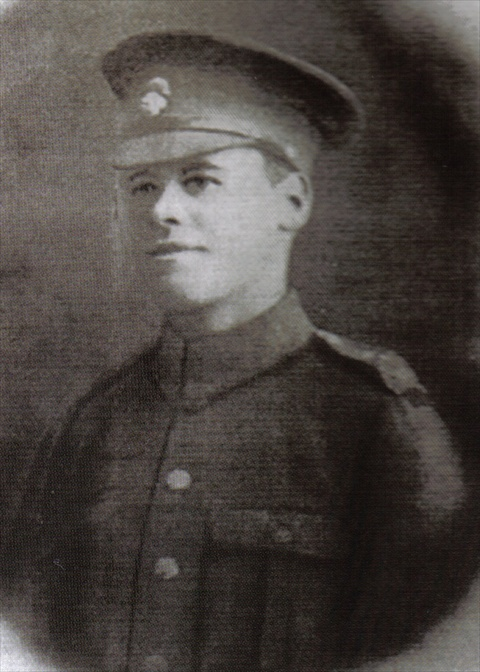
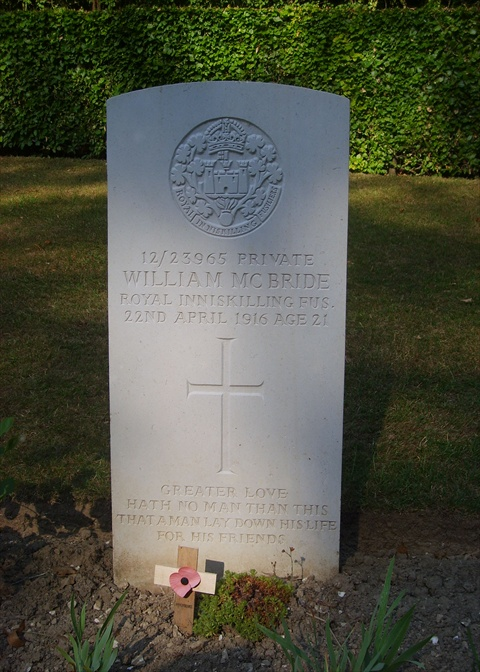
Of the eleven real William McBrides killed in the war and resting in France, this is the one who has been identified as most closely resembling Bogle’s fictional McBride [32]
France is widely considered one of the greatest anti-war and First World War memorial songs of all time, and I am inclined to agree. I’ve quoted from its lyrics with less restraint than I have most of the other songs, including a bit over half of it in relatively large blocks, because I want to make sure I convey its beauty.
Rating: 10/10. Bogle’s original recording and every major cover I’ve heard of this song have been nearly uniformly outstanding. If I had to choose a favorite among them, I’d probably choose McDermott’s, with Bogle’s original as a very close second. Bogle has said that McDermott’s his favorite cover of the song as well.
The Great Conch Train Robbery
And now for something that isn’t quite completely different, but which is radically different in tone from France and of the other serious songs we’ve been covering. It’s also tied to the Lad tradition in a much more tenuous manner than the other songs.
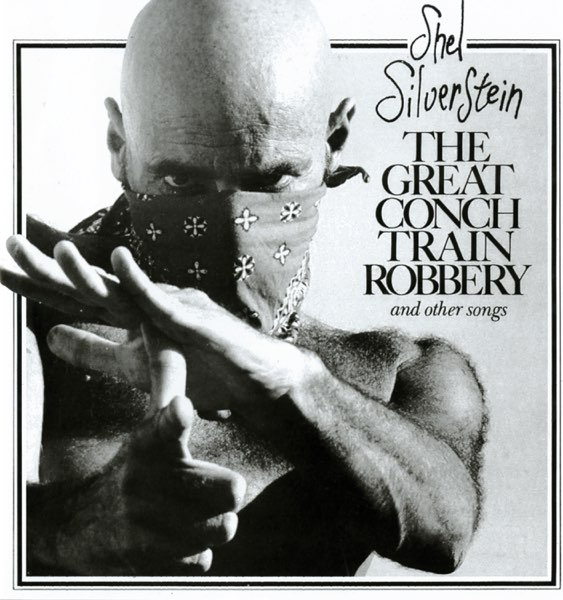
The Great Conch Train Robbery (1979) is another song written by Shel Silverstein, the author and performer of Shades. It takes place in the town of Key West, Florida, where a local called Sam the Shrimper stands up in Sloppy Joe’s bar and declaims to all present that,
...I'm tired of being a shrimper
Cuz a shrimper's life's too tame
So I'm gonna rob [33] the Conch Train, boys,
And be like Jesse James.
The narrator then explains to the audience that the Conch Train is “a tourist toy” used for sightseeing trips and is “like some weird ride from Disneyland”. If anything, this undersells the absurdity of Sam’s proposed career change. The Conch Train is real [34]; it’s a rubber-wheeled tram with open-sided cars (similar to the ones that shuttle guests to and from amusement park parking lots), styled like an old-fashioned steam train, that drives around city streets at little more than a jogging pace for a one-hour tour.

Sam defends his plan to the audience by explaining that the tourists carry cash, jewelry, and fenceable cameras and mopeds. But the real selling point seems to be the glory of being the first man in history to rob this particular train. The chorus of the song also emphasizes that Sam is looking to imitate a legendary outlaw in the Old West, finishing
[In] case you didn’t hear me the first three times
[I’m] gonna be like Jesse James
The narrator then tells us how Sam seduced the engineer of the Conch Train, Betsy Wright, and convinced her to join the heist by slowing the train down and allowing Sam to do his thing [35].
On the fateful day, Sam jumps naked out of the ocean, where he had been hiding, onto the train and holds up the tourists with his filet knife. Things do not go well for our hero [36], as near the back of the train rides Kelso Bolls, whom the narrator describes as “A redneck of respect and a marksman of renown”, who draws a concealed pistol and shoots Sam three times. The narrator spends two full verses describing Bolls and his one-sided shootout with Sam, explicitly comparing them to two classic Western movie stars:
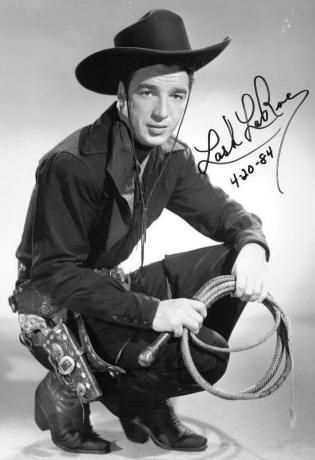
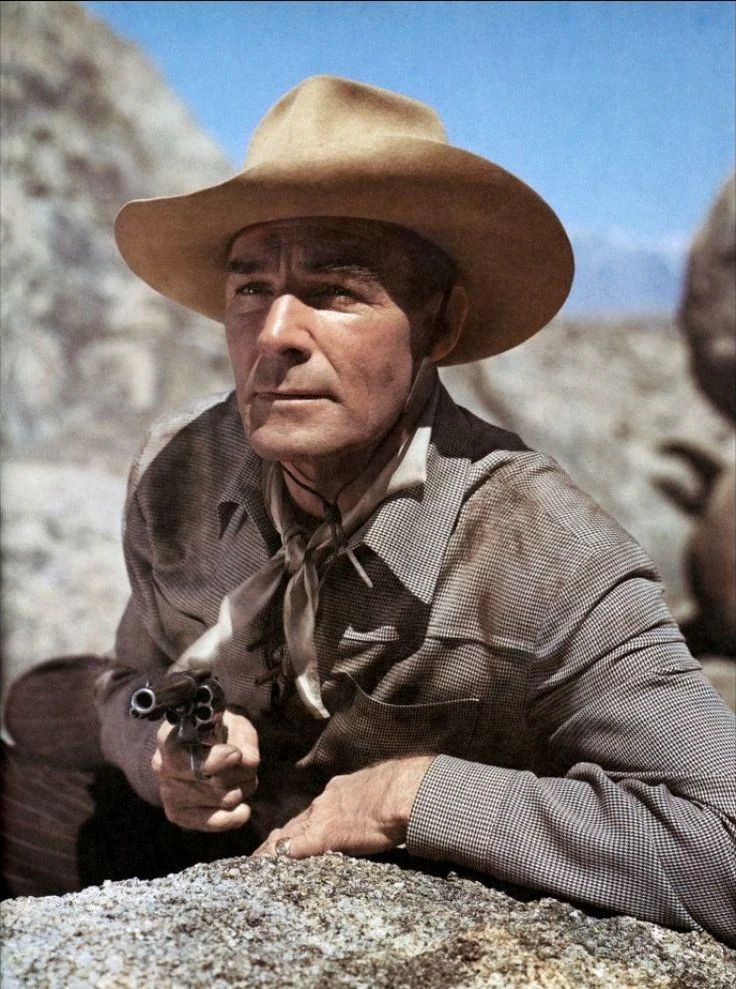 …and the third time that he shot poor Sam,
You could see in both their eyes Lash LaRue [Left] and Randolph Scott [Right] Beneath the Western skies. [37]
The closing verses are what at long last converge towards the deathbed ballad format, as a group that includes the narrator, Betsy, and Kelso carry Sam back to the nearby beach and listen to his dying words. Sam bears remarkably little ill will towards his killer, saying only that he “botched the job” and asking “But how can a boy be Jesse James / Without a train to rob?”
Kelso meets Sam’s sentiment in kind, mourning the man he has slain and expressing sympathy for his motives:
…Son, I know just how you feel.
This world's a changing place
When history is written,
They won't recall our names,
But I only got to play Pat Garrett
Cuz you played Jesse James.
Kelso is mangling the history but getting the narrative perfectly. Pat Garrett was a legendary Western lawman and Jesse James an even more legendary Western outlaw, but Garrett is not the one who shot James. Jesse James was famously shot in the back by Robert Ford, a member of his gang, who was motivated by a promised reward and pardon. Ford is not well remembered in popular culture and Western legend [38]. Pat Garrett is best known for hunting down and killing Billy the Kid.
The song closes with the narrator telling how they buried Sam there on the beach, Besty Wright regularly visits his grave to mourn him, and Sam’s tombstone bears the epitaph,
Stick to your own game.
And if you are a shrimper,
Do not try to rob a train.
Conch Train, like Shades, is structured as a ballad and performed to a slightly-jazzy folk rock song. Unlike Shades, it does not use a similar chord progression to Cash’s arrangement of Laredo, and the song also has some stylistic undertones that remind me of Jimmy Buffett, whom Silverstein mentions in passing in the first verse.
On the surface, Conch Train doesn’t really seem to belong in the company of the other songs I’ve reviewed, as it lacks the common story structure of every other song but France and the short versions of St. James. It also lacks funeral instructions of any kind and only has one minor parallel passage with other songs. But if you do a detailed analysis of individual motifs common to many of these songs, as I will do in the next section, Conch Train fits the pattern quite a bit better than one might expect.
Rating: 6/10, recommended with reservations. It’s a fun song with clever lyrics, and despite being quite silly in both concept and execution, it deals with some meaningful issues about yearning for adventure and how chasing that understandable drive can lead to tragedy.
The Synoptic Problem
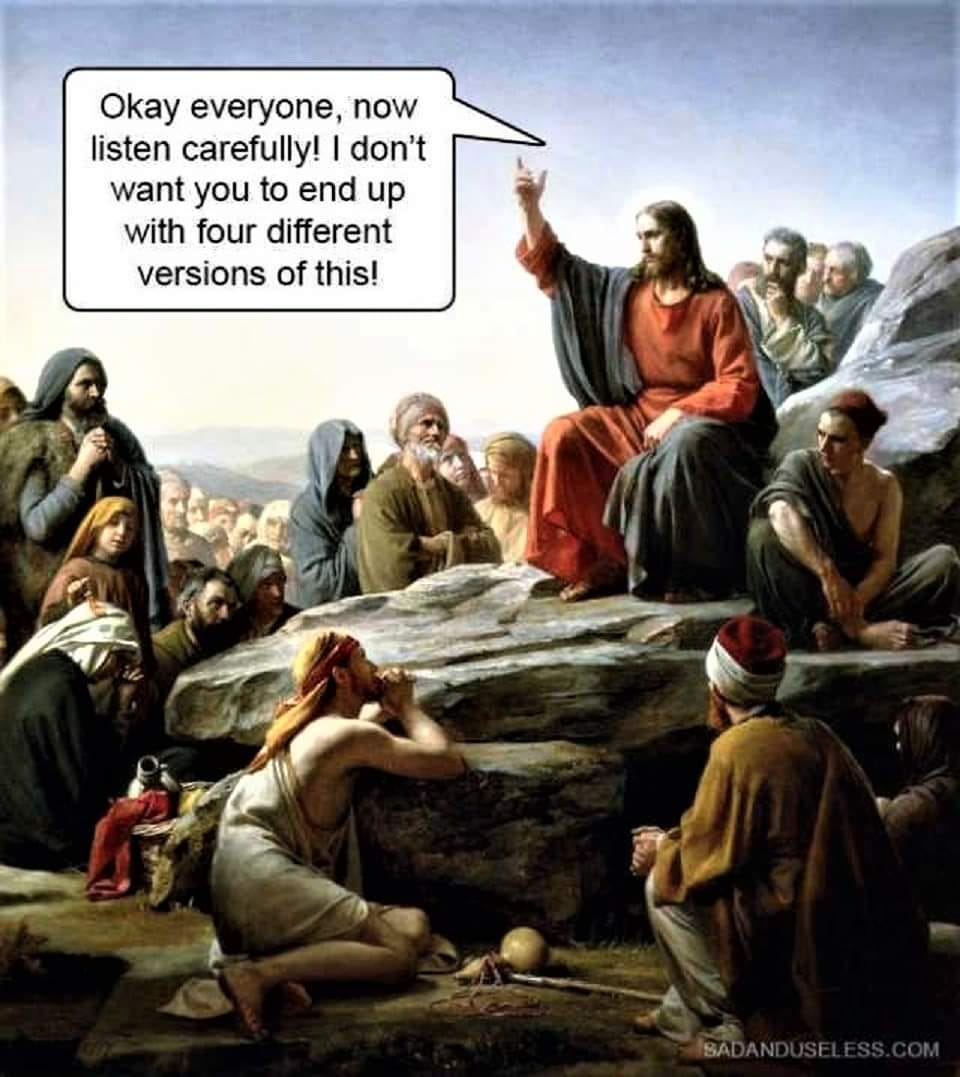
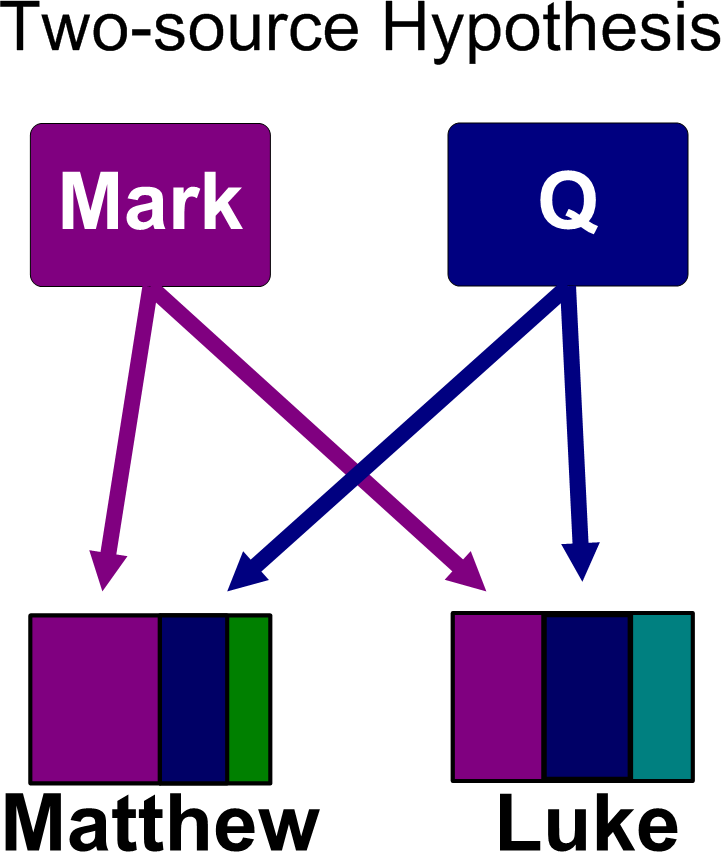
Of the four canonical Gospels of the New Testament, three of them, Matthew, Mark, and Luke, have enormous overlaps between them, and not just the way that we’d expect if they were independently-formulated accounts of the same events. To a large extent, they tell exactly the same stories in approximately the same order using very similar wordings. Some of this is all three, some is only present in two of the three, and there are major stylistic differences between the Luke/Matthew double tradition and the material that either or both share with Mark. These three books are known collectively as the “Synoptic [39] Gospels”, and the analysis of why they share these similarities in ways that the Gospel of John lacks is the “Synoptic Problem”. There are a plethora of hypotheses that have been offered to explain this, of which the currently most accepted is that Mark was written first and Luke and Matthew independently drew their shared material from a lost and unattested source known as the Q Gospel.
There is a considerable body of scholarship attempting to analyze the cause of the thematic and textual overlaps between Lad, Laredo, St. James, Crapshooter, France, and other similar songs and poems. I’m familiar with some of the literature, but far from all of it. The conventional view is that all of them are straight-line derivative works of a single ancestral Irish ballad, usually referred to in the literature as The Unfortunate Rake, of which Buck is often identified as one of the earliest surviving forms. Laredo and France are straight-line descendants of Rake via Lad, and St. James and Crapshooter are an offshoot branch that grew within the African American musical tradition. Of the authors I’ve referenced so far, this view seems to be accepted by Bishop, Roud, and Haymes.
More recent scholarship has questioned major elements of this narrative. Robert Harwood [40], seems to be the main pioneer here. He raises objections to the conventional theory and proposes an alternate one. Richard Jenkins [41] built on Harwood’s conclusions by tracing where and how the conventional narrative went wrong. And Karen Heath [42] wrote an essay summarizing the conventional and the Harwood theses, coming down mostly but not entirely on Harwood’s side, then after original publication she read Jenkins’s article and produced a revised version that briefly summarizes Jenkins’s view [43]. To summarize my understanding of where the Harwood/Jenkins thesis differs from conventional narrative,
- The Unfortunate Lad is an early-to-mid 19th century English composition originating in or around London, probably inspired generally from a much older tradition of “Neck Ballads” about condemned criminals asking forgiveness for their wrongdoings and making requests for their funerals
- The Unfortunate Rake is an entirely unrelated Irish ballad that merely has a coincidentally similar title.
- St. James Infirmary Blues and Dying Crapshooter Blues are the products of a seperate tradition that shares themes with Lad and its direct descendants. The two traditions may have influenced one another, but they should be regarded as cousins or friends rather than descendants. The conventional view here, it is argued, was the result of poorly-supported speculation by an English journalist, A. L. “Bert” Lloyd, which generations of folklorists have taken for granted.
- The mistakes in 2 and 3 have been compounded by generations of scholars and casual observers taking the conventional narrative for granted and allowing that to skew their own analyses as a collective exercise in confirmation bias and trapped priors.
I think they make a fairly persuasive case, especially for 1 and 2. I am not entirely convinced on 3, but I have updated my views in the revisionist direction. I agree with their point that there is substantial novelty in the St. James/Crapshooter double traditional and the individual songs that deserves to be acknowledged as unique creative output and not as a mere Bad Quarto [44] of the Lad tradition.
If I understand correctly, the case for the St. James and _Crapsh_ooter being an entirely separate tradition from Lad and Laredo rests on the lack of clear specific overlap between them in music or lyrics. I hesitate to put much weight on the melody being musically unrelated because all four songs have versions set to unrelated music: Lad doesn’t even reliably share a tune with itself, and the same is true of the other three songs. As for lyrics, I think they do have some notable similarities. The story structure, at least for the longer forms of St. James, is virtually identical. The Devall version of Laredo starts almost identically to St. James. The Roud Index does contain clear Lad variants before the 1920s that reference St. James Infirmary or Hospital. If the musical resemblance I noticed between the tune of Baxter/Moore version of St. James and Handel’s Dead March was real and intentional, that would represent a fairly strong link to one of the most distinct and durable parts of the Lad tradition. Despite the lack of shared passages, the two traditions do seem to have several motifs in common.
I don’t think the connection of Shades, Kangaroo, and Conch Train with the Lad tradition has not been examined in any of the literature. My inclusion of them with the others is original to me and may be nonsense, and if it isn't, it might merely be a deeper cut in the literature that I haven't stumbled across.
One of the major tools of analysis applied to the Synoptic Gospels is pericope analysis, the counting and diagramming of shared passages between gospels. I have done something similar here, using motifs (a mix of thematic, structural, stylistic, and lyrical elements) instead of pericopes. I’ve included the nine specific songs I’ve included, plus three “control” songs that are clearly not part of the same tradition, chosen for similar origin and overlapping broad themes. The three are:
- Minnie the Moocher, a jazz standard from the same era (1931) as St. James that is probably Cab Calloway’s most iconic song. It concerns a prostitute who is daydreaming about marrying rich men and retiring to a life of luxury. I chose it because it was the first vaguely relevant song to come up on my “Jazz, Blues, and Swing” Pandora channel.
- Whiskey in the Jar, a 16th century Irish ballad about a highwayman who is betrayed to the authorities by his wife or sweetheart. I chose it for themes of regret, lost love, and fateful chance meetings.
- A Boy Named Sue, a song written by Shel Silverstein for Johnny Cash in 1969 about a man seeking vengeance against his deadbeat father for giving him a girl's name. I chose it because three of the nine songs I’m reviewing were performed by Silverstein or Cash.
I chose the motifs by including elements that were shared between some of the nine songs, then removing things like “chance meetings" and “prior associates” that were too generic to add much value.
Some motifs were only sort-of present in a given song, while others were present in some versions of a song but not others. These I represented with fractional values.

I see a block of motifs that are equally common among the Lad, Laredo, St. James, and Crapshooter. I also see some motifs that are shared by Elegy, Lad, and Laredo and absent from St. James and Crapshooter, and vice versa; I’ll refer to these as the “triple tradition” and “double tradition” respectively.
The other four songs don’t fit quite as well. Kangaroo scores especially poorly, but Conch Train is surprisingly strong. France is unusually weak for a song that we are absolutely certain is derived from the triple tradition, but that makes sense given that France has entirely different story structure and mainly derives a narrow piece, the tune and France’s chorus from the triple tradition. Almost all of the nine non-control songs share dying orations, nested first/second person narratives, a sense of impending doom, and funeral arrangements, but this is unsurprising since those were what more or less what I identified as the shared traits I was intrigued by when I started looking into this.
Moving on from eyeballing the raw data, here’s my attempt at an actual statistical analysis:

This is an asymmetrical analysis of what fraction of motifs from the row-header song are also present in the column-header song. For example, the 96% figure in the Lad column and the Buck row means that 96% of the motifs in Buck are also present in Lad, and the 68% figure one cell southwest of it means that Buck only has a little over two thirds of the motifs present in Lad. Taken together, this means that Lad adds substantially to Buck in the dimensions I’m considering, but hardly subtracts any, the same way that the Gospel of Matthew contains almost all of the Gospel of Mark, plus substantial additional material. The averages on the right of the chart indicate a ceiling of how much that row’s song gives to the triple and double traditions (Buck/Lad/Laredo and St. James/Crapshooter respectively), while the averages on the bottom indicate a ceiling of how much those songs take from them.
This confirms my impressions from the previous table: St. James and Crapshooter have more in common with one another than with Buck, Lad, and Laredo, and likewise in the other direction. But they also have a lot in common. France is universally accepted as part of the Lad tradition, but it only has 46% of Lad’s motifs, while St. James and Crapshooter have 50-51%. Same family, but different genus.
Of my proposed additions, Shades and Conch Train hold up pretty well, significantly outperforming the controls. They don’t fit quite as well as the first five do with one another, but aren’t that far behind, either.
Kangaroo does seem to have a lot in common with Shades, almost a strict subset of the latter’s motifs, but doesn’t have much in common with the others. I mentioned previously that Kangaroo derives in part from The Dying Stockman, which seems to be at best a very distant cousin of Lad, etc. Intriguingly, there seems to be a small cluster of shared tradition between Kangaroo and Shades.
Unsurprisingly, all three of Silverstein’s songs (Shades, Conch Train, and Sue) have a fair amount of overlap.
Closing Thoughts
So what is it about these songs that interested me enough to spend fifteen thousand words and a two page spreadsheet analyzing them? Why have so many singers and songwriters been interested enough to add to the tradition, and why have so many of them (especially St. James Infirmary and The Streets of Laredo) found many eager listeners? And if you, dear reader, are still with me, that suggests that the subject matter carries at least a bit of interest to you as well.
The music is excellent, but this is certainly not the entire reason. The current standard tune for Lad and Laredo was appropriated from The Bard of Armagh. The one for St. James is derived from Charleston Cabin. These tunes don't seem to have caught on anywhere near as well in their original forms, so there has to be more to it.
Love and death are two of the most emotionally charged human experiences, and both are nearly universal in one form or another. No living person has experienced death, as such, but we all know that it lies ahead of us at some point in the distant future, and most of us have experienced it second-hand in the form of losing friends, relatives, or beloved pets. An enormous number of popular and traditional songs center themselves on themes of love gained or lost. Fewer seem to be centered on themes of bereavement and facing one’s own mortality, but those are still fairly common, especially in traditional music.
The song pattern I’m referring to imprecisely as the Deathbed Ballad is centered on facing one’s own mortality and meeting it with combinations of acceptance, defiance, and falling back on the comforting framework of funeral ceremonies. The rituals of final goodbyes, last requests, funeral processions, and burial have been developed in our cultures to help us formalize and process our emotions around death. By focusing on evocative descriptions of these rituals, a Deathbed Ballad brings up our feelings about the underlying pain and fear associated with death, but also brings up the comforting practices our cultures have to help us cope with those feelings.
The nested story structure is also significant. The narrator tells how he meets the dying man or woman, then quotes their speech about their own imminent demise. Sometimes the song then returns to the narrator describing the death and its immediate aftermath. The listener gets both perspectives of death: the experience of the one doing the dying and the experience of those left behind to grieve.
The format also gives songwriters an opportunity to explore themes of regret and negative examples. Almost every song I’ve reviewed has been some kind of cautionary tale. Shades has themes of wasted potential and surrounding oneself with unworthy companions. Laredo and France warn against senseless violence. Lad and Elegy are explicit and heavy-handed cautions against high-risk sexual behaviors. St. James may be telling that same story more subtly. Crapshooter’s protagonist dies and faces damnation after a life as a crooked hard-hearted underground gambler. And Conch Train warns against throwing away what you have by chasing after hollow glory. Only the silly and tenuously-related Kangaroo seems to lack major cautionary themes.
I don’t think it’s an accident that Lad, Buck, and (if Heath is correct) St. James all deal with death by syphilis. Today, almost eighty years after the advent of penicillin, and in an era where latex condoms are relatively cheap and widely available, syphilis is easily cured or avoided and there is little living memory of a time when it wasn’t. It’s easy to overlook that at the time of the first flush of mass popularity of Lad or St. James, syphilis was arguably as devastating as the AIDS pandemic was in the late 20th century and for similar reasons. It’s a long-simmering disease spread through intimate contact. It can be spread by asymptomatic carriers. The disease was heavily stigmatized by association with shameful behavior and marginalized communities, which perversely often led to people refusing to acknowledge they were carriers and either seek treatment or avoid passing it to others. Untreated syphilis is less universally fatal than AIDS, but it can disfigure its late-stage sufferers so horrifically that it’s been hypothesized that it contributed to zombie legends [45].
The songs that don’t involve syphilis replace it with other pervasive horrors. In Laredo, it’s interpersonal violence. In France, it’s the slow-motion apocalypse of the First World War. In Conch Train, it’s destructive glory-seeking. In Crapshooter, it’s a combination of Jesse’s own cutthroat conduct and police violence. All of these are problems that have left deep wounds on generations and communities, and several of them at least rhyme with issues that are still relevant today.
Footnotes
- ↩
“Hipster” here is used in the early-to-mid-20th century sense of jazz/blues subculture and its imitators, not the modern subculture of the same name. The Beatniks of the 1950s and the Hippies of the 1960s are often considered to be successors of the Hipsters of the 1940s and before.
- ↩
Structured irregularities in the beat of the music, much more typical of Jazz or Rock music than of Folk, although Silverstein’s music is often a blend of Folk and Rock elements and he often employed heavy syncopation even in his more Folk-styled pieces.
- ↩
I’m quoting these verses in full for reasons that will become clear later.
- ↩
“Damnation of memory”, a practice in Rome and several other ancient and classical cultures of attempting to erase certain wrongdoers from the historical record, condemning them to be forgotten by posterity.
- ↩
Before the Blues: The Early American Black Music Scene, Volume 1, published by Yazoo Records
- ↩
From the description on this YouTube listing of the song, also from this listing of the original 78 single release of the recording.
- ↩
Here, I am relying heavily on The Myth of the Origins of St James’ Infirmary Blues and The Unfortunate Rake, by Karen Heath.
- ↩
Steve Roud and Julia Bishop, The New Penguin Book of English Folk Songs, 2014. Yes, the same Roud as in the Roud Database I keep nattering about.
- ↩
Richard Jenkins, The Unfortunate Rake’s Progress: A Case Study of the Construction of Folklore by Collectors and Scholars, Folklore Volume 130, April 2019.
- ↩
Heath, op cit
- ↩
Ibid
- ↩
Heath also brings up British laws requiring women believed to be prostitutes to be screened for symptoms of STIs and, if the results were positive, confined to Lock Hospitals. She takes this to imply that Lock Hospitals only treated women, seemingly at odds with the subject of the song being a man. I suspect she may be mistaken on this point: from what I can gather Lock Hospitals, including the original London Lock Hospital, primarily or exclusively treated women and the relevant provisions Contagious Disease Acts only mandated confinement for suspected prostitutes, but Lock Hospitals being female-only does not seem to have been a universal characteristic.
- ↩
Heath (Op Cit) refers to it eight times as The Buck’s Elegy and twice as The Buck’s Lament. I’m not sure whether this is a historical alternate name or a modern error.
- ↩
Heath (Op Cit) mentions an older genre of “Neck Ballads” or “Goodnight Ballads”, about condemned criminals giving speeches at the gallows, often concluding with funeral requests. These have clear thematic similarities, but she does not cite any (nor have I been able to find any on my own) that show signs of being clear ancestors of most of the songs I’m analyzing.
- ↩
Ibid, and also Phil Baxter, 1925 co-composer of Gambler's Blues (aka St. James Infirmary) by Robert Harwood, 2020.
- ↩
$374 in 2025 dollars, or about 50 hours wages for a common laborer in 1930, according to the Bureau of Labor Statistics. CPI calculator and the 1936 Handbook of Labor Statistics, respectively.
- ↩
In draw poker or blackjack, to stand pat is to play the hand you’ve been dealt without drawing any (more) cards. Source: it is known.
- ↩
Op Cit
- ↩
It could still have been syphilis as of the 1920s. At least two effective cures had been discovered: a protocol of deliberate infection with malaria to induce a high fever that killed the syphilis bacteria, developed in the late 19th century, and an arsenic-based antimicrobial drug called Salvarsan, invented c. 1910. Both had severe and dangerous side effects, required arduous courses of treatment, and the latter in particular was only effective relatively early in the progression of the disease. Penicillin treatment didn’t become available until the 1940s, and problems with access to diagnosis and treatment meant nearly a hundred thousand people a year were still dying of syphilis in the US three decades after that.
- ↩
In which Gunthrie tells a mostly-true story about his attempt to help clean out a friend’s home on Thanksgiving and its consequences. A film adaptation was made in 1969, in which both Gunthrie and the local police chief who had arrested him (William Obanahan) played themselves.
- ↩
Laurie also has an extensive career in acting and sketch comedy, of which I am even more a fan. You may know him from House MD, Blackadder, Jeeves and Wooster, or A Bit of Fry and Laurie.
- ↩
Tracing The Origins Of Dying Crapshooters' Blues Back To English And Irish Folksong In The Eighteenth Century, originally a 1989 dissertation, revised in 2012.
- ↩
Haynes, Appendix II, Op Cit.
- ↩
But not the last song we’ll be examining in detail. I’ve got one more song coming up after this one, and it’s a bit of a stretch to include it.
- ↩
I’m using Green Fields of France in preference to Bogle’s original title because it’s more distinctive and because most of the high-profile covers seem to use that title.
- ↩
“MacBride” can also be a Scottish name, but the “Mc” spelling used by Bogle is the Irish spelling. Bogle has said in a 2014 Radio New Zealand interview (starting around the 12 minute timestamp) that he specifically chose an Irish name for the soldier as a counter to anti-Irish settlement in the UK. The context was that he was writing in 1976, in the middle of the Troubles in Northern Ireland.
- ↩
If she’s the same age as McBride, and the song is taking place when Bogle wrote it, then she would be 79 years old.
- ↩
Bogle RNZ interview, Op Cit
- ↩
Find A Grave for Pvt William McBride of County Armagh, Ireland. The notes on this source contradict details of Bogle’s account in the RNZ interview. I think I believe Bogle over whoever wrote those notes.
- ↩
Online lyrics listings universally say “ride”, but I’m pretty sure Silverstein is singing “rob”, which makes more sense in context.
- ↩
As is Sloppy Joe’s bar. The Conch Train Tour’s website features a picture of the train driving past the aforementioned bar.
- ↩
This is a case of “write what you know”. At the time, Silverstein lived in Key West and was in a relationship with Sarah Spenser, who worked as a Conch Train tour guide.
- ↩
To be precise, I think Sam is an antihero at best. You can make a pretty good case for “villain protagonist”. His arc has the essential character of a classical tragic hero undone by his own hubris.
- ↩
According to the Oracle of Bacon, LaRou and Scott never appeared together in the same movie. Both played heroes more often than villains, although LaRou’s heroic characters were often villain-coded and Scott’s villains were rarely depicted and entirely evil.
- ↩
C.f. the 1983 novel and 2007 movie, The Assassination of Jesse James by the Coward Robert Ford.
- ↩
From Greek for “viewing together”.
- ↩
Op Cit
- ↩
Op Cit
- ↩
Op Cit
- ↩
I am extremely grateful to her for this, since I have been unable to a version of Jenkins’s paper available on reasonable terms so I am dependent on her essay and other summaries for my understanding of his arguments.
- ↩
My characterization of Lloyd's supposition that St. James was a corrupted derivative work of the Lad tradition. A “quarto” is an Early Modern book-printing format where each page is formed from a quarter leaf of paper, generally a cheaper alternative to the “folio” format where each page was a half leaf. Early printed editions of Shakespeare’s plays come in two major flavors: authorized folio editions (especially the “First Folio”) prepared and bootleg editions believed to have been transcribed by memory by cast or audience members, usually published in quarto format and referred to by Shakespeare scholars as the Bad Quartos.
- ↩
If you are morbidly curious, here is a (NSFW, NSFL) reddit thread with a compilation of photos of people with severe physical disfigurement from tertiary syphilis.