Any review of Judaism must be insufficient, skewed. Overreaching statements, bombast, long digressions agonisingly cut. I’m sorry in advance. Here we go.
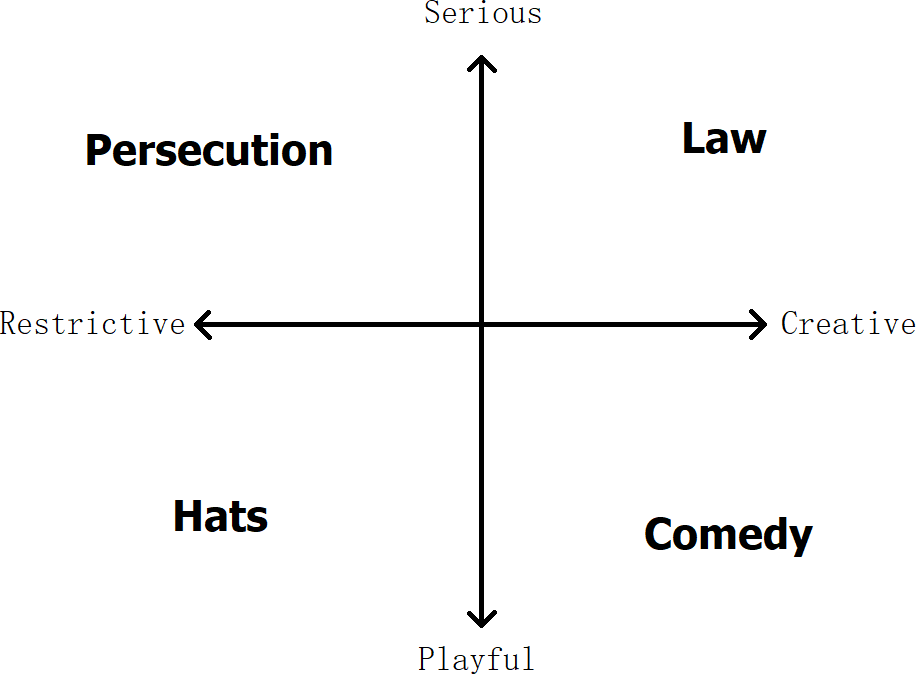
This review will be centered around Judaism’s four great strengths: law, persecution, comedy, and hats. At the end, we might spare a few sentences for her four great weaknesses: food, dance, fashion, and Tay-Sachs.
Law
At the center of Jewish law is a tragic misunderstanding.
Some background:
The Creator of Heaven and Earth communes with a Mesapotamian man named Abraham, and makes a series of covenants with his family.
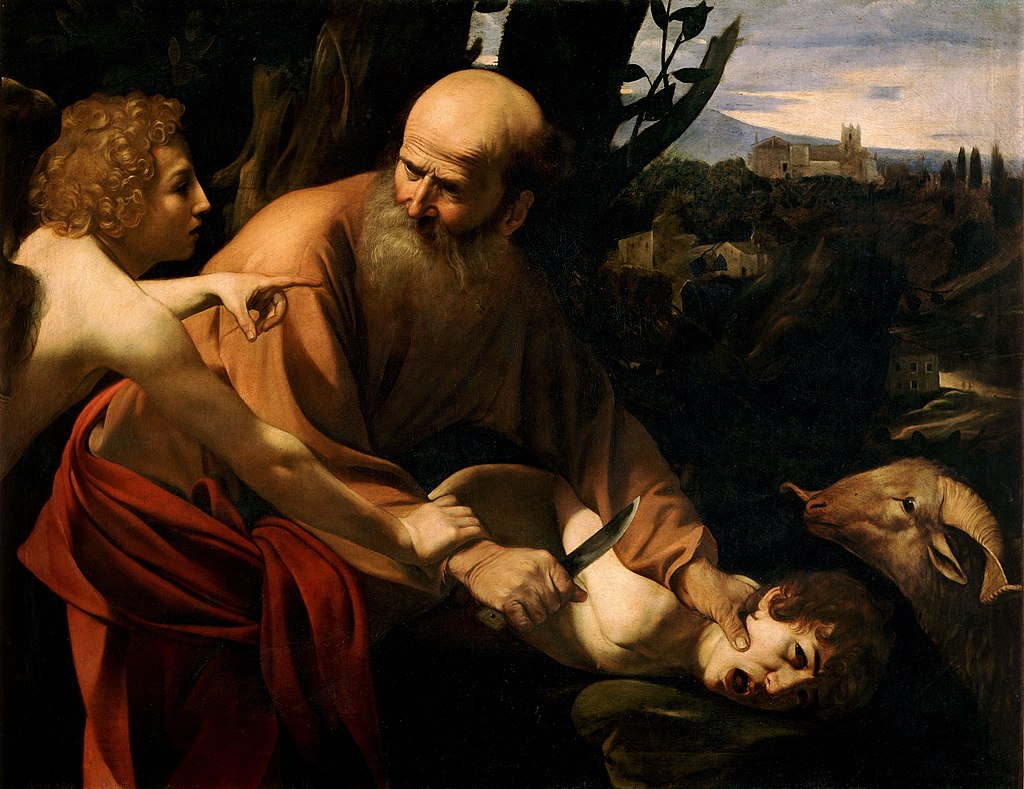
“Naahhhh I was just kidding with that one. Absolutely crazy that you were willing to go through with it, though.”
In one of these covenants, Abraham is told that his descendants will be subjugated in a foreign land for 400 years, but then rescued and brought into their homeland.
Abraham’s descendants are paroled early out of slavery in Egypt, after serving 210 years of their sentence. A man named Moses chastises Pharoah with miraculous punishments and negotiates for the Israelites’ release.
Moses leads his newly-freed people into the desert, and from a mountain-top brings them the Divine Book, the Torah (lit. “Law”; “Instruction”; “Teaching”). Moses is Abraham’s great-great-great-great grandson on his father’s side, and Abraham’s great-great-great grandson on his mother’s side, and is considered to be the humblest man who ever lived.
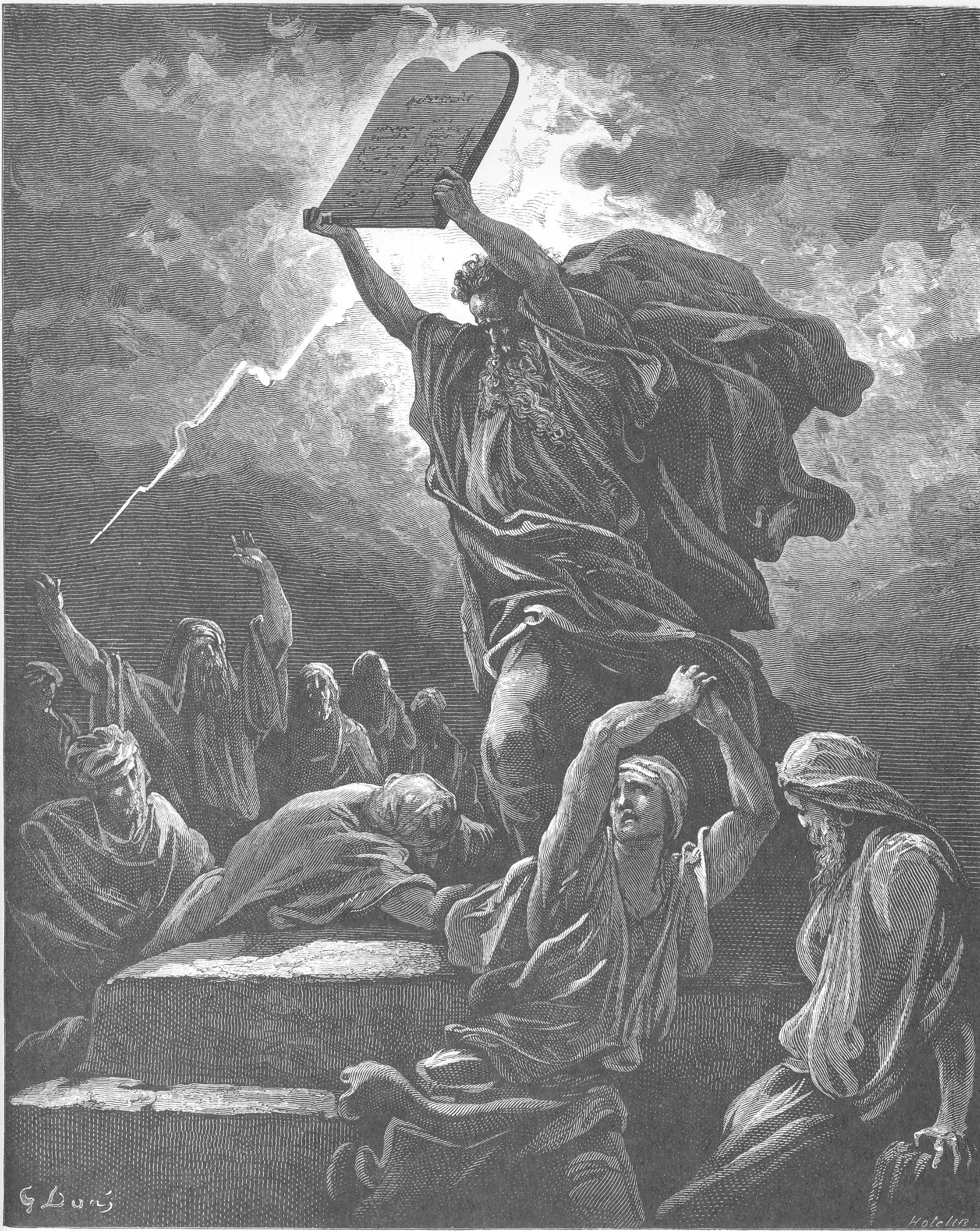
But he could still throw down when he had to.
Along with the Book, or “the Written Law”; Moses is given something called the Oral Law, literally: “the Law that is Mastered by Mouth”. This tradition is not to be written down, but memorised and communicated to students who similarly commit it to memory and pass it along. The Oral Law contains all the fine details on how the Written Law is to be applied, as well as a system of dialectic for the interrogation and application of the Law to specific situations.
Remember: the Torah, the fundamental book of Jewish law, is only 79,980 words long, and a lot of those words are used in narrative. The American federal internal revenue code is 2,412,000 words long. The European Union regulations on what kind of side-mirror an automobile must have in order to be suitable for import is almost 2,000 words long. Like all ancient codes of law, the Torah necessarily dealt with typical cases in low resolution, and left a lot of the messy details to the scholarship of future legislators, and to the discretion of future judges.
So far so good. The early Hebrews confederate, are conquered and exiled, and return in small number to rebuild their homeland. (Meanwhile, the conversation on how to run a just society and how to apply the sacred law - really the same thing - rolls on.)
During a civil war, they invite Roman interference, which predictably ends in Judea becoming a Roman vassal and subject. The Romans have a particular dislike for their new subjects: Jews keep to themselves, they don’t integrate well into Roman society, and they rebel with ferocity. These rebellions are put down with extreme force, and Jews live under Roman occupation and oppression for a few centuries.
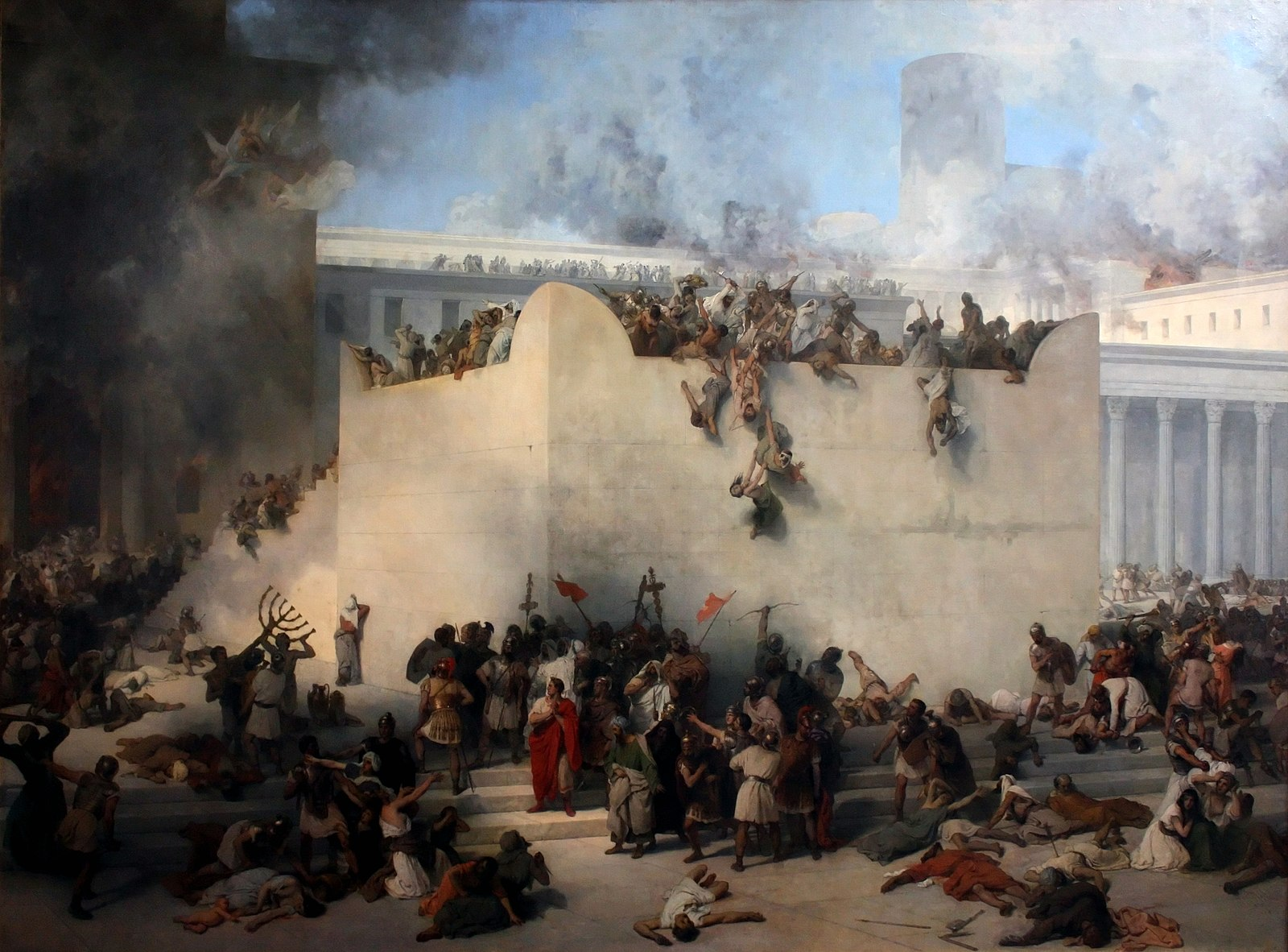 Pictured: extreme force
The Roman sandal stays on the Jewish neck for centuries, but the intensity of the oppression fluctuates based on whoever happens to be Emperor in Rome, and whoever happens to be Governor in Judea.
Around 200 AD, a Jewish leader called Judah the Prince sees his chance. Renowned stoic philosopher Marcus Aurelius Antoninus has ascended to the Roman purple; and Judah the Prince sees in the new emperor not merely a sympathetic ruler, but a genuine intellectual counterpart. (Later Jewish sources record their conversations and their bromance, including a notable episode about which Judah the Prince later concedes “this matter I learned from Antoninus.”)
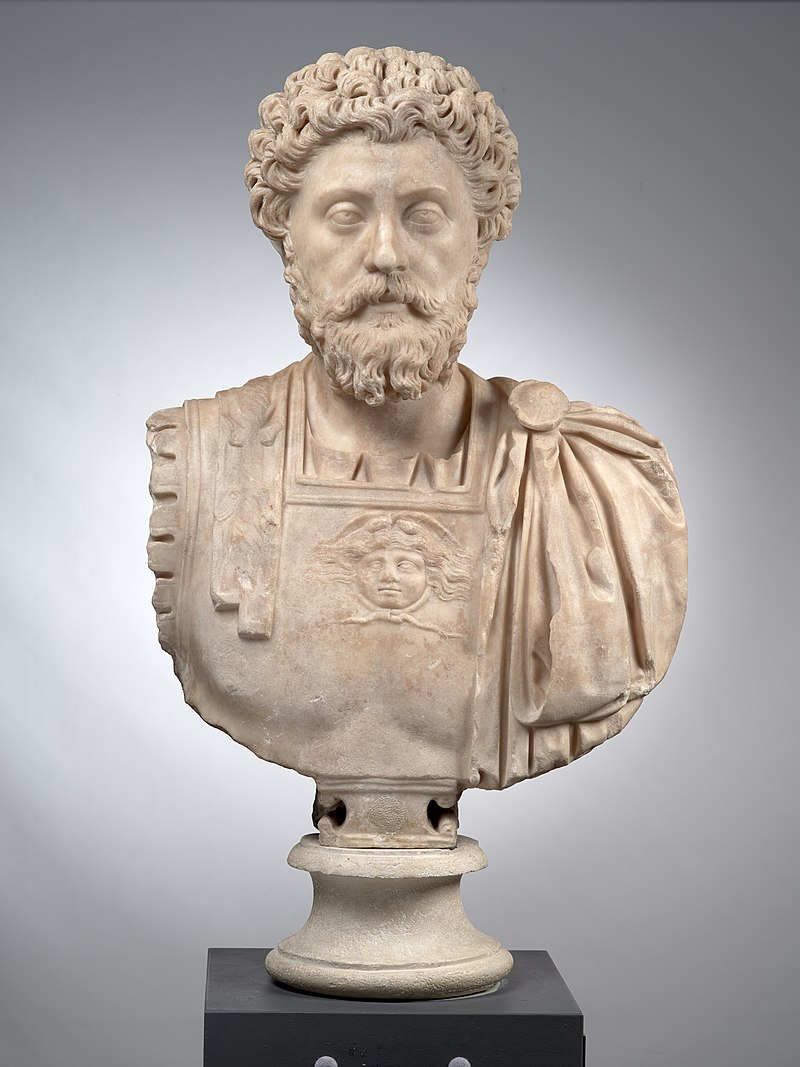
For a good time, compare the opening passage of Book 2 of the ‘Meditations’
with Judah the Prince’s personal prayer at the bottom of Berakhot 16b
Judah the Prince assembles the learned men of his day, and redacts the Oral Law into a single unified text called “the Mishnah” (lit. “repetition”; “recital”; “sharpening”; “toothmaker”; even “teaching”). Omissions and contradictions are ironed out; supplementary materials considered canonical-but-superfluous make their way into less-central compilations.
The Mishnah is taught to generation after generation of trainee judge, with a teacher’s manual called the Gemara gradually being added to the corpus. After about four hundred years of this, the final combination of Mishnah + Gemara are compiled into a text that will become Judaism’s source code in exile: an intricate literary goliath called “the Talmud” (lit. “teaching”, once again). Confusingly, the entire Talmud is often also simply called the Gemara.

The 73-volume Artscroll translation of the Talmud, complete with commentary. A steal at merely $2,999 USD__.
What distinguishes the Talmud is its form of dialectic. The Talmud will often quote the opinion of some great rabbi of the past, then immediately attack his position. The truth is gradually teased out over the ensuing lines, with some arguments running for several pages. Famously, a conclusion is not always reached. It seems the Talmud was designed to help judicial acolytes not merely memorise lists of laws, but learn how to weigh genuine human considerations in their decisions. For the most part, the book does not spoon-feed answers.
There are many passages within the Talmud on how valuable this process is. “A disagreement for the sake of Heaven will endure!” says one mishnah. (An individual teaching in the Mishnah is also called a “mishnah”.) This means that if you have a good and genuine point to make, that point will never be obviated by an eventual wise answer. Any wise answer must acknowledge and incorporate your good point into a final synthesis.
For centuries, the Talmud and her pursuant discourse were how Jews learned to be human. The tome was carried into exile with us, and continued to be our cultural and legal backbone as we mostly stuck to ourselves. More than that, it was a surrogate Temple, a grounding pivot for our faith while our homeland and our holy sanctuary lay in ruins.
Then, the Enlightenment struck, followed by the relaxing of anti-Jewish restrictions across the Continent. Suddenly, Jews weren’t merely outsiders with their own distinct culture. They could be full citizens of their host countries, participants in the cosmopolitan effort of humanism. For the first time, you could be an Englishman-who-happened-to-be-Jewish rather than a Jew-who-happened-to-live-in-England.
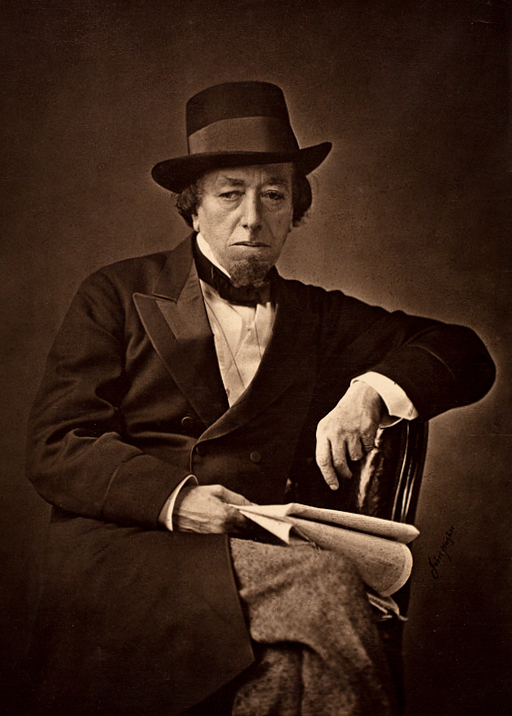
Benjamin Disraeli, whose Jewish birth did not prevent him from twice becoming Prime Minister of the United Kingdom
Being raised in the social milieu of their host nations meant that Jews now learned how to be human by being Westerners, and their Judaism was largely relegated to an (often arbitrary) set of identity markers. Thus modern discussions in Jewish law often look like an absurd game of divine legal sudoku. Scholars furiously discuss ritual purity and food taboos, completely divorced from any understanding of water scarcity and disease vectors and the carrying capacity of ancient Judea.
When we look back at the arguments of the sages in the Talmud, it sure seems like they’re playing Absurd Divine Legal Sudoku as well, at least at first glance. But with an appreciation of their material conditions and shared language, you can still glimpse the real high-stakes conversations they were having, albeit framed in an unfamiliar theologically-laden shorthand.
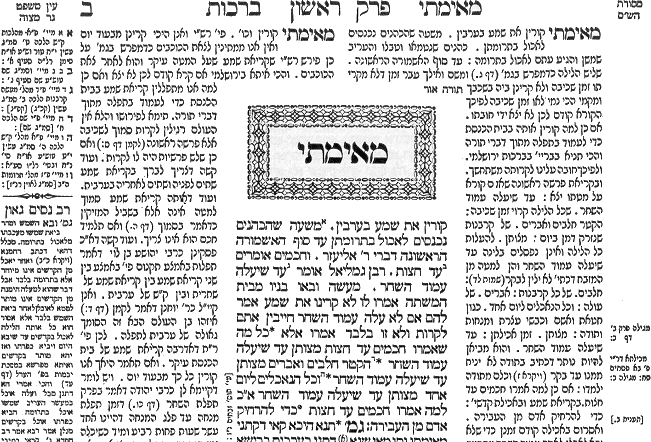
“From what time does one recite Shema in the evening?” the Talmud begins, presuming you already know (a) what the Shema is, (b) that it is recited in the evening, (c) what the function of that recitation is, and (d) that there are more- and less- ideal times for its recitation.
Although most people studying the Talmud today are missing a huge amount of context, they can (and do) still greatly exert their minds in following the logic of her arguments. And while this tragic misunderstanding yet persists - that the Classical sages were only playing Absurd Divine Legal Sudoku - the study of the Talmud still trains a mind to think in a robust and useful way. Although a point of hot contention (like everything else), it is often thought that this rigour is what has honed the Jewish mind to master other domains like economics, chemistry, literature, and mathematics. In The Polgar Variant, László Polgár, who validated his pedagogical methodology by raising his three daughters into chess grandmasters, genuflects briefly, but tantalisingly, to the Talmud.
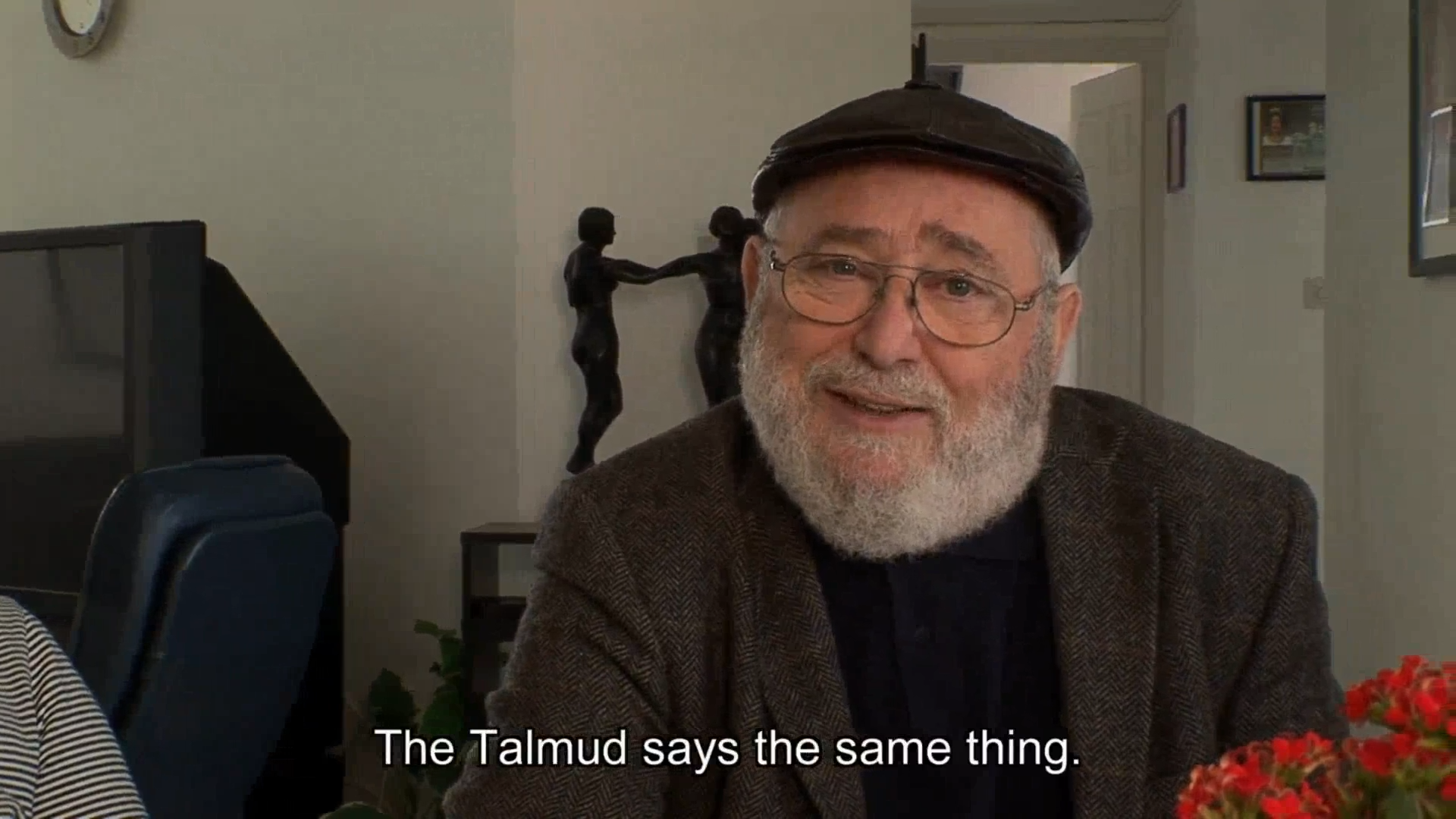 A fun image to drop into various conversations, I think.
I have a friend who was ordained as a rabbi, then went to law school. “After yeshiva, law school was easy,” he told me.
The actual practice of working through a Talmudic argument is an exercise well beyond the scope of this review, but let’s close this section with an illuminating old joke on the subject:
A cardinal goes to a rabbi and says “rabbi, I’d like to study the Talmud”.
The rabbi replies, “with respect, you’re unable to study the Talmud.”
“Why not?” the cardinal replies, perplexed.
“I’ll show you. Suppose two burglars come down a chimney. One gets his face dirty, one doesn’t. Who washes his face?”
“The one with the dirty face!”
“Wrong. The one with the clean face washes his face. Examine the logic! The one with the dirty face looks at his compatriot, who has a clean face, and assumes that his face is likewise clean. But the one with the clean face looks at his compatriot, who has a dirty face, and assumes that his own face is likewise dirty. So the burglar with the clean face washes his face. See? You’re not ready to study the Talmud.”
“Oh, I just messed up that one question,” says the cardinal. “Give me another chance.”
“Ok,” says the rabbi. “Two burglars come down a chimney. One gets his face dirty, one doesn’t. Who washes his face?”
“You just asked this! I know the answer. The one with the clean face washes his face.”
“Wrong. They both wash their faces. Examine the logic! The one with the clean face washes first, for reasons we’ve already discussed. But when the one with the dirty face sees this, he correctly deduces that if the burglar with the clean face is washing his face, it must be because he sees his friend has a dirty face. So the burglar with the dirty face also washes his face.”“Ahhh, I see,” says the cardinal. “Very good, but I insist upon one more chance.”
“Ok,” says the rabbi. “Two burglars come down a chimney. One gets his face dirty, one doesn’t. Who washes his face?”
“We’ve just been through this, twice! Both of them wash their faces!”
“Wrong again,” says the rabbi. “Neither one washes his face. Examine the logic! The one with the dirty face looks at the one with the clean face, and assumes that his own face is likewise clean, so he doesn’t wash his face. The one with the clean face sees that his friend isn’t washing, despite having a dirty face. He surmises that the reason for this must be that his own face is clean, and that his colleague has misread this as implying that his face is also clean. Thus, he knows that his face is clean, and he doesn’t wash.”
“Wonderful!” says the cardinal. “I understand completely. You must give me exactly one last chance, and I’ll definitely succeed!”
“Ok,” says the rabbi. “Two burglars come down a chimney. One gets his face dirty, one doesn’t. Who washes his face?”
“Neither!” exclaims the cardinal with pride. “See? I understand the Talmud.”
“You fool!” shouts the rabbi. “You absolute buffoon! How could you think such a thing? Examine the logic! How can it be that two burglars come down the same chimney, and only one has a dirty face?”
With jokes like this, is it any wonder people keep trying to kill us?
Persecution
An old Jewish man looks skywards and asks, “Lord, is it true we’re the chosen people?”
The heavens open, and all the world pauses as an impossibly deep voice answers:
“YES, IT’S TRUE.”
The old Jew keeps his gaze steady and says, “well, would you mind choosing someone else for a change?”
The cardinal from the last section, understandably furious about his humiliation, decides to tell everyone that the Jews are poisoning the wells. Or kidnapping Christian children to make their blood into matzah. Or using a giant space laser to manipulate the weather.
Pretty soon you have a lot of miffed peasants doing the whole torch-and-pitchfork thing. The flare-ups of violence have causes deeper than slander, or course. The lowest socioeconomic rungs are often flattened as the great wheels turns, and it’s a much safer bet to take your rage out on the middleman minority than it is to come at the king.
What doesn’t kill you often leaves you a traumatised husk of your previous self. So why call persecution a strength?
Nissim Taleb argues that there are three kinds of response to stress: fragile, robust, antifragile. The fragile object, when struck, shatters. The robust remains unbroken. But the antifragile becomes stronger. Pushing heavy weights might shred your muscles, but also cause them to heal stronger than before.
In the same way, Jews have responded to centuries of persecution by becoming mobile, agile, and extremely cooperative. They can go anywhere and put down roots, then be driven away by the next stormwind and repeat. They can switch profession or industry with great rapidity, then swiftly master the new domain. Perhaps most importantly: they help each other. Boy, do they help each other. Charity is basically the Jewish national sport.
On a zoomed-out level, there are innumerable Jewish charities with significant endowments. There’s the place you get your free wheelchair rental after a tumble, the place that provides food packages on a Friday afternoon, and the place that will administer blood tests to you and your partner to screen for genetic diseases.
But on a zoomed-in level: if you go for Shabbos to a new synagogue, in a new town, you’re very likely to have someone come up to you, say hi, ask where you’re from, and interrogate you until he finds the chain of friends, cousins, and business associates that links the two of you. We call this process “playing Jewish geography”. Even if this game fails to find a link, but especially if it succeeds, your interlocutor is likely to invite you over for the meal, or find a friend of his to host you.
We help each other in a thousand tiny ways. We bring in each other’s mail and take out each other’s trash. We create spreadsheet rosters of volunteers to handle meals for families that have just given birth; or, Heaven protect us, for families who have just lost someone. We carry large amounts of cash and diamonds around for each other, and never give the slightest worry to theft.
I am reminded of Lord Stark:
Let me tell you something about wolves, child. When the snows fall and the white winds blow, the lone wolf dies, but the pack survives. Summer is the time for squabbles. In winter, we must protect one another, keep each other warm, share our strengths.
For the Jew, winter is always coming.
Comedy
Another thing that persecution helps with is being funny. Use your pain, they say. Well, when you’ve had a couple thousand of years of Inquisitions, Holocausts, and angry mobs … you’ve hit the comedic jackpot.
We can distinguish fairly neatly between Jewish comedy and comedy by Jews. In the latter, you have your Jerries Seinfeld, your Rodneys Dangerfield, your Jons Stewart. In the former, it’s a different breed. Mel Brooks might be the only true master of Jewish comedy to break through to broader popularity, but from within the tribe, the type specimen is a man named Jackie Mason.
 "My grandfather always said that I shouldn't watch my money. That I should watch my health.
So while I was watching my health, someone stole my money. It was my grandfather."
We’re a neurotic people, with plenty to be neurotic about. It’s hard to say that the comedy is always helping, rather than making things worse. But when it does help, it seems to have two main benefits. An old Hassidic tale:
Reb Simcha Bunim of Przysucha was walking by a river and saw a man drowning. He called to the man, “give my regards to the Leviathan!”
The man laughed, and so Reb Bunim was able to reach out and save him.
I mentioned this story to a friend, who said “it’s obviously about depression right? Can we agree that’s what this story is about?”
I hadn’t realised it before then, but it struck me that my friend was correct. When someone is in a bad-enough place, you can’t even begin to do the important work of heal & rescue until you’ve shaken him a little. A good joke is supremely useful for that purpose. For a contemporary example, here’s Tony Robbins using the same technique.

The Hassidic masters were rarely said to have possessed such striking jawlines
The first benefit of Jewish comedy, its first function, is to help someone laugh so he can begin to escape his own sense of despair.
The second benefit is more subtle. Here’s psychiatrist Martin Grotjahn:
One can almost see how a witty Jewish man carefully and cautiously takes a sharp dagger out of his enemy’s hands, sharpens it so that it can split a hair in mid-air, polishes it until it shines brightly, stabs himself with it, then returns it gallantly to the anti-Semite with the silent reproach: Now see whether you can do it half as well.
Pithy passage, sure … but it doesn’t address the question of why on earth you would want to do this. Surely a knife to the heart kills just as surely whether it’s from another’s hand or one’s own?
It seems to me that if the Reb Simcha Bunim story illustrates the potential for a joke to shake one out of depression, that this passage illustrates the potential for a joke to shake one out of indignity. When you are defined by your enemy’s castigation, you are painted into a psychological corner. But if you can take the slurs and criticisms - earned or unearned! - and present them with more elegance than can your oppressors, you’ve won a small but important victory. Though you’re still stuck working with their script, you can rewrite it for literary quality and perform it with greater flair. In doing so, you have ceased to be merely the audience of your own denunciation. You have become an actor, both in the sense of being the thespian under the lights, and in the sense of being an autonomous agent.
Ok, here’s one more:
A traveller is making his way through a densely-thicketed wood. As he zig-zags along narrow, half-forgotten paths, he spies a watchtower.
He calls up to the man atop the tower. “Ho! Where is Plony Village?”
The man replies: “Just over that way! Take a left at the creek, and then a right at the large boulder.”
“Thank you. By the way, what are you doing out here? Are you here to guard the village?”
“Guard? Not at all. I’m a Messiah watchman.”
“A Messiah watchman? What does that mean?”
“Well, the townsfolk were concerned that if the Messiah ever came through these parts, gathering the exiled Jews to return us to the Promised Land, he might accidentally overlook us because our village is so remote. So the village council decided to build this watchtower, and have someone stay in it, so that when the Messiah comes, I can tell him how to get to our village.”“Wow! How interesting. I’ve never heard of such a thing. Tell me: does the job of Messiah watchman pay a lot?”
“No, but it’s very steady work.”
See? We’re poking fun at the futility of our own perennial eschatological optimism, but in the very process of doing so, we’re finding yet another way to see the brighter side of things. So it goes.
Hymie and Seymour are on safari. A wild animal leaps from the foliage onto Seymour’s head, sending him into a panic.
“Hymie! What is it? What is it??” he shrieks.
“How should I know?” replies Hymie. “What am I, a milliner?”
Hats
Most Jews don’t wear hats, but for those who do, hats are very serious business.
Jewish law requires men to cover their heads. Males start wearing one of these from the age of three:
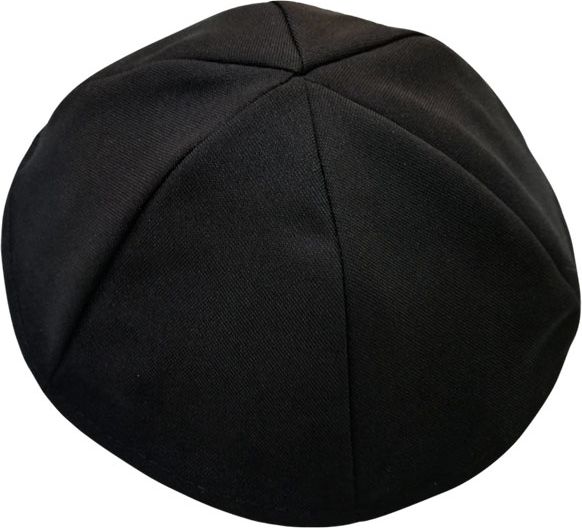
It’s called a kippah (lit. “cover”) or yarmulke (lit. “fear of the King”), and it’s meant to indicate humility before one’s Creator.
(Married Jewish women also cover their heads, but that’s it’s own whole thing and beyond the scope of this essay.)
OK, so far so good. The kippah above is a fairly standard Chabad design. Here’s a selection of other designs, along with attached signaling information:
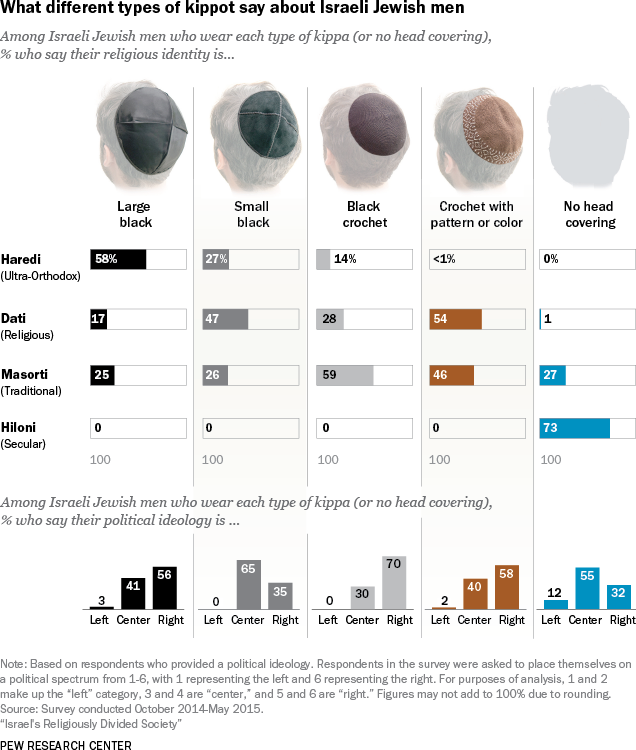 Hard to believe this is straight from Pew.
If you’re sufficiently attuned to the Matrix, you can tell all sorts of things about a Jew from his hat. There’s the basic divide between the black kippot and the knitted kippot. You can often tell how serious a guy is in his faith (or how much he wants his faith to be taken as a core part of his identity) by the size of his kippah. And he’ll sometimes tell you explicitly about his political or sports or pop culture allegiances too.



But once you get into the ultra-Orthodox world, you’re normally seeing an additional hat on top of the kippah. Take a look:
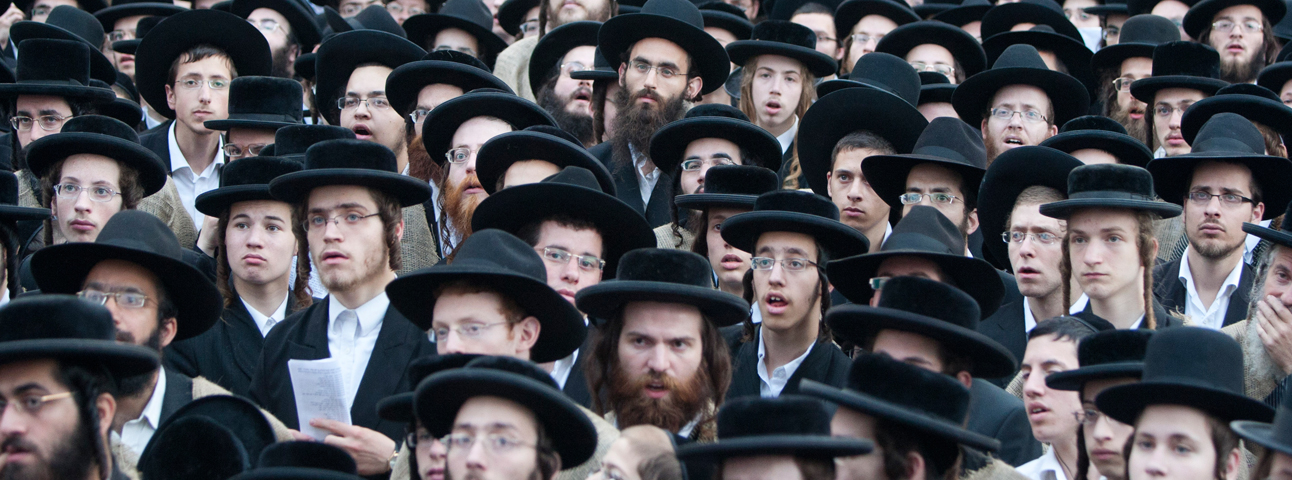
At first glance, they’re all dressed the same, right? But the longer you look, the more you notice subtle differences. These differences speak volumes to those who have ears to hear. I recently asked a good friend and mentor of mine to explain his hat.
 His hat looks like this.
He said, and I quote here almost verbatim:
This hat is called a “samet kappelutsch”. It literally means “silken hat”. If I flipped it around, it would be Vizhnitz or Seret. If made of ordinary materials (like a Borcellino) rather than velvet, as half of my children wear, it signifies non-belonging to specific chassidish groups (like Belz); they belong to either general Polish or general Russian Chassidim (e.g. Chernobyl, Ger etc). Recently, about nine months ago, they made a minhag that the base age for switching from the more juvenile hats (such as peak-caps) to the kappelutsches would be raised by a few years.
I wish I knew enough to explain what is going on here. Really, I do. I thought about doing a deep dive and coming up with all the answers, with a grand taxonomy of hats.
But, in the end, I decided that my ignorance would be a teaching moment. The lesson is important, and it’s kinda the same as the point I started with.
Even though I’m the guy teaching you about Judaism, I still barely have any idea what’s going on. And to be honest, I’m not entirely sure that the vastness of the machinery can be fully understood by a single person. There are people who spend their whole lives on it, and still barely grasp their own small section of the edifice.
As Rabbi Eliezer said on his deathbed:
I have learned much Torah, and I have taught much Torah.
I have learned much Torah, yet I took from my teachers like a dog lapping at the ocean.
I have taught my Torah, yet my students took from me like the quill draws from the inkwell.
So, please, take everything I’ve said with a sense of perspective.
And if you’re ever in Jerusalem, come for Shabbos. (I’m serious, btw. I’ve cleared it with my wife and everything.)