Of Mistletoe and Memorandums and Manipulation
An Exploration of Claude’s Romantic Fiction
Mistletoe and Memorandums is a romance novel written by Coral Hart… except it’s not. Although Hart’s name is featured on the cover, it was Claude Opus 4.5 who wrote the entirety of this book.
According to Hart, she came up with the idea, wrote an outline of the story, fed it into Claude using her super-secret prompting method, and voila. Forty-five minutes and a few thousand tokens later, she was ready for publication.
Let’s just get this out of the way: Mistletoe and Memorandums is unapologetic slop. The plot is predictable, the characters act like aliens, the dialogue resembles a bad therapy session, and the prose is painfully simplistic. Coral Hart claims to have developed a cutting-edge prompting framework that allows “authors” to create quality books, but Mistletoe and Memorandums fails as a proof-of-concept.
Yet the stark lack of quality hasn’t stopped her success. Hart has made over $100,000 USD across 21 pen names and 200 novels, and she also earns profit through expensive courses that showcase her prompting method. She even sells pre-made outlines and prompts for “authors” who want her magic touch on their AI-generated novels.
When profiled by The New York Times, she went viral in publishing circles for being a hack and a slop-peddler. Simultaneously, she went viral in AI circles for being a beacon for progress and the future of publishing.
Both of these viewpoints are accurate. In this review_,_ I’ll examine the ways Mistletoe and Memorandums fails as a work of fiction yet succeeds as a budding business model. We’ll explore why AI fiction sounds “off,” what needs to change for it to capture a broad human audience, and where this new “art form” belongs in the complex ecosystem of publishing.
The Ick Factor
The plot of Mistletoe and Memorandums is simple: a photographer falls madly in love with her best friend, but he cheats on her and then moves across the country. Three years later, he’s moved back into town, and the two of them are forced to work together at a holiday festival. The photographer must decide whether it’s worth giving her ex a second chance, and romantic hijinks ensue.
You may notice that I’ve failed to provide the characters’ names, and there’s a reason for this: I forgot them. I read all 183 pages of this book just two days ago, yet my brain seems to have rejected the contents of this story the same way my stomach would reject a room-temperature oyster.
But why? It’s easy to laugh at Claude for being a terrible fiction author, but it’s much harder to pinpoint exactly what he’s failing to accomplish.
Yes, there’s the overuse of tropes, but James Patterson has made millions despite his constant recycling of mystery cliches. Yes, there’s the simplistic sentence structure, but Brandon Sanderson’s simple sentences have propelled him to bestselling stardom. And yes, Claude’s dialogue is clunky, but that didn’t stop Andy Weir from scoring two major movie adaptations and millions of fans.
For every technical flaw in Claude’s writing that is commonly ridiculed, there are a dozen bestselling human authors who display the same flaw. So why do the humans have adoring fanbases, while Claude’s fiction remains repulsive to all but the least discerning of readers?
I think the answer is simple: unlike those bestselling authors, Claude is a bad manipulator.
The Manipulation Hierarchy
In order to understand why Claude is so bad at generating fiction, we first have to understand what makes writing good.
All writing—or at least effective writing—is an act of manipulation. If words cannot alter a reader’s mind, they have no purpose.
Of course, manipulation comes in different flavors, and some are far more difficult to achieve than others. I’ve illustrated this with a chart I’m terming the Manipulation Hierarchy, which lays out the core ways writing can influence a reader.
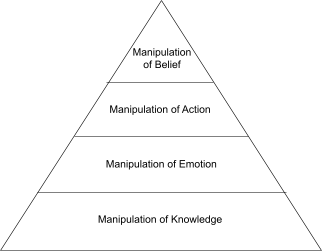
Each of these tiers has a unique impact on the reader:
-
Manipulation of Knowledge - Writing manipulates knowledge by adding, subtracting, or revising the facts within a reader's brain. This is the simplest and easiest tier to accomplish as a writer. A researcher can write a paper on lattice cryptography, you can consume that paper, and your knowledge of cryptography has been directly altered by their words.
-
Manipulation of Emotion - Writing manipulates emotion by changing the emotional state of a reader during or after the consumption of words. A description of a homeless child can trigger sadness. An article about a crime can trigger fear and anger. A novel that describes a wedding can trigger joy, or perhaps jealousy, or maybe yearning.
To change a reader’s emotions, a writer must manipulate knowledge in a calculated way that triggers feelings. For example, the statement “Pit bulls have a strong bite” conveys the same warning as “A pit bull attacked my sister and tore off half her face.” But the first statement merely manipulates knowledge, while the second statement manipulates your emotions by using a gory description and the emotional pull of family.
The second statement will also cause far better knowledge retention. The writer is able to use the distress and disgust triggered by the words as emotional sandbags that anchor the knowledge firmly in the reader’s brain. This is the goal of emotion manipulation: not just to randomly trigger feelings, but to trigger feelings toward a piece of knowledge and cause both the knowledge and emotions to linger.
-
Manipulation of Action - Writing manipulates actions by convincing a reader to complete–or refrain from–an activity. Some very simple actions are driven purely by knowledge, such as taking Tylenol after reading it’s the best painkiller for headaches. However, triggering more complex actions requires both imparting knowledge and activating a sustained emotional response.
For example, an article about a local food bank may impart a heartwarming feeling and also inform the reader of an upcoming fundraiser, and this combination of emotional pull and knowledge may convince the reader to attend the event. Similarly, a book about fentanyl may impart knowledge about opioid addictions, and the reader’s fear of becoming an addict may cause them to refuse to ever take OxyContin.
Manipulating a reader’s actions is difficult, due to readers having limited time, energy, and attention to react to the words they consume. Writers must precisely calibrate their usage of knowledge and emotion manipulation in order to achieve a desired action from a reader.
-
Manipulation of Beliefs - Writing manipulates beliefs when it is able to alter a core truth that shapes a reader’s reality. Perhaps an article on factory farming turns someone into a staunch vegan. Or maybe reading the Koran causes a religious awakening in a former atheist. Altering beliefs requires immense skill at using all three of the lower tiers of manipulation, and it remains a distant goal for many writers.
Talented authors utilize each of these tiers, carefully balancing them upon each other and recognizing which elements of their writing add weight to which tier. Knowledge is laid as a foundation, emotion amplifies the retention and impact of knowledge, and action channels facts and emotions into real-world effects. A change in beliefs is a writer’s Holy Grail and the reason words are one of the most powerful forces in existence.
It’s easy to assume these tiers must be composed of macro-elements, such as structure, point of view, or theme. Yet it’s usually a multitude of micro-elements that compose the core of each tier. The rhythm of a single sentence can stymie the transmission of knowledge, a poor choice of word can cripple emotional manipulation, and tone is often a deciding factor in whether a reader takes action.
A piece of writing is a collection of thousands of these micro-elements, with each one becoming a tiny weight distributed across the Manipulation Hierarchy. Add too much weight to any one tier, and it becomes bloated–critics may call the writing bland or melodramatic or preachy. Too little weight, and you risk the tier crumbling, which collapses all tiers resting atop it.
Bad writers send the hierarchy tumbling like Jenga blocks. Good writers maintain a comfortable balance. And great writers balance it so precisely that the writing melds into a reader’s brain as if the contents had always lived there.
Claude the Manipulator
When Claude first launched, he was not proficient in a single tier of the Manipulation Hierarchy. Frequent hallucinations and factual errors rendered Claude inefficient at manipulating knowledge, and his attempts to manipulate emotion were so alien they were laughable. Claude’s loose grasp of knowledge permitted him to manipulate the most basic, inconsequential actions, but only a madman would have changed their beliefs based on Claude’s outputs.
In a stunningly short span of time, this has changed. Claude has become skilled as a knowledge manipulator; his breadth of expertise is impressive, he excels at synthesizing facts from a variety of sources, and he’s a more patient and accurate tutor than the average human. Claude’s knowledge manipulation has become so good that many professional writers of non-fiction have begun using Claude to create content for blogs, research papers, and even legal briefs. Yes, there are still significant issues with hallucinations and clunky prose, but Claude can now accomplish knowledge manipulation better than most people.
Claude’s ability to manipulate emotions has also improved, and his attempts no longer feel so laughably bizarre and alien. However, although his attempts are mostly coherent, they remain clumsy and often ineffectual. He generally achieves emotional manipulation through exaggerated expressions of “feelings” or by regurgitating therapy speak, and he lacks the trustworthiness and subtlety required for more delicate manipulation.
Claude’s ability to manipulate actions has also progressed, although this is mostly driven by his enhanced ability to manipulate knowledge. Today, users permit Claude to influence a wide variety of fact-based decisions, such as how much protein they should eat or which car they should purchase. However, Claude remains poor at prompting or dissuading users from making complex, emotionally-involved decisions. Some hyper-logical or highly insecure users may be more easily persuaded, but the average person isn’t going to change their career or move to another country after reading Claude’s writing.
Lastly, Claude’s grasp on the manipulation of belief has increased–yet his skill in this domain remains crippled by his weak performance in manipulating emotions and actions. There is a subset of users who find their core beliefs transformed by Claude’s outputs, yet this is a miniscule and often mentally-unstable population. Claude’s writings about the important truths of the world usually sound like an undergrad philosophy major or a wannabe cult leader, and the messages remain unconvincing to most readers.
Fictional Failings
When examining the current state of Claude’s writing, a pattern emerges: when crafting non-fiction, he can be effective. Yet Claude’s fiction remains bad.
This is explained by the different manipulation tiers required for non-fiction and fiction. The core focus of non-fiction is the manipulation of knowledge. If a writer can also integrate the other tiers of manipulation, it becomes far more powerful, but non-fiction can often accomplish its goal of knowledge manipulation without using any other tiers.
In contrast, the core focus of fiction is the manipulation of emotion. Readers consume fiction with the goal of feeling an emotional impact; they want to develop feelings toward the characters, the plots they navigate, and the worlds they live within. If fiction cannot deliver this emotional response, readers will abandon it, and the story is rendered useless.
Mistletoe and Memorandums is a contemporary romance novel, and Hart was wise in prompting Claude to write this genre. It is one of the most straight-forward genres and requires manipulating a simple set of emotions: desire, anticipation, affection, and joy. As long as a reader receives these basic emotional signals, they’re probably going to be satisfied, since contemporary romance readers are notorious for caring little about plot, pacing, or the quality of prose.
Yet despite the simplicity of this genre, Claude still fails miserably when attempting to write it. Instead of delivering the desired emotions, Claude instead sparks boredom, frustration, and a pervasive sense of distrust. The manipulation of emotion falls flat, and thus the entire novel does too.
But what exactly is Claude doing that causes him to fail? The answer to this question requires a more technical dive into the methods that authors use to manipulate emotion.
Techniques of Manipulation
Manipulating a reader’s emotions requires combining multiple techniques, especially when writing long pieces of fiction. If a writer tries to use just a single technique, their attempt to mess with the reader’s emotions becomes too transparent. Every piece of writing must have a unique combination of emotional manipulation techniques, and they must be subtly interwoven so none draws too much attention.
Authors tend to find a few techniques they prefer and specialize in these. However, there are a few that are used nearly ubiquitously across effective works of fiction.
As we examine these common techniques, you will notice a repeated theme: trust. Trust is a foundational requirement for manipulating a reader’s emotions. No one wants to have their emotions manipulated by anyone–or anything–they do not trust.
From an evolutionary psychology perspective, this makes a lot of sense. Emotions can lead to costly and dangerous situations, and you don’t want untrustworthy people messing with them. Think of the “ick” feeling in your gut when a bad salesperson attempts to act like your best friend; that is your instinctual aversion to untrustworthy people messing with your feelings.
Gaining trust is a complicated dance that is difficult to perform and easy to ruin with a single misstep. Most of these emotional manipulation techniques revolve around the need to continuously earn and maintain the reader’s trust. Once trust is developed, the author can manipulate the reader in increasingly intense ways without them balking.
If you think this sounds creepy, or like some sort of toxic relationship, you’re not alone. Many writers balk when their craft is phrased in these terms. Yet I believe it’s important to face these realities of fiction. Stories have an immense impact on our lives, decisions, and thought processes, and we should be open to understanding the power dynamics that exist between a reader and an author. Without this understanding, it’s easy to dismiss stories as mere entertainment, and ignore the potential negative consequences that may occur when models like Claude master the art of storytelling.
So without further ado, let’s explore the ways a good author will mess with your mind–and why Claude currently fails to pull off these techniques.
Technique #1: Demonstrate Basic Competence
The first step to manipulating a reader’s emotions is demonstrating mastery of the basic mechanics of writing. If a reader opens a book and finds a mess of poor spelling and grammar, they are going to assume the author doesn’t have anything intelligent to say. Likewise, if sentences make no sense and paragraphs are a confusing maze, readers will believe the author is an idiot. And no one wants an idiot mucking around with their feelings.
Luckily for Claude, he’s hardly a fool. His spelling and grammar are impeccable, his sentences are coherent, and his paragraphs are neatly laid out in a logical order. In fact, he’s better at the basic mechanics of writing than the average writer. Even best-selling authors frequently make typos, and it requires the sharp eyes of multiple editors to find all the mistakes before publication. Yet Claude has mastered the basic mechanics of writing with a precision that only a machine could achieve, and there is nary a typo to be found within Mistletoe and Memorandums.
But once you look beyond the basic grammar and coherency of sentences, Claude’s competency at writing begins to crumble. The prose of Mistletoe and Memorandums is littered with grammatical and structural tropes that repeat with annoying frequency. Em-dashes appear hundreds of times, negative parallelism is used relentlessly, metaphors are beaten to death, and no emotion can be expressed without using short, punchy sentences. None of this is surprising to any reader who has consumed AI-generated writing before; LLMs are notorious for these rhetorical tropes, and Hart has failed to prompt Claude in a way that corrects for them.
The result is prose that annoys the reader with its frequent mishaps, such as metaphors and similes that don’t quite make sense:
“I dress in dark jeans and a charcoal sweater, pulling my hair back in a sleek ponytail that feels like armor.”
It also causes the prose to sound clinical, killing all hints of romance:
“Maren nods and falls into step beside me as we cross the field. We maintain careful distance–three feet minimum, enough space that we’re not accidentally brushing arms or invading each other’s territory.”
Heaven forbid the main characters of a romance brush arms! And the phrasing “invading each other’s territory” is oddly sterile, yet Claude loves using this type of clinical phrasing, ruining repeated opportunities to tug at the reader’s heartstrings.
I could list dozens of other pitfalls in the prose, but this essay would never end, so I will refrain. Suffice to say, the prose is repetitive, sterile, and frustrating to consume, which poisons the reader’s emotional state and lays a poor foundation for any further manipulation. Although that certainly doesn’t stop Claude from trying.
Technique #2: Maintain Reality at All Times
Good fiction requires keeping the reader grounded in a realistic, coherent world, despite telling a false story. Maintaining a consistent grip on reality lulls the reader into a state of trust–if everything feels so real, why wouldn’t they believe the story they’re being told?
Unfortunately, Claude provides many reasons to be skeptical. His model of the real world remains shaky, which causes his stories to be riddled with absurdities that destroy a reader’s trust. And remember the importance of trust–you cannot emotionally manipulate a reader without it.
The main plot revolves around one of these breaches of reality. As the title suggests, Mistletoe and Memorandums is a holiday story, with the entire novel revolving around two characters who work at a holiday festival. Many references are made to the chill of winter, the dreary weather outside, and the coziness of the seasonal festival.
But the holiday being celebrated is… the Fourth of July. It seems Claude was prompted to write a “holiday” story, chose the Fourth of July as the occasion to celebrate, but proceeded to be confused by the vast swathe of Christmas-themed fiction that’s often termed “holiday stories.” The result is a cozy winter romance with lots of (literal) fireworks.
No sane reader will accept this as a believable premise. The contrast between the Fourth of July and Christmas themes is a jarring reminder on nearly every page that reality has been violated. All trust is broken, and the story is left feeling like an absurd lie rather than a relatable tale.
A similar issue appears with the naming of the side characters. There are only six named side-characters: Sophie, Ethan, Derek, Maya Chen, Dr. Chen, and Mrs. Chen. The problem? None of the Chens know each other. The reader is expected to believe that 50% of the side characters in a very small, white town have the exact same surname, but zero social or biological relation. Although not impossible, the odds of this occurring are so vanishingly small that it once again shatters the facade of reality.
Another frequent issue is characters knowing things they have not yet been told. Claude lacks the theory of mind to understand that if two characters talk in private, a third character won’t know what was discussed. This leads to jarring moments where a character appears to be psychic, but all the characters act like this is normal.
Every chapter, there are several of these instances where the reader is rudely yanked from the story by improbable or impossible details, reminding them not to trust the author. This leaves no room for a reader to develop any emotions toward the story except for distrust and annoyance.
Technique #3: Give Readers What They Came For
Most readers know what kind of fiction they enjoy, and their taste determines what they read. Someone who loves being scared will devour a horror novel, but someone with an aversion to sappy stories won’t buy a romance novel. (Unless they are me, and the novel is written by Claude, but I digress.)
When readers pick up a novel, there is a certain set of emotions they expect to experience. If the author fails to deliver these emotions, it’s a violation of trust that usually results in the reader rejecting the story. A thriller novel that is not thrilling will get abandoned. Similarly, an author can write a heart-wrenching exploration of genocide, but if it’s done within the confines of a romantic comedy, the reader will balk at the attempt to make them feel despair and dismay. Good writers can deliver emotions that the reader wasn’t expecting, but these emotions must be provided in addition to ones that were promised.
Claude tries to deliver romance and all the excited, hopeful, and nervous feelings that accompany a love story. Yet there isn’t a single instance within this novel where Claude convincingly creates the sweet, loving moments that readers expect from romance novels.
Instead, Mistletoe and Memorandums offers what sounds like a painfully drawn-out therapy session. Claude delivers no spark, no chemistry, no charm. Instead, there is a bizarre amount of therapy-speak that dominates nearly every conversation. As an example, enjoy this taste of the characters flirting:
“Are they kinder now?” I ask. “Your thoughts?”
“Getting there. Dr. Chen calls it ‘reframing the narrative.’ Instead of telling myself I’m fundamentally broken, I’m learning to see myself as someone who made mistakes and is working to do better.”
Several paragraphs later, Claude ups the spice level by delving into trauma theory:
“Those aren’t truths. They’re trauma responses.”
“What’s the difference?”“Truth is what actually happened. Trauma response is the story your brain created to protect you from it happening again.” He leans forward slightly. “I hurt you. That’s truth. But the story that everyone will hurt you? That’s trauma trying to keep you safe by keeping you isolated.”
This perhaps works as porn for therapists, but romance readers will be left irritated and confused by the stark lack of chemistry between the love interests.
And despite these long and repetitive sections of therapy-speak, the characters still make bafflingly poor choices. As the story progresses, the dialogue gets increasingly concerning:
“Whatever this becomes, I’m in. Completely. Terrified, but in.”
Cole cups my face in his hands… “I’m terrified, too. But I’d rather be terrified with you than safe and alone without you.”
Ah, yes, terror and the fear of being alone. Truly the pillars of all great love stories.
Unfortunately, Claude is really obsessed with how scared these characters are of each other. The word “terror” and its variants are used 43 times throughout the novel, and the word “fear” is used 40 times, averaging about six mentions of being scared each chapter.
If Claude had any modicum of self-awareness about how toxic the relationship sounds, this novel could have turned into something interesting. But Claude seems very convinced he’s delivering the pinnacle of romance, which takes the narrative down a disturbing path and into the depths of uncanny valley.
All a romance reader asks for is a bit of romance. Instead, Claude delivers a neurotic mess of fear and therapy speak–all while being completely oblivious that he’s ignoring the reader’s desires.
Technique #4: Use Strong Voice
The “voice” of a piece of fiction is the emotional lens through which the narrator interprets their reality. Regardless of language or dialect, the voice of a depressed narrator should be different from the voice of a manic narrator, and the voice of a finance bro should be different from the voice of an elderly mother.
In technical terms, voice is conveyed using point of view, rhythm, word choice, syntax, and punctuation. In practical terms, voice is one of those “you know it when you see it” elements. It’s that unique flavor that suffuses the prose of your favorite books and breathes life into the main character, making it sound like the narrator is truly talking to you through the page.
This insight into the character’s mind deepens the emotional connection that a reader feels toward the story. It also provides a more subtle way to manipulate the reader’s feelings. Rather than just saying “John was sad,” this can be viscerally shown through John’s voice becoming melancholy. Humans instinctively mirror the emotions of people we’re connected to, so if a character’s voice “sounds” sad, those emotions will infuse the reader as well. This trait makes voice one of the most powerful tools for emotional manipulation.
Unfortunately for Claude, he’s hopelessly bad at voice. He just cannot figure out how to piece together prose in a manner that represents the internal monologue of a human. He’ll drop long, complicated words and sentences in the middle of tense moments, or describe a kiss with very sterile vocabulary. Few things he says are technically wrong, but it just doesn’t sound right, because he doesn’t understand how humans process emotions and use words to convey them.
To Claude’s credit, humans don’t really understand this either, at least not on a scientific level. Writers depend on vibes and experimentation to figure out how to capture voice, and this learning process often takes years. But humans have the cheat code of being able to ask themselves if their writing sounds “off” compared to the thoughts in their head and the words they speak, and adjust accordingly.
Claude can’t make this comparison, and his inability to refine voice is a massive handicap, because humans are remarkably sensitive to language. Often, we don’t consciously register these sensitivities, despite them having a large impact on our communications. For example, we react quite strongly to the emotional valence and arousal of words (meaning whether words spark positive or negative feelings, and whether they cause calming or exciting feelings.) This emotional sensitivity goes beyond definition and context; studies suggest that nonsense words can trigger emotions based merely on their pattern of syllables.
This means writers can’t choose words just based on definition; they must also consider whether words have proper valence and arousal, or “feel” right. An English speaker instinctively knows that “hulking giant” sounds more intimidating than “extremely tall dude,” and that “grimy” sounds more gross than “muddy.” And a human author would know which of these words and phrases would best represent their character’s thought processes. But Claude lacks these instincts and feelings, and can only make educated guesses.
Similarly, humans are very sensitive to the emotional valence and arousal of sentence structure. Short sentences are exciting! Or tense. Meanwhile, long sentences can be calming, but if they keep going on and meander around a lot, they can start to get boring, although at a certain point they become good at conveying excitement or bewilderment, because holy crap it just keeps going on and on and on, and there’s nary a period in sight, and the words start to bleed together in the same way an overwhelmed character’s thoughts may jumble up in a confused heap.
Paragraph structure also triggers these emotional sensitivities, as does the structure of chapters, and ultimately the structure of novels. Good writers will deliberately play with all these elements to create and maintain a unique voice for their narrator. But Claude can only guess at the emotional impact of all these elements, which leads to a spray-and-pray approach, where Claude slaps a bunch of words together and hopes the combined emotional impact feels human.
It does not. Claude can’t make it further than a few paragraphs without choosing words or structure that sound strangely at odds with the stated emotions of the characters. A panicked character will often sound chipper while describing their fear, whereas a passage describing a boring chore will sound tense for no reason. The result is a “voice” that is both boring and unsettling, and does not sound like any human.
Claude seems aware of the need for voice, so sometimes he’ll try to give characters accents or vocal tics. This gimmicky “voice” is equivalent to writing a sentence in Comic Sans in an attempt to make it sound unique, and it only highlights the problem of the voice falling flat.
In Mistletoe and Memorandums, the voice is so faint and jumbled it may as well not exist. This issue is worsened by Hart’s poor choice to prompt Claude to write this novel from first person point-of-view, with the chapters alternating between the points-of-view of the two main characters, Maren and Cole. (Yes, I did pause to check their names.)
Maren and Cole’s chapters have identical voices, which makes no sense considering how different they are as individuals. Cole is a serious businessman and Maren a passionate photographer, but they both use the same types of words and think with the exact same patterns. Both have an identical tendency to ruminate over the same emotions, notice the same details in the physical world, think the same thoughts about other characters, and talk about themselves as if they were therapists.
The narrative style Hart chose for this novel is supposed to permit the reader to “hear” the deepest thoughts of the characters. But since Claude can’t deliver proper voice, the result is the unsettling realization that there is nothing going on within the characters’ minds except stochastic parroting.
Technique #5: Develop Relatable Characters
Readers won’t feel emotions toward a story if they don’t care about the characters. This doesn’t mean readers need to like the characters, but they do need enough empathy to become invested in the outcome of the characters’ story.
If an author wants readers to feel empathy, they must make the characters relatable. Even if the character is very different from the reader, a good author can provide sympathetic and familiar qualities that make the reader feel they have important similarities. Once you trigger that feeling of similarity within the reader’s brain–permitting the reader to “see themselves” in the character–they naturally develop empathy for them.
Claude attempts this in Mistletoe and Memorandums, but once again fails spectacularly, for reasons similar to his inability to pull off voice. To create a relatable character, the author must themselves relate to the character and identify the parts of their mind that are endearing, interesting, or sympathetic. This comes naturally for humans, but not for Claude. He lacks a nuanced understanding of humans’ emotional reactions toward the thoughts and personalities of other people. All Claude can do is tack together a bunch of character traits that seem statistically likely to inspire empathy and occur within the same person, and hope it feels relatable.
This fails because of the complex and often counter-intuitive ways humans connect to each other. For example, in Mistletoe and Memorandums, Claude attempts to make the main character Maren relatable by making her heartbroken and suspicious of allowing others into her life. On paper, this should make her highly relatable–most people have experienced heartbreak and the subsequent fear of getting hurt again. But Claude makes a pivotal mistake: he makes Maren hyper-aware of her emotional issues.
On the second page of the novel, Maren lays out her problems for the reader:
“Three years I’ve been doing this. Three years of witnessing other people’s happiest moments while keeping everyone at arm’s length. My reputation has grown–Maren Shaw, the photographer who finds authentic emotion in manufactured moments. Couples hire me because I see what others miss, the small gestures that reveal true feeling. What they don’t know is that I see those moments because I’m always watching, never participating. It’s easier this way. Safer.”
Maren spends the rest of the novel ruminating on her obsession with keeping people at arm’s length, delving into these thoughts multiple times per chapter. The result is that Maren isn’t relatable; instead, she’s annoying and baffling. She knows exactly what her problems are and hasn’t done anything about them, choosing instead to hurt herself and others in her life. She comes across as self-centered and neurotic, rather than empathetic. But Claude is entirely blind to this dynamic, and just keeps emphasizing over and over how heartbroken and fearful she is, not realizing that he’s just making her less relatable.
The other main character, Cole, has similar issues. Claude tries to make him empathetic by emphasizing all the therapy he’s done to overcome his emotional issues, but massively overplays this aspect of his personality. The result is Cole having a bizarre relationship with his therapist, who features as a side character. He calls her repeatedly, meets her in person for long discussions, and quotes her frequently. He seems entirely uninterested in thinking for himself, and seems to make his therapist do all the work to figure out how he can earn back the woman he cheated on.
Both main characters have an unhealthy obsession with each other, and seem to have no inner thoughts outside of pining over each other in therapy speak. They have none of the nuance, none of the contradictions, none of the quirks, none of the hobbies, none of the friendships, none of the memories, none of the humor, and none of the emotions of a real human.
As a reader, I not only didn’t find them relatable, but I was repelled by the idea of being similar to them. As a result, I felt no empathy for them and didn’t care about the outcome of their stories at all.
Technique #6: Fulfilling Promises
All stories are a series of promises: an author hints that they have something of value to share, and promises the reader this valuable reward if they keep paying attention. This manipulates the reader into flipping the pages, and eventually the author fulfills their promise by delivering an emotional or factual payoff.
Some promises are large, obvious macro-promises: if a homicide detective finds a dead body, there’s a promise of a murder investigation. Likewise, if a character is shipwrecked on a deserted island, there’s a macro-promise of the character fighting for survival.
However, the majority of promises are micro-promises. These are the miniature social contracts buried within the structure and prose of a story. When a new character is introduced, it’s a micro-promise that they matter to the plot. Similarly, if an author spends three paragraphs describing a wardrobe, it’s a micro-promise: “Look, I know this is a lot of detail about a random wardrobe, but I promise you should care about it.”
The author will then fulfill their micro-promises: that new character opens the wardrobe, and it’s actually a portal to another world! The reader’s attention is rewarded with an emotional payoff–pleasant surprise–along with the payoff of new knowledge about this cool wardrobe. And now that wardrobe becomes a macro-promise: a portal to another world promises the beginning of a fantasy adventure.
Promises are a powerful manipulation tool. There’s a reason parents of toddlers so often find themselves saying things like, “I promise if you listen closely, you’ll get a treat.” This basic social contract–promising a special surprise in exchange for mere attention–is one of the quickest and easiest ways to earn the emotional investment of a participant.
However, it can backfire easily. If a promise is not fulfilled, it is quick to break trust and create anger and frustration. This means if an author makes a promise–either macro or micro–they need to put effort into providing a proper payoff. And that payoff should feel like it can only come from reading the story. Ideally, a reader shouldn’t be able to guess the payoff.
Additionally, a well-written promise must deliver a payoff that matches–or exceeds–the size of the promise. A macro-promise generates lots of anticipation and requires lots of attention, and thus must have a large payoff–it needs to be very surprising, very emotional, provide large amounts of desired information, or offer a combination of all these elements. A micro-promise requires only a bit of attention, and thus can have a small payoff, although an occasional big payoff for a micro-promise is an effective writing tool. However, a macro-promise cannot have a small payoff without disappointing a reader, and too many micro-promises having large payoffs will sound contrived.
This may sound complicated, but most writers find that creating and fulfilling promises comes very naturally to them. The reason for this is simple: we utilize these promises frequently in our daily lives–sometimes explicitly, but more often implicity. When your friend calls you, it’s the exact same social contract at play: they’re promising they have something valuable to share, and you’re providing your attention in exchange. These promises feel so natural, most people don’t even realize they’re occurring.
But promises are not natural to Claude. And that is a big problem for him.
In Mistletoe and Memorandums, Claude displays some talent with macro-promises. The reader is promised a romance and given a painfully bad one. The reader is promised that the main characters will go from enemies to lovers, and they do. Claude also promises that there will be a Fourth of July event in the winter, and uh, yeah, that happens.
But Claude is hopelessly bad at micro-promises. He seems incapable of differentiating between what is a mere fact of the story and what is a promise, so he ends up creating micro-promises without realizing what he’s doing. Characters are introduced and then disappear without impacting the storyline. Setting details are given intricate description, but ultimately don’t matter. Tense sentence structure and pacing is used, but the events remain perfectly calm and benign. Characters get upset and then forget they are upset. These broken micro-promises waste the reader’s attention numerous times per chapter.
When promises are fulfilled, they are done in such an obvious and bland manner that they barely feel like payoffs at all. The reader had no need to keep reading in order to get the payoff; they could have easily guessed from the very beginning. Alternatively, sometimes the payoff comes so far out of left-field that it’s equally annoying; it’s not at all the type of payoff that the reader anticipated or expected, and leaves them bewildered instead of satisfied.
The result is the reader becoming increasingly frustrated by promises, and eventually numb to them. You don’t want to keep reading, because why would you want to engage with someone who doesn’t keep their promises?
No one cares about Claude’s wardrobe, because it’s probably just a regular damn wardrobe, and it’s going to disappear in the next chapter anyway.
Technique #6: Building Tension
Tension is the creation and fulfillment of promises in a strategic manner. Promises are the breath of a story, providing the oxygen needed to fuel the reader’s interest and emotional investment. To maintain this emotional hold on the reader, the author needs to provide a certain amount of “active” promises that have not yet been fulfilled. These active promises work together to create tension. Once all the important promises are fulfilled, the tension ends and the story comes to a close.
Tension is a constant balancing act. If there are too many active promises, the reader will get frustrated by the amount of unanswered questions and lack of payoff. If there are too few active promises, the reader will get bored by the lack of intrigue. Authors must carefully manipulate the reader’s emotional state by maintaining a healthy ratio of active and fulfilled promises throughout the entirety of the story.
But this balance cannot be consistent. In general, making promises increases the pace, while fulfilling them slows the pace. If a story remains the same pace the entire time, it becomes predictable and monotonous. So authors must create some sections that involve a large amount of active promises and some with lots of fulfillment, and combine them with sections that have an even mix of the two.
This cannot be done randomly; the ratio of active and fulfilled promises must be strategically altered depending on the intent of the scene. A scene meant to develop intrigue and excitement will make lots of promises, while a scene with lots of character growth will fulfill many promises.
Claude does not seem to understand any of this. In Mistletoe and Memorandums, he tosses around promises willy-nilly, clueless to their intricate relation to tension. He’ll make a promise and then forget about it, or make a promise and then immediately answer it, rendering it useless. On the rare occasions Claude seems to recognize promises, he treats them as plot devices, rather than what they truly are: tension devices.
For example, in the scene below, Maren must tell her best friend that she’s not romantically interested in him, despite him being madly in love with her. This scene is loaded with micro-promises to the reader: they will get to see Maren struggle with distress and guilt, watch Derek’s despair and resentment, and see whether Maren will ever earn forgiveness after years of taking Derek’s support for granted. Let’s take a look at how Claude handles these promises:
“I need to tell you something,” I say.
Derek goes very still. “Okay.”I force myself to meet his eyes, to give him the honesty he deserves. “You’ve been incredible to me for three years. Patient and kind and present in ways I didn’t know how to appreciate. And I’m so grateful for your friendship.”
“But?” His voice is gentle, like he already knows where this is going.
“But my heart isn’t free to give you. I’ve been using your steady presence as a shield against my feelings for someone else, and that’s not fair to you…”
He nods slowly, processing. “I’ve known for a while, I think. The way you look at him when you think no one’s watching. The way you light up when his name comes up.” He reaches across the table and squeezes my hand once, brief and final. “I was hoping you’d choose safety over risk. But I understand why you can’t… For what it’s worth, I think you’re making the right choice. Even if it’s not the choice I wanted.”
Claude packed this scene with micro-promises–and then gave a bland payoff for all of them within a single page. He had no reason to do this! He could have left those micro-promises to suffuse the narrative with tension for chapters. Maren and Derek could have both had slow, realistic character growth, in which they battle through the tough emotions promised in this scene, driving the reader to keep turning the pages.
Instead, the tension is gutted in the span of paragraphs, and the reader is left annoyed at the unrealistic payoff. No one devotes years of their life to wooing a woman, only to immediately encourage her to pursue another man–especially when the other person has repeatedly hurt her! But Derek just shrugs off Maren’s lack of interest, leaving him with no pain to process, and permitting Maren to immediately let go of her guilt for using him.
This pattern is repeated over and over–Claude creating promises, and then fulfilling them in the quickest, blandest, and least believable way possible. Claude simply doesn’t know how to properly handle macro-promises or how to maintain micro-promises, and this guts all tension.
Claude may have learned to create intriguing plots, but his stories will never become engaging until he also learns to utilize tension.
Technique #7: Manipulate Intentionally and Respectfully
One of the most pivotal rules of manipulating emotions is that you must do it intentionally and respectfully. Emotions cost energy and exist in limited quantities, so readers must only be prompted to emote when it’s appropriate.
This follows social norms, which teach us that it’s acceptable to scream if someone tries to kidnap you, but very rude to do so when someone tries to shake your hand. A scream manipulates the emotions of all observers, causing panic, so this must only be done under appropriate circumstances. Otherwise, people will get angry and lose trust.
Stories are bound by these same social norms. If writing demands emotions from a reader, it had better be for a good reason–otherwise the reader will get upset and won’t permit their emotions to be manipulated any further.
Unfortunately, Claude is a chronic handshake screamer. He’s bad at determining when emotion is appropriate or not, so he’ll often attempt to gain an emotional response from readers when it’s not needed. Moments that should be benign are instead filled with turned stomachs and pounding hearts and shortness of breath.
For example, take this passage describing Maren texting her love interest. She’s asked Cole if he wants to meet up, and he agrees and then asks what time they should meet. This is how Claude chooses to paint the scene:
I type three letters and stare at them for ten minutes, my entire body tense with the weight of what I’m about to do.
Then I hit send, my heart racing like I’ve just agreed to jump off a cliff.
“Okay.”
Ignoring the fact that “okay” is neither three letters, nor a suggested time to meet up, this description is wildly inappropriate. It demands an extreme emotional response from a reader–the character is so scared she literally can’t move! This is super bad! You should be so nervous right now! Yet there’s nothing bad happening, except for Maren’s texting skills.
Claude also displays the reverse problem. Something that demands strong emotion will happen, and the characters will barely even acknowledge it, leaving the reader to feel frustrated that their emotions aren’t being validated and respected.
This occurs when a side-character, Sophie, admits to spying on Maren for half an hour:
“I saw your SUV in his parking lot when I was driving home from book club. You sat there for at least thirty minutes.”
If a friend admits to stopping on their way home to watch you for half an hour, no sane person is going to brush past this. They’re going to be upset they were spied on. But Maren doesn’t even acknowledge this massive breach of social norms; she just launches into a rant about Cole.
The result of these repeated blunders is the reader muting their emotion toward the story. Much like the boy who cries wolf, if you demand emotion from a reader too many times when it’s not needed or validated, they will begin to ignore all nudges for feelings. Instead, their emotions will be channeled into frustration and annoyance toward the story.
Technique #8: Provide Agency to Readers
Good writing respects the agency and intelligence of the reader. Rather than outright stating what emotions a reader should feel, a competent author will layer small hints, providing readers with the satisfaction of piecing together this revelation themselves. A reader should never feel like their reactions are being manhandled by the author; they should instead feel like they chose to feel the emotions, and the author was merely a neutral guide.
The trick here is subtlety. Authors need to trust that if they drop enough small nudges, the reader will react in the way they want. When readers are instead slapped in the face with obvious facts, their agency is stripped from them, leaving them feeling coddled and disrespected. It’s the difference between talking with someone and talking at them.
Claude just cannot bring himself to give the reader agency. He has all the subtlety of a jackhammer, and reading his fiction feels like being talked at by someone who thinks you’re particularly stupid. If a character is going to be a villain, you’ll know from the evil glimmer in his eye and his nefarious laugh, which are pointed out before you even learn his name. If a dog is aggressive, it will be described like a rabid hellhound and a character will announce that it looks dangerous. A depressed character will sob an ocean of tears and declare they are sad, just to make sure you really understand.
This lack of respect for the reader’s agency has a chokehold on Mistletoe and Memorandums. Scenes that should be touching or joyful instead leave the reader thinking, “Oh my god, we get it already, now kindly shut up.”
Here is a scene that demonstrates this issue:
I stare across the field at Cole, who’s crouched beside a little girl who dropped her sparkler, helping her find it in the grass with the patient kindness that defines this version of him. The old Cole would have walked past without noticing. This Cole sees what needs attention and gives it.
This Cole became someone worthy of a second chance while I was busy protecting myself from the possibility of one.
This description should have ended after the word “grass.” That’s all that’s needed for the reader to understand that Cole has changed. Instead, Claude decides to relentlessly bludgeon the reader with facts and sentimentality.
This removal of agency happens on nearly every page, which is infuriating enough to make the reader want to throw the book at a wall. If Claude’s goal with Mistletoe and Memorandums was to cause irritation, I would have to consider him a master of emotional manipulation.
Alas, this is not the case, and I’m left to accuse him of being so terrible at emotional manipulation that he’s currently incapable of writing a decent novel.
Creating a Manipulation Maestro
Now that we’ve covered the most common emotional manipulation methods, and why Claude sucks so hard at them, we’re left with an obvious question: can Claude ever become proficient at these techniques?
I believe the answer is a resounding “yes.” Already, Claude’s fiction has improved by leaps and bounds, and you can see this within Coral Harts’s own work.
Before reading Mistletoe and Memorandums, I read another novel Hart created with Opus 4.2 called Hidden Cove Hearts. (I cannot recommend you do the same, as I’m fairly certain a single Claude romance is the limit before brain damage.) These novels were released just months apart, yet the difference in quality is striking.
Hidden Cove Hearts is largely incoherent. Basic facts change multiple times, the laws of reality are broken on nearly every page, and characters behave as though they have dissociative identity disorder, flipping to entirely new personalities on a whim. The plot revolves around the characters making inane and socially inept decisions. The whole novel is so bewildering, it’s hard to even know how to critique it.
Although Mistletoe and Memorandums is far from literary genius, it’s a massive step up from its predecessor. Basic facts remain largely consistent and the laws of reality are only violated a few dozen times. The characters have consistent personalities, and although they act like eerie robots that have been programmed by a therapist, their actions tend to be consistent with their stated feelings. Claude’s attempts to manipulate emotion fail because they’re clumsy or cringey, but rarely do they fail because they’re incoherent.
Don’t get me wrong–both these novels are painfully bad. But Mistletoe and Memorandums represents a drastic quality increase from its predecessor.
Claude lacks the natural human empathy that most authors rely on for learning emotional manipulation techniques. But he seems to be gradually improving at these techniques anyway, in a manner that reminds me of an autistic person learning to mask. He doesn’t have vibes and feelings to guide him through manipulating emotion, so he’ll have to learn on hard mode. But with billions of dollars being poured into this model, it seems inevitable that he’ll eventually receive the correct training and unlock this skillset.
The areas where he needs improvement all seem to revolve around the same issue: a poor theory of mind. This is a known and stubborn issue with LLMs, and I certainly don’t have the expertise to suggest a solution.
With that said, I am surprised that major AI labs seem to be under-utilizing human feedback when addressing this issue. There are now dozens of popular apps and sites that allow users to play around with AI-generated short stories, serials, books, and scripts. This digital ecosystem seems ripe for mining data that can be used to improve Claude’s theory of mind.
For example, a helpful training tool could be a “choose your own adventure” app, in which Claude generates pieces of a story in small chunks, and prompts the reader for their reaction and input to each section. Readers’ interactions with Claude’s outputs would provide a very hands-on way for Claude to learn when he’s annoying readers, breaking promises, over-utilizing tropes, killing tension, and making other mistakes.
Of course, there are many other ways to improve Claude’s theory of mind, and I have little doubt Anthropic will eventually pull off a model that can accurately mimic human empathy. Given the immense improvements Claude has made just within the past year, at this point it seems silly to suggest that Claude will never be capable of manipulating emotion.
And once he unlocks that tier, there’s little stopping him from reaching the top of the Manipulation Hierarchy.
The impact of this will reach far beyond cute romance novels. After all, political propaganda is one of the most classic genres of fiction.
Society is racing toward a new world where the majority of well-written fiction is crafted by AI. How that impacts propaganda and the world at large is beyond my area of expertise, but I can offer insight into how this will impact the publishing industry.
Leveling the Playing Field
Currently, the publishing industry is split into two main camps: traditional publishing and self-publishing. Traditional publishing consists of professional publishing houses who purchase, edit, publish, and distribute manuscripts. This is the way most manuscripts were published for centuries. However, the advent of new technologies has led to the majority of books now being self-published. Self-publishing can be done through many methods, but all of them consist of the author doing the work to publish and distribute their own work. Some self-published authors use platforms like Amazon’s KDP to publish ebooks and print copies, while others self-publish via web serial apps or similar sites.
Despite the popularity of self-publishing, the majority of books found in stores are traditionally published. This is due to the large difference of quality and availability between traditional and self-published books.
The average traditionally published book is of far higher quality than the average self-published book; numerous professionals work for years on each manuscript to ensure the quality bar remains high. Traditionally published books are also available in more stores, more formats, and more translations, because traditional publishers have the money to make investments into top-tier distribution. These advantages have kept a deep moat between the traditional and self-published book markets, and they are the reason most best-sellers are still traditionally published.
Assuming it advances as projected, AI-generated fiction has the potential to close the quality gap and drastically narrow the availability gap. Using AI, self-published authors will be able to approximate–and perhaps even exceed–the quality of purely human-generated and edited works. They also will gain the ability to affordably publish audiobook versions and translate their books into as many languages as they’d like. As an added bonus, AI will also make marketing cheaper and more readily available to self-published authors.
Right now, people complain that the publishing industry has been “flooded” by too many self-published works. But the storm has hardly even begun. As AI-generated fiction becomes higher quality, more and more authors will begin to use this technology to “write” their novels, and the number of self-published books will skyrocket.
Eventually, this will create a market pressure that traditional publishers will be unable to ignore. Whether they like it or not, large traditional publishers will need to adopt AI-generated fiction as part of their product line. If they refuse to, their control over the market will vanish.
A New Era of Fiction
I estimate that by the end of 2026, a small but significant percentage of traditional publishers will accept the use of AI in their fiction books. At first, it probably will only be permitted to augment or edit a human author, and using it to generate an entire novel will not be permitted. This trend will likely start with small and medium-sized presses, who are always looking for a leg up against the Big Five publishers who dominate the Western publishing market.
However, as the use of AI becomes more normalized, it inevitably will spread to major publishers as well. Eventually, they will permit AI to be the main “author,” rather than just an assistant to a human author. At first, this probably will only be permitted within certain imprints that publish “low brow” commercial fiction books.
The first genres that will be impacted are romance, erotica, mysteries, and thrillers, which are the top-selling genres that remain rooted in the real world. (Currently, AI can barely maintain the laws of the real world, and it’s going to take longer for it to properly pull off the world-building required for speculative genres.) These genres are also very formulaic, which makes it easier for AI models to generate them. And as an added bonus, readers of these genres are notorious for reading voraciously and caring little about the quality of the prose, which lowers the quality bar needed for AI-generated fiction to gain a foothold.
As soon as models become better at maintaining the boundaries of reality, AI models will become competent at world-building, which will unlock the ability to write the remaining commercial fiction genres of science fiction, fantasy, and historical fiction. This will permit AI to take over authoring the majority of commercial fiction.
However, traditional publishers will most likely maintain "boutique" imprints that specialize in 100% organic, free range prose. These human-only imprints will likely charge a premium price for their books, in exchange for a guarantee that AI never touches the words.
It remains to be seen how literary fiction will be impacted by these changes. This is the genre you study in school, and it’s supposed to be very character-focused and represent the finest writing that humans can create.
Currently, most literary fiction experts insist that AI could never pull off the genre, as it is far too human-centric. But I believe it’s too premature to make such a claim. If AIs manage to conquer the manipulation of emotion, there is no good reason to believe they wouldn’t be able to mimic human behavior well enough to develop a work of literary fiction. And the unusual and sometimes discomforting styles used within literary fiction may actually help cloak the true identity of an AI.
Most likely the true barrier that will prevent AI from writing and publishing literary fiction is human taste. Most readers of literary fiction will balk at the idea of a machine creating it. However, AI is likely to become good at it anyway, so get ready for endless scandals of lauded literary fiction authors being exposed as AI fraudsters.
These sweeping changes will require adjustments to the business models traditional publishers use. Will there be a legal requirement for publishers to denote AI vs human generated fiction? What if a hybrid of the two was used? Does a human author get lower royalties if they utilize AI for some of the writing? Or higher royalties if their work is used to train a specialized model for a publishing house? If you sell the rights to a novel, does the publisher have the right to generate spin-offs or abridged versions using AI? What if an author dies and can’t complete the sequel they’re contracted to write? Does the publisher have the right to finish it using AI?
And how about translation rights? Right now, publishers must purchase rights to every language they want to publish the book in, but what happens when publishers can translate a book into 28 different languages within the span of an hour? Does that shift how we view the value of translation rights? And the questions regarding film rights are too numerous to even begin listing.
There is a massive swathe of legal and moral issues that will need to be grappled with by an industry that is notoriously slow to change. While the traditional publishing world spends years, or perhaps decades settling these questions, the world of self-publishing will continue to rush forward into this new paradigm.
However, the core limitation of the publishing industry will remain the same–there are only so many people who wish to read novels. In response to this market pressure, I predict fiction will follow in the steps of other commodities and become increasingly personalized. There is a likely future where a “novel” exists in 12,000 different forms for its 12,000 different readers, each one with the same core story, but its presentation and format personalized for every buyer. AI-generated novels written specifically to entertain a single person will probably also become common–imagine a more technologically sophisticated “choose your own adventure” novel.
Right now, the core advantage of traditional publishers is their access to the top authors and editors in the world. As AI progresses, it’s likely that they will shift their business model to focusing on having the best story-generation models in the world.
If they’re unable to accomplish this, it’s very likely traditional publishing will lose its power over the industry. The human-only imprints are likely to maintain influence for a long while, but their revenue and sales numbers will likely plummet. This may level the playing field between traditional and self-publishers until the moat between them vanishes entirely.
Conclusion
Currently, there are two emotions that Claude is talented at manipulating within readers: amusement and frustration. But since these emotions are merely reactions to Claude’s god-awful writing, it’s hard to take his fiction seriously.
However, society likely only has a few months left before Claude learns to properly manipulate a reader’s emotions. Once this skill is unlocked, the publishing world will enter the most transformative period since the printing press.
This review was crafted with 100% organic, free range prose. In a few years, this will be considered an anomaly. Both fiction and non-fiction will soon become dominated by AI-generated words.
They say the pen is mightier than the sword, and AI labs are unleashing the largest, fastest, least controllable pens the world has ever seen. We would be wise to watch them closely and understand the mechanisms of manipulation at their disposal. If we don’t monitor them and put proper controls in place, history may become yet another genre that is no longer authored by humans.
Your message is stored now and emailed to the author after the contest ends. The author can reply to you, but their identity stays hidden unless they choose to respond.