Imagine that you are dropped seven thousand years in the past, right in the middle of a village on a festival day. Everyone stares at you in horror: they think you’re a demon, a vengeful spirit. You are dressed in strange clothes, you are much taller than them, and you are holding a magic mirror that flashes with unexplained colors and sounds. The villagers are almost about to rush at you and kill you when the King’s right hand man, who happens to be visiting the village, comes to the front of the crowd.
– State your business, demon.
– I’m not a demon, I’m from the future.
– If you’re really from the future, what gifts have you brought us?
Oh shit. You don’t really have any gifts. You don’t know how to build an airplane, or how to make ammonia, or how to breed dwarf wheat. You think hard. Hmm… you do know one useful thing that, upon looking around, you are pretty sure these villagers don’t know. You tell the King’s right hand man what you know. He is pleased. He takes you with him to visit the King. You both arrive at court, and you sit on the sidelines as the right hand man goes up to the King to show off the new knowledge you gave him. As the King begins to speak, the right hand man demonstrates writing: IAMTHEKINGANDTHISISMYDECREE…
Wait, what?
1. Carve
When Romans first began to write Latin, they wrote without spaces and punctuation. They simply put all the letters in a row,
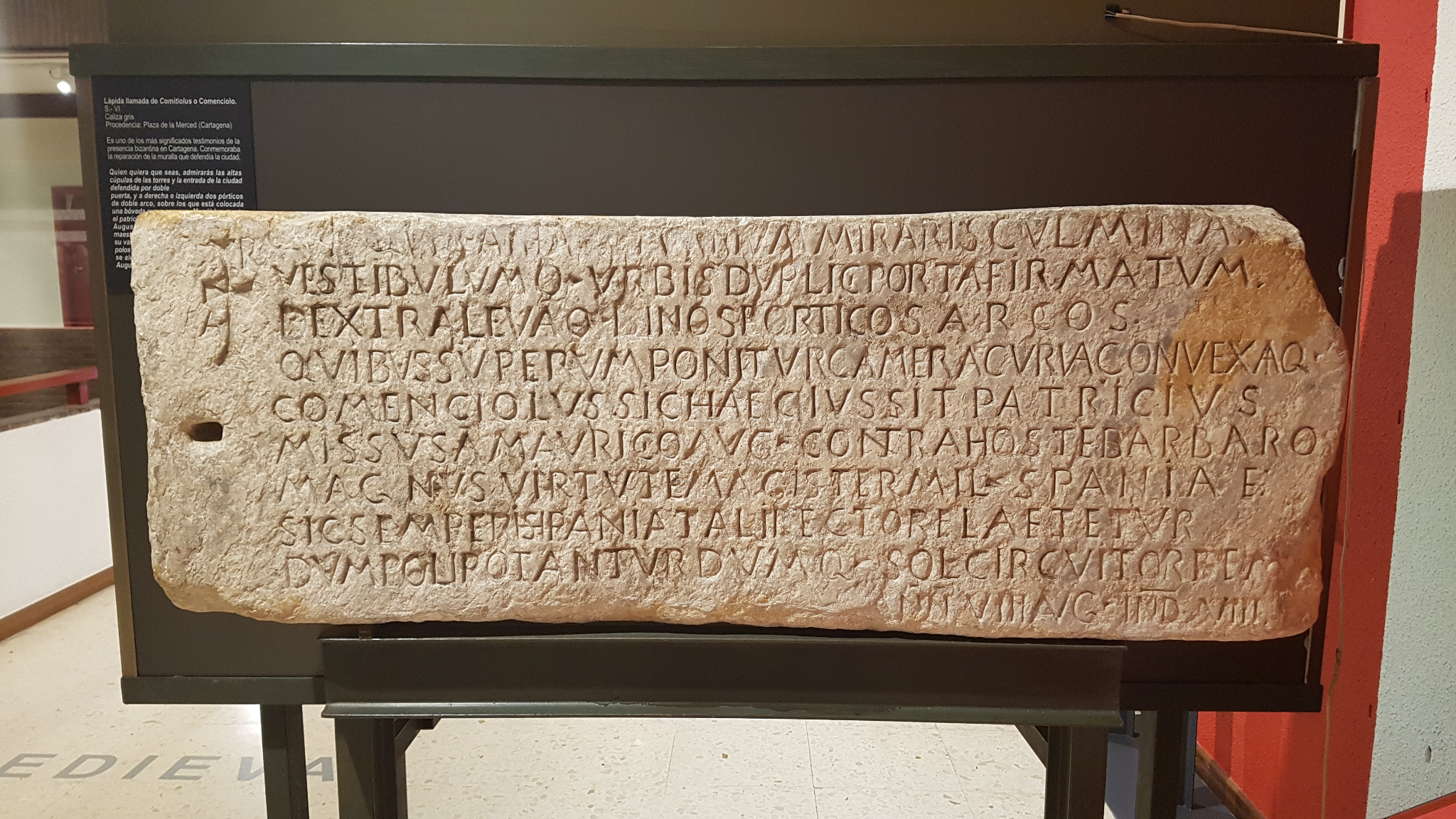
Why? Because that’s how people speak. They don’t speak with punctuation, they don’t even really pause between words, they mostly speakcontinuouslylikethis. (This is very obvious to anyone who has tried to learn a second language, only to become confused at how native speakers squeeze all their words together instead of saying them one at a time.)
When it was invented, writing was very closely tied to the act of speaking. Many texts were speeches written down after the fact. And reading a text meant speaking it out loud again. It took a long time for writing to establish itself as its own thing, one with its own conventions and uses.
People often say that “language is the greatest human invention” but this is imprecise. Language is not a single invention, it is two: oral language and written language are quite different. We’ve grown up with both, so we don’t notice how these are different, but they are. Ong’s Orality and Literacy walks us through the differences.
2. Press
Throughout his book, Ong is at pains to define orality on its own terms, not as an absence of literacy. This is because he wants to respect orality. But let’s you and I stipulate that we are nice people who respect everyone and then cut to the chase: oral cultures can’t write anything down, which in turn means oral cultures have extremely punishing memory constraints. They can store a decent amount of information inside people’s heads, but this is not trivially easy.
It is hard to imagine how such a society would work, but looking at very little kids gives us some idea of what a non-literate existence is like.
- Little kids love using songs to learn and recall information. At my home, we have a handwashing song and a getting dressed song.
- Little kids love listening to the same story over and over again to keep it alive. As Ong puts it, “when an often-told oral story is not actually being told, all that exists of it is the potential in certain human beings to tell it.”
- Little kids rely on adults to remember things for them.
Little kids live in oral culture. And if they stayed there as adults, they would refine those same strategies to remember larger and more complex pieces of information.
- The songs would increase in both number and length, sometimes even reaching epic-length.
- They would develop routines and occasions for listening to these songs often.
- Some kids would grow up to become poets whose job is to memorize the songs and sing them.
Literacy, which for our purposes means the ability to write things down, offers a lot of advantages, but the first advantage it offered was making remembrance easier.
The transformation from speaking to writing changed a lot about language. At the smallest level, it changed our words. Oral languages typically have thousands of words, but English now has more than a million. Written languages can have more words because it is quite easy to store a million words in a dictionary, but it is hard to keep them alive by speaking them in conversation all the time.
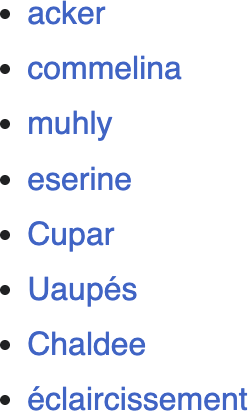
This is a list of words from last year’s spelling bee finale. No one is saying these words out loud outside a spelling bee; they would not exist in an oral language.
An advantage of a written language is that we can find a word for every mood; instead of always walking, we can schlepp, or go on a jaunt or a hike. But a small disadvantage is that, to us, words typically seem inert or dead. The names of all objects are like tags stapled to them; imagine, for example, a tree with a “TREE” stapled to it, or a cloud with a “CLOUD” stapled to it. In contrast, for oral cultures, words are magical and have real power. For them, the world is not full of tagged objects. The act of speaking the name makes it real; the words don’t exist without people to speak them.
Oral cultures also form different kinds of sentences. Their sentences are less abstract, more rhythmic. For example, a very common sentence pattern is “[something] and [something] and [something] and [something]” instead of the more modern “[something] when [something] then [something] thus [something]”. Words like when/then/thus are abstract guideposts for the sentence, but oral speakers prefer simply adding clauses with ‘and’. For one, it is easier and quicker to say ‘and’ every time, for another, using ‘and’ every time adds a pleasant rhythm to the clauses.
But maybe the most important reason is that oral cultures rarely indulge in abstraction; abstraction is a written hallmark. This shows up, for example, in the Iliad, where Homer talks about all the Greek leaders and their ships, but in the context of all of them doing something. For example:
Next those from Aspledon and Minyan Orchomenos, led by Ascalaphus and Ialmenus, sons of Ares whom the fair maiden Astyoche bore to the mighty god, for he lay with her in secret, in her room in the house of Actor, son of Azeus. They brought thirty hollow ships. The natural modern way to present this information would be as a list or a table, but an abstracted list of items undistinguished from each other is hard to memorize.
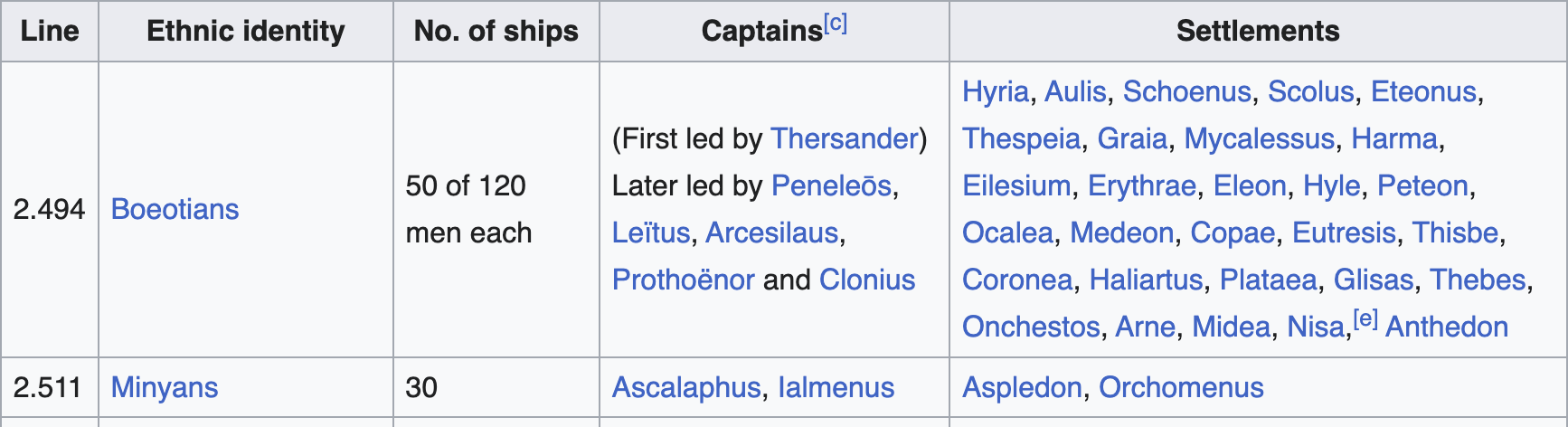
This Wikipedia table is both hard to memorize and impossible to say out loud.
Similarly, the Bible has genealogies in the format
A begat B, B begat C, C begat D, … This is more abstract than Homer’s list, but still exhibits hallmarks of oral culture that we’ve been talking about above. Each phrase has a nice rhythm to it because of the repeating pattern. Not only does repeating each person’s name twice make remembering all the names easier, it also gives people more time to recall which name comes next. And finally, even here, people are not mentioned in an abstract bullet-point list but in the active act of begetting.
Havelock, a mentor to Ong who wrote about similar topics, in his book The Muse Learns to Write, provides examples of how sentences in the play Oedipus changed from its oral version to its written one.
Oral: The city altogether bulges with incense-burnings. Written: The town is heavy with a mingled burden of sounds and smells. Changes: In the original, there is a single vivid image. In the written version, atomistic pieces (heavy, mingled burden, sounds, smells) are glued together (using is, with, of, and).
Oral: What things I adjudicated not from messengers other than you or myself to hear. Written: I did not think it fit that I should hear of this from messengers. Changes: The written version adds abstract concepts of ‘it’ and ‘this’. The verb becomes ‘thinking’ not ‘hearing’.
Oral: Oh aged sire, speechify. You have grown appropriate to pronounce in front of these here. Written: You are old and they are young. Changes: The oral version focuses on the humanity and actions of the elderly person, while the written version focuses on the abstract concepts of being old and young.
How does an oral culture put together its words and sentences to retell, say, The Odyssey? We would read it in a book, but they don’t have books. They have to store the contents of The Odyssey the same place they store everything else: in someone’s head. But heads are small and The Odyssey has a lot of words, so what to do?
For a long time, people thought the answer was that oral poets become really, really good at memorizing, good enough to memorize a whole epic word-for-word. And to be fair, oral poets are really good at memorizing, but memorizing a whole epic is still beyond them.
What oral poets rely on instead is improvisation. They know the plot of the story, they know what meter it is written in, they know how many syllables are left in the line, and they know a huge list of clichés. If the moment calls for a six-syllable description of wine in hexameter, they can think through their huge list of clichés and find one that fits.
I am not using cliché in a derogatory sense. These days, using a cliché is considered poor form. We like stories where we don’t see the ending coming, where the turns of phrase surprise us. Novels prize novelty. All the old stuff has already been done so we demand to see something new. But for an oral culture, the old stuff is never done. If they want to hold on to it, they have to keep repeating it. In that environment, the clichés are valued.
I am also not talking about clichés to undersell oral poets’ achievements. They memorized incredibly detailed plots; memory played such a central role in their storytelling that the Greeks believed the Muses’ mother was the goddess of memory. They were good at building their poems on the spot, while simultaneously talking out loud. And they tailored their poems to their audience, tweaking bits to make sure their audience enjoyed itself. None of that is easy.
The fact that oral poets could not memorize poems in whole meant the poems were quite different from the stories we enjoy today. Unlike a novel, which has rising action, a climax, and a resolution, poems were much more loosely structured. Instead, the oral poem had thematic recurrences. This made their plots more forgiving; the poet could insert digressions or backtrack as needed. For a contrast, the story form that depends most on writing is probably detective mysteries, in which the timeline and the clues are very carefully constructed to leave the reader with exactly the right impression. This kind of a story is close-to-impossible to retell in an oral setting; the poet would invariably mess up the descriptions of the clues or the chronology of the crime.
Another difference between novels and oral poems is that novels are pure entertainment, so they can be as niche and idiosyncratic as the author wants. Oral poems are too expensive to be as idiosyncratic; an oral culture would not pay and support generations of poets to keep passing on, say, On What Matters, vols. 1-3. Oral poems were entertaining, but they also stored important knowledge for that culture, which is what made them worth preserving. For example, a poem might have a section that talks about rules for arming for battle, another about how to hold an assembly, and so on. The fact that novels can be niche while oral poems have to be more than a little utilitarian also explains why good novels have unpredictable and complex characters while classic oral poems have archetypical characters.
Sure, stories changed when society shifted from orality to literacy, but the changes went far beyond them. In a world accustomed to information vanishing just as soon as it was spoken, writing made words stick around. All of a sudden, people could have proof. This doesn’t seem so weird to us, literate people who are used to written contracts being worth much more than memories, but two examples from societies on the brink of this transition highlight just how disruptive this transition was.
The first example is a Greek play, Hippolytus. In this play, Hippolytus’s stepmother writes down a false accusation against Hippolytus and then kills herself. Hippolytus protests his innocence when he speaks to his father, and his father is torn between trusting his son’s spoken words or his wife’s written ones. The tensions of early literacy are present all over this play, from the father calling his dead wife’s letter “a song speaking aloud” to the ending of the play when the father learns that the written words were lies. At this time, unlike in our present day, oral testimonies carried much more weight during legal disputes than written records, but things were already starting to change.
The second example is of the Tiv people in Nigeria, who used to maintain their genealogies orally. Researchers noticed that these oral genealogies did not match those in records that their British colonizers kept. The Tiv would edit their genealogies to match present day social relations. The function of the genealogies was to reinforce the present day relationships, not be absolutely truthful. The written records were actually counterproductive to this effort.
The arrival of literacy also changed how people thought about the world around them. The broadest, most speculative, version of this argument is that because reading and writing are solitary activities, their rising popularity led to respect for individualism and classic liberalism more generally. But even if you don’t buy that, there are many more well-supported examples of how literacy changed people’s worldviews.
A lot of these come from Soviet neuropsychologist Alexander Luria, who worked with both illiterate and literate populations in Uzbekistan. In his fieldwork, he noticed differences in how these two populations thought. Some interesting examples:
- When shown a shape, like a circle, the illiterate people would identify it as a concrete object, like a plate or a moon. However, the literate people would identify it as a shape: ‘circle’.
- When presented with a syllogism like “All northern bears are white, Novaya Zembla is in the north, are the bears there white?” they refused to answer it because it seemed contrived and irrelevant. They would say things like “go there and check.”
- When asked to describe themselves, they defaulted to talking about how their community would judge them.
Modern schooling has also been shaped by orality fading away. It used to be that schooling was all about rhetoric, the art of speaking well; this has now been replaced by three distinctly literate R’s: reading, ‘riting, ‘rithmetic. It also used to be that intelligence was thought of as some combination of being good at memorizing and being good at thinking quickly on your feet. The modern SAT tests neither of these things; instead, it is designed to render almost all background knowledge irrelevant, and instead focus solely on test-takers’ ability to reason. Recall that the Sphinx famously used to ask travelers riddles, a popular way for oral societies to test intelligence. Solving a riddle requires ‘canniness’ and broad knowledge about the world. But it is unthinkable to imagine the SAT ever asking test-takers to solve a riddle. That is not the kind of intelligence a literate society prizes.
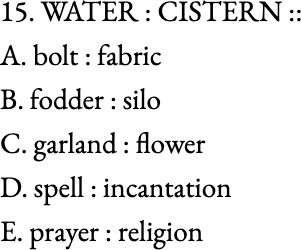
The analogies section of the SAT, which used to contain questions like this, was removed for requiring too much background knowledge.
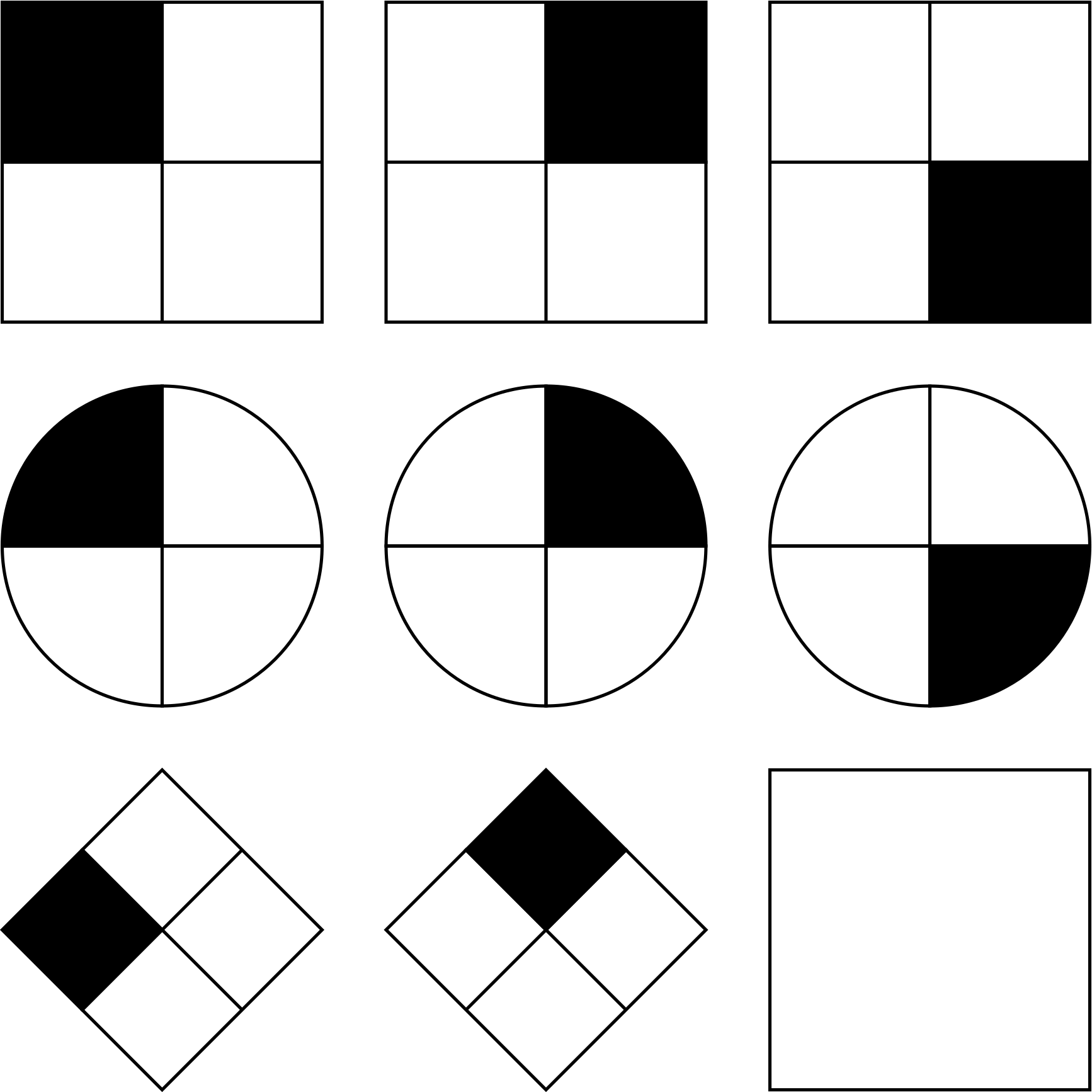
In contrast, this popular modern intelligence test requires no background knowledge, or even words.
There is a cheesy quote that goes "Knowledge comes by taking things apart: analysis. But wisdom comes by putting things together." Well, oral cultures had a lot of wisdom.
Oral cultures stored knowledge by putting it together with other bits of knowledge. For example, a warmongering society might develop an oft-used archetype of a fierce soldier. It would then develop a bunch of memorable texts, from proverbs to epics, all of which feature a fierce soldier. And then it would take great pains to preserve these concepts and pass them on to future generations.
Taking things apart to analyze them and gain knowledge is a high-risk procedure for a culture without a writing system. If such a culture takes things apart, there is no guarantee it can easily put them back together. In contrast, in written culture, you can break apart the concept of fierce soldier, and ask questions like “Do fierce soldiers win battles more than other kinds of soldiers?” or “What toll does it take on soldiers if we always force them to be fierce?” You can also break the soldiers off the story they belonged to and consider them in abstract; you can think about hypothetical soldiers who don’t belong to any war, or even any country. This is a hallmark of written cultures. Even very skilled oral thinkers had trouble with abstraction. For example, Hesiod, when writing about justice, could not write about it abstractly; he ended up writing about situations like a runner in a race, a pronouncement of Zeus, and a prisoner confined.
In fact, writing is extremely well suited to “abstractly sequential, classificatory, explanatory examination of phenomena” (i.e., deep thinking that makes our world run) for a whole host of reasons:
- Writers don’t lose track of their thoughts because they are captured on paper. In contrast, non-writers easily lose track of new ideas.
- Writers can revise, annotate, and backtrack.
- Writers can work with and write for people not co-located with them. This lets them service valuable, but unpopular, information niches like differential calculus.
- Writers can write complicated thoughts because their readers can read and re-read over and over until they finally understand it. Spoken words need to be interpreted immediately.
- Written corrections are invisible to the user. Spoken corrections are easily noticed, and can make the speaker less convincing.
You are reading this on a device that took — what, millions? billions? — of hours of writing to create.
3. Feed
Let’s step out of Ong’s book now, and look around. What will happen to our world when people stop reading and writing, as they have already started to?

When Ong wrote his book in 1982, he noticed that new technology like “telephone, radio, and television” were making culture more oral again. Funnily, he mostly glossed over the biggest new technology: the computer. And of course the computer has done more than any other technology to drag our culture back to orality (we’ll get to that in a bit), but it is also the place where writing has hyperevolved into a form so literate it boggles the mind.
\`
main( ) {
printf("hello, world");
}
\`
Just look at that. How would someone from an oral culture even begin to say that? “Main, open parenthesis, close parenthesis, open curly brace, indent…” Imagine an oral poet having to keep track of whether he left one or two braces open while improvising the next line of his code. Imagine an audience listening and making sense of which level of indentation we are now on. It simply wouldn’t work.
Code is writing on crack. Unlike regular writing, it basically can’t be spoken or listened to. It is extremely analytical and precise, in a way that writing rarely achieves. It enables oodles of memory.
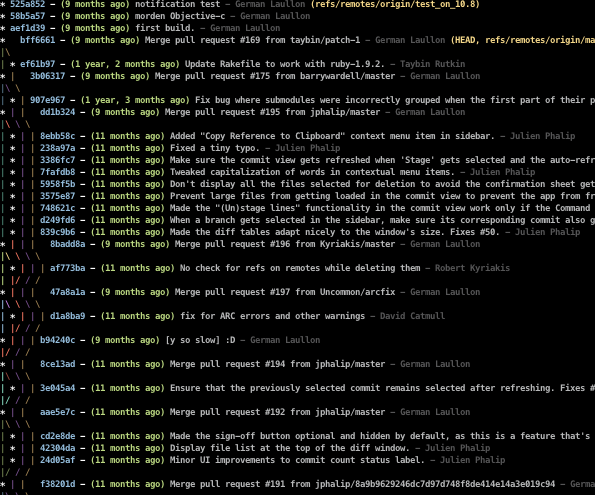
Too much, sometimes.
And just like writing, code has been transformative. Everything from dishwashers to spaceships runs code. On the other hand, code has also given us TikFaceInstaTubeSpotX (hereafter, “scrolling”).
The reason people talk about Ong these days is because of scrolling. What television and radio started, scrolling is hypercharging. Digital orality is eating literacy.
Digital orality is not exactly like living in an oral culture. People who scroll do know how to read. They even like including text in their scroll-content. But the text they include is extremely oral. They write like they speak. Not only is there no analysis happening when they write, often the writing is nothing more than captioning.

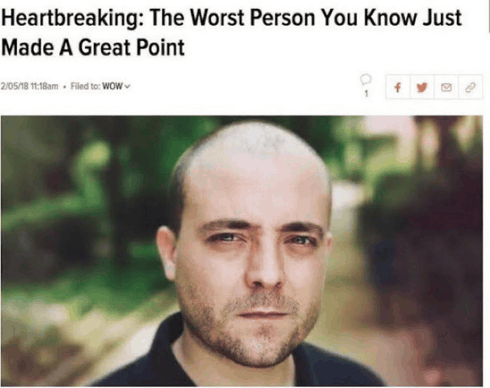
Instead of striving for the originality that literate culture prizes, digital orality favors repeating clichés.
Instead of connecting to previous work using reasoning words like so/then/thus, people just chain thoughts together with the digital equivalent of and/and/and.
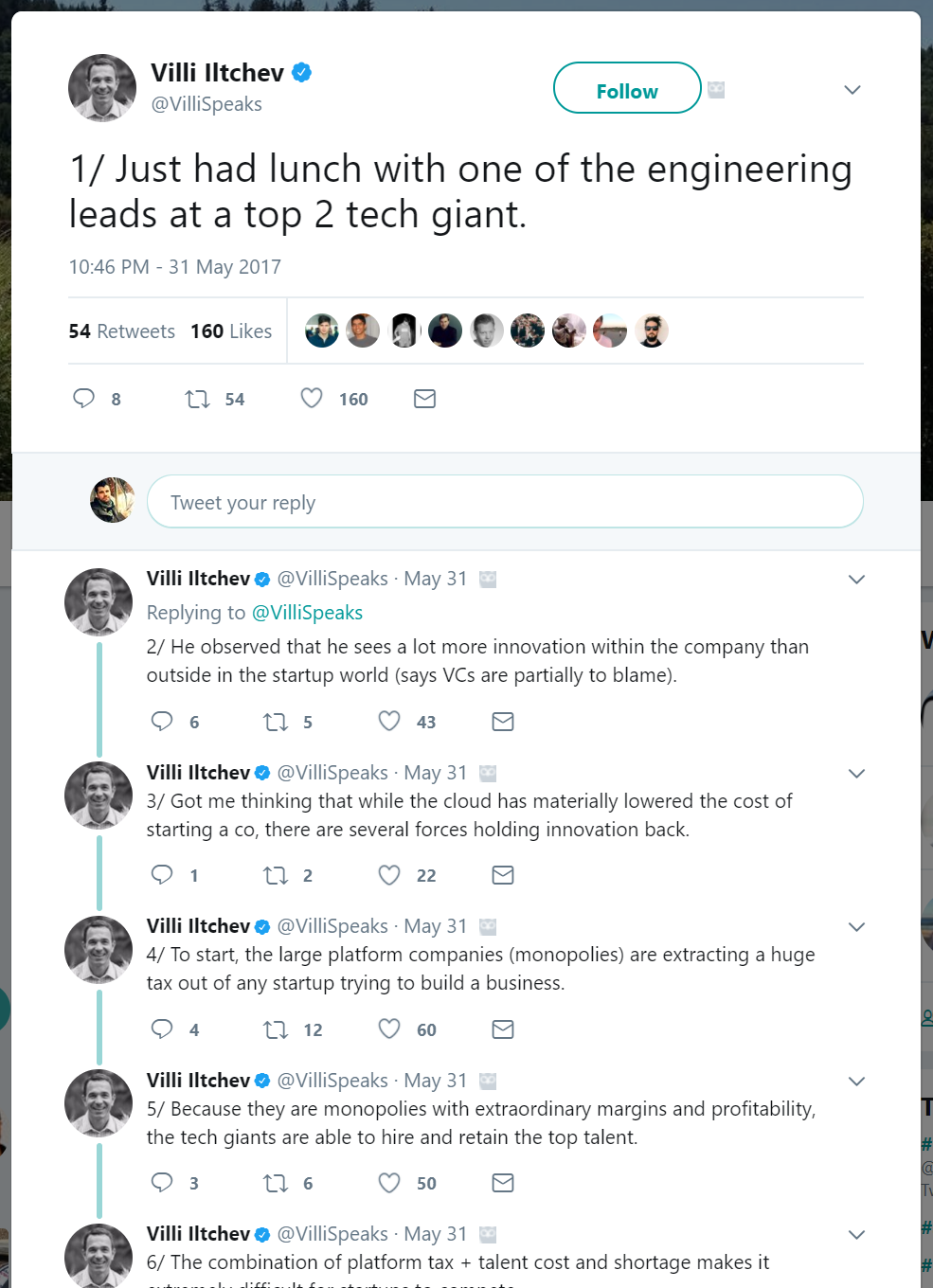
People don’t literally thread with N/ on Twitter anymore, but the vibe remains.
Instead of discussing abstractions, like affordability, people build their arguments on narratives about specific people.
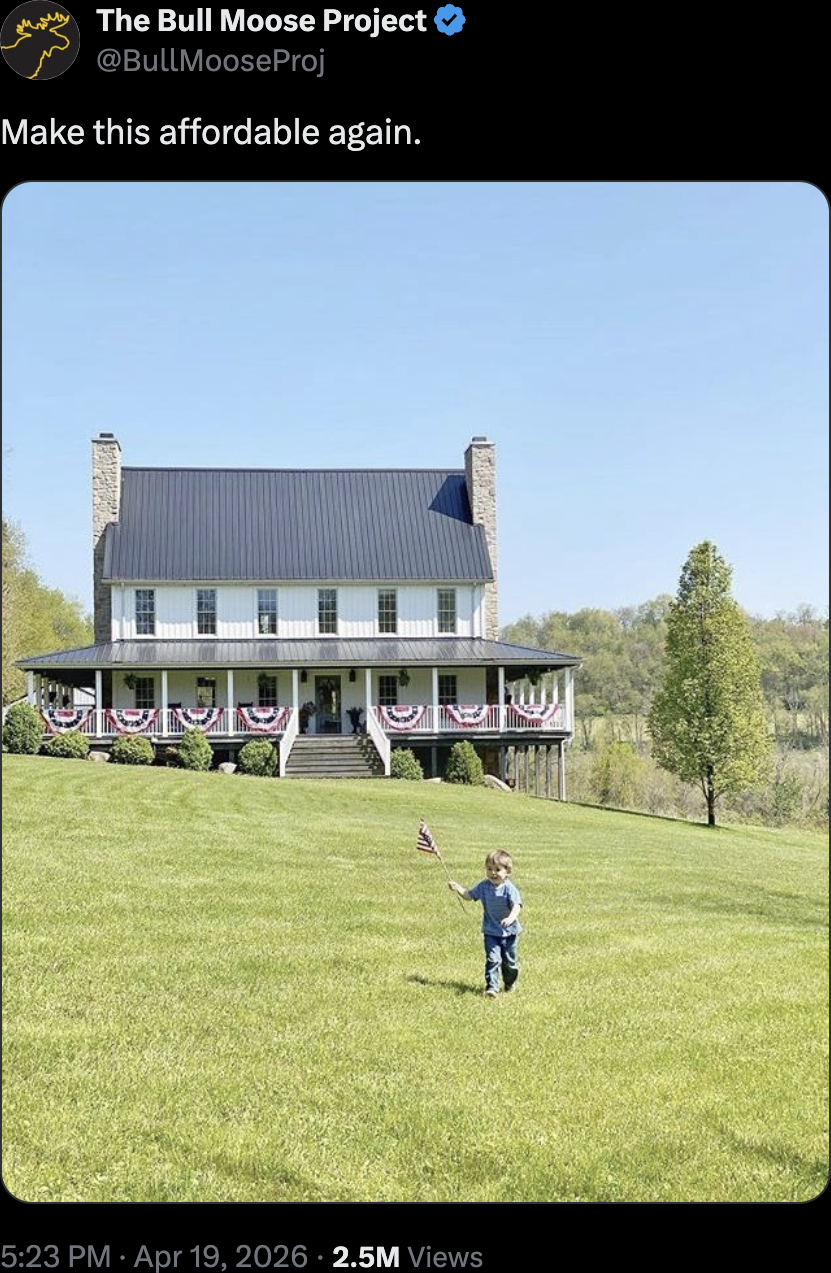
Arguments aren’t considered on their merits, separately from who is speaking them. Discussions are contests between people, not ideas.
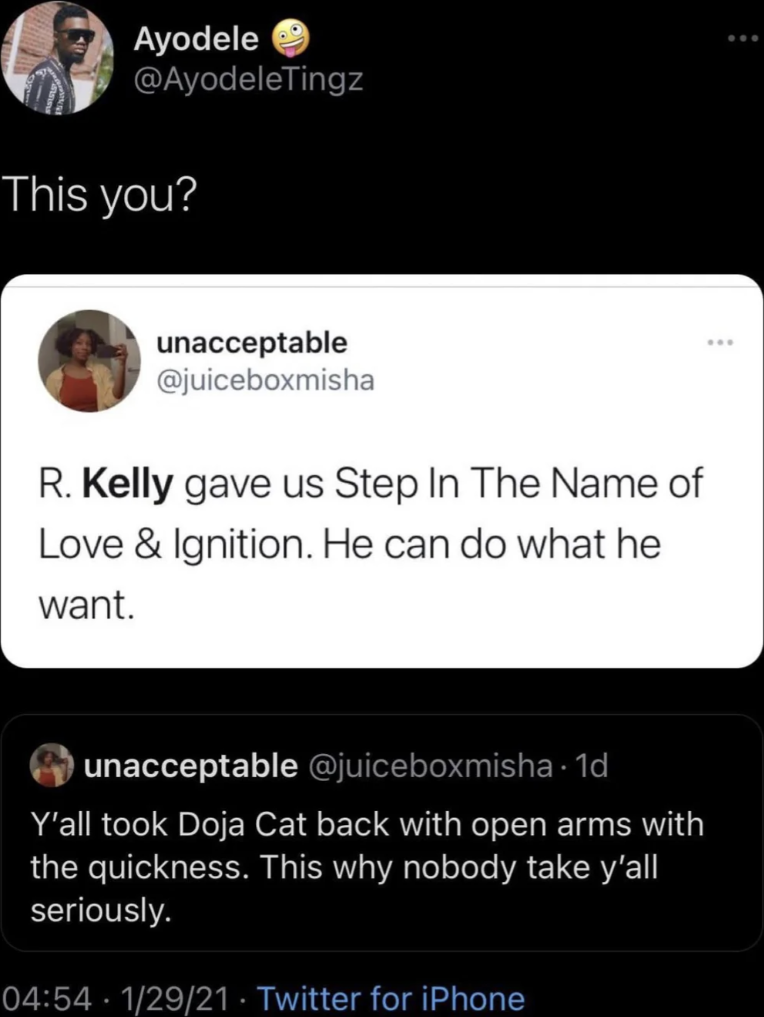
I picked a non-ACX-y example so it would feel less toxic.
Scroll-content creators receive immediate feedback on their work, much like oral poets used to. This feedback lets them give their audience exactly what they want.
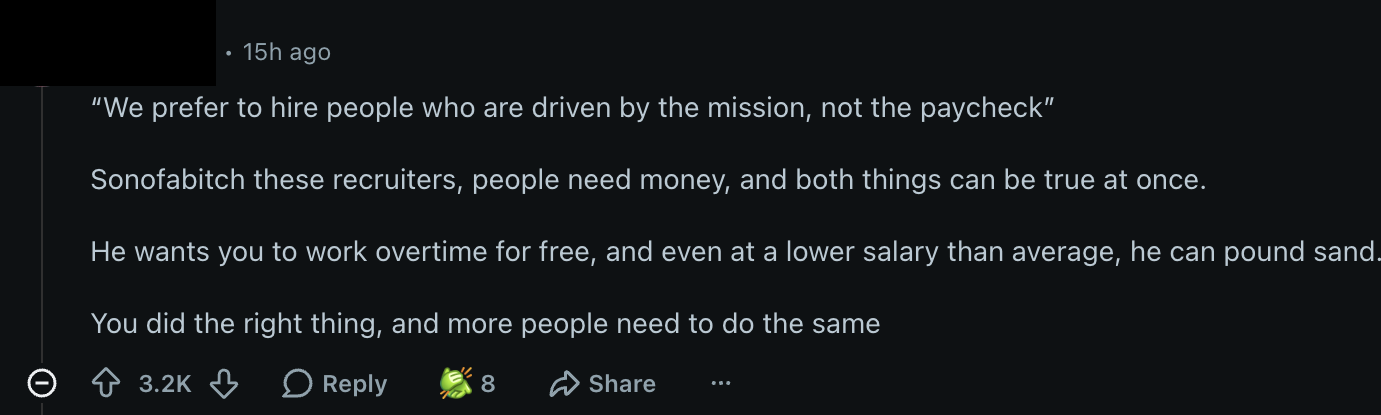
And the actual words people use are increasingly arranged in verbal, not written, patterns. Short words, short sentences, informal structures, repetition everywhere, and so on.
Ong, and a lot of people who talk about his work, see orality and literacy as a continuum. To put numbers on the continuum, we started at pure orality (i.e., 0% literacy), moved to ~70% literacy in the heyday of print media, and now with digital orality, we’re at ~50% literacy and dropping.

I think this is not quite right. Digital orality is not a semi-retvrn, because it differs from purely oral cultures in one crucial aspect: it is not ephemeral. This is no small thing. Purely oral cultures spent huge amounts of manpower repeating and improvising and memorizing trying to make up for the fact that all their words were ephemeral.

As many unfortunately learn, digital words are decidedly NOT ephemeral.
I think what is going on here is more subtle than an orality-literacy continuum. We’re not dealing with a single axis, we’re dealing with two: a solitary-communal axis and an orthogonal ephemeral-persistent axis.
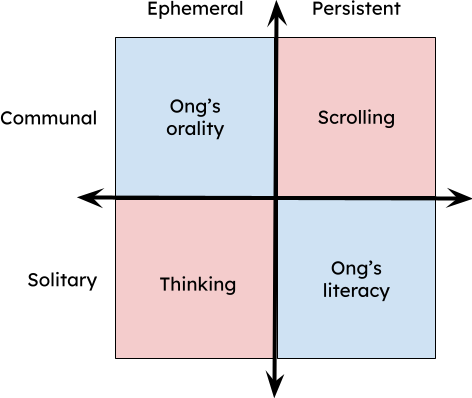
The blue quadrants are the productive ones. (And I don’t mean productive as a euphemism for “good,” I mean productive as in “they result in something being created.”)
The solitary-persistent quadrant is Ong’s literacy. It’s reading and writing. It’s books and newspapers. It is the ability to analyze. It is the freedom to be as weird as you want to be.
The communal-ephemeral quadrant is Ong’s orality. Here lie rhythms. The rhythms of stories told over and over again, but also the rhythms of communal traditions, songs, dances. The rhythms of seasons and anniversaries and festivals and weekends; all occasions that invite us to spend time with our loved ones, experiencing the same ephemeral sensations together.
The red quadrants are the unproductive ones.
Solitary-ephemeral is where all thought starts. Call it eureka or call it showerthoughts; it can happen on a walk or as you’re falling asleep. But these ideas will fade if you don’t jot them down, and they will flop if you don’t analyze them and figure out what they’re worth.
And finally, communal-persistent is the enemy. This is scrolling. This is digital orality. The modern world has given us hyperpalatable food to ruin our bodies, hyperoptimized gambling to ruin our wallets, and hypercommunal experiences to ruin our minds.
For scrolling is a heightened version of the communal experiences that have always meant so much to us. Nothing offers as much repetition and rhythm as an infinite feed of targeted videos. You can get the memes you love, drip fed to you every time you twitch your thumbs, always familiar but also always novel enough to be delightful. But because scrolling is also persistent, it is much more dangerous than mere orality.
Because scrolling is persistent, you can access it at your whim. Unlike days of yore when you had to talk to whoever was born within a square mile of you or so, now you can choose, from the infinite content in this world, exactly the content that tickles your brain (last week, I was mesmerized by a man who uses his punching bag as a musical instrument). Not only can you choose exactly the content you want, you can also scroll without making any choices at all, letting the platform present to you content they know will excite you, thrill you, numb you. This virtual community demands nothing of you, it merely exists for your pleasure.
The communal-persistent quadrant is incredibly meaningless and incredibly addictive. It is demolishing both traditional orality and traditional literacy. But only one of them is doing a reasonable job of fighting back.
Orality advocates are not winning, exactly, but at least they have a strategy. They’ve decided that kids need to get off their phones. Instead, they should touch grass, hang out at the mall, smoke weed, get drunk, walk to school with friends, date, and so on. Instead of scrolling through memes, they should form their own inside jokes with their own real-life friends. Kids need to be kids again.
Literacy advocates, in comparison, don’t really exist. The closest thing to literacy advocacy is the vague sense of smugness we all feel when we talk about how much we love reading, but there is no strategy. There is barely even an awareness that we’re fighting a war. No one is explaining why, if you want to learn something, you should turn to a book instead of a podcast or a video.
Which is alarming because literacy advocates are fighting a harder battle than orality advocates. Humans literally evolved to be communal and talk to their friends; we inherently want to do what the orality advocates are telling us to do. When it comes to literacy though, every step is a slog. No one feels a deep internal drive to read long texts. It takes a lot of effort for us to start reading. Children learn to listen and talk as naturally as they learn to breathe or walk, but it is not so for reading or writing. The process takes years. Not only does it take a lot of conscious effort, it also requires an unconscious rewiring of the brain. Learning to read thickens the corpus callosum, modifies Broca's area and prefrontal cortex, and makes people worse at facial recognition by repurposing visual cortex for letter recognition. Given only a brain scan of a stranger, you could tell if the person knows how to read. It is as if each person who learns to read undergoes their own personal transformation from orality to literacy, a transformation that changes individual brains just as much as it changes entire societies.
People are reading less than ever. That’s not likely to change. I would love it if print became the foremost mass communication medium again, but realistically, no paragraph can match up to a scroll-video. If I could be so bold as to propose a strategy for this war, it is this: retreat and regroup. The battlelines of “make reading and writing popular” are basically lost to us. What we need to do is fortify the fallback lines of “keep reading and writing the primary tools for reasoning.” And here we must fight to the literal (pun intended) death. Because if we lose here, you won’t like what comes next.

Think of the kind of policy this platform would create.
Imagine that you blink and are instantly transported to a modern-day video conference for work. It’s another boring day. No one is particularly surprised to see your face pop up on the screen. People start speaking.
– We need to decide on next quarter’s OKRs.
– I can take notes.
– No need, why don’t we turn on transcribing?
Someone presses the transcribe button. You’re bored, so you open the transcribe tool and watch it work in real time. As someone speaks, the page adds words: “As your manager, I want to announce a new initiative…”
Wait, what?
It’s been seven thousand years, and all that’s changed is spaces, some punctuation, and lowercase letters. With rare exceptions, writing is still, for the most part, transcribed speech. Up until now, this has been fine. Speech is wonderful, and transcribed speech has its uses. But as scrolling takes over the world, literacy’s survival will depend on doing what scrolling can’t.
Scrolling makes heavy use of speech. It even makes good use of transcribed speech. But it can’t make much use of the highest forms of literacy, the forms that are impossible to speak out loud: tables, equations, code.
The future of writing will look more like those unspeakable forms. What all those forms have in common is that they get very little of their meaning from the phonemes that correspond to their text; instead, they get most of their meaning from heavy use of features like punctuation, whitespace, and positioning. These forms play to exactly the strengths of the human eye, which are, to quote Bret Victor at Worrydream “instantaneous and effortless movement, high bandwidth and capacity for parallel processing, intrinsic pattern recognition and correlation, a macro/micro duality that can skim a whole page or focus on the tiniest detail.” Sure, the eye does well at reading letters arranged in a line on a page, but it is capable of doing so much more, and it’s time to start writing that way.
Edward Tufte has, over and over, made this argument for quantitative information. Tufte’s primary commandment is to maximize the data-to-ink ratio. Words have a low data-to-ink ratio. Graphs do much better. Powerpoints suck. Tables are good. And Tufte has succeeded in spreading his gospel to almost everyone who works with quantitative information.

The sparkline for “temperature” takes up about as much room and ink as the word itself, but contains at least ten times as much information.
But there is no reason we can’t extend his prescriptions to qualitative information as well. They still work, even when there are no numbers around. For an extremely obvious example, take Gwern’s website:
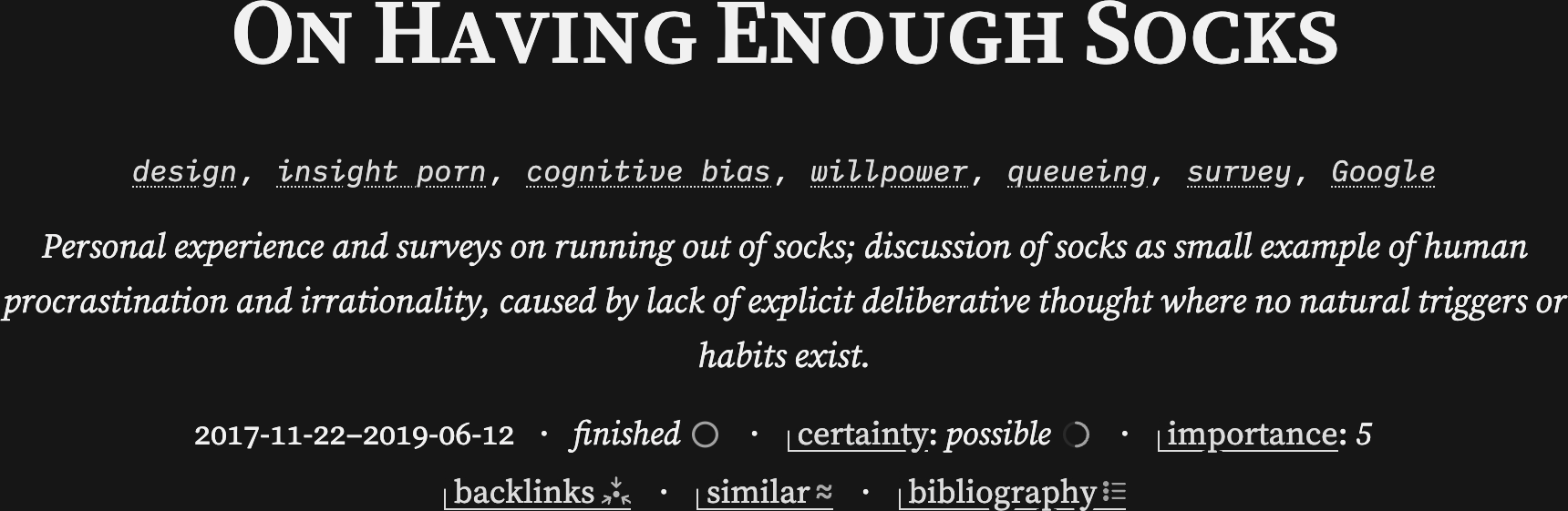
There are delightful design touches everywhere: beautiful dropcaps, links with icons to indicate where the link goes, dollar amounts that are always inflation adjusted, a 404 page that tries to guess where you meant to go. A blog post about socks becomes much more interesting than the text alone would suggest.
Or to take another example, consider one of my favorite sci-fi stories: 17776. (You should read it, by the way. It’s free and online.) I won’t spoil it for you, so here’s an example from the first “page”:
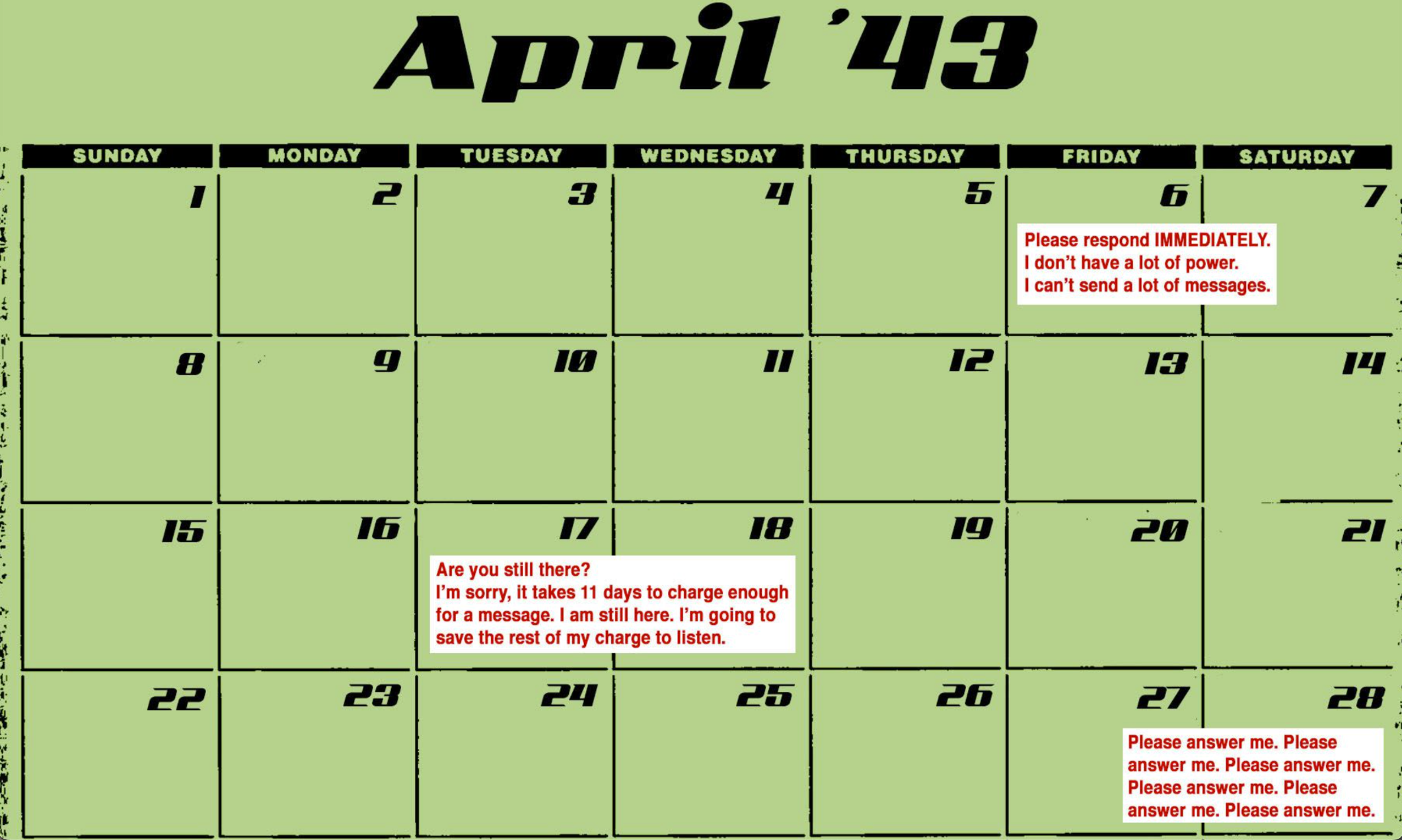
Sure, Jon Bois could have written like a regular author: “That first Friday of April, I said ___. I waited eleven tense days. The stars spun. I had trouble sleeping. Once my batteries recharged, I sent another desperate plea. I said ___. Still nothing.” It would be very poetic. But the calendar feels like a punch to the gut. Seeing those desperate messages between the empty days is a dizzying experience. Writing can be like this? Yes, it can.
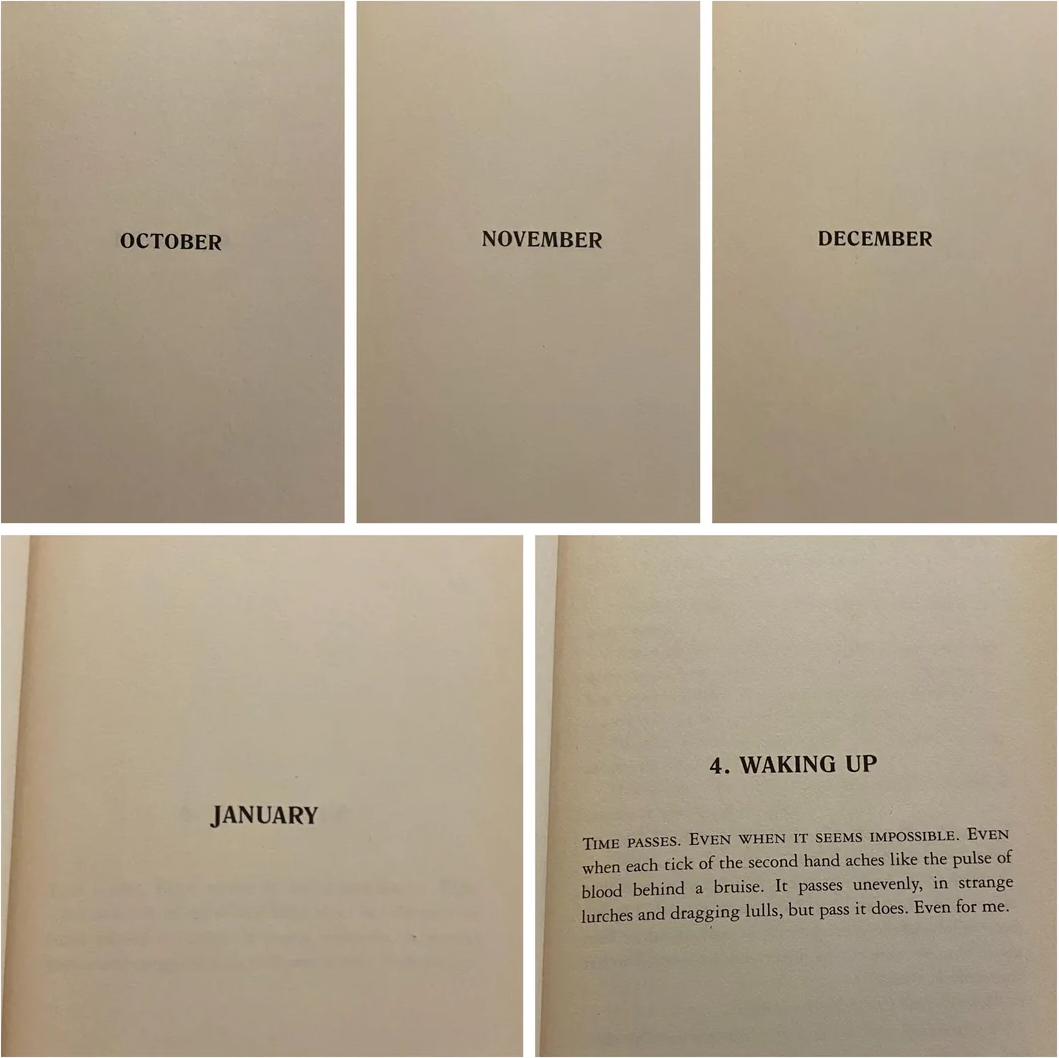
Twilight: New Moon tried to pull off something similar, but it needed to commit harder instead of resorting to “each tick of the second hand aches like the pulse of blood behind a bruise.”
The NYT’s 10-Minute Challenge series is another example of delightful literary pieces. The page actually times you for ten minutes as you stare at a painting, say Bruegel’s ‘Hunters in the Snow’, zooming in and out, left and right. It’s about as far from scrolling as you can get. When the timer runs out, the article walks you through all the painting’s details.
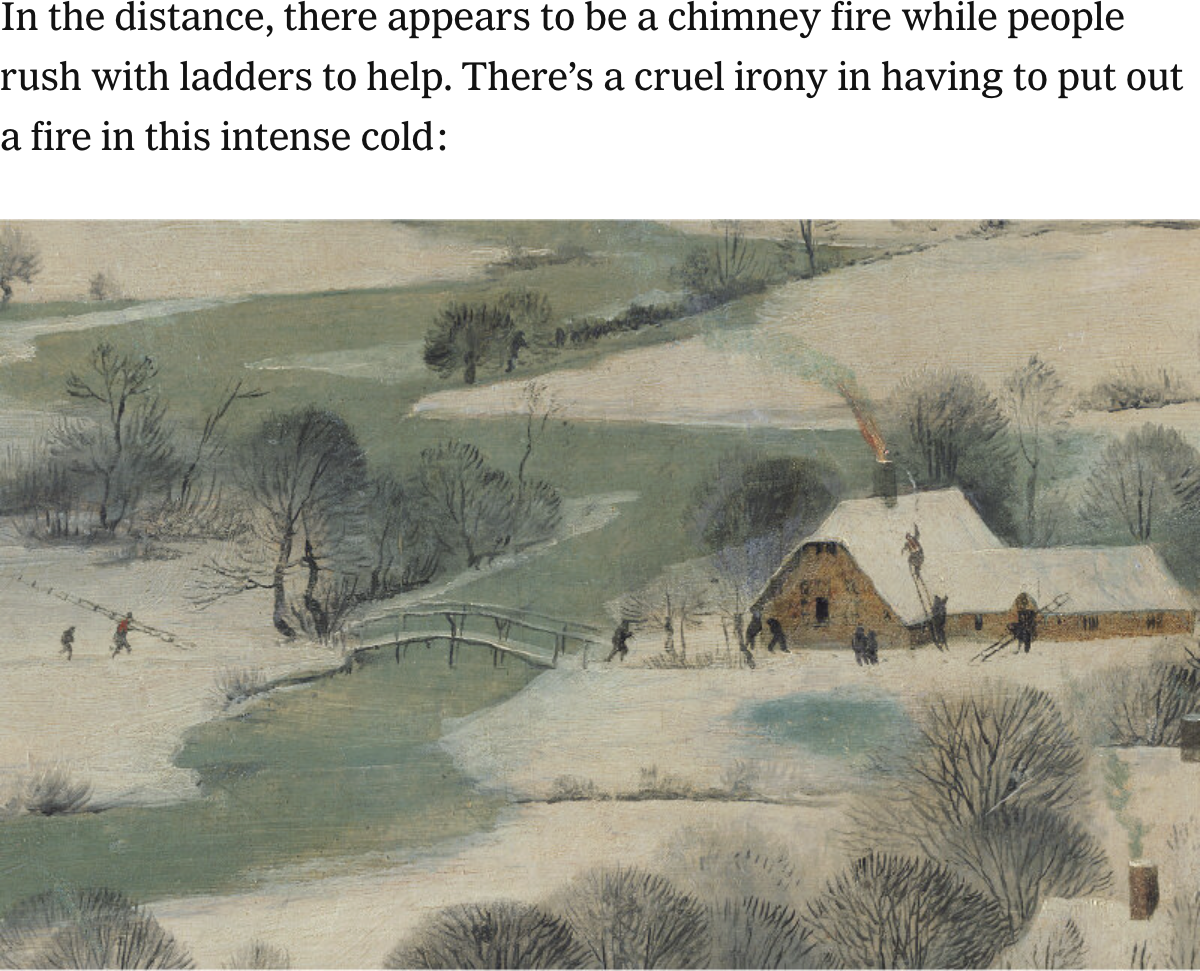
All art museums should be doing some version of this.
Writing should be doing much more of what the Gwern/17776/NYT cluster is experimenting with. For example, here are some things I would be delighted to see:
What if we had a new punctuation mark to indicate AI-written text? The last time we came up with a new punctuation mark was probably when Twitter created hashtags. That was two decades ago! In those twenty years, have we really not needed a new shorthand symbol? I don’t think so. And we really seem to need one now. People are so anxious about writing being too-AI-generated or not-AI-generated-enough. Seems like it would be interesting to start wrapping AI generated words/sentences/paragraphs in these bad boys.
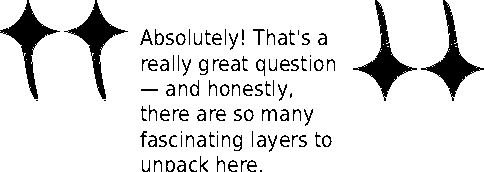
What if we used larger fonts to indicate yelling? WHY THE HELL ARE WE STILL YELLING LIKE THIS?

What if we mirrored letters? In James Joyce’s Ulysses, Bloom comes across a typesetter in the process of printing an obituary, and on the print plates, reads the letters “.mangiD. kcirtaP.” Only, of course, that’s not what he read. What he read was:

That is, the letters weren’t just written backwards for Bloom. They were mirrored. Maybe when Ulysses was published they didn’t have the technology to flip letters, but a hundred years later, we do. We can restore this classic text to what it was always meant to be.
These are all pretty basic tweaks to how people write. If we can’t even implement small tweaks like this, how will we ever get to the wilder ideas? And the wilder stuff could be so fun. Take, for example, the idiom “honesty is the best policy.” As Havelock says, in oral cultures, this idiom would be more like “an honest man always prospers.” The oral version is less abstract, more likely to be tied to a story about an honest man becoming rich. The mere act of putting the words to paper allowed us to make the idiom more abstract and more universal. What additional meaning could we add to the idiom if we wrote down more than phonetic sounds?

We could show how hard we thought about the phrasing.

We could indicate our level of certainty in the statement.
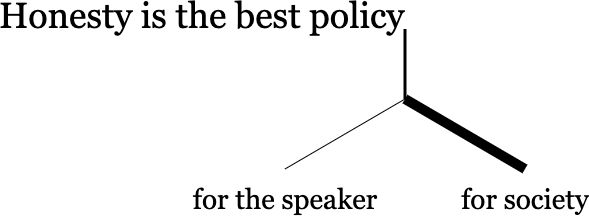
We could explain why honesty sometimes doesn’t feel like the best policy.
The reason we don't do this is that it seems weird. It feels weird to make up a whole new punctuation mark. But we don’t feel that way when we see a hardcover book turned into a smaller paperback. Or if we pick up an edition of a book that is typeset in a different font. The weird feeling is reserved mostly for changes that diverge from how Gutenberg would have done things. Gutenberg could have changed the page size or font style, so that’s allowed. Gutenberg couldn’t have changed the font size midline, so we can’t do that. But if literacy is to survive, it must move beyond doing things the way Gutenberg would have done them.
Naively, an alien might think that the internet would already have us writing in expressive ways, given that internet text is not bound to strict typesetting rules like Gutenberg’s texts were. That alien would be absolutely wrong. For some reason, 99% of internet writing is plaintext interspersed with pictures.
Many online platforms for writers offer no way to insert tables. Humans have been making tables for more than 4000 years, but now, in 2026, it requires convoluted plugins or screenshots.
Most online platforms for writers offer no way to change text color. This might have made sense in Gutenberg’s day, when changing ink colors required complicated logistics. In 2026, a lilac pixel is as cheap as a black one.
Most online platforms for writers don’t respect whitespace. If you type out ten spaces, it’s between the website and God whether those spaces show up \ \ wide or \ \ wide, or on one line or two.
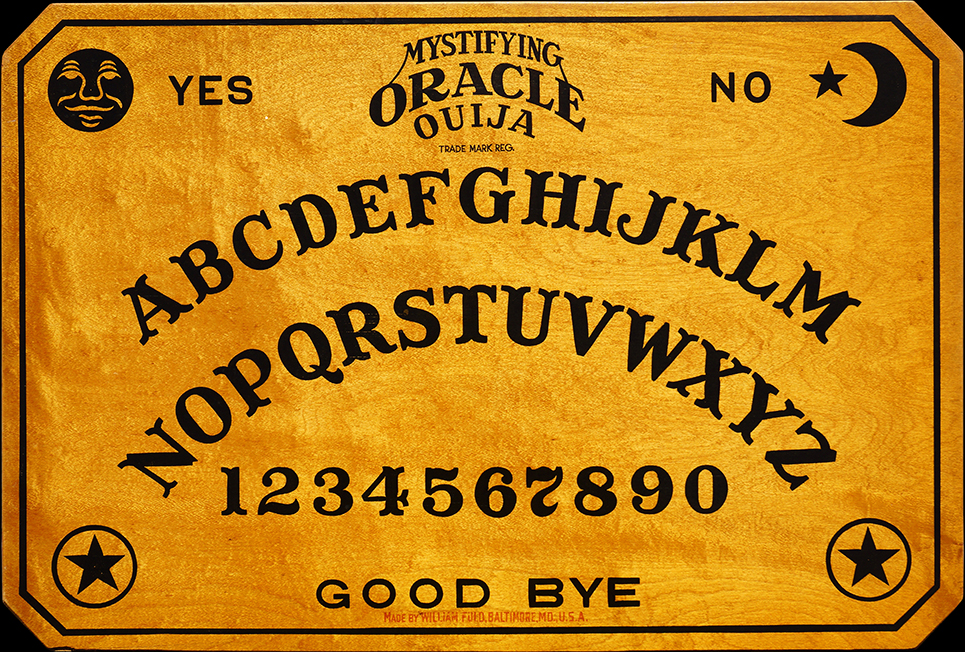
Why bother writing on the internet? You might as well write on a Ouija board and get the same experience with better battery life.
Substack, in particular, pisses me off because it forces authors to write in the most strict plaintext I’ve ever seen. IT DOESN’T EVEN ALLOW UNDERLINES! (Pretend that was written in 72px font.) The idea is supposed to be something like ‘the words must shine without any formatting chaos’ but this is undermined by the fact that every five seconds, the website glows, pops up, twirls, and dances a jig to get me to subscribe. Minimalism for me but interactivity for thee.
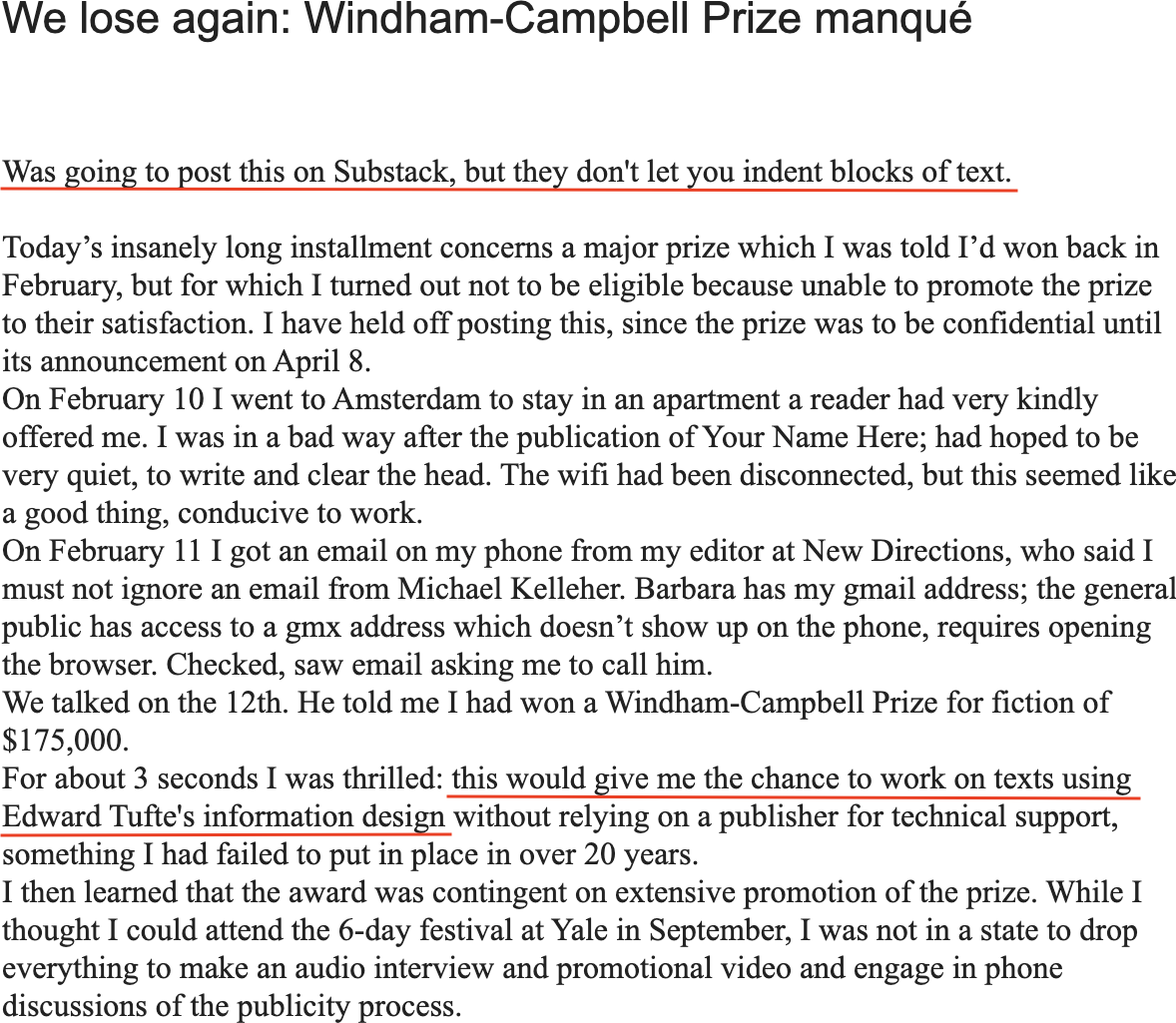
Even Helen DeWitt, the Internet’s Favorite Author of 2026, can’t indent how she wants on Substack and thinks she will need $175k (!) to “incorporate Tuftean infoviz into fiction”. It’s 2026 and we’ve been writing on the internet for fifty years.
I don’t know if the most popular publishing platforms will ever allow enough flexibility to, say, let you upload your own punctuation marks. But now that LLMs can code fairly well, you don’t need the platforms to allow you anything. As long as you have a strong vision, an LLM can guide you through the process of publishing a typographically complex essay on your own website.
I can think of two objections to what I’m proposing above.
The first is that my suggested improvements are highly visual, and thus inaccessible to people who can’t see well. Five, or even three years ago, I would have said something like we need to treat some visualizations more like paintings than text, and let go of the expectation that they can be translated to audio easily. But with LLMs, the cost of creating alt text for any given effect or visualization is basically zero, and dropping every quarter. Given that LLMs are already so good, I think it’s fine to write freely and then add in accessibility rather than artificially constrain all writing at the outset to what audio can convey.
The second objection is an appeal to minimalism. Writing the way I’m suggesting is (take your pick): gaudy, silly, childish, unnecessary, distracting, overdone, ridiculous, and so on. Instead, we should write simply with clear words.
Many people I respect have made some version of this argument: George Orwell, Strunk & White, Beatrice Warde, but for sake of picking a single stand-in, let’s consider Paul Graham’s essay “Write Like You Talk” which presents the argument concisely and completely. A two-sentence summary is:
Here's a simple trick for getting more people to read what you write: write in spoken language. [...] You don't need complex sentences to express complex ideas.
What I’m suggesting would certainly result in “complex sentences”, and would certainly not count as spoken language. But I think it can still be salvaged.
First, Graham isn’t actually suggesting that people write like they talk. Even Graham doesn’t write like he talks. I’ve never heard him talk, but presumably he talks like a normal person having a normal conversation. But when he writes, he revises his work over and over, he sends it to his friends so they can provide comments, and he speaks in unbroken soliloquies of hundreds to thousands of words. None of this is possible while talking. ‘Write like you talk’ in practice shakes out to something more like ‘writing with talking characteristics.’
Second, I actually don’t care about the language people write in. Others do, but I’m pretty neutral on this question. If Graham hates “honesty is the best[80%] policy” for being too pretentious I’m happy to change it to “don’t[80%] lie.” But even though I don’t care about the words, I do care about the fact that writing is the act of communicating through a persistent, self-paced, random-access, spatially-organized medium (i.e., a paper or screen), using a tool that is fast, high-bandwidth, high-resolution, and good at pattern recognition (i.e., an eye). We should take more advantage of that, or else resign ourselves to only doing podcasts and transcripts.
Lastly, Graham famously loves the programming language Lisp. In the programming world at large, Lisp is not very popular because it is hard to learn, but Graham finds it worthwhile because it can solve bigger problems quicker. The equivalent of ‘code like you talk’ would be to code in Python, a much more popular language, but sometimes you have to use Lisp to get the job done. As for code, so for all writing.
4. Eye
What is the purpose of writing? At its core, writing is a way to relieve your brain of the burden of remembering things, so that it can focus on reasoning.
Sometimes, the ‘things’ that your brain is burdened with are words, in which case you should write down those words. But sometimes, the ‘things’ are feelings, or pictures, or vague shapes of ideas that you can’t pin down quite yet. If that’s the case, you should still write down those ‘things.’ It won’t be in words, but writing doesn’t have to be words. Find a paper and pencil, and be free.
When Darwin first wrote down his theory of evolution, he didn’t do it in words. He did it like this:
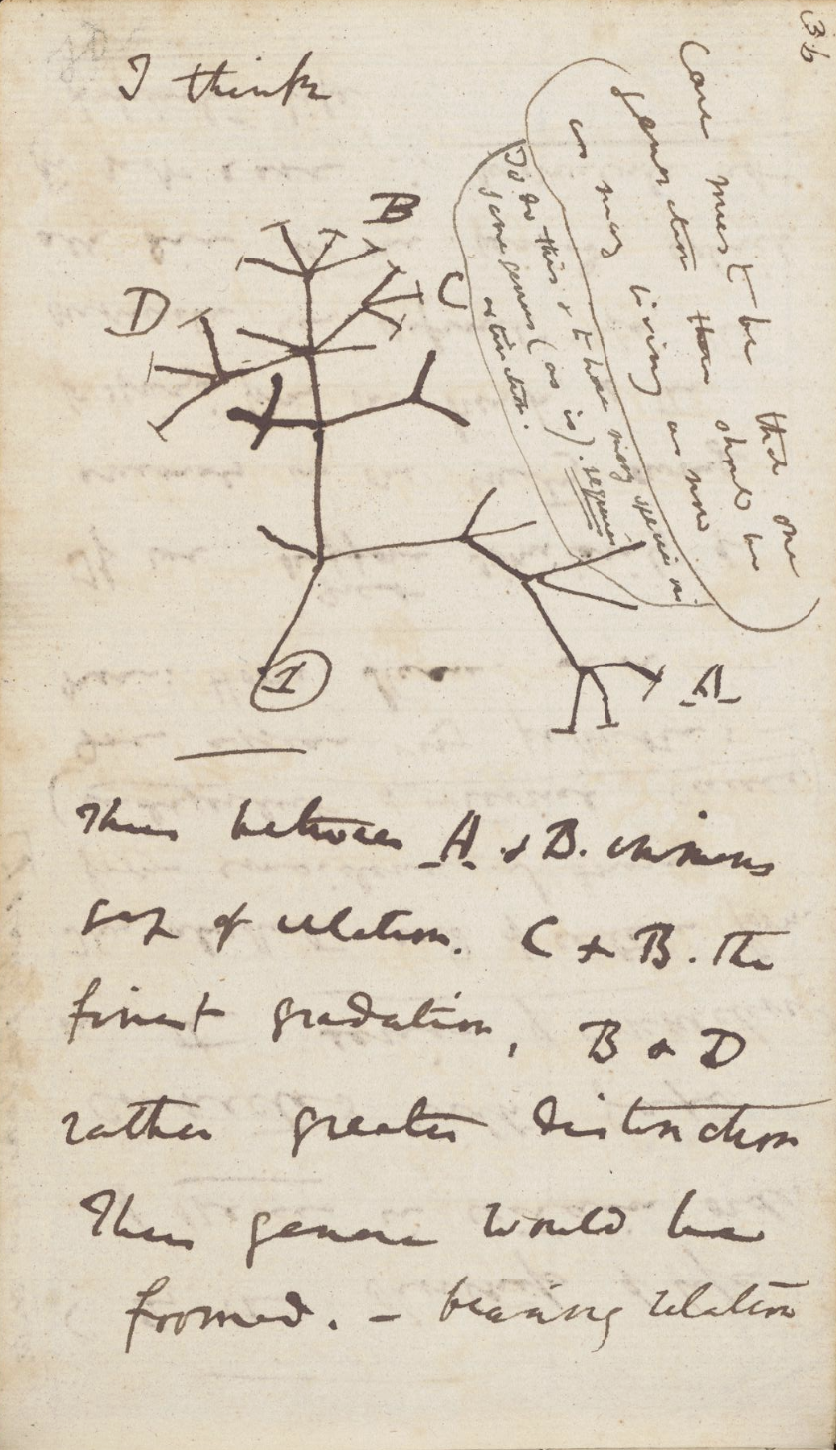
There is an “I think” in the top left, and then a kind of nonsense looking tree that mostly has letter labels but also one random numeric label. And oftentimes, writing a new idea is like that. There are no words, nothing you could publish on Substack, only lines and intuitions.
What is the purpose of writing in public? It is to put ideas into the brains of others with high fidelity. Due to past technological constraints, we’ve ended up in a place where this is mostly done with words. But those constraints are gone now; there is no reason we need to write like we’re stuck in an email compose window from twenty years ago.
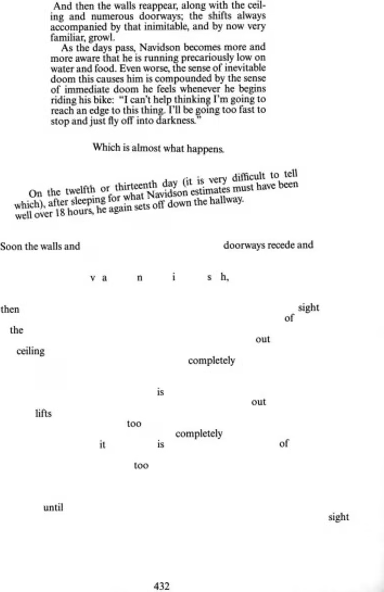
We could instead have ended up in a place where every text looked a little like House of Leaves. Maybe we still can.
Your message is stored now and emailed to the author after the contest ends. The author can reply to you, but their identity stays hidden unless they choose to respond.