(But Reviewed Good This Time)
If the fool would persist in his folly he would become wise.
A Proverb of Hell
It's customary to begin a piece of writing with a summary of what is to be argued. This will not be possible in this case.
Yes, I know that Scott has reviewed Sadly, Porn already. Look, when that review came out it provoked equal amounts of bafflement, anger and amazement. A lot of people have tried to review the book, and their reviews are universally awful. Not that the reviews said the book was bad, though plenty of them did that, but the reviews themselves are terrible at telling you about the book. Scott's was by far the best of a bad bunch, to be sure, but even when he knew he was missing something he didn't seem to want to grapple with it. As Scott himself said, it was clear that he was left with a lot of holes in his map. I guess you could say that this review is an attempt to fill some of Scott's holes.
For those who haven't heard anything about Sadly, Porn, it's a book about stories. The stories that people tell to others and the stories that they tell themselves. It's about lies, and truths that may as well be lies. Part of the problem is that it is very against the spirit of the book to summarise it, to review it, after all, a review is itself a kind of story, a story about a story, and to tell a story about a story that warns one about the nature of stories would be highly improper. But as you'll find out, I have found a loophole to get around this.
It is notoriously aggressive and obscure, effectively this guy going on at you for about 1000 pages. It seems to have an active disrespect for the reader:
“‘Will this book help me learn more about myself?’ Ugh. The whole earth is sick of your search for knowledge. In here you will not find explanations, I am not offering you information, this is an attempt to destroy the wisdom of the wise and frustrate the intelligence of the intelligent.”
For someone like me, a sentence like this is a huge piece of bait that I cannot help but respond to, and this essay is the sad result. It is an attempt, if not to explain the underlying logic of the book, to turn it into information, to at least gesture at how this can be done.
If the book doesn't want to be reviewed then it would be very stupid of me to try and to try and review it in the way other people have. So you can think of this as a propaedeutic, a scholastic commentary, or perhaps even an extended piece of fan fiction. My intention is not to explain the book directly, but to start you along some lines of inquiry. I’m going to give you some lenses you can use to interpret the book, and I’m going to be more direct and didactic. I’m going to put some training wheels on it to make it less obnoxious, and I'm not going to bother with that tedious voice that Teach uses. He has a good reason for it, which I'll get too, but I'm going to treat you as I would myself: an intelligent, handsome, and well endowed individual.
This is a long piece, but it did not feel like it took a long time to write, because I had fun writing it. Therefore, I hope it will not feel like it takes a long time to read, because you’ll have fun as well. I’m going to take you to some of the highest heights of contrarianism the internet has yet achieved: we’re going to learn the Messianic Secret of John Romero, wrestle with the nature of Apophatic Psychology, and conduct Gonzo journalism on the death of god. Most importantly, I’m going to explain a secret of godlike power, which you can use to Have Sex With Super Hot Bitches Whenever You Want.
If I make light of something, that doesn’t mean I’m not trying to make a serious point. Some people think that the more boring and stale a piece of writing is the truer it must be. This is wrong, even the stupidest writer is capable of writing interminable trash. Something none of the reviewers of Sadly, Porn noted is that it is, in fact, hilarious, far funnier than anything I can write, that suggests to me that they didn’t really get it, so please don’t make the same mistake with this.
The question I want to try and answer is: why? Why does this book exist? Why is it written in this way?
I don’t want to go into much detail describing the overt content of the book; you can read others for that. What disappointed me about previous reviewers is that there was a lot of exasperation with the structure of the book, but little real attempt to delve into why a writer as erudite as Teach would choose to write it in such a way. Scott described the book as being composed of Jenga Towers of logic, this is an exploration of the architecture that makes that possible, effectively reconstructing it from first principles. Even when it seems like I’m not discussing the book, it is all relevant. As we will find out, the point of the book is not to decipher it, it is simply to read it.
Let me make you a promise. One of things I like from Scott's review is his framing of the “anti-meme”; The bizarre tone of the book, Scott claimed, resulted from someone trying to cram an idea into your brain, something that you will struggle to understand, your mind resists it, it just doesn’t fit into the knowledge shaped hole in your head. Scott was right, but I promise you now that I will reveal to you the “anti-meme”, I will put it into plain text, because I can tell you right now that it's simple enough to be expressed in three words. I’ll show you the fnord, this thing that you're staring at and unable to see. But if you blink, you'll miss it, you need to be ready for it. But before we can do that, I need to tell you a story- the shaggy dog story of the soul.
Once meek, and in a perilous path
The just man kept his course along
The Vale of Death.
In school, they taught me that I had to define my terms when starting an essay, and if they teach you something in school, you know it has to be true.
I said I would tell you a story, so let's start with that. In principle, a story is just a sequence of events, but we can categorise stories along a number of dichotomies.
Is there a single, multiple, or no protagonist?
Is the protagonist active, or passive?
Is causation or coincidence emphasised?
Does it take place within a consistent reality?
Is it temporally continuous or not?
Is the conflict external or internal?
Does the conflict resolve leading to lasting change?
Robert McKee, the godfather of Hollywood screenwriting, describes in his magnum opus Story a single structure that most successful stories conform to that he terms, the Archplot, or Classical Design. It depicts a single, active protagonist in a temporally continuous manner in a consistent way, where the events are directly caused by the actions of the protagonist and the other characters, and the conflict is resolved leading to lasting change.
The vast majority of films, novels, myths etc, are just variants on the Archplot. Star Wars Episode IV is the classic example, but The Very Hungry Caterpillar is one as well. Don’t confuse it with the Hero’s Journey, though, which is a kind of Archplot, but a more specific take on it which nonetheless manages to recur throughout cultures.
Our story begins with a hero who starts in a state of equilibrium but is put out of it by some event. He then has to take actions that will restore them to their ideal state, sometimes these will succeed, often these will fail, since that’s what gives the story conflict and drama. When he achieves his goal, the conflict is resolved, and the hero is changed.
As McKee puts it, what really motivates the protagonist is a fantasy, a vision of the world that is going to put him back into equilibrium. In an action film, that usually means killing the bad guys, in a romance, it will mean getting the girl.
There’s something about the Archplot that appeals to people. As McKee says:
“Most human beings believe that life brings closed experiences of absolute, irreversible change; that their greatest sources of conflict are external to themselves; that they are the single and active protagonists of their own existence; that their existence operates through continuous time within a consistent, causally interconnected reality; and that inside this reality events happen for explainable and meaningful reasons. Since our first ancestor stared into a fire of his own making and thought the thought, ‘I am,’ this is how human beings have seen the world and themselves in it. Classical design is a mirror of the human mind.”
However, there are two other plot designs that you might have seen in media. Some people have imputed to McKee that these are inferior forms of art, which is untrue, he simply thinks it's natural that most people will gravitate towards the more conventional Archplot, relegating the other plot types to more niche art films. They’re ideal types, all films lie in a spectrum between them.
The Miniplot involves a passive protagonist, or even multiple protagonists, tending to focus more on internal conflict, and the conflict often remains largely unresolved by the end of the story. Pulp Fiction is likely the most famous Miniplot that Mckee cites, No Country For Old Men is my personal favourite.
The Antiplot eschews causality in favour of absurdism and coincidence. Often, there is no identifiable protagonist, and events are rarely the direct result of the characters actions. Resolution is barely possible, because the story can’t even be said to take place within a single consistent reality. Mass market Antiplots are usually absurdist comedies, where these factors are most accepted. Monty Python and the Holy Grail would be the signature example, Blazing Saddles is another good one.
One way to read Sadly, Porn is this: Everyone lives their lives thinking they’re in an Archplot. As Mckee says, this is normal and natural. But when we look at some people, though they think they're in an Archplot, they're actually in a Miniplot, or an Antiplot. If your life was a Miniplot, or an Antiplot, how would you be able to tell?
What I'll say for now is, if you’re living in a Miniplot, that’s bad.
If you’re living in an Antiplot, you’re fucked.
Eternity is in love with the productions of time
In the Soviet Union a common theme of propaganda was the concept of the “New Soviet Man”. Under Communism, it was supposed that free from material conflict of bourgeois society a new kind of man would emerge with the benefit of the scientific materialist approach of Marxism. He would be selfless and noble, both worker and philosopher, a vision of humanity unalienated from itself.
This did not transpire. But in dissident literature an alternative thesis emerged, that a New Soviet Man had been created, he simply had the opposite properties of what he was supposed to. The New Soviet Man was an intellectually incurious and untrustworthy coward, lazy, indifferent to his work, and liable to give up his own mum to the KGB for a promotion. In short, the kind of person you'd have to be to survive within the totalitarian environment of the Soviet Union.
Whatever the truth of this is with regards to the Soviet Union and inhabitants, I enjoy speculation of this kind. Maybe you've heard of Julian Jaynes' Origin of Consciousness in the Breakdown of the Bicameral Mind, that supposes that consciousness as we understand it was only invented three thousand or so years ago, a radical, but difficult to prove thesis. Of course, practically speaking any investigation of this is necessarily unscientific since we don’t have direct access to other people’s interior states,especially those who lived thousands of years ago. Instead it must be inferred from the close examination of texts and other cultural products.
If it is true, the question naturally arises: what is the distinctive psychological condition of contemporary life?
Always be ready to speak your mind, and a base man will avoid you
There's something funny going on with fans of The Culture of Narcissism (henceforth TCON). Teach or The Last Psychiatrist took his whole shtick from Lasch, and his writing style is notoriously aggressive. The excellent Lou Keep at Sam[]zdat gave his own review of TCON, which, though I personally find it fascinating, takes some circuitous and bizarre logic. Hotel Concierge was another popular one, with a similarly gnomic style. Why does anybody waste their time with this crap? Can’t they just write clearly?
Personally, I’ve always found this sort of thing fascinating. I’m afraid my brain was melted at a young age by Rick Roderick’s excellent lectures, so I'm a sucker for this sort of analysis. They all have a brilliant combination of erudition and cynicism, a consistent refusal to opt for the obvious answer, and all suffused with a deep sense of bitterness, hopefully proceeding not from resentment but tenderness.
This book, and those like it have infected my thinking too. The Culture of Narcissism is a book that sheds light on many of the strange and irrational aspects of modern life. Once you see this phenomenon, you’ll see it everywhere, in politics, popular culture and the economy. Perhaps that is also a reason to be suspicious, after all, a theory that explains everything explains nothing.
The reception of the book is curious in itself. Many people who position themselves on the left have castigated the book for its willingness to criticise many of the tendencies of the left that have emerged since the progressive era. He slammed the New Left, which is always liable to get one into trouble as this will inevitably involve some criticism of the identity movements that the New Left contributed to, particularly the feminist movement where his ideas are a bone of particular contention. Those on the right have embraced the book for the same reasons, which is strange, because in developing his positions Lasch relied on many of the approaches that those on the right use as bogeymen for the kind of social change that they dislike, namely, Psychoanalysis and Marxism. Indeed, he drew on the worst kind of Marxism, the Frankfurt School style of a Marxism-informed approach to culture; right wing commentators have usually dealt with this contradiction by ignoring it completely.
Expect poison from the standing water
We'll have to start with this “Narcissism”, but be careful: words also have stories. If you ever read older English books you'll start to see how the meaning of words slips over time.
A particular favourite of mine is the word “enthusiasm”. Back in the 18th century, enthusiasm meant something quite different to what it does today. If you ever read Enlightenment era texts, enthusiasm means something along the lines of religious fervour or fanaticism. You can probably see yourself how that transformed into the contemporary more positive concept of enthusiasm: a strong feeling in favour of something. But it had a more specific meaning that's been lost, which is a shame because it's a very useful meaning. The word also had connotations of what we would recognise as the kind of mental illness that exhibits itself as extreme religious beliefs. Even back then, it was clear that there was a certain way of having god on the brain that wasn't quite right.
Narcissism too has a peculiar history that makes it a source of trouble. The character of Narcissus emerged in Greek mythology, and was given his canonical expression in Ovid. The word was appropriated by early psychology through the work of Havelock Ellis to describe people who were sexually aroused by their own bodies. Freud then took it up, and it was further developed by Otto Kernberg and then Heinz Kohut among others within the Psychoanalytic tradition. The word now survives within orthodox psychiatry (represented by the DSM) in the form of Narcissistic Personality Disorder. But, please be aware that NPD now refers to something quite different. The DSM’s method, rightly or wrongly, is deliberately theory agnostic about the origins of mental disorders; it takes a behaviourist approach to the description and classification of mental illnesses. Beyond that, Narcissism has come into common parlance as part of the stock and trade of pop-psychology, a highfalutin way of calling someone an asshole. Bearing that in mind, please try to cast away whatever associations you have concerning the word.
We will start with the Greeks. The Last Psychiatrist summarised the Myth of Echo and Narcissus very ably here, but in short, Narcissus is a guy whose parents got some very bad advice about bringing him up and he came to a bad end. The prophet Tiresias told them;
“He will live a long life, if he never knows himself__.”
I shouldn’t have to mention what is inscribed over the entrance to the Oracle at Delphi. Just remember; it was a warning, not an instruction.
Narcissus’ parents somehow raised him not to know himself, and one day he caught sight of himself in a pond. Not recognizing himself, he fell in love with the beautiful youth and wasted away staring at the reflection of someone who could never return his love.
Lasch comments:
“The point of the story is not that Narcissus falls in love with himself, but, since he fails to recognize his own reflection, that he lacks any conception of the difference between himself and his surroundings”
What does this mean, and how is this possible?
Let us begin with as simple a model of the human mind as can be imagined; it’s a thing that experiences pleasure and pain, and takes actions to avoid pain and experience pleasure.
The mind starts developing in the womb. A newborn baby is completely, hopelessly dependent (much more so than other mammals). Parents must do nearly everything for it, provide for it, protect it, nurture it. Therefore this action part of the equation is missing at first.
The process of growing up involves the child taking on more and more functions until they are able to live independently. However, every parent must thread a difficult needle in this process; the child must be given enough experience to develop the competencies they need to survive on their own, and this process necessarily involves failure, effort, and pain. But the parent also has to continue to protect the child, oftentimes protecting the child from its own actions and desires. So the fundamental problem is, how can the parent allow the child to gain experience of the world whilst also protecting them from it? And all of this is complicated by the fact that parents are necessarily imperfect themselves. How can they know exactly what the child needs or doesn’t need at every point throughout their development?
Why is pain and effort necessary to learn? The child’s mind begins to form in the womb, where it didn’t have to do anything at all, it simply existed in a state of primordial unity. When it comes into the world, bad things start to happen to it, it starts to feel hunger, thirst, and many more things to come. Even taking action involves a form of pain, since it requires expenditure of energy. And that assumes the action is successful; it is entirely possible to take action and then the bad thing happens anyway, the worst of both worlds. It’s the pain that drives us forwards; we learn that a minimal expenditure of effort prevents worse things from happening. Development, therefore, occurs through what we might call non-traumatic stress. I would compare this process to going to the gym; lifting weights damages muscles, and the body overcompensates for the damage causing gradual development, but you can injure yourself as well, if you're not exercising properly.
The growing child has to learn to do some pretty tricky things. They’re trying to do the basics, avoid pain, gain pleasure. But there are many causes of pain that we can do very little to prevent; nature is cruel and unforgiving, our own bodies are imperfect and tend to break down, and worst of all, other people are wildly unpredictable and prone to doing all variety of monstrous things. They have to learn to deal with their own impulses and desires, their aggression and eventually their sexuality.
Above all they have to learn to deal with people. The human mind has a kind of natural solipsism to it; we only feel our own qualia. Empathy is a natural human capacity, but it isn't literally the same as feeling another's pain or happiness. In that sense other people are always objects for us, to a lesser or greater extent. A child may gain “theory of mind” in a qualitative sense at age 4, but in another way theory of mind continues to develop over the course of a person's entire life as we gradually refine our understanding of the psychology of people in general and the specific individuals that we know. As a part of this the child must learn to reconcile the two opposing sides of the parents, as benevolent providers and restricting authorities. Psychoanalysis interprets this in a gendered manner; the mother, for obvious reasons, is the provider, the nurturer, and the father represents restrictive authority.
If all goes well, you would end up with an adult who fulfils some vision of mental health or flourishing. I’ll use the description of a virtuous man in the Nicomachean Ethics for argument’s sake. A man who is capable of both engaging in useful action and bearing inevitable pain, confident and self-possessed but capable of collaborating with others, with deeply held values tempered by rational self-interest. Or take it from Kipling if you prefer:
“If you can keep your head when all about you
Are losing theirs and blaming it on you,
If you can trust yourself when all men doubt you,
But make allowance for their doubting too;
If you can wait and not be tired by waiting,
Or being lied about, don’t deal in lies,
Or being hated, don’t give way to hating,
And yet don’t look too good, nor talk too wise”
But what happens when this process fails?
There are many possible failure modes we could imagine. The child could die, right? That’s what Narcissus' parents were worried about. Or they could experience traumatic events that warp their development, they learn that the world is cruel at such a fundamental level that it leaves them crippled for life.
Narcissus’ problem is quite specific. When I spoke earlier about the state of the child in the womb, we saw that it was an undifferentiated, actionless unity. Ideally, from its own perspective, it would just stay like that forever. Of course, it has to be born eventually, but it retains this sense of inertia as it continues to grow. What would happen if the parents didn’t force the child further along the path of development?
To understand this, we’ll have to talk about Defence Mechanisms. I have to say, this was a concept I found difficult to parse for a long time, but I think I have it cracked. A defence mechanism is a pattern of behaviour that seeks to deal with pain, particularly pain that can’t be dealt with straightforwardly by action.
It’s best to start with a very straightforward example of the concept. Consider a drug addict, say, a heroin addict. After a certain point of usage the drug no longer provides the pleasure that it once did, they continue to use merely to avoid the painful feelings of withdrawal. The addict could choose to undergo those feelings and thereby gradually reduce their chemical dependency but this would involve trading a lot of up-front pain for happiness over the long term. The defence mechanism in this example is the habit of drug usage itself; it “defends” against the pain of withdrawal in the short term but it's also pernicious since it's reinforcing the chemical dependency, damaging your health through the physiological effects of the drug, and probably making you do some destructive things in the process. Drug addiction is a good example since conscious awareness of the problem is often little help.
Narcissistic defences represent the more primitive psychic defence mechanisms that a human could use to deal with the pain of life. In that sense they’re characteristic of children who are still developing the capacity to deal with their emotions. Like the drug addict, they offer short-term protection against external threats and internal impulses, but are pathological in the broader scope of an individual’s life.
Let's start with Splitting. Just imagine everyone’s worst ex-girlfriend; you come home from work one day, and they asked you to pick up some milk and you forget to get it, and suddenly they’re shouting at you and saying that you don’t love them, and then they’re at their ex's house and you’re calling them and they’re not picking up-
Sorry, let me explain, what happened?
It’s natural that our loved ones let us down occasionally, and become sources of pain, they’re only human, after all. It’s quite natural too though that if a lover repeatedly lets you down, or commits a major infraction like cheating, that you would have to let them go, that you would have to downgrade and isolate them from your emotional life in order to prevent their actions from causing further pain. The splitting response is this, manifested in a manner that is wildly out of proportion to the cause of the pain itself. The splitter can only focus on the immediate pain, and not the “complete object” of the person that’s causing it. That means they can’t balance the pain with the history of the good aspects of the relationship. So they go overboard, and all of those accumulated feelings are thrown out of the window in the process.
To my understanding splitting is more characteristic of Borderline Personality Disorder than NPD within the DSM. This is another area where the language of orthodox psychiatry has diverged from the psychoanalytic tradition where it emerged; in the original conception of Kernberg, BPD and NPD were both due to an underlying “Borderline Personality Organisation” where the subject lacks a coherent unity. The “Borderline” in question refers to patients whose symptoms were on the borderline between psychosis and neurosis. This encompassed what would turn into the modern concepts of BPD and NPD.
The next primitive defence is Denial. This one is straightforward; avoid the psychic threat of an object or an event simply by refusing to admit that it exists. The pathology of such a defence is obvious.
The final primitive defence is Projection in which interior impulses, particularly aggression, are interpreted as coming from outside. Projection is a rationalisation of an impulse that cannot be recognised by the individual, it doesn’t eliminate it so much as explain its presence. It can’t be interpreted as coming from within as that would violate the self-image of the individual, it must be seen to come from outside. These feelings can be attributed to both other people and inanimate objects. Since the fundamental condition of narcissism is the inability to distinguish between interior and exterior content, projection is the narcissistic defence par excellence.
There’s a particular problem with projection: imagine you meet someone and they’re constantly miserable, they’re always talking about how other people have insulted and slighted them, maybe they start accusing you of doing the same. If you go around acting like a huge asshole, people respond to that, they don’t like it. Suddenly, everyone treats you poorly, they start acting like an asshole towards you too. Now you live in a world where everyone acts horribly towards you, thus justifying your aggressive demeanour in the first place. If you can’t properly determine the “vibe” that you’re giving off, you’ll have an improper sense of how people ought to be responding to you, and your demeanour becomes a self-fulfilling prophecy.
Projection is the most pernicious of these since it's based on real data, just biased data. With splitting or denial we can at least try to make them see the part of external reality that they're missing. With projection, the data, their perception of external reality is the problem. Or put it this way, our dear friend who sees the whole world insulting him, what would happen if we told him about this tendency of his? He would interpret that as an insult as well! More data that confirms his view of the world. To contradict him we would have to show him his inner state, which we can't do. At least, not directly. We’re going to come back to projection over and over again; a huge amount of Teach’s rhetoric is about exposing different ways projection exhibits itself.
The most extreme and pathological defence mechanisms involve the breakdown of the subject itself, unable to distinguish at all between interior and exterior content they veer into psychosis; the inability to recognise reality as such.
“Defences” is the language of psychoanalysis, but a more modern way to describe them would simply be logical fallacies. If you don’t like psychoanalysis, think of it this way; defences are informal fallacies or faulty heuristics, they’re the shortcuts that the human mind makes in its quest for thermodynamic efficiency. Maybe the mind would be better off trying to think things through more, to reach a fuller understanding of the world, we can see that because we’re more developed, apparently. The problem the mind has is this; it needs this tendency to fall short, or else it would never stop. How is it supposed to know in advance, without data, the level of effort it needs to put in? The mind is naturally conservative, in the most literal sense of the word.
All the vast panoply of cognitive distortions play into this. Splitting seizes upon the most immediately visible aspects of reality at the expense of everything else, it is a rush to judgement on inadequate data. Denial is possible due to the messiness of determining causation in the real world. Projection can be interpreted as a form of sampling bias, rationalists can think of it as a “Bayesian trap”: your priors cause you to act in a way that you receive data that confirms your priors. The problem with thinking about these just as being logical fallacies is that it is not only thought in the overtly conscious Cartesian sense that's vulnerable to these things, perception itself is affected by them: always remember that perception is an active, energy using process, not a passive one.
A final problem: the mind develops through pain but this is something it doesn't want, it interprets pain as failure. Therefore the thing that stops the development of the mind is actually its success. If the mind perceives itself as succeeding, it has no need to reassess the heuristics it uses to judge reality. Addicted to its model of reality, its defences, it just stagnates. In this sense a drug addict has one great advantage over a narcissist: they can remember a time when they weren’t addicted, and they can look at the people around them who aren’t addicted.
Narcissus’ problem is that as his parents never granted him some level of independence, he never progressed beyond these primitive defence mechanisms, he never learned to see the world as it is, and by extension, to see himself as he is, because he never needed to do any of these things. So when he sees that mirror-smooth pond, he projects himself into it. He doesn’t think that he loves himself, he thinks he loves another, without realising it is himself.
To be fair to Tiresias, since Narcissus wasn’t actually doing anything, he did live a long time.
If there’s one thing to remember going forwards, it’s this; a lot of times Ed Teach makes tall claims about what “you” think and what “you” want. You are your mind, it cannot be disavowed.
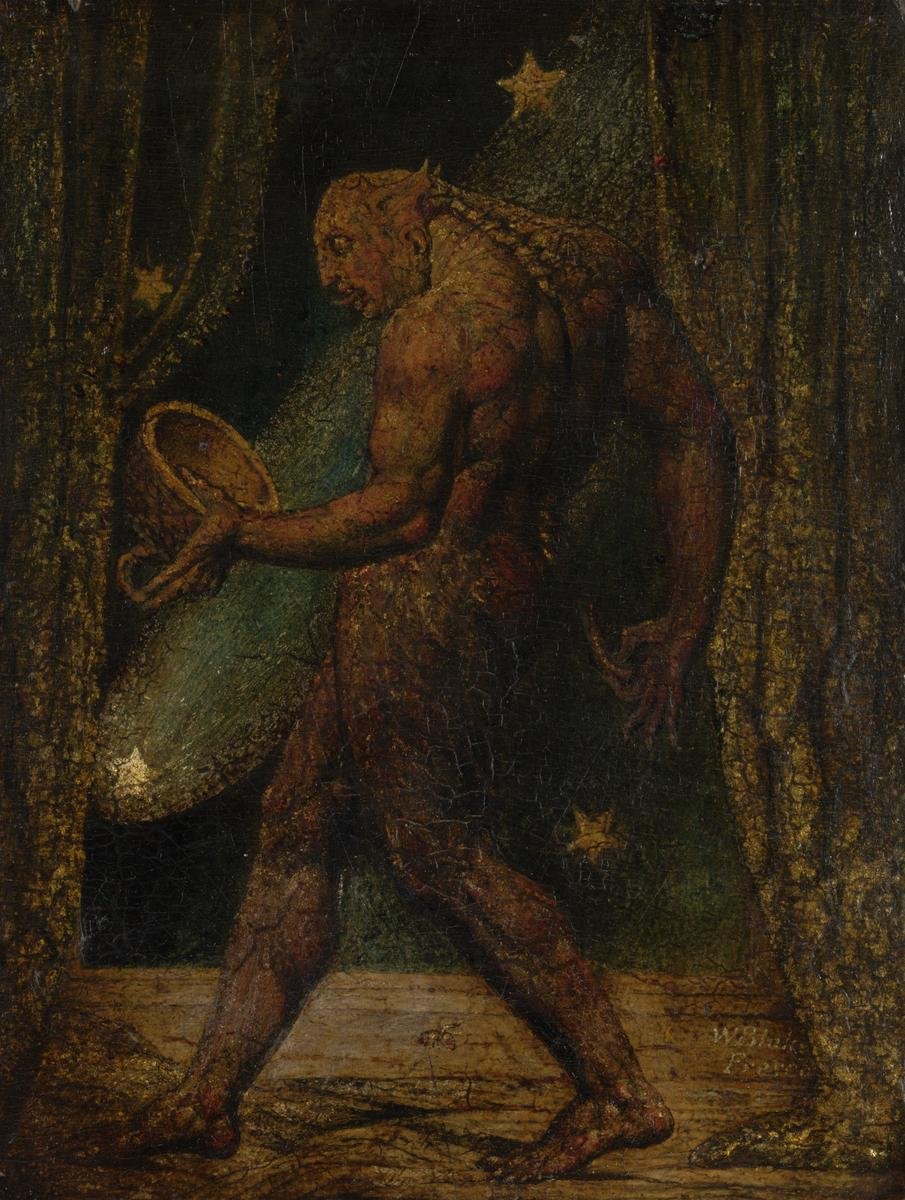
Those who restrain desire, do so because theirs is weak enough to be restrained; and the restrainer or reason usurps its place and governs the unwilling.
And being restrained, it by degrees becomes passive, till it is only the shadow of desire.
If this is the basic logic of narcissism, what does it actually look like in a real individual, not a myth? Again, this differs largely from the definition you'll find in the DSM so cast that aside.
Lasch himself abandoned the term narcissism after The Culture of Narcissism came out, likely because too many people understood it as simple vanity or self-absorption. This is likely his fault for not providing an actual explanation like the one I provided above for the psychological roots of narcissism, which he had to provide in his next work The Minimal Self. The “minimal self” is Lasch's redefinition of narcissism, it means the same thing in many ways but it's a more intuitive name for the phenomenon; if you don't like my usage of the word ”narcissist” in this review just replace it with the “minimal self”.
Psychoanalysis has tended to view the child's relationship to their parents as the prototype they take for all subsequent social relations. However dubious this may be in general, this will actually be a strength of the theory once it becomes generalised by Lasch into a kind of social theory. For the purposes of explanation in this instance we will assume it to be true.
In Psychoanalysis a pathological narcissist is someone re-enacting a relationship with a parent who is in some way arbitrary in their relationship to the child. As the child can't act for themselves, they interpret their parents as being god-like figures who provide everything for them, and they come to internalise the demands of the parents to ensure their needs are met. But in an “arbitrary” relationship, the parents aren't providing a consistent set of demands for the child to act according to.
The classic example of this is someone growing up under a single mother who lacks the stereotypically paternal authority of a father, the assumption being that it's easier for the child to incorporate the nurturing and discipling roles of the parents if these are split between two people. But there are many ways this can happen, we'll see this can be generalised right up into the realm of theology. The problem is not so much “permissive” parenting as that which is sometimes abusive, neglectful or at least inconsistent, which permissive parenting can be if you're not careful.
The Last Psychiatrist used to give an example of how psychiatrists fuck up their kids; they want to be rational, modern parents. They have the benefit of a psychiatric education, after all. This means they don't shout at their kids, even when they do wrong, like bullying another kid. They will shout at them when their frustration boils over as it must do after repeated wrongdoing, which is particularly likely to happen when the child does something that inconveniences them as opposed to something that's morally wrong.
The young child only responds to affect, to the emotion you're giving off. He hasn't internalised the sense of others being people, so when you calmly explain why he shouldn't do something, he doesn't get it. He doesn't interpret it as a real punishment. He does get it when you shout at him, but now you're doing it over something arbitrary, like spilling some milk.
What happens next is the child cries and the parent realises what they've done, and then they turn around and console the child. This is the fatal step.
What the child has learned from this process is that:
- Your authority is arbitrary
- You can be placated for them to get what they want
- All they need to do is figure out what will placate you.
A harsh, even abusive parent who merely beats their kids for no reason is sure to give them some kind of pathology, but they won't get the second and third parts so this won't create narcissists. It's this unstable emotional dynamic: at once nurturing then punishing without a predictable underlying logic that could allow them to develop a clear understanding of right and wrong.
Imagine someone who is going through their adult life re-enacting this dynamic, they see themselves dependent on this omnipotent power that has the power to dictate their life and they have to behave with this in mind. The real problem is that facing up to this consciously would involve living with a constant sense of anxiety. It would be too much for them to bear, particularly for the fragile psyche of a child. So they have to find a way to determine and accede to the demands of the omnipotent power whilst avoiding the reality of this fact: this can only be done through a colossal amount of doublethink.
This is why “grandiosity” is misleading as a symptom of narcissism: grandiosity is the whole complex of defences against this sense of overwhelming anxiety. It is grandiose in the sense that it cannot admit to a fundamental weakness that is nonetheless still felt. This is quite distinct to the colloquial sense of being up one's own ass.
If this other person is making demands on them, there needs to be a way for these demands to be absorbed without acknowledgement. The key to this is introjection. Just as how interior impulses can be seen as coming from outside, outside impulses or commands need to be interpreted as coming from within. By doing so, they can incorporate the demands of the omnipotent power whilst avoiding the anxiety of acknowledging their position of dependency.
This manifests as the social invasion of the self: they're highly susceptible to social influence, sensitive to the opinions of others, but this fact can never be acknowledged. Old content can be easily overridden by new introjected content, hence the instability, and that's needed because the arbitrary demands can change at any point. This means that they can't act according to a consistent set of values, in a sense they can't tell that their values are changing at all as a part of this process.
The narcissist simultaneously craves the admiration and affection of others but whilst having a fundamental disrespect for them. They need other people, but they can't acknowledge the fact that they need other people. This explains why narcissists tend to fall into a pattern of unstable personal relationships. They need the affection of a romantic partner, but can never acknowledge this; they want someone who will praise them unconditionally without needing affect in the other direction. This tends to manifest when their partner makes a demand on them: expending the effort of doing something for another person implies their dependency, and rather than acknowledge this fact, they split (in the psychological and social sense) on their partner.
Introjection and projection are each the same process in reverse; the need for introjection makes projection inevitable. The narcissist's psyche is porous, therefore the traffic goes in both directions. The introjection hides the source of the anxiety, not the anxiety itself, which is then projected outwards in an attitude of fundamental suspicion towards others. The ambivalence and inconsistency of the narcissist reflects the bifurcation in his soul.
The primary concern of the narcissist is their identity; as their fundamental desire is placating this other their identity is the image they are trying to create that will achieve this. Of course in reality their identity is unstable because it needs to change in response to the changing demands they receive. Shame or humiliation is what results when the identity they are desperately trying to project is revealed to be false. It’s their primary motivator because it represents the failure to satisfy this omnipotent power. Guilt is never felt because it implies an independent concern for the wellbeing of the other.
They can't control their emotions because that would involve being aware of their internal source, which in turn presupposes this strong awareness of the boundaries between the external and internal world: a self, in other words. Instead emotions manifest in an uncontrollable and amorphous manner: that is, rage. That's rage as opposed to anger, because anger is the aggressive instinct manifesting in a purposeful directed manner, it's goal oriented, this is something that even healthy people need sometimes. Anger is the will to fight, whereas rage is the will to violence as such.
The goal of the narcissist is to satisfy the demands of this omnipotent parent figure, and they have to guess at what it wants. Inevitably they're going to get it wrong and that's when the rage manifests because their one fundamental desire has been violated. Again, this cannot be acknowledged, so the rage must be projected out into the world, creating the potential for horrible acts that to the narcissist seems completely justified.
In its most extreme form, this is the logic of men who kill their families. They create an image as a loving family man and more importantly, a provider. When they lose their job or blow all their money gambling they can no longer keep up the facade of the identity they've created for themselves. With the fissioning reactor core of their soul visible to the world, this boundless rage is exposed and attributed to the supposed source of these impossible unmeetable demands: those closest to them.
Viewed subjectively, the narcissist is trying to have a consistent self narrative, but it cannot be done, because they need to be able to be twisted one way then the other. A narcissist in this sense can be seen as someone failing to inhabit a consistent personality, not so much having multiple personalities but one that's fragmentary.
Having a consistent life narrative implies having a substantial self and values. An absence of history pervades the narcissist’s life, life events have to be reinterpreted in the light of new ones, old memories that are inconvenient may have to be actively repressed. Like a totalitarian regime pasting over its history textbooks, their memory becomes patchy and self serving, justifying their current needs. If an external observer who will have a better memory than the narcissist points this out, the narcissist is compelled to deny, and if hard evidence can be produced, their identity is violated and rage results.
The narcissist is a walking paradox; he has to be able to watch without seeing, be loved without loving, and do without acting. They're a sadist and a masochist in one mind. This is all only possible through constant psychological self-mutilation.
Ah, that's interesting, they need to be able to watch something without seeing it. Does that sound familiar to you? And to heal them, you'd have to be able to make them see the thing that they're watching, but that all their defences are fighting as hard as they can not to see.
A healthy person inhabits a single persona for most of their whole life, they have a consistent story that informs their identity: an Archplot.
The narcissist cannot inhabit a consistent identity, they must be able to flit between them as needed. Either the designation of a Miniplot or Antiplot could be applicable depending on the severity of the condition.
Lasch termed this self “minimal” in the sense that it tries to avoid long term commitments that will cause it loss in an unstable social environment. In general, it can be thought of as a strategy of extreme short term risk avoidance. For the benefit of this audience I will try to interpret this in Bayesian terms. Introjection is a strategy that accepts new information coming from others with a high degree of confidence, prioritising it over actual sense data. Projection is a strategy that interprets the behaviour of others with a high degree of suspicion, effectively a kind of paranoia. If this dynamic that combines a trust for others opinions but a distrust for their actions seems irrational, it's because it is, but only in the long run where we are all dead.
The conclusion of all this is that rational individuals do not per John Locke (and Hobbes as well, but you all aren't ready for that conversation) spring out of the ground fully formed, they have to be made. If the factory for making rational people gets gummed up, then problems are on the horizon.
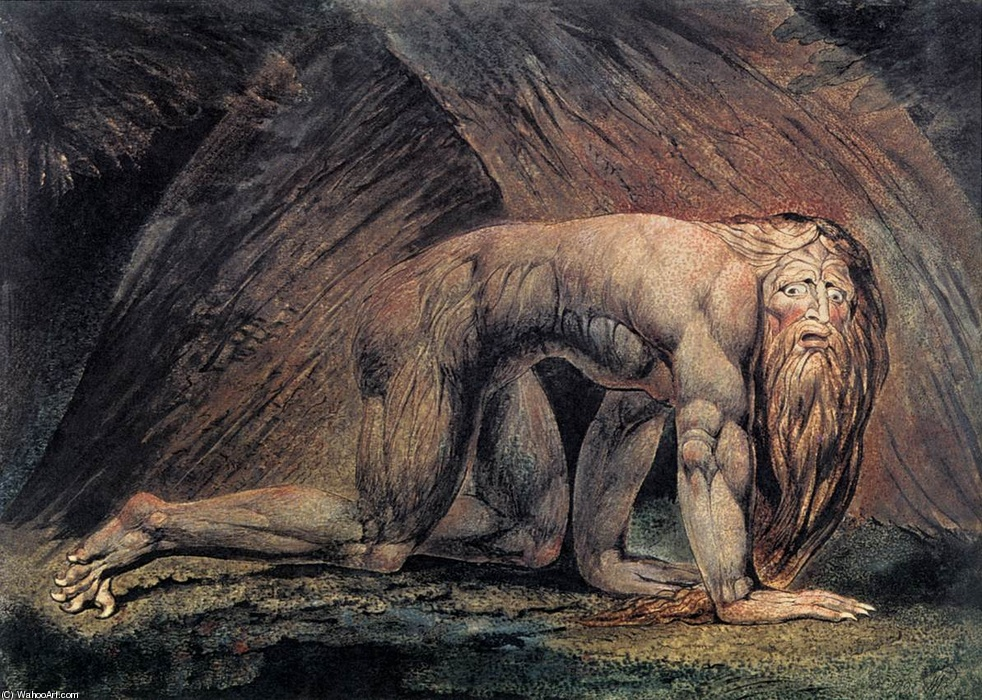
Prisons are built with stones of Law, brothels with bricks of Religion
The basic thesis of _The Culture of Narc_issism is that many features of modern life work together to produce a similar mental state across the entire population. It is not an accusation of mental illness, since it represents an accumulation of adaptive psychological traits for individuals. As Lasch himself says:
“If these observations were to be taken seriously, the upshot, it seemed to me, was not that American society was ‘sick’ or that Americans were all candidates for a mental asylum but that normal people now displayed many of the same personality traits that appeared, in more extreme form, in pathological narcissism.”
If we’re all mad, then none of us are.
The modern life of individuals is characterised by living within the shadow of a huge number of large bureaucratic organisations. We are born in hospitals, learn in schools and universities, work for corporations, get incarcerated in prisons, and finally return to the hospital to die. In our leisure time, we consume products created by vast industrial conglomerates around the world, and the cultural products that we gain meaning from are creations of an industry as large and as powerful as any manufacturing concern or government agency. The guiding philosophy of all this, in its various forms, tells us that these organisations exist for our benefit, and certainly many of them are staffed with generally well meaning people. But this is a unique situation in the history of the world, and this state of being has deep ramifications for the kind of lives people live.
The relevance of the previous sections is that these institutions treat us like Narcissus’ parents: they foster dependency without development, they protect us only intermittently, and we labour under demands which are rapidly changing and inconsistent. Lasch terms this “Paternalism without Fathers”: parenting without love.
In turn, this develops psychological traits and habits of mind reminiscent of the pathological Narcissist encountered by the analyst. Modern parenting practices may be implicated in this phenomenon to some degree, but I’m not going to focus on that. It’s certainly true that parents have never been less relevant in the lives of their kids; what’s key is the nature of the institutions that we live under. Taking the psychoanalytic story too seriously can be a mistake; it is its own kind of myth about the experience of living under overbearing and arbitrary authority.
But before I go too deep into examining the cultural and social implications of this state of being, we need to examine these institutions in more detail, what they’re doing, and why they’re failing. We’re looking at three main processes:
The decline of the family as a unit of social organisation: The norm of human history is multigenerational families living in small communities. In agricultural communities, the family was an economic unit as much as a social one, where children would act as labour alongside their parents. Industrial capitalism began to break up this system through urbanisation and the instability of wage labour itself. The economic function of children has disappeared, leaving them as consumers and a resource drain. The “nuclear” family, often overstated in prominence, has also been weakened by changes in our sexual culture and the weakening of the legal basis of the family. The family hasn’t been in decline since the 1950s, it’s been in decline since the 1600s!
The appropriation of family functions by the state: Within modern society vast institutions have been established to adapt to the changes described above. With children now resource drains rather than resource providers, and the need for advanced training in an industrial economy, the state has found it necessary to segregate children into schools divided by age, turning childhood into a far more distinctive period in an individual's life than in previous eras. Further to this parental services have checked the unlimited authority of parents, turning the state into a co-authority in the child’s life.
Even in sections of the state that are not overtly to do with children, a paternalistic logic reigns. In our welfare systems, healthcare, even in our prisons which aspire to rehabilitate rather than extract retribution from criminals, the state acts as a pseudo-parent that watches the individual from cradle to grave. Though he may have more freedom as an adult, the individual is never far from the intervention of a state institution.
The rise of mass culture: In previous eras, high and low classes had somewhat separate cultures, you know the sort of thing, music hall vs opera, pie and mash vs foie gras, but in America, everybody drinks Coke. With the rise of industrialization, culture itself has become an industrial product, our signature cultural products have shifted from “artisanal” works like novels, the products of a single individual, to films and video games, often the collaborations of vast numbers of people who mostly do not know each other.
As the production of culture has become centralised, this has homogenised the psychic life of individuals in which media products play a larger and larger role. The distinctive cultures of the working, middle, and upper classes have largely been destroyed, which means that the values inculcated by culture fit a common mould. Where parents and religious institutions may have once been expected to teach children right and wrong, it is now expected that media products will play their role in this as well. Whilst debates may rage ferociously about the values embodied by our media products, the right of the media system itself to do this is less often questioned.
In total, this process goes beyond the state as such. NGOs, charities and non-profits are also paternalist actors, without even the check of democratic authority. Corporations too now put a paternalist veneer over their dealings with customers, employees and all varieties of “stakeholders”. “Stakeholder capitalism” and “E””S””G” initiatives promise to reconcile the profit motive with the social good, pledging servitude to both God and Mammon.
Many people will take umbrage at the description of the appropriation of the family by the state. Is it really strange that child protective services and family courts exercise the authority they do when many parents are genuinely terrible? Even ordinary neglect is bad enough, let alone those who actively abuse their children. Why should we question that schooling has expanded to take up so much of childhood when a modern economy demands advanced skills that working parents clearly would not be able to provide all on their own?
Yes, this is all absolutely true. This process has responded to real needs and problems in society, it is not merely the product of bad actors or an obviously misguided ideology. What we’re looking at here is, to use Max Weber’s terminology, the substitution of traditional authority for legal authority, that is to say, bureaucratic authority. A rules based system. A rational system.
Assuming, of course, that bureaucratic authority is genuinely rational- right?
By degrees we beheld the infinite abyss, fiery as the smoke of a burning city; beneath us at an immense distance was the sun, black but shining; round it were fiery tracks on which revolved vast spiders, crawling after their prey, which flew, or rather swum, in the infinite deep, in the most terrific shapes of animals sprung from corruption; and the air was full of them, and seemed composed of them
Consider the beginnings of modern political philosophy. We have inherited many forms and ideas from the Ancient world: Democracy, Republicanism, the Rule of Law. Open up your copy of Aristotle's Politics and you’ll see ideas of representative government right there next to the justifications for slavery. So what distinguishes modern liberalism from the old kind of classical republicanism?
In Aristotle and co, a republican government is a form through which free men exercise their power, they come together to deliberate and make decisions that reflect their will. The moderns, Hobbes, Locke, whoever else you like, used a word, “Alienation”, to describe the process of the government appropriating power. This is the essence of the social contract: you agree to give up the power that you possess inherently (most importantly the power to use violence) to the government in exchange for the guarantee of security. The classical citizen of a republic is an active participant in his government, but the modern liberal government is a representative of the citizen’s interest, an agent of them. This is what enables the strong public/private distinction in liberalism that didn't really exist in the ancient world. Consider in Thucydides, a group of Athenian traders conducted diplomacy with the Spartans prior to the outbreak of the Peloponnesian War as there was no one else present to do so. In America today, it would be an actual crime to do the same thing.
One way to describe this shift is that it turned politics into a kind of labour saving device, a kind of technology. Politics changes from something that you do, to something that is done for you.
This specific meaning of alienation I’m going to refer to as “outsourcing” to differentiate it from the kind of alienation you find in 90s films like Fight Club or The Matrix. You know the sort of thing, the misery that results from having a stable high paying white collar job. These things aren’t wholly separated; the modern concept of alienation is etymologically descended from this earlier usage, through the early works of Ludwig Feuerbach, Karl Marx and early sociologists. Not only is it etymologically connected, the two senses are causally connected as well.
Liberalism conceives of itself as the philosophy of freedom; it is in the name, after all. But liberalism describes freedom as being composed of rights, and positions the state as the guarantor of these rights. This results in a paradox; except for those rights that only the state is bound to respect (freedom of speech etc), each right gained by the liberal citizen also represents a claim for power on the part of the state, as it needs power to be able to guarantee the right effectively. The freedom of the individual becomes synonymous with the power of the state to this extent.
Put this way, the origins of the Laschian state become a lot clearer; as time has gone on, more and more functions have been outsourced or alienated to the state beyond the simple right to use violence. It’s a product not only of liberalism, but really of modernity itself, a manifestation of a technological society. Socialism and fascism represent also represent kinds of paternalism, as well as contemporary conservatism in a more ambiguous and self-contradictory manner.
Improvement makes straight roads, but the crooked roads without Improvement are roads of Genius.
If the state is acting as a parent, is it a loving one, or neglectful? The success of this system is going to depend on the nature of bureaucracy.
In a bureaucracy, authority is derived from conformity to a set of explicitly enumerated rules, of which the individual bureaucrat is supposed to be a passionless executor. Even the head of the bureaucracy is subject to the rules, so they can’t be absolute. This is the connection between democracy as we practise it and bureaucracy: democratic institutions like elections and referendums manifest a popular legitimacy, a general will, which the bureaucracy of government is then required to implement to the best of its ability.
But bureaucracy is afflicted by a number of pathologies. The first issue is what it does to the bureaucrat himself. The bureaucracy is an attempt to make a machine out of people, it is supposed to dissolve the power of individuals, it is the essence of a “government of laws, and not men”. As Sir Humphrey notes, there’s a certain absurdity about this; the bureaucrat by the terms of his job cannot actually care about the rules he implements as tomorrow he may be asked to repeal what he implements today.
The principal-agent problem is a persistent issue: since people are not machines they have interests and wills of their own. The bureaucrat is always supposed to be a pure agent of the rules, if he had a stake in the matters he dealt with that would be highly improper. He has no skin in the game, but this means doesn’t really have to care about the output of his job, he just satisfices, which means he does the minimum not to get fired.
There’s a particular problem, it’s what James C. Scott refers to as legibility. This section will be abstract for brevity, you can try reading Seeing Like A State or one of these reviews for more detail. The human mind can be conceived as a system for processing, storing and using information, a bureaucracy, or really any organisation is the same.
The way that the bureaucracy has to conceive of knowledge is termed by Lou Keep at Samzdat (one day the Mahdi will return) as episteme. Episteme is easy for us all to understand because it’s just another way of describing knowledge as most people understand it. It consists of a collection of rules that correspond to reality, a set of justified true beliefs. I choose to use it because I want to make it seem more alien than the word knowledge is for most people; knowledge is a word that people use without really grappling with. This essay is episteme since it tries to address its meaning itself to you directly, Sadly, Porn is not episteme for the opposite reason, hence its relevance.
As we noted, the bureaucracy is based on rules, hence the connection to episteme. The more complex reality is seen to become, the more the rules have to expand to deal with the ever accumulating exceptions that are noticed to all this. In its desire for regularity it is prone to projecting certain distortions into its reality for the purposes of simplicity. If there’s a way to summarise legibility in a single sentence, it’s that it is the property of a stranger being able to quickly understand something.
When planning a city, the streets are long and straight gridirons that make navigation easier. When planning agriculture, you create vast monoculture plots that are easy to organise and assess. Nature does not think in straight lines, but humans think in straight lines.
Quantification is often useful for this, and often problematic. Mathematics can be thought of as a perfectly clear language of expression; it defines the relations between things with complete clarity. The bureaucracy loves quantification for this reason, and quantification is great when the object of study is capable of being modelled mathematically. If it isn’t, you’re going to have some problems.
Obvious problem: can humans be modelled mathematically? Humans are stubborn little bastards that love doing all sorts of things to break out of the pristine prisons of reason into which they are put by theorists, and since most bureaucracies will have to deal with humans - indeed are staffed by humans - this is immediately giving us grief.
Sometimes we need to balance incommensurate values, and quantification is no aid for this. In the Soviet Union, state enterprises focused on quantity over quality of products because shortfalls in goods produced were punished more harshly than failures in quality control, if the latter was punished at all; the system can only optimise for one thing at a time.
The bureaucracy needs a system of fixed names and labels to function properly, but the act of naming is arbitrary. Often, a form of resistance to bureaucracy is simply not to have names, or at least names that would make sense to an outsider, for places and people.
Finally, the bureaucracy needs a vast system of record keeping to ensure that the data collected can be accessed and retrieved when needed. You can’t tax individuals without a census and you can’t tax land without maps.
What happens to people outside of the bureaucracy? They’re the most illegible thing of all. They have to be straightened out as well, with disastrous consequences.
What the bureaucracy can’t deal in is what James Scott calls metis, something that can only be held by individuals and through tradition. Metis is a kind of practical ability that can’t be easily communicated or quantified. A large part of metis is just what we would call experience (experience as opposed to knowledge), in the way that you can’t learn to ride a bike by reading a book. The key to metis is that it can be thought of as “group experience”, it’s not just the possession of individuals, it expresses itself in custom, tradition and religion as well.
“Metis resists simplification into deductive principles which can successfully be transmitted through book learning, because the environments in which it is exercised are so complex and nonrepeatable that formal procedures of rational decision making are impossible to apply. In a sense, metis lies in that large space between the realm of genius, to which no formula can apply, and the realm of codified knowledge, which can be learned by rote.”
Metis thrives on complexity. Many of James Scott’s example’s are from agriculture; this is because agriculture is highly sensitive to geography, microclimates and variations in ecology. People who live in these environments come to notice the subtle interactions between these, without understanding the exact reasons for them. This means that metis explains itself in a funny way, when they try to explain it in language at all; they’ll explain in terms of religion, custom and anthropomorphism. In a way, metis expresses itself in language through gettier cases, if you farm on a plot in a particular way and it works, and you say “the goddess wants it this way”, your explanation is bullshit, but who cares? Even if a scientific explanation is possible, having it doesn’t add anything. If they tried to apply their metis somewhere else it wouldn’t work, but usually they know this, they just point to a different god.
A simpler way to put it would be this; where episteme is a collection of rules, metis is a vast system of exceptions.
Metis is a kind of power for individuals. If you don’t have a last name in a small community, locals still know who you are, but the tax collectors don’t, and if there are no maps of an area you can use the lay of the land for guerilla warfare whilst government troops are bumbling around in the forests.
James Scott used legibility to explain why the actions of states are often inefficient, destructive and self-defeating, but the key to all this is that even when the insistence on legibility is destructive, it continues because it reinforces the power of the state. The classic example is collectivization in the Soviet Union; it did not increase agricultural output but led to widespread famine. What it gave the Union government was control: the smallholding kulaks could hoard their grain when they wanted to, but the kolkozy allowed the state to appropriate all of the surplus produced, even if it was smaller.
When you quantify, you often distort reality, but now everyone has to jump through the KPIs and measures you’ve created for them, the labelling process forces everyone to speak in the state-language that you’ve created for them, and the laborious process of record-keeping becomes a form of surveillance.
As the bureaucracy expands it grows in complexity, the number of rules grows exponentially, the KPIs, weights and measures proliferate, the amount of labelling grows ever larger and more arcane, and the record keeping and data collection explodes. This complexity means that it starts to become illegible, and since the system can only understand the legible it loses its capacity for self-comprehension and awareness. The bureaucracy becomes a malignant Lovecraftian entity, a blind demon god, all powerful but knowing nothing.
“An entity can be omnipotent or it can be omniscient but the problem of sociology and theology is that psychologically it cannot be both.”
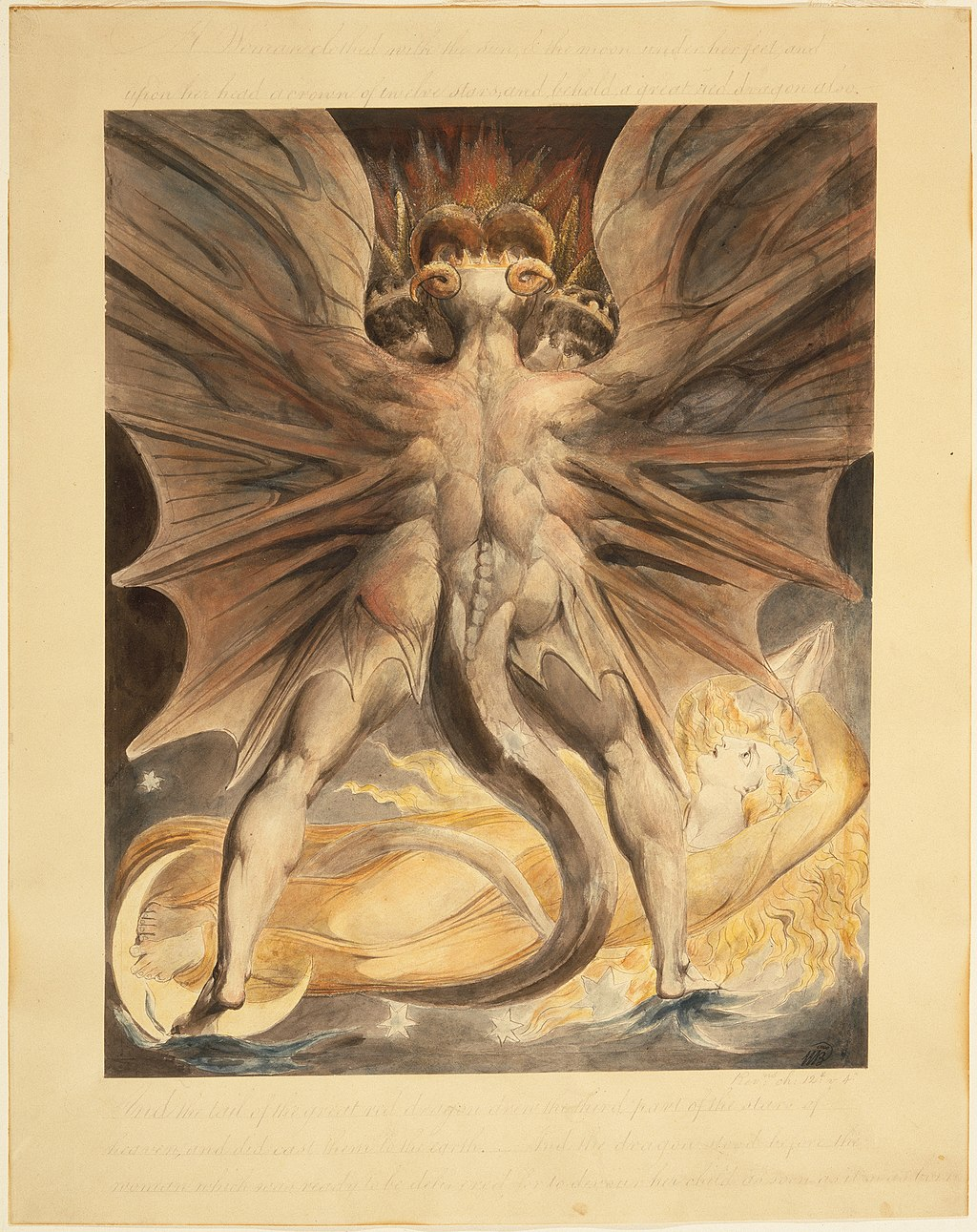
The weak in courage is strong in cunning
The bureaucracy accumulates power whilst destroying the power of the individuals that make it up. In theory.
Actually, it doesn’t do this entirely. A bureaucrat who takes the system at face value has no power, but one who can see the cracks in it, at least intuitively, can use the system for his own ends. You can compare my analysis here to the Clueless/Sociopath distinction in Venkatesh Rao’s Gervais Principle__.
The power of the bureaucrat generally exists in the form of exceptions, cases in which the rules he has been provided seem unclear or contradictory. The system defines competent authorities to deal with these exceptions, managers, and then the managers have managers for their exceptions and so on, up to the top bureaucrat, the sovereign. Whoever is dealing with these exceptions has the power to make real decisions.
A crucial concept in any bureaucracy is review; it needs to ensure that rules are followed and that exceptional decisions taken are properly justified, and information must be collected to ensure that this is possible. As the old saying goes, forms are not filled out for the benefit of the person doing the filling, but for the protection of the person who processes the form.
A simple form of power is consensus. If your boss doesn’t care about something you’re doing, then you have less to fear about. Maybe the guy above him does, but your malfeasance is less likely to come to his attention. Horizontal consensus, consensus within your level of the hierarchy is also useful, mass non-compliance is hard to rectify since usually everybody can’t be fired at once.
The more subtle forms of manoeuvre concern the nature of legibility. Under conditions of illegibility, the capacity for review becomes more difficult. To this extent, the bureaucrat cannot be controlled, and he is sovereign in his own right. The bureaucrat may even have an interest in making things more illegible than they might otherwise be, to this extent.
The more rules there are, the more they conflict creating more exceptions and this means the bureaucrat is able to exercise more of his own judgement without being questioned.
The creation of measures and KPIs ensures that Goodhart’s law comes into effect. If there's any slippage between correlation and causation, that’s something that can be exploited by agents within the system, and they're going to start looking for the cheapest and easiest ways to satisfy the strict letter of their demands. A bureaucrat could even influence the creation of measures he knows can be gamed for this reason.
The labelling process creates opportunities. There are two basic methods that can be used to abuse the naming process; the first is to give two separate things the same name, the second is to refer to one thing by two separate names. By giving two separate things the same name, you can flit between the definitions as needed, using one meaning to cover the other. By using two separate names, you can create plausible deniability by using the newer, more obscure and uncommon name to mask understanding. A vast system of jargon, cant, emerges within the bureaucracy to exploit this.
Lastly, and most simply, in any bureaucratic system, if there’s no record of it, it can’t be reviewed. If it can’t be reviewed, it isn’t real. So whenever you need to do something funny, just do it in such a way as there’s no record, or the record is distorted, or at least ensure it's hidden in an ocean of meaningless data. Esse est percipi - to be is to be perceived.
A curious paradox emerges as a result of this: as the bureaucracy expands and becomes more powerful it accumulates new rules, new quantifications, labels and forms of record keeping. But the more rules there are, the more conflicts there can be between them. Since the cynical bureaucrat exercises agency through these gaps, as the bureaucracy gains power, he gains more power and agency, and ceases to be a bureaucrat in the true sense. An out of control bureaucracy is one where review has become impossible, and each little cog is a king in his own right. Under these conditions, the bureaucracy is dead, it has solidified into aristocracy, feudalism. Since like all living things the bureaucracy wants to grow by its own nature, it is also inexorably moving towards its own demise.
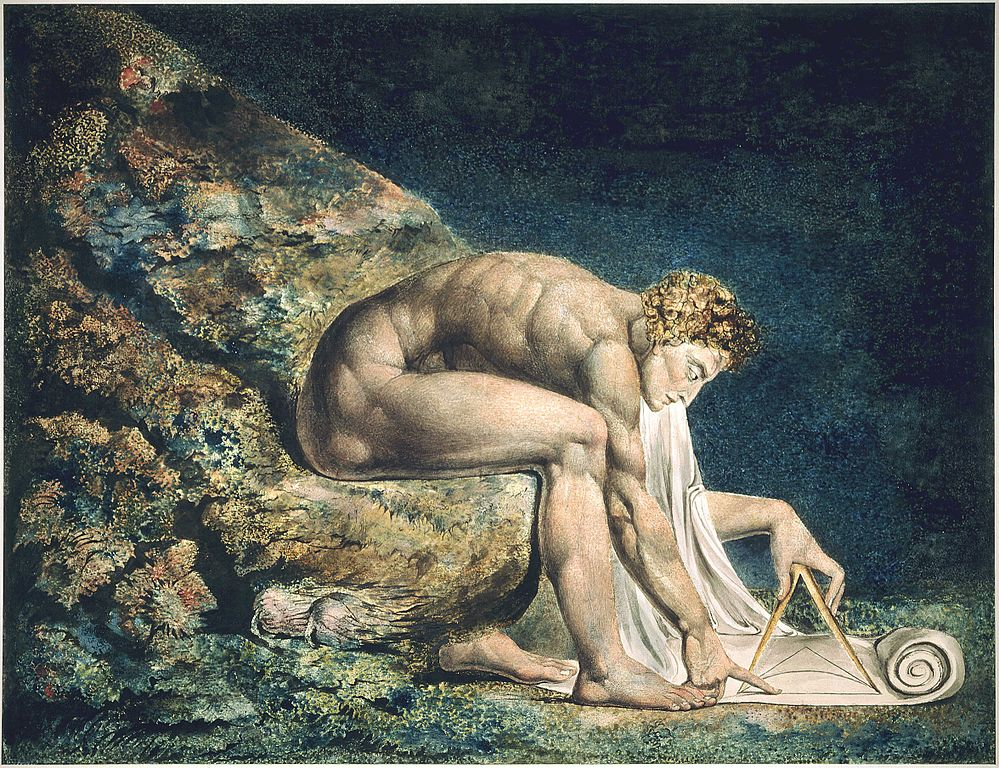
Bring out number, weight, and measure in a year of dearth
Knowledge and power, why do they have to be opposed? We’ve already seen this to some extent with the conflict of metis and episteme in James C Scott; those with episteme have genuine knowledge but they’re often helpless in the face of complexity, those with metis have power without knowledge, and the bureaucracy creates power through its own ignorance.
But to most people the question sounds ridiculous: knowledge is power, right?
I’m worried it has been unclear why I’ve been going on for so long about bureaucracy: the problem that Teach is addressing is one that afflicts both governments and individuals; in fact, it is a civilizational malady.
Someone had to come up with that quote, and for something so obvious it took humanity a long time to realise this. Francis Bacon was a great phrasemaker, but he was also the closest thing the modern world has to a founder, to the extent that something so large can be founded by a single person. The limitations of Bacon’s worldview has implications for us all.
Science has made great advances; no one who lives in a world so thoroughly transformed by the genius of man can live in denial of its power. But as we noted in the section on defences, success can breed stagnation and addiction. Mounting a full scale critique of the practice of science is beyond the scope of this review; to be honest, I’m probably not capable of it. Really, I have no interest in criticising the natural sciences; the problem with the sciences is their success.
This desire for legibility that the bureaucracy has, humans have too. A legible world is one that is easy to understand, it requires little in the practice of judgement, and offers little risk. Metis, by contrast, takes risk and experimentation to acquire. When you first learn to ride a bike, you proceed with difficulty, you might hurt yourself or fall over. With a physical task like this, we understand there’s no alternative to this painful process, but that’s not so clear in other areas of life.
A pithy way to describe the popular view of science is as “cheat codes for reality”. Actual scientists tend to be more circumspect since they see the dirty process of the scientific method in action. Science appears to flatter this desire for legibility; it reduces the world to episteme, cause and effect rules stated in language. As an institution and a body of knowledge, science represents another outsourcing of the faculties of the human mind to something outside of it. With regards to the natural sciences, this usually isn’t problematic in the slightest; why bother reconstructing Newtonian mechanics from scratch through trial and error? That would be madness, but outside the natural sciences we’re going to see a whole complex of pathologies based on this.
As time has advanced people have come to view the world increasingly through episteme; this is the connection to narcissism, a simpler and more basic way of viewing the world than metis. Think about something difficult and complex, like trading stocks; there’s theory that can help you make money, but the risk is a part of the game. Warren Buffett can do it consistently well, so it’s not like it's wholly arbitrary, but reading Warren Buffett’s book doesn’t make you as good at trading stocks as Warren Buffett; another example of metis vs episteme.
This can be exploited; you’ve probably seen those scammers who tell you how you can earn $2,500 a day dropshipping or trading crypto, if only you pay them the low one off price of $2,500 in return. Presumably those ads work on people; what they’re selling is the allure of episteme, that there’s some kind of system of rules that will allow you to bypass the risk and effort and move straight to GO and collect $200. In this example the problem is obvious, but subtler ones are always possible.
Another example would be learning a new language: languages are systems ultimately based on consistent rules, so in principle they can be reduced to episteme. But it would be madness to think that the way to learn a new language is just to memorise a vast set of grammatical rules and then apply them. That would be too complex, you wouldn’t be able to work them through fast enough to be able to speak. Instead, you have to go through this long painful process of internalising the sense of another language; this is what allows you to become fluent, when you stop having to translate to your mother tongue internally and can just think in the second one.
Because episteme is in language, it isn’t really your property, your power at all; it’s something anyone else could have. Understanding Newton doesn’t give you his genius, but it does make you as good at predicting the behaviour of a pendulum. Knowledge isn’t inferior to power, it just isn’t commensurable.
In so many areas, people complain that they don't know what to do, so they do nothing. But the problem often is, there’s no better way of learning than simply doing, so this is simply an excuse for inaction.
Bring out number, weight, and measure in a year of dearth
An obvious empirical fact about the practice of science: as soon as humans enter the picture, it starts to get extremely messy. The social sciences, psychology, sociology and economics have nowhere near the same prestige as the natural sciences; in fact, it’s not really clear that they’re doing the same thing at all. Even those aspects of the natural sciences that cross over with human interests, like nutrition and medicine, can very quickly become controversial over issues that seem as though they ought to be simple.
Why is this the case? There’s a whole range of problems we could present; the key one I would call the problem of reflexivity. Once an observation is publicly made about humans, they become aware of it, and they change their behaviour in response to it. In Economics, this is known as the Lucas Critique, although Goodharts Law and the Efficient Market Hypothesis are also examples of it in action. Human beings don’t represent fixed things like electrons that can be isolated unchangingly; even if they’re all similar biologically, their experiences shape their actions.
More sinister (pardon the pun) is the problem of ideology. The power of ideas in the natural sciences derives from their applications, which in turn relies on their truth. In the social sciences even false ideas have their uses; even if the Laffer Curve or the Phillips Curve are bullshit, both of them have uses in justifying the kind of society a person might want to create. This means actors within the social sciences have very different incentives to those in the natural sciences. Although the concept of ideology originated on the left, it isn’t their unique possession; all it means in its broad sense is that particular interests will push things as “knowledge” that benefit them.
Finally, in our society, science itself has become an institution and a bureaucracy, meaning it’s subject to the same pathologies of bureaucracy that we’ve already discussed. Consider the impact of quantification; the more papers an academic publishes, the better an academic they are, so publish or perish. They stop writing books, they take too long. Every insight has to be pithy enough to make sense in an article. Now there’s so many articles flying around that no-one can read all of them or try to replicate them, so why even bother trying to conduct meaningful research? Why not just fabricate data, p-hack or plagiarise?

Something funny is starting to happen here: the replication crisis is a bit like how the narcissist can’t tell interior from exterior content. Academia, as the social organ that deals with knowledge, can't tell the difference between the data it's gathering from reality and the dross that the institution creates from the irrationality of its own organisation.
Could the social sciences ever approach the natural in terms of the rigour of their methodology and organisation? I don’t have the expertise to prove conclusively that they never could, but at the present moment it suffices to say that they do not.
Drive your cart and your plough over the bones of the dead
The role that capitalism plays in this story is ambiguous. Industrial capitalism did a lot of the work of destroying the old social systems; the division of labour, the instability of wage labour, urbanisation, even the shift to clock-time all played a role in this. The modern structures of bureaucracy that libertarians tend to criticise are largely responses to the disruption (as the entrepreneurs like to say) that capitalism brought in its wake. Modern corporations are particularly pernicious as they combine the worst of both worlds; they’re large bureaucratic entities that are also subject to the profit motive.
In Lasch’s consideration, the fundamental criticisms the left has of capitalism are correct: it is both an unfair system and highly destructive. This is neither the place to justify or criticise such a view, but I will counterbalance it by noting that the need for profitability among businesses is the closest thing our social structure has to a principle of reality; competition does restrain the tendency of corporations to unlimited bureaucratic expansion in a way the government can’t be restrained, at least when competition is allowed to occur.
When I call it a principle of reality, I mean that in a world where everything can be faked, only the economy, scarcity, resources are still real, and capitalism mediates this reality through the profitability of firms. Goodhart's law can be avoided by ensuring a 1:1 correlation between what is being targeted and measured; businesses are capable of this because they're profit maximising, and profit can be measured easily and efficiently. Profit is one of the few things that can't be gamed, at least until the government gets involved.
That doesn't make any of the other facts about capitalism necessarily less true, though.
Folly is the cloak of knavery
Jargon begins within a profession as a precise technical language, morphs into a marker of identification among careerists, and finally into a system of direct obfuscation, that is to say, ideology.
Economists love to do this. Consider the masterpiece of jargon that is Quantitative Easing. Quantitative, meaning to do with quantity, and easing, meaning to let off pressure. They’re letting off pressure through quantity. Of course, this is the opposite of what it is: the point is to increase pressure, to inflate. A cynic would say that quantitative easing is when the government prints money and gives it to banks. An economist would rightly step in here and explain that they’re not printing money, they're adding it to the balance sheet of the central bank. They’re not giving it to banks, they're increasing the liquidity of financial markets. In other words, they’re printing money and giving it to banks (and the government). There is a genuine difference, in that the government debt on the Fed balance sheet has to be paid off, in principle.
Yeah, let me know when that happens.
Libertarian and socialist critics of the central banking system tend to make a big mistake in thinking that this process is done overtly to make the richest people in America richer. I can’t prove this for certain, but I’m sure that Jerome Powell just sees himself as fulfilling his job description, which is to maintain the stability of the financial system.
But consider this: financial markets are based on expectations, people buy stocks because they think their price will rise, and then their price rises because they’re being bought; it’s a self fulfilling prophecy. This means financial markets tend to rise slowly as money filters in, but when prices dip, that can easily turn into a crash as expectations change en masse and everybody tries to get their money out at once. So defining things in terms of stability de facto means ensuring prices always rise. In other words, even if Jerome thinks he’s maintaining financial stability, the reality of that is to ensure that the rich continue to get richer: two labels for the same thing. Ideology deceives the ruling classes as much as those who are ruled.
A fool sees not the same tree that a wise man sees.
This has all been rather dry, hasn’t it? Psychology, political science, philosophy of science. Let’s go back to the anti-meme, that’s fun. Actually, it’s appeared a few times already.
I’m going to start indicating what it looks like so you can start to see it yourself. Metis vs Episteme, legibility, this is the kind of thing we need to be looking for. The bureaucracy has things it can’t see, and also, things it doesn’t want to see. In fact, not wanting to see and being unable really aren’t that different. Episteme is memetic, metis is anti-memetic.
It’s a bit like those defences that we discussed back in our summary of developmental psychology. In defences or cognitive fallacies, the mind mangles reality, simplifies it for its own purposes. When we say something is anti-memetic that means that your defence mechanisms are resisting it, it’s something that the mind doesn’t want to accept. So in order for you to see the anti-meme, we need to indicate the kind of things you wouldn’t want to see.
It can’t be done by just telling you exactly what it is, at least, not effectively. That’s tautological, it’s definitional that you can’t do that. But consider this: what if you could be tricked into understanding it? The mind doesn’t want to understand it, but if it thinks it’s seeing something else, something that it wanted to see, it can catch a glimpse. It would have to be deceived, it would need to think that this thing it really doesn’t want is actually the most important, precious thing in the world. In short, it would need to be sold, a fantasy.
“Now hear a plain fact: Swedenborg has not written one new truth. Now hear another: he has written all the old falsehoods.
When I wrote this, I frontloaded the psychological and political analysis because it makes the logical derivation of the ideas clearer. Rhetorically this is less effective; Lasch structured The Culture of Narcissism the other way around, with the cultural critique first. Ed Teach skipped this part entirely and just presented the cultural critique without explaining the “system” that underlay it. Some people seemed to think this was a trick but I disagree; it wasn’t really important to his purposes.
Thinking about it as a “system” is likely misleading, it’s just a set of lenses that can be more or less applicable to certain situations. A clue I noticed at one point in Sadly, Porn is that he recapitulates Jacques Ellul’s theory of propaganda practically word for word, without citing Ellul. Maybe you think that's plagiarism, but really, when you cite someone you turn them into an authority. So the question is less whether the actual details of Ellul’s theory is correct, and more about the figure of Ellul himself. You pull up his wikipedia page, turns out he’s some weirdo French Marxist Christian Anarchist? Why would I listen to him? Nobody would listen to him; at least one of those four words is going to put a nuke into their brain and they’re not going to be able to see through the resulting red mist.
This review is my take on the “system”, which is likely the wrong way to approach this because it probably doesn’t exist, but don’t worry, I have my own reasons. If this seems schematic and unconvincing, it’s because it is; I’m just trying to sketch out where you can start looking into this, and after all it’s only a review. I’m going to start applying this system to cultural critique in Ed Teach’s style; it's up to you to decide the extent to which this describes reality.
I tell you, no virtue can exist without breaking these ten commandments. Jesus was all virtue, and acted from impulse, not from rules.”
Maybe this critical talk of science is worrying you. The problem isn't really science, it's the human mind's compulsive striving for simplicity; science just happens to flatter this impulse. Take another example: writing.
Sam Kriss is another Lacanian, this section from his writing advice piece could have come straight from Teach:
“Down in the most lightless depths of bad writing—among the fanfic troglodytes, or the people who assume all books come in trilogies—you’ll find an obsession with this idea of rules. Somewhere there is buried a vast golden lawbook of what you must and must not do. One of the worst things anyone has ever shown me is the r/writing subreddit, in which bad writers constantly, fretfully, seek permission to write. Am I allowed to do an enemies to lovers story but without the romantic element? Am I allowed to set my story in a real place like New York City or will I get in trouble for copyright? Am I allowed to write a story with two different themes? I’ve heard you can’t use any speech verb except ‘said,’ but what if my character is from an alien species that doesn’t communicate through sound?”
It hits all the same beats: the obsession with rules, episteme, seeking permission to act, and generally how these obsessions fail to produce anything of value. Good writing does not follow rules; if it did, originality would be impossible. In that sense, there’s no real criteria of what good writing is, you just know it when you see it, you feel it.
George Orwell was thinking along similar lines to Teach at at points in Politics and the English Language__:
“I list below, with notes and examples, various of the tricks by means of which the work of prose-construction is habitually dodged__.
Dying metaphors. A newly invented metaphor assists thought by evoking a visual image, while on the other hand a metaphor which is technically ‘dead’ (e. g. iron resolution) has in effect reverted to being an ordinary word and can generally be used without loss of vividness. But in between these two classes there is a huge dump of worn-out metaphors which have lost all evocative power and are merely used because they save people the trouble of inventing phrases for themselves.”
So much of our language is metaphorical, but we rarely notice this in everyday life. And oftentimes, the use of metaphor degrades into cliché. The use of cliché language is fine when it's intentional, but when it’s not, it's a quite troublesome phenomenon.
A good metaphor enhances our understanding of something in a way that a literal description of it wouldn't, and a great metaphor has such pristine mathematical clarity that literal description could never hope to match.
What shall my west hurt me? As west and east
In all flat maps (and I am one) are one,
So death doth touch the resurrection.
Metaphor, in some sense, is more real, more basic, than “literal” description. Poetry, when it's good, is not some abstruse way of writing it is the ultimate form of concision and clarity, lossless compression. It relies on a common understanding, common images, the texture of the language it’s written in; this means it is a kind of metis and is probably why poetry has been in decline for some time. Good prose is always episteme; maybe next year I should write an epic instead.
There's a line to the effect that the first poet to compare a woman to a flower was a genius, but the second was an idiot; metaphor loses its power and meaning the more it's repeated. Using a phrase like “Achilles Heel” doesn't actually add anything to our understanding; it's become identical to the thing it's a metaphor for, and ceased to be a metaphor at all. It's a sort of compulsive repetition, something we've picked up (another metaphor, see?) ambiently from our culture without understanding why we would actually use it, like children imitating grownup talk (originally I wrote “aping”, another stale metaphor). At this point, it is almost always superior to write “weak point” than “Achilles Heel”.
It’s a common joke that every bad fan fiction has a line along the lines of “the Imperial T19 Cannon blast cut into the rebel star-galleon like a electrum lasersword through Wudu hide”, as though these universes don’t have hot knives or butter. The problem that these people have is that they can’t tell when they’re writing, and when someone else is writing through them. Literally, they are using someone else’s words, someone else’s thoughts, and they don’t even know it. It’s not necessarily a bad thing when something is writing through you, it worked for Homer, just make sure the thing is a good writer.
This is part of what amateur writers get wrong; they worry about using cliché characters, cliché plots, and cliché settings, but those aren't clichés, they're stock characters, archetypes or genre tropes, there's nothing wrong with any of that. You cannot get away with cliché language, because that’s all that writing is, language. And when you write in clichés the reader has already read your writing too many times before to bother continuing.
If you find yourself about to say or write something cliché, try to at least express it in a different set of words, even if the sentiment is still going to be the same. This way, you will think about the actual words, and you'll know whether they're yours or not. That assumes that you can tell when you’re thinking in cliches, of course.
Prudence is a rich ugly old maid courted by Incapacity
“I went down yesterday to Piraeus - No, wait, that wasn’t me”
Just as the city reflects the mind, the mind reflects the city. As Plato argued, certain tendencies in the human mind may be more apparent when viewed at the macro level.
One way to frame the narcissist is that he’s a “bureaucrat of the soul”. A bureaucrat is meant to have no independent power in the system; he is expected to be a selfless executor of the rules. Life doesn't have explicit rules but the narcissist is someone who doesn't get this. They're always looking for permission from some thing, it could be God, it could be Science, the Law, or “Society”, to do what they already wanted to do. But they also have contempt for the rules; like a civil servant who must adopt the policies of each successive government, the narcissist always has his finger in the air. They feel they might have to change at any point, so they can’t get attached to values or a substantive identity.
Consider how of the three main narcissistic defence mechanisms we discussed, each has a parallel to the kind of distortions in which bureaucracies deal:
Splitting - The bureaucracy is on the lookout for clearly defined, ideally quantifiable markers with which to judge reality, it is incapable of dealing with whole objects.
Denial - Anything the bureaucracy doesn’t understand, it can't deal with. Or if there’s no record of it, it doesn’t exist.
Projection - As the bureaucracy uses its measures and KPIs, its labels, and forms of record keeping, it forces people to speak in the “language” it has created for them. The information it receives is now marked by this; it stops reflecting reality, it reflects the bureaucracy itself.
Bureaucracy is meant to dissolve power, and in the process, it also destroys responsibility. If something goes wrong, the bureaucrat blames the rules, and maybe it is the rules fault; they have to obey the rules, even when the bureaucrat knows that the rules are faulty. The bureaucrat never makes the rules, they're just handed down from above. Whose fault is it? Nobody’s, or everybody’s, which is the same. That's a shame. Guess you'll just have to fuck off if you have a problem then - maybe you’ve met people like this in your own life.
Ambiguity is where the bureaucrat’s independent power lies, in the gaps between the rules, in the vagueness of names, in the things that can’t be recorded, but he must always disclaim power for this reason. He is put into a permanent pose of reactive helplessness, apathy, and impotence. Like the bureaucrat, the narcissist exercises his real agency through these gaps which are all the more common in everyday life for the lack of explicit rules and record keeping.
Doestevsky wrote a very good novella called Notes from Underground. Apparently Nabokov said the title really ought to be “Memoirs from a Mousehole”, but I prefer Wikipedia’s sourceless assertion that the word in Russian means something more like a crawlspace. I speak no Russian, but “Cries from the Crawlspace” is a very evocative title.
I won't explain the Underground Man to you, just read it when you get the chance. But consider this question when you do: What was the Underground Man's job?
Shame is Pride’s cloak
“Events have rendered liberationist critiques of modern society hopelessly out of date-and much of an earlier Marxist critique as well. Many radicals still direct their indignation against the authoritarian family, repressive sexual morality, literary censorship, the work ethic, and other foundations of bourgeois order that have been weakened or destroyed by advanced capitalism itself. These radicals do not see that the "authoritarian personality" no longer represents the prototype of the economic man. Economic man himself has given way to the psychological man of our times, the final product of bourgeois individualism. The new narcissism is haunted not by guilt but by anxiety.”
Why anxiety, and not guilt? One feels guilt when your locus of control is internal, you’re constantly wondering “Am I doing the right thing, what am I doing to other people?” One feels anxiety when one's locus of control is external, you're constantly wondering “Am I doing the right thing, what will people think of me?”
This is what people of my generation love to call “imposter syndrome”.
I have always found that Angels have the vanity to speak of themselves as the Only Wise. This they do with a confident insolence sprouting from systematic reasoning.
Let’s go back to the Oracle at Delphi. Know Thyself. Why did anyone listen to that fucking thing? Was there a single time the Oracle gave good advice? Croesus asks, should I invade Iran? He is told “A great empire will fall”, and before you know it they’re pouring molten gold down his throat. Actually, that was Crassus, but same difference. Sadly, John McCain died before we lived to see the same with him.
The prophet Tiresias was the same way; he’s the one who gave the parents of Narcissus that fatal advice. Oedipus’ parents as well: poor Oedipus, he just thought he had a 10 carat run of good luck when he strolled into a city whose king had mysteriously died, with a hot MILF waiting for him to boot.
The Oracle always tells you what you want to hear. It doesn’t lie; it just gives you enough rope to hang yourself.
Now the sneaking serpent walks
In mild humility;
And the just man rages in the wilds
Where lions roam.
The canonical artistic explorations of narcissism in media are The Sopranos and Mad Men; I think something about the repetitive nature of TV made it the perfect medium for exploring the concept. In most sitcoms the characters are caught in a kind of stasis or time warp that keeps them in an eternal present; in the Simpsons, the world advances, but the characters stay the same age. In the Sopranos and Mad Men, time is passing, the characters are ageing, but the characters' personalities stay the same or get worse. This is practically explicit within the text of the TV shows themselves.
“It says in these movie-writing books that every character has an arc, you understand? Like everybody starts out somewhere, and they do something, or something gets done to them, and it changes their life, that’s called their arc. Where’s my arc?”
Chrissy is exactly right here, he has no arc. He has a story in the sense that events do happen to him; he gets shot, he gets addicted to heroin, his girlfriend gets killed by his “family”, but none of these can shake him from the path that he’s on. His unconscious is screaming at him, it's constantly showing him where he's heading, that is, hell. Even his own awareness that he has no arc can’t boot him off into getting off of his self-destructive path.
You didn’t need me to tell you that The Sopranos is a good show, but know this; good art can teach us about the world. Bad art can too.
If others had not been foolish we should have been so.
Let's talk about The Room.
In The Room, Tommy Wiseau plays Tommy Wiseau. He plays a character called Johnny, but Johnny looks exactly how Tommy Wiseau does in real life, and speaks in exactly the same way Tommy Wiseau does in real life, and moves in exactly the same way Tommy Wiseau does in real life. So Tommy isn’t really acting in the traditional sense, unless he’s the most dedicated method actor in the history of the world.
The Room is a fantasy, and not a particularly deep one: a perfect guy with nothing wrong with him, gets fucked with by a bunch of demons wearing human skin. A rich handsome banker who does nothing wrong is cheated on by his wife for no real reason and does nothing about this, until the end of the film when he commits suicide.
It’s a fantasy, but an agency destroying one. You see we might expect that when we fantasise we would create an idealised version of ourselves, you know, it's you but richer, more handsome, bigger cock etc. If Tommy was going to make an obvious wish-fulfilment narrative, why not just make an action film where he’s like this and gets the girl and is happy at the end?
Teach mostly doesn’t use the word narcissism in the book; I use it because of how he did so on the blog. I think he stopped using it because it was too easy to misunderstand, but I’m an idiot for noticing this and deciding to use the word anyway, so bear with me. His understanding didn’t change that much, as far as I can tell, because the fundamental desire of the narcissist is for desire itself, the ultimate assault for the narcissist is to stop someone else from being desired. That’s why Teach bangs on and on about depriving the other, that’s what that means.
This is why Johnny has to be cheated on, the worst thing that can happen to him is that he is deprived of his wife’s desire. It’s also why Johnny has to commit suicide at the end; it is ultimately a self-destructive fantasy, a narrative of perpetual victimhood. The greatest revenge that Tommy can fathom is the act of depriving the other of himself. It doesn’t make much sense in terms of plot, since his wife is already cheating on him anyway, so this deprivation also has to be mediated through Greg Sestero’s character who has a sudden assault of conscience. In a 10% more life affirming fantasy, Johnny would have just found a better, hotter wife in the story but even this level of agency is beyond Wiseau’s ken.
I’m sorry, it’s not a particularly pretty picture. It isn’t difficult to read The Room, and nobody’s mind is going to be blown by this. The whole reason why I’m going on about The Room, is that somehow some people found it difficult to understand that art reflects the artist. That it reflects their understanding of the world. You need to understand what every piece of art and writing is; the unconscious confession of its author.
Why is Sadly, Porn all these weird readings of pop culture? It’s about teaching you how to read, how to look at things so that you can see what the artist saw. In great art, you can see that the artist's eye sees more than his brain. In bad art, you get to see how little the artist sees.
The thankful receiver bears a plentiful harvest.
Why does the narcissist desire desire itself? Think about our helpless child from the beginning, he’s dependent on his parents, these godlike entities. He wants them to do things for him, because he can’t do it himself. So the only way he can get what he wants is to assume a form or pose, to create an image that will cause these entities to act in his favour, and he interprets getting what he wants as being desired.
Kind of like status. If only you had the right job, the right qualifications, the right social position, everything would go right for you.
It’s easy to interpret the desire for desire as a desire for “status”, which isn’t wholly wrong. Where rationalists and others go wrong is in not seeing that actual status in society in some objective sense is quite distinct from the feeling of status, which is the real key to this. Being desirable is an eminently useful and practical thing, even for adults, the real problem of the narcissist is being unable to distinguish between the feeling and reality.
This is the great thing about the internet. If you have a narrative, an identity that leaves 99.9% of the people in the world thinking you’re an idiot or a psycho, that still leaves seven million freaks willing to validate your identity. All you have to do is find those seven million nutters and you can feel as high-status as you like. It’s a shame “Outsourcing the Superego” never caught on, it’s such a useful phrase.
I would follow Teach in terms of not speaking of status at all. “Objective status”, as I have called it, is just power, and “the feeling of status” is the trappings of power. Yeah, like it's a trap.
The apple tree never asks the beech how he shall grow; nor the lion, the horse, how he shall take his prey
Let me give you a thought experiment of my own design: the Chinese Golfer.
Imagine a Chinese man who is locked in a room, and instructed that to get out he must become a master at playing golf. In the room is a vast library of golfing related books, there are books on the mechanics and physics of golf, there are biographies of famous golfers, and all of history’s finest golfing themed novels. There are books and technical specifications for golf clubs, descriptions of the aerodynamics of golf balls, and there are maps of all the world’s golf courses.
What is not in the room are any golf clubs, golf balls, or golf courses. How much success will this man have in becoming a master golfer? How long will he be trapped in that room?
Obviously, he will be in there forever.
But whilst it’s intuitive that mastery of physical tasks involves practice, does this stretch to tasks that could be more conceptual? Social interaction, for instance, that’s mostly words, that could be conceptual. What happens if we try to treat social interaction like our poor oriental golfer?
I am compelled to talk about modern romantic life, as this is where the madness of the present age exhibits itself in its rawest and saddest form. As Scott (Alexander) and others have pointed out, the internet is full of people who talk all day long about how sad they are that they have no gf. Of course, they also never try to get a gf, or even take any action that might be preparatory to acquiring a gf, like going to the gym. I think Ed Teach’s habit of saying that these kinds of people have no desire is kind of untrue, or at least it’s a rhetorical trick, because he means something different by desire to what they mean. I know it because I’ve felt it too, and in retrospect, it is a kind of madness. What is true is that these people’s problem is that their “desire” for gf is weaker than their desire not to be rejected, and since that’s the motive most clearly reflected in their actions (or lack thereof), that is their “real” desire. In that sense their neurotic obsession with their single-ness is a defence against their lack of action.
People of this type never cease to complain of the strictures that have been put upon them. They never stop talking about, say, about their lack of physical attractiveness though many of them are hardly terribly below average but they often aren’t even willing to try, they just know that they aren’t good enough. Maybe they’ll even complain of the danger of feminists or public humiliation or false rape allegations. Women have to face a far larger threat of actual physical danger in their romantic lives, this is unfortunate, but it rarely stops them from having them. The problem is not an objective assessment of threat, but rather this overwhelming desire for desire itself, facing the fact that you might not be what the other desires in any capacity is so threatening that it becomes all consuming.
To me, this is as pure a demonstration of narcissism that I can find, both in my own life and the lives of others. In the abstract, it is a fascinating phenomenon, this simultaneous petrifying fear and crippling desire for the other, this object that you crave and are obsessed with but that you must recoil in terror from its omnipotent power. Nowhere is the dual nature of man on fuller display.
What alternatives are there? Consider Pick Up Artists. One thing that PUA’s were known for is scripts. You know, you’re in a busy club and you can’t hear the other person, and you have to talk to them about star signs and spirit animals or some crap. It’s really dumb, isn’t it? The idea that something as complex as another person can be reduced to a set of rules on a single paper. This is episteme too, right?
Actually, it’s not all that dumb. Even if a script is stupid it is literally infinitely superior to doing nothing. If you’re going to try and talk to women you don’t know, then a script really is as good as anything else you might say, because you have little to go on that would help you formulate a more organic opening. If it gets you talking to women, that is enough, you can learn to improvise from that, and then you can ditch the script in favour of an actual conversation. Even if the Script isn’t actual knowledge, that is, justified true belief, it allows you to act, gives you permission to act, maybe it will even help you achieve something. It’s approximating metis, a poor one maybe, but it will get you going. What the script really is a useful story, or a fantasy even, the real problem would be to get stuck only using a script.
There’s a deeper and darker secret buried here (don’t worry, it’s not “All Women Are Whores”). Obviously you can gain power by making other people believe lies. What is less obvious is that you can gain power by making yourself believe lies. I am fully aware of the ugliness that Pick Up Artists and Red Pill types represent, the hatred that you’ll see if you go to look at them. They speak of women alternately as being children and as being demons, but the hatred is part of a package deal; as I said, the fear that keeps incels and others in their place is usually this fear of the other, the fear of humiliation. One way to get around that is to devalue the other, to see them in such a way that you have such contempt for them that their opinions of you can’t affect you. It’s simple, all you have to do is to see them as meat.
I really don’t think that an individual can be a sane and moral person whilst regarding half the human race in this way. They shape their whole lives around the Pussy, and then it turns out the Pussy is such a burden to deal with that no sane man would want it in the first place. Sex could never be pleasurable enough for this to be worth it, what they really want are the things around sex that also make it desirable, namely, that it’s seen to be cool to have sex, they want the identity of a Sex Haver. But since they’ve devalued the opinions of women, this can only come from one place, other men. It turns out, it really is gay to get pussy; what they want is the desire of dudes, not sex with dudes, but the admiration of dudes. Dangerous as this is, it also represents willful self-mutilation.
Going beyond this requires vulnerability. Not vulnerability in the sense of crying to women or painting your nails pink, it means facing the possibility that you will be humiliated, which simply means that it is revealed that you are not what the other desires. Humiliated when you fuck up and make an ass of yourself as you inevitably will, or even humiliated for no good reason. Seeing women as whole objects means seeing them as people, which is to say, that they can do terrible things, often without good cause. A man who views women as perfect angels is one bad experience or sweaty blogpost from seeing them as demons; he splits on them. Facing up to this involves this paradox of liberating yourself from the desire for desire, up to actual desire for the other, which is romance in the true sense.
When you get to that point, that’s where the fun, the joy is. The risk, the ambiguity, is all part of the game. It’s like gambling, but as a positive sum game, because you’re not actually losing anything when you lose, and none of it would be possible without risk. And when you do make a connection, all the pain and humiliation was worth it, because there’s no greater feeling than that. Certainly not remaining in one’s room jacking off forever.
Perhaps you find this unconvincing, that you’ll never be able to acquire gf, Kierkegaard has a far more eloquent response than me:
“You know that you must not wish - and thereupon he went further. When his soul became anxious, he called to it and said: When you are anxious, it is because you are wishing; anxiety is a form of wishing, and you know that you must not wish - then he went further. When he was close to despair, when he said: I cannot; everyone else can - only I cannot. Oh, that I had never heard those words, that with my grief I had been allowed to go my way undisturbed - and with my wish. Then he called to his soul and said: Now you are being crafty, for you say that you are wishing and pretend that it is a question of something external that one can wish, whereas you know that it is something internal that one can only will; you are deluding yourself, for you say: Everyone else can - only I cannot. And yet you know that that by which others are able is that by which they are altogether like you-so if it really were true that you cannot, then neither could the others. So you betray not only your own cause but, insofar as it lies with you, the cause of all people; and in your humbly shutting yourself out from their number, you are slyly destroying their power.”
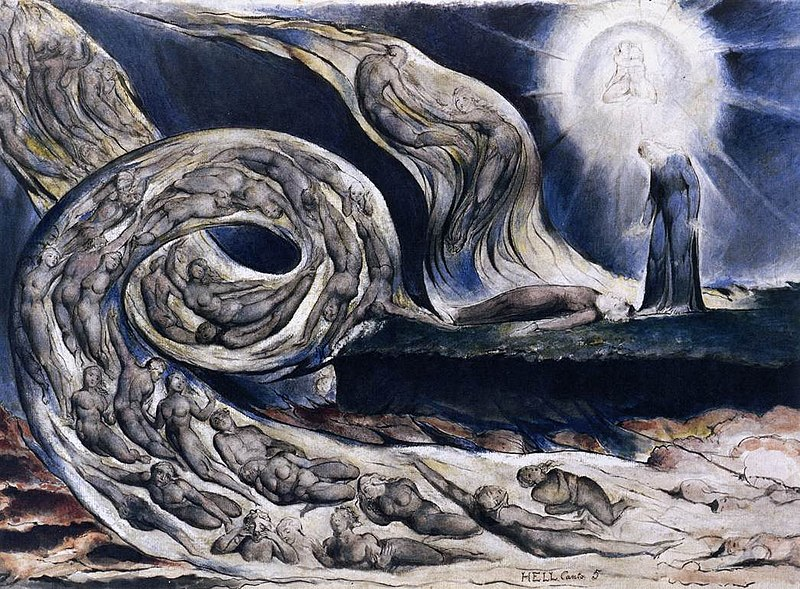
The nakedness of woman is the work of god.
We’re over twenty thousand words in and I haven’t even mentioned porn yet, isn’t that what the whole book is about? What is its significance? What’s all this stuff about not having desires? I have to say, I think it’s something of a rhetorical trick, the kind of thing Zizek is prone to, you say something that sounds counterintuitive to reveal a more banal truth.
When Teach says “Pornography is your fetish”, this is wordplay, a fetish is a term from anthropology for an object in primitive religion imbued with power that it doesn’t have; think of a voodoo doll if that doesn’t make sense. It’s this original sense of the word that sexual fetishism derived from, how an inanimate object, practice or body part replaces the whole other person as the object of desire. By fetish, he means that you are imbuing the porn with the power over you, when really it’s just reflective of your own desires.
At one level it's pretty straightforward, porn is just an artificial hyperstimulus that satisfies an existing desire. In this way, our society is full of it, far beyond actual porn. Take any piece of media you like; video games, movies, even the news, it’ll satisfy the same definition. For people who aren’t in relationships, this is hardly mind-blowing, but there are people who are in relationships and continue to use porn, that’s what has to be explained.
It’s intuitive that people without a regular sexual partner are probably going to jack it occasionally in place of actual sex, a defence against the need for another person. A person who does the same whilst they’re in a relationship is not really that different, masturbation is easier and doesn’t involve worrying about the needs of the other person. In that sense it’s a way of not being dependent, even whilst being in a relationship, which is a state of mutual dependency. This contradiction is what makes it actually pathological more than anything about porn itself. The growing moral panic about porn addiction online is a defence, people could stop but they would rather not.
Think of it this way: ordinal desires. First order desires are the ones we normally think of, hunger, thirst, sex etc. Second order desires are the conceptual ones, your ambitions and moral beliefs, and as we know these can conflict. Narcissism could be framed as a zeroth order desire, a meta-desire for inactivity, passivity, and a kind of self-sufficient wholeness. Where first order desires are primal and second order ones are conceptual, zeroth order desires represent the meta desires underlying the entire mind. Not directly felt like the first order desires, it turns your second order desires against themselves through the process of their own working.
You have a zeroth order desire for self-sufficiency, a first order desire for sex, and a second order desire for love of another. The desire for self sufficiency turns this around, and projects porn as the thing that you really desire, in order to avoid dependency on the other person.
Deeper than this, I think Teach’s specific usage of porn is rhetorical. Assuming that you are a narcissist, you only respond to shame, and sexuality is one of the few areas in our cultures where people will still feel shame, at least anonymously. This is reflective of the hypocrisy of our sexual culture; it is ostensibly liberated, that doesn’t mean that shame has disappeared for men or women. Teach’s intention isn’t to shame at all, but it’s a way of directing your attention to the real issue.
In religion, sin is closely associated with sexuality. Historically, religion has been largely responsible for the maintenance of sexual mores, and has tended to treat the maintenance of sexual norms as its most harsh and sacred duty. In the modern era, we see this particularly acutely as we can understand the most obvious religious prohibitions (e.g. “Don’t Murder!”) as being useful to the self even absent religion. It’s the sexual mores we can’t grasp, it’s the whole “consenting adults” thing. Don’t worry, I’m not going to argue against this.
Curiously and contrary to his reputation, Dante saw through this, to some extent. In the Comedy, the highest circle of Hell proper, just below Limbo, is devoted to Lust. It is the closest to the world of life, and heaven as well. Likewise, the highest part of Purgatory, the part closest to heaven, is dedicated to the purgation of Lust.
Lust cuts you off, but it’s the least worst way to cut yourself off. Lust is at some level, a desire for the other. A desire for the self reflected in another, but it’s still connecting you to the collective body of Man. This is just standard Platonic orthodoxy, the desire for beauty is a prefiguration of the desire for wisdom and then the good itself. Actual porn is another layer on top of this, a simulacrum, but that chain is still there however tenuously.
In this sense, worrying too much about actual porn is probably wrong headed; if your worst vice is jacking it too much then you're practically a saint. What's problematic about porn is this way that it cuts you off, or really, that it justifies your desire to cut yourself off. Of all the kinds of “porn” in society, actual porn is likely the least worst way to do this, the only person it’s going to hurt is your partner, assuming you have one.
Take… Taylor Swift, she's popular right now, right? It used to be that pop songs were about love, about the fantasy of another person. We've declined from the love song to the break up song, not about being sad at break ups which is still reflective of the desire for the other, songs about being happy that you broke up. Or indeed, that you were broken up with. The one Taylor Swift song I can name is about being better than that punk bitch that dumped you and has now come crawling back. This is Wiseau’s fantasy: the one who has hurt you through the deprivation of desire, will in turn be hurt by the deprivation of your desire. And like in Wiseau’s fantasy, Taylor’s stance is passive, the ex-boyfriend takes the action of breaking up; her revenge just is to do nothing. The problem isn't Taylor Swift, she’s just a product, this is what people want to hear, the fantasy of disconnection.
The terrible crime, the worst crime for Dante is far from lust, but the opposite, treachery. Treachery, the violation of trust, is to completely, voluntarily and consciously cut oneself off from the collective body of Man and God himself. Frozen in the lake of Cocytus, the treacherous are the furthest from life itself.
“Perhaps you will be willing to show me my eternal lot, and we will contemplate together upon it, and see whether your lot or mine is most desirable.”
Maybe you think it's strange to talk in terms of Hell, it doesn't seem very rational. Hell exists upon the Earth I can assure you; it's the crawlspace of the world.
For many lay people, divine punishment is interpreted as a utilitarian measure for the maintenance of peace and order on the Earth. This is stupid.
The next level, the actual view of most organised religion, is the opposite, God punishes to maintain justice itself. It would be wrong for God to let sinners off the hook for the things they’ve done by letting them pass into mere oblivion. This is also wrong, as Dante knew, God in his infinite love is beyond good and evil, there’s nothing he must do.
Something that a lot of people get wrong about Dante’s Inferno is that they think the punishments in Hell are supposed to be “ironically” related to the sins they’re the punishments for, that they represent the sins in some way. This isn’t true, the sin is the punishment. The punishment you experience in Hell is just your desires continuing on and on and on. You don’t get put into Hell, you go there because that's where you want to be, because you can’t let go of yourself, your punishment is just to be you, forever.
One figure in Hell is Ugolino, he was locked in a tower by his enemy, with his children. He had to watch his children starve in front of him, watch them beg him to cannibalise them to spare them their misery. And so in Hell he’s down in the dark pit of Cocytus, gnawing upon the neck of the man who put him there.
Is this punishment? Where else would he rather be? He’s consumed by revenge, forever inflicting it upon his foe. Even if his foe deserves what’s happening to him, this act is what cuts him off from God. The act itself is superfluous; his enemy is in Hell, what worse can be inflicted upon him?
Paolo and Francesca are down there too in one another’s arms, they would rather be down there with each other than in heaven.
Why does the Devil torture people in Hell? It’s like the old joke goes, aren’t the sinners his boys? Why must he eternally gnaw upon Judas, who did more for him than anyone else?
Because he’s dumb, that’s why. His only pleasure is in depriving the other, in the pain he can inflict on others. He always lies, because he doesn't know what the truth is, he couldn't tell the truth even if he wanted to. He is incapable of gratitude, and of seeing the bigger picture. If he knew better, he wouldn’t be there.
O foul descent! that I who erst contended
With Gods to sit the highest, am now constraind
Into a Beast, and mixt with bestial slime,
This essence to incarnate and imbrute,
That to the height of Deitie aspir’d;
But what will not Ambition and Revenge
Descend to? Who aspires must down as low
As high he soard, obnoxious first or last
To basest things. Revenge, at first though sweet,
Bitter ere long back on it self recoiles;
Let it; I reck not, so it light well aim’d,
Since higher I fall short, on him who next
Provokes my envie, this new Favorite
Of Heav’n, this Man of Clay, Son of despite,
Whom us the more to spite his Maker rais’d
From dust: spite then with spite is best repaid.
Spite then with spite is best repaid; this is what keeps you in hell.
Frozen down in the mirror smooth lake of Cocytus, his jaws fixed upon Brutus, Cassius, and Judas, Satan too is staring at his own reflection. To try and escape, he is desperately flapping his wings. The flapping cools the lake, keeping it frozen, keeping him trapped. He too could be free, if only he would stop, but he will not. Satan, Lord of This World And All Visible Things, has no real power, all he can do is trick people. He can not refrain from going on with this, but it seems to us that we may stop here.
And at length they pronounced that the Gods had ordered such things. Thus men forgot that all deities reside in the human breast.
I'm an atheist. Apparently saying this is unfashionable these days.
Did you ever go to R/Atheism? Have you ever been Euphoric? Does the name Aalewis mean anything to you? You should, the power of his words reversed the course of four hundred years worth of flow in the history of ideas. That’s what a professional quote-maker can do.
If none of those mean anything to you then don't worry, you're saved, but anyone who “believes” in God because atheism is cringe is going to go to a far deeper hell than me.
Prayers plough not; praises reap not; joys laugh not; sorrows weep not.
A narcissist wants to assume a form that will ensure that what they want is given to them, this generally takes the form of inhabiting a pseudo-identity, the creation of a false self-narrative. I call it a pseudo-identity because the overall desire is to avoid the risk and investment that action requires, and that a real identity would be based on. The key to this is having other people participate in this identity, validate it. This is often achieved by seizing upon commonly recognized signifiers of the identity they think they need that don’t require the investment or risk of action.
Do you remember fedoras? How every person you were supposed to dislike wore fedoras for a few years there around 2012? The fedora was symbolic of noir, detectives, pseudo-Nietzschean anti-heroes. It was natural, if stupid, that the New Atheist movement would gravitate towards it as a costume; that edginess was a part of their aesthetic as well. They were cringe, but the reason they were cringe is they didn't realise that it was Bogart who ennobled the fedora and not the fedora that ennobled Bogart. They used it as a totem, a fetish. They mistook the part for the whole. Teenagers can be forgiven for this, but adults should know better.
This is Goodhart’s law in action in the social world, the exploitation of the mismatch of correlation and causation. Of course, no one fell for it in this instance, it was too obvious what was going on. But as I always say, subtler examples are always possible. Indeed this is the problem the New Atheist movement really had, it very quickly became too gauche, too crass, too unfashionable. It became an identity no-one could desire, because no-one else was willing to validate it.
What’s less obvious is that this process of participating can happen negatively as well. People are much more likely to fall for this one, in fact, that’s what makes it so powerful, they think that they’re spiting their enemy with their blind hatred, when this is the thing that their enemy wants the most.
The best thing for the New Atheist movement was for their enemies to call them satanists and blasphemers, that’s what they wanted to be, that’s what made them seem cool. It made them seem like radical truth-tellers, when really they dealt in sloppy self-satisfied banalities. It was when they were called nerds and losers that the whole thing began to fall apart.
This is just the logic of the fedora in action: you want the cheapest, most visible identifier you can scrounge up, and here’s someone, an actual person, willing to do the work of providing this to you, for free. You don’t even need to buy a fedora.
How is it possible to feel desired whilst people are openly hating you? If you were the only person in the world with this identity, then yes, it wouldn’t work. But there will always be people willing to validate you, no matter how insane your narrative is, because you’re validating them at the same time. And the ones who hate you, you just devalue them, see them as the meat they are. There’s a contradiction here, that they can esteem the hate of their enemy, but not their love, but nevermind that.
What becomes particularly insidious is how this effectively allows your enemies to control what you believe. There used to be many people online who would say something along the lines of “I used to be a moderate centrist, but the Left kept calling me a Nazi, so what choice did I have?”
See, they’re complaining that the Left was trying to force them to change their beliefs, that’s unpleasant for sure, but what they didn’t notice is that the Left succeeded in changing their beliefs. I’m sure the Left would have preferred if they had become SJWs or whatever they were supposed to be, but like an attention seeking child if they can’t get your love they’ll settle for your hate.
Now everyone gets what they want, each side can get as much validation of their identity as they need just by looking at what the enemy says. The Blackshirts don’t need to march on Rome, they can just sit on their forums and post soyjaks and cartoons of them drinking liberal tears. They’re locked in mutual obsessive, almost erotic embrace. And that’s not so strange: it’s well known that sex looks a lot like fighting. These types of people think about their enemies with a passionate intensity that lovers can rarely amount to.
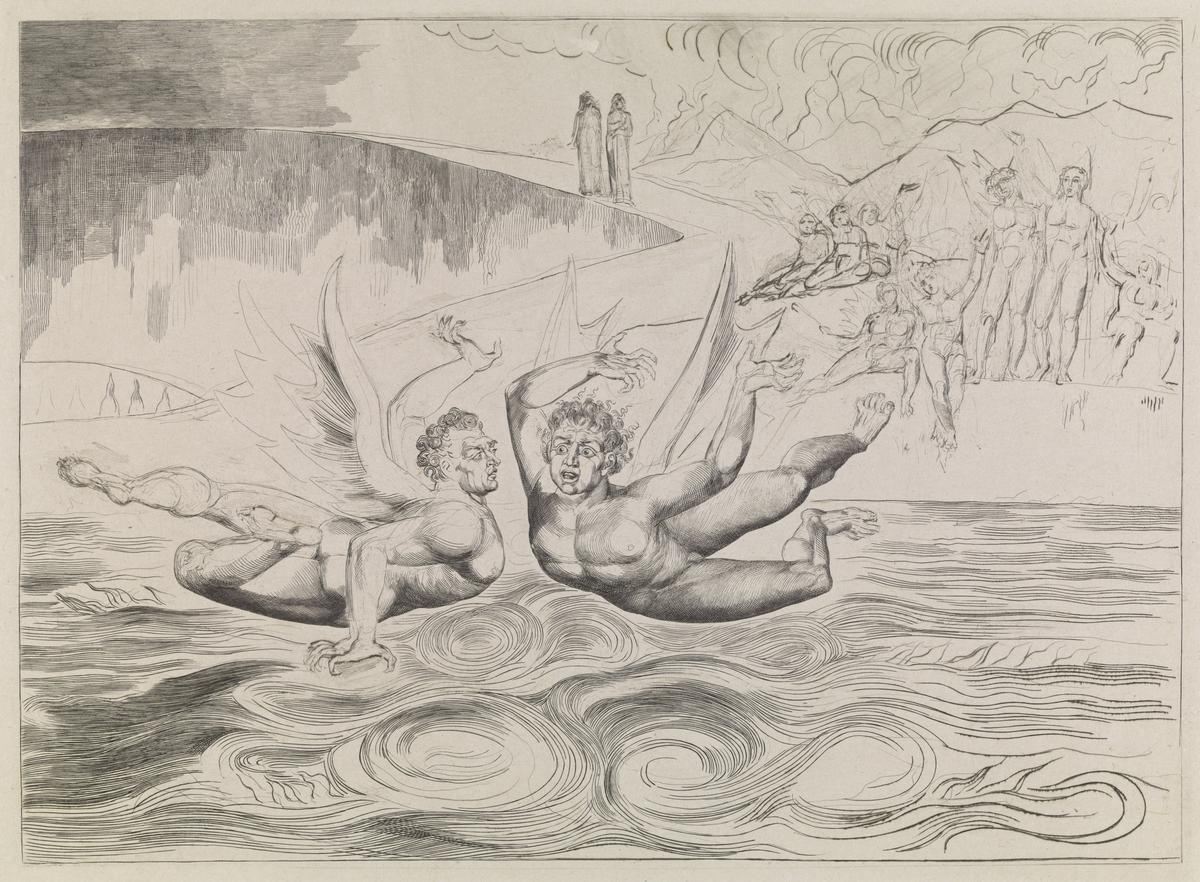
People believe that if their enemies seized power they would do monstrous and terrible things, and they know this because if they seized power they would also do monstrous and terrible things. They believe they’d be justified in doing these monstrous and terrible things because their enemies want to do the same. Of course, their enemies also think themselves justified because of what they want to do. Mutual projection, spite paid with spite, all the way down to hell. As far as I’m concerned, this explains about 95% of the content on the internet.
Perhaps you’re concerned I’m arguing that there’s no difference between Left and Right. No, the values really are different. The problem is that there are so many people on either side who aren’t capable of having values at all. This is why worrying about “wokeness”, or even “fascism” as such is wrongheaded. As I say it plays into their identity, but more importantly there are many varieties of madness out there, arguing about which is the maddest is beside the point.
If the left preaches the gospel of love in place of loving their neighbour, the right preaches the gospel of strength in place of being strong. Effectively, posting gigachad memes in place of trying to be gigachad. Personally, I don’t know that gigachad would find himself posting memes, I think he would be out in the world.
The wrath of the lion is the wisdom of God.
Trump supporters think the election was stolen. Hilary stans think Russia hacked the elections. In fact, the last US election that didn’t have significant doubt cast upon by the losers was… 1996? Those on the far-left live in fear of an imminent fascist coup, whilst those on the right see Gramscian guerillas everywhere marching through the institutions. These are only the partisan apocalypses, there are plenty of others, global warming is another one, not to mention the innumerable conspiracies one can choose to flatter all your preconceptions about the world. It feels so trite to point out the obvious parallels, but these fantasies are omnipresent!
It baffles me that people can not see this, this wholly enlightened Earth is radiant calamity. Institutional trust is at an all time low, what keeps obedience is fear, not of the government, but of the other person.
Don't worry though: AI risk is perfectly reasonable and an exception to all this.
He who has suffered you to impose on him knows you
Quick question, is it narcissistic to go around calling everyone else narcissists?
Yes, next question please.
Sorry, I should explain myself. Narcissism as we have described it is part of the human condition, some may be more narcissistic, some less so, no-one is ever not narcissistic to some degree. I think Teach never put it that way because it took some of the heft out of the accusation, and it is very easy for this observation to become its own kind of cope, in a way.
Being better than another person is never enough. You’re always better than someone, even if that person is Hitler. The narcissism is in the act of comparison, it is a kind of projection, and that’s very tricky because other people have to be used as examples to show your similarity with them, but it can also highlight the differences, which is less helpful.
Narcissism is a vicious circle; we fear being dependent on others, which in turn makes us undependable. We treat others poorly and they learn to see the world the same way, making them undependable as well. Then this comes back around to us, reinforcing our original belief.
In Christianity, the highest virtue is humility, it’s an intentional paradox; the highest thing is to know that you are nothing. That hasn’t ever stopped Christians from being insufferably smug, of course. If I were to sum up the virtue of Christianity in a single sentence, it would be “It may not be your fault, but it is your responsibility.” This is the point, and nothing else.
If the lion was advised by the fox, he would be cunning
Some people might find my use of Christian language and concepts offputting, or at least self-contradictory, this needs to be commented on.
So often online we hear the name of religion being used as an insult for what people disagree with: Wokeness is a religion, Liberalism is a religion, Socialism is a religion, AI risk is a religion, the list goes on and on. Religion in this sense is a slur invented during the Enlightenment by the philosophes.
I also have little sympathy for religion in the sense that they meant, the problem with this usage is that it gets causation back to front. The aspects of religion that they point out, the black and white thinking, the denial of reality, moral contagion, the relentless usage of shame as a tool of control, these are all characteristics of narcissism as we’ve described it. What they’re describing is narcissistic religion, and in this it is similar to wokeness, which is just narcissistic Liberalism. It's narcissism that’s infecting the ideas, not the other way around.
Great minds have come from all traditions of human thought, even the ones we might disagree with most. Dealing with that ambiguity is a part of facing up to the reality of life and history.
My usage of Christianity is not arbitrary, I think there is something unique there that I’m trying to bring out. It’s not God as such; God, as most people think of him is a kind of projection, in a sense it was Ludwig Feuerbach that first formulated the concept of projection at all. Christianity alone is no solution to our problems, forcing it or even having a successful campaign of persuasion would only produce a narcissistic Christianity, which is what actually practised Christianity has been for most of its history.
If you can have narcissistic liberalism, and narcissistic Christianity, can you have narcissistic conservatism?

The answer to this question will be left as an exercise for the reader.
The fox condemns the trap, not himself.
There’s an AI generated video that I quite like, you can watch it here. If you’re on your phone, what it shows is a primitive AI attempt to generate an advert for beer. Because it’s quite basic, there isn’t much sense of continuity or object permanence, but in that way I think it captures, what we might call, the primal unconscious of the advert.
It’s all just happy people, drinking in a sort of dreamscape, with the commodity itself floating benevolently around them. The logic is basically associational, montage theory. Are they happy because they’re drinking? Are they happy because they’re at a sick party, and the beer is along for the ride? Maybe you could be this happy? Anyway, drink Coors Light.
The simple and obvious way to think of adverts is as information transfer**.** The theory is quite straightforward. You, as a businessman, have a product that is superior to your competitors. You put an advert out there that shows the superior qualities of your product and when people see it, they perform a rational analysis and decide that yours is better, and decide to purchase it.

Who could say no to that?
Simple, obvious, therefore, wrong: many ads these days barely feature the product at all. If you’re watching a local TV station, say, you’ll still see a lot of “informational” ads for local businesses and crappy start-ups selling bizarre home-cleaning equipment. High value brands and companies do not do this, which suggests this is merely a primitive form of the advert.
What do the “high” form ads do instead? Some of them are funny, some of them are melodramatic, and some of them are sexy but what they mostly seem to be trying to do is to create a “vibe” for the product. Perfume ads are universally perfect examples. A perfume is just smell, after all, which can’t be put through a TV, so the ads are always completely nonsensical. It’s always just beautiful women being attractive at you. Or, take a look at this ad. The top comment informs me that “This is the greatest ever advert for a car”. What the fuck does this have to do with cars? It's only in it for a couple of seconds at the end!
So what's going on with ads, are they mind control? The point of the advert is to get you to buy things, that is their basic economic function. There is no deep dark sinister secret about adverts, what is important about them is what they reveal about us. Ads aren’t targeted at particular individuals, they're targeted at demographics. That means they work on people as a mass; that any particular ad is effective or not on you is irrelevant.
I said that what ads seem to be trying to do is to create a “vibe” around the product, what does that mean? They’re trying to create a narrative that the product fits into, a narrative that you might be fitting your own life, and therefore, the product into.
Those perfume ads we mentioned, they're filled with beautiful women. A dumb person would say “sex sells”, but that's a cliché, and therefore someone else's thought. Those ads are aimed at women, presumably straight women. The point isn't that you can fuck her, it's that you can be her. A beautiful women wears this perfume, ipso facto, if you wear it, you are beautiful.
Take any example you like, a particularly crass one from recent years was the Bud Light debacle (but don’t worry, smarter examples are always possible). People said it was “tranny beer”. Tranny beer? Like it has oestrogen in it? It may have been bad marketing on the part of the Anheuser-Busch corporation, but the fundamental lie is that anything that can be purchased has any relevance to one’s identity at all. You can’t buy masculinity from Anheuser-Busch, and you can’t buy it from Molson-Coors either. The only thing you need to know about either of them is that their beer tastes like stale piss.
So many people have thought that Ed Teach was imputing that ads are some kind of mind control. They’re not brainwashing, people want to be led like this; it is easier to purchase an identity than to create one through action. Advertising simply takes advantage of this tendency in the human mind.
And as for me: remember that car ad? I remembered it 19 years after it aired. I didn't compulsively buy a Golf GTI, but it's still tangled up in my neurons after all this time. That's the power of introjection, and now I've introjected it into you too.
In Jacques Ellul’s Propaganda: The Formation of Men’s Attitudes, Ellul claims that the purpose of propaganda isn’t to control what you think. What an individual thinks is irrelevant, only what they do. Propaganda is an attempt to influence action, orthopraxy over orthodoxy. As we said, ads are just trying to get you to buy things, to do something. This is how they would be described in any reasonable description of the free market economy, so it’s not such a radical statement to call advertising propaganda. But if advertising is propaganda, then it’s far more insidious than anything you would find plastered on a wall in the USSR. It’s everywhere: it’s on buses, TV, they post it through your mailbox, they put it on your clothing, they write it in the sky. A whole world screaming at you, possessed by a malignant Kantian evil; even if it's a good product it's treating you as a means to an end. When you see that even the bus stops are trying to manipulate you, you start to see how the world we’ve built is hostile to life.
I then asked Ezekiel why he ate dung, and lay so long on his right and left side. He answered: “The desire of raising other men into a perception of the infinite. This the North American tribes practise. And is he honest who resists his genius or conscience, only for the sake of present ease or gratification?”
The antimeme is like Daikatana.
All a game is is a simplified version of reality. The key with a video game is that it was made by somebody else, when you play one, someone has simplified reality for you. They're giving you the feeling of power, but not the reality of power, which no one can give you.
John Romero's problem is that he was honest. This is the only honest advert in the history of the world and people turned away from it in Petrine revulsion at the truth. By stating this fact, it ceased to be true. It liberates you. Because once you know that he's going to make you his bitch, you can consent to it. You can genuinely choose to play the game, and it becomes not a statement of domination, but of love.
He wasn't a developer, he was a messiah. If you don't believe me, just look at his hair. And like all messiahs, he was a failed messiah.
The selfish smiling fool and the sullen frowning fool shall be both thought wise that they may be a rod.
We should frame an important question; is Narcissism bad?
Bad for who? Narcissism is adaptive to the conditions of modern life, even helpful to the individual, although coming at the expense of their psychic wholeness. Systemically it’s a problem, which just means it's a problem for other people, not such much for the individual. They’re just playing by the rules of the game.
Consider this, as we mentioned the narcissist is looking for the cheapest signal to project the image they want. Credentialism is the most obvious and visible aspect of this; credentials are a clear signal of the qualities you want to project in the economy. But there's a problem; the process of creating credentials is a part of the system as well.
As competition in American academia has increased, the importance of grades has lessened in actual university admissions due to grade inflation. Instead, alternative measures have expanded in importance, like interviews and personal essays. We’re told that these are fairer, but how? A rich kid can get a tutor for better grades, but a poor kid can still study out of a textbook after school. They may have to put more effort in, which is unfair, but it can be done. The admission essay is a game of guessing what the essay team wants, what the other desires, and the children of the upper classes will always be better at this because the upper classes are the ones staffing the admissions team.
There was an exposé a few years ago, a little furore because the Harvard admissions team had an internal email making fun of Asian applicants because every Asian applicant had perfect grades and played the piano. The problem these Asians have is that they're the descendants of immigrants, hard workers, intelligent people, but people who aren't well versed in the culture they moved to. They don't see that the system doesn't want hard workers, it wants the kind of people who know what the admissions essay team wants. They know that their kids need to be “well rounded” so they make them learn the piano, but they don't get that the real test is to figure out what this incomprehensible monolith wants from them, so they all pick the same thing. I sympathise with them, if I had kids I would much rather they were good at maths and could practise an art than have to send them off to Africa to pretend to build toilets, they just don't get the nature of the game.
Maybe one day you send them to build toilets, maybe another day it's something to do with politics, perhaps we'll come full circle and they'll have to learn Latin and my hardscrabble years cribbing vocab in Mrs. Towler's classroom will not have been in vain. Because it’s unstable it selects the ones who can tell what the system wants, which isn’t really anything in particular, other than this ability to go with the flow, this desire for the desire of the other.
This is why every use of the word “meritocracy” subsequent to Michael Young has been a clear sign of a bullshit artist. The problem isn't merit, the problem is the identification of merit. Meritocracy is always bureaucratic because it needs a rules based assessment of merit, this is another way the system engages in projection. This is why the Catholic Church and the Soviet Union became gerontocracies, and why the US became gerontocratic as well, without some mechanism to allow “forceful” circulation up the foodchain everything simply becomes about pleasing those further up in the hierarchy; feudalism, in other words.
This infects everything, consider the nature of work in a large corporation or the public sector. You have a day to day job that you do, and you have a promotion track set ahead of you that determines your income and status within the organisation, and your progress through this track is decided by your superiors.
The consequence of this; your job is not to do your job. Your real job is to get your next job, your promotion. Maybe you could get this promotion by performing really well in your role. Except, your performance needs to be recognized as such by your superiors. Therefore, what is really important is to be noticed to be doing well. After all, the role you will be promoted to presumably has at least some different responsibilities to your current one, so your performance in one role is only a partial match to the other. Indeed, the core responsibilities of your job may be an active impediment to your success since they take away your attention and energy from the important work of getting promoted. Possibly, doing too well in your core role will actually retard your promotion because they don’t want to lose the contribution that you’re making in that position. And this is not to mention the more obvious and unsavoury aspects of promotion culture; brown-nosing and conformity.
The kind of person who will succeed best in this environment is the one who can recognize this intuitively, someone who can devote their whole life to the maintenance of appearance, with reality and action as an afterthought.
If later parts of this essay start to seem weird, one way to interpret them is this: they are a colossal act of revenge against the British civil service. I'm the reincarnation of Hong Xiuquan: the chinless aristocrats that rule this land will rue the day they rejected my Fast Stream application without even looking at my grades.
Buried inside this is a very dark conclusion. I mentioned that a pathological narcissist enters into a pattern of unstable relationships, breaking them up when their dependency becomes clear. That’s only possible because you can break up a romantic relationship, meaning that you aren’t really that dependent.
The kind of social narcissism we’ve described is a product of living under the constant authority of bureaucratic institutions, entire lives lived with no other way of being. People identify with power as a defence against the acknowledgement of their own potential helplessness in the face of these powers. But the anxiety of this state doesn’t disappear, it just gets redirected.
My background is on the Left, that’s the language that I speak. I know so many people who think “free speech” is bullshit, they want the government to take more steps to suppress those with views they see as dangerous. These people are also supposed to be “radicals”, people who claim to want to overthrow the system. Of course, they don’t expect that power to be used on them, only on their enemies. They would rather fight fascists than the government, it’s a lot easier I can tell you. However stringent their rhetoric is they always give succour to the state of things as they are - and their enemies are no different.
Narcissism allows people to take their servitude and interpret it as freedom. The problem can never be recognized as the system itself; it must always be redirected outward onto something else, some alien force that is ruining this world. The harsher and more intrusive the authority becomes, the greater the anxiety, the more you fear the other that you project as fucking you over. The end point of this line of thought is that the only conclusive solution can be the elimination of this force: the logic of genocide.
“I have always found that Angels have the vanity to speak of themselves as the only wise; this they do with a confident insolence sprouting from systematic reasoning.
The antimeme is like computer programming. This part will only be intelligible to a few of you, which is good, because you may be the ones who need this said to you the most.
I programmed for years without understanding how a computer actually works. I’m an amateur, I never studied computer science, but there are almost certainly people out there who spend entire programming careers the same way, and let me tell you, they're none the worse for it.
When normal people look at computers they look like magic. Just look at a closeup of a computer chip, look at those billions of transistors printed to nanoscale precision. A labyrinth of billions of miles that a human could never fathom or understand, let alone design.
But when I grokked how a computer works, it was a beautiful, transcendent moment. This thing that seems so complex, so marvellous, so mysterious, is really the most simple thing in the world. It's nothing less than logic itself. And since you understand logic, since you can speak, you already understand it. There's no real distinction between hardware and software or between process and memory; those are mutilations that mere mortals have had to put upon a system of pure primordial unity out of their own weakness. It's why the computer was invented by a 13th century Catalan theologian, the thing you're reading this on isn't a product of science, it's the last masterpiece of scholastic theology. It's not built through engineering, but origami, billions of folds on a single material, a single principle. The computer chip is but a microcosm of the world.
Now I have a friend, and he's a good friend, he’s a smart guy, and I love him, and I have to write this out of the spirit of love. He's a classic slacker, he went to a good university, the same one as me, but he tends not to be in regular employment. He wants to learn programming, because he thinks it will get him a job. He's been saying this for years now. But he hasn't really started on this, and his problem, he says, is that he doesn't get how a computer works. He doesn't want to start with “Hello World!” He wants to get to the soul of the machine.
I've tried saying that this is madness. You just open that Python REPL and bang away and see what works. I've also tried explaining the revelation to him as well, but it just bounces off of him. I've tried explaining combinatorial logic and logic gates and opcodes but he just doesn't get it. And how can he, when I'm trying to make him see the simplest thing in the world? I'm trying to get him to see the thing that's right in front of his eyes, if he can't see it already then he's fucked. It took years of staring at that screen even for me to see it.
I've seen what he's looking for. I know that it is there, and that it is beautiful. For that reason I hope that you and him will see it one day too. But it didn't make me a better programmer. Nothing ever did, other than hard work.
For the cherub with his flaming sword is hereby commanded to leave his guard at the tree of life, and when he does, the whole creation will be consumed and appear infinite and holy, whereas it now appears finite and corrupt.
The antimeme is like Linux.
That black terminal screen; people recoil from it like it's the Ark of the Covenant, like they’re looking at the face of god, something too powerful and terrible to contemplate. This intuition is correct.
What the terminal offers you is nothing less than godlike power itself. The machine does nothing but strictly what you command it to do. It is but an instrument of your will, all you have to do is wrestle with it.
You, when you open the man pages
But this means you have responsibility for it. And this is the problem, people shy away from this kind of responsibility, this power, because they’re the same thing. Any time something goes wrong, its not because of the developer, or because of Bill Gates, it’s just you, and your inability to deal with this complex, messy reality.
Using Linux is like riding a bike; the perfect symbiosis of man and machine. The machine liberates the man, extending him, not limiting him.
Using Windows is like riding a horse; the horse has a mind and a will of its own, except it doesn’t because it has Bill Gates’ vaccine mind control technology in it.
I open up my Task Manager on my laptop, and I look at the hundreds of nameless and unknown processes that are spying on me and using up my valuable processor capacity. The whole thing is barely usable because it insists on trying to update, but doesn’t have enough hard drive space to do so. It just fills up with useless half-downloaded updates. But the real problem isn't Windows, the problem is me. I let Bill Gates make me his bitch.
As the caterpillar chooses the fairest leaves to layer her eggs on, so the priest lays his curse on the fairest joys.
What could be done to fix all this?
At one level, the problem is one of means. Let's say a right wing government gets elected, what options do they have at their disposal to fight these issues? Mostly, the same means that are the cause of the issues in the first place.
Take an example: Let’s take it as a given that our modern sexual culture is implicated in this problem. What exactly are you supposed to do to counteract the sexual revolution?
The sexual revolution is a by-product of urbanisation; where people used to live in small low-mobility communities they now live in enormous cities where they will see hundreds or thousands of people in one day that they will likely never see again; mate choice is dramatically expanded. Cities have always had a different sexual culture to rural areas, go back as far as you like and this will be the case. It’s also a byproduct of an industrial economy where the division of labour between men and women has broken down, reducing the economic dependency of women on men. Finally, and most simply, technological advancement around contraception has dramatically reduced the immediate risks of sex, changing the incentives. The 1960s is not really a turning point for actual sexuality, that had been going on for a hundred years by that point, it’s just when the modern culture of sex caught up to the reality.
So, to tackle this at its roots, all you have to do is:
- Reverse Urbanisation
- Reverse the Industrial Revolution
- Reverse technological advancement
Simple.
Since this isn’t going to happen, what you get instead is abstinence only sex-ed. Clearly this is a sticking plaster that barely does anything. Very real destruction has taken place, abstinence only education is an attempt to reproduce the metis of a previous time with the episteme of the current, but in different situations. We can’t have metis now because our situation changes too fast to develop it. In fact, this intervention is even more destructive since it’s more paternalistic in principle than actual sex education; it withholds knowledge about sexuality where conventional sex-ed at least tries to get kids to practise judgement. Banning contraception would be an even more extreme form of paternalism.
What you also get is culture war. All of these incentives acting on people in a particular way, and they try to counterbalance them through pure force of shame.
In general, market solutions have more appeal. As I mentioned, profitability is a real signal in a system that is conspicuously absent them otherwise. But capitalism is at the root of half of these changes! Even if paternalism itself isn’t, paternalism is a response to the destruction created by capitalism. If the structures of the state were stripped back, people would clamour for them to be reestablished.
How about charities, non-profits, dare I say effective altruism? Also paternalistic, in some ways more paternalistic than the state. The modern liberal state is in principle democratic, responsive to the concerns of citizens. Charities are only accountable to trustees and donors; if you think this is a cynical take read Fatal Misconception__.
Really the problem is the question itself, it’s that word fix and the fact that no specific agent is presented to be doing the fixing. If I answer that question for you, you’re outsourcing to me. That’s the whole problem in the first place: you need to figure it out yourself.
Then I asked: “Does a firm persuasion that a thing is so, make it so?”
He replied: “All poets believe that it does, and in ages of imagination this firm persuasion removed mountains; but many are not capable of a firm persuasion of anything.”
Isaiah Berlin once said with regards to Karl Marx that great thinkers often exaggerate in immoderate ways, and that this exaggeration helps to reveal certain aspects of things that a more moderate thinker would have ignored. Even if the system as a whole is unreasonable, it can still be productive for these things that might otherwise have gone unnoticed. In Berlin's words:“Few new truths have ever won their way against the resistance of established ideas save by being overstated.”
Normally, now is the time that I would tell you what I would think about the book, how certain parts are interesting and insightful, but how there are obvious deficiencies-
Sorry, can you hear that voice? I think it's saying- defences.
And it's right, I'm not interested in criticising, that's boring. You can do that yourself, in fact, some of your fellow readers are already criticising in the comments before they've even finished. I don’t want to be reasonable, I want to win my way, to overcome. That means I have to overstate, to exaggerate. I've been chasing this dragon for ten years, let's follow it through to its conclusion.
But first the notion that man has a body distinct from his soul is to be expunged; this I shall do by printing in the infernal method by corrosives, which in Hell are salutary and medicinal, melting apparent surfaces away, and displaying the infinite which was hid
Perhaps you still don’t buy into this style of reading where you turn over everything to find the worst possible way to take it. Is it really fair to have this permanent attitude of cynicism towards everything?
Let me teach you a $2,500 dollar word. It’s called “Hermeneutics”. It just means the theory of interpretation. Interpretation, as in reading books, originally, interpreting the bible. But it turns out that everything needs to be interpreted, not just books, but events and people as well. There are broadly speaking, two ways to interpret anything, a hermeneutic of trust, and a hermeneutic of suspicion.
A hermeneutic of trust takes what the text says at face value, to extract meaning from the text itself. It explains reality in the terms of the text.
A hermeneutic of suspicion looks at what the text says with scepticism. In order to do this, the hermeneutic of suspicion takes meaning from outside the text, from the world. In other words, it compares what the text says to reality and tries to explain the difference.
So which one of these is better, which one of these is the right way to read?
Neither! That’s like asking if it's better to drink or to eat! Or if a bird needs its left or its right wing more to fly. I can assure you, you’ve been using both whilst reading this text.
The hermeneutic of suspicion is a defence. Literally, it defends you from the meaning of the text. People described the tone of Sadly, Porn as being practically abusive, which it is. But abusive in favour of what? The author doesn’t know you, the book was addressed to the same void this review was addressed to. Defences are useful, they are needed, to lack defences would be to lack a mind at all. If you hear a man preaching about the end of the world on the street corner, you need the hermeneutic of suspicion not to be immediately convinced by him. Even if he’s right, you still need it not to change your mind the second another nutter comes along with a different apocalypse.
What always needs to be explained is not the text, but the gap between reality and the text. Motive is meaningless, result is everything. When there’s a gap between words and action, this needs to be explained, and nothing else.
Take “virtue signalling”, when people do good things in order to appear good. Virtue signalling is bad because it means people prioritise showy and overt displays of being good in place of actually doing the most good. If you see someone doing a straightforwardly good act and chalk it up to “virtue signalling”, you could be right, but the judgement is irrelevant.
Is the way that Ed Teach talks to you fair? As this maximally unvirtuous person? Examine your life, is it a fair judgement?
What you will almost certainly find if you’re being honest is: sometimes? Sometimes you will live up to your words, your values, and sometimes not. Teach’s style is not intended as a perfect sniper shot into your brain, it’s more like artillery fire: if you lob enough rounds eventually one will connect. As he says;
“In this book you will find one sentence that will engage you and one sentence that will enrage you, and if you tell both those sentences to anyone else they will have all the information necessary to determine whether to sleep with you or abandon you at a rest stop.”
If you are Christ himself, then by all means, cast those stones. But if you aren’t Christ, he’s going to be right about you at least once. If you think otherwise, your problem is a lack of vision. So look at your life, your plot, and come to your own judgement, and see what you must work on. Alternately:
“Withdraw into yourself and look; and if you do not find yourself beautiful as yet, do as does the sculptor of a statue... cut away all that is excessive, straighten all that is crooked, bring light to all that is shadowed... do not cease until there shall shine out on you the Godlike Splendour of Beauty; until you see temperance surely established in the stainless shrine.”
For man has closed himself up, till he sees all things through narrow chinks of his cavern
A Pope once enjoined us that:
“Know then thyself,
Presume not god to scan,
The proper study of mankind is Man.”
But like any of God's Englishmen, I have an inherent distrust of Popery. Is the mind of man any more scrutable than that of God?
When we look at other people, we see so easily their lack of free will, we see their motivations better than them. Of course, others see the same when they look at us, but this “free will” has bewitched man for thousands of years nonetheless.
Nietzsche, as we would expect, pours caustic bile on free will in Beyond Good and Evil. For this audience it probably isn't necessary to quote that part. What fewer people remember is how the aphorism continues:
“Now, if someone can see through the cloddish simplicity of this famous concept 'free will' and eliminate it from his mind, I would then ask him to take his 'enlightenment' a step further and likewise eliminate from his head the opposite of the non-concept 'free will' : I mean the 'unfree will' which amounts to a misuse of cause and effect. One should not make the mistake of concretizing 'cause' and 'effect' as do the natural scientists (and whoever else today naturalizes in their thinking), in conformity with the prevalent mechanistic foolishness that pushes and tugs at the cause until it 'has an effect'; 'cause' and 'effect' should be used only as pure concepts, as conventional fictions for the purpose of description or communication, and not for explanation. In the 'in itself' there is nothing of 'causal associations', of 'necessity', of 'psychological constraint'; the effect does not follow 'upon the cause', no 'law' governs it. We alone are the ones who have invented causes, succession, reciprocity, relativity, coercion, number, law, freedom, reason, purpose; and if we project__, if we mix this world of signs into things as if it were an 'in itself', we act once more as we have always done, that is, mythologically. The 'unfree will' is mythology: in real life it is only a matter of strong and weak wills.”
The illusion is not the free will or the unfree will, but the will itself. That he immediately goes on to posit strong and weak wills isn’t a contradiction; it’s another useful fiction, a lens, a story.
Remember how I talked about what I called “reflexivity” in the social sciences: when observations are made about people, they become incorporated in their knowledge and their actions change, and the observation ceased to be true. This is the real substance of consciousness: not free will and not that we perceive, not qualia, but the perception of perception, the quale of having qualia. A strange loop, if you like.
This was the original project of Psychoanalysis, in its own way. People think Freud reduced everything to sex, that's wrong; the whole point was that by bringing the consequences of repressed sexuality into the light you gain some kind of control over them, because you're conscious of them, you can perceive them. The sexual impulse doesn’t go away, after all, the repressed always returns, but once it has been brought into the conscious mind it can be responded to, and managed with the exercise of reason. It's a concept from Spinoza, he got it from the Stoics in turn. Marx was like this in his own way, with ideology, and Nietzsche too with his work on ressentiment.
The opposite of this happens today. About once a week someone posts on the Slate Star Codex subreddit that they took an IQ test that came back at 103 points, and they're begging for advice about how to manage their life now they think that's it confirmed that they're relegated to the subhumanity of being a slightly above average person. These people have been enslaved by “self-knowledge”.
It's not that the IQ test didn't measure something. The problem is that now that it's measured it's confirmed something objective and their life is “revealed” to be fixed and changeless. Their actions have become meaningless. Now they never have to try to grapple with this reality that is apparently so far beyond their puny mental powers. The same thing would happen to them if they got a high score, confirmed in their genius, the actual practice and exercise of genius would become irrelevant to them.
The same thing happens with our post psychoanalytic psychiatric system, though psychoanalysis is also implicated in this. The bad stereotype about psychiatrists is that you go to them and they tell you to blame everything on your parents. That's not what was supposed to happen, by revealing the historic roots of your actions in childhood, it's supposed to give you the power to change your future. Instead, people choose to become enslaved by their pasts, and they pass from becoming into being.
The people like I’ve described have become a walking paradox, voluntary slaves, not really slaves at all, just people who choose to be passive, as both you and me are in our own ways. By making you aware of something, it doesn't go away, it just gives you the power to fight it, to manage it, and indeed to give in when it suits you. Freud, Marx, Nietzsche, none of them were wrong in their original assessment. The real problem is that people want to be like this, it is easier to give in. The genius of each of these men was in the way they found to get around this, for Nietzsche, it was that useful fiction of the “strong will” that he posited. There are other ways to overcome this, I’ll come to Marx’s and Freud’s methods in turn. Freud's, I think, is the method Teach is also using.
When this process succeeds, it proceeds by negation, by dialectic. When these things are brought to light they’re negated, they cease to be true. It's not for nothing that I quoted Plotinus in the previous section, let me use apophatic theology as a metaphor.
Apophatic theology describes the divine in terms of what it is not, it does not posit god’s attributes, it states what are not god’s attributes. There's a strong correlation between Apophatic Theology and Mysticism: by emptying one's mind of the falsehoods about god, one prepares oneself for the direct experience of the divine. In The Gervais Principle Venkatesh Rao describes Mysticism as the religion of the sociopath (under his very specific definition of a sociopath). That's a strange thing to say, but what he really means is that mysticism is an attempt at religion without any kind of mediation, without churches or priests, without holy texts, just a single man alone with the silence of God. There's a strong argument to be made that the Christian mystics of the middle ages are the precursor of modern scientific naturalism, Hegel certainly recognised them as such, this is just dialectics in motion. But that story will have to wait for another time.
What you are is a strange loop. What you are is the Synthetic Unity of Apperception. What you are is Subjective Spirit. What you are is the relation that relates itself to itself, not the relation itself, but the relation of the relation to the relation. What you are is Will to Power. What you are is nothing, but not merely nothing, a Creative Nothing.
What all these names are are the various labels that the more perceptive philosophers have tried to paste over you, to cover up this hole in reality, the blackness beyond black that lies beyond the edge of your vision. A name doesn't tell you anything by itself, it's arbitrary, hence the superiority of using one of these labels.
Is there no role for kataphasis, positive theology in this? Of course, mystics rarely reject holy texts as such. But our only real knowledge of God is through what he has written and what he has made, in other words the things he has done.
Self knowledge in this “mystical” sense is unmediated, it is not given to you by psychologists or philosophers or biologists. Use psychoanalysis, Marxism, Nietzscheanism, and also genetics or other descriptions of human motivations if you like, the ones I have mentioned are merely the ones I am most familiar with. Always remember, these things aren't supposed to tell you what you are, they are meant to give you the power not to be what they describe you as. What you are is simply, what you do.
If the doors of perception were cleansed everything would appear to man as it is, infinite
The antimeme is like this passage from Plotinus:
This is indeed what the injunction about the mysteries makes clear, not to communicate them to the uninitiated; since that is not communicable, it forbids explaining the divine to anyone who has not had the good fortune to see for himself. So, since they were not two, but the seer was one with what is seen, as though it was not being seen by him, but was unified with him, if he remembers who he became when he mingled with the One, then he will have in himself an image of it. He was a one, and contains no difference relative to himself, nor in any other respect. For nothing moved in him, neither spiritedness, nor appetite for anything else was present in him when he reverted to the One; but also not reason, nor intellection, nor he himself, if one should say that. He was instead ravished or ecstatic in solitary quiet, in an unwobbling fixedness, unwavering from his own substantiality in any way, not rotating about himself, entirely stable, as if he were the stability itself. Nor had he any desire for beautiful things, having already surpassed beauty, having already outdone the chorus of virtues. It is like someone who enters the inner sanctum and leaves behind the statues of the gods in the temple.
Sorry, perhaps that isn’t clear. I think this poem by John Donne expresses the sentiment more elegantly in English:
Batter my heart, three-person'd God, for you
As yet but knock, breathe, shine, and seek to mend;
That I may rise and stand, o'erthrow me, and bend
Your force to break, blow, burn, and make me new.
I, like an usurp'd town to another due,
Labor to admit you, but oh, to no end;
Reason, your viceroy in me, me should defend,
But is captiv'd, and proves weak or untrue.
Yet dearly I love you, and would be lov'd fain,
But am betroth'd unto your enemy;
Divorce me, untie or break that knot again,
Take me to you, imprison me, for I,
Except you enthrall me, never shall be free,
Nor ever chaste, except you ravish me.
Do you still not get it? Okay, one last time, in my own words:

These two classes of men are always upon earth, and they should be enemies: whoever tries to reconcile them seeks to destroy existence.
Authenticity is a funny word. It’s another one of these things that had to be invented. I guess you could just call it another word for identity, but where did it come from?
In the mediaeval world, your identity wasn’t something you picked. Your status was largely hereditary. You didn’t pick to be a peasant, or a lord, you were born into it. Some people rose and fell on their merits, but most did not. Christianity is about choice, because the focus of it is on creed, on belief, although in the mediaeval era you didn’t really have much choice in that.
Two things came along, Protestantism and Capitalism, I’ll let you pick which of those caused the other, it doesn’t really matter. With Protestantism, you are compelled to choose what you believe, even if you remain a Catholic, you choose to do so. With Capitalism, your job, the thing you spend twelve hours doing each day is longer given to you. A serf was tied to the land, but the worker has to actively find his work.
People are now forced to create narratives for themselves, whether they like it or not. The way that we’ve learned to interpret this process is “authenticity”, the idea that within ourselves there’s an ideal narrative for us that we should conform to. One way to frame the battle of left and right is that it is a conflict of which of these systems is superior.
The right wants to return to the old system of pre-packaged identities. As the great chain of being has been broken, this can take many forms; there are those who would reestablish “Christianity” in the style of the Grand Inquisitor, take choice away from man in the name of Christ. Race is another way to do this, one that fits into a pseudoscientific idiom, a way to reconcile hierarchy and modernity.
Capital itself can also be used as a mechanism for giving narratives, as the market acts like a god picking winners and losers in life. This one is the most ambiguous, as we noted capital is a part of the problem in the first place. The question is whether the market is “picking” people arbitrarily or they’re succeeding on their own merits, that is “authentically”.
The left embraces and radicalises this system, even today they busy themselves discovering ever newer and more intricate forms of authentic identity for people to inhabit. This is why Rousseau is the father of the left properly stated, people think it’s because he introduced equality into modern political thought, which he didn’t, Hobbes did that; it’s because he framed authenticity as his central value. He’s rarely referred to by leftists; Marx never cites him to my knowledge and no-one on the left today joined it because they read Rousseau, but he is the root of it whether they realise it or not.
At one level this battle is absurd. We cannot go back to the old way of doing things, the act of choosing is clearly real even if identities are bullshit. People can only go back into the box voluntarily, by being tricked, even if it could be shown that the old system was better in a utilitarian sense they would still have to exercise their judgement to do so.
Nonetheless, people seem to love being tricked, they fall over themselves to be tricked, and the right is certainly aided by the fact that the self-narratives many people choose are self-evidently ridiculous. More importantly, if identities are bullshit, does it make a difference if they’re chosen or forced upon people?
Perhaps you wonder what I believe, all I will say is this; identity is bullshit, but choice is everything.
Thus Swedenborg boasts that what he writes is new; though it is only the contents or index of already published books.
Quotations, I love a good quotation, as you can tell. The ones I really like, I don't even signpost. Sorry, someone told me that good writers borrow, but great ones steal.
Some quotations become cliché in their own right. This is a shame, because they're usually the best ones, that means they need to be defended against. Nietzsche was a great writer, which means his fate was to become a source of fortune cracker wisdom, /pol/ memes and motivational posters.
Be careful when you stare into the void, that the void does not stare into you [Hits blunt]
Whoa, that's cool man. Let me keep staring into this void for more good lines.
God is dead-
I have to stop myself from dropping this one all the time. It is a good one, but no-one gets it.
God's dead? To be dead one first had to be alive, otherwise one never existed. You think that's anti-Christian? Far be it for me to tell you about Christianity, but I seem to recall that the death of God is a pretty important event in the Bible.
But not merely dead, this sickness is not unto death. Dead, to rise again.
What are these churches now, but the tombs and the sepulchres of god?
Tombs indeed- empty tombs.
The ancient tradition that the world will be consumed in fire at the end of six thousand years is true, as I have heard from Hell.
I wonder what Lasch is doing right now-
“Strategies of narcissistic survival now present themselves as emancipation from the repressive conditions of the past, thus giving rise to a "cultural revolution" that reproduces the worst features of the collapsing civilization it claims to criticise. Cultural radicalism has become so fashionable, and so pernicious in the support it unwittingly provides for the status quo, that any criticism of contemporary society that hopes to get beneath the surface has to criticise, at the same time, much of what currently goes under the name of radicalism”
“Collapsing civilization”, I thought he was supposed to be a Freudo-Marxist, a Frankfurt School guy? He’s starting to sound more like Oswald Spengler. Maybe that’s not so strange, Theodor Adorno once wrote this of Spengler;
”Spengler stands among those theoreticians of extreme reaction whose criticism of liberalism proved superior in many respects to that which came from the left wing. It would be worthwhile to study the causes of this superiority. It is probably due to a different attitude towards the complex of "ideology." The adherents of dialectical materialism [i.e. Marxism] viewed the liberal ideology which they criticised largely as a false promise. They did not challenge the ideas of humanity, liberty, justice as such, but merely denied the claim of our society to represent the realisation of these ideas. Though they treated the ideologies as illusions, they still found them illusions of truth itself… Their doctrine of the increase of societal antagonisms, or their statements about the potential relapse into barbarism, were hardly taken seriously. Ideologies were unmasked as apologetic concealments. Yet they were rarely conceived as powerful instruments functioning in order to change liberal competitive society into a system of immediate oppression. Thus the question of how the existent can possibly be changed by those who are its very victims, psychologically mutilated by its impact, has very rarely been put…”
Adorno, like any good Marxist, thinks of the world in terms of dialectics. Dialectics is held to be this notoriously obscure and difficult idea, a ridiculous thing, a belief in a crypto-deity. On the contrary, dialectics can be thought of in a very simple way; it’s the idea that God has a sense of humour.
Take Nazism, it was a cruel and barbaric doctrine that held that history was an amoral struggle of races as they slaughter and predate upon each other. But fortunately, God had a sense of humour; the Nazis believed that only the strong deserved to live, and their fate was to get into a fight with someone stronger.
Communism too, the whole history of the Soviet Union is a cracking series of jokes. Marx said the revolution would be conducted by the proletariat, so of course the revolution happened in a peasant country. Communists proclaimed to liberate the working class which they starved and slaughtered in their millions. They boasted that they would bring about an era of economic abundance and they were competed out of existence.
So Liberalism won in the end, that almost certainly was the best outcome of the 20th century. But Liberalism, which valorizes the individual and sovereign reason, what punchline could God have in store for that?
The Giants who formed this world into its sensual existence and now seem to live in it in chains are in truth the causes of its life and the sources of all activity, but the chains are the cunning of weak and tame minds
I like to have fun but I promised I wouldn't be obnoxious, let me lay out the above in plain English.
Western civilization, built on the principle of sovereign reason, built rational institutions. These rational institutions in turn outsource rationality from individuals, depriving them of the ability to exercise it. This makes the individuals irrational, and in turn the institutions as well, because they're made of individuals.
This is why most people never really understood Moldbug; the whole “fifty Stalins!” thing, the call for more Stalins isn't just the call for more progressivism, it's about the attitude of reason itself, individual reason only lets itself be criticised by individual reason, that’s what memetics looks like. This is why Yarvin went on for so long about Protestantism, Martin Luther is the one that put this into motion (there were others but he is the most notable). Luther disparaged reason in word, he called it the “devil's whore”, but he valorized it in deed, by appropriating the right to interpret the Bible from the Catholic church.
But once reason starts to become outsourced from individuals by the institutions they've built, this process goes into reverse. People retain the habits of speech and outward trappings of the era of sovereign reason, but they can't keep up with its demands. They're just imitating it blindly, without understanding.
Whether Yarvin took the idea from Teach or Lasch or reached it by convergent evolution of ideas is unclear, he has linked to The Last Psychiatrist before, his understanding seems to be similar. The narcissist’s porous psyche leaves him unable to properly evaluate the ideological content he receives, but he’s not really irrational so much as someone who refuses to consider his position rationally. In a society like ours with independent media this means we are effectively in a media dictatorship; we are prone to arbitrary waves of ideological fervour quite meaningless in actual content. If a force could amass enough power to dissolve these independent organs democracy as it exists could be dispensed with minimal conflict. The narcissist is the ideal totalitarian subject: he identifies instinctively with power in order to avoid confronting his own helplessness. He will actively call for the subjection of others, not realising that this is the form of his own subjugation.
Spengler and Yarvin’s prognosis is this: the cage that Luther let humanity out of, we will voluntarily go back into. We will be persuaded to do so; reasoned into it because we have lost the ability to distinguish between genuine freedom and serfdom. Yarvin doesn't even think it would take that much violence on the part of the masters, the violence of the anarchy will be enough to herd people into the paddock marked “safety”. Personally I think it will be a slaughterhouse, the masters are as lobotomized as the rest of us.
Adorno, Lasch and Teach all agree with this at some level. Where Lasch and Adorno differ with Yarvin and Spengler is in thinking that this process is not inevitable, that we can reclaim our reason and our understanding of freedom. Even if the odds are slim (Adorno was not known for his optimism) humanity still has the possibility to redeem itself, and this is worth fighting for.
I also think that, and I'd like to think Ed Teach thinks the same; his project makes little sense otherwise, except as a last exercise in intellectual vanity in a doomed world. But for us, we must live in this world, and if it's unthinking “reason” that's fucking us over, then the solution to our problems is going to look like a finely crafted specimen of “madness”.
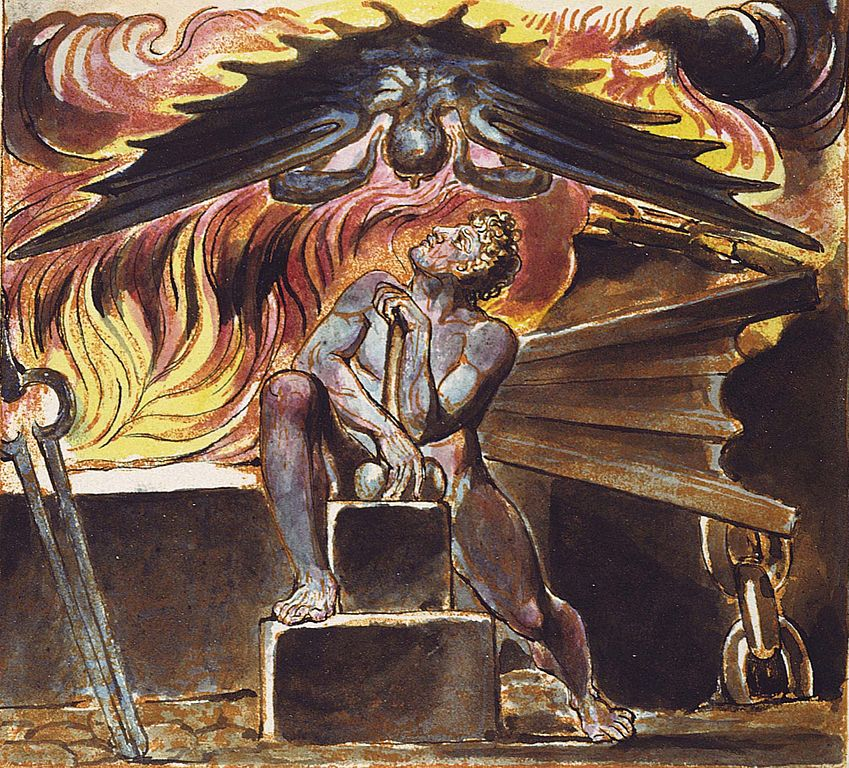
‘I saw no God, nor heard any, in a finite organical perception; but my senses discover’d the infinite in everything, and as I was then persuaded, and remain confirm’d, that the voice of honest indignation is the voice of God, I cared not for consequences, but wrote.’
The antimeme is like Marxism. Somewhere in his review of Sadly, Porn, Scott Alexander notes something strange:
“Teach hints that Marx actually had some good ideas, but they were mostly anti memes, so modern socialists have no idea what they were - he has nothing but contempt for the latter.”
Now, as anyone who has read The Last Psychiatrist knows, a sympathy for Marx in any capacity is surprising. By his own admission he is a “Hardcore Republican”, and his paranoia about socialism on his old blog was palpable. Why would such a person find any value at all in the work of Karl Marx?
I'll give you a clue: whatever it was, it was what Scott missed.
I think my first introduction to Slate Star Codex was Scott’s twin pieces Reactionary Philosophy in an Enormous Planetary Sized Nutshell and its companion piece the Anti-Reactionary FAQ. For those who aren’t aware they were a vast summary and critique piece to the Neoreactionary “movement”, mostly a group of bloggers aiming to resurrect anti-democratic ideas. I think there was some expectation that what he had done for the right there he would do for the left in some capacity. Which he did, he read Marx. Well, not Marx it turns out, but Karl Marx: A Very Short Introduction__. Written by the utilitarian philosopher, Peter Singer (originally I wrote “Brian Singer” there, Freud would have a field day with that).
Read the review if you like, it's very short. Suffice to say, Scott is looking for Marx’s secret sauce, this key to how to achieve Marx’s utopian communist society. And shockingly, it isn't there. Scott doesn't really interrogate why it isn't there, nor does he elaborate on what would even constitute a satisfactory answer. He follows Singer in gesturing at Hegel’s dialectics as effectively a substitute for God.
At one point in Sadly_, Porn_, Ed Teach gives the example of a friend who comes to you and says something along the lines of: “Look, I know you’re a stand-up guy, I want you to give it to me straight. I cheated on my girlfriend. Am I a bad person?” See, they’re bullshitting you, if you were the kind of person to say “You betrayed the trust of a loved one, you shouldn’t have done that.” they wouldn’t have come to you. They came looking for you to affirm what they wanted to, or at least not condemned them, which is the same.
That’s what Scott did. He had the time and energy to write two mini-novels about a group of right-wing bloggers but he had no interest in encountering something new, be he a titan of the Western Canon or not. So he went to a secondary source, a necessarily short one, written by someone whom he knew shared his worldview and prejudices to a minute degree. Even more maddeningly he went looking for the Solution To The Riddle Of History, a thing that he had some intuition didn't exist, and that he would have known Peter Singer hadn't found (because Singer isn't a commie). In other words, he went looking for something he knew didn't exist, on a map drawn by a guy he knew hadn't found what he was looking for, and loudly and proudly declared that he had not, in fact, found it.
He looked into the pond and saw his own reflection staring back at him. I like Scott generally and I know it’s unfair of me to rag on him for something he wrote ten years ago, but I really hope that the lack of self-awareness will be all the clearer for the passage of time.
The first “modern” (that is to say, non-religious) socialists were people like Saint-Simon and Charles Fourier, who provided these very detailed descriptions of the kind of ideal societies that they wanted to create. Everyone would live in big communal buildings that would combine working and living, with ample space for leisure too. Elaborately, ludicrously, insanely detailed descriptions of how people would live, literally down to the cookbooks and the combinations of personality types that would end up living in them.
It’s very easy to laugh at them for their ridiculousness, we call them the Utopian Socialists, but this is an insult- invented by Karl Marx himself, in the Manifesto. Which I guess is supposed to be some kind of an irony since his own vision was “utopian” in the broad sense of the term. But utopian meant something quite specific for Marx; Fourier and those like him supposed that their vision of an ideal society was so perfect and convincing that once it had been put onto paper, people would just naturally flock to it and adopt it as their form of life. They mostly spent their time looking for rich benefactors to fund their mad schemes, thinking that once one had been created, it would be so successful that the whole world would soon follow suit.
There are obvious problems with this. What if people think the Phalanstere isn’t all that sick? What if the genius of the Phalanstere is so subtle that most people can't appreciate it? What if there are people that benefit from us not living in Phalansteries? But at an even deeper level, it supposed that all of human history had been leading up to Fourier’s description of the Phalanstere. This is a species of madness.
Madness it may be, but this is also Scott's madness, which is why I'm ragging on him so much: this is the thing that he went looking for and didn't find in Marx. A description of an ideal society, so elaborate and complex and convincing, that anyone who heard it would be compelled to admit that it was superior. If only you have the right piece of knowledge, everything else will bow down before you. The fact that Marx specifically admonished him not to do this passed him by.
But Scott can be forgiven, after all, this is the same mistake generations of socialists have made as well. So what is this great insight from Marxism that I and Ed Teach see that everyone else doesn't, including Scott and most Marxists?
I suspect that like most of these great secrets, the answer is hiding in plain sight. In this case, it's maybe the most famous line Marx ever wrote, which is the Eleventh Thesis on Feuerbach. I won't quote it for you, because it's so cliché that its meaning will bounce off you, but I will explain its significance.
Marx set about to change the world from his bedroom in Soho and largely succeeded: he generated as much power as he could with words alone. It is not enough to have a grand vision of how the world should be, there are powerful interests that would prefer things to stay as they are. Therefore; you must unmask the liars, smash the idols that people bow down to. The Marxist terminology for this is “the Critique of Ideology”, and Marx vivisected the pretensions of Victorian liberalism as they expressed themselves in the economic orthodoxy of the day. The details of this, or whether Marx’s critique was even correct are not relevant to this essay, so I will skip them. It suffices to say that enough people found it convincing that even people who oppose him still say “He was great at criticising, but not so much at offering solutions.” This is a statement of pure nihilism, but never mind that.
Then comes the social and historical theory. This is where most Marxists go wrong, they think that the power of the theory lies in the fact that its description of the world is so perfect that it can be used as an Archimedean lever to overturn the whole social order. This isn't the case, though I think there are worse descriptions of the history of the world. I won’t go into to detail on Marxist economics or social theory, all you need to know is this; history proceeds through a series of necessary stages, with the primary mechanism of these changes being the struggle between classes.
Marxism is not some pristinely insightful detailed description of economics and society. It is a story, a story of the collective triumph of humanity as it comes into the “adulthood” of the species. Just like how we described the development of the human mind as it learns through suffering and pain, Marxism describes the development of human beings as a collective struggle that proceeds through violence and exploitation. Each stage of history in this process is necessary, and this vindicates the suffering of the past and the present. All of those slaves that suffered under the lash, those peasants slaughtered by rampaging knights, workers caught in the cogs of machinery, all of that sacrifice was needed to gain the understanding of ourselves that would be needed to exercise our collective agency. Beneath all the layers of Hegelian obscurantism, this is the substance of “dialectics”.
Even more importantly than this, it ties the life of the individual, the ordinary individual into this grand story of humanity. It makes the worker, the everyday person, into the protagonist of history. All of the petty injustices, humiliations, degradations suffered by everyone in the course of their lives, it isn’t just some meaningless tragedy, some absurd and cruel antiplot, it’s an essential part of the narrative of the transformation of humanity. But it also lays a heavy burden on the worker; the burden of history. It’s his job to vindicate all this suffering, this pain, to show that it wasn’t vain; that man is capable of exercising collective agency. And it does all this in a manner appropriate to the transformed world of the Enlightenment, the world of science and industry.
In this sense Marxism is not just a simple sigh of the oppressed; it is a word addressed to the agency that lies within every human, a reminder of what his destiny can be. You could almost call it a cosmic vision of human life, and people constantly point to its crypto-religious nature as some kind of an Enlightenment slur against it. When people call it a religion, what they're really saying is that it was persuasive, and that it was motivating. Motivating people to do ridiculous and terrible things perhaps, but take action nonetheless. Marxists themselves are partially responsible for this scorn, since most of them also denigrate religion, as though it were an insult to be called the soul of soulless conditions or the heart of a heartless world.
The final part of this puzzle is the utopia, this ridiculous mythical world that haunted the dreams of mediaeval chiliasts and trade unionists alike. That utopia that people mock, however false it was, was a source of power, not a weakness. Like we said at the beginning, it’s the fantasy that motivates one to act, a utopia is a collective fantasy capable of powering a movement for popular action. All of the most popular works on socialism in the 19th century were utopias. In Russia, the key book wasn’t anything by Marx, it was a dreary utopian novel, What is to be Done? The utopia wasn't even that much of a lie; he was pretty fastidious about not speculating himself about what this world would look like. He let other people do the fantasizing, he just left room for the fantasy within the system he created. This fantasy was capable of motivating people, it gave them the power to fight, to strike, to topple governments and empires. It gave them power to overlook their petty concerns for the common good.
And you need that fantasy, because the “rational” choice is always to do nothing, to bow down and accept one’s fate. Even unto the end, into the darkest pits of degradation, rational choice will take you down that path for the lack of any seemingly better alternative. In the Holocaust, there were groups of inmates, Sonderkommandos, that would perform the menial work of the camps. They were the ones who did the dirty work of clearing the bodies of their brothers out of the gas chambers, and their reward was merely to live another day. Let me judge them not, perhaps I would do the same; theirs was the “rational” choice, hopeless revolt or voluntary death were hardly more attractive options. There’s a profound lesson in that; that people should sell each other out for power, status, money, or sex is hardly surprising, but the real sad truth is that people will kill each other and debase themselves merely for that slightest and most meaningless of privileges; the right to be killed last.
What you need to save you from this fate is irrationality and madness, a certain kind of divine madness; the divine madness that possessed the men and women of the Sonderkommando at Treblinka that did mount an escape attempt. Seven hundred of them, a hundred survived the attempt and escaped. One in seven got out, not great but better odds than the gas chamber you’ll admit. The problem is that even if you know that resistance can work, you need the guy next to you to know that too. And he’s got the same problem with you too, he’s wondering what you’ll do. Call it game theory, or “Moloch” if you like, it’s all the same thing. The madness that you need to break out of this is- faith. Not faith in god, faith in the guy next you. I lie, those are the same thing. Faith, not in something that must be true, but in something that if it isn’t true, you’re fucked.
Marx wasn't a social scientist or a philosopher, he was a prophet, the most successful prophet in the last thirteen centuries. A prophet in the Old Testament sense; you smash the idols that the people bow down to, and then you remind them of their place in the world, their place in history, their mission. And then you arm them with a glorious vision of the Kingdom of Heaven, a powerful tool and a weapon that can motivate them to overcome the vast forces that are arrayed against them. The details of this cannot be explained in full in this essay. If you want to try and figure it out yourself you can start by interrogating the demon that you'll find squatting on the first hundred or so pages of Main Currents of Marxism.
When people say that old cliche, that communism can’t work because of Human Nature, what they are really saying is this; that such a way of living would put demands on people. And it’s true, if socialism is to be anything more than a form of sophisticated slavery then it needs to put demands on people. The problem that many socialists have is that they claim to want a just society, when they really want an easy society; slavery is hard work, but it has never required much in the practice of judgement.
The fate of Marxism certainly is a great warning to us all; the line between the truth that liberates you and the lie enslaves you is thin indeed. I don't want to write Marx off as purely innocent in this process. He said the bourgeoisie would come to resent his carbuncles; the peasantry of Ukraine certainly came to. Marxism, with its focus on class struggle, was built to justify action, including violent action. The hammer that can smash the idols can smash people’s skulls in as well.
But it must also be said: is there some mechanism, some string of words so powerful and ingenious that it can't be corrupted? No, because even if the words themselves are unimpeachable, they can simply be obfuscated and ignored, and commented upon over and over again until the original words have been buried under the weight of interpretation. The expectation that mere text can do otherwise is folly.
I mean, just look at what happened to Christianity.
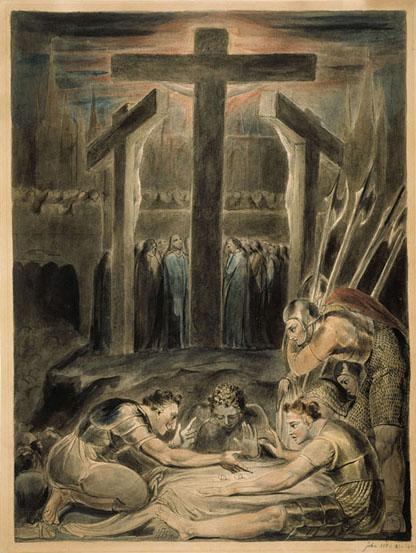
When he had so spoken, I beheld the Angel, who stretched out his arms embracing the flame of fire, and he was consumed, and arose as Elijah.
The antimeme is the cross.
Somewhere, Ed Teach remarks something along the lines that if you're seeing or hearing an injunction repeatedly and it isn't being followed, that line isn't a command, it's a defence.
The Cross is a pretty awful way to die, it turns out. When you're pinned to it, you have to use your core muscles to keep yourself upright. Without that, you slump forwards, compressing your abdomen, making you unable to breathe and you slowly asphyxiate. That's what actually kills you, not the nails in your wrists. If you're strong, you might be able to keep it up for about three days.
The cross is everywhere. That might be seen as unusual, that an instrument of torture would be displayed so prominently and so widely. Following Teach’s logic, that likely means the display of the cross is a defence against the meaning of the cross.
Christ seems to have understood something about the antimeme. For instance, why did Christ insist on speaking in parables? Fortunately, he tells us:
“And when he was alone, they that were about him with the twelve asked of him the parable.
And he said unto them, Unto you it is given to know the mystery of the kingdom of God: but unto them that are without, all these things are done in parables:
That seeing they may see, and not perceive; and hearing they may hear, and not understand; lest at any time they should be converted, and their sins should be forgiven them.”
The parables, therefore, are a kind of indirect communication. They reveal the truth, but without explaining it to people directly. This allows Jesus to avoid the trap of the Oracle at Delphi, that people only hear the part that they want to hear, this kind of cheap knowledge. With the parable, which has a meaning that they can’t immediately understand, they are forced to work through the logic for themselves, and come to a greater understanding.
Consider the parable of the Rich Man and the Vineyard. Jesus tells us the Kingdom of God is like a rich man who goes into the town in the morning looking for labourers and pays them $100 to work the rest of the day in his yard. He then goes at midday, and does the same thing again. Then, he goes in the late afternoon, and hires yet more workers for the rest of the day. The workers from earlier are mugged off that the rich man is paying the guys from later on in the day the same amount, so they’re doing less work for the same reward. The rich man tells them: “Get fucked oiks, I can do what I want with my money!”
The overt meaning of the parable is straightforward. God must always leave the door open to repentance, even to those who have committed sins, many sins, since if there’s some cut off-point those who go beyond that point have no reason to reform. It could never be good for God to want people to commit sins, he must give them a reason, a possibility to turn to the light. This inevitably means that some people who have lived their lives committing few sins will get the same reward as those who committed many.
But the deeper reading is this; that one cause of sin is itself the desire to be treated fairly. The workers are upset that they have been treated unfairly, perhaps this is even true. They’re upset that other people have received the pleasures of sin whilst they’ve been toiling in the vineyard, this tempts them to commit sin themselves. I mean, it would only be fair, right? A little sin, as a treat, the others get to do it.
So Christ is something of a psychoanalyst like Ed Teach. One’s desire for “specialness”, one’s desire for “justice” is self-serving. The grace of god is an unmerited gift, beyond the simple dictates of human justice, perhaps even beyond good and evil as we understand them.
People reject this message, it’s part of the anti-meme. That’s why Jesus has to speak in riddles, because they wouldn’t get it even if he told them the truth straightforwardly. Even the disciples, they get to hear what’s going on without parables but they struggle to understand it as well. Consider Peter, he’s the rock of the church, the first pope. How is he depicted in the bible?
From that time forth began Jesus to shew unto his disciples, how that he must go unto Jerusalem, and suffer many things of the elders and chief priests and scribes, and be killed, and be raised again the third day.
Then Peter took him, and began to rebuke him, saying, Be it far from thee, Lord: this shall not be unto thee.
But he turned, and said unto Peter, Get thee behind me, Satan__: thou art an offence unto me: for thou savourest not the things that be of God, but those that be of men.
Martin Luther declared that the pope was the Anti-Christ. He did this on the basis of impeccable (pun intended) biblical authority. Peter's problem is the “anti-meme”. He doesn't get it, in fact, none of them get it. Peter doesn't get it until his last day, out on the Appian Way. That’s why he rejects Christ three times. He just doesn’t understand the cross, why Jesus has to go to the cross.
Then said Jesus unto his disciples, If any man will come after me, let him deny himself, and take up his cross, and follow me.
For whosoever will save his life shall lose it: and whosoever will lose his life for my sake shall find it.
For what is a man profited, if he shall gain the whole world, and lose his own soul?
Not only did Jesus have to go to the cross, you have to as well! Hardly surprising that people should not understand this. Why should this be so?
Perhaps it’s a question of fairness, God can’t reasonably ask us to suffer if he hasn’t himself suffered. This is true, but the reverse is also true, we should suffer, because god suffers.
The pagan world believed that godliness consisted in not suffering. Christianity reversed this, godliness is suffering itself. The invitation to the cross is itself the invitation to take up the attributes of God, the imitation of Christ, the imitation of God himself. God isn’t god in spite of his suffering, but because of it, and your own suffering is a reflection of the power that’s latent in you.
Cur Deus Homo? God became man, that man might become god.
The power that was unlocked by Christ was the power of being spirit, the power of the self; this “divine madness” I’ve spoken of. The power of being unable to bow down before slave-drivers and emperors because you already serve a perfect master, and no man can serve two masters. The power not to be afraid of the lash or the cross because you are afraid of a far more real and terrifying fate; that of not being spirit, of losing your soul, of losing what power you have and becoming a mere tool of another man once again. The true Christian had the power to write his own story, even if the only other choice was suffering and death, in fact, because it meant choosing suffering and death.
Crowns and sceptres, gold and jewels, all these are, are the trappings of power. The reality of power, is to be crowned with thorns.
The ultimate form of power is not to deal out death, but to give out life. It is mercy, to show that the other is so far from being able to harm you that there's nothing he can do that you must respond to. It is also charity, to have such an effervescent vitality that one's parasites could never drag you down.
Clearly, suffering alone is not enough for greatness. It drags people down far more often than it raises people up. It is the capability to choose to suffer willingly that matters. What this mysterious power that allows some to rise above suffering, through suffering, I cannot say specifically. Whatever it is, it is something wholly unmerited, undeserved, a gift from heaven. I can only say that it is the thing that Christians hide their lack of understanding of beneath the word “grace”.
This is what Nietzsche saw in Christianity that all his subsequents fanboys missed, Slave Morality had more power in it than Master Morality, it wasn't merely a trick. The Masters, who could see nothing beyond themselves, fell over themselves everywhere before the cross. The Christian, in his will to complete self-abnegation, was prepared to put everything on the line in a way the Masters could never comprehend, it was a power that could not be taken from them by the old means. A revolution, a reformation of the human spirit that enabled it to ascend into ever greater and more splendid heights of deviousness and duplicity.
Nietzsche despised Christianity because of what had been done with it, what had been done with this gift from the heavens. As soon as Jesus died, the defences came up once again. It’s in the Bible itself. Historians generally agree that Mark was the earliest of the gospels, and that John was the latest. Read both descriptions of the crucifixion, and watch the suffering body of God become consumed by the pure passionless spirit.
Jesus warns about this in the gospels, repeatedly, and it didn’t help. The line between the lie that liberates you and the one that enslaves you is thin indeed. However inspiring the ideal is, altogether too soon it turns back on itself. The conversion of Constantine was the greatest act of recuperation in the history of the world. How do we explain this event?
The original elite of Rome was its aristocracy. Fattening themselves on their estates, their highest value was Otium, leisure. It turned out the Romans were pretty good at fighting, but this was the preserve of the citizens as a whole. Because they were good at fighting, they won wars, and this created enormous wealth for the aristocrats who seized the wealth, the vast tracts of land that were annexed. It also impoverished the commoners, who spent all their time fighting and not farming.
What emerged was a new class of generals who derived their power from the loyalty of their soldiers. Since the aristocrats’ power was their wealth, and not arms, it quickly became clear that these generals were the real power in the republic, which they usurped, repeatedly, leading to the formation of the Empire as a more stable form of government that enshrined the military as the core of the Roman state. Although the real power in the republic was now the princeps, they kept the republican traditions alive in name and appearance.
They didn't just keep the kayfabe up after the empire had been established, they kept believing it after the Roman Empire had fallen! The Senate continued to sit for a century after the deposition of Romulus Augustulus. Sidonius Apollinaris wonders in his letters if his children would rise to the rank of consul. That was in the 480s, years after the Western Empire had fallen; imagine you were living ten years after a Chinese army had seized DC, and you were still worrying that your kids would get into Harvard or get a job at the Washington Post.
The significance of Catholicism is that it was the escape pod that the old Roman Aristocracy used to eject from the exploding mothership of the Roman Empire. They had been gradually shut out of power by the military and by the fourth century, Senators couldn't hold military positions at all. Their administrative function had been usurped by an imperial bureaucracy that was an invention of Diocletian. All they could do was sit on their estates, read Cicero, abuse their slaves and have orgies.
But there was this new organisation, a parallel structure across the whole breadth of the empire. Its power is based on persuasion, on rhetoric, which is convenient; that's the art those aristocrats had been perfecting for hundreds of years. But they're going to have to make some renovations to make this new home fit to live in. In fact, they're going to cut Jesus’ corpse open buffalo bill style, and wear his skin like a suit.
The first problem is the language of the bible itself: it’s rustic, vulgar, Common Greek and unbefitting of a great religion, it must be turned into elegant, refined Latin. This is going to be very convenient with the passage of time as the language of Europe degenerates from the Vulgar Latin spoken by the people into the Romance languages. When this occurs, ordinary people become cut off from the text of the bible, and it becomes the preserve of a theocratic elite. It’s ridiculous, because the Vulgate is itself a translation, so it’s no more authentic than any vernacular bible, but never mind that.
In fact, a whole body of ritual must be developed that outsources the functions of religion to an elite. The church, as a bureaucratic institution, takes up the job of religion as such, so that the laity don’t have to worry their pretty little heads about it. God is outsourced, he’s alienated into the Church structure. Where Christ the Son acted as the intermediary between Man and the Father, now the Visible Church will do so i.e. the thing that’s made of men, man will act as intermediary on behalf on Man, with all the abuses that inevitably come of such an arrangement, indulgences and the like.
The vision of Christianity has a pleasing simplicity that anyone can understand, this will not do. So you're going to integrate the vast and sophisticated body of Greek philosophy - even when those things are in contradiction with one another. Theology was created as a body of knowledge to rob these existential questions of their significance to the laity. Take our vision of the afterlife; when you die, your soul drifts off from your body into fluffy white clouds. Jesus was pretty clear about bodily resurrection; your soul will rest until the day of judgement. Your vision of heaven has nothing to do with Jesus and everything to do with the Phaedo.
The apocalypse is right out. It's too incendiary. Jesus had proclaimed it would come within the lifetime of his followers, but it has to be contained in some way. The Church interprets the apocalypse as something that happens outside of history, outside of time. You have to strip them of that fantasy of destruction, lest they try to make it real.
Eventually, the gradual reappropriation of power by the civilian aristocrats could not be ignored by the military emperors. Constantine, seeing an opportunity, adopted Christianity to shore up his support among a primarily urban elite class, and in so doing, the church became a part of the imperial structure of the Roman Empire, a Roman church, though it would outlast that particular edifice of power.
In this way the demon that Christ put into man was put into a box where it could be used as and when needed. In fact a new kind of power had been created for the rulers, this soul-power could be used to control people as well as liberate them. The Bible warned about this, and it still wasn't enough;
MYSTERY, BABYLON THE GREAT, MOTHER OF WHORES, AND THE ABOMINATIONS OF THE EARTH
Babylon, it says - Babylon, with seven faces, upon seven hills.
Everything that lives is holy
Back at the beginning, I said that the human mind is naturally solipsistic. That’s not quite true, there’s one part of your mind that’s irreducibly from the other, which is language. Language is something imposed upon you by others, as a child, this thing that has to be beaten into you before you can express yourself in it. It is the ultimate meme; once it’s there, you can’t get rid of it, because you think in language. It’s a part of your being so really you're not all that separate from other people. Not the same as other people, but connected and separate at once, in tension, in contradiction with them. All of human life is a battle between these two forces, individual and collective; and neither side is right. To lack one side, would be to lack humanity in some crucial sense.
Just as a body, though one, has many parts, but all its many parts form one body, so it is with Christ. For we were all baptised by one Spirit so as to form one body—whether Jews or Gentiles, slave or free—and we were all given the one Spirit to drink. Even so the body is not made up of one part but of many.
Now if the foot should say, “Because I am not a hand, I do not belong to the body,” it would not for that reason stop being part of the body. And if the ear should say, “Because I am not an eye, I do not belong to the body,” it would not for that reason stop being part of the body. If the whole body were an eye, where would the sense of hearing be? If the whole body were an ear, where would the sense of smell be? But in fact God has placed the parts in the body, every one of them, just as he wanted them to be. If they were all one part, where would the body be? As it is, there are many parts, but one body.
The eye cannot say to the hand, “I don’t need you!” And the head cannot say to the feet, “I don’t need you!” On the contrary, those parts of the body that seem to be weaker are indispensable, and the parts that we think are less honorable we treat with special honor. And the parts that are unpresentable are treated with special modesty, while our presentable parts need no special treatment. But God has put the body together, giving greater honor to the parts that lacked it, so that there should be no division in the body, but that its parts should have equal concern for each other. If one part suffers, every part suffers with it; if one part is honored, every part rejoices with it.
Now you are the body of Christ, and each one of you is a part of it.
A private language, a language understood by one person, is meaningless and therefore not really language at all; it’s just madness, sound and fury, signifying nothing. To lie, to abuse language, is to commit treachery in the sense of Dante, to voluntarily cut oneself off from the body, and to voluntarily mutilate oneself. In the end the deceiver mostly deceives himself.
A threefold knot is not quickly broken: the power of ordinary people lies in their collective strength. In that sense it relies on their trust, on their dependency on one another. In this way power and dependency are not so separate, not opposites of one another.
Look up! Look up! O citizen of London, enlarge thy countenance!
I have written long enough that I am compelled to justify my purpose.
Liberalism, socialism, conservatism, fascism, “Christianity”, atheism, “science”, to name but a few, all of these have proven to be idols, excuses to avoid responsibility, reasons to avoid loving the person next to you.
I don’t feel hate for the people I’ve described, what I feel is pain. Pain that my brothers and sisters cannot rise above these visions of life. Pain at what people inflict on others, and on themselves.
But it is clear that it is not enough pain to do much more than write this review, so everything that has been said must only be my own excuse to cut myself off from others.
Truth can never be told so as to be understood and not to be believed
Narcissism is not a psychological syndrome or a social phenomenon, but the existential condition of human beings. Believers or not we are all the children of an absent Father; it is no surprise that we should turn inwards in defence against a cruel, hostile and arbitrary world.
But there is not only the desire to love oneself, but also the desire to love another, to transcend, and to negate. As Nietzsche wrote:
“If men were moved solely by impulse and self-interest they would be content, like other animals, simply to survive. Nature knows no will-to-power, only a will-to-live. With man, needs become desires; even the acquisitive enterprise has a spiritual dimension, which makes men want more than they need. This is why it is useless to urge men to renounce material pleasures in favor of a more spiritual existence. It is precisely the spiritual side of human experience that makes men want more than is good for them. It is equally useless to urge men to be governed, in the interest of their survival as a species, strictly by their biological needs.”
Both Nietzsche and Christ would agree that only those of us who still despise ourselves have the capacity to change, to be anything other than what we are. In the same way, only a man who despises the world can hope to change it. But just as one who despises himself esteems himself as a despiser, the man who hates the world loves it for the thing in it that goes beyond it: its capacity to be changed.
Marxism and Christianity, I chose them as two of history's most famous and profound fantasies, but there are many more that could have been picked. I hope it’s been clear that these aren’t things you should adopt yourself in some crude way, too much of their power has been taken from them by this point.
An enslaving fantasy promises to make your life simpler; it promises to take burdens off of you, it entices you to outsource, to alienate yourself. These are the lies of the Grand Inquisitor. It never makes life easier, it only simplifies your world to the point that you cannot understand it and you become helpless.
A liberating fantasy places a burden upon you, a load that once born is no burden at all; a yoke that is easy, a burden that is light. It’s something that allows you to see the complexities of the world, the things you don’t want to see but are no less true for that. A lie that makes you understand and in that sense is no lie at all.
It is a common mistake to think that Richard Dawkins invented the idea of memetics. The real inventor was Friedrich Engels, consider his obituary for Bruno Bauer. The whole thing is worth reading, but it ends:
“So it happened that, among the thousands of prophets and preachers in the desert that filled that period of countless religious novations, the founders of Christianity alone met with success. Not only Palestine, but the entire Orient swarmed with such founders of religions, and between them there raged what can be called a Darwinian struggle for ideological existence. Thanks mainly to the elements mentioned above, Christianity won the day. How it gradually developed its character of world religion by natural selection in the struggle of sects against one another and against the pagan world is taught in detail by the history of the Church in the first three centuries.”
We live in an era of psychic and ideological chaos. The sheen of established ideas has never been worn thinner, but they vegetate and rot in place of no better alternative. As the opportunities of the present exhaust themselves a civilisation that sees hope only in progress in the crudest and most meaningless sense of the word will never be able muster the will to wrench itself from the path that it is on.
But all of these things; the chaos, psychic or social or otherwise is the process that brings the new into being, and even in destruction lies the hope of rebuilding better than before. Words, words, words, an avalanche of meaningless words bombards us in this nightmare-filled sleep, impossible dreams and fantastic shadowy images and prophecies of a monstrous future. But through all this we await the Word that cannot go unheeded, the call that will rouse us from this sleep, a proclamation into the heart of existence: the grace that will redeem us to freedom, or at least to the dignity of a higher form of servitude.
The most sublime act is to set another before you
At the beginning of this essay, I promised that I would give you the antimeme, and here it is in a single three word sentence:
“Life is suffering”
I know that it seems like a truism and a banality because it's so simple. And it is a banality, that's what makes it the antimeme, that in spite of its simplicity humanity runs from it. Many people won't believe it because they think it's sophistry, but the irony is they believe that because they are expecting something more sophisticated. They still think that there is some combination of letters that could be put between those quotation marks, so long, and so ingenious, that it could prove this truism to be false.
Some people will say that they already knew this, but deep down in the core of their being they believe it to be false; their actions, or lack of it, their revealed preferences, show so. Though those letters may be rippling around your cerebral cortex, your brain stem recoils from their meaning as it would from a burning flame.
It hides in plain sight, in our greatest myths and stories. It is the proclamation of every messiah, and it is why all messiahs are failed messiahs, because every religion is built in denial of it. Some will say that it's “Just Buddhism” or “Secularised Calvinism” as though those labels can bury the truth of what hides beneath them.
It's why we valorize the spirit instead of the body, even today, because only the body suffers. It's why people scorn their bodies as wretched meat puppets, and in so doing they turn their bodies into prisons for their minds. In turn the collective body of humanity becomes a prison too in denial of this fact, cell by cell divided, and thus, conquered. It's why the Church is the Antichrist, and no-one did less for the Working Class than the Marxists.
Some will say that it is a pessimistic message, they say this because in their hearts they believe it to be false. They will say it is an argument in favour of death, for the same reason. Death isn't pain, but the cessation of pain, the most primordial and most powerful defence.
Our civilization, not in spite but because of its great achievements, is built upon massive denial of this fact. That's why our technology and our culture enslaves us, not liberates us, because it helps to isolate us from this reality into an artificial world of projections where we can only be tormented by the pale reflections of our own desires.
This essay is not a long chain of logically connected arguments, it is a continuous repetition of a single thought. It’s in that story I gave you at the beginning, the mind interprets pain as failure, but it learns and develops through pain. The mind has an upward path but it cannot help but turn away from it to another of stagnation and decay, save for some mysterious force: God, or Fortune. But this is just a myth in the language of psychology, you could call it Narcissism but also Original Sin, or the Death Drive, or simply, entropy. It is all the same thing, lenses, myths, stories. In fact, it is the story of stories. The only question you have to ask yourself in your story is : Quo Vadis? - Where are you going?
Do you think you can pay the price to live this truth? The burden that would have to be born is unimaginable; forget about the suffering of the living, remember those billions of souls down there in the darkness, could you write their ending? Those whose names have been worn from their gravestones by wind and rain, those who were born and died without names? To feel the collective pain of humanity across time, the massive responsibility that you have; maybe it’s best that one forgets it.
Only if we could embrace it, we could be as we were supposed to be, which is to say, perfect. Even if perfection is impossible and never to arrive, it is the pursuit of perfection that creates excellence. The things that seem the hardest of all when we're young are in adulthood the easiest and most trivial of things. Perhaps one day this heaviest of truths will become the simplest and lightest of burdens, and all can look up from their cross and cry out “It is accomplished!”.
Some of you will think parts of this essay, or even the whole of it, are a joke. They're right, not because those parts aren't true, but because they are. That one sentence is the punchline of the universe. Not a bitter or nasty or insulting joke, a pure joke that if you got it, you would be filled with unending laughter for the rest of your life. And you don't get it. And neither do I.
Let me be clear in case you are deceived, I do not believe I am some great genius for having recognised this. The entire history of thought is the history of the discovery and the forgetfulness of this idea. Writers have found it and forgotten it in the course of writing single books, sentences even. It did not come to me in some moment of revelation, it has taken long years of reading and observation to put it this way, and I hope that has been clear from this essay. All I can say to you is: Tolle, Lege, before I forget it again myself.
I will round this off by saying something in favour of forgetfulness, narcissism, and death. Defences exist because they’re needed, because we haven’t learned a better way to deal with the world. Consider that even death may be defending you against an even worse fate, that doesn’t mean that you shouldn’t fear death or that you should run to it, but that it may be the least bad prospect in the long run. If nothing else, oblivion saves one from Dante's hell of being oneself forever, of being without becoming. Always remember, death is nothing but the forgetfulness of self, in that sense, you already die every day. These defences belong to the childhood of the individual, and the species too. They can only be dispensed with when one is ready for them to be substituted by the exercise of judgement and action.
And let me give a stern warning to anyone who read this story and believed it. Remember that I said that paranoia was a symptom of Narcissism, that overwhelming feeling of the unbearable expectations of others, of the things they can do to you. This story is also a form of paranoia, even if it's true. Many of the sad figures referenced in this essay are afflicted by it. And it is paranoia- even if they are out to get you.
It is not a pessimistic message, but optimism. For the atheist, the alienation of reason is the call for it to be exercised by the individual, and for the Christian, if churches are the tombs of God, that is because God is now out in the world. As far as I am concerned, these are simply two ways of saying the same thing. However bleak conditions become, we will still have the freedom to be tested and therefore, the freedom to be something at all.
I'm going to end with a quote from a passage you've heard many times before. Through long misuse, the meaning and the power of the passage has been lost, but even across two thousand years words can shine with new light. I don't believe in god; god is just projection, defences, bullshit, but I feel this truth all the more strongly for my lack of faith, because it is the price of having a soul.
You have heard that it was said, ‘Love your neighbour and hate your enemy.’ But I tell you, love your enemies and pray for those who persecute you, that you may be children of your Father in heaven. He causes his sun to rise on the evil and the good, and sends rain on the righteous and the unrighteous. If you love those who love you, what reward will you get? Are not even the tax collectors doing that? And if you greet only your own people, what are you doing more than others? Do not even pagans do that? Be perfect, therefore, as your heavenly Father is perfect.
This Angel, who is now become a Devil, is my particular friend. We often read the Bible together in its infernal or diabolical sense, which the world shall have if they behave well
Some may have noticed something important about this essay. Consider the below passage:
A dreamer in analysis assumes the analyst knows what the dream will mean. Of course, the analyst might not know. But by allowing - encouraging - the belief that he, the analyst, is the person who absolutely would know but doesn’t tell it, the dreamer can act on it. The dreamer might never know what it meant, but something changes. You may find yourself tonight having a dream and thinking, I wonder what the author of this odd book on pornography would think of my dream? He would know what it means. And by knowing that I know what it means, you could begin to suspect some of what it means because its meaning is knowable - and you will act. And the reason you think I would know what it meant is that you dreamt it with me in mind. But if I told you what it meant, even on the outside chance I was dead on, you would hear it whatever perverted way you needed to but attribute that meaning to me, you would use my authority to defend against the true interpretation. You would be much more satisfied, consider me a genius, and everyone else would be miserable. The analysis failed, but the therapy was a big success. That’ll be $500, please.
The erudition, the obscurantism, the domineering tone, all these things create a fantasy of a hidden truth for you to find. But like a parable, if you do the work of thinking it through you will get there too because the work is the part that matters.
I came across an old passage on the blog that puts the whole book into context:
‘Therapists should understand the imaginary transference but not play into it, and instead stay outside, an abstraction, an inexplicable mind that already knows all the answers but doesn't tell them (because telling them is inside the transference.) Whose silence is taken by the patient to mean something-- and the answer to the patient's problem is how they interpreted that silence…
The moment the therapist speaks, he stops being a symbol of knowledge and becomes a person to be fooled (or loved or devalued or punished or whatever the nature of that particular transference is.) A post, a story, and the (mostly) silent therapist are the opposite: a screen to project on so that patient or reader can then ask, why does this make me feel like that? (Or, more rigorously: "what do you want from me?")...
For these reasons, I am becoming convinced that the only real way to "personal growth" outside of direct action is through careful study of fiction. Of course stories may have an intended meaning, but a well written story allows you to ask not just "what does the story mean?" but "why do I think that this is what the story means?" As in The Second Story Of Echo And Narcissus: "The story is the pool... what do you see in it? It's a reflection and a projection.’
The significance of the fiction is that by definition it does not involve real people, it is just you Alone with the silence of the text, of the analyst, of God. The point is not what the book means, the point is your response to the book. Having written forty thousand words of involuntary confession myself, I’ll certainly have a lot to think about.
The silence of God? Is that strange? Remember that quote from the beginning:
“Will this book help me learn more about myself?’ Ugh. The whole earth is sick of your search for knowledge. In here you will not find explanations, I am not offering you information, this is an attempt to destroy the wisdom of the wise and frustrate the intelligence of the intelligent.”
Take a look at Isaiah 29:14;
“Therefore once more I will astound these people
with wonder upon wonder;
the wisdom of the wise will perish,
the intelligence of the intelligent will vanish.”
God's answer is in his silence, in how we interpret his silence.
Have I screwed up by explaining these things for you, even partially? Maybe I'm just wrong and this whole thing is bullshit, but if I'm right, have I created another kind of Knowledge, outsourced your reading, written another useless secondary source, erected another authority to bow down to? By interpreting for you, have I given you a Delphic reading, maimed you, crippled your ability to act?
You don't have to worry about any of that because I've been lying to you; I haven't actually read Sadly, Porn. I read the first hundred pages of it when it came out, but I forgot most of what was said, and so I just assumed the kind of stuff that was in the book when I wrote this, the quotes are cribbed from comments and other reviews. Maybe you should read the book yourself. Anyway, that’ll be $2,500 please.
P.S. Anyone who reads this section without having finished the piece, either by having skipped to the end or because someone has posted it into the comments, will be boiled in a cauldron of my piss by ten demons for eternity.