For years I've wanted to open a restaurant. The plan goes like this: Every Saturday morning I'll put a folding table up in my front yard and sell vegetables from my garden and eggs from my chickens. Once people are in the habit of coming by, I'll add some baked goods. If those catch on, I'll throw up a picnic table and serve breakfast. And I'll keep going until I have a small, part time restaurant on my lawn. Each step will be small and low risk. If people don't come by, I'll stop and move on to something else. It's a risk free way to pursue my dream.
Unfortunately, I'd be dragged away to an HOA gulag on day one.
In Strong Towns, Charles Marohn points out that this sort of incremental progress used to be the driving force behind all city development. Things we would identify as 'businesses' like hotels, restaurants and stores would grow out of someone's house. If the business failed the owner would shrug and turn the space back into a living room. Or rent it out. Or turn it into a workshop. Because no one cared what you did with your house.
Modern America does things slightly differently. We build stores, malls, and entire neighborhoods to their finished state without worrying too much about the outcome. If a big box store fails, we just close it. If no one moves into a development, the developer slashes prices and takes a loss. The city, who subsidizes these places and is on the hook for maintaining them, loses some money, but that doesn't seem like a huge deal. Marohn points out here that as a culture, we're not used to worrying about resources; we've had too much slack for too long. The book doesn't provide much to back up this assertion, but "we've had too much slack for too long" feels like it could be our national motto right now, so I bought it.
Everything we do build gets frozen in place. Not just with zoning regulations, but with environmental regulations, referendums, and every other tool of vetocracy. Everything is either undeveloped or in its final state; there's no middle ground.
This may not be a universal intuition, but "take a complex adaptive system like a city and start removing degrees of freedom," seems like it might end badly.
Marohn spends the first forty pages convincing the reader that the American system of urban development is a departure from historical norms. He shows off several examples of how incremental growth occurred in the past, then explains that automobiles allowed us to change the fundamental structure of cities by allowing people who work in the city center to live on the outskirts, devaluing the neighborhoods near the core. I found myself nodding along. This at least matches my personal observations. The most car friendly cities I've lived in have a ring of decaying neighborhoods that suburban commuters speed by on the way to the city core.
After making this case, the book goes straight into telling the reader that most American cities are heading towards bankruptcy. I'm not exaggerating. The most apocalyptic quote was:
"Detroit is not some strange anomaly. It's just early. It's just a couple of decades ahead of everyplace else."
Marohn's case is simple: a city needs to take in as much money from property taxes as it spends on maintenance, and not only are US cities not meeting this bar, they're not even trying. Not because the people running them are corrupt or incompetent, but because 'making money' isn't an intuitive thing to optimize for if you're running a city. After all, isn't a city government's primary goal to make sure the citizens are happy and taken care of? It'd be career suicide to say "we're not going to repave your roads because your neighbourhood is a huge financial drain on the rest of the city." But if your city is operating at a loss you need to write off certain neighborhoods (or increase taxes, which is an equally popular way of making ends meet).
(This section reminded me of the culture at Google. If you want to get promoted you work on one of the big flashy projects. No one is going around saying "we could make a new chat service, but what would be really great is to allocate those person-hours to improving our core services.")
Every time the government does something like add a lane to a highway, they have added a permanent, ongoing expense to the city. This means that, in order to be sustainable, improvements to the highway need to either increase property values enough that the road pays for itself or city managers need to raise taxes somewhere. Even a one time cost like resurfacing a road or cleaning up garbage has to cause a corresponding bump in revenue or that city will never get rid of the deficit.
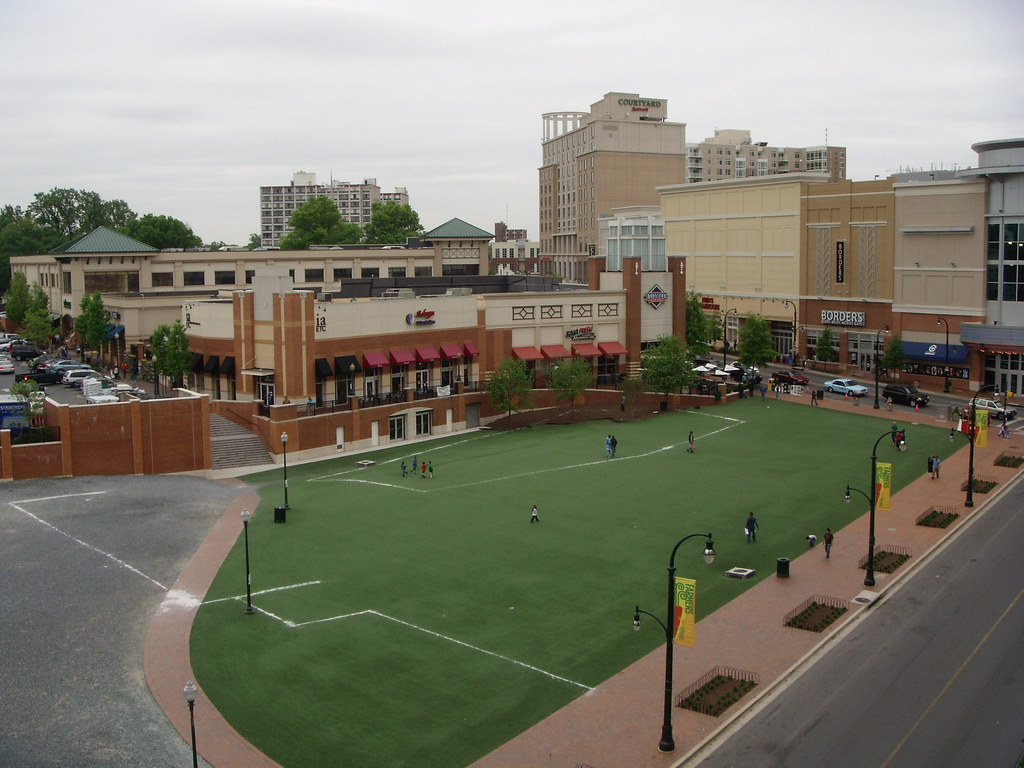
This insight floored me. It never occurred to me to think about where the money from city projects came from. Building roads and parks is just what the city did, like some benevolent fairy reaching down to make sure the lives of rich white folks ran smoothly. Thinking back on the construction projects I've seen, they range from improving home values marginally (we tore down this building and replaced it with a field of astroturf!) to actively hurting city income (we tore down hundreds of houses to run a noisy highway across the county so people can get to work five minutes faster!). Thinking about it this way, I started to wonder how our cities have lasted as long as they have.
Marohn's answer to this question is two-fold. The first one is pretty obvious: cities are taking on unsustainable levels of debt. He explains why city management might make this mistake, why lenders might still finance it, and why debt is bad in certain places and not in others. This section felt unnecessary; I'd be more surprised if cities weren't taking out unsustainable levels of debt. As it was, I read this section thinking "yeah, that's what people do when they don't have enough money."
The second answer is more interesting: Cities are financing themselves through unsustainable growth. Because maintenance costs don't really become significant for 20 or 30 years, a city can increase its tax base by building new developments without paying any immediate cost. But as the pipes and roads age, the maintenance costs of those developments go up while the property values go down. Why wouldn't they? We keep our neighborhoods static, so there are limited ways people can improve the values of their property. And this same unsustainable growth increases the supply of housing, further preventing home prices from rising. Thus, every development the city builds eventually becomes a liability, which prompts more growth, etc.
(I would have loved it if he had talked about the developer perspective. It seems like a good way to make money would be to create built-to-completion neighborhoods that look as impressive as possible while saving money by not building them to last. I haven't really heard of anyone actually checking up on the reputation of the people who built their house, and besides, if it takes ten years for your houses to fall apart you can probably sell a heck of a lot of them before anyone caches on. I don't know if anyone is doing this persay, but I'd be surprised if they weren't.)
The fact that city planners seem to value the least cost efficient properties further exacerbates the unsustainable growth problem. Franchises and big box stores seem flashy, but are, according to Marohn, extremely inefficient when you consider their infrastructure use relative to their tax revenue. Assuming acreage is a decent proxy for maintenance costs (which I'm not sure I fully understand, but I'll trust him here) he gives us the tax revenue per acre of various city sites. Big box stores and chains come in last; areas that are considered 'blighted' and tend to be targeted for redevelopment are some of the highest performing properties.
All this taken together paints a pretty grim picture for our future. If Marohn is correct, cities have been continuously adding on liability for decades and only staving it off with constant growth. At some point, the accumulated maintenance cost will outpace a city's ability to grow and the city will be forced to either face bankruptcy or contract, abandoning some neighborhoods to neglect.
So all our cities are going bankrupt and we're going to live in a decaying suburban hellscape. What should we do? Marohn has some suggestions.
Allow cities greater autonomy to govern themselves. Stop building new infrastructure. Identify what the highest earning parts of the city are, focus on them, and commit to abandoning low performance areas (which, to him, means areas that produce the least tax revenue relative to maintenance expenses). Limit the debt cities can take on. Revitalize old or vacant areas by letting people use them however they want. And get rid of regulations and zoning rules that aren't absolutely essential.
These suggestions encompass the later quarter of the book and are clearly well thought out, but I'm not going to go too in depth with them for two reasons: One, I think a lot of the solutions are on a "once you realize you're in a hole, stop digging" level. And two, if you're in a position to actually implement any of the changes he suggests, you should probably read the book yourself. That being said, if you're one of those few who are not in a position to say, pass a state law limiting how much debt cities can take on, there are a number of non-government organizations trying to improve cities at the community level. There is a tactical urbanism movement that focuses around small scale interventions and has a Wikipedia page that is mostly a list of grass root projects that can improve the city. There is also the Better Block Foundation that focuses on improving urban spaces, and the Strong Towns movement that focuses on building prosperity (to Marohn's credit he does spend the book beating you over the head with how awesome his org is.)
The beauty of Marohn's suggestions is that they continue to be applicable even once his predictions start becoming true. Unlike global warming, where once you can see the most damaging effects it's already too late, a lot of what he describes here can be employed at any point during urban decay. While I think addressing these issues before they become glaring problems is unlikely (because why would we ever address a problem before we start experiencing the consequences), it's nice to know that when this does start becoming obvious to people I'll have a book to lend them.
The last section of this book shifts in tone from practical to Marohn's feelings about the actual quality of life in a suburb vs an urban environment. He argues that by abandoning typical development patterns we've also warped our social structure, that suburbs are just not conducive to a healthy tight-knit community. I'm sure it depends on the suburb, people and the culture, but I don't think he's wrong that something in how we relate to our neighbors has changed.
Towards the end Marohn describes his experience moving from a suburb to a healthy urban area. One passage in particular resonated with me so deeply I wanted to include it in its entirety:
"At the old house, the girls were stuck biking the driveway, maybe the cul-de-sac. Anything unaccompanied beyond that risked tragedy with a speeding vehicle and a moment of inattention. And even if they had ventured further, there was no place to go. Their friends were likewise spread across the area, brought together outside of school only through scheduled play dates and long car rides.
The new neighborhood is full of kids. A city park is a mere block away. The girls have learned to navigate the neighborhood on their own, as a life skill I took for granted yet few of their peers seem to possess. They can go to the store or the library or, when they scrounge up some money, downtown for an icecream. I'm watching them grow into the kind of confident people I always hoped they would be.
The move has saved me five hours a week of commuting. Instead of being stuck behind the wheel, I walk or bike to work. And to get groceries. And to the hardware store. And anyplace else I can reasonably get to, even in the winter. I go days without driving, and I've felt myself become more relaxed, less stressed, as a result.
The most consequential change with the move has been adding new neighbors to my life."
He continues:
"I'm an introvert who enjoys long walks alone, avoids social gatherings where possible, and can't remember names. None of that has kept me from getting to know all my immediate neighbors. It's almost impossible not to as we run into them all the time. I know their kids, their pets, and some of their plants. When we're out of town, they watch our house. We do likewise to them."
I grew up in a suburb that is somewhere in between suburban sprawl and Marohn's ideal. We knew a few kids in the neighborhood and could, if you were tenacious, walk to the store. But even so, there's something about suburbs I find isolating. The houses are their own islands, separated by space and fences and trees. It doesn't feel like an environment designed to foster human connection, but rather to squash it.
The life Marohn describes seems idyllic enough to me that I feel almost cheated by my lifelong existence in the suburbs. Reading this book, I have to wonder if some of the social decay we're seeing now is the result of the transition from living in tight knit communities to living in our own fortress-like cookie-cutter houses, surrounded by a green grass moat trimmed exactly to HOA specifications.