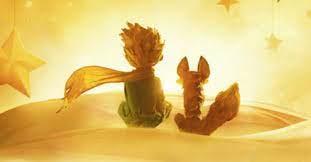
The Little Prince by Antoine de Saint-Exupéry
Grown-ups can’t perceive important things; they look at figures, facts, politics, and rationale while never eyeing the significant details. That is the theme of Antoine de Saint-Exupéry’s 1943 novella ‘The Little Prince’.
The book focuses on our narrating, unnamed aviator who crashes right in the middle of the Sahara with only 8 days’ worth of water supply and no rescue in sight. He is met with a surprise of what appears to be a young boy nicknamed “the little prince”.
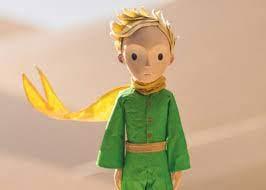
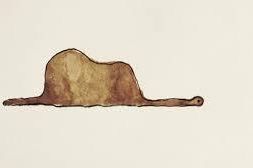
Our hero makes keen observations on the nature of adults. One portrait drawn by the pilot as a child appears as a hat to the grown-ups. It’s actually a picture of an elephant being digested by a boa constrictor, correctly identified by the prince.
The book is short and sweet taking less than 2 hours for the median reader to complete. It chronicles the little prince’s journey across the planets and stars toward Earth. Heartbroken by a vain rose, who was prideful, pretentious, and caused a deep strain on him. He was tired, distanced, and felt under her control. Deciding to leave the tiny asteroid he called home, he came to explore the rest of the vast, awe-inspiring, and mysterious universe.
The author doesn’t expand on the journeys to each planet the tiny royalty visits. We move forward and forward to each end without knowing the means. Thus, two unreliable narrators are created, the aviator and the prince according to the aviator.
We are never given much dialogue or specific accounts. We are told a story from an unreliable source recounting stories from another unreliable source recounted by the author. Saint-Exupéry focuses on the allegorical and often has poetic narrations and observations. We see a world of flawed individuals through a shaky narrator.
The story tells us about the differences between adults and children. As a child, the narrator hoped to become an artist, only to have that dream crushed and have him turned into a pilot instead. He is much older and much more jaded toward society. Compared to the prince, who is carefree and prefers to see the innate beauty of the universe, he is more conservative. Compared to the grown-ups in the story, he remembers what really matters.
We see the prince going on a journey to different planets, each inhabited by one close-minded adult. We meet a king with no subjects commanding only followable rules, a biting commentary on modern politics. We meet a narcissistic man who takes great pleasure in being the most admirable man on his planet. He literally cannot hear the prince, instead talking over him. He is the epitome of self-centeredness, nothing like the little prince. We meet a drunkard who drinks to forget the shame of drinking succumbing to his own crippling addictions. We meet a businessman full of materialism counting the stars to own them without knowing their beauty. He doesn’t see their twinkles, their awe-inspiring formation of unending brightness, instead, they are numbers and numbers only. We meet a lamplighter who turns a lamp on and off every 30 seconds. He is of importance to the prince as the lamp dictates the Sun. The Sun and its fall and rise are of tremendous beauty to the small man. But the lamplighter sees none of it. Akin to a zombie, he blindly follows orders and enjoys none of it. He acts as a critique of the system that perpetuates slave labor with no rest or beauty in sight. Last of all satires of adults is the elderly geographer. He is the most rational of the adults representing technocracy, specialization, and academia, and later guides the prince on his journey.
Most adults in the book take things literally. When children see predator and prey, adults see a hat. What is seen as “silly” to most adults can serve as a lifelong bond for a child. The only adult with his wit and curiosity intact is the narrator, yet still acts as a conformist. The prince’s rose might not have been special in the physical sense, but she is in her meaning to the prince. She was as the fox would call “tamed”. Our eyes are shallow compared to our hearts.
The prince takes on a form similar to that of a child in appearance and heart, yet he is wise. He points out the nature of “becoming serious” as one grows older. Getting older requires changes, but we will never lose our humanity, our awe, our curiosity, and our hearts.
In spite of our ever-changing world, we can still make it. We can still remember the little prince. We shall understand that years and decades from now. Getting older requires us to forget, but we shall never forget ‘The Little Prince’. As Antoine de Saint-Exupéry once said, “It is only with the heart that one can see rightly; what is essential is invisible to the eye.”