The Machiavellians by James Burnham
James Burnham followed an almost comically 20th century intellectual trajectory. Born in 1905, he studied philosophy at Princeton then moved to Oxford where he learned Old English from Tolkien. By 1925 he was a professor at NYU. He was raised Catholic, converted to Marxism, became friends with Trotsky, broke with him over doctrinal disagreements then rejected Marxism to become a vehement anti-Marxist. During the war he joined the OSS and urged it to prepare itself for a post-war environment where communism was America’s primary enemy. He was involved in the early years of the CIA, helped found the National Review and spent the rest of his life drifting further and further to the right. Ronald Reagan awarded him the Presidential medal of freedom in 1983, and he died four years later: a once influential thinker largely forgotten outside conservative circles.
Today he’s remembered for two books written in his post-Marxist, pre-National Review phase. The first, The Managerial Revolution: What is Happening in the World was published in 1941 and became a world-wide bestseller but lost some of its cachet when Burnham’s confident prediction that Germany and Japan would win World War II did not pan out. It’s often cited as a key influence on Orwell when he was writing 1984, and Orwell’s post-war essay on Burnham summarises the thesis:
Capitalism is disappearing, but Socialism is not replacing it. What is now arising is a new kind of planned, centralised society which will be neither capitalist nor, in any accepted sense of the word, democratic. The rulers of this new society will be the people who effectively control the means of production: that is, business executives, technicians, bureaucrats and soldiers, lumped together by Burnham under the name of ‘managers’. These people will eliminate the old capitalist class, crush the working class, and so organise society that all power and economic privilege remain in their own hands.
A prophecy that seemed hilariously wrong during the Cold War but now gets a little less laughable every day. In the late 2010s Thomas Piketty described the dominant political factions of the 21st century as the Brahmin Left and Merchant Right: rival elites who’ve captured the political parties that once represented labour and capital. For Burnham’s modern day admirers they’re a perfect representation of his managerial class, and their dominance of the public and private sectors is a validation of his thesis. We still enjoy a superficial form of democracy via the circus of electoral politics; but most power is held by the managers.
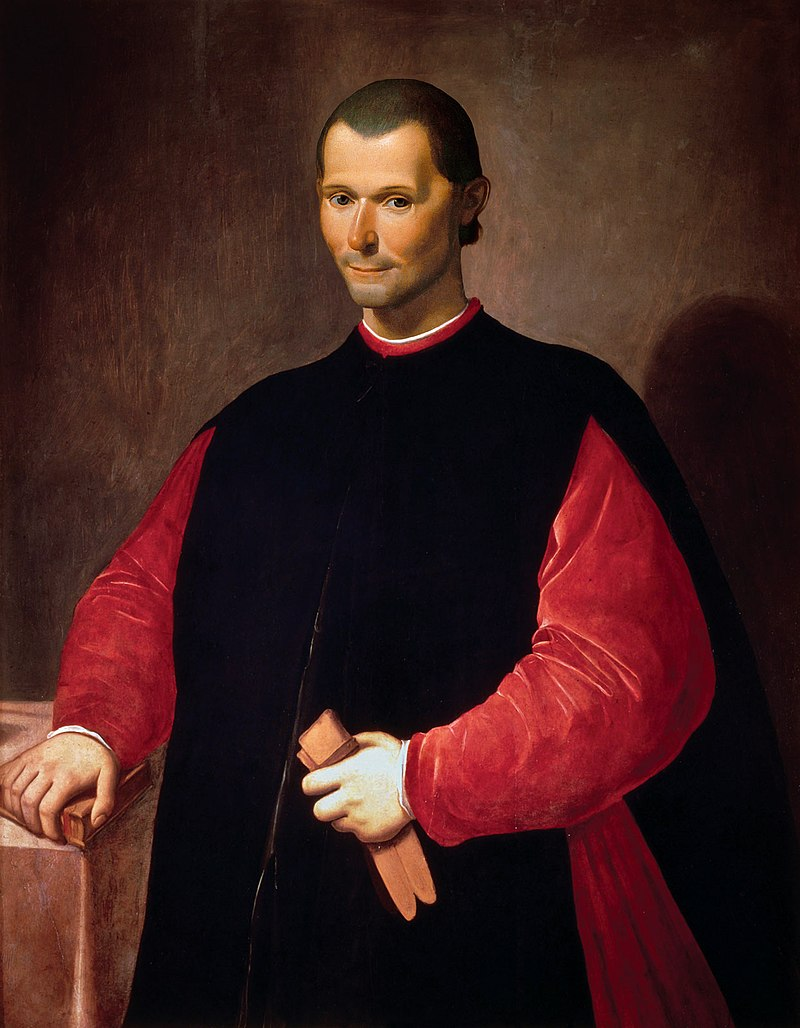
So Managerial Revolution is enjoying a renaissance. Burnham’s followup work, The Machiavellians: Defenders of Freedom was published in 1946. It's an attempt to think about the managerial society, and to build a new ‘science of politics’ to replace the Marxist framework of his youth. He wanted a new unified theory of everything - one that actually worked - and he began with Niccolo Machiavelli.
There is nothing more important than appearing to be religious
Here’s an excerpt from one of Machiavelli’s letters:
I come now to the last branch of my charge: that I teach princes villainy, and how to enslave. If any man will read my book ... with impartiality and ordinary charity, he will easily perceive that it is not my intention to recommend that government, or those men there described, to the world; much less to teach men how to trample upon good men, and all that is sacred and venerable upon the earth, laws, religion, honesty, and what not. If I have been a little too punctual in describing these monsters in all their lineaments and colors, I hope mankind will know them, the better to avoid them, my treatise being both a satire against them, and a true character of them
The Prince seems to be a how-to guide for the ruthless and amoral acquisition of power but Burnham believes there’s an esoteric reading: that Machiavelli is defining ‘the prince’ as a formal problem in political theory. Most theorists begin with an idea of a utopian society or some idealised system that they hope will put good and just people in charge in perpetuity. Machiavelli’s critique of this approach is that whatever system you begin with, a clever, ambitious and ruthless political actor will emerge and attempt to seize and maintain control of it. If your theory doesn’t take this into account then it's not really politics - just a very irresponsible daydream. Money quote from The Prince:
Many have imagined republics and principalities which have never been seen or known to exist in reality, for how we live is so far removed from how we ought to live, that he who abandons what is done for what ought to be done will rather bring about his ruin than his preservation
So for Burnham the first principle of his doctrine of Machiavellianism is to regard all politics as a struggle for power. Machiavelli’s critics complain that this is a cynical view of human nature. Many people are good! Even some politicians are good! Burnham’s response is that Machiavelli isn’t saying anything about human nature in general. Instead he divides people into two groups: the first comprises the majority of the population. They aren’t interested in power; they just want to live their lives. Of the second group - those who do vye for power - some may be moral. But the prince will always pretend to be moral if this is to their advantage. You can’t base your politics on an assumption of morality or an optimistic view of human nature. The prince is the edge case that breaks every system.
So for Machiavelli the primary task of political theory is not to empower leaders to deliver us all into utopia but to design a system that protects everyone else from the tyranny of the prince. If this works it will restrain leaders and even incentivise them to act on the people’s behalf. And the mechanisms for this are just the tools of modern liberal democracy, the architects of which had all read Machiavelli: elections, term limits, separation of powers, the rule of law, adversarial contests. All of this gets you closer to utopia than the systems devised by utopians.
Secondly, Burnham argues, people who adhere to Machiavellianism must distinguish between formal and real political speech. Political actors always promote themselves with appeals to metaphysical or transcendental goals: eternal salvation, peace, unity and harmony, freedom from want. Their real agenda is almost always the maximisation of their own power, or that of their party or faction. Burnham’s not saying that politicians are liars, exactly. Formal political speech is often an act of self-deception. But it always has this dual quality of advancing real motives while concealing them behind abstract ideals. You can see his influence on Orwell again in Politics and the English Language:
Political language – and with variations this is true of all political parties, from Conservatives to Anarchists – is designed to make lies sound truthful and murder respectable, and to give an appearance of solidity to pure wind.
Thirdly: Machiavellians seek pluralistic causes and disdain ‘monism’ - the tendency of intellectuals to seek single unified explanations for everything. We’ve all met people like this: libertarians who think the problem with everything is socialism or socialists who never shut up about late capitalism or neoliberalism. Aquinas mocked them as people who have only read one book. They’re monists, Burnham sneers, and they might be right about some things, accidentally. But history and politics are complex and if you want to understand them you need to look for multiple interacting causes.
Lastly, Machiavellianism is supposed to be scientific. Or, rather ‘scientific’ because Burnham doesn’t cite studies or models or indicate any uncertainty about any of his claims. He simply asserts that his opinions are true because they are informed by reason rather than clouded by metaphysics and ideology. Let us agree that this is not a good way to think about politics or science and move onto the modern Machiavellians, a group of early 20th century thinkers he associates with his political tradition.
In reality the dominion of an organised minority, obeying a single impulse, over the unorganised majority is inevitable.
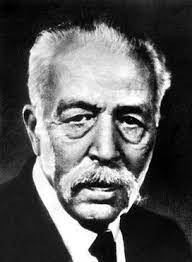
Gaetano Mosca was a journalist, political scientist and politician in Italy around the turn of the 19th century. Just as Machiavelli thought the Prince was a constant in political life, Mosca thinks the ruling class is a constant in human society and for him this is the fundamental principle of political science. No matter the system there has always been and will always be:
a class that rules and a class that is ruled. The first class, always the less numerous, performs all political functions, monopolizes power and enjoys the advantages that power brings, whereas the second, the more numerous class, is directed and controlled by the first, in a manner that is now more or less legal, now more or less arbitrary and violent, and supplies the first, in appearance at least, with material means of subsistence and with the instrumentalities that are essential to the vitality of the political organism.
.
What about democracy? Don’t the people rule? Not exactly. We don’t literally pick our leaders in representative democracies. We select between a very small number of options that have been pre-chosen by political parties, ie by organised minorities. What about a post-revolutionary society in which the people have risen up and overthrown their hated oppressors? The same logic asserts itself: the revolutionary council that seizes control on behalf of the workers forms the new ruling class. They might be better than the old ruling class, they might be worse - but the fundamental nature of political organisation has not changed, and cannot change.
Mosca has much to say on the nature of the ruling class: it can be autocratic or liberal, aristocratic or democratic (e.g. the UK during the 19th century was a liberal aristocracy). But for Burnham the most important points are (a) that the ruling class always represents dominant social forces and (b) they always employ political formulae to justify their elite positions.
Social forces are any group or activity within a society that enjoy significant economic or political influence: these proliferate as a society gets more complex: ‘war, religion, land, labour, money, education, science, technological skill— can function as social forces if a society is organised in terms of them.’ Political formulae are ideologies: moral and legal arguments that the ruling class uses to justify its own power and high position. So in a theocracy the religious authorities hold most of the power and their political formula is that they safeguard the eternal souls of the nation; in an authoritarian state the security services justify their pre-eminence on the grounds that they’re protecting the people from traitors and saboteurs.
If some form of ruling class is inevitable then, logically, political theorists and activists should focus on what kind of ruling class is preferable. For Mosca a good ruling class needs to be open rather than closed, i.e. you can non-violently replace its members if they’re doing a bad job. It also needs to be constrained by ‘juridical defence’, by which he means the rule of law. But Mosca doesn’t think legal systems, constitutions or separation of powers have any inherent value - they only work if they’re enforced by rival social forces acting to counter each other. “In real social life, only power can control power. Juridical defence can be secure only where there are at work various and opposing tendencies and forces, and where these mutually check and restrain each other.” And these need to exist in appropriate balance or, at best, a shifting equilibrium in which none of the forces triumphs over the others.
Take California. Over the past few years the New York Times columnist Ezra Klein has written a number of columns pondering the very poor quality of governance in his state. The political formula of the Democratic Party and the broader technocratic centre-left is that they’re good and smart while their rivals are stupid and bad, so all economic and political problems can be solved by putting them in charge of everything. But, Klein wonders, if this is true then why is a polity in which the good smart people enjoy near total control of the state so dysfunctional? Mosca would answer that the political formula of the modern centre-left is nonsense and California lacks the primary criteria for good governance - rival social forces keeping each other in check. So of course the quality of government is terrible. Burnham puts it like this:
There is no one force, no group, and no class that is the preserver of liberty. Liberty is preserved by those who are against the existing chief power. Oppositions which do not express genuine social forces are as trivial, in relation to entrenched power, as the old court jesters.
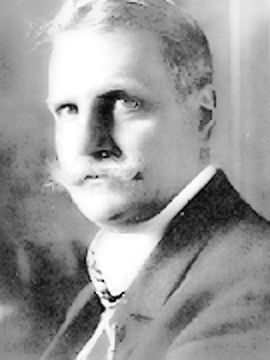
Mosca started as a liberal anti-democrat - which wasn’t too unusual for late 19th century liberalism - but by the end of his career he’d come around to democracy and decided that a representative parliament was probably the best system. The next thinker in Burnham’s pantheon is Robert Michels, who began as a German-Italian sociologist and radical socialist, became Max Weber’s protege, moved to Turin and wound up supporting Mussolini and joining the Italian Fascist party.
He who says organisation, says oligarchy
In 1911 Michels published Political Parties: A Sociological Study of the Oligarchical Tendencies of Modern Democracy. His goal was to try and understand why left-wing political parties were so terrible and he approached this from a socialist viewpoint. He took it for granted that right-wing organisations were corrupt and anti-democratic. But why were socialist movements, trade unions etc also so bad? Why did they repeatedly betray their own members, constituents and ideals?
His answer is the iron law of oligarchy. To project political power in a modern state you need some form of bureaucratic organisation. The bulk of this organisation’s members will be devoted to its overall goals but they’ll need a dedicated caste of managers to run it. So decision-making power is delegated to these managers, along with control of the resources, dissemination of information, decisions about hiring and promotion. And, over time these management positions are captured by oligarchs: modern incarnations of Machiavelli’s Prince.
I rewatched the first few seasons of The Wire while I was reading Burnham, and its depiction of the Baltimore Police Department is a great example of Michel’s principle of oligarchy. Rawls, Valchek and Burrell run the BPD and their primary goals are to further their own careers and advance the political interests of their patrons in the local Democratic party (which, again, is a corrupt and dysfunctional political monopoly). Sometimes their goals overlap with solving crime and sometimes they conflict with it, in which case careers and politics always take precedence over public interest. Oligarchs always choose their own advancement over the interests of the members or the ideals of the organisation, so they’ll generally out-compete rivals who fail to do this. For Michels the managerial oligarchy is the natural end state for all large organisations - especially central government. He believes that his Iron Law of Oligarchy reveals the deep flaws in democracy, capitalism and socialism, rendering them all doomed:
Whatever social changes occur, whatever happens to economic relations, whether property is in private hands or socialised, organisation will remain and through organisation an oligarchical rule will be perpetuated.
You can see how this logic leads him down the path to fascism. If a distributed self-serving oligarchy is inevitable why not have one central mega-oligarch running everything? A great and terrible leader unbounded by the rule of law, who embodies the will of the working class and can overrule all the bourgeois tyrants of the corporations and the bureaucracy! What could go wrong? He died in 1936, before the war.
Burnham thinks that the transition from Mosca’s more traditional ruling class - aristocrats, landed gentry, capitalist owners - to Michel’s technocratic oligarchy is a seismic political shift that most people have missed. We still have capitalism but owners tend to be vast numbers of fluctuating shareholders; the managers control the actual company and extract wealth from it by inflating their salaries. We have large socialist-style government departments but they’re generally controlled by their bureaucracies, not the people or the politicians who represent them.
Whoever becomes a lamb will find a wolf to eat him.
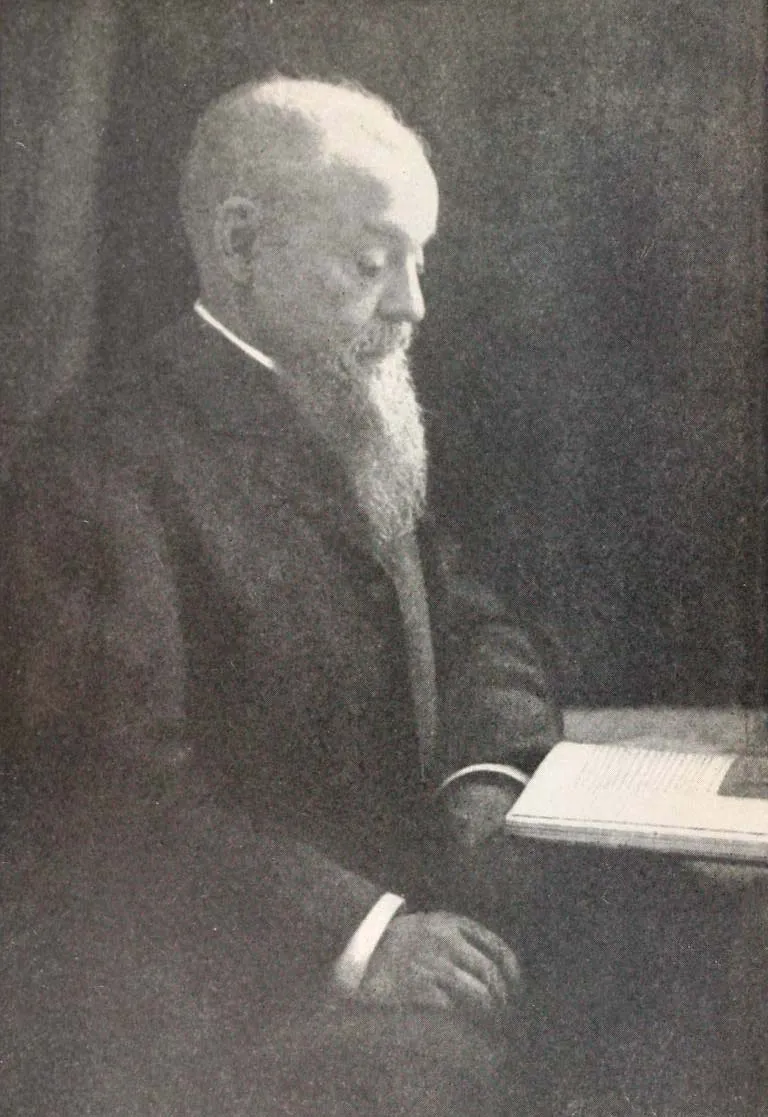
Vilfredo Pareto was the only one of Burnham’s Machiavellians I’d heard of prior to reading his book. But I didn’t know he started out as a classical liberal and became . . . maybe not a fascist exactly, but an important intellectual influence on Mussolini’s government. Italian intellectuals love to argue about whether he was or was not a fascist sympathiser.
Nowadays he’s most famous for the Pareto distribution: the observation that in complex systems - like a modern economy - many population distributions follow power laws rather than bell curves, and that wealth is one of them. Burnham doesn’t mention the distribution - he’s not a numbers guy - but it ties in nicely with his general argument that modernity has a strong bias towards elitism and oligarchy.
Pareto thinks that inequality is inevitable because humans aren’t heterogeneous. Pick any field or skill and some people will be better at it than others, and this will aggregate across society and time to deliver the inegalitarian outcomes predicted by his models. So for him, politics is driven by men who either generate enough value or possess enough strength and cunning to seize power. They form the political elite. But over time elites inevitably devolve into closed, parasitic aristocracies until dynamic individuals outside the system either merge with them or overthrow them to form a new ruling class and the cycle resets itself, a phenomenon he describes as ‘the circulation of elites’. He has a complicated and frankly boring suite of theories and terms to describe all of this - meritorious elites are Lions and they have a predominance of Class-I Residues while degenerate elites are Foxes with Class-II Residues. Fluctuations in Derivations can turn Lions into Foxes.
And again, you can see how this line of thinking turns into a pretext for a fascist coup. If there are forceful brave elites and sneaky weak degenerate elites, and democracy just empowers a bunch of weak degenerate elites and ‘science’ proves this, then what’s a strongman who loves his country and wants to lead it to national greatness to do?
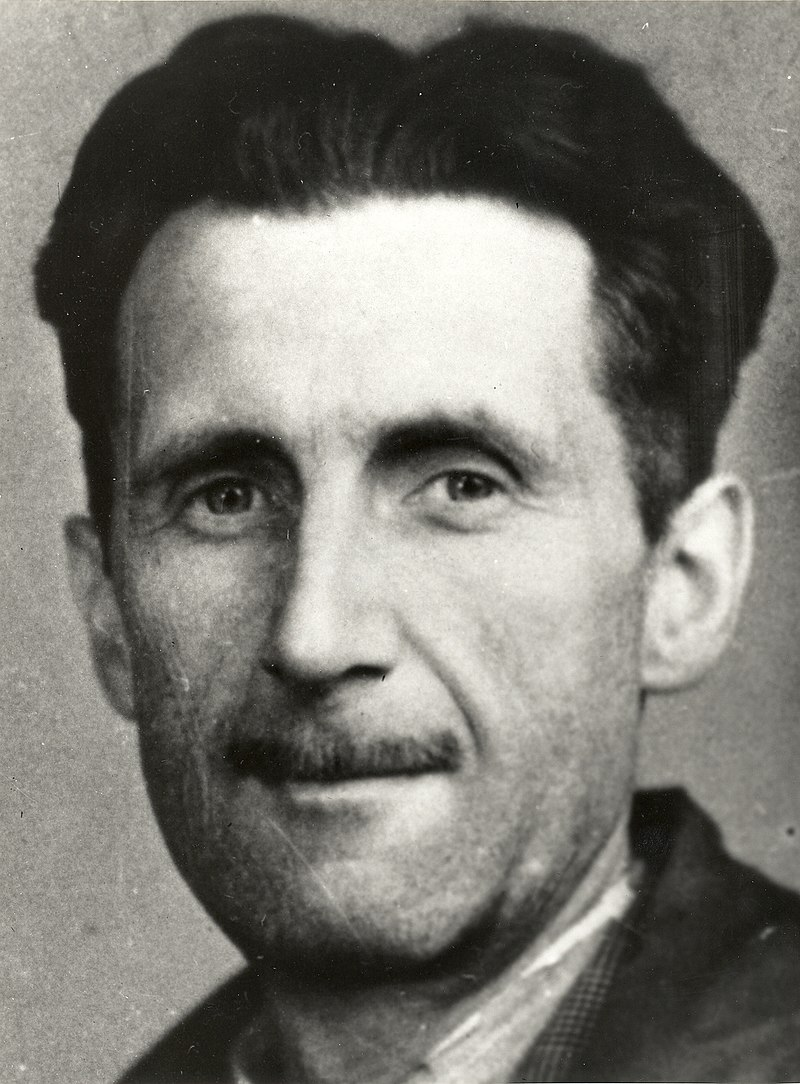
One has to belong to the intelligentsia to believe things like that: no ordinary man could be such a fool
Orwell’s essay on Burnham gleefully points out all the many predictions Burnham got wrong in his attempt to forecast the outcome of the war and the general trajectory of world history. He admits that Burnham was right about the big stuff, though. Industrialisation does seem to push societies towards technocratic oligarchy. But there are oligarchies and there are oligarchies: Burnham’s mistake, Orwell believes, and the mistake of his fascist-curious embittered ex-liberals and ex-socialists was to underestimate the resilience of democratic institutions that constrain their oligarchs. And they vastly overestimated the long term viability of totalitarian systems and the general sanity of unconstrained tyrants. Towards the end of his essay - written in 1946 - Orwell makes a prediction of his own and a final assessment of Burnham’s worldview:
the Russian régime will either democratize itself, or it will perish. The huge, invincible, everlasting slave empire of which Burnham appears to dream will not be established, or, if established, will not endure, because slavery is no longer a stable basis for human society . . . That a man of Burnham’s gifts should have been able for a while to think of Nazism as something rather admirable, something that could and probably would build up a workable and durable social order shows, what damage is done to the sense of reality by the cultivation of what is now called ‘realism’.
He’s attacking the earliest edition of The Managerial Revolution here. Burnham revised his book multiple times. Today the most widely available version is the 1972 edition which is less enthusiastic about Hitler and the merits of totalitarianism and more self-congratulatory about Burnham’s grand thesis being validated: western democracies were unmistakably managerial societies in which factions of elite technocrats vyed for political control to grant themselves more wealth and power.
This underestimation of democracy was an odd mistake for Burnham to make and points to a moral ambivalence - you might even say incoherence - at the heart of his project. His book is called The Machiavellians: Defenders of Freedom, freedom being a good thing worth defending, presumably. Right? He begins with the assertion that only the realist worldview delivers genuine freedom. It does this by constraining political actors, unlike utopian worldviews which empower tyrants. But by the time we get to Pareto we’ve moved into a very Nietzschean world of Great Men seizing power. Concepts like democracy and the rule of law have themselves become utopian ideals. There’s a vague notion of meritocratic leaders versus degenerate leaders but nothing ‘scientific’, even by Burnham’s loose use of the term. The suggestion that you can constrain elites has vanished. What happened to defending freedom? And how do you discriminate good elites from bad or incentivise them to act in the general interest?
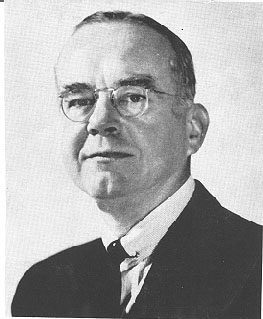
Just as we seldom realize that we are growing old until we are already old, so do the contemporary actors in a major social change seldom realize that society is changing until the change has already come
That last question obsessed liberal theorists during the 18th and 19th centuries, and into the early 20th. Adam Smith and David Ricardo talked about the problems of economic rent and rent seeking: elites using their power to extract value from the productive economy rather than creating new value through labour or the investment of capital. Smith thought that free markets would solve this problem. So did Keynes. In the final chapter of the General Theory, written in 1935 he was optimistic that capitalism will eventually lead to ‘the euthanasia of the rentier’. What went wrong?
Michels’ law of oligarchy feels like a pretty good explanation. Corporations are organisations; once they get large enough and wealthy enough they tend towards oligarchy; they form mutually beneficial alliances with the oligarchs in political parties, state bureaucracies and regulatory agencies and they all conspire to extract rents from everyone else. The economist Mancur Olsen calls these ‘distributional coalitions’. Burnham assumed that his managerial overclass would be scientific and ruthlessly efficient and we see elements of that in the tech industry. But Actually Existing Managerialism is mostly just the plutocrats, bureaucrats, politicians and lawyers from The Wire writ large: confederacies of parasites coasting off the institutions of the pre-managerial society.
Why didn’t Burnham and his Machiavellians think about rent-seeking versus value creation as a criteria for good and bad elites? I can’t say, but I suspect it's for the same reason they discounted democracy and free markets: these are liberal ideas and by the mid-20th century most intellectuals regarded liberalism as obsolete. Normies liked it but smart people knew it was fake and ineffectual; a dead ideology; a relic of the past. Even Orwell agreed with that. But if there’s anything valuable in Machiavellianism I think it comes from that liberal tradition and loops back into it.
There’s a sensibility you find in earlier liberal theorists. People like Smith and Locke, going back to the ideology’s precursors, Machiavelli and Hobbes and extending to Hayek and Keynes. They think about politics and economics in terms of formal problems with systemic solutions. This is a very unnatural approach: humans seem to be hardwired to view politics in terms of morality and tribes.
That older form of liberalism hasn’t been forgotten, exactly: those people are incredibly famous. But their mode of thinking has fallen out of fashion, lingering on in some areas of economics and moral philosophy but notably absent from politics. At some point liberalism transitions from inventing the future to defending the present. Its institutions - elections, markets, rights - become intrinsic goods in themselves rather than solutions to problems. It becomes a political formula, as Mosca would say. In 1989 Francis Fukuyama insisted that those institutions signified the apex of human politics, there was nothing beyond them.
Burnham goes back to the beginning of modern political theory and tries to build a new tradition. And I agree with Orwell: his approach reveals a lot about the world, even if he got a few details - the outcome of the war, that Hitler and Stalin might be bad - badly wrong. But his system doesn’t seem to lead anywhere. He starts out with a core liberal principle - the advancement of individual freedom - but this clashes with his maxims, that he must be ‘scientific’, which means abandoning any moral claims, and that politics can only ever be about the struggle for power.
In 1964 Burnham - now well into his conservative phase - published a book called The Suicide of the West. It’s an anti-liberal polemic, a foundational text of the postliberal tendency so popular on the right nowadays. He warned that liberal ideology was destroying western civilisation and that the west was about to be overwhelmed by the more dynamic forces of Islam and communism. Yet another wildly inaccurate prophecy, but if Burnham were still around I think he’d congratulate himself for getting the big picture right, again. Liberalism is failing. Everyone admits it. Instead of safeguarding individual freedom its institutions have been captured by his managerial class and now they’re sclerotic. Dying.
Hannah Arendt talked about the importance of ‘natality’ in political life. Progress requires a space for new ideas, new parties, new institutions to emerge and challenge the existing order. For a long time liberal theory was the midwife of natality, the wellspring of world-changing new ideas. It was literally revolutionary. But in the late 19th century socialism became the revolutionary ideology par excellence and liberals transformed into defenders of the status quo. For a few decades after the 1960s left-wing liberalism was about extending its franchise to previously excluded groups while right-wing liberals expanded markets, but today the term ‘liberal’ is largely meaningless. Liberalism is not a tradition we associate with novelty or innovation. But it could be! The old intellectual framework is still there, the diagnosis of formal problems; the invention of new institutions or systems to fix them, often involving constrained competitive or adversarial frameworks, like markets or elections. Oligarchical rent-seeking is an acute problem and it doesn’t strike me as unsolvable. We just need to see it and think about it instead of squabbling over which coalition of oligarchs to vote for.
I don’t have a cute term for this approach to politics: paleoliberalism? (neoliberalism seems to be taken.) A friend suggested the alt-centre. I don’t know. And when I try to conceive of new political institutions and systems I personally come up blank. Maybe Fukuyama was right and the idea-space of politics is mapped out. Maybe this is as good as it gets. But I prefer to think Arendt is right, that progress requires new ideas, those ideas exist, and that Burnham’s instincts were correct: to iterate back up the tree of our political theory to an earlier node; to look for new branches - new directions; new paths. Machiavellianism doesn’t seem to lead anywhere good, but that doesn’t mean there aren’t other possibilities. And there’s a very successful intellectual tradition to examine them with, just lying there, largely unused.