The Man Without a Face: The Unlikely Rise of Vladimir Putin
Dictator Book Club: Vladimir Putin
I enjoyed Scott’s Dictator Book Club series [1, 2, 3, 4] and was hoping he would eventually cover Vladimir Putin, but that hasn’t happened yet so I decided to do it myself. The book is The Man Without a Face: The Unlikely Rise of Vladimir Putin by Russian dissident, journalist, and activist Masha Gessen.
The book was published in 2012, so it predates not only the full-scale 2022 Russian invasion of Ukraine, but also the smaller-scale war/invasion that took place in 2014. So in some ways the book’s pretty dated, but I still found it pretty insightful and useful for understanding the current situation.
The main conclusions I drew from the book were not what I had anticipated. I went into the book expecting some deep insights into Putin as a man – exciting stories about his life as a Real-Life-James-Bond-Villian. But after reading the book, I don’t feel like I have any deep insight into his psychology. In fact, the book isn’t even really about Putin at all. It’s about the relationship between the Russian political system and the state security / intelligence agencies (the KGB in the Soviet era, and the FSB in the post-Soviet era). Putin is just a man, not particularly charismatic or notable (which Gessen alludes to in the title), who happens to be the head of this system. The book traces his rise from a lowly cog in the machine to the most important and powerful cog in the machine, but ultimately the real story is more about the machine itself.
.
In this review I’ll summarize the key points of the book, list some of the most interesting facts, and discuss my takeaways from the book and how they relate to current events.
DISCLAIMER: I largely have the same ideological bias as the author – pro-liberalism, pro-Western democracy, anti-Russian-government. I’d like to state this upfront rather than pretend that this is a completely neutral, unbiased assessment of things.
Setting the Stage: The Ryazan Incident
Early on in the book, Gessen describes an incident so frightening and bizarre that I actually think an entire separate book could (and should) be devoted to it. The incident doesn’t directly involve Putin at all, but it’s a good case study for understanding how things work in Russia, and helps to properly frame the rest of the book.
In 1999 there was a series of bombings targeting several Russian cities. This was during the Second Chechen War, so it was widely believed that Chechen separatists were behind the attacks. Gessen describes the following attacks in the book. Please note that the death and injury numbers given in the book are slightly different from the ones I found on Wikipedia and in the news articles from the time. For this review I’m listing the numbers that the author gives, but don’t be surprised if you see different numbers in different sources.
- Moscow, August 31, 1999 – An explosion in a shopping center, leaving 1 dead and more than 30 injured.
- Buynaksk (close to Chechnya), September 4, 1999 – A car bomb attack targeting an apartment building where Russian military officers and their families lived. 64 dead and 146 injured.
- Moscow, September 8 1999 – A bombing that destroyed a nine-story apartment building. 100 dead, nearly 700 injured.
- Moscow, September 13, 1999 – A bombing that destroyed an eight-story apartment building, leaving 124 dead and 7 injured.
- Volgodonsk, September 16, 1999 – A truck bomb exploded in the street, leaving 19 dead and over a thousand injured.
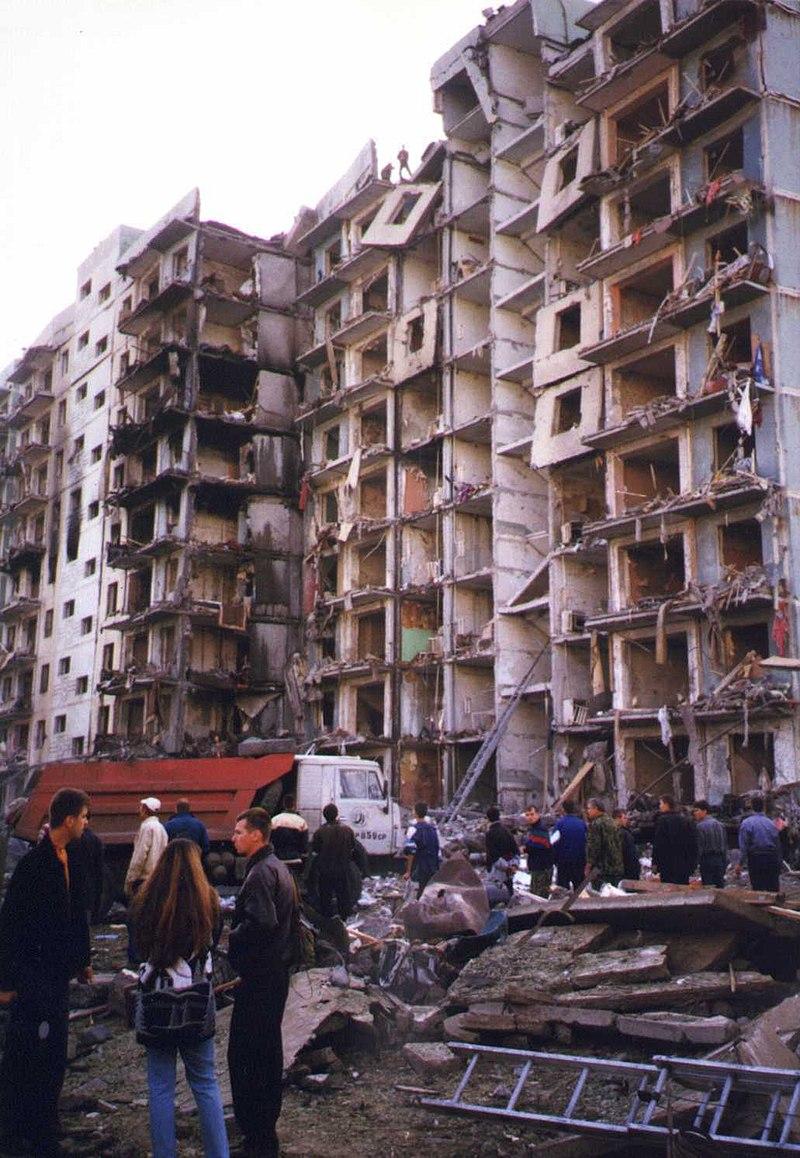
Aftermath of Volgodonsk bombing. Image source

Naturally this left the entire country in a state of panic. Gessen notes that some people in Moscow banded together to form neighborhood patrols, and some people chose to sleep outside on the street because they thought that to be safer than sleeping in their apartments.
Then, on the evening of September 22, 1999, around 9pm, a local busdriver was returning home to his apartment building in the city of Ryazan when he noticed something suspicious. He saw three people (two men and a woman) pull up to the apartment building in a car, open a door leading to the cellar of the building, and carry three heavy-looking sacks from the car down into the cellar. They then got back in the car and left.
The local busdriver called the police. Upon investigation, the police found three fifty-kilogram sacks marked “SUGAR”, containing wires and a clock. They then immediately evacuated the building and called the bomb squad. Gessen notes an especially disturbing detail – that several severely disabled people who lived in the apartment could not be evacuated and had to remain in their apartments, terrified, during the whole ordeal.
The bomb squad got the situation under control, diffused the timers, and concluded that the sacks contained hexogen, a powerful explosive that had previously been used in at least one of the other bombings. The residents of the apartment complex, and the bus driver especially, were celebrated as heroes whose vigilance had prevented a tragic attack. The head of the local FSB (Russian security service and successor to the KGB) office congratulated the residents and praised their alertness.
This is where things get… odd.
Two people matching the description of the suspected terrorists were detained by the local police, but they produced FSB identification and were released on orders from Moscow.
Then, just like that, the official story changed. Nikolai Patrushev, the head of the FSB, announced to reporters that the entire incident had been a training exercise. He said: “First, there was no explosion. Second, nothing was prevented. And I don’t think it was very well done. It was a training exercise, and the bags contained sugar. There were no explosives.”
This is, of course, extremely suspicious. Neither the Ryazan police nor the local FSB office had heard anything about a training exercise. Local officials resisted at first, but eventually fell in line, claiming that there weren’t any explosives, and that the bomb squad had mistakenly identified the sugar as explosives due to faulty equipment.
There were other suspicious bits of evidence as well. For example, a telephone operator overheard a suspicious call coming out of Ryazan, in which someone said “The city is closed. We can’t leave.” She reported the call to the authorities, and it was discovered that the number being called from Ryazan was an FSB office in Moscow (source). According to the Russian government’s official explanation, this call was also staged for the purposes of the exercise.
The book also references the story of Alexei Pinyaev, a soldier in the Russian army, although I haven’t been able to figure out if this story is true or not. It originated in this article that I haven’t been able to read, both because it’s behind a paywall and also because it’s in Russian. There’s also a brief summary on Wikipedia. The story is that Pinyaev and his fellow soldier were tasked with guarding an ammunition storehouse near Ryazan, when they got bored and decided to go looking around in the storehouse. They found some sacks labeled “sugar” and decided to put some of it in their tea to drink. To their surprise, the substance made their tea taste terrible. The soldiers then worried that they had accidentally consumed a dangerous chemical and might get sick, so they turned themselves in and confessed the entire incident to their supervisor. Upon inspection, the substance turned out to be hexogen, the same type of explosive identified by the Ryazan bomb squad. Pinyaev has apparently denied that this ever took place, although the book implies that this was due to intimidation by the FSB. Anyway, I don’t know if this story is true, so I recommend taking it with a grain of… um… “sugar”.
The book also describes a TV special that was being filmed about the Ryazan incident, with many members of the targeted apartment complex present in the studio audience. Apparently the apartment residents were very skeptical about the official government story and made their disbelief known. Then at one point, someone claiming to be a resident of the apartment complex announced that he believed the government’s story about it being an exercise – but the other residents began shouting that they didn’t know this man and he didn’t really live in their building. Gessen implies that this man was planted in the audience by the FSB to help support their version of events.
Taking all of these bits of evidence together, it’s reasonable to suspect that the FSB was responsible for not only a foiled attack on the Ryazan apartment building, but also for the entire series of bombings that seemed to follow a similar modus operandi. The motive was apparently to drum up support for the war in Chechnya among the public.
Anyway, the Ryazan incident contains an important lesson, useful for properly framing the rest of the book: the idea that conspiracy theories are almost always wrong is a peculiar idea that’s probably only true in modern liberal democracies, and is not true in Russia.
Putin’s Childhood
Vladimir Putin was born in 1952, in a city that was called Leningrad at the time, but has been called St. Petersburg since the fall of the Soviet Union in 1991. For the purposes of this review, I’ll just call it St. Petersburg. The city had been completely devastated when the Nazis laid siege to it during WW2, and was still in rough shape during Putin’s childhood. Putin’s father was a wounded World War 2 veteran, and his mother was a factory worker.
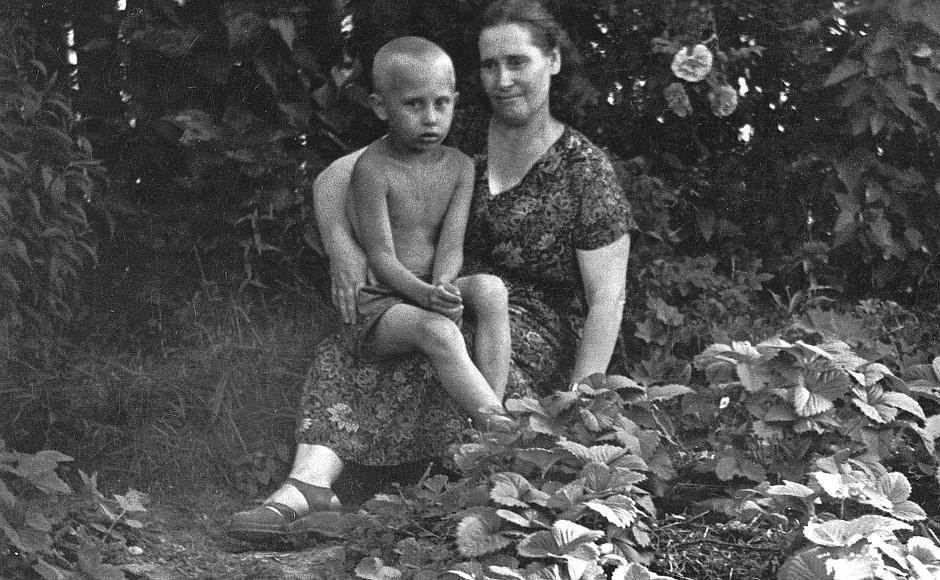
Vladimir Putin and his mother, 1958. Image source

In absolute terms, Putin grew up in what we would now consider to be poverty. However, in comparative terms, his family was relatively well-off – they lived in a relatively large room in a shared apartment, and had a television, a telephone, and a dacha (a type of Russian vacation home outside of the city). He was a scrawny, scrappy kid – physically small, but tough, and unwilling to back down from a fight, even if a bigger kid was picking on him. He also took Sambo (a Russian martial art) and Judo classes to learn self defense, and apparently took them pretty seriously. As an adult, he still practices Judo and holds a black belt in the sport.
As a young child, Putin struggled in school, both in terms of academics as well as with disciplinary issues (getting into fights all the time). Then, when Putin was about 15 years old, he saw a TV miniseries called The Shield and the Sword, which was about a fictional KGB spy working in Germany. The show had an impact on the teenage Putin, and he set his sights on a career as a KGB officer. This goal was enough to get Putin to start applying himself more in school and working on his behavior. He started getting better grades and taking things more seriously. He eventually enrolled in Leningrad State University (one of the most prestigious universities in the USSR) to study law, and was hired by the KGB upon his graduation from the university.
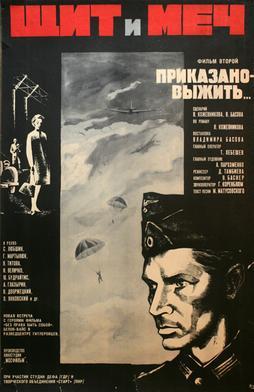
The Shield and the Sword poster. Image source

KGB Career
Putin’s time in the KGB was probably more exciting and interesting than being like, an accountant or something but it was much less exciting than one might expect of the life of a spy. There weren’t any car chases, shootouts, or daring missions, like in the James Bond movies. Rather, he was a cog in the state security apparatus – lots of paperwork, writing intelligence reports, recruiting informants, conducting surveillance, etc.
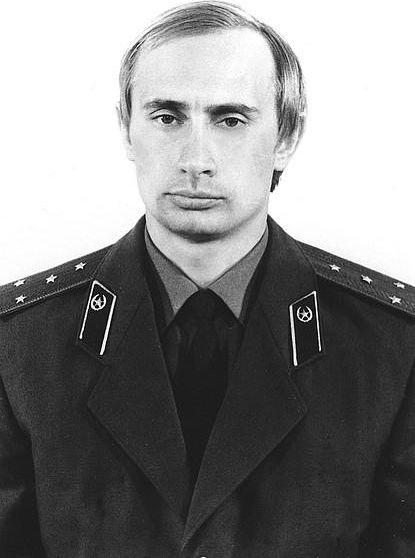
Vladimir Putin in his KGB uniform, 1980. Image source

After completing the initial training, he was stationed in St. Petersburg (called Leningrad at the time) for a while. He then completed an advanced training course. Putin speaks German and had evidently hoped to be stationed in West Germany after this advanced training. This was considered an exciting foreign assignment, to be truly living the life of an undercover spy in the capitalist West. However, he was instead assigned to a post in Dresden, East Germany. This assignment was considered much more boring. According to Gessen, his work in Dresden included collecting useless information like newspaper clippings, and occasionally trying to recruit foreign students studying in East Germany as spies.
There was one particular event during Putin’s tour of duty in Dresden that I think was probably a formative experience for him. This formative event occurred during the fall of the Berlin Wall. When the wall fell, there were celebratory protests throughout East Germany. In some cases, these protests turned into violent riots. In Dresden, a mob of rioters stormed and ransacked the local Stasi (East German secret police) headquarters, and then marched onto the KGB office, where Putin was stationed, apparently intent on storming and ransacking it too.
Now, I’m a center-rightish guy myself, so in terms of political ideology I’m definitely on the side of the anti-communist, pro-democracy protesters here. Especially in the context of East Germany, it’s easy to tell a story where the protesters are the clear good guys, and are righteously angry with the Stasi and KGB who’ve spent decades oppressing them. But making this scenario into a political debate misses the visceral, emotional reaction to being threatened by an angry, violent mob.
So let’s leave politics out for a second. Forget about democracy, communism, the KGB, and the Berlin Wall. Just imagine you’re stuck in an office building with a small group of Your People, while a much larger mob of violent rioters from The Outgroup swarms the building, shouting angrily, banging on doors and windows, intent on getting in to destroy the building and hurt you. There’s no politics in this situation. Just the feeling of helplessness, fear, and defensive anger.
The KGB officers were under strict orders not to fire on protesters without explicit permission from Moscow. Putin radioed Moscow to explain the situation and request permission to use force to defend the building, but received no reply. “Moscow is silent,” he was told. Eventually the rioters dispersed, but I would bet that Putin remembers the feeling of helplessness and defenselessness to this day, and it may be playing a role in his decision making.
Rise to Political Power
So how did Putin go from a mid-level KGB officer to president of Russia? Amazingly, this happened without him ever being elected to office, even though it occurred during the 1990s, when democratic reforms were being enacted in Russia and elections were taking place. He was simply hired and appointed to various positions, until he got all the way up to prime minister. Then in 2000, the president of Russia resigned, and Putin was in line to take his place, reaching the position of president without winning a single election. So how did this happen?
After Putin’s KGB assignment in Dresden, he returned to St. Petersburg in 1990 and took an administrative job at Leningrad State University, in the International Affairs department. His affiliation with the KGB during this time is a bit unclear – the book describes him as being in the “active reserve,” but I’m not exactly sure what that means and wasn’t able to find clarification from another source. Gessen claims that he was still on the KGB’s payroll, and that his job at the university was a KGB position, involving surveillance and recruitment of potential informants.
During this time, he became friends with Anatoly Sobchak, one of his former professors. Sobchak was something of a pro-democracy reformer, and became the first democratically elected mayor of St. Petersburg in 1991. While he was mayor, Sobchack appointed Putin as an advisor. Gessen implies that Putin’s KGB affiliation had something to do with this – every politician was going to have a KGB minder whether they wanted one or not, so it was better to hire someone with a KGB affiliation so that you could at least choose your own minder. I’m not sure if this is true, but this is what’s implied in the book. Another possibility, though, was that Putin was actually a good employee: loyal and intelligent, but uncharismatic enough that you didn’t need to worry about him getting ambitious and trying to replace you.
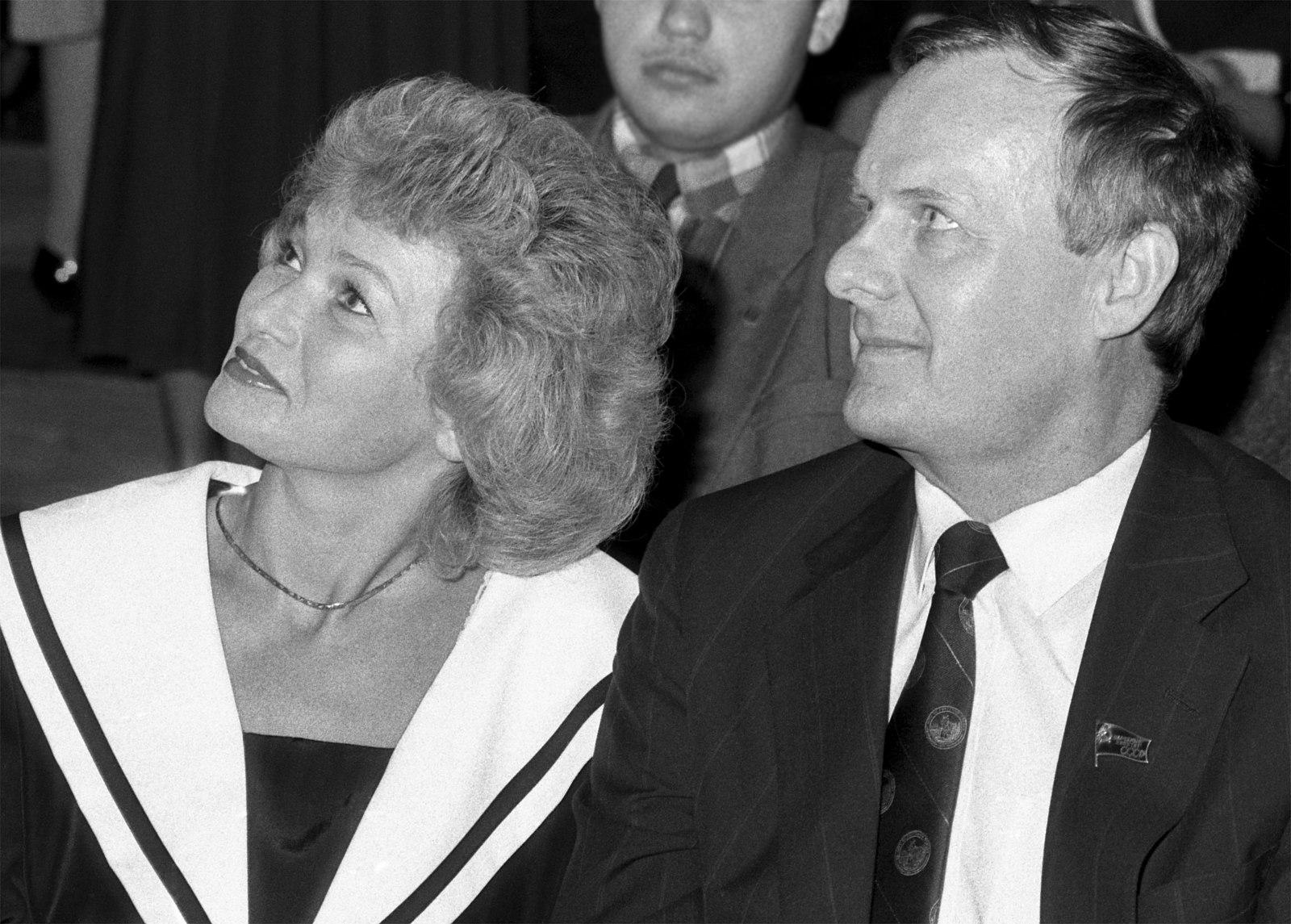
Anatoly Sobchack with his wife Lyudmila Narusova. Image source

Sidenote: Putin claims to have officially resigned from the KGB in 1991, during the failed coup against Mikhail Gorbachev (which was partly organized by the KGB). The book claims that there is some ambiguity around this date.
Anyway, throughout the 1990s, Vladimir Putin continued to be appointed to various positions within the government, inching his way higher and higher. As the Soviet Union broke up and Russia attempted the transition to a democracy, Putin became loosely aligned with the liberal democratic reformers. In 1998, then-president Boris Yeltsin appointed him as the director of the FSB (the intelligence service that replaced the KGB).
In 1999, Yeltsin appointed Putin as prime minister, basically setting the stage for Putin to eventually take his place as president. According to the book, this is because Yeltsin was growing more and more unpopular towards the end of his presidency, and wanted a successor who he could be sure wouldn’t try to target him or his family with prosecution or violence. So, he picked Putin.
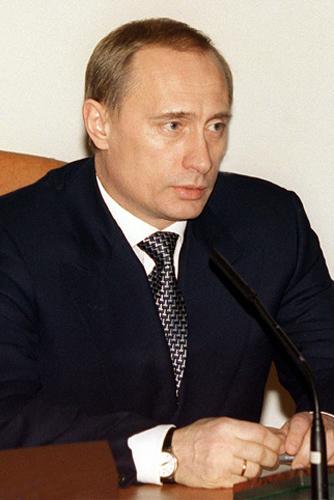
Putin on December 31, 1999, shortly after becoming acting president of Russia.

On December 31, 1999, just before the turn of the millennium, Yeltsin unexpectedly resigned as president, and Vladimir Putin became the president of Russia. According to the book, this was done so that Putin could go into the 2000 presidential election with the advantage of already being the incumbent president. This apparently worked, and Putin won the 2000 election in a landslide, getting a majority of votes in the first round, so that a run-off second round was not required. Although it’s widely believed that Russian elections since 2004 have been rigged, I couldn’t find any credible allegations that the 2000 Russian election was rigged. As far as I can tell, it appears that this was a free and fair election that Putin legitimately won.
Consolidation of Power and Violence Against Dissidents
There’s an infamous video of the 1979 Ba’ath Party purge shortly after Saddam Hussein rose to power in Iraq. In the video, Saddam addresses a large auditorium full of people. He announces that he has uncovered a fifth-column within the party, and reads off a list of 68 names – “co-conspirators” in a plot against the government. These people were then arrested on the spot and taken out of the room. In the subsequent weeks, 21 of them were sentenced to death, and their execution was carried out by other high-ranking members of the party. Around the same time, hundreds of other Ba’ath Party members suspected of disloyalty were also killed. The executions were videotaped, and the footage was distributed throughout the country.
When we think about a dictator consolidating power, this is usually the type of thing that comes to mind. But Vladimir Putin’s consolidation of power didn’t fit this mold at all. Rather than using conspicuous violence, like mass executions, to instill fear in people, the Russian government’s violence against political dissidents is kind of the opposite: quiet, secretive, and always carried out with plausible deniability.
One of the most famous cases, which was not included in the book because it happened in 2020, was the attempted assassination of Russian opposition leader and activist Alexei Navalny. Navalny became ill while on a flight, and was taken to a hospital and put in a medically induced coma. Laboratory tests confirmed that he had been poisoned (which is apparently a common FSB assassination tactic). Navalny survived and was eventually released from the hospital.
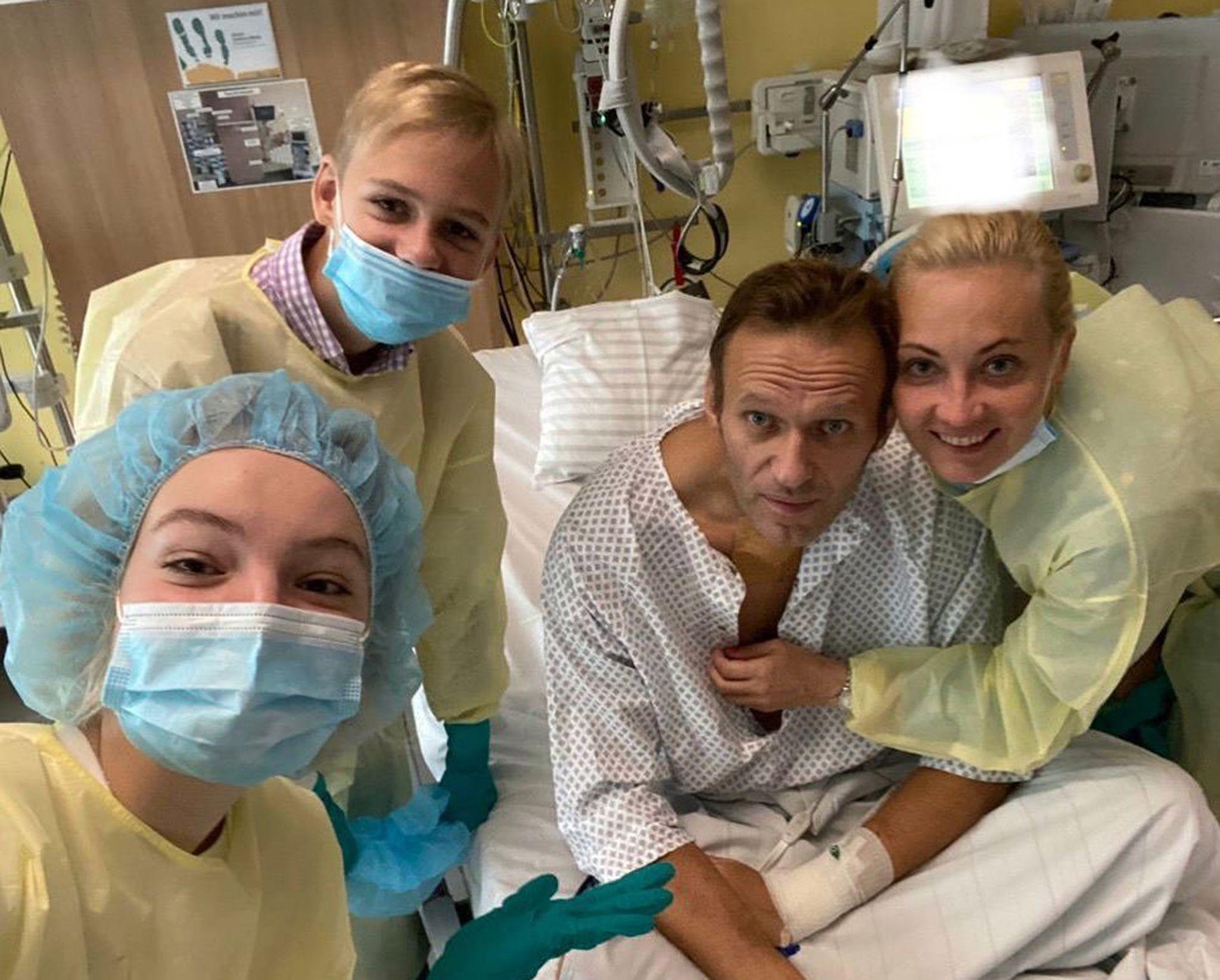
Alexei Navalny in the hospital. Image source
Amazingly, he was then able to catfish the FSB agent who had poisoned him and record a phone conversation where the guy unwittingly confessed to the whole thing. Seriously, I’m not making this up. Here is a BBC news story about this with some clips from the phone call, and here is a recording of the full call (about 50 minutes total). Currently, Navalny is in prison with a 11.5 year sentence.
The attempted assassination of Navalny is probably the most famous instance of anti-dissident violence committed by the Russian government. Another famous case is the assassination of Alexander Litvinenko (this one is included in the book). Litvinenko was an intelligence officer for most of his career, serving in both the KGB (during the Soviet era) and the FSB (after the fall of the Soviet Union). Eventually he had a falling out with the Russian government, became a defector, and moved to England. While in exile in the UK, he was very critical of the Russian government and FSB in particular and accused the FSB of being involved in the 1999 apartment bombings discussed earlier in this review.
In November 2006, Litvinenko fell ill and was hospitalized. He immediately told the doctors that he thought he had been poisoned by Russian government agents – but in liberal democracies like the UK it sounds crazy to say this, so the doctors responded by giving him a psychiatric evaluation.
Eventually it was confirmed that he had been poisoned with a radioactive substance called polonium, almost certainly by agents of the Russian government that he had met with the day he fell ill (source). After a couple weeks in the hospital, Litvinenko eventually died of the poisoning. Shortly before dying, he made a final statement in which he directly accused Vladimir Putin of ordering his murder.
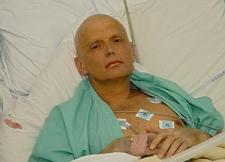
Litvinenko, bald from the radiation poisoning, shortly before his death.

The thing about catching the government red-handed in a couple of assassinations is that every mysterious death of a political dissident starts to look like a potential murder committed by the FSB. For example, the book tells the story of the journalist and human rights activist Anna Politkovskaya, who was shot to death in the elevator of her apartment building in 2006. The murder was apparently a contract killing, and five hitmen were convicted of it and sent to prison, but it’s still unclear who hired them. There’s no solid evidence linking the Russian government to the murder… but it’s certainly suspicious, especially considering how critical Politkovskaya was of both Putin and the FSB.
There are dozens, possibly hundreds of other cases like this – unsolved murders, freak accidents, suspected poisonings – involving anti-Putin dissidents. The maddening thing about the cloak-and-dagger tactics of the FSB, and what makes their style of violence possibly even more terrifying than the Saddam-style mass executions, is that it’s impossible to know for sure what to make of these cases.
Besides the ruthless violence, there was also a dull, administrative side to Putin’s consolidation of power. The book describes how he simply changed laws to give his side more advantages and put opposition parties at a disadvantage. I don’t want to spend too much time on this stuff because it really is quite boring, but some examples were changing elected positions to appointed positions, changing election laws to make it more difficult for opposition parties to run (like ballot signature requirements), having the state media more explicitly support the ruling party, and stuff like that.
Another weapon wielded by Putin’s government is the selective enforcement of laws. The book tells the story of Mikhail Khodorkovsky, a wealthy Russian businessman and oligarch, who was also involved in pro-reform philanthropy and activism. In 2003, he was arrested on charges related to financial and tax fraud, and spent several years in prison. Amnesty International considered him to be a prisoner of conscience.
Now, it’s not that Khodorkovsky was innocent of all the charges brought against him. Probably he had indeed violated some section of the tax code or something. Rather, it’s that the Russian tax code and financial regulations are so complex that everyone has violated some part of it. So if a Russian businessman has the audacity to criticize Putin or support the political opposition, all you have to do is go through his past tax returns and financial documents, and chances are you’ll find something that you can charge him on.
Or, as the infamous Soviet-era secret police chief Lavrentiy Beria said: “Show me the man, and I’ll show you the crime.”
Recent Russian History
A quality I like in history books is when they go off on tangents, so that they tell not only the story of the central person or topic they’re focusing on, but also the stories of various related topics and people. The Man Without A Face does this, although somewhat sloppily. These side-plots are told in disconnected chunks throughout different chapters of the book, and sometimes a bit difficult to follow. But still, while telling the story of Vladimir Putin, Gessen manages to give a reasonably-complete history of Russia from the 1990s until around 2012. A couple of these tangential stories are:
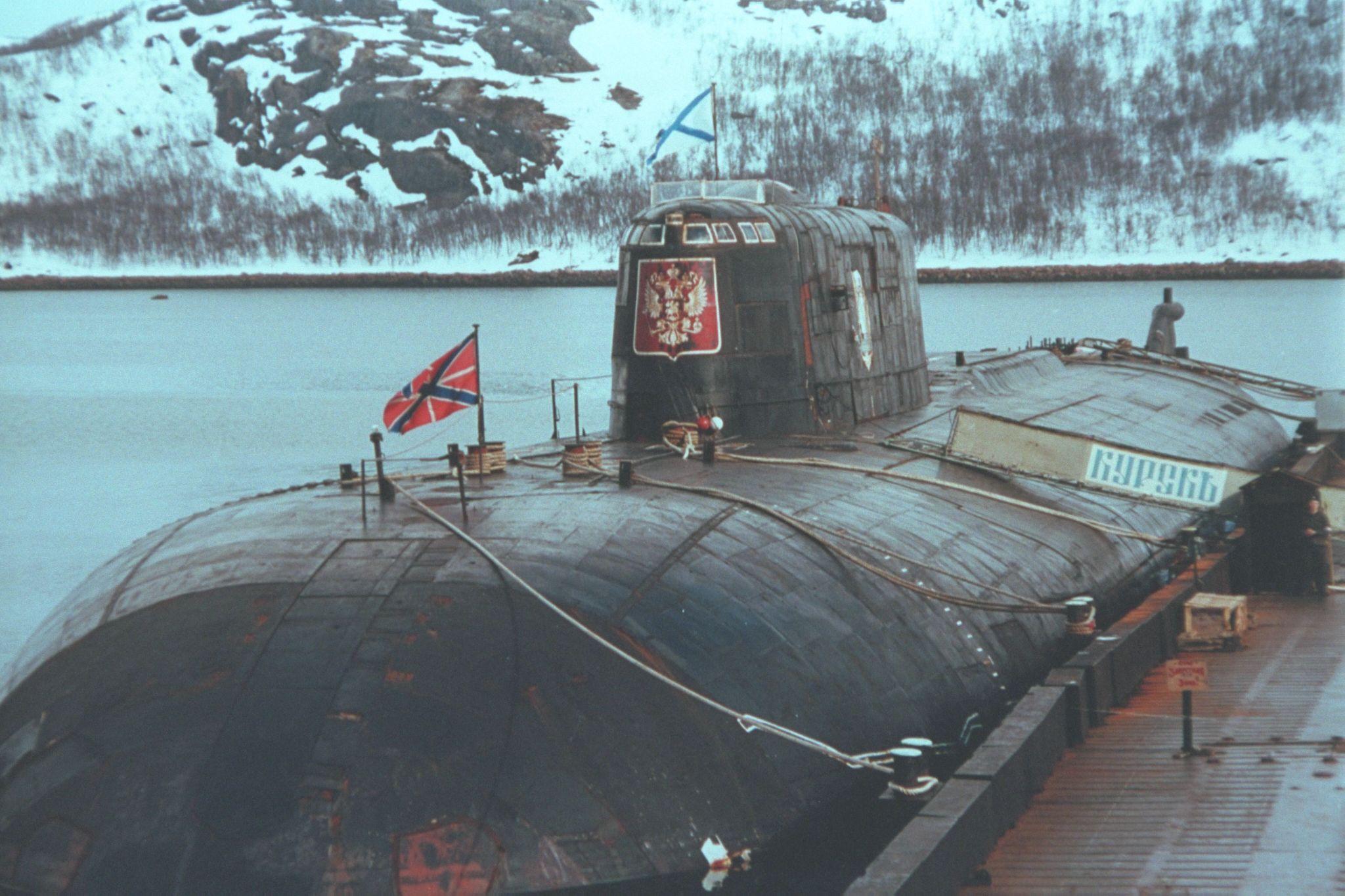
1. The Kursk Submarine Disaster. On August 12, 2000, there was an explosion aboard the Kursk submarine in the Barents Sea (north of Russia, near the Arctic Ocean). The submarine sank and all 118 crew members died. Most of them died immediately, but an investigation later found that 23 sailors survived the initial explosion and took refuge in part of the submarine, where they survived for more than 6 hours, but the Russian Navy botched the rescue attempt, while also refusing assistance from teams of British and Norwegian divers. I don’t think it’s fair to directly blame Putin for any of this, but he was generally criticized for his perceived insensitivity to the situation.
2. The Moscow Theater Hostage Crisis. On October 23, 2002, a group of Chechen separatists seized a theater in Moscow, taking hundreds of hostages and demanding the withdrawal of Russian forces from Chechnya. Russian special forces soldiers conducted a rescue operation in which they pumped a chemical agent into the building to render everyone in it unconscious. They then stormed the building, and summarily executed all of the hostage-takers in their sleep. However, the soldiers failed to provide medical aid to the hostages, who were also unconscious, and more than 100 hostages died after the rescue operation had already been completed, simply because they did receive medical attention and ended up choking on their own vomit while unconscious, or from other complications due to the chemical exposure.
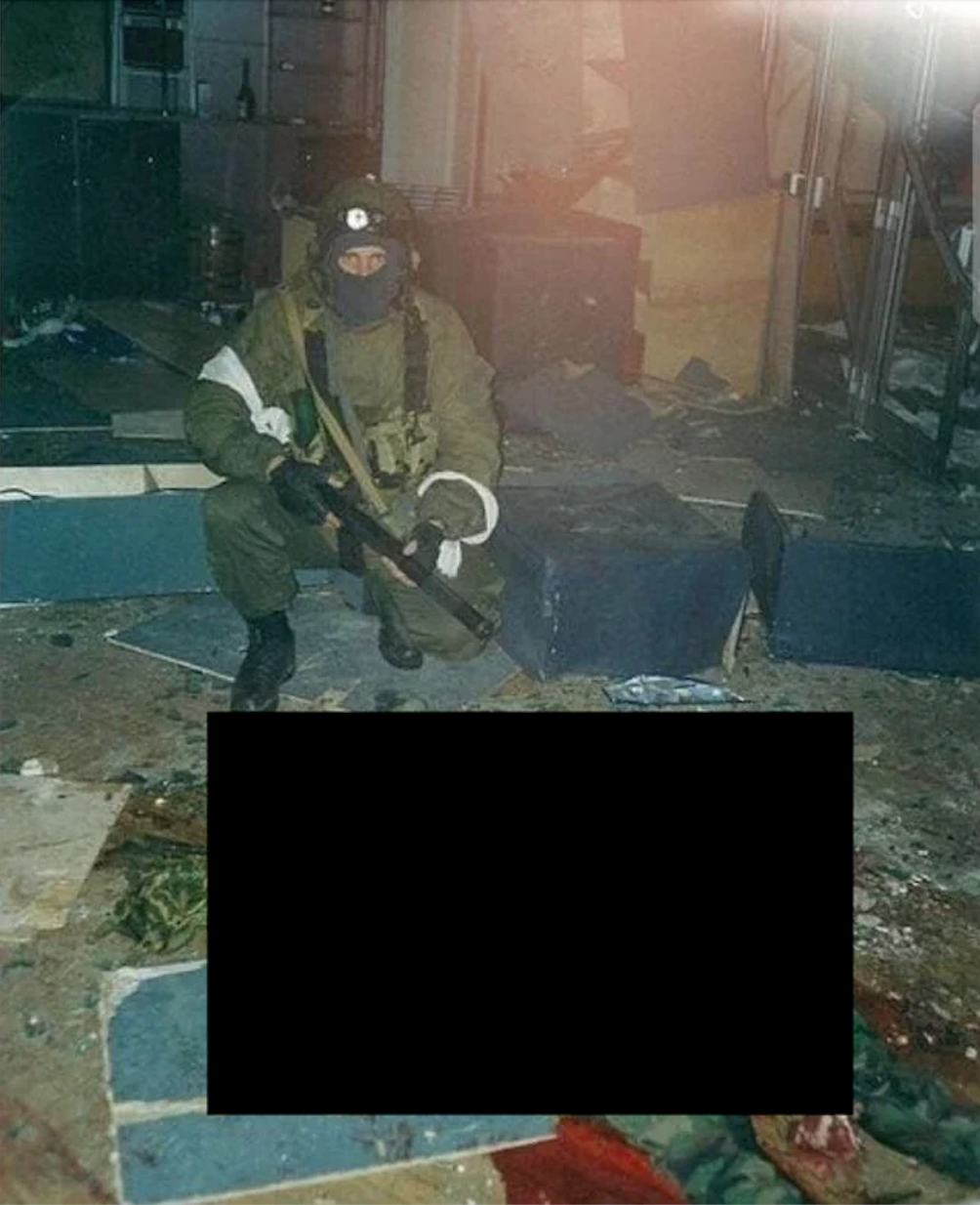
Russian Spetsnaz soldier poses with body of hostage-taker killed during the theater raid.
Image source (WARNING: link contains uncensored image)
3. The Beslan School Siege. On September 1, 2004, the first day of the school year in Russia, a group of 32 armed Chechen separatists stormed and occupied a school in the town of Beslan (in the Caucasus region of Russia) and took more than a thousand hostages, including several hundred children. The separatists, who were loyal to Chechen warlord Shamil Basayev, demanded the independence of Chechnya and withdrawal of Russian troops from the region. The hostage situation lasted for three days, and ended in a complete disaster, with an all-out firefight between the separatists and the Russian military that left 333 victims (including 186 children) and 31 hostage-takers dead.
From a moral/ethical standpoint, the blame for all of the deaths clearly falls on the hostage-takers. However, from a strategic standpoint, the consensus is generally that the Russian military handled the situation terribly, taking a far too heavy-handed approach and engaging the separatists in an all-out battle with heavy weapons and no concern for the welfare of the hostages.
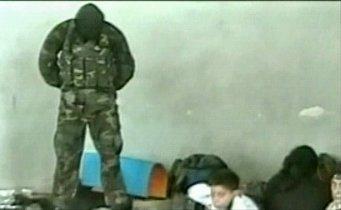
One of the Beslan hostage-takers standing on a dead-man’s switch, designed to detonate if he steps off, dies, or becomes incapacitated. Image source

These are only a couple examples. The book also has plenty of other smaller anecdotes related to the fall of the Soviet Union and Russia’s attempt at democracy in the 1990s, Gessen’s experience as a journalist, the Chechnya conflict, and more.
Conclusion
There’s a Cold War era joke from the 1980s that goes like:
An American and a Russian are arguing about who has more freedom of speech in their country. The American says “The US has so much freedom of speech, I could go out on the street in my country and start shouting about how terrible Ronald Reagan is, and that would be perfectly legal!”
The Russian says “Yeah, well the Soviet Union has freedom of speech too. I could ALSO go out on the street in my country and start shouting about how terrible Ronald Reagan is!”
(Here a video of Reagan himself telling a version of the joke.)
The joke is getting at something real. Authoritarian dictatorships tend to be highly critical of liberal democracies, and liberal democracies tend to be highly critical of… well, themselves.
This is partly a matter of legality. Criticizing the government is simply illegal in countries like Russia and China, and constitutionally protected in the United States. Western Europe and Canada tend to be worse than the US on free speech protections, but still far better than the hardcore authoritarian dictatorships – like, you can at least have a protest without getting thrown in jail usually.
I think another reason for liberal democracies’ self-criticism is that their systems of representative democracy create situations that are two-party or generally two-sided, and then each side criticizes the other. So internally this isn’t self-criticism at all – it’s the in-group / out-group tribal dynamics described in I Can Tolerate Anything Except the Outgroup. But on the level of the society as a whole, it’s basically a self-criticism machine, where each half of the society is constantly incentivized to criticize the other half.
And this self-criticism is extremely important. It’s why liberal democracies are the nicest places to live and why so many people want to immigrate to them. In order to improve, you have to criticize your own flaws and try to work on them.
But this can also paradoxically create a dilemma where people within liberal democracies develop a warped view of things and end up thinking their countries are terrible. For example…
United States: "Jeez, we've done a lot of terrible stuff historically -- slavery, terrible treatment of the Native Americans, oppression of racial minorities. We need to teach this stuff in our schools so that we can learn from it and try to be better. Also Columbus was a dick and maybe we shouldn't have a holiday for him."
China: "We're actually perfect and the Communist Party has a perfect history. 80 million people killed under Mao? That's just western propaganda! Modern day slavery and genocide of Uyghurs? Western propaganda! Tiananmen Square massacre? Western propaganda!"
Me-when-I-was-17: “Wow, the US is pretty horrible. We should try to be more like China.”
Ok, I’m slightly joking/exaggerating here… but not by much. When I was a teenager, I really did go through this phase of thinking the US was a terrible place that was much worse than the rest of the world. It took me a while to realize that the reason there are so many documentaries, books, new stories, and protests criticizing the US isn’t because it’s terrible compared to the rest of the world, but because it’s highly self-critical compared to the rest of the world – and that this is actually a good thing!
Also, I’m not the only one making this error. Here’s a map of how different European countries responded to the statement: “Our people are not perfect, but our culture is superior to others.”
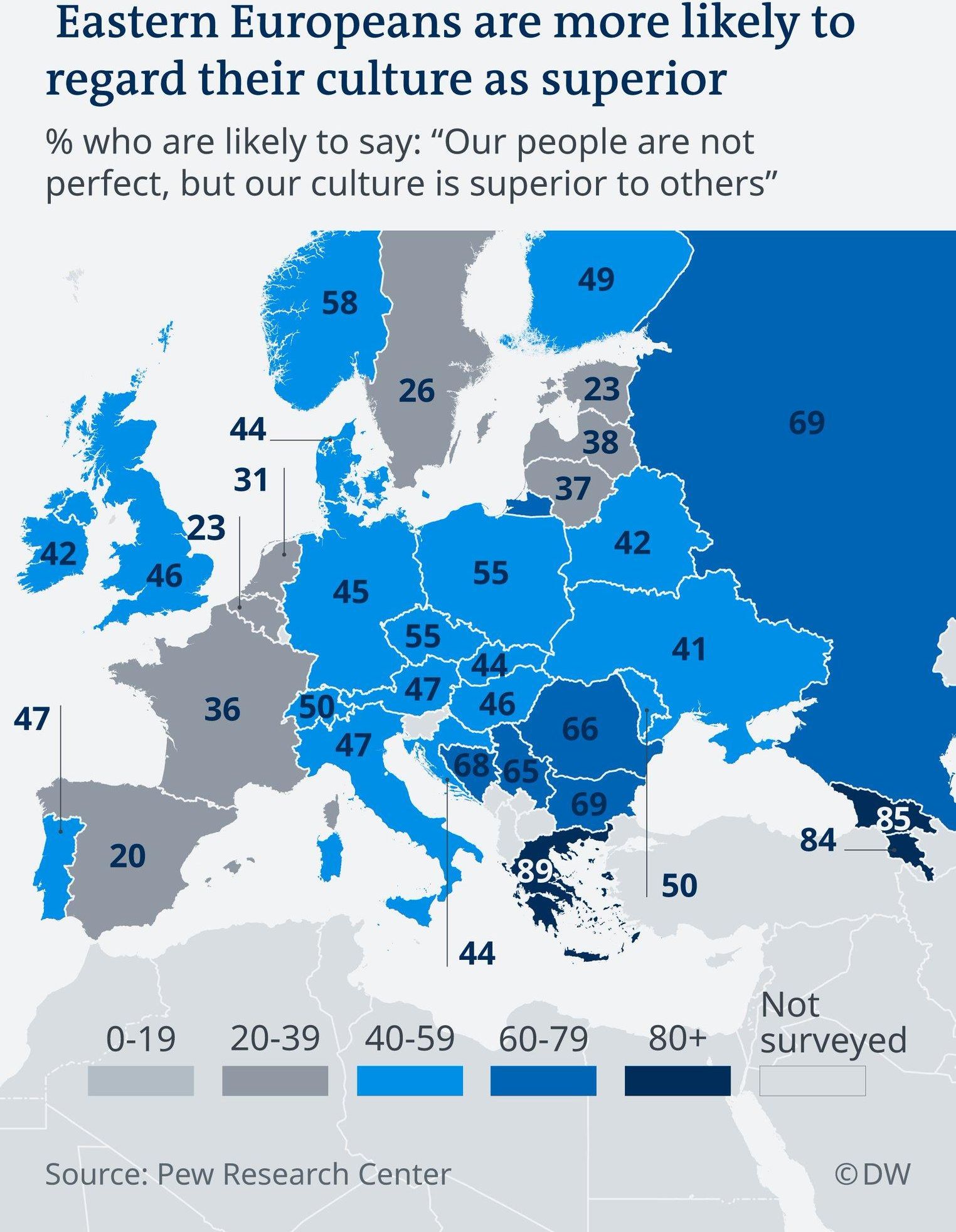
Now take another look at those links to the lists of the happiest countries and countries that people most want to immigrate to. The trend, though not perfect, is that the happy countries that lots of people want to immigrate to (mostly in Western Europe) also tend to view their own cultures more negatively.
Relatedly, there has been a worrying trend on the American political right lately to view the Russian government and Putin favorably. Of course, you can also find these views on the far-left, which is not surprising. After all, Vladimir Putin is himself the one-man embodiment of horseshoe theory, having been both a career KGB officer / communist as well as a right-wing / nationalist dictator. I think what’s going on with both these far-right and far-left pro-Putin Americans is that they’re not really pro-Putin. Rather, they’re extremely critical of American society, and are projecting their idea of what a better society might look like onto a foreign country, without a solid understanding of what the situation is actually like in that country.
Alright, what does any of this have to do with the book? Well, I think books like The Man Without a Face are basically an antidote to this Liberal Democracy Paradox, since they help us get a realistic picture of what the situation is in countries that aren’t liberal democracies. They allow us to still be critical of our own societies, while also having a point of comparison so we don’t trade in what we have for something much worse.