1. The author.
I’ve sometimes talked about Primo Levi, the Italian-Jewish writer, chemist and Holocaust survivor, with men I loved. He was a violent man, one of them – a violent man himself – once told me, referring to the means of Levi’s likely suicide in 1987 – a fall down the stairs of an apartment landing in his native Torino, an industrial city not far from the French border. Another one, a climber, took me to a reading of Levi’s work. There, I first heard the short story Iron from The Periodic Table, one of Levi’s best known works, in which chemical elements give title to episodes of Levi’s life. That story, about a trip to the Alps with a childhood friend who later died in the war, made a long-lasting impression on my late teens self, for the precision of expression and for the epics that perspired from an era where feelings seemed stronger, simpler, and purer. The last and most recent guy told me, “don’t bother talking about non-American culture to an American audience.”
Sorry, darling – I’m going to review The Sixth Day and Other Tales, a collection of science fiction short stories published in 1966 under the pen-name of Damiano Malabaila. The pseudonym was a precaution suggested by Levi’s publishing house, given the lesser reputation of the genre compared to that of his two previous autobiographical works on his experience in Nazi concentration camps (If This Is A Man, American edition: Survival in Auschwitz) and his adventurous return to Italy (The Truce).
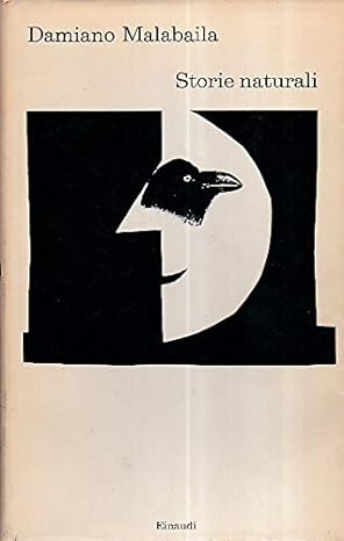
The book’s original cover in the 1966 Italian edition by a Damiano Malabaila.
2. A note on translation.
Before setting out to write this review, I assumed the English version(s) of the book, although perhaps a little obscure (I found no prints after 1990), would follow the Italian one. Of course, I was wrong. There are 15 stories in all the Italian editions – the latest of which was published in 2022 with mild fanfare (national darling! Re-discovered pieces! Look he also wrote sci-fi!) –, and 23 in the English one (see Additional Materials for the complete list). It turns out that the English version unifies what in Italy got published as two separate collections: The Sixth Day itself, and Vizi di Forma (“Form Defects”, 1971).
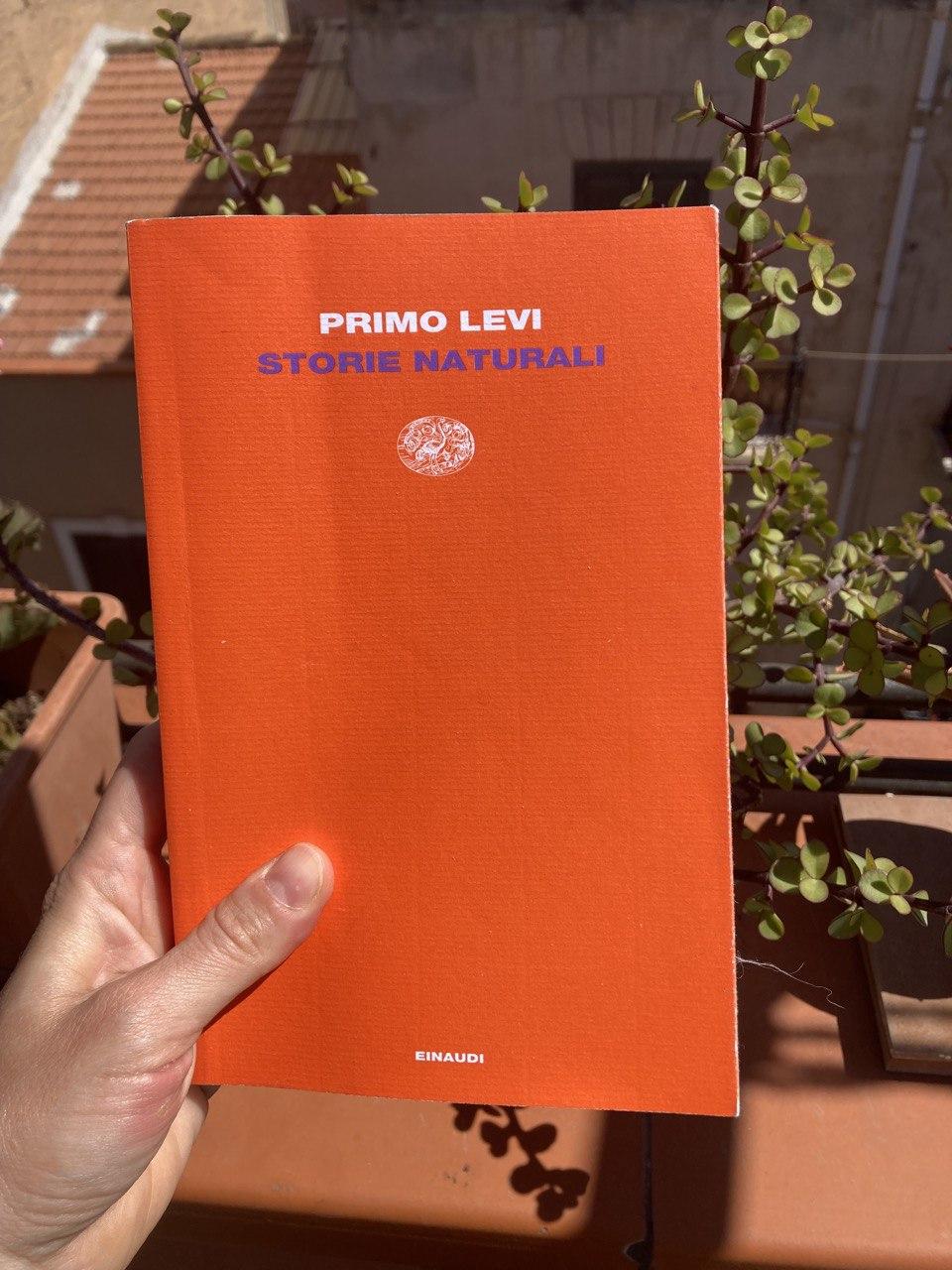
The Italian 2022 edition by Einaudi, Levi’s long time publisher.
What’s more, the English version, while more abundant, doesn’t contain[1] some stories that are instead included in the Italian one. Based on the synopses on the book’s Wikipedia page, I find the English version somewhat grimmer (suicidal lemmings, really? People needing convincing to being born? Life-matters decision-making governed by light signs?), but that’s probably just a prejudice, as, like we’ll see in a moment, the 15 pieces I can talk about are grim enough on their own.
3. The themes.
The Italian title of the collection, Storie Naturali (“Natural Histories”), seems to me less of a mockery of traditional taxonomy and more of a playful, if a little didactic[2], description of the topics of the short stories, which are very there are more things in heaven and earth, Horatio, etc.
There is a whole lot of inventors, scientists, technologists-turned-salesmen, early adopters, all sorts of animals, minerals, inter-species experiments, and extravagant machines bridging the gap between the organic and the synthetic; in fact, the science fiction label is restrictive, as several pieces border with fantasy, dystopian fiction, weird, and not least autobiography, with frequent, overt references to Levi’s Holocaust memories, particularly to the Nazi’s eugenics experiments.
The stories in The Sixth Day are a joy to read for the inventiveness and precision of the language, which even in the realm of the absurd never lets go of a sense of measured realism, akin to other Italian writers of the same region of the time: Cesare Pavese, Beppe Fenoglio, and Italo Calvino – an early champion of Levi and author of the first edition’s back cover commentary. In this sense, they embody all six of Calvino’s Memos: these aren’t hallucinatory dreams, but rather calm accounts of possible realities.
The stories’ topics are the product of technological advancements, post-war consumerism and existential angst of the Sixties; the technological content feels prophetic, and therefore is somewhat less interesting. There are inventions that are supposed to improve the human condition and that sometimes, but not always, fail (a drug transforms pain into pleasure; a machine clones humans and things alike; plenty of AI-like devices replace various aspects of life). There are dystopian, totalitarian regimes (Censorship in Bitinia); machines to which humans outsource creativity (The Versemaker) and labor (Full Employment); eugenics attempts at discovering the super-human (Angelic Butterfly) and quasi-immortal life (The Sleeping Beauty in the Fridge: A Winter’s Tale).
Levi, a technologist himself, accepts the inevitability of technology and describes people’s funny and unfortunate interactions with it in a non-judgmental fashion, which is one of his most modern characteristics. The creators – scientists, medical doctors, engineers – aren't happy people: in the best cases, they end up briefly incarcerated (Some Applications of the Mimer) or corrupted (The Measure of Beauty), and in the worst ones succumb to their own inventions (Versamina, Retirement Fund).
I’ve seen Levi’s work compared to Aldous Huxley’s – and indeed (Wikipedia)
the difficulties and dangers of world overpopulation; the tendency towards distinctly hierarchical social organization; the [...] use of technology in mass societies susceptible to persuasion
are among some of The Sixth Day’s overlying anxieties; and to Ray Bradbury’s, for the common preoccupations with the effects of censorship and conformity on the human condition.
My millennial eyes have looked for traces of Ursula Le Guin – aren’t there delicate explorations of emotion? A curiosity towards relationships? –, but Levi was a socially conservative man and his profound sympathy for the human condition didn’t transcend the customs of his time. Female figures in The Sixth Day are deliciously unacceptable: women are secretaries, NPCs, wives (patient, bored, presumably jobless), and consent-lacking subjects of experiments, while men invent, do business, and are generally busy experiencing the world. Along with the too-easily-fulfilled prophecies on technological advancement, I guess such treatment is among the elements that makes The Sixth Day
the flavor of mid-20th century international style furniture,
but differently from the author of this Goodreads review line, I do not take it as a sign of a lesser work.
Animal lovers and empathetic souls of all kinds will find The Sixth Day a painful read. There is, for example, a lab wolf dog
whom we wanted to keep alive at all costs, against its will, as it seemed to have no other desire other than self-destruction: he'd bite its legs and tail with senseless ferocity, and when I made it wear a muzzle, it would bite its tongue;
a young female horse
found agonizing, her cervix torn
by a centaurus’ blind sexual appetite; manipulated dragonflies, whose collective-minded behavior serves their human master’s purpose; and many similar instances.
In all this cruelty, Levi treats organic and inorganic matter with the same detached compassion. Many of the stories feature plastic interspecies exchanges, similar to those that penetrated pop culture in recent years. Cars have genders, sex preferences, and can catch parasites (Cladonia Rapida / “Fast-Acting Cladonia”; this one is funny as Torino, where Levi lived all his life, is one of Europe’s oldest automotive industrial cities), and people’s clones have of course the same wills and troubles of their originals.
Recurring characters help make the collection a coherent universe. Many of them are more than a little stereotypical: an engineer named Gilberto who in spite of
possessing a clear gift when it comes to sketching differential equations on the back of a packet of cigarettes, is completely helpless at expressing his own feelings
(the guy in question happily clones his own wife); a Mr Simpson salesman
but not of the usual kind, who remind me of stuffy lawyers: for he’s really enamored with NATCA products. He believes in them with uttermost faith; he torments himself when they fail to deliver or break down, and he succeeds when they succeed. At least, that’s the impression he gives out; which, to all practical purposes, is the same.
This Mr Simpson works for NATCA – an Apple-like electronics megacorp that builds almost anything, good and bad products, from perilous toys for the masses to useful work aids.
I am less interested here in the science contained in The Sixth Day, real or imagined. For the sake of completion, I will note that there are many invented but plausible chemical elements, fused in an alchemist-reminiscent quest to recreate organic processes.
4. Form and language.
The Sixth Day’s stories have got a wide variety of registers. Two are written in the form of a screenplay, starting with a character list and interspersed with indications about changes of scene; one is a dispassionate bureaucratic report, and a couple mimic the scientific jargon of a academic papers; several are the first-person recounts of a NPC that Levi isn’t preoccupied with conceiving as himself; notably, such narrator is uninterested in taking any action even in the face of the most appalling aberrations.
The confidentiality with which Levi indirectly addresses the reader to lure them into his stories (the most absurd facts are preceded by expressions such as "It is known .."; fictional laws and product functionalities are "well-know", etc.) is contagious, and provides a solid reality check. Like any Italian intellectual trained in the classics, Levi invents many words drawing from Greek.
Several passages[3] light up with the sparks of Levi’s extraordinary linguistic creativity, with few, well-placed words depicting whole universes:
Some people even keep… an alive cat or dog.
5. My top 3.
The title tale, The Sixth Day, in which a committee of zealous god-like technicians discusses how to design “The Human”, is one of the most enjoyable reads. The creation-of-man trope provides a familiar frame that makes the piece easy to read, and the rest is just funny. The way the creators impose all sorts of constraints over each one’s specialities reminds me of modern product design and, in particular, my TikTok darling AI Meeting Recorder.
I love The Versemaker (named after a ChatGPT-like machine for creative work assistance) for its play-like form and the irresistible characterization of the self-important Poet, the god-fearing but intelligent Secretary, and the comic NATCA Salesman.
Another favorite story[4] is The Mnemogogues, where an old country doctor discovers a way to recreate memories, for the seamless way in which the absurd slips into a typical Torino countryside still life – one could almost smell the fog of the hills in autumn and take a seat in the man’s dusty office. I like the use of the sense of smell as one of a chemist’s finest tools – something that Levi relied on himself in his early professional days as a chemistry consultant. Unlike most other stories, this isn’t doom-infused, but the lingering threat given by the never explicitly mentioned addictive potential of the memory device makes it all the more unsettling.
7. Conclusion
Maybe it so just happens that the life I live now is connected to Levi in many forms. I too live in Torino, the city where he lived and died; I cycle past his family house on Corso Re Umberto as part of my daily commute to the city center. The places where he spent his childhood summer vacation, southwest of the city, are where I have my happiest memories with my own friends; chemistry, Levi’s lifelong occupation before becoming a full-time intellectual, is also the profession of both of my parents, who failed at instilling the subject in me but succeeded in passing one of Levi’s ethical archetypes: that of
loving one's job [...] is the best concrete approximation to happiness on earth.[5]
though many people from my generation disagree.
There are many signs from his presence here – from my younger cousins visiting the science museum that occupies the paint factory where Levi worked for twenty years as a plant manager and technical director; to my friend’s neighbor, an elderly American woman who used to give him English lessons.
Levi was the quintessential European man of the last century: cultivated, tormented, concerned about collective well-being, old-fashioned about gender roles, and well-versed in both science and the arts – the latter a way to cope with his generation’s enormous traumas. We might not care now if he predicted modern obsessions with prolonging life or painkillers. The legacy of The Sixth Day, like all good art, is a reminder that literature, though it might not save us, is what makes life more bearable.
He is headed toward death, he knows it and does not fear it; for he already experienced it, in six different versions, recorded on six of the black cover tapes.
Written in Palermo
Additional materials
These are the stories contained in the 2022 Italian “orange” edition, which are also included in the English ones:
- The Mnemogogues (I Mnemamgoghi)
- Angelic Butterfly (Angelica Farfalla)
- Order on the Cheap (L’ordine a buon mercato)
- Man’s Friend (L’amico dell’uomo)
- Some Applications of the Mimer (Alcune Applicazioni del Mimete)
- Versamina (Versamina)
- The Sleeping Beauty in the Fridge: A Winter’s Tale (La bella addormentata nel frigo: Racconto d’inverno)
- The Measure of Beauty (La misura della bellezza)
- Full Employment (Pieno impiego)
- The Sixth Day (Il sesto giorno)
- Retirement Fund (Trattamento di quiescienza)
These are the additional tales that are included in the English edition but not in the Italian ones:
- Westward (Verso occidente)
- Seen from Afar (Visto di lontano)
- The Hard-Sellers (Procacciatori d’affari)
- Small Red Lights (Lumini rossi)
- For a Good Purpose (A fin di bene)
- Psychophant (Psicofante)
- Recuenco: The Nurse (Recuenco: la Nutrice)
- Recuenco: The Rafter (Recuenco: il rafter)
- His Own Blacksmith: To Italo Calvino (Il fabbro di sé stesso)
- The Servant (Il servo)
- "Mutiny: To Mario Rigoni Stern (Ammutinamento)
- Excellent Is the Water (Ottima è l’acqua)
Footnotes
- ↩
These are the missing stories: Censura in Bitinia (“Censorship in Bitinia”), a dystopian regime’s dry account on the outsourcing of routine censorship work to chickens; Il Versificatore (“The Versemaker”), about a machine that’s able to invent stories on behalf of The Poet – who still needs the convincing of an old-school/seasoned salesman to make up his mind and buy the thing; Quaestio de Centauris, in which the myth-respecting wisdom of a centaur named Trachi does not save him from going mad for love; and «Cladonia Rapida» («Fast-acting Cladonia»). If anyone has information on whether they ever got translated and where, I’d be interested to know!
- ↩
One Amazon reviewer notes Levi’s “relevance to us as science teachers”.
- ↩
Translations from Italian are mine.
- ↩
Among the ones that are included in the English version
- ↩
From The Monkey Wrench, 1978.