1. The Thirteenth Novel
For Cormac McCarthy, The Sunset Limited is a relatively cheerful book. Unlike some of his other novels, Outer Dark and The Road, no one cooked and ate their own baby around a campfire. Unlike Blood Meridian and Child of God, not a single corpse was raped. But it seems The Sunset Limited makes people the most uncomfortable.
When McCarthy passed away last year he was the most award-winning novelist in America. His fans organized annual festivals in the Texan desert where he set his westerns. He was revered by critics as one of the greatest writers of his generation and they nominated him for one award after another. But there’s something very odd about his critical reception. These critics say that McCarthy published twelve novels, which is strange, because McCarthy believed that he published thirteen novels. It’s as if critics have collectively decided that The Sunset Limited doesn’t exist, like it must not be spoken of.
There are a number of reasons why no one talks about this book. I think it’s partly because McCarthy said it was a novel, but in dramatic form. But I suspect another reason is that it doesn’t stand on its own. McCarthy’s most famous work is Blood Meridian, which was named as one of the top 100 novels ever written in the English language. Fortunately, it's not the first McCarthy novel I read. If it was, I wouldn’t have read a second book by him. It was boring. Then I read Sunset and something clicked. Blood Meridian became far more interesting, but also, Sunset just doesn’t stand on its own without McCarthy’s broader work.
The Sunset Limited has only two characters, never referred to by name, just by the color of their skin. Black has just stopped White from jumping in front of a train, the Sunset Limited. White still wants to die but Black says he’ll follow him and stop him again. White says that he can’t stop him forever so they come to a compromise. They’ll eat together at Black’s apartment and afterwards White will decide whether or not to go back to the train station. Every page of The Sunset Limited is a single, unbroken scene in Black’s kitchen where they debate whether White will commit suicide after he leaves the apartment.
2. Nobody wants to leave
Black asks why he decided to die today. White says that nothing unusual has happened. He hasn’t lost any family members recently. Nothing has traumatized him. White says it’s been a decision he’s come to gradually.
White brings up God after he sees a Bible on the table and begins to mock Black for his faith. McCarthy was an atheist. It would be easy for him to write a story where the atheist validates his own views and the people who think differently are defeated. But that’s not how things go. But also, McCarthy was an atheist, and this isn’t a story of White finding Jesus.
I want to make a distinction here about Black’s belief in God. Eliezer Yudowsky writes about the difference between belief versus belief in belief. Yudowsky (via Carl Sagan) proposes the example of someone claiming there is an invisible dragon in the garage. You offer to verify whether the dragon exists by listening for its breath. The person says it’s a silent dragon. You offer to toss flour into the air to see if it would outline the body. But the person says the dragon is permeable and the flour will go right through it. What would falsify their belief in the dragon? Does this person actually believe that the dragon exists, or do they believe that it is virtuous to have faith that the dragon exists? In other words, do they believe that faith in the dragon is a worthy goal in and of itself (belief in belief)? Or do they believe that there’s a dragon in the garage?
Black actually believes in God and came to believe when he heard God’s voice in his head. He doesn’t believe that it’s virtuous to believe. He believes.
White thinks that belief in a deity is insanity and people should be locked up in a padded cell for hearing voices: “If you and I say that I have my coat on and Cecil says that I’m naked and I have green skin and a tail then we might want to think about where we should put Cecil so that he wont hurt himself.” But of course, White is the one who is actually trying to hurt himself. McCarthy recognizes that if you just believe that you believe, then maybe you aren’t genuine. But if you really believe, then a certain segment of our population regards you as schizophrenic.
Black asks White what he does believe in. White says he used to believe in the value of culture but the culture lost its value. But why did it lose value? White says that books and music and art lost their value because “People stopped valuing them. I stopped valuing them.” Black is baffled by this: “You sayin that all this culture stuff is all they ever was tween you and the Sunset Limited.” After all, there are plenty of atheists who have no urge to commit suicide. White says, “My own reasons center around a gradual loss of make-believe. That’s all. A gradual enlightenment as to the nature of reality.”
White mocks Black for believing in God and Black mocks White for thinking he’s smarter than everyone else. After all, if White is killing himself because he’s enlightened then does that mean that everyone else hasn’t killed themselves because they just aren’t as smart as White? Are we all still alive because we’re just too dumb?
McCarthy thought and wrote about suicide for decades. The Stonemason, The Road, The Passenger, Stella Maris, all heavily focus on suicide. I have no idea if he was depressed, but no one who knew him has mentioned anything about it. It seemed to be more of an intellectual curiosity. During a talk at The Santa Fe Institute, someone said that humans are the only species that commit suicide and Cormac McCarthy quietly corrected him: “Dolphins do.” It’s the sort of odd bit of trivia that only someone obsessed about suicide in an intellectual way would know. McCarthy was particularly fascinated by why more people don’t kill themselves.
McCarthy’s dialogue draws heavily on regional sayings from the American South. One of them is “Everybody wants to go to heaven but nobody wants to go right now.” In The Road, a father and son wander a postapocalyptic wasteland and watch the misery of the last survivors struggling through starvation as the world descends into nuclear winter. The final remnants of humankind are deeply unhappy and turn to cannibalism in their desperation to survive. The father observes: “Nobody wants to be here and nobody wants to leave.”
The main question of The Sunset Limited is why don’t more people want to leave?
3. Blood Meridian
Blood Meridian; or The Evening Redness in the West was closely based on an autobiographical account, My Confession: Recollections of a Rogue, written by a member of the Glanton Gang that hunted down Apaches and sold their scalps to the Mexican government. McCarthy traced the exact routes that the Glanton Gang took through Mexico and Texas and traveled them himself. He described almost every mountain and plateau with extreme detail. He learned Spanish so he could write dialogue with Mexican characters in the language it would’ve been spoken in. But one major departure from the autobiographical account is that McCarthy added a couple extra characters into the gang: the devil and an ex-priest. Judge Holden is either the devil, or at the very least a demon. The ex-priest is named Tobin. Judge Holden and Tobin ride around the desert, discussing philosophy as they murder and their debate parallels the debate in Sunset between White and Black.
The Glanton Gang runs out of Apaches and hunts Mexican villagers instead, selling their scalps to the Mexican government who can’t tell where they came from. Judge Holden tells the gang:
Moral law is an invention of mankind for the disenfranchisement of the powerful in favor of the weak. Historical law subverts it at every turn. A moral view can never be proven right or wrong by any ultimate test.
Let’s say you were trying to train a machine learning algorithm to play Tetris. It has four actions: move the block left, move the block right, or rotate it clockwise or counterclockwise. At each time step your AI inputs the current state of the world (an image of the game) and estimates a probability distribution, let’s say: 70% to move left, 20% to rotate clockwise, 8% to move right, and 2% to rotate counterclockwise. At each time step the goal is to output the probability that each possible action will optimize some objective function. In this case, to get the blocks horizontally across the bottom row. But of course, you could change the objective function to any number of things.
It’s up to the ML engineer to decide which objective function is the correct one. But what if you take away this creator? Holden sees moral law as invented by humans with no god who created the world. There is no objective function that can be proven right or wrong. In traditional faiths, configurations of matter exist in a state of moral virtue or moral sin.
Traditional religions tend to come with a set of rules. You should help the poor. You shouldn’t murder. You shouldn’t eat pork. You should eat fish on Fridays. We usually call these things commandments or taboos. I call these rules an objective function. Of course, there's a lot of room for interpretation. Different denominations of Christianity interpret the same text very differently. But these denominations are all attempting to optimize the objective function they’re given, they just think there’s ambiguity in it.
If we set a maximum character limit, we can have a finite number of moral objective functions and enumerate them all. How do you decide which ones are correct or incorrect? Perhaps it’s a simple objective function that Peter Singer proposes: to minimize suffering. But of course, what if Judge Holden comes along and murders you? What do you do to enforce your morality as the correct morality? Judge Holden argues that a duel will decide:
A man falling dead in a duel is not thought thereby to be proven in error as to his views. His very involvement in such a trial gives evidence of a new and broader view. The willingness of the principals to forgo further argument as the triviality which it in fact is and to petition directly the chambers of the historical…
By “chambers of the historical” he means historical law, which to Holden means war. Holden argues: “If war is not holy man is nothing but antic clay.”
During the conversation in The Sunset Limited, Black tells White about his conversion to Christianity. He was in a prison fight when he beat someone nearly to death and was stabbed and following this sin God spoke to him and he was saved. In Black’s interpretation of Christianity, matter exists in sinful configurations like when you have a knife in someone’s stomach. Judge Holden disagrees and claims that moral view is an invention. White calls it “make believe” and he’s lost his sense of make believe and that is what brought him to the train station to throw himself in front of the Sunset Limited. If there is no god, then the morality of Western Civilization is the make-believe of a nomadic desert tribe from three thousand years ago.
Without a deity, how does a society decide which moral laws are correct? Judge Holden argues there is no way to prove a moral law as right or wrong and that power is the only way that one law becomes seen as moral versus another one as immoral. It’s not the decisions of a deity, it’s the winner of warfare.
White says that he used to have beliefs in the values of our culture, but those were dependent on other people also collectively believing in their value. White says:
The things that I loved were very frail. Very fragile. I didnt know that. I thought they were indestructible. They werent.
One possibility to explain White’s desire for suicide is that he is in despair over the lack of coordination in our society. Nietzsche argued that the Enlightenment and Scientific Revolution had disrupted the alignment of the culture around Christianity and called this the death of God. Nietzsche argued in The Gay Science that without belief in God, humankind would have to invent our own moral structures: “What festivals of atonement, what sacred games shall we have to invent?” In Blood Meridian, Judge Holden argues that the winner of warfare is the one who decides what is sacred in society. The ex-priest calls this blasphemy. Judge Holden says: “the priest has put by the robes of his craft and taken up the tools of that higher calling [war] which all men honor. The priest also would be no godserver but a god himself.”
White looks around at his society and sees that the things he once valued seem to have no sacredness. Whoever has power does not value the things he once did. White’s values weren’t absolute, they were relative, and dependent on the beliefs of others. White lost his faith in the inherent value of things when he realized they were determined by violence. He believes this is the death of Western Civilization more broadly.
But if Judge Holden believes in a purely atheistic universe then how is he the devil?
4. Gnosticism
In addition to suicide and Nietzschean philosophy, McCarthy was also fascinated by Gnosticism. This is a religion that lots of people talk about but not many people practice, or at least don’t openly practice it. It’s the general idea that the world was made by some demon or devil or (depending on your flavor of Gnosticism) perhaps Satan defeated God and banished Him. It also involves the belief that we’re lied to about the prison we live in and we are called to become enlightened to the true nature of the demonic world around us. This devil is typically referred to as the demiurge.
In the gnostic belief system, the very fact that we live in a prison is hidden from us. As White tells Black in The Sunset Limited: “the world is basically a forced labor camp from which the workers—perfectly innocent—are led forth by lottery, a few each day, to be executed.” White believes he has become enlightened to the nature of reality.
You can probably guess where this is going for White.
Why don’t more people want to commit suicide? Black argues that the reason that White wants to die is not because he’s atheist. Black suspects he does have religious beliefs: “I think it’s what you do believe that is carryin you off, not what you dont.” Finally, White agrees. He does believe, just not in a christian god:
“I know what is out there and I know who is out there. I rush to nuzzle his bony cheek. No doubt he’ll be surprised to find himself so cherished. And as I cling to his neck I will whisper in that dry and ancient ear: Here I am. Here I am.”
5. A Note on form
The full title of the book is The Sunset Limited: A Novel in Dramatic Form. Most critics will tell you that Sunset isn’t even a novel, even though the subtitle includes the words, “A Novel.” David Foster Wallace could have subtitled Infinite Jest as “A Novel Mostly in the Form of Endnotes” and it would still clearly be a novel. McCarthy didn’t just casually mention that it was a novel in an interview or in some offhand comment. He said it right on the front cover.
Most critics see McCarthy as a novelist who occasionally dabbled with writing a couple plays. His novels are seen as his primary work and his plays as his lesser work. By redefining Sunset as a dramatic work rather than a novel, as McCarthy intended by the title, it categorizes Sunset in with his “lesser works.” But I don't think this is a helpful way of understanding his fiction because almost everything he wrote—whether it was clearly a novel or clearly a play—blurred the line between novel and drama.
Most authors tend to write in one of a few different points of view: first person, third-person limited, or third-person omniscient. McCarthy chose none of the above. His novels are written in something called the third-person dramatic, which can be imagined as if the narrator is sitting in an audience watching a play. The narrator has no knowledge of the characters’ internal thoughts, and only witnesses what they do or say as well as the setting around them.
His novels often have long stretches of dialogue, often many pages or even an entire chapter of nothing but unbroken back-and-forth dialogue. One of his most famous novels, No Country for Old Men, began as a screenplay and remained a screenplay for his first four drafts until he eventually rewrote it as a novel. Child of God started as a novel and remained a novel, but in the marginalia of his drafts, McCarthy wrote handwritten notes where he debated with himself on how to write a scene[1]. He eventually resolved his debate with the phrase “Hitchcock would just leave it.” In other words, he wrote his novels thinking about how a film director would write the scene.
Most scripts aren’t very fun to read because they aren’t meant to be read, they’re meant to be watched during a performance. But The Sunset Limited is fun to read but not as fun to watch. Tommy Lee Jones made an adaptation of it as a passion project with Samuel L. Jackson. They’re both great actors and they put as much effort into it as you’d expect from a personal passion project, but in the end, their film makes it clear that this script wasn’t meant to be performed. The Sunset Limited: A Novel in Dramatic Form is undeniably a script, but is clearly meant to be read as novels are.
The Tango of Ethics: Intuition, Rationality and the Prevention of Suffering, by Jonathan Leighton
[Content warning: Unbearable suffering, spoilers for decades-old science fiction, poetry.]
I.
The Tango of Ethics by Jonathan Leighton, founder of the Organisation for the Prevention of Intense Suffering, is a book about intense suffering. It is about as enjoyable as a book on that topic could possibly be, which is to say it is still a huge bummer. It asks you to contemplate depressing questions like: “Would it be better if sentient life had never existed?” and “Should vegans go hungry at parties?”
Would I still recommend it? Yes, to two groups of people. The first is anyone who enjoys reading well-written musings on ethics and is already on board with, or at least curious about, a suffering-focused approach. Much of The Tango of Ethics is about how to incorporate the stark implications of suffering-focused ethics into a life well-lived, and into a holistic worldview that has a snowball’s chance in hell of being widely adopted. Leighton offers wisdom on a wide range of topics, such as: facing reality without succumbing to nihilism, avoiding the pitfalls of naive consequentialism, navigating tensions between moral purity and impact, and balancing individual with collective action. In short, how to take ideas seriously without following them off a cliff. It’s the sort of book I wish Sam Bankman-Fried had read. If that sounds good, then it’s probably worth reading it yourself – I won’t expand much on any of those themes here.
The second group I’d recommend the book to is anyone whose altruistic efforts are aimed at saving the world from existential risks and/or spreading consciousness to the stars. Leighton’s core argument, which I hope to do justice here, is – with a couple of caveats – the most compelling case I know of for feeling deeply uneasy about that project.
II.
If Leighton wanted to summarize that core argument in a tweet – and within the 280-character limit for free X accounts to avoid paying Elon Musk, who is himself “accumulating resources to help make life multiplanetary and extend the light of consciousness to the stars” – I’d suggest something like:
Only suffering has an inherent urgency for relief; there’s no corresponding need to create bliss. People are sometimes willing to trade these things off, usually from a position of ignorance about the worst suffering, but that shouldn’t fool us into thinking they’re commensurate.
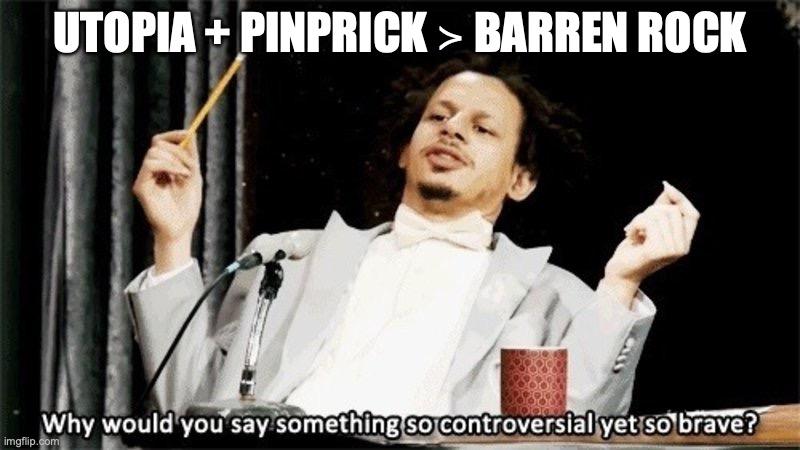
Speaking of X, Leighton calls his preferred variant of negative utilitarianism xNU+, where the x stands for extreme suffering. (I’ll get to the + bit later, and drop it for now.) xNU distinguishes itself from strawman negative utilitarianism by being willing to say that a utopia marred only by a single pinprick is better than a barren rock.
It also differs from classical utilitarianism and some other variants of negative utilitarianism in saying that even unfathomably many instances of trivial suffering (like specks of dust in people’s eyes) are preferable to a single instance of torture.
And if we’re playing the axiology game – the straight-faced philosophical cousin of “Would you rather?” – then those seem like two very nice and sensible things to say.
Now readers who remember the ACX review of What We Owe The Future might suspect that a spoilsport philosopher could pop out and demonstrate, with impeccable logic, that xNU commits us to some other seemingly absurd conclusion. And they’d be right: Toby Ord or Eliezer Yudkowsky would be happy to oblige.
The gotcha with xNU comes at the threshold where suffering becomes sufficiently minor that it can be outweighed by other things. Wherever you draw that threshold, you’re saying that arbitrarily many instances of just-below-the-threshold suffering are preferable to even a single moment of just-above-the-threshold suffering.
Take headaches, for instance. There is a world of difference between minor ones, which after some painkillers and a glass of water are soon forgotten; and cluster headaches, which are even more painful than childbirth or kidney stones according to people who’ve experienced both. (Not coincidentally, Leighton has spent a good chunk of his career advocating for cluster headache patients to be allowed psychedelic drugs that reportedly help a lot.) But presumably it’s a matter of degree, and we can imagine a continuum of headache intensities that goes all the way from barely noticeable to cluster headache. How to draw the line between bearable and unbearable, outweighable and not?
So, back to the drawing board for xNU? Well, moral philosophy is lousy with impossibility theorems that say you can’t always get what you want. In fact it’s worse than that: you can’t always even coherently want all the things that it seems would be obvious to want on their own. The best-known of these is the mere addition paradox, of “repugnant conclusion” fame. But the hardworking spoilsports at the Global Priorities Institute are churning out new ones all the time.
Faced with these sorts of paradoxes, the options are to bite one of the bullets – embrace one of the seemingly absurd conclusions – or let go of the idea of having a complete ranking of every possible situation that doesn’t go round in circles.
Leighton’s answer to the “Where to draw the threshold?” objection is to say we can have ranges rather than thresholds. I don’t think this gets him very far out of trouble, because the question just shifts to where the borders between the ranges are. But Leighton is happy to take the escape hatch of incompleteness – to admit that his axiology doesn’t give clear answers about what’s best in all situations.
Is this a cop-out? Yes. And an axiology that declares some situations literally incomparable is obviously less practically useful than one that’s more sure of itself. But until philosophers solve ethics, and find a comfortable resting place somewhere among the hard edges of all those impossibility theorems, I’m much happier with “Doesn’t Have All the Answers” than “Prefers Torture to Dust Specks”.
III.
Do these philosophical distinctions matter? Given their differences, there’s actually a remarkable degree of consensus among classical and negative utilitarians about how best to put their ideas into practice. Part of the reason for that is that money can buy happiness, but after a certain point it gets really expensive. And there are some forms of suffering in today’s world – people in poor countries suffering from preventable disease, and animals being tortured on factory farms – that are relatively cheap to alleviate. They might place a different emphasis on saving versus improving lives, but as far as I know there aren’t any classical utilitarians scouring the globe for the most gleeful sadists and helping them take candy from babies. Nor is there anybody trying to farm as many happy animals as possible to “make up for” all the suffering ones.
But contemplating existential risks, which effective altruists have been doing more of lately, throws axiological dilemmas into sharp relief. Faced with the stark choice of continued existence or the void, it really matters whether we think pleasure can outweigh pain.
As Leighton points out, classical utilitarians are open to the possibility that the world could in fact be “net negative”, that all the joy in the world does not outweigh all the suffering. So under sufficiently terrible circumstances, faced with Hell or the Void, classical and negative utilitarians could still agree to prefer the Void.
So the real crux of disagreement is whether a world containing many instances of great joy and (relatively) few instances of extreme suffering is preferable to nothing at all.
There’s a famous short story, “The Ones Who Walk Away from Omelas”, where a utopian city of thousands living blissful lives is dependent for its harmonious prosperity on the fact that there’s a single child living a miserable life in a dungeon. I used to find it frustrating that the author never explains why the suffering is necessary, but now I think I get it – the universe doesn’t do much explaining, either.
And Leighton points out that, horrifying as it is, Omelas is about as good a deal as the universe is likely to offer us. Both in terms of the absolute amount of suffering, and the ratio of suffering to joy, Omelas is specified to be much better than our current reality, where even in Japan incarceration rates are about 1 in 3,000, and where presumably many prisoners have committed crimes that inflicted severe suffering on other members of society.
IV.
So Leighton would prefer the Void to Omelas. In case at this point you’re tempted to condemn Leighton’s philosophy as having omnicidal implications, I should remind you that the book is full of sage advice on not following abstract philosophical ideas off a cliff. This is where the “+” bit in Leighton’s xNU+ comes in. The book’s official subtitle is Intuition, Rationality and the Prevention of Suffering, but if I had to sum it up in a single line, it’d be Taking Suffering Seriously Without Becoming an Omnicidal Maniac.
For the avoidance of doubt, here’s Leighton in his own words:
There is a huge difference between evaluating two situations and determining that one is objectively better than the other, and labelling someone’s actions as either “right” or “wrong” in a morally judgemental way—even if a situation was improved or made worse by their actions.
[…]
[F]rom a consequentialist, impact-based perspective, [utilitarianism, deontology and virtue ethics] can also be seen as providing answers to different questions:
- What outcomes do we want for our actions when we look at the world objectively?
- What rules can we follow to get there effectively? And what other rules do we need to follow for other, indirect reasons, such as not generating huge tensions and opposition that would ultimately undermine the ethical objectives?
- What character and ways of thinking do we want to instil in people so as to achieve the desired outcomes?
[…]
[T]he fact that strictly following negative utilitarianism might seem to lead to the conclusion that we must destroy the world is another refutation of moral realism, not of negative utilitarianism itself… [A]s an answer to the world destruction criticism, I [have] proposed a variation of negative utilitarianism that I called “negative utilitarianism plus”, in which we simply assert our desire for continuity and refuse to destroy the planet and everything we care about in the process. This is a fundamentally different approach than pretending that all the happiness makes the suffering worthwhile. Rather, it’s a pragmatic concession to one of our deepest intuitions.
And in the world of revealed preferences, which everyone knows speak louder than stated preferences, Leighton can be found spending his time trying to get terminal cancer patients in Africa access to painkillers and bring peace to the Middle East, rather than plotting to blow up the planet.
V.
How can negative and classical utilitarians try to resolve the Omelas versus Void crux?
Leighton uses a couple of rhetorical moves that I don’t think are likely to work on anyone not already sympathetic to negative utilitarianism. He wants to draw a distinction between suffering, which is “urgent” and what really matters, and our survival instinct, which he labels variously as a mere intuition or “existence bias”. But presumably survival feels pretty urgent when you’re being chased by a bear. And an unsympathetic reader could simply reverse the move and label our aversion to torture mere “comfort bias”.
So why, despite these quibbles, did I nonetheless find Leighton’s case convincing? Why am I currently very queasy about the idea of trying to reduce existential risks under the banner of effective altruism?
When it comes to the Omelas vs. Void crux, I think we’re at the limits of the ability of logical reasoning – at least my own – to persuade.
What tools of persuasion are left to try to resolve disagreements among people of good faith and sincere compassion? (Which, I hope it’s clear, I think goes for everyone referenced in this review.) Unsettling thought experiments, rhetorical questions, and – Lord help us – poetry. Here goes.
VI.
The late 1970s were a good time to be a science fiction fan: 1977 saw the release of the first installment of Star Wars, and in 1978 The Hitchhiker’s Guide to the Galaxy was broadcast on the radio.
The late 1970s were the worst possible time to be living in Cambodia.
In the very same moments that people in the West were watching the Death Star vaporize the planet Alderaan, or hearing about the Vogon Constructor Fleet doing the same to Earth, about a thousand people were being held prisoner in Security Prison 21, aka Tuol Sleng. Rather than have to decide how to draft sentences about the horrendous ways in which they were tortured there, I will simply quote from Wikipedia:
Most prisoners at S-21 were held there for two to three months… Prisoners were routinely beaten and tortured with electric shocks, searing hot metal instruments and hanging, as well as through the use of various other devices. Some prisoners were cut with knives or suffocated with plastic bags. Other methods for generating confessions included pulling out fingernails while pouring alcohol on the wounds, holding prisoners' heads under water, and the use of the waterboarding technique. Women were sometimes raped by the interrogators, even though sexual abuse was against Democratic Kampuchea (DK) policy. The perpetrators who were found out were executed. Although many prisoners died from this kind of abuse, killing them outright was discouraged, since the Khmer Rouge needed their confessions. The "Medical Unit" at Tuol Sleng, however, did kill at least 100 prisoners by bleeding them to death. It is proven that medical experiments were performed on certain prisoners. There is clear evidence that patients in Cambodia were sliced open and had organs removed with no anesthetic. The camp's director, Kang Kek Iew, has acknowledged that "live prisoners were used for surgical study and training. Draining blood was also done."
Now suppose that in the late 1970s, the idea of planet-destroying spaceships had left the realm of science fiction. That aliens had in fact arrived and were poised to blow up the Earth, instantly extinguishing all Earth-originating sentient life. And suppose that a group of morally serious people had in fact foreseen this existential threat, and had prepared – perhaps at great personal cost, and in the face of ridicule or indifference from their fellow citizens – planetary defenses for just this eventuality. And suppose it worked!
Would those people be heroes? Yes, duh, making sacrifices to save the world is what heroes do! Just think of the wave of relief as the aliens’ laser beam bounced harmlessly off the force field. Billions of people weeping with joy, knowing that their lives and those of everyone they held dear had been spared.
And the impact of those heroes’ actions wouldn’t end there. From that fateful day forward, they would be responsible for everything good that ever happened on Earth. Every first kiss. Every scientific breakthrough. Every sporting victory. All, in some sense, thanks to them. Not because they were directly involved in those things. But in the counterfactual sense that none of it would’ve happened without their actions. It might easily be the most good anyone had ever done.
But what about – and I imagine you can see where I’m going with this – Tuol Sleng? Its thousands of victims, doomed to endure the unendurable for months before being murdered with a pickaxe anyway? For whom a swift death in a planetary apocalypse would have been a merciful release? Who could stand and declare – of course with solemn regret – that as a matter of impartial benevolence it was all outweighed by the rejoicing of billions elsewhere? That when existential risks present themselves, doing the most good may in fact entail doing the most bad?
Don’t get me wrong. If I were there and living the privileged sort of life I’m living now, I too would have been rooting for the planetary shield to work. I am profoundly grateful to be alive, and I’m not at all neutral about making happy people – so non-neutral, in fact, that I’m even giving it a try myself. I, too, have hopes and dreams for the future. I, too, do not want to die in a planetary apocalypse.
And so I might gladly have chipped in 10% of my salary to help fund the Alliance to Fend off the Earth’s Destruction. But if I did so, would it really have been the altruistic part of me in the driving seat?
No, when I consult the part of me that feels most like impartial benevolence, it points at Tuol Sleng, and firmly insists: Nothing could “outweigh” that. Not the unbridled joy of a child at Christmas. Not a galaxy-spanning civilization, no matter how cool. Void is better than Omelas.
That may well put my notion of impartial benevolence in conflict with other parts of me. Probably the ones with the hopes and dreams. I may not, in Joe Carlsmith’s turn of phrase, be able to “see myself whole”.
And so (with a nod to Joe, who likes a good poem, and apologies to Wilfred Owen, who wrote one) to the threatened poetry:
If you could hear, in that cursed place, the screams
Of torture victims cruelly kept alive,
And weigh them against your fervent hopes and dreams
For future worlds where trillions thrive,—
My friend, would you endorse with such high epistemic confidence
To students ardent for some positive impact
The new Motto: Aequum et beneficum est
Potentias humanitatis conservare?
Footnotes
- ↩
You can see McCarthy’s drafts for yourself at the Wittliff Collection at Texas State University, or read a thorough investigation of them in Books Are Made Out of Books.