I
Once told, or, at least, actively encouraged to review something as seemingly un-reviewable as an oddly-shaped pebble, political party, or God himself, it’s extremely difficult to avoid going overboard. As internet users, most of us have by now encountered a grandiose, tongue-in-cheek review of something like, say, Velociraptors or Viral Meningitis , and probably thought, ‘I ought to try my hand at something like that, at the very least as a kind of self-reflection exercise’ but then failed to do so. I’ve toyed with a few such ideas for a long time now, and even half-begun pompous drafts of reviews titled things like: ’Modern Masculinity: Underrated?’, ‘Generation Alpha Folkways’, and ‘Spiritual Tinnitus’. None seemed to have struck the right chord, not because their subjects were too grand, but rather, too humble.
I’ve decided to remedy that problem by writing a review of the world.
To be clear, I’m under-qualified for the topic, but not dreadfully so: I’m less than thirty years old but have lived long periods of time in a diverse set of places including The United States (19 years), Hawaii (4 Years), Japan (2 years), Thailand (2 years), and North Macedonia (2 years), which, if I generously crunch the numbers, means I’ve directly experienced about 2% of Earth’s human-occupied landmass (4 million square miles/196 million square miles) despite being handicapped by good ol’ Macedonia being about the size of Vermont. Obviously someone who’d only watched 2% of a movie wouldn’t be considered a good candidate for a review contest held for said movie—and yet when I talk about where I’ve lived, and how I’ve lived, usually people (especially my fellow Americans, who, despite their wealth, rarely take part in such reckless, long-term travel) are extremely curious about what I saw, the languages I speak, and what comparisons I’m able to draw between The Wealthiest Empire in History, America’s Official Vacation Paradise, The Land of Cool Anime Stuff Plus People Who Try Very Hard at Everything, The Most Visited Country in the World, and of course, The Place In Dusky Eastern Europe that No One has Heard of (that’s the US, Hawaii, Japan, Thailand, and Macedonia, respectively.)
If you can at least guess which stereotyped name refers to which country, we’re off to a good start—but please understand that I understand that these five data points, however rich, do not represent the ‘World as a Whole’. I haven’t even been to Africa, and spent an embarrassingly small amount of time in the fancy, well-known parts of Europe. What my data points do represent is an opportunity to triangulate a general picture of the world, as experienced from five wholly different vantage points.
The trouble is, that even when presented with such a wonderful opportunity, I find I have no idea where to start. The temptation to make disclaimer after disclaimer, as is the style in 2025, or even go so far as to apologize for_daring_ to write down what I noticed in ten years of expatriate living, is shockingly powerful. I could probably make this whole review a disclaimer, and no one would bat an eye—that’s how we’ve been trained to write about those delicate, wonderful, cultures that we humble Americans could never hope to understand. Indeed, it’s that apologetic, or else touristic-corporate outlook of most travel writing that makes it absolutely unbearable to read. The problem is made even worse by the fact that most honest, non-corporate travel writers are clueless, over-awed (because they leave before the 1-3 month honeymoon period expires) and never learn local languages, making their writing resemble a summarized wikipedia article with a few direct sensory details tacked on. Why? Because they, like the apologetic ‘I’m just a silly outsider American tourist’’ writers don’t feel they have the right, much less the capability to accurately describe what they’ve experienced, or even to experience what they’ve experienced. Believe me. I’ve traveled with these people. They see a grumbling slavic man in an Adidas tracksuit punt a dog down the street and murmur, “Oh, no, we can’t possibly understand…s-s-such cultural nuances,” which might be true, in many cases, but is in no way an excuse to power down your curiosity out of fear of what it might uncover about the slavic man, his world, and you. All that to say that this genuflecting attitude towards other cultures is as often as ignorant and cowardly as it’s opposite: the attitude of the ugly, arrogant, proudly monolingual American, Australian, Brit, or Chinese, who prowls across the world with his blinders on, his drink to his lips, and with less curiosity or genuine empathy about him then if he’d never left his local pub. To him, the world is only an annex of his local pub.
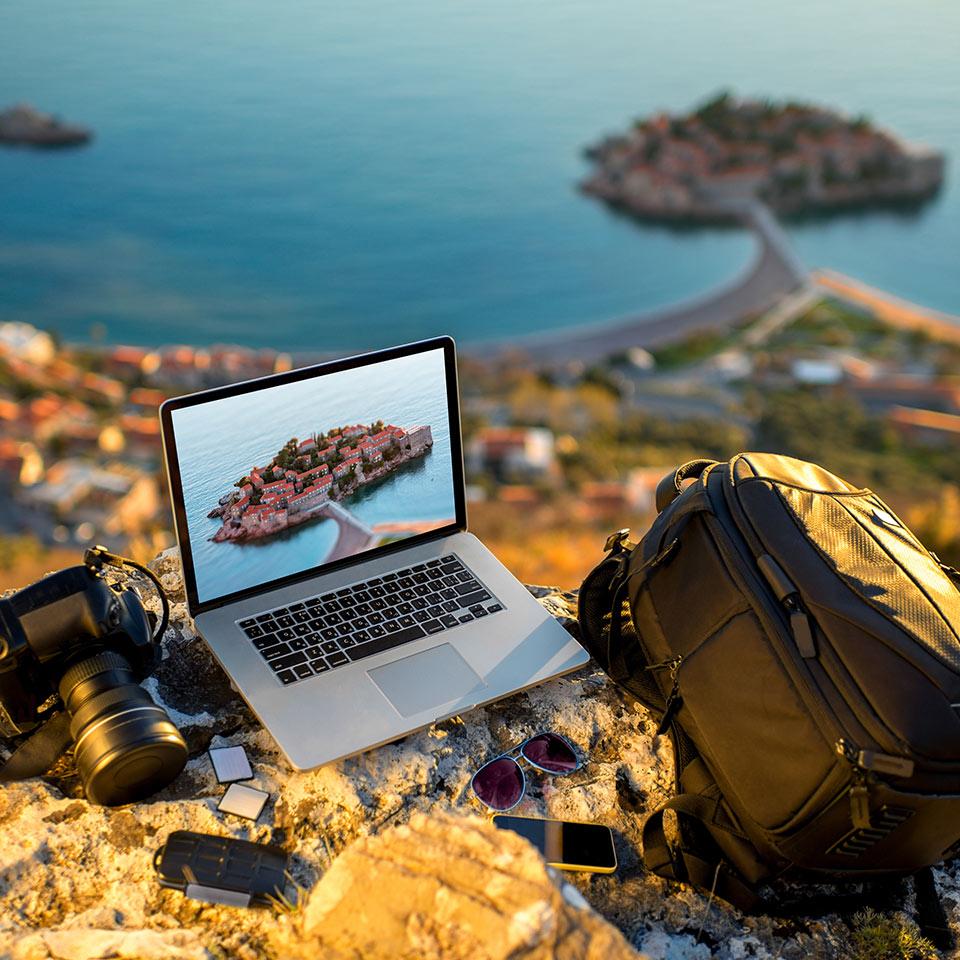
The modern travel writing aesthetic is decidedly affluent, un-sweaty, and San Francisco-coded.
I, like every human being on earth, am certainly guilty both of cowardly genuflection and immense arrogance, but I have a few things on my side: I’ve been fondled by Japanese salaryman and women, chased by wild dogs in the Balkans, fought meth-smoking Thai kickboxers, and been attacked by local Hawaiians who hated white people more than anyone else in any foreign country I’ve ever been to, which has for the most part given me the all-too-rare feeling that I do have the right to talk about these countries, these cultures, and the world—or at least the right to try.
So where to begin, now that I’ve made long-term travel seem so romantic and wonderful? Should I write a counterpoint to the previous list, and say that I’ve equally experienced what it’s like to have a ninety-year-old Japanese woman, who was alive to see my country bombing hers, show more courtesy, grace, and genuine concern for my well-being in two years as her neighbor than my own blood grandparents did in 28? Or that I’ve sat around a Macedonian lunch table for eight hours straight, an only slightly-longer than average Sunday social outing, and finally understood why most Americans are so awkward, lonely, and under-socialized? Might I tell you that the graciousness and general decency of Thai people in day-to-day interactions has made returning to North America feel like passing from the Shire and back into Mordor, where everyone is simply about their petty business, whether smiling, scowling, or inviting you out for an IPA, wherein they’ll mostly talk about their petty, anxious, business?
No, I don’t think so. When one breathlessly describes their travel highlight-reel, both listener and speaker lose touch with the reality of each experience, because the grind of living day-to-day in a foreign land is so unlike a montage of victories, that to present it as one, however honestly, basically amounts to a lie. And I don’t want to lie. Every YouTube video, travel blog, and social media post is already lying in this way, and realistically, that’s how most people learn about the world. I, even more than I want to seem unpretentious and unaffected when I talk about my exuberant Eat Pray Love days in Asia, or my folksy, brandy-swilling nights in Europe, just want to tell the truth.
So then I better start with the bad.
Because the world, in short, is very, very bad, and you can stop reading here, if like most review-readers, all you’re interested in is the rating. I’m not shy about it. This_is_ a review, after all. And you’ll know exactly what kind of review it is going to be from the fact that I unabashedly give The World as a Whole (as viewed through 28 years in five places) a 3/10. Read on to find out why (and for hot deals on Macedonian Beach House Timeshares!)
II
My trajectory along the many dimension of Earth’s badness goes like this: I start as a child in Florida, America’s 4th wealthiest state, then became a teenager in Ohio, the 7th, attended university in Hawaii, the 41st, which with a 2024 GDP per capita of $80,325 is still far richer than my next destination, Japan, which is 39th(!) richest in the world at $33,806, which of course is still far wealthier than Thailand at $7,182, and my final destination, North Macedonia at $8,306 (which feels deeply wrong because the region I lived in was rural, undeveloped, and by some internal statistic which now I can’t find, possessing of a GDP per capita more in line with Kenya’s.)
In other words, I’ve made slow progress towards impoverished climes, year by year inching further into scarcity finally I found myself living in a crumbling post-communist shack, experiencing regular power outages, drinking risky tap water, and avoiding wild dogs as I sat back and remembered my childhood in early 2000s upper-middle class America, where in a gated community I frolicked in the jubilant ignorance of all worldly want, which is the special possession of children raised in rich families at the height of empire. It’s by passing through this gauntlet, all the way from wealthy American suburbanite living to long nights trudging through the deep blackness of a Balkan village without power in winter, that I came to this 3/10 score for the world. And simply put, the score comes down to the sheer unfairness that exists at every level of just about everything, if one cares to let the gaze linger for more than a moment.
Even the half-empty rural areas of a ‘middle income’ Balkan country look picturesque when viewed through the window of a google image, displayed on a Macbook screen.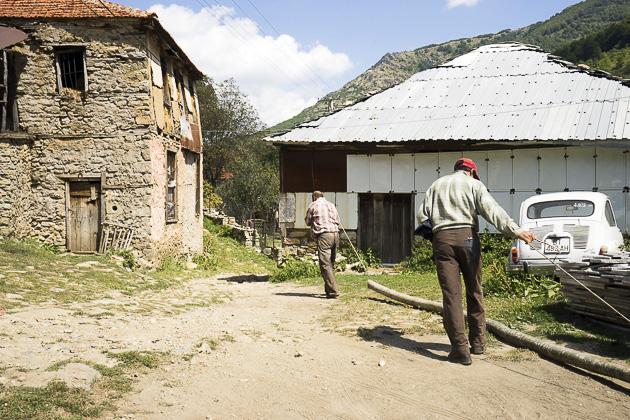
Let us compare my childhood to that of my students in Macedonia: I was born into a large house, full of books, all written in my own language, the language that ⅛ of all the world’s inhabitants can speak, meaning I could draw on all of the world’s knowledge, whenever I wanted. There were learning materials that met my every need: clever little books which I remember well, designed to help American kids like me learn to read, write, speak, and form a world-picture with astonishing effectiveness. These books exist because they’re profitable to make, and they’re profitable to make because ⅛ of all the people on Earth speak English, and even more than that want their children to speak English.
In Macedonia, on the other hand, a country of 1.5-1.8 million, there are few such books because there are few such people to buy them. Similarly there are very few TV shows in Macedonian, so very early on children are siphoned off into two groups: those who consume imported English materials, and those who consume imported Serbian/Croatian/Slovenian materials, and so of course the cleft between these groups grows wide, very wide, as half the kids became fluent in a language and culture the parents don’t understand, and the other half closes themselves off from that culture forever, limiting themselves to the former Yugoslavian sphere, probably also forever. The parents have next to no say in this process. The children, even less so. They all receive this secondary culture through screens, and therefore if your 14-year-old Macedonian child is throwing up Los Angeles gang signs, shouting the n-word at every opportunity, and fascinated by gun culture, well, what are you to do? There are hardly any other diversions for them, in their town of 5,000 which used to be 10,000 and has been culturally and economically ravaged by communism and the subsequent fall, which means everyone is religious but seldom goes to church, and everyone wants money but no one knows how to properly run a business, and everyone wants Macedonia to improve but also wants to flee to Germany as soon as possible, causing the the social fabric frays as everyone stays inside on TikTok, consuming culture from somewhere else. Thus the best hope the parents have, even for their 125 IQ children (which are rare, because most high-achieving people use their cleverness to leave the country and have children elsewhere) is that they learn English, get a visa, and perhaps work as a teacher in Germany, or start a liquor store in New Jersey. That’s about as good as it gets. Many more work menial jobs; basically, Macedonians are like Mexicans for the EU, but no one notices because they speak English well and are white-ish.
Meanwhile I, with my English books and stay-at-home mom (because Macedonia, despite being culturally conservative, has precious few housewives, what with the average monthly wage being 475 dollars, meaning both parents have to work to take home about 10k a year) had an IQ test at 6 that put me on an educational track wherein I was given special attention, and told I could do just about anything I wanted, until, of course, that anything I wanted became something more than letters on a grade sheet, and like so many suburban teenagers, the boredom that is concurrent with existence in a well-kept arrangement of houses owned by people you don’t know, mostly devoid of businesses and avenues of achievement besides those of sports and academics, became infatuated with what music, movies, and the delight of elder siblings told me was most desirable: The Party Lifestyle. This entailed smoking weed out of apples, drinking beers in basements, and having sex on public property, because somehow all the comfort, stability, and oft-spoken of opportunity on the horizon seemed only to rise up like a grey curtain before us, a curtain that blocked out anything resembling the vital and life-like, and so our goal became to pierce that curtain at any cost. But I still got all A’s and went to a good college, so none of it mattered, much—my worst case scenario, outside of a drug overdose, was that I would be a burn out for a while, and then, if I put even a modicum of effort into my own life, land on my feet and achieve a better life than those of my Macedonian students who’d done literally everything right from the day they were born.
Occasionally, while standing in a Macedonian classroom without a projector, textbooks, winter heating, reliable chalk, or a credible reason that my students should stop having fun and learn about the death of a medieval king, I remembered that grey curtain, and my boredom, and how cartoonishly epic it once felt to smoke weed and stampede around the suburbs. My students, knowing I was a young American, would ask me to discuss such activities, which, because of TikTo, they correctly assumed I had taken part in. Every single time, I would of course say such things were bad and not to be done, and feel unutterably sad because my students could only_aspire_ to the kind of emptiness and angst and access to a car that allowed me to almost ruin my life. They, in their cold, concrete farm houses, would lie on their beds and watch TikToks of Americans doing like I did, and feel jealousy as much as superiority. This admixture was always there, in their simultaneous boasting about how ‘we never have school shootings here, like in fucking weirdo LGBT America’ and complaining that ‘we don’t get to do anything fun like you did in school, Mr. X, you know we can’t drive or go out and party like you Americans’ and that was true, and it made me wonder if the excess of suburban American teenagers and the dreary boredom of Macedonian ones, who neither work the fields with their fathers like you probably imagine, or study, or do much of anything in their free time besides consume foreign culture, all comes down to the fact that teenagers are something new, and we still have not figured out what to do with them. My miserably fun youth, and their miserably boring one, have so much in common: we both so badly wanted to be somewhere else, and someone else, with something meaningful and impressive to do. Neither of us achieved that—they aspire to my hedonistic American adolescence because I achieved at least a shadow of something meaningful and impressive, through chemical and sexual stimulation.
I wondered if a happy adolescence exists anywhere on Earth. In Japan, maybe? There, the kids must join an afterschool club, which they must not ever quit or switch or reconsider, and therefore, usually from 7th-12th grade, they do the same activity, with the same kids, every single day, often until 6 or 7 pm at night. Thus are the world-famous Hardworking and Disciplined Japanese produced.
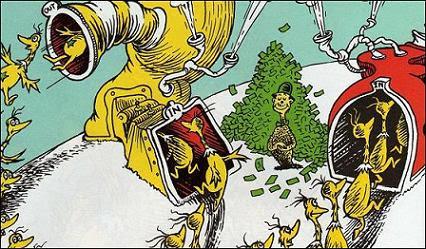
It felt exactly like Dr. Seuss once imagined it, only with less money involved.
The Hardworking Japanese are manufactured by a clever, but exceptionally simple system of hierarchical sorting and assiduous ‘free time’ filling. I can explain it in a sentence: kids are sorted into high or low ranked academic schools, or vocational schools, through which their future is known almost from the first day, and then in those schools they are sorted into ‘home room classes’ which almost never change, such that kids are stuck with the same 25-30 other kids throughout the entire day, sometimes for all 3-4 years of high school. If this sounds like it would exacerbate the strict enforcement of a social hierarchy between the kids, you’re correct.
Bullying, when it happens, is more nightmarish than anything I ever witnessed in Macedonia or the US because, like in any good nightmare, there is nowhere at all for the bullied to escape. Your tormentors are with you in every period, and at lunch, and probably will be there next year, still right next to you, still with the same cruel nickname as last year. And you and your bullied friends who all retreat to the same club will also be known as such, and your club will be ostracized at school events, and will barely be clapped for at assemblies, and so on and so forth such that in Japan, more than anywhere else, the cool and attractive ride roughshod over the unattractive and uncool, because the latter cannot extricate themselves from the hierarchy that is THE HOMEROOM CLASS, and then eventually THE OFFICE ENVIRONMENT. And nowhere else is beauty so worshipped: only in Japan does it actually seem preferable that the attractive cool kids were standoffish and mean. In my own high school, you might get away with that if you were hot, but the friendly and charismatic attractive people were always more popular than the quiet ones. Seems obvious, doesn't it? In fact, if you’re American, you might have assumed that was a law of human nature. Sadly, it isn’t. In Japan, the coldest and cruelest of the attractive kids were always considered the coolest, the most desirable, the most worthy of admiration. The same with the teachers; I, as a twenty-two-year-old foreign teacher, strove to be kind, relaxed, relatable, and always with involved and interactive lessons. This did not make me popular. Rather, the kids always sung the praises of teachers who screamed at them, brow-beat them, and designed lessons like the worst sort of college lectures. They took this to be a form of caring, in contrast to my friendliness which seemed clownish and lackadaisical.
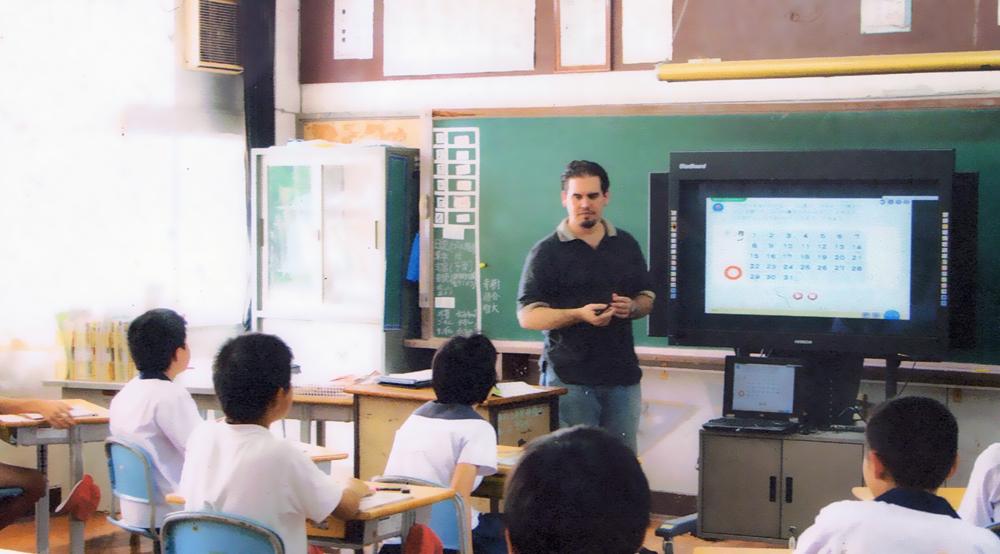
Strangely, things always went well when cameras were brought in to show what a wonderful thing I was doing. (Note: this is not me nor anyone I know, nor even the age group I was working with, but a random representative image from the internet).
And that’s only the beginning, because this machine by which obedient Japanese workers are made, all extremely aware of their place in the nested pecking orders of team, office, and nation, is only preparation for the workforce, which I need not overly explain here because at this point almost everyone has heard tales of Japanese overwork. I will share only one representative example, as I witnessed it:
I had a co-teacher, let’s call her Mrs. Kimura, who was clearly in the early stages of dementia. Her breath smelled like a morgue, her hair always looked as though she’d been electrocuted, and she asked the same questions again and again, and often even taught the same classes to the same kids, multiple times. For some reason, Ms. Kimura loved me, likely because I was entirely beholden to her and extremely polite, in light of the fact that she was my boss.
She insisted on my presence whenever possible, and was, in fact, far from the worst pedagogical collaborator I dealt with in Japan. But on and on she went, this demented sixty-four year old woman, seemingly aways at the school between the hours of 7 am and 7 pm, because, she said: ‘I hate going home to my husband, he smells bad and is mean,’ until eventually, out of nowhere, she stopped coming to work. No one said anything about it, mind you. Japanese people have a special way of saying nothing that pressures YOU into saying nothing, and to say nothing about the fact you’re saying nothing, until eventually it starts to actually feel like there’s nothing to say anything about.
Only weeks later, did I find out what happened: I was driving with another co-teacher, and as we passed an old house in the middle of a rice field he said, “Oh, guess what? That’s Mrs. Kimura’s house. You know, the other day she invited me over and when I went there she was trying to kill herself with a knife. I stopped her, though. Ha, ha, ha, ha!’ and he laughed, and I laughed, because the shock of this story being brought up so casually after our curry lunch was too much for my nervous system to come up with any better response. Here I was, in the country of polite, hard working people, driving through a half-empty village of collapsing buildings, laughing about this poor woman trying to kill herself with a knife. It wasn’t cruel laughter, mind you, from him or from me. It was the laughter of people who didn’t know what to say—all the more so because Japanese is a language whose very structure makes it difficult to describe internal experiences in vivid detail. So instead you laugh, and keep driving.
III
I have to preface my next story with a quick question: where do you think Japan ranks for suicide rates? Top 5? Top 10? And what countries do you think are up there with it? Korea, the USA, and Russia, maybe? This is an important question, so please don’t cheat. Where do you think misery is so abundant that people commonly take their own lives? Probably in places where modern malaise has set in: irreligious countries where people, freed from the hard-driving momentum of simple resource needs, turn to big questions with scant answers, right? Places like France, and the US, where individualistic, drug-addicted, and lost souls turn to violent and final solutions.
In short—no. Japan is only 49th in the world for suicides (albeit probably a bit higher because I think Japanese people far less likely to accurately report than in some other countries, for reasons you will see). The US is 31st, and South Korea, famous for its industrial progress and resultant, society-wide malaise, still doesn’t crack the top ten. So what are the top ten countries for suicide rates?
10. Central African Republic
9. Mozambique
8. South Africa
7. Zimbabwe
6. Suriname
5. Micronesia
4. Kiribati
3. Eswatini
2. Guyana
1. Lesotho
And what professions, at least in the US (the only place I could find credible statistics), commit suicide at the highest rates? Writers, poets, or doctors, perhaps?
No—I’m afraid it’s fishermen and farmers ; those who work with the land, and probably have a vanishingly small amount of free time for rumination on unanswerable questions and their own deplorable circumstances.
I find that most people have a hard time accepting this information, because if farmers in Eswatini are that much poorer than us, and that much more miserable, we are denied an extremely comforting lie; the one that says that this world is fairer than it looks, and the accounts are somewhat balanced, and that we wealthy westerners are the conscience of the world, experiencing special forms of misery that Micronesian fisherman are mercifully denied. But if you think about it for a moment, it makes perfect sense that a Micronesian fisherman would be miserable. If I described the daily life of such a person, you would recoil in a fascinated kind of horror and spend a few seconds in quiet reflection, there at your comfortable west-coast computer station. In just such a way have I described the life of a Japanese high schooler. Now tell me, then, if this story makes sense:
Everyday my students would clean their school (badly, for the most part, because they’re Japanese high schoolers, not aliens) in little groups, usually decided by the kids themselves. Now, because by this point I had developed a strong sense of sympathy for the downtrodden of the school, I usually cleaned the science lab with a group of unpopular boys, one of whom spoke excellent English, in contrast to the others, who might as well have been mute.
I bonded with them, best as I could, until again, like Mrs. Kimura, one of the effectively mute kids vanished from the school and was never mentioned again by anyone, so far as I could tell. I never asked about his disappearance, and in retrospect, I doubt I even noticed. He was one of the anonymous, face-in-the-hall presences that every school is so full of, in the way every empty glass is full of air.
Weeks later, a female colleague and friend of mine (for some reason, many western expats in Japan tend to end up with a large number of middle-aged female friends) asked me if I remembered a boy named ‘Hikaru’ who used to clean with me. I didn’t like the way she asked. My Japanese sixth-sense for subtle social undercurrents had been developed by this point, and I knew something was afoot. But sadly, I didn’t remember the name, or the boy in particular. To be honest, that gang of quiet boys I cleaned with once a week didn’t occupy a large place in my mind; they were at best, a single unit in my mind, represented by the single outgoing, English-speaking boy.
“Well,” she said, “it’s so sad…you can’t tell anyone. The family and the principal have decided to tell everyone it was an accident. He killed himself over winter break.”
“Oh, that’s horrible,” I said, knowing by now that it was strange to say things like ‘sorry’ during tragedies in Japan. In Japan, apologies are too serious to be wasted on the dead. “Do they know why? What was wrong?”
I asked this in the vein of offering support. Not for a moment did I expect she would actually tell me. But she did; Japanese people often confide deeply in their foreign friends, because we seem an oasis away from the social pressures and judgements that issue from other Japanese. Also, many of them outright state that English is a far better language in which to dump out one’s feelings and speak of shameful and difficult things. I came to agree with them; Japanese, as it is spoken in day-to-day life, is the elevator music of languages.
“He lived with his grandma because his mom and dad are alcoholics,” she said. “But then he and his grandma got in a big fight, and he wandered off alone. No one knew where he went. Then eventually they found him in the woods, dead. Yeah. So sad. I cannot believe it.”
You have to imagine this said to me in a thick Japanese accent, by the sweetest Japanese mother and home economics teacher you could ever imagine, a constant, polite smile still on her face as she gave a slow nod, the one Japanese people give in acknowledgement of something terrible having transpired. Tears pooled in the corners of her eyes, and almost pooled in mine, not so much at the death of this boy I hated myself for not being able to remember, but at my friend’s obvious relief at telling me this. Me, the twenty-two-year-old American she’d once caught looking down her blouse (an honest mistake), sitting in her office, drinking tea and scarfing down a scone, was the best outlet she had for this horrible burden of information. So I took it, gave as much comfort as was appropriate, and was haunted by the grim idea of this quiet, 15-year-old Japanese boy wandering around town (for all I know I saw him!) by himself during winter break, and coming to the idea that killing himself was his best course of action. No one, not even the kid’s best friends, some of whom I knew, were ever told the truth about what happened. No service was held at the school. It was all glossed over, and thus that famous Japanese societal harmony was maintained.
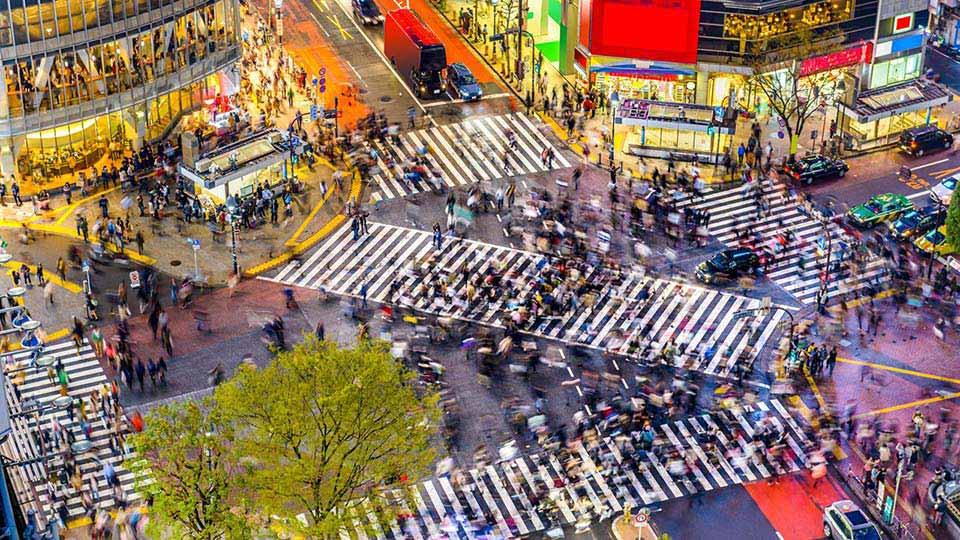
Insert clichéd image of time-lapsed Shibuya crossing, in order to illustrate both the impressive results and the eerie, dehumanizing aspects of Japanese cultural harmony; every documentary about Japan has to have one.
In Japan, unless you want to be a wacky foreigner monkey, you must learn to ‘read the room’ or ‘read the air’ if literally translated. The atmosphere of the room is something of a religion over there, and underpins everything, good and bad, that Japan is known for. The issue is, sometimes the room, in all its formidable power, tells you to kill yourself. Other times it tells you to not dare to mention the boy that killed himself. The Room, I came to understand it, is a cruel, pagan god. It is a precise embodiment of the fantasy trope in which gods literally exist only as much as people believe in them. The Room is formed out of the collective expectations of millions of Japanese people, living and dead, coming to bear on even the smallest acts, and seeing to it that they do not deviate from the strictures of the most successful social religion in human history (in any criticism of Japan, one must remember the crime statistics, and what a remarkable achievement they are: .23 homices/100k people compared to the US’s 6.38/100k or world leader Jamaica’s 53.3/100k).
This worship of ‘reading the room’ is essentially what makes Japan so unlivable, and why I, like so many other foreigners, departed after two years with my tail between my legs, and an understanding that to survive any longer I’d have to either become Japanese (by worshipping The Room) or embrace being a wacky, loud-mouthed, tall-nose foreigner forever. The former option is even harder than it sounds, because unless you’ve done something truly despicable, Japanese people don’t give you feedback on what you might be doing wrong (which is everything that you’re doing, if it is decidedly un-Japanese). Therefore your own, primitive read of The Room is all you have in the way of behavioral guidance, and that read is at best only an alien’s attempt at mind-reading people who have a completely different set of expectations when it comes to respect, efficiency, and even the aim of communication itself.
The best and most concise analogy I can come up with is this: in Japan, everyone is your girlfriend. You are responsible for understanding that when your boss asks about pastries, it means he wants you to buy the pastries for next week’s meeting. It means that when someone says yes to the thing you’ve been requesting for months, you should expect that tomorrow they’re going to ask you for something you don’t want to give, but if you don’t give the same yes back, they’re going to resent you forever and regret the ‘yes’ they gave you for the rest of their lives.
Japanese social interactions exist at a much higher resolution than American ones, and at times I felt that living in Japan as an allistic person gave me a reasonable understanding of what it might be like to be autistic in America. At all times there were subtle games being played, and things being communicated by other people to which I was not privy at all. This created a background radiation of stress that made social interaction much more stressful than fun. Japanese people get around this by leaning into role assignment; basically, your boss is just your boss, and must play the role of boss rather than ‘being himself’ because if everyone was particularly ‘himself’ at this high resolution of social interaction, everyone’s minds would collapse under the information overload, and life would be impossible, even for those born into the culture.
It almost is impossible, anyway, but the use of stock roles and personality archetypes (which is quite clear in anime, and is perhaps the main way anime and Japanese reality intersect) make social dynamics in Japan just about manageable for Japanese people, and anyone else who either neatly falls into a ‘role’ or is at least content to perform one.
This pronounced art of role performance was nowhere more clear than in the large friend groups I’d observe among my students: the kids, to a much greater degree than in America, engaged in a kind of social division of labor, meaning that one kid got to be the smooth, cool one, another the wacky, fat one, an another the quiet, athletic one, and so and so forth down the list of stock student stereotypes. It’s hard to convey how comically pronounced this was, when we Americans might look back and think we also fell into these roles in high school, and even now. But In Japan, there is overwhelming pressure to be one thing, or two things at most (for example, an attractive engineer, or a stern teacher) in your public life, and therefore the kids are from an early age learning to perform these limited roles and personality types.
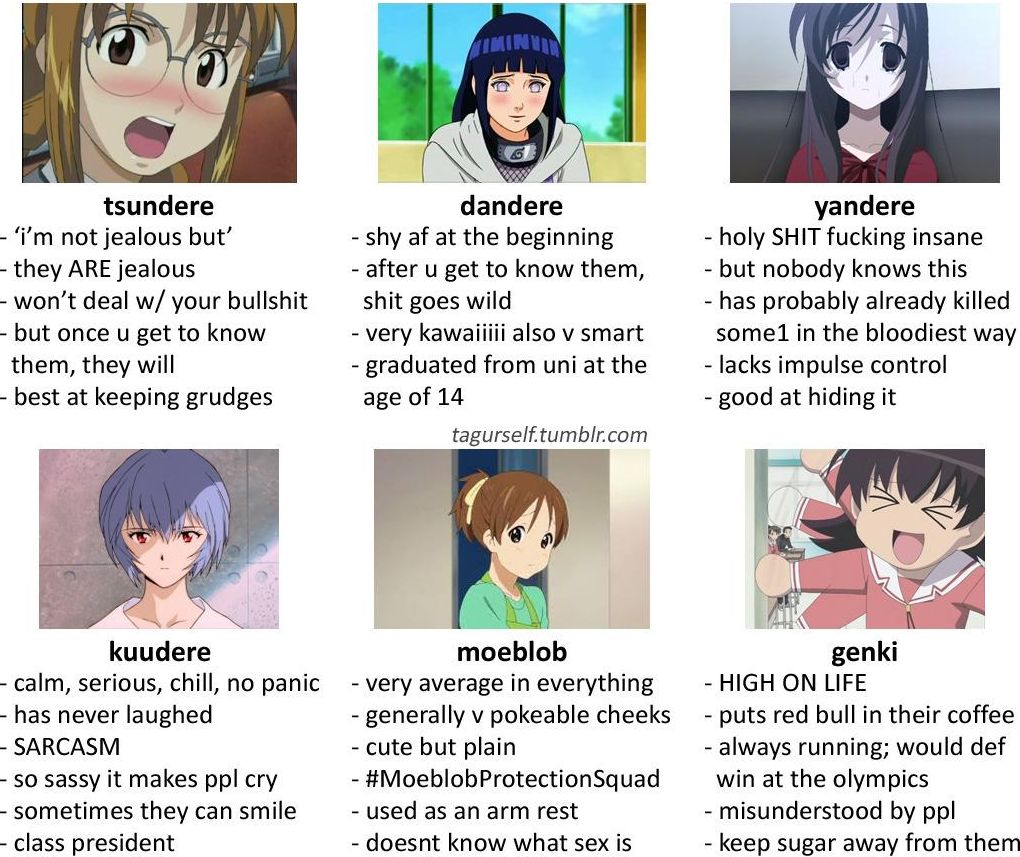
Anime exaggerates an underlying reality, just as American high school films do–the difference is that in Japan, the reality is exaggerated to begin with.
For the kind of eccentric, open-minded western fellows likely to uproot their lives and move to Japan, it can be terribly depressing. Luckily, most of my English-teaching peers were content to play their Nintendo Switch, date a prettier girl than they would’ve gotten back home, and not think too much about the above issues, except when info-dumping all their woes on reddit or something. Every single one of those who stayed in Japan either got insane kicks from being the kooky, loud-mouthed foreigner, such that even after five years it still didn’t get old for them, or else were relatively conformist, role-oriented people who happened to fit into the Japanese mold long before they’d even heard of a country called Japan.
IV
Many of these eccentric, open-minded types, realizing that a conformist culture like Japan wasn’t quite their speed, would instead take to the open road, and call it ‘Digital Nomadism’ which basically means working on your laptop in a very cheap country, and switching countries whenever bored or, more often, when your visa runs out. Thailand is generally the most popular of all countries for this lifestyle, because it is somehow both safe, cheap, beautiful, warm, and open to foreigners despite decades of mistreatment by said foreigners (yet without ever being colonized, so to speak) and therefore perfect for people like me, who wanted to learn to fight, start a business, and have fun all at the same time (because in most countries, you cannot do even two of those things at once unless you are already rich).
Foolishly, I decided to live this lifestyle whole-hog, which meant not learning Thai, (unlike in Japan and Macedonia, where I spoke the languages reasonably well) and for the most part encapsulating myself in a bubble of like-minded, or at least superficially like-lifestyled people. I would work on my business, learn to kick box, and meet new friends and lovers, day after day, almost for as long as I wanted, considering how cheaply I could live; this seemed like an excellent plan, following two years of 8-6 Japanese salaryman-dom.
It’s hard to overestimate how fun that kind of life can be for three months. For three months, it really is like Eat Pray Love, where you feel constantly on the verge of some new breakthrough or epiphany, and this feeling pleasantly tempered by a healthy dose of degenerate exhaustion on those morning when at 4 AM you roll back home on a rented motorcycle and order a $5 Steak that you’ll eat in bed with a woman who feels exactly the same way as you do, and has through deft and well-timed location switching, managed to maintain that feeling for five years running.
Oh, what a life! Temples and ice baths and yoga and crystals and sound baths and crypto lunches and game nights and mastermind sessions with internet famous gurus and all of it rushing past you during a boiling hot summer that eventually amounts to…nothing. Nothing because three months laters all those people you met have moved on to a new country, and you’ve essentially repeated high school in fast forward: learning the ropes, meeting new people, experiencing a few humiliations and triumphs, and then finally settling into yourself just as it all ends rather abruptly.
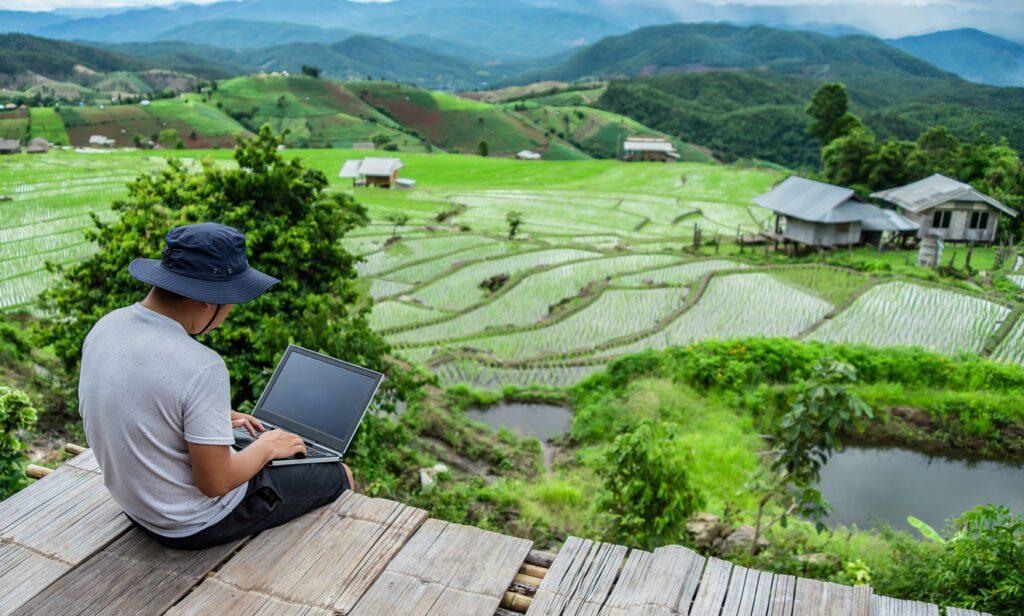
This image, like most digital nomads themselves, is so unaware of its own absurdity that it is this very unawareness, rather than the act of nomadism itself, that makes it, in many ways, repulsive. Not that the person charging for the guest house rental in the top right cares, or should care.
And then, this cycle repeats, to diminishing returns as you wonder how you’ll ever go back home now that you’ve learned to live a better life on $1500 than you could on $7000 a month in an equivalent American city. You look up from time to time, as the three month honeymoon draws to a close: everyone else just as lost as you, especially the old men, the terrible old men whom you see sitting alone at lady bars in the city, who have either been there thirty years, or just half a week (it makes no difference) and speak no Thai, and have been there too long, and whose lives were never better than in Thailand, probably, where for a few dollars an hour they enjoy female attention and are thousands of miles from the office job, the London Fog, the wife, whatever. You see those guys and get very afraid of becoming like them, and you even see the steps that lead there: you know thirty-five year old guys living off shrinking crypto wallets, who when they go back to England still feel as ugly and lost and priced-out-of-existence as when they were nineteen, and dreaming of Thailand for the first time…it gets hard to ignore those old guys, after a while.
At first, I didn’t see them, and almost thought Thailand’s reputation as the sexpat capital of the world was overblown, but then suddenly they seemed to be everywhere, in one form or another. I never understood how they managed to enjoy all the female attention (not necessarily sex!) that they paid for. Because unless you are paying extremely high rates, women whose attention or affection you purchase don’t actually try that hard to convince you it’s real. I’d see girls walk away the second their glass (they get paid in drinks, essentially) was empty, or worse, smile with such polite, typically Thai, falseness that I’d wish to escape to some dark, frigid country when no one ever smiled except when they really meant it. Which, fifteen months later, is exactly what I did.
How could I not? After nearly two years of living entirely for myself, like a commensalist tick on the skin of Thai society, a kind of shame had crept up on me, a collective shame that I used to claim I didn’t believe in, like a virus I’d caught from the sad old men in the bars who always laughed like it was quite hilarious how they couldn’t speak a word of Thai after ten years, who sat their buying drink after drink for underage girls in braces and cocktail dresses, night after night, as their hair crept back from their foreheads and everyone in their hometown forgot who they were.
Looking back now, I see that this era of growing shame and Tolstoy-reading and ‘wrestling with god’ was nothing much more than a desire to suffer in exchange for all the pleasure I’d experienced. Some part of me wanted to balance the scales, and efface myself by giving away what I imagine I’d stolen, and what I’d stolen was joy born of simple unfairness: that I was born American, to upper-middle class parents, and therefore had fallen into a life where I could inject money into a country like Thailand, which, of course, was happy to have me.
Not that I did anything evil, or illegal, either: it was only the shame of being part of a group (and not a historical, or ethnic group, but a living, active group, like a kind of informal gentleman’s club—I’d shiver when those sad old men winked and lifted their drinks to me, as if we were peers) that did do evil things by virtue of the same unfairness that had led me to a similar, if less destructive life in the same place.
I’d had enough of those men, and my similarity to them. I wanted them as my enemies, and so long as I lived a comparable life, that never could be. So I decided to leave Thailand, and do something self-righteous. Something worthy of an ashamed, Tolstoy-reading, kickboxer: I joined the Peace Corps.
V
Originally, my intention was to go to a place like Vanuatu or Tonga, where I’d be completely beholden to a small island’s collective expectations, rules, beliefs, and rituals of daily-life. I wanted to be subsumed, and to know what it was like to live in a village of subsistence farmers, where I might discover how most of my ancestors lived, and contrast that with the hyper-modern life of a digital nomad in Thailand. But sadly, that was not to be: due to a medical issue I was offered the country of North Macedonia, instead, and I accepted it, despite several clear warnings from my digital nomad friends, who rightly stated that such a drastic change might very well kill me, or send me into the worst depression of my life. The few who’d been to Macedonia (because strangely, Thailand is one of the few places where the average pub might have a handful of people who have visited the Balkans for fun) regaled me with stories of ‘Friends’ billboards from 1998 still perched above dilapidated malls, and a cuisine consisting only of spice-less potatoes and pickled miscellany. There was also the obvious problem of the Balkans being cold, poor, and, speaking only slightly hyperbolically, post-apocalyptic.
Allow me to sketch a picture of a centuries-long historical disaster in as few strokes as possible:
-The Ottoman Empire conquered Macedonia in the 1390s and didn’t relinquish control until 1913, during which Macedonians could only acquire education, such as there was, through service to their Ottoman conquerors, under a system of feudal quasi-serfdom that lasted from before Da Vinci to after the goddamn Wright Brothers. One such highlight of the Ottoman’s enlightened rule was the Devshirme system, wherein young Macedonian boys were forcibly stolen from their parents, converted to Islam, and turned into Ottoman soldiers.
-In the wake of the Ottomans’ fall, Macedonia was ruled by Serbs and Bulgarians, until eventually, falling under the rule of Josip Broz Tito, (whom Churchill had deemed the most successful Nazi-fighter in the Balkans, and given funding) as part of Yugoslavia, a firmly communist but at the time anti-Stalinist country comprising Macedonia, Croatia, Bosnia-Herzegovina, Montenegro, and Serbia.
-In the 1990s, Yugoslavia collapsed, resulting in 100,000+ deaths, millions of replacements, and a great deal of very scary and surreal TV footage that Americans had to watch between Nirvana music videos and episodes of The Real World.
-In 2001, Albanian insurgents (about 24% of the Macedonian population are Albanian Muslims) attacked Macedonian soldiers, igniting a very small civil war wherein ‘only’ about 200 people died, and which NATO was very quick to mediate due to the ethnic cleansing that had previously taken place in Kosovo.
I want to make a cute metaphor between Balkan politics and quantum physics, but I just can’t bring myself to do it because there is no experience in the western world that is anywhere near equivalent to the act of discussing Balkan politics with Balkan people. Those 100,000+ deaths happened so recently, and as part of a much larger conflict stretching back so long that no American can ever begin to understand why those Cyrillic YouTube comments are so angry, and the old slavic men in tracksuits so stiff and grumpy as they putter around shabby-looking, concrete-lined parks and squares. The reason is because after six hundred years of virtual slavery under the Ottomans, further atrocities under Bulgarian and Serbian rulers following WWI, and then the relative prosperity of early Yugoslavia, followed by a heartbreaking, bloody, family-dividing collapse, the Balkans are not just post-apocalyptic, but post-post-post-apocalyptic, even though the world before the apocalypse was pretty much still just grinding poverty, and total obscurity upon the world stage.
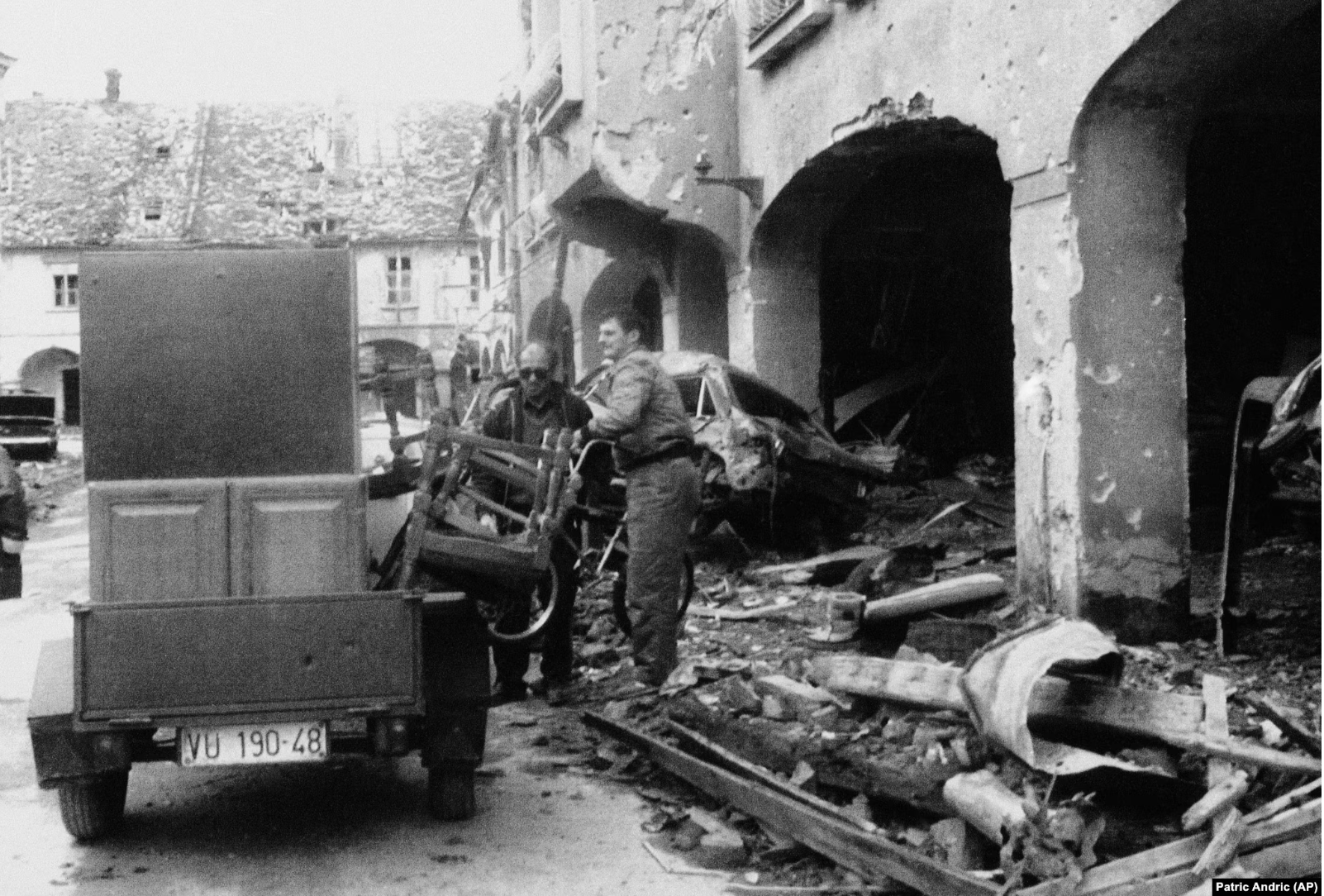
Nothing could be more indispensable to a westerner’s understanding of the Balkans than the knowledge that the above photo was not taken in 1913, or 1943, but 1991—the same year that Nirvana released Nevermind.
The Ottomans disallowed Macedonians from holding most positions of power, unless they themselves joined as Ottoman collaborators. Therefore, there is still a lingering distrust of education, and institutional power in general, because for more than 500 years, that power was held by a conquering army that wanted to steal your sons and forcibly convert them to Islam. After that, you get garden variety atrocities in the wake of WWI, and then a communist takeover that wipes out what social fabric came from the cornerstone of most slavic societies: the Orthodox Church.
This then brings us to the 2020s, when I lived there, and observed that no one wanted to go to school, because that was a bullshit, corrupt, government institution, and no one wanted to go to church, because that habit had been stamped out decades before, when doing such a thing could get you in trouble, and no one wanted to start up a business, because that’s the act of some American up-start capitalist, who probably wants to immigrate to the EU and turn gay anyway.
Do you see the problem? Such a long period of social deterioration and suppression of human development along any meaningful vector means there’s_nothing left_. Nothing left but farming, and trying to bend the god-like ever-pervasive ‘system’ to your favor, just like their ancestors under the Ottomans. But do you bend the rules, and perhaps open a nightclub with fake documentation, and it works out well, so people actually come, and maybe that means other people will want to mimic you and open their own businesses and succeed but…bending the rules to your favor happens to have extremely serious consequences.
And that atmosphere in which no one gets ahead except through illegal manipulation of ‘the system’ through bribery and nepotism creates a listlessness in everyone not immediately benefiting from such graft, which then results in desperate, hopeless parents just praying their children will leave, and then all of a sudden you have a 10% population drop in two decades. This listlessness and hopelessness is everywhere, and I think it’s a large part of the reason Macedonia felt poorer than Thailand, despite statistics telling a different story: in a country like Thailand, or even say, Botswana, people have experienced a rough, bumpy, but largely quite noticeable drift towards progress and relative prosperity. People live better lives than their grandparents, and certainly their great-grandparents. Contrast that with Macedonia, where there is a kind of boomer nostalgia that makes everything on American Facebook look like child’s play, because Macedonian grandparents did have it so much better in so many ways that it is all anyone ever talks about. For a variety of complex economic reasons (largely massive IMF loans that Tito never paid) Yugoslavia had high wages, cheap prices, and low productivity. I heard so many glory-days stories from men in their sixties who’d describe how they used to work for a hotel, check in one guest a day, and earn a salary that allowed them to support a family, buy a new car every year, and go on vacation anywhere within Yugoslavia.
These stories always had the flavor of someone who, finally owning up to their massive credit card debt, remembers how a few months ago they lived so well, and with so little effort:oh me, oh my, what happened to the good old days?
But of course, the common people of Yugoslavia had no say over Tito’s IMF loans, or how they were used; all they know is that life in Macedonia was terrible for a few hundred years, decent for about thirty, and is now pretty much terrible again, under what is best described as a two-party fascist state. How now? Two party fascist state? That doesn’t make any sense!
Well, let’s imagine you’re one of my students, and you’re hoping to get a job after college. Well, actually, you didn’t go to college because your teacher father lost his job when the other party came into office, and nudged him out with all their new party-approved appointees at his school. So instead you went to a trade school, which has historically been run by your party, which is why they let you in despite you having no qualifications for that school, but then they lose funding because the director of the school dared raise his voice at the local party meeting, and the party boss retaliated ‘to make a point’, and now the school may very well close in a year or two.
So then you leave, work at a gas station, and fall in love with a girl there. She’s working there because her mom’s a judge (remember that this high-status job still only pays $500 a month), whose court is run by an administrator from the other party—and this administrator hates the girl’s mom because she doesn’t take bribes, even more she distrusts her because of her party affiliation. Therefore this administrator pulls strings and gets your girlfriend’s mom sent to the worst district in the country for judges, (which is two hours away by car, despite being only 40 miles away, because of the terrible roads). But your girlfriend’s mom is so good at being a judge that she actually enjoys and excels at her new post, and when the old manager finds out about this, she loses her mind and spreads a rumor about your girlfriend’s mom cheating on her husband with a court reporter. Everyone in the administrators' part believes the rumor. No one in your girlfriend’s mom’s part, who actually knows her, does. And on and on it goes until your girlfriend’s mom loses her job, and you have to befriend your local party leader, who you hate, just so you can get an office job at the only factory in town for $400 a month. Oh, and if your party loses again, that factory will probably change leadership, and you might very well lose your job and have to start over.
These are the glories of two-party western democracy, inflicted on a rump of a post-communist state, with a powerful case of Stockholm syndrome for Tito, and most other competent-seeming strong-man the world over. Trump is wildly popular in Macedonia, and not just because his wife is from former Yugoslavia, but because he represents the kind of decisive, undemocratic unity that gave the country its only decades of relative ease, significance, and pride (though I must say, for every ten people that would tell me these things, there would be one who would violently disagree, and the entire dialectic of the 20th century would play out before my eyes, over a glass of homemade brandy.)

Don’t ask: for the longer you look into the abyss of Balkan politics, the less it makes sense.
Many nights, I’d lie on the cold, mustard-yellow tile of my Yugoslavian cottage and listen to the barks of the wild dogs outside (most would be dead in a month or two, from the thirty-year-old BMWs that whipped down the narrow country roads at 60 mph), and think of all the historical accidents that had led to me being there, speaking and reading Macedonian, freezing because my electricity was out, wondering what I could possibly do in the way of actually helping anyone in my village. Because the Peace Corps, ostensibly, is there to help. And I tried to help. I didn’t turn tail once the winter settled in and my hedonistic digital nomad days were a distant memory, and I had to stand in front of a class of Turkish students (holdovers from the Ottoman Empire who spoke less Macedonian than me) and try to come up with a 40 minute lesson on the spot, because we had no textbooks or effective curriculum. I’d think about that, and the workday to come, and the 500 years of virtual slavery followed by decades of war, basket-case economics, and then more war, and I’d imagine the 100-year-old woman who lived next door to me, who watched soap operas all day and never left the house, and laugh at the thought that most everyone I knew, even my best friends, still couldn’t locate Macedonia on the map, much less understand when I tried to explain a single fact about it when they asked ‘How are you, man? What’s it like over there?’, which was an arrogant thought, but a true one. I was cold, and I was lost, almost the entire time I was over there, and even more so than Japan, I could never figure the place out, albeit for completely different reasons.
VI
A country like Macedonia, whose essential character and destiny has been so mutilated by centuries of colonialism, and then false hopes that spawn under a relatively benevolent communist dictatorship, and become so confused and discombobulated that I, as an American, especially an American who’d been out of his own country for nearly a decade, couldn’t hope to understand it, much less improve it in any significant way. I determined that striking an example for my students would be challenge and help enough, because from about 3-16, kids are much like kids anywhere else, and not yet wholly subservient to the cultural programming of the place they were arbitrarily born in.
All of them, wherever I’ve lived, have been lost. In the US, we were lost in a cultural and parental vacuum that 2000s pop culture stepped forward to fill, mostly with superficial heroism and a glorification of the only real-life romantic heroes left: inner-city gangsters, drug dealers, and pimps, who made art and music so convincingly epic that we suburbanites imitated it, and are still imitating it, albeit in subtler ways as we enter out late twenties.
It’s strange that this heroic-gangster subculture has stepped forward almost everywhere: even in Asia, the gangster is beginning to be worshipped, even if the role and its imagery are only shallowly acted out by K-pop stars who have never sniffed a drug or fired a weapon outside of their two-year conscription. Half of my time as a teacher was spent trying to get kids to stop larping as gangsters, because I’d done it myself, and as soon as a larping kid gets access to the proper props, it ceases to be larping and becomes what it had long only yearned to be: a romantic war against the established order, in the name of personal pleasure and achievement. Nowhere, not even rural Japan, seems to be able to escape the pull of it, and this frightens me because the only solutions I’ve seen, not believed in, but actually_seen_ work are the bogging down of children in endless, regimented extracurricular activities, or the total buy in of a two-parent household into a set of strict cultural customs, whether they be Christian, Shinto, Mormon, or otherwise. This then leaves the rest of the young people (75% or more, I’d estimate) who are by default edgelords, unserious Christians, iPad kids, psych med-takers, or bog-standard faces in the halls to mine the social media algorithms for what is most in opposition to the listlessness and malaise they feel, because, at the end of the day, they are trapped. And the trapped want to tunnel out, any way they can, and their screens are tunnels to the rest of the world, above all else.

But like most bad things in life, it comes down to people wanting to be high status in precisely the same way that people who are already high status, are high status.
This is why I feel justified in giving the world a 3/10. Not because much of the world is poor, and the poor parts are more miserable than you can imagine, and often without the saving graces of religion and comforting folkways you assume them to have. I give the world a 3/10 because I have seen the younger generations, even lived amongst them, in all these places, and I see that the lostness that is in all young people the world over has created a demand for tunnels out of their dreary circumstances…but out into what?
In some cases, such as my own, it is out into an actual enactment of a cartoonishly hedonistic lifestyle, as advertised by almost every single musician, celebrity, and public-facing elite who is not explicitly known for being religious. But even that is going out of style now, in favor of a gangster-flavored nothing that when seen objectively through the eyes of a worldwide public school teacher such as myself, is even worse than what the most pessimistic of parents see in their own kids. This nothing is a half-amused, half-anxious voyeurism that looks out upon everything in the world and sees it only in terms of its most obvious features: who is most attractive, who is most powerful, who is most disgusting, and then rushes to frame those experiences in an unconscious system of thought that accounts for both the petty Machiavellianism evident in high school, and the endless circus freak-show aspect the world takes on when viewed through the thousand thousand windows of days, weeks, and years of doom scrolling—this system of thought is not a pretty one, and though it manifests in belief systems as varied as Nazism, unapologetic lookism, and Marxist-Leninism, the underlying problem is always the same: every feature of the world is judged as a voyeur would judge it. That is, cruelty is judged only as another form of spectacle, and whatever form of cruelty or pleasure makes the best spectacle for that particular kid’s schema of rods and cones will lead them down the path to the extreme-right, or the extreme-left, or much more commonly, extensive lip fillers, anti-natalism, light inceldom, videogame addiction, and above all, the feeling that the world is pretty much a rotten place, even if suicide would not quite be worth it.
I have seen these forms of voyeur-mind taking root all over the world. I’ve seen it in adults, and even old people, who you’d have thought were fully formed and thus resistant to a few thousand video clips’ reshaping of their nervous system. Most of all I’ve seen it in America, where lots of very shy men and women, covered in tattoos of their favorite characters and ideas, lift weights in perfect silence, struggle to maintain eye contact, and have learned to judge one another as a collection of proper and improper opinions, overlaid on a skeleton of status determined by height/bust/bone structure. It would not be correct to call this global drift towards superficiality ‘Americanization’ anymore than when people describe the ills of life post-2020 as ‘because of Covid’ when in fact America and Covid are only signposts for changes that have been determined primarily by novel technologies, and a concurrent collapse in the technology through which culture, behavior, and values are transmitted: parenting.
But this isn’t a review of children, or parents, or social media. I only want to point out what I believe, in all seriousness, is the newest stain on the planet, right up there with famine, genocide, and war: the gradual, and still nascent planet-wide social consensus that digital media, especially rapid short-form video, will manifest on Earth. I predict Thai teenagers who will see the temples in their cities as strange and alien as an American teenager would. I see American teenagers as confused by Elvis as any Thai kid would be; there will soon be no difference in the things they are interested in, confused about, and disgusted by—but they both will recognize Mr. Beast, and rejoice.
Everywhere will be people play-acting as gangsters, pop-stars, and wrap-around-glasses American patriots (there is a subculture of country boys in Norway who proudly wear the confederate flag!) and travel, which I suppose is the activity underlying this review, will cease to mean very much anymore. You may call this outlook apocalyptic or doomerist, but having lived in a post-apocalyptic place, I can tell you—bad things do happen. No matter how many starving Ethiopian children or Macedonian club fires you might see, it is hard to accept until you’ve lived amongst people like, say, a Guyanese farmer who never learned to read, lost his hearing in one ear due to an infection, and then killed himself at thirty-two following his wife’s second miscarriage caused by medical malpractice. This small tragedy, along with the larger one just described, is the texture and flavor of the world as I’ve experienced it. This is the view from outside of Turtle Island and the best parts of Western Europe, and I stand by it in the face of wide-eyed techno-optimists as much as trite, internet-forged doomers who are sad precisely because they’ve never witnessed something as sad as a child soldier, a trafficked girl, or a once-wealthy British man homeless on the streets of Bangkok with half his teeth missing.
VII
I give the World as a Whole a 3/10, because now, looking back, every person I’ve ever met who has said something like ‘…the world is just awesome, man, things always work out, in the end,’ was either on drugs, extremely rich, or had never left America—even if they’d flown somewhere else for a week, once or twice. Because things do not always work out. They did not work out for the Do-Do. They did not work out for the Ais people. They are not currently working out for the Macedonians, or the Ukrainians, or the Russians, for that matter. They have probably worked out for you, mostly, considering you are sitting here reading this—but because I’m not reviewing your life, I’m afraid I can’t take that into account.
Your life, and the young American doomers’ unhappy lives, were all made possible by people much like the poor Guyanese farmer, even if they, in your case, happened to live on the outskirts of Boston, or on a farm in the Punjab, or in small town Pennsylvania. They might have died in a bar fight, or of tuberculosis, or the black lung, but they, and even more impersonal servants of your own luck, undergird your comfortable life, along with every happy circumstance and opportunity. Prosperous, free-and-easy western lives are the temporary creation of a productive surge that occurred within a small patchwork of stable states—not that that makes your misery, or your optimism, invalid or unreal—all this is only a way of saying that problems, when seen from as high up as most Americans and western Europeans are, look small, manageable, and even, somehow, aesthetic. When stuck_within_ these problems, however, in the places they are actually happening, they are none of those things. An issue as small as a lack of textbooks, unpredictable power surges, or unclean air, is completely suffocating, and sends out ripples of misery and dysfunction that seem to have no end.
I imagine the napalmed villages of Vietnam and or the killing fields of Cambodia didn’t look so bad, when viewed from space. And until I stepped away from Turtle Island, I, and everyone I knew experienced the 3 million deaths of the Second Congo War(1998!), and the 112 million Chinese currently working 9-6 in factories, and the smell of plastic trash burned so close to Macedonian elementary schools that it makes the students dizzy, all as one at the top of Mt. Fuji might experience an approaching tsunami: as just one of many large waves, eminently manageable, and in the grand scheme of things, only another part of what makes standing on Mt. Fuji so wonderful and interesting. The pangs of guilt one occasionally feels when surveying the wreckage below are only another luxury, not much different than the crisp air, snug cabins, and distant views. 
And from atop Mt. Kilimanjaro, the African continent looks so…peaceful.
This grave, but rather detached outlook on the world’s many sufferings is possible to maintain even when touring a favela, or volunteering for an NGO—these scales do not fall easily from the eyes—and I have seen it maintained even in those living abroad for decades. I’ve been back living in the US for a few months now, and with every Chili’s Pick-Three Appetizer Deal, and $9 IPA, and discussion about Tariffs or Hasan Abi or Star Wars or delivery meal boxes, I can feel the scales beginning to accrete again.
I clean my eyes off in the following way:
I lay on the warm, carpeted floor of my American house and force myself to remember what it was like to sit on the freezing, tile, floor of my Yugoslavian cottage, waiting out a winter night without power or water, listening to the wild dogs barking outside, and imagining the dead empty eyes of the sexpats in Thailand, alone with their drinks and their bar girls’ false, brace-faced smiles…or else trying my best to recall the real name and face of the Japanese teenager, dead at fifteen, who I can’t, actually, seem to remember at all.
During this exercise, I feel like a film critic going over his notes and discovering that the movie he thought he enjoyed falls apart the more he thinks about it—because despite the high production value, talented actors, and generous running time, a film made up of mostly arbitrary, tragic, and repetitious scenes can’t be better than a 3/10, can it? Even if it’s the only movie currently showing?