This is not a review of Rabelais. This is a review of a certain, incomplete translation of Rabelais. It is also arguably one of the greatest translations in our language. Let’s meet the hero of our story.
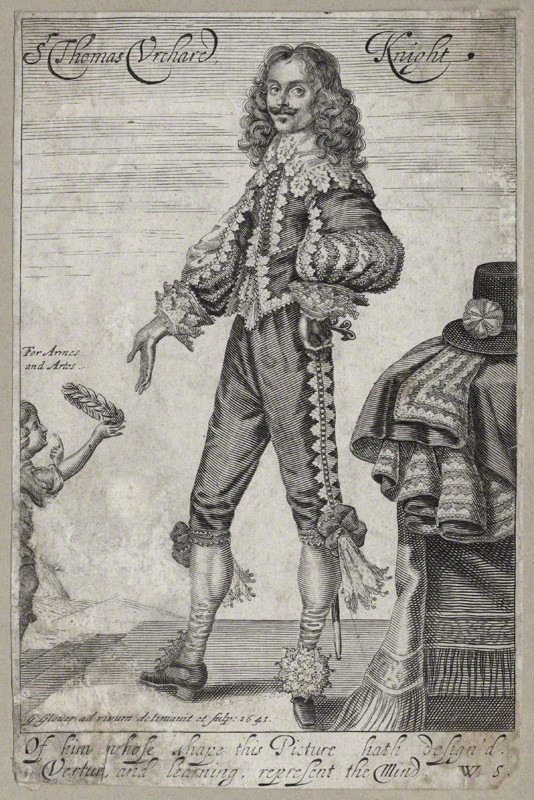
He is born Thomas Urquhart in the year 1611. He is the third of his name and in line to become the 12th chief of the clan Urquhart, one of the older aristocratic families in Northern Scotland. As such, Thomas grows up in the Castle of Cromarty, attended by numerous servants and tutors.
It is a true medieval castle, erected in the 1200s out of timber and grey stone, perched on a hill above the town of Cromarty. It is moated, walled, turreted, and battlemented, and rises six stories to a height of one hundred and sixty feet above a narrow stream. Thomas grows up in these immense stone hallways, looking out from the battlements towards the sea. The great hall where he has dinner is a massive dark chamber lined with oak. One hundred soldiers have exercised here with pikes, and the large chimney has room for a dozen men to stand comfortably.
While noble guests hunt for fowl on the estate, a young Thomas busies himself in the castle keep studying optics, trigonometry, natural philosophy, theories of color, the squaring of the circle, and Napier’s logarithms. He is tutored in Latin, Greek, and French. He pores over the family genealogy, and hears stories of the great battles that his ancestors had fought in the past. He learns the aristocratic arts: how to fence with sword and dagger, how to shoot a bow, how to wield a lance on horseback — already antiquated in this era of rifles and cannons. Above all, he is taught to honor and defend the three pillars of his fading world: family, Scotland, and crown. He will grow up to be a failure in almost every aspect of his life.
At age eleven he attends King’s College, which was apparently par for the course back in the 1600s. Thomas Hobbes went to university at thirteen, Francis Bacon at twelve, John Donne at eleven. It also seems like every other person in Britain was a genius in that century.
In his twenties, Urquhart travels to the continent to complete his education. He dresses well. He improves his grasp of French, Italian, and Spanish. He hobnobs with other royals and sees the artistic masterpieces that one is supposed to see. Additionally, he duels anyone who shows the slightest disrespect to his native Scotland. The rest of his time is taken up with scavenging through old alleys and stalls for rare and expensive books which he brings back as plunder to his castle at Cromarty.
In 1639, he feels the first rupture in his world. The rumblings have been there throughout his life as a kind of ever-present religious anxiety. The Thirty Years’ War has been raging in Central Europe since he was seven. Stories of Catholic massacres and Protestant martyrdoms are rife in the British Isles. The Protestants themselves are squabbling. Hairline fissures emerge over minute theological nuances, which will soon widen into uncountable sects: Diggers, Seekers, Ranters, Quakers, Levellers, and Muggletonians. Scotland is dominated by touchy Calvinists, who always suspect the English monarch will go back over to the Pope.
But in 1639, things come to a head. In response to King Charles I’s attempt to assert royal supremacy over all religious matters in the isles, Scotland breaks out in riots and protests. Representatives across the country come together and vow to resist any theological innovations from London. They are known as Covenanters. Urquhart, however, lives in the small Royalist part of Scotland around Aberdeen in the north that doesn’t sign on, an island within an island. And so the pugnacious Urquhart finds himself at war with his fellow Scots.

All accounts suggest that, as a soldier, Urquhart was endearingly inept. His entry into the war is spirited but lacks the sort of prudence one would hope for in a military man. He stockpiles weapons and stores them at a large manor called Balquholly Castle, but nearby Covenanters come by and steal the weapons, taking them back to Towie-Castle. Swearing revenge, Urquhart gathers a handful of men and rides off to the enemy castle. When he arrives, he is foiled by the fact that the gates are closed. There is no backup plan. The Covenanters mock them from the walls, a few shots are exchanged, one of the servants in Urquhart’s party dies, and he retreats ingloriously. He gives up on the weapons.
The rest of his career in this war is fairly brief. He participates in the Trot of Turiff, a minor skirmish in which there were three casualties, two Covenanters and one Royalist. He promptly sails down to Whitehall to be knighted by the king (Oh, for the days when two casualties in a meaningless battle could get you a knighthood!).
It’s a little hard to tell what this war was like for Urquhart, because although the war raged for the next eleven years, it apparently has no importance in Urquhart’s life. There he is back in Cromarty, supposedly in hostile territory, knighted for what would have been considered treason against his fellow Scotsmen, and yet there is no mention of any further engagement in the war. Instead, he settles down in his castle and begins to write.
He first pens a collection of epigrams. Epigrams are brief, witty poems on a variety of topics. In 1640, Thomas cranks out 1100 of these in 13 weeks, which the critics universally agree are neither brief nor witty. Then in 1642, his father dies, leaving behind two unmarried sisters to care for, five younger brothers, and 13,000 pounds of debt (four million dollars today!). Immediately, the creditors descend. They garrison various properties with troops. They graze horses upon his land. They confiscate furniture and, in the gravest insult of all, plunder large portions of his library — those rare books he had so painstakingly collected, the esoteric tracts on math and alchemy, the complete Latin sets of Roman authors. For the rest of his life, Urquhart will bitterly assert that the weight of this debt kept him from his true calling: to make inventions that would benefit humankind.
But the problem of the debt persists. Urquhart, like many a nobleman before and after him, hopes to write his way out. His plan is straightforward. He figures that if he can just write something universal, something that everyone in the world will want to buy, surely then he will become rich. Easy, right?
His first attempt is theTrissotetras (1645), a bizarre attempt to simplify trigonometry. Without calculators, of course, our old high-school sines and cosines are a terrible pain to deal with. In the olden days, amateur mathematicians had to painstakingly calculate the values for every single angle by using trigonometric identities along with previously known values. Then they would write up all the values in a table. Scientists would look up these values and use them as a starting point for the more precise angle that they needed. Astronomers might spend a working day on the arithmetic required for sine(34.5678). In 1614, fellow Scotsman John Napier famously doubled the speed of these calculations by inventing logarithms. Now all the tedious multiplication and division of numbers with seven or eight decimals became addition and subtraction [1]. Urquhart hoped to make the next breakthrough.
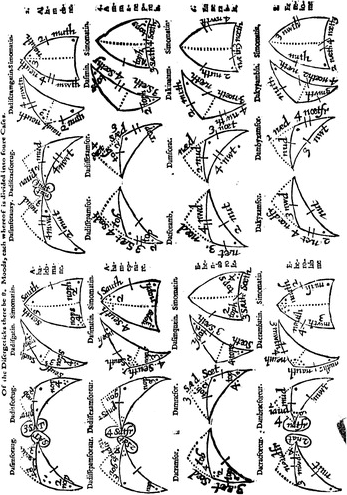
At this point, reader, I wish I could tell you I have been completely thorough and comprehensive in my research. I wish I could tell you that, rather than merely skim through this work, I had the patience to slowly work through Urquhart’s mathematical ideas. But life is too short. From what I can tell, only half a dozen mathematicians in history have ever made an attempt to understand theTrissotetras, and no one has ever mastered it, including probably Urquhart himself. The Scottish mathematician William Wallace (no relation) read it in 1834 and the best he could say was that it was not “absolute nonsense.”
The gist is that Urquhart hopes to invent a new nomenclature that will help with memorization of the logarithmic and trigonometric values. He will encode long mathematical relationships into the structure of words. Portions of formulas will be compressed into the syllables of words. Ideally this will make everything simpler and quicker (“a year of math in seven weeks” is how he advertises his book). Here are a few of the simple terms you have to learn: proturgetick, quadrobiquadrrcquation, sindiforall, cathctobasall, amfractuosities, loxogonosphericall.
Can you use one of these words in a sentence? Sure thing.
“Cathctobasall is said of the concordances of loxogonosphericall moods, in the datas of the perpendicular and the base, for finding out of the maine qusesitum.”
Perhaps this all does make sense, but it certainly doesn’t make things any simpler, and Thomas sadly does not revolutionize mathematics. Nor does he strike it rich.
Undaunted, he decides his problem was that he wasn’t ambitiousenough. Let’s be honest; a new language for mathematics is really only going to appeal to a handful of scientists and mathematicians. What he really needs to create is a new language for everything. Urquhart spends the next seven years working on this dream of a universal language which will change all of human life. The language is to have 12 parts of speech, 10 tenses, at least 10 synonyms for every word, 11 genders, 7 moods, and four kinds of number (singular, dual, plural, and redual [2]).
The overarching idea is that words will no longer be arbitrary sounds that represent real things. The meaning of the words will be encoded in their sound and spelling. Thus the word for horse and donkey will be similar to each other, and less similar to words like tree or carpet. A new speaker will quickly pick up words once they understand the inner logic of the language. However, the claims Urquhart makes for his universal language are all preposterous.
Every letter of every word will contribute some meaning.
Every word will have one meaning forward and another backwards, to make it an ideal language for anagrams.
It will be simultaneously the perfect language for Aristotelian logic and also literary expression.
The word for every star in the sky will also give its magnitude, longitude, and latitude.
The language will have such a concise system of words for numbers, that a number which had more digits than grains of sand you could fit into the volume of the earth, such a number can be expressed with two letters.
The mathematics of logarithms will be encoded into the numbers of this language.
Every word from every other language will have a corresponding equivalent in this language. The equivalent will preserve not only the meaning, but also the syllable count and rhyme, so that it allows for the perfect translation of poetry.
He eventually lists 63 advantages in total. At this point, you’re probably thinking that Urquhart was some kind of baroque troll. This is a fair suspicion. But if you read his writing, it’s really hard not to feel that he is being serious. There’s almost nothing conventionally funny in any of Urquhart’s original work. Plus there are these long sections without the barest whiff of humor, where he spends page after page going over the limitations of ordinary languages. And if this was in fact an elaborate troll, for whom was it intended? Why spend seven years on such an unfunny joke? Perhaps the first or second impossible claim is amusing, but surely not the sixty-third? And what’s more, he genuinely needed the money. He can’t have expected an extended practical joke to make his fortune, right?
His descriptions of his language seem more like a daydream that has gotten entirely out of control. Urquhart always produced a lot of writing, and we have no reason to doubt he did in fact spend seven years working on this project. He claims to have written over three thousand pages (which matches the zany productivity of the other years of his life). But in fact we have no direct records of the language.
He loses the labor of these seven years in what has to be the most idiotic chapter of his life. In 1649, King Charles I is executed for treason by Puritans and Parliamentarians. In response, the Royalists arm themselves to restore Charles’ son to the throne. Urquhart returns to the field and inexplicably takes the entire three thousand page manuscript with him. He holds no command and is surrounded by the same soldiers he had fought against in the religious wars just ten years ago. Therefore, he keeps to himself. He marches by day and writes by night. He imagines that after the great victory, he will reveal his language to a grateful world. The army of 16,000 moves rapidly south toward London until they are finally intercepted at Worcester by the English general Oliver Cromwell.
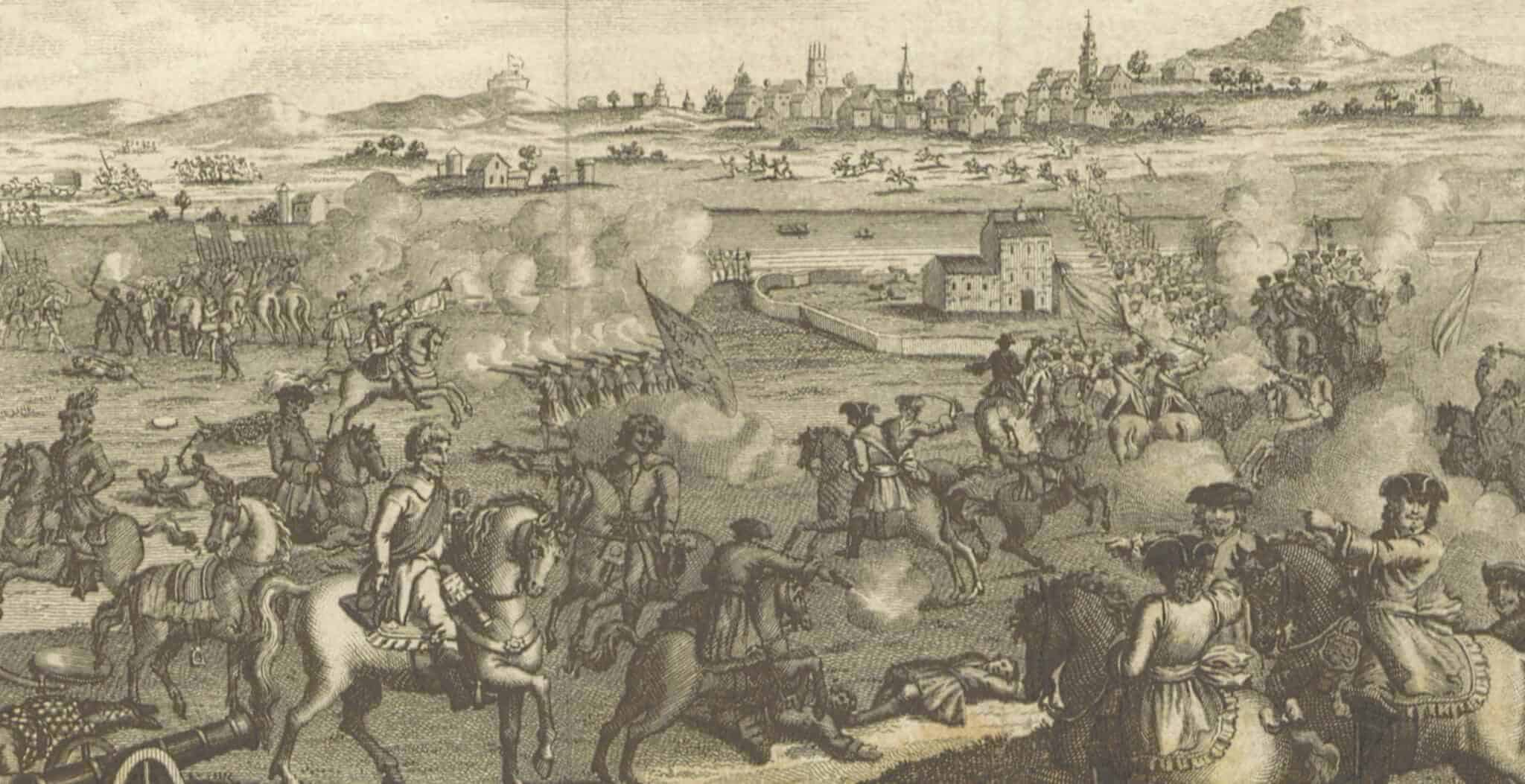
The Royalists are utterly crushed. 3,000 die and another 10,000 are taken prisoner (Cromwell loses only 700). Urquhart is captured in his Worcester quarters where he sees marauders ransack his chests, trousseaus, and portmanteaus. They dump out the quires of paper and take them away to wrap up other, more valuable plunder. Later, grocers, druggists, chandlers, and pie makers will come by and take paper for wrapping their wares. Urquhart is imprisoned in the tower of London, and over the next few weeks, stray pages are brought back to him, bespattered with rain and mud and blood. Picked up from gutters or beneath the corpses of soldiers dead in drunken fights after the victory. But the vast majority of the work is lost forever.
Urquhart remains a prisoner for a year. He quickly befriends his jailers, but he feels like a caged nightingale. As always, he tries to write himself out of trouble. First he writes the Pantochronachanon (1652), which can only be described as a kind of biblical-historical fan fiction. In this book, he traces back his ancestors in an unbroken line all the way back to Adam and Eve. He invents one relative who was hanging around in Abraham’s house when Sodom and Gomorrah were destroyed, and another who married the same Egyptian who discovered Moses among the bulrushes. Urquhart continues to weave the lives of imagined relatives alongside famous figures from antiquity and the Middle Ages until the genealogy finally arrives at himself. The hope is apparently to convince his captors that his lineage is so noble that it would be a crime against humanity to keep him imprisoned.
His other project during this period is a prospectus for his universal language. This prospectus, and another that he writes the following year, are the only surviving sources we have for the original project. Again, the direct motivation was to convince his captors that he should be freed. If they didn’t free him, he argued, they would be preventing him from completing this great, world-changing gift of a universal language.
Again, it probably seems like I’m getting trolled by a 17th century Scotsman. The obvious assumption is that he was simply lying in a desperate attempt to free himself. But these are such absurd lies, and are so completely unbelievable, that surely he couldn’t have expected anyone to ever fall for it. The claims he made for his universal language were literally impossible. And if he meant it all as a joke, why pad these works with so many pages that aren’t even remotely funny? Was he really wagering his freedom on Oliver Cromwell’s sense of humor? The only thing that makes sense to me is that these are the earnest delusions of an insane and vainglorious aristocrat.
And yet Cromwell does pardon him, and Urquhart is able to retire to his castle in Cromarty. But life at home is neither peaceful nor quiet. The creditors still lurk, and they still demand payment for the father’s debt which has only been accumulating interest while Urquhart was in prison. Suffice to say, neither the universal language nor the genealogy made any money.
And so, in his last ditch attempt to earn enough to pay off his father’s debt, Urquhart begins on the final work of his life, his great translation of Rabelais’ five books on Gargantua and Pantagruel. Rabelais’s masterpiece was one hundred years old at this point and wasn’t widely read in the English-speaking world. Shakespeare referenced him once, as did Francis Bacon and Ben Jonson, but to reference Rabelais was mainly about showing off how well read you were. It was a book for the educated and the urbane.
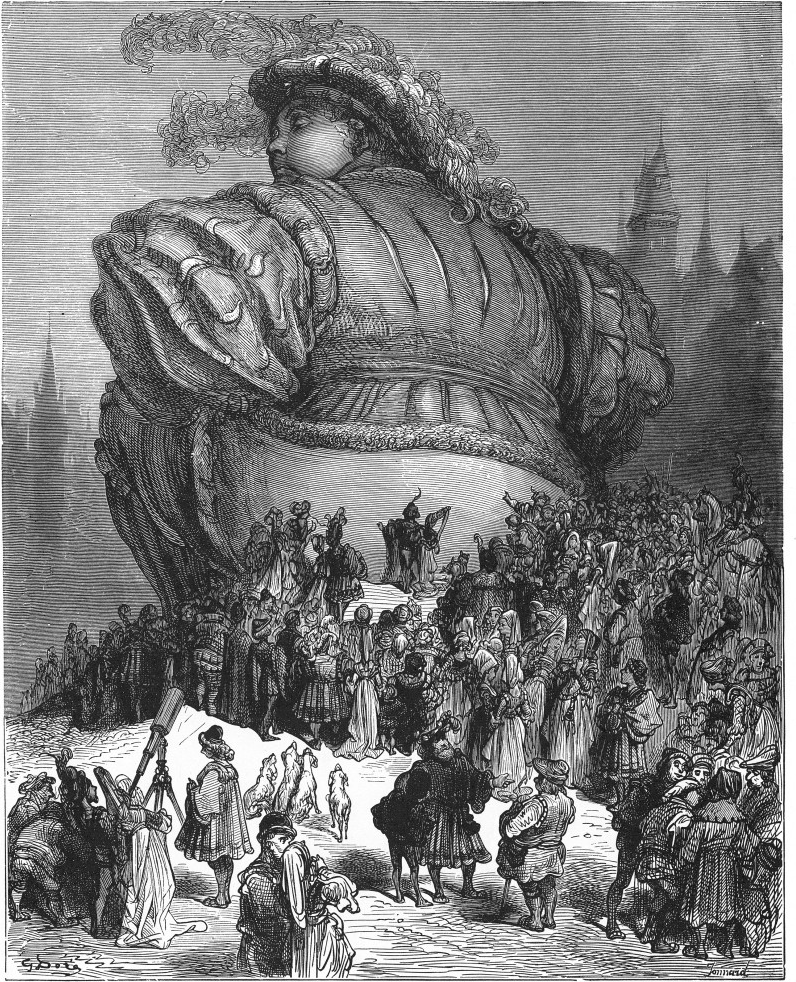
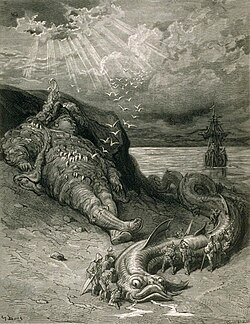
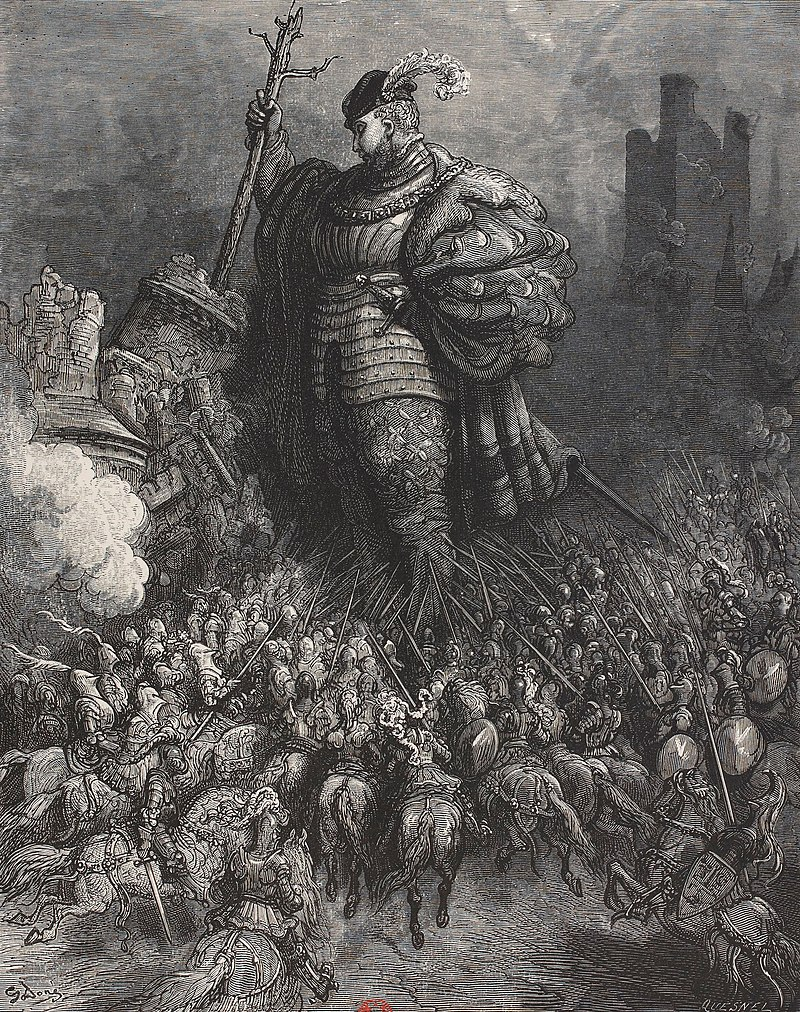
The full title is The Five Books of the Lives and Deeds of Gargantua and Pantagruel. The basic plot follows the adventures of the giant Gargantua and Pantagruel, his giant son. Their adventures mainly consist of fighting, traveling, debating, and making speeches. Along the way you meet such colorful figures as Friar John of the Funnels, a bawdy warrior monk; Herr Trippa, an eccentric astronomer; and Panurge, Pantagruel’s clever and cowardly best friend. However, the main thing with Rabelais is not really the plot, but the performances. Rabelais moves swiftly from topic to topic, satirizing the Catholic church, parodying medieval scholars, or digressing at length on scatological subjects. Various characters stand up and make speeches in favor of wine, or against marriage, or against law, or against religion. The result is frequently hilarious, and I say this as someone who doesn’t usually love old classics of French comedy like Moliere and Voltaire.
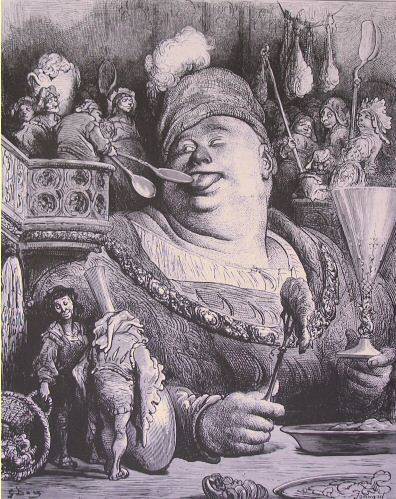
Gargantua and Pantagruel also had a reputation for being completely untranslatable. Rabelais filled his tales with obscure or invented words, obscure references, bawdy and polyglot puns, esoteric jokes, spoofs on dialectic logic, and recondite allusions. Two previous attempts at an English translation had been made, but both were given up in fragmentary forms, and neither survives to this day.
It’s almost as if Urquhart was born for this job. It was a task which perfectly suited both his strengths and limitations. Here, finally, was a place where he could find a use for his addiction to extravagance, exaggeration, inventing words, his own wide learning. Even more importantly, he didn’t have to provide any of his own wit. Because Urquhart’s main weakness was that he simply had no good original ideas. But now he didn’t need to. Rabelais’ book anchored Urquhart’s uncontrolled imagination and channelled his boundless energy. If Urquhart had been born a hundred years later during the more rational era of the enlightenment, he would have made himself useful by assisting with the first English dictionary or thesaurus. As it was, he was born in an era when Isaac Newton split time evenly between physics and alchemy, and John Napier was known in his hometown not as the inventor of logarithms, but as a mysterious necromancer. So Urquhart daydreamed of impossible languages and translated Rabelais.
Now to the translation itself. Why might you want to read it? I don’t think this is the kind of capital-I “Important Book” that everyoneshould read. It’s one of those second-tier books that you should only read for pleasure.
The first and most important pleasure is in the language. There is really nothing quite like it in English, but it’s certainly not for everyone. The prose style is one of baroque exuberance. If you don’t like Shakespeare or Milton or Thomas Browne, you probably won’t like Urquhart. If you were brought up on Flaubert and Hemingway, and thus prefer precision and concision, that’s entirely fair. I won’t bother trying to make arguments for Urquhart’s prose style. I can only offer quotations. And if you like these brief samples, you can look forward to long hours of pleasure.
A good part of the pleasure in Urquhart’s translation derives from an appreciation of words for their own sake. This was an age mostly before dictionaries and thesauruses (although Urquhart was able to lean heavily on Randle Cotgrave’s 1000 page bilingual dictionary of English and French published in 1611). Thus Urquhart had to discover many of these words for himself, book by book, sentence by sentence, and he lovingly strews these finds throughout his translation. Words like flimflam (nonsense), plasmator (creator, fashioner), onocrotary (pelican), whirlingfriskorum (some kind of whirling dance?), or bumfodder, arsewisps, and wipe-breeches (synonyms for toilet paper).
Often it’s less about individual words than the long lists. Rabelais loves to list anything and everything: foods, plants, animals, liquors, weapons, cities, languages, scientific terms, words for medicine, names from the classical world. The term “encyclopedic novel” really applies best to Rabelais. There are portions of the work that literally read like an encyclopedia. Urquhart takes the original French lists as a personal challenge, and hopes to showcase the greater flexibility and gusto of the English language. If Rabelais names four kinds of wine, Urquhart will give seven. Here is one of the many examples of a list of insults, voiced by the cake-bakers of Lerne against the shepherds in Gargantua’s kingdom: “prattling gabblers, lickorous gluttons, freckled bittors, mangy rascals, shite-a-bed scoundrels, drunken roysters, sly knaves, drowsy loiterers, slapsauce fellows, slabberdegullion druggels, lubberly louts, cozening foxes, ruffian rogues, paltry customers, sycophant-varlets, drawlatch hoydens, flouting milksops, jeering companions, staring clowns, forlorn snakes, ninny lobcocks, scurvy sneaksbies, fondling fops, base loons, saucy coxcombs, idle lusks, scoffing braggarts, noddy meacocks, blockish grutnols, doddipol-joltheads, jobbernol goosecaps, foolish loggerheads, flutch calf-lollies, grouthead gnat-snappers, lob-dotterels, gaping changelings, codshead loobies, woodcock slangams, ninny-hammer flycatchers, noddypeak simpletons, turdy gut, shitten shepherds, and other suchlike defamatory epithets.”
Again, you either enjoy this sort of thing or you don’t. I myself can’t help but smile deep in my soul at slapsauce fellows and jobbernol goosecaps. But if this was all Urquhart could do, he’d merely be a compiler, a hoarder of obscure words and phrases. What truly distinguishes his translation is his marvelous ear for sentences and paragraphs.
Here he is, describing how Pantagruel hoped to colonize the newly conquered land of Dipsody with men and women from the land of Utopia: “You understand well enough, nor is it needful further to explain it to you, that the Utopian men had so rank and fruitful genitories, and that the Utopian women carried matrixes so ample, so gluttonous, so tenaciously retentive, and so architectonically cellulated, that at the end of every ninth month seven children at the least, what male what female, were brought forth by every married woman, in imitation of the people of Israel in Egypt, if Anthony (Nicholas) de Lyra be to be trusted.”
Notice the rhythm of this sentence, that crescendo of adjectives until the wonderful climax of “architectonically cellulated” [3]. And then how the sentence slowly unwinds from there until finally landing softly in a roguish Bible reference and an absurd show of arcane learning. I can’t speak French, but I have a hard time believing that Rabelais’ original can be any better than this.
Here is a longer passage without commentary: “Pantagruel, very well remembering his father’s letter and admonitions, would one day make trial of his knowledge. Thereupon, in all the carrefours, that is, throughout all the four quarters, streets, and corners of the city, he set up conclusions to the number of nine thousand seven hundred sixty and four, in all manner of learning, touching in them the hardest doubts that are in any science. And first of all, in the Fodder Street he held dispute against all the regents or fellows of colleges, artists or masters of arts, and orators, and did so gallantly that he overthrew them and set them all upon their tails. He went afterwards to the Sorbonne, where he maintained argument against all the theologians or divines, for the space of six weeks, from four o’clock in the morning until six in the evening, except an interval of two hours to refresh themselves and take their repast. And at this were present the greatest part of the lords of the court, the masters of requests, presidents, counsellors, those of the accompts, secretaries, advocates, and others; as also the sheriffs of the said town, with the physicians and professors of the canon law. Amongst which, it is to be remarked, that the greatest part were stubborn jades, and in their opinions obstinate; but he took such course with them that, for all their ergoes and fallacies, he put their backs to the wall, gravelled them in the deepest questions, and made it visibly appear to the world that, compared to him, they were but monkeys and a knot of muffled calves. Whereupon everybody began to keep a bustling noise and talk of his so marvellous knowledge, through all degrees of persons of both sexes, even to the very laundresses, brokers, roast-meat sellers, penknife makers, and others, who, when he passed along in the street, would say, This is he! in which he took delight, as Demosthenes, the prince of Greek orators, did, when an old crouching wife, pointing at him with her fingers, said, That is the man.”
There are so many sections of this quality. To me, this language is so lovely, so full of vitality, that it makes all of life more beautiful.
I should add, finally, that this translation offers all the myriad pleasures of Rabelais: the wit, the slapstick humor, the ribaldry, the learning, the humanistic perspective, the criticism of corrupt clergy, the satire of all forms of Renaissance life. Rabelais is excellent at moving things along quickly, at varying his scenes, and Urquhart is equally adept at matching his style to warfare, marriage, court cases or whatever else Rabelais wants to touch on. And for all its verbal pyrotechnics, I think the prose is surprisingly smooth. To me, at least, Urquhart’s translation is much easier to follow than most other prose from that period. If you’ve ever been curious about Rabelais, try this translation first.
Urquhart completed his translation of the first two books in 1653, along with a second prospectus for his universal language. The translation was a commercial failure, as was the second prospectus (obviously). The Parliamentarians took control of all of Britain, and so Urquhart went into exile on the European continent where he completed a draft of his translation for the third book. The final legend of his life is that he heard of Charles II’s restoration to the English throne in 1660, and died in a fit of laughter.
The Cromarty estate, still saddled with debt, passes into his younger brother’s hands and eventually out of the family. Urquhart leaves no heirs to the family name. And his unfinished translation passes into obscurity. We know it today only because a refugee from France named Peter Motteux completed the last two books in 1694 and then republished the work as the complete Rabelais. This new translation spread the fame of Rabelais in the English-speaking world, and paves the way for Gulliver’s Travels, Tristram Shandy, and Finnegan’s Wake. The translation has never gone out of print, and is still available today in the Everyman Classics edition.
Is there a moral to this story? I doubt it. We can only count ourselves lucky that the translation has come down to us today, like one of those scattered pages of the universal language, rescued from the mud.
Your message is stored now and emailed to the author after the contest ends. The author can reply to you, but their identity stays hidden unless they choose to respond.