I undertook to learn Russian about ten years ago just so I could read Dostoyevsky. And, after parsing Бесы (variously translated as “Demons” or “Devils” or “The Possessed”) in its original language—insofar as that was possible, obviously with the help of dictionaries, chatGPT, etc—I now sincerely believe in the existence of demons.
People, like me, who are apt to spend their weekdays reading Star Slate Codex (or Slate Star Codex, or whatever) rather than laboring, would, I imagine, be disposed to scoff when confronted with the proposition that demons exist. “What now: Darwin and his colleagues have scoured the globe long ago; if, as you say, there exist these creatures, demons, as you call them, with hooves and fangs and claws and breathing fire, wouldn’t biologists have documented them? Wouldn’t they have a genus and a clade and all those other esoteric Latin incantations that science says all real living creatures must have?”
Short answer: the devil is in the details.
Long answer: there are many things that the natural sciences have yet to document and maybe, for complex epistemological/political/religious reasons, never will. That is not evidence that demons do not exist; it simply means that perhaps the methods of the natural sciences are ill-suited to describe them.
Dostoyevsky, that great naturalist of the human condition, described and documented (in a semi-fictional narrative form) the demons that possessed—or were—the participants in the Russian revolution nearly half a century before it happened.
I mean actual—drooling, howling, screeching—monsters who will literally tear you apart with their claws.
However, the whole purpose of this review is so that the modern “scientific, rational” thinker should not get lost in pesky terminology which is likely to make him confuse the symbol for the substance. The novel opens with a quote from the canonical Russian translation of the Gospel of Luke, recounting the episode when Jesus casts out demons (or “бесы,” or “Legion,” or “devils,” or “unclean spirits,” depending on your translation) out of a man and allows them to possess a herd of swine (pigs) grazing on the hill, whereupon they promptly (the pigs) cast themselves off a cliff and drown in the ocean.
At the end of the book (not really a spoiler, I literally told you Dostoyevsky predicted the reasons for the Russian revolution) Stepan Trofimovich reflects on this passage and how it relates to Russia (translated by me—actually the character speaks half in French because he’s quirky and arrogant and a poser like that—and, unlike many translators, I have preserved the French original):
“My friend,” pronounced Stepan Trofimovich in a great agitation, “savez-vous, this marvellous and . . . unusual place was for me my entire life a stumblingblock . . . dans ce livre . . . so much so that I could even as a child recall it. Now, however, I have only one thought; une comparaison. Now horribly have many thoughts come to me: you see, this is point-by-point just like our Russia. These demons, coming out of the sick [man] and going into the swine—it’s all the sores, all the miasmas, all the uncleanness, all the demons and demon-cubs that have amassed themselves in our great and dear sick [one], in our Russia, for the age, for the age! Oui, cette Russie, que j’aimais toujours. But a great thought and a great will hangs over her from above, just as over that mindless demon-infested [man], and there will come out all these demons, all the uncleanness, all this abomination that is beginning to fester on the surface . . . and they themselves will ask to go into the swine. Yea, and they’ve already gone in, maybe! That’s us, us and those, and Petrusha . . . et les autres avec lui, and I, maybe, am the first, at the head, and we’ll throw ourselves, mindless and possessed, from the cliff into the sea and we all will drown, and that is our path, because after all that’s all we’re good for. But the sick man was made whole and “was sitting at the feet of Jesus” . . . and all will look on in astonishment . . . [My] dear, vous comprendrez après, but now this is very much disturbing me . . . Vous comprendrez après... Nous comprendrons ensemble.
- Representation vs. Reality (A Category Error)
A great philosopher of Reddit (whose name eludes me at the moment) once argued that literally every error in rationality is a “category error”—which means wrongly dealing with or talking about an entity as if it were something that it’s not.
I propose that this is merely a modern articulation of the ancient prohibition against idolatry—that is, treating a physical object as if it were the “actual,” “real” object of proper focus—or in other, much better words: “Thou shalt not make unto thee any graven image.”
Pop quiz: Without thinking, what do you see in the following (non-graven) image:
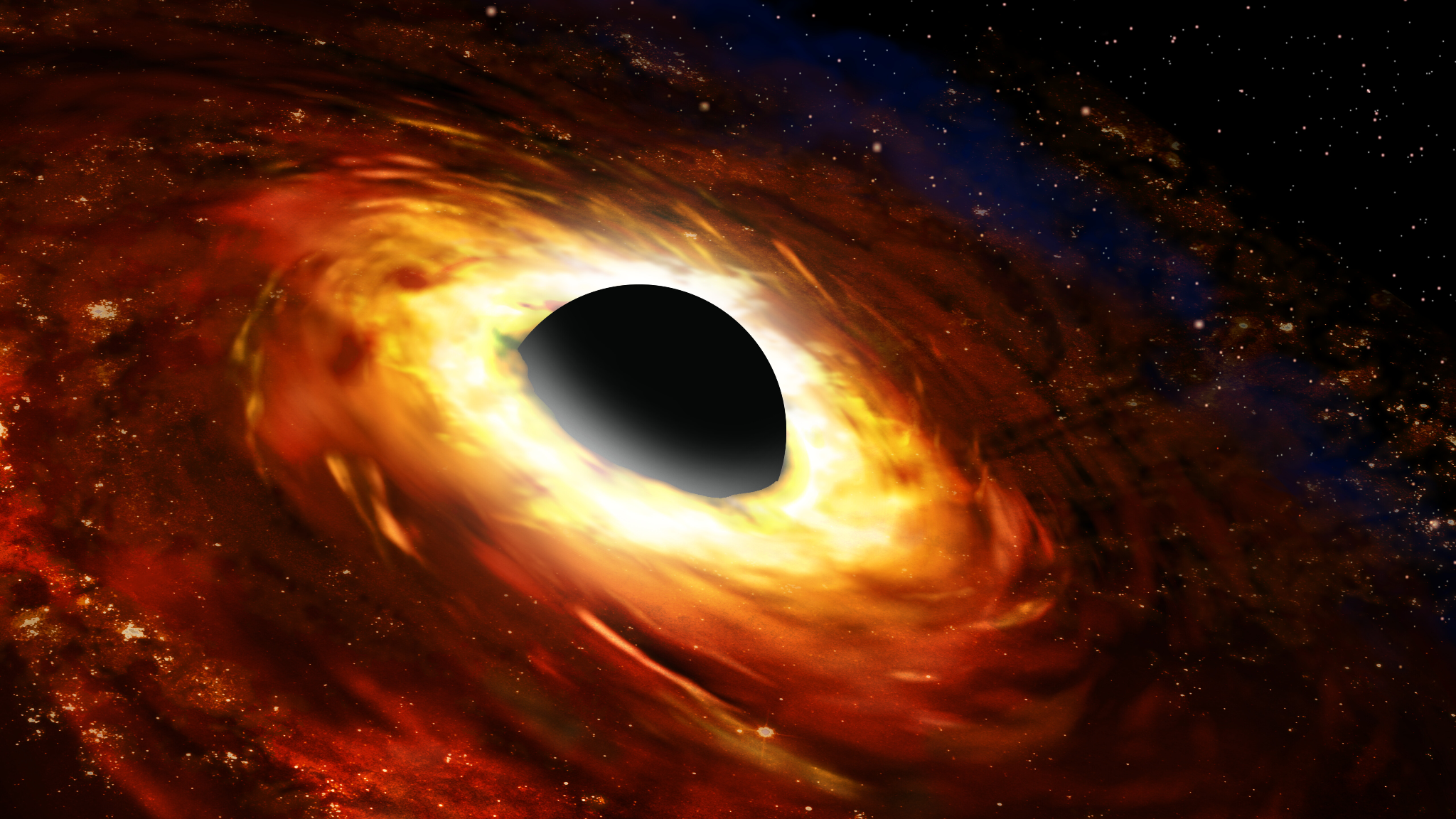
Figure 1: An Artist’s Rendition of a Black Hole
If you said “it’s a black hole,” you’re wrong. Rather, what you are looking at is an artist’s rendition of a black hole.
Hopefully, after this short exercise, you’ve been completely disabused of any tendency to confuse representation for reality. But, just in case, we’ll do one more—what do you see in the following picture:
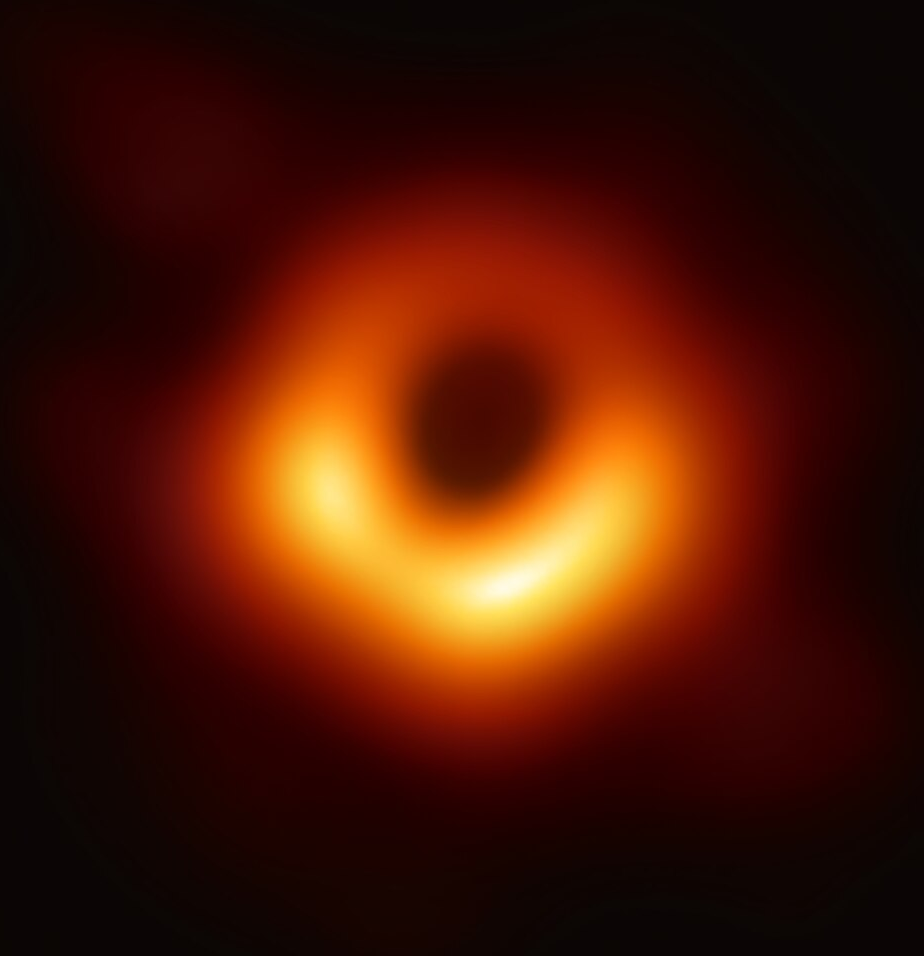
Figure 2: The Output of a Very Complex Function That Takes as Inputs the Data Received From the Event Horizon Telescope Pointed toward the Center of Messier 87
If you said “it’s a black hole”—again, you’re wrong, and for the exact same reasons. (Rather, this is what a certain computer program displays on a monitor after receiving data from the Event Horizon Telescope.)
“What? Of course black holes exist!”
How do you know? Have you actually seen one with your own eyes? Have you ever been under the influence of one? Or are you just parroting what the Reverend Father Neil deGrasse Tyson taught you as dogma?
Flippancy aside, I am not to be taken as suggesting that black holes do not actually exist. What I am saying, however, is that the evidence for the existence of demons—as that concept is properly understood—is at least as strong, if not stronger, than that for black holes. (Of course, I used the word “evidence” broadly here, and not in the strict 21st century usage often employed in scientific circles.)
Demons, like black holes, can be difficult to perceive with the naked eye. Their existence—if they do exist—would have to be inferred by their influence on other bodies.
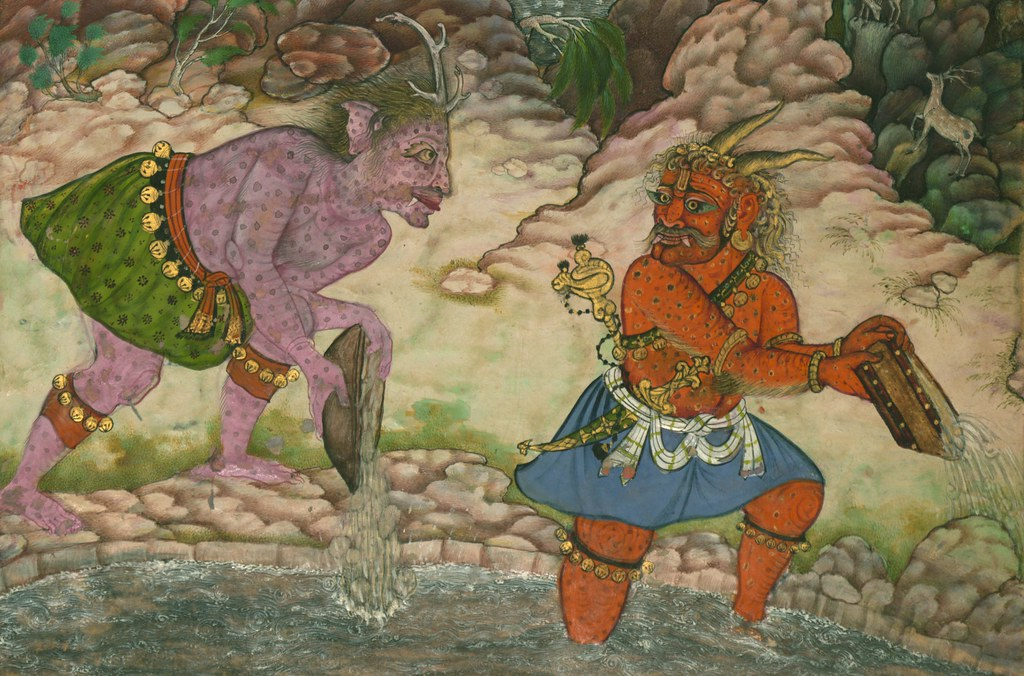
Figure 3: A Medieval Artist’s Rendition of Two Demons
- Defining and Translating Demons
There are some texts that are called “untranslatable.” This can be for many reasons—a common one is that the source language is simply too unrelated to the target language.
Since I am Canadian, I can tell you, as someone selectively bred to speak both languages, that The Three Musketeers is not untranslatable into English; that is, given the (relative) similarity between French and English (literally the main character asserts that English is just French badly pronounced), a competent translator could render it into English without losing any of the original tinge. Conversely, Madame Bovary is not translatable, simply because the whole point of that book is dedicated to exploiting the peculiar characteristics of the French language.
What is the genre of Demons? “Historical fiction”? Not really, as Dostoyevsky the author—as opposed to Tolstoy and his depiction of Napoleon in War and Peace—does not claim that the setting is an actual place with actual historical figures (although undoubtedly he based the characters and events on actual people and events—just like every writer of fiction). “Political satire”? We might classify it thus now—but only because we have the benefit of hindsight.
Ordinarily Demons would defy all attempts to categorize it (just like actual demons). The novel systematically and intentionally breaks all the modern conventions of writing—don’t do exposition dumps, “show, don’t tell,” don’t have talking heads in a room—but Dostoyevsky is allowed to do all this because he’s Dostoyevsky.
Petrusha, the main antagonist, is deliberately evasive to confuse and baffle others while he engages in subterfuge behind the scenes. I cannot accurately reproduce to an English audience the wild, unrestrained nature of his speech (and neither can AI, which either attempts to smooth it out to make it more grammatical and less stilted, or even adds words and connotations that simply aren’t there in the original). However, I have done my best:
I always say much—that is, many words—and hasten, and with me nothing ever comes out of it. But why do I say many words and with me nothing ever comes out of it? Because to talk—don’t know how. Those who know how to talk well, they talk succinctly. Here, thus, am I untalented—no? But as this gift of talentlessness with me is even natural, then why do I not avail myself of it artfully? I am availing myself. It’s true, preparing for this, I nearly thought at first to be quiet; but after all to be quiet is a great talent, and, consequently, it’s undecorous for me, but secondly, after all to be quiet is nevertheless dangerous; well, and I resolved definitively that it’s better to say everything, but particularly talentlessly; that is, much, much, much, to always hasten to prove and toward the end to become lost in my own proofs, so that your listener will leave before you end, spreading his hands, but better to have just spit. It’ll turn out, firstly, that you believed in your simple-souledness, were very boring and were not understood—all three victories at once! Please, who after this will start to suspect you of having secret designs? Yea, any of them would personally be offended at him who should say that I have secret designs. But I sometimes laugh at that—and that’s really valuable.
It will shortly be seen that any skepticism toward the existence of demons can likely be attributed to mistranslations or, rather, a failure to rigorously define the concept. Here’s the definition I propose:
DEMON: A force that seizes a person or group of persons, displacing the individual personalities in service of the force.
Under this definition, a strong indicium that a person is possessed would be if he acts in a manner obviously contrary to his own personal interests.
Gustav Le Bon’s Psychologie des foules (Psychology of Crowds, not Psychology of Fools) is an excellent treatise on how contagious (Le Bon’s actual word is contagion) the “mob mentality” is, how it can easily cause anyone to behave in a manner he never would have if he had maintained his individual personality (which is just a different way of saying “if he had maintained his soul”). We all know how people can suddenly find themselves “taken up with the crowd” and often cannot even describe why they did it or even reconcile their behavior with their pre-conceived “go[o]dly” conception of themselves.
Call me paranoid, but the word crowd sounds awfully similar to Legion.
Looting is easy to hand-wave away as a “crime of opportunity.” What’s less easy to hand-wave away is the US-Canada fights in the 2025 4 Nations Face-Off tournament. This was, of course, right during the time when President Trump had just been re-elected and was threatening Canada with various economic sanctions and even annexation.
“Well, that’s just hockey.”
If this were a regular, domestic, regulation game, I’d be inclined to agree with you. But, even then, three fights in the first ten seconds would be highly unusual. Any fights whatsoever on an international level is unheard of. (“We’ve never had anything like that, best-on-best.”)
“He says that we’re going off the draw.”
The ferocity of the participants is not what’s remarkable; nor is it even the fact that the participants had absolutely no personal beef with one another. What’s remarkable is the contagion—truly the “uncleanness”—of demons: somebody, or something, told these grown men (including, as shown in the interview, a headscarf-wearing woman) that they had to fight, and they not only believed it, they embodied it, needed it.
To a rationalist and a skeptic who won’t accept the existence of demons, this is simply not explainable under the laws of human nature. Hockey players certainly do not subjectively consider themselves “performance artists” and would in fact be offended if you suggested that their training and skill is merely to entertain others. “Political tension” simply is not supportable on the objective evidence: as far as I can tell, on the basis of articles and interviews with the players (professional athletes are not known for their eloquence), none of them cited or implied any sort of political disagreement to be at the root of their brawl (of course they could be lying—but a drive to lie can also be attributable to demonic possession).
Like I said: literal, screeching demons with claws and fangs.
It can further be seen, even after the word demon is properly defined and construed, that any remaining objection the skeptic might raise is simply an isolated demand for rigor, all the more dishonest since the skeptic routinely accepts the existence of phenomena for which the evidence is even flimsier—such as “mental illness.”
- The Modern Man Says “He’s Mentally Ill”; the Ancient, “He Hath a Demon.”
Approaching a topic rationally, scientifically, and skeptically requires us to rely only on objective evidence: that is to say, only that which a bystander can actually observe is admissible in our discussions. Furthermore, this bystander must be actually objective: that is, even armed with actual direct observations, the bystander cannot rely on inferences that are predicated on unfounded assumptions, stereotypes, or biases of normativity.
It has long been recognized, among both the clergy and the laity, that a man can face corruption even in life, and that this corruption can manifest in bizarre, unexpected, even “mad” behavior. Indeed, in Demons, many characters engage in all sorts of wild, incomprehensible, and violent behavior. Modern “progressives” will often be inclined to explain this blatant corruption as помешательство (closest translation is “interference, disturbance”)—which term is, of course, just the way the (Russian) medical-industrial complex brings into its purview and control what is fundamentally a spiritual trauma.
In his Incerto series, Nassim Nicholas Taleb argued that many religious rituals (e.g., exorcisms) served, unbeknownst to the practitioners thereof, a real and useful salutary function: they satisfied the human urge to “do something” about an apparent problem, while also decreasing iatrogenic harm (that is, after performing an exorcism, people felt “they did all they could,” so they wouldn’t take the “patient” to a medieval doctor who would likely harm him way more than simply doing nothing would).
“Well, they were just ignorant peasants of the dark age; they had no valid, coherent nosology, and they didn’t have the methods to understand the real etiology of things.”
And do we? Most definitions of “mental disorder” are completely circular: they appear to hold explanatory power, but in actuality explain nothing. (E.g., “Your son has autism.”—”How do you know he has autism?”—”Because he flaps his hands, really likes trains, and has few friends.”—”But why is he flapping his hands, is really into trains, and has few friends?”—”Because he has autism.”)
Dr. Siskind has already discoursed excellently and elsewhere on the question of “mental illnesses” and whether they are actual “diseases,” so I need not dwell on this topic too much here. Suffice it to say that, ultimately, it’s a question of blame and responsibility: the definitions of “disturbance” and “mental illness” are deliberately and intentionally manipulated and expanded, whether by doctors who wish to expand their field of practice, by educators trying to blame their students, by anxious parents seeking sympathy, or by students seeking relief from the ordinary demands of the curriculum.
Of course, none of this is to suggest that these disturbances and difficulties aren’t real. There’s no doubt that they are. The only question, therefore, is one of cause. A good definition of demon, therefore, would be “a corrupting force that by its nature evades scientific classification.”
The very last lines of the book are:
On the table lay a wisp of paper with words [written] by a pencil: “No one to blame, I myself.” Here also on the table lay a hammer, a piece of soap and a giant nail, obviously saved in store. A sturdy silk string, obviously earlier saved and chosen . . . was greasily soaped. All bespoke premeditation and consciousness till the final minute. Our doctors . . . completely and insistently ruled out помешательство [madness, mental illness].
Whether you call it “mental illness” or “demonic possession,” the nature of this phenomenon has nothing to do with objective, verifiable evidence, and everything to do with blame: those who use the former term blame the individual or his breeding; those who use the latter blame Satan.
Call me superstitious, but for some reason I find the latter to be a more fair, just, and accurate description than the former. And, so it seems, would Dostoyevsky too, given how he depicts Captain Lebyadkin (Ret.) and his abuse of his physically disabled little sister Maria.
A narrow, superficial, first-order reading of Demons would take Maria Lebyadkina as merely just a manic pixie dream girl: She is almost quite literally the “object of affection and orientation” of the main character (and rake) Nikolai Stavrogin. Furthermore, much of her speech is meandering, whimsical, parabolic, and disjointed if not outright nonsensical. And because she has a physical disability, when people find her difficult to understand, they are inclined to believe it’s only because she’s mentally ill.
Their belief is strengthened by the fact that even though, objectively speaking, her brother terribly abuses her, she doesn’t complain, even goads him on—and, by all appearances, even seems to get off on it.
Of course, if you read carefully, it’s obvious that Maria has a depth of thought that is unparalleled among her contemporaries. It’s just easy to dismiss that which you find difficult to understand as “madness” (just as Herod dismissed Jesus as a “madman”).
“Captain Lebyadkin? Sure, he has some problems, as we all do, but he’s not possessed by a demon, nor does he have any mental illness, much less alcoholism: he’s just a retired Russian army officer! It’s completely normal and understandable for someone with his cultural and professional background to behave and drink like that!”
- A Review of a Book, but Not a Book Review
People like Health Secretary JFK Jr would maintain that “autists” do not and cannot understand fiction; activists would push back that this is an unfair characterization, that many “autists” can enjoy and understand many of the same things, etc.
Both these positions would miss the point, nor would this argument in any way help anyone, whether ever labelled “autistic” or not, to appreciate Demons: approximately 90% of the narrative is people just standing in rooms having, by all appearances, completely ordinary (if but intellectual) conversations. If you are unable to grasp subtext and implied meanings, this book will be completely incomprehensible to you—even if you can, it’s still a difficult read.
In fact, it strikes me as almost an affront to attempt to summarize this book for a short-form blog post. If it were possible to communicate with a blog post what Dostoyevsky was trying to communicate, then he would have simply written an essay (after all, he was a prolific essayist) and not a 600+ page novel.
“What, then, keeps people, in your opinion, from suicide?” asked I.
He absent-mindedly looked [at me], as if [suddenly] remembering about what we were talking.
“I . . . I very little know . . . two lines of reasoning keep [them back], two things; only two; one is very big, the other very small. But the small [one] is also very big.”
“What, then, is the small one?”
“Pain.”
“Pain? Really it’s that important . . . in this case?”
“The most. There are two kinds: those who kill themselves either out of a great woe, or out of spite, or are mad, or where it’s all one and the same; those, suddenly. They think little about pain—but suddenly. But those with premeditation—they think a lot.”
“So really there are those with premeditation?”
“Very much. If there were no premeditation, there would be more; a lot more; everyone.”
“Well, really everyone?”
He paused.
“So are there really no ways to die without pain?”
“Picture,” he stopped before me, “picture a rock of such greatness, like unto a great house; it hangs [above], and you under it; if it were to fall on you, on [your] head—would it be for you painful?”
“A rock like unto a house? Of course, scary.”
“I’m not [talking] about fear; will it be painful?”
“A rock from a mountain, a million pounds? Of course, nothing would be painful.”
“But stand [under it] in real life, and while [it] hangs, you will very much fear that it’ll be painful. Every utmost learned [man], the best doctor, everyone, everyone would very much fear. Everyone would know that it’s not painful, and everyone will very much fear that it’ll be painful.”
“Well, the second cause, is it big?”
“That light.”
“That is—punishment?”
“It’s all the same. That light; only that light.”
“Really are there no atheists that totally don’t believe in that light?”
Again he paused.
“You, maybe, are judging by your own [standard]?”
“No one can judge on his own,” said he having turned red. “Complete freedom will be when it’s all the same, life or no life. That’s the goal for everyone [or, for everything].”
“The goal? Really then there will be nobody who wants to live?”
“Nobody,” pronounced he decisively.
“Man fears death, because [he] loves life, that how I understand [it],” remarked I, “and thus has nature commanded.”
“That’s despicable and here is the entire deception!” His eyes flashed. “Life is pain, life is fear, and man is unhappy. Now is only pain and fear. Now man loves life, because pain and fear [he] loves. And thus [he, or it]’s been made. Life gives itself now unto pain and fear, and here is the whole deception. Now man is not even that former man. There will be a new man, happy and proud. He to whom it’s all the same [whether he] lives or dies, the same will be a new man. Who vanquishes pain and fear, he will become God Himself. But the former God will not exist.”
“Consequently, that God does exist, in your opinion?”
“He’s not, but he is. In the rock there is no pain, but in fear of the rock there is pain. God is the pain of the fear of death. Whoever vanquishes pain and fear, he will become God Himself. Then a new life, then a new man, everything new . . . Then all of history will be divided into two parts: from the gorilla to the destruction of God, and from the destruction of God to . . .”
“To the gorilla?”
“To a transfiguration of the earth and of man physically. There will be a man-turned-god and [he] will change physically. And the world will change, and things will change, and thoughts, and all feelings. What do you think, will man then change physically?”
I am put to further difficulties in that not only are the characters so numerous, the plot so unbelievably complex—but, crucially, there are certain plot points that are so revolutionary that my even mentioning them here would only dilute and pervert your experience should you ever read this book.
I’m speaking in particular about the section that, in most modern editions, is usually included as an appendix (приложение) at the end.
When I reached the end of the “main action,” I was confused and disturbed, thinking that I would need some time to process this narrative. However, when I reached the appendix, I was shocked as everything about the book fell into place all at once on my head—just like Kirillov’s great rock.
It wasn’t so much the subject matter—in fact, unlike in Crime and Punishment, the “transgression” described may not actually have constituted a crime under Russian law at the time (at most, maybe a civil tort). Rather I felt, and continue to feel to this day, actual fear—of what? My reaction is real, but the cause thereof, or the words we use to describe it, may differ. Call it “a fear of being watched,” “a fear of demons,” or “a fear of the Lord” if you absolutely must.
As something of a fiction writer myself, I instantly knew that this was the lynchpin of the entire book—that nothing the main character does in the preceding 600+ pages makes sense without this scene.
And—to the great flattery and satisfaction of my literary ego—it turned out my instincts were correct: When Dostoyevsky’s editor saw this part, he declared the novel unpublishable. Despite Dostoyevsky’s insisting that neither the character nor the novel could make sense without it (his letters to the editor survive to this day), the “expert” still would not publish the book for that scene. Dostoyevsky was compelled to go back and rewrite large sections of the book to remove all explicit references to this scene.
It is not clear to me where the edits end and where the unexpurgated parts begin. There are some editions where the scene is totally cut; there are others where the setting and narrative framing are preserved, but the actual narration of the most “unpublishable” part abruptly leaves off—and because Dostoyevsky is such a literary genius, even under the prudish constraints of his editor he’s still able to allude to the substance of the scene while maintaining plausible deniability (just how Oscar Wilde was able to use subtext and innuendo to preserve, with plausible deniability, the raunchiest parts of The Picture of Dorian Gray).
I will leave you with this: if you want to read Demons properly, first learn Russian—but, assuming that’s beyond your ability, you must find an unexpurgated translation: look for editions that explicitly say “unabridged” or clearly contain the section called “At Tikhon’s.”
All in all, reading and appreciating the existence of Demons was an exercise in humility. If Dostoyevsky of all people could consent to cutting out an essential scene—just for the sake of getting published—then there is literally no other author who can ever claim that he’s in any way above Dostoyevsky, should he refuse the dictates of an officious editor.
"Y'know, Kirillov, you can't not sleep at night anymore."
Kirillov came to and—strangely—started speaking much more smoothly than he had ever spoken; it was clear he had already long ago formulated all this and maybe even written:
"There are seconds, of which only five or six come at once, where you suddenly feel the presence of an eternal harmony, completely obtained. It's not of this earth; I don't mean that it's heavenly, but something that a man in an earthly form cannot bear. Need to change yourself physically or die. This feeling is clear and indisputable. As if suddenly you feel all nature and suddenly say: yes, it's true. God, when he created the world, at the end of every day said: "Yes, this is true, this is good." It's . . . it's not tenderness, but just like, joy. You don't forgive anything, because there's already nothing to forgive. You don't love, oh—here's something beyond love! Stranger than all that, this joy is so horribly clear. If there were more than five seconds, then the soul wouldn't be able to stand it and would have to disappear. In these five seconds I live through life and for them would give my whole life, because it's worth it. In order to withstand ten seconds, it would be necessary to transform physically. I think man has to stop giving birth. For what are children, for what is childrearing [or, development, or growing up], if the goal is achieved? In the Gospels it's said that in the Resurrection we won't give birth, but will be like the angels of God. A hint. Your wife is giving birth?"
"Kirillov, does this happen often?"
"In three days, once; in a week, once."
"You don't have epilepsy?"
"No."
"That means it'll happen. Take heed, Kirillov, I heard that this is exactly how epilepsy starts. An epileptic once described to me this preliminary sensation before an attack, point-by-point just as you've [described it]; five seconds and he declared and said that more would be impossible to bear. Remember Mohammed's jug which did not manage to pour out while he was flying around paradise on his horse. The jug is exactly those five seconds; it's too similar to your harmony, but Mohammed was an epileptic. Take heed, Kirillov, epilepsy!"
"Won't work," quietly smirked Kirillov.
Your message is stored now and emailed to the author after the contest ends. The author can reply to you, but their identity stays hidden unless they choose to respond.