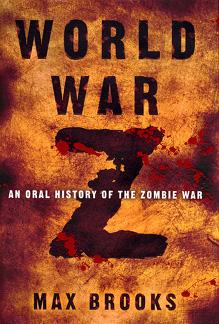
Every zombie story worth telling is not about zombies.
Zombies are one-dimensional. A zombie is a moving corpse with no capacity for emotion or reason. And they pretty much have to be: otherwise, they’d just be a person with an insatiable appetite for living humans who spreads this condition to their victims. Or in other words, a vampire.[1]
Because of this, zombie stories need to broadcast what they’re actually about, usually directly in the title. I am Legend is about what it means to be a hero – or a monster. The Girl with All the Gifts is about childhood in a shattered world, and the tragedy that comes with seeing the truth. (“All the gifts” is a loose translation of the Greek “Pandora”.) Even in The Walking Dead, the title describes the survivors as much as the reanimated.
So World War Z is a book about war. Specifically, “an oral history of the Zombie War”, as its subtitle relays. Each chapter is an interview: a firsthand account from someone who survived the war humanity was forced to wage against the undead. Each survivor – hero or villain – adds their piece to a story of a world that was pushed to the brink of collapse by the failings of modern society, but clawed its way back thanks to humanity’s timeless strength.
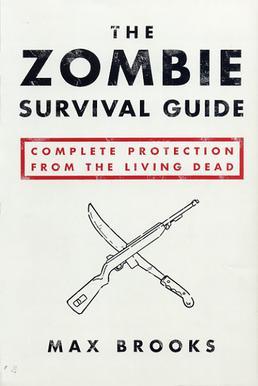
Max Brooks (son of filmmaker Mel Brooks) made his debut with The Zombie Survival Guide in 2003. It, too, is a zombie book written in a nonfiction style, specifically a “practical” manual on how to fight, fortify, and survive against a zombie attack of any scale. World War Z is his follow-up, from 2006. You can tell it’s a product of its time, but 20 years later – after COVID and with the threat of AI looming – it hits much harder.
For World War Z, Brooks took inspiration both from classic zombie fiction like Night of the Living Dead and from The Good War by Studs Terkel, a 1985 Pulitzer-winning oral history of World War Two. Somehow, it’s an inspired combination.
If I had to pick, my three favorite things about the book are:
- The surprisingly realistic world
- The firm but not overbearing morality play
- The captivating humanity of each story
I’ll try to avoid spoiling the best surprises in this review, but this is a book that doesn’t really need spoiler warnings. The writing and the world are the book’s strong suits, not suspense or plot twists. I don’t usually reread books, but World War Z is just as good on the third read as the first.
I. The setup
World War Z is divided into 8 sections, each with five to nine interviews. Most interviews are from people “on the ground” facing the zombies directly. But a few are from the higher ups – the leaders and administrators organizing (or failing to organize) the world’s fight against the hordes. These act as the framework of the narrative. They elevate World War Z from a series of horror scenes to a richer-than-life history, and show how the decisions of those in power shape the lives of the many who have to carry out those orders and face their consequences.
Every interview can function as its own short story, but collectively they share more than just a common world. A character or detail mentioned offhand in one story often becomes the center of another. Besides making the book more cohesive, these references imply that every survivor has a story worth telling. This can go too far, though: it’s hard to believe so many of the interviewed survivors know each other, especially in the concluding “goodbyes” section.[2]
The zombies themselves work like they do in Survival Guide, and are pretty standard modern sci-fi zombies. They’re moving corpses puppeted by a virus, with no higher brain functions and an insatiable drive to eat living animals, particularly humans. They can keep shambling along indefinitely without food, water, oxygen, or most of their organs. The only way to actually kill a zombie is to destroy its brain.
The virus itself spreads through bites, or occasionally through infected tissue entering a person’s body. It’s incurable, and always fatal. Victims first develop a fever, then coma, then die within a few days – only becoming zombies upon their death. This makes it difficult to contain outbreaks: still-living victims often try to deny or hide their infected status. But uninfected corpses aren’t rising from the grave, and nonhuman animals can’t spread the virus. So in principle, it’s possible to eradicate the disease from a safe zone, or the whole world.
As far as the zombies are concerned, that’s the entire conflict. But remember, this book isn’t about zombies – it’s about humans.
II. The sins of humanity
“What we did, what every president since Washington has done, was provide a measured, appropriate response, in direct relation to a realistic threat assessment.”
Welcome to the 2000s. America is bogged down in the Middle East, Israel and Palestine are at each others’ throats, everyone’s ignoring the Third World, and China is trying to cover up a terrifying disease outbreak via internal crackdowns. Definitely a completely unfamiliar historical setting.
The first section, “Warnings”, traces the zombie virus as it leaks out of China. A Chinese doctor responding to a rural outbreak is ashamed to admit his fear of a 12-year old boy: a boy with no pulse whose teeth snap from behind his gags. A smuggler brings escapees – both healthy and infected – across the China-Kyrgyzstan border for a hefty fee. A Canadian soldier patrolling for terrorists in Kyrgyzstan finds a zombie crawling out of a cave, killing it with a lucky shot; the soldier is sent home for a psych evaluation. A doctor performs a black market heart transplant in Brazil, but the Chinese “donor” heart is infected – the patient reanimates and kills the doctor’s colleague. When zombies tear through a Cape Town slum, the doctors treating the survivors classify it as rabies.
Each of these stories represents a different sin of modern society: dictatorship crackdowns, preying on refugees, terrorism and endless wars, forced organ harvesting, third world poverty and neglect. And each one leads us right into disaster when a real crisis comes biting.
A few people are reading the clues. The strongest warning is the “Warmbrunn-Knight” report, spearheaded by a former CIA agent and an Israeli intelligence official. A liberal Israeli government heeds the intelligence warnings, makes peace with the Palestinians, and works with them to fortify their common borders against the undead, sparking an armed uprising by the ultraorthodox.
(Twenty years on from 2006, this is the least realistic part of the book, with the possible exception of the zombies.)
Still, everyone else is having the worst case of denial since Neville Chamberlain. In the second section, “Blame”, the list of society’s sins grows longer. The CIA straight up drops the ball after huge staff cuts. The US military’s morale is still in tatters after Iraq and Afghanistan, and the government only authorizes flashy token “Alpha teams” – the White House Chief of Staff at the time, now literally employed shoveling dung, still defends the decision. It’s an election year, after all. Breckenridge Scott, a businessman now hiding in Antarctica post-war, makes billions selling a rabies vaccine that he knows will do nothing to protect against the zombie virus.

Pictured: A proud Breckenridge Scott fan, probably
This culminates in “The Great Panic” – also the title of the third section – when the zombie outbreaks become a full scale invasion, and billions of people are caught ignorant and unprotected in their own homes.
But the list of sins doesn’t end there. Even with suburbs and shantytowns and shipyards turning into zombie feeding frenzies, there are yet more horrors humans can wreak upon ourselves. A billionaire in Long Island tries to house the world’s celebrities in a fortified mansion. He broadcasts his “achievement” on the news while zombies invade Manhattan, only to face instant karma when panicked citizens overrun the compound. Iran and Pakistan come to blows over refugees from India; mushroom clouds soon rise from both their cities. A girl in a Kansas church faces the book’s most terrifying monsters – and they’re not the undead.
Finally, the US military tries to head off the New York horde and restore confidence at the Battle of Yonkers. They bring all the shock and awe that the military industrial complex can assemble: grenade launchers, fuel-air bombs, flamethrowers, “steel rain”…and it’s useless against mindless zombies. The retreat becomes a rout. Humanity has failed.
III. Effective Heroism
“…over 65 percent of the present civilian workforce were classified F-6, possessing no valued vocation…In short, we needed to get a lot of white collars dirty.”
The entire first half of World War Z is a damning story of how humanity is unworthy of survival. Thankfully, there’s a second half.
Yes, humanity will pay for its sins – dearly – but unlike the zombies, we’re not rotten to the core. There’s still something in our spirit that can save us. Something worth saving.
As the world basically prepares to give up and die, the South African government calls upon an unlikely hero: a psychopathic apartheid official named Paul Redeker. In an interview with a man who claims to be Redeker’s closest colleague, we learn of Redeker’s strategy to save humanity, based on his apartheid-era plan for protecting South Africa’s white minority against an uprising of the native black population.
The Redeker Plan is brutally pragmatic: withdraw the military to a small naturally defended “safe zone”, but don’t bring along most of the public. Instead, leave isolated pockets of survivors to lure away the zombies while you clear the safe zone and rebuild an industrial base. If the pockets are overrun – or starve – so be it. It’s impossible to save everyone.
The South African cabinet is horrified, but Nelson Mandela personally intervenes to save the plan – and with it, humanity.[3]
The rest of the 4th section, “Turning the Tide”, deals with the immediate consequences of implementing the Redeker Plan. A German Army unit having to abandon civilians, a Ukrainian unit trying desperately to screen civilians entering Kiev, a young woman facing starvation in the wilderness after fleeing north to Manitoba.[4] And finally, we see the book’s first hero, as a soldier in northern India watches General Raj-Singh make the ultimate sacrifice to secure a mountain pass at the edge of the safe zone.
We don’t actually get interviews with the Zombie War’s most famous heroes. Instead, their stories are relayed secondhand by those close to them, like the soldier serving under Raj-Singh. This happens again in the 5th section, “Home Front USA”, with the wartime president.
The pre-war president bungles the response so thoroughly that he’s a non-factor – “sedated” when the cabinet flees to Hawaii. His vice president, a Jamaican-American, takes office and appoints as his own VP a politician from across the aisle: “the Whacko”.
It’s the Whacko who’s being interviewed. He describes how his boss insists upon holding the election despite the disaster, because Americans have nothing to bind us together but our ideals. This single act probably saves American democracy, and it’s just the first of many decisions from the president that save the country – and the world.
It’s not all sunshine and rainbows, of course. There are saboteurs and secessionists. The administration institutes public whippings and stockades, in part to restore the perception of law and order and in part because there aren’t the resources to run prisons.
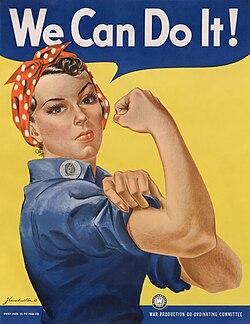
Resources get their own interview, with the head of the Department of Strategic Resources or “DeStRes” for short. The failed shock and awe tactics are discarded, replaced by the “resource to kill ratio”. The main metric of the military becomes how many dead zombies you can make per kilogram of scrap metal or barrel of oil or can of beans. Saving the world in the most efficient manner: it’s enough to make my effective altruist side weep with joy.
DeStRes goes further than breaking down cars for bullets. The economy of the safe zone has to switch from services to wartime manufacturing. Desk job workers are retrained to build guns, make bullets, and clean toilets.
These two stories are the fulcrum of the book. They’re when humanity gets back on its feet and learns to fight again. The ritual cleansing of our collective soul.
The rest of “Home Front USA” is people on the ground again: a wheelchair-bound member of an official neighborhood patrol; a filmmaker who takes on the challenge of restoring hope; a downed Air Force cargo pilot who makes a daring escape from zombie territory. Finally there are heroes, and finally we’re letting them do their jobs.
IV. Taking back the world
“The long, hard road back to humanity, or the regressive ennui of Earth’s once-proud primates. That was the choice, and it had to be made now.”
Section six, “Around the World, and Above”, reveals how the rest of the world is facing down the zombie hordes. Here, Brooks doubles down on the message of the second half of the book: that despite our many, many flaws, there are good people in the world, willing to sacrifice everything to protect each other. Regular people can become heroes if we let them. Despair is not the correct response to the ails of the world.
A personal aide to Queen Elizabeth II teaches us the role of castles – and monarchs – in the defense of Europe. We tune in to an operator of Radio Free Earth, giving survivors around the world the only help they can send: information. We speak with a pair of survivors from Japan, both outcasts – one an otaku and the other a hibakusha – who meet by chance and decide to cleanse the land when everyone else has died or fled. We meet the commander of the International Space Station, who remained in orbit with a skeleton crew to save a handful of observation satellites – priceless assets for the war effort.
We also get a few stories of the political turmoil the zombies cause. North Korea’s population vanishes without a trace in a single night. Cuba takes in American refugees as menial laborers, and slowly transforms into the world’s most prosperous democracy postwar. A Chinese nuclear sub escapes during the Great Panic, and faces a terrible choice when China erupts into civil war.
The last story of the section recounts the “Honolulu Conference” held aboard USS Saratoga. With representatives of the world’s remaining nations pointing fingers at each other, the US President makes an impassioned plea to go on the offensive and retake the world from the zombies. It’s controversial, but in the end a majority of the delegates agree. The die is cast.
The penultimate section details the campaign to liberate America, and the world. It’s no simple coast to coast road trip. The country’s top general explains the strategic nightmare: the zombies are independent killing machines that can mass into armies without supply lines, population centers, or leadership. They’re the only adversary truly capable of “Total War” – the section’s title.
Experts study logistics, amateurs study tactics. So we learn the tactics from an amateur, Todd Wainio – the veteran from the battle of Yonkers, now on the offensive. He describes the full body Kevlar uniforms, the semi-automatic rifles, the firing lines, and the one shot per second doctrine. There are “recharge teams” walking around distributing water and ammunition, and combat psychologists to keep the soldiers in optimal mental fighting condition.
The new army faces the zombies in the Battle of Hope – that is, Hope, New Mexico. With Iron Maiden playing to attract the zombie horde, this remodelled army takes on a colossal “chain swarm”. The zombie corpses pile so high they form a natural palisade. Hope is a flawless victory.

Hope in the desert
Bit by bit, the world is liberated. We see the bravery of US army canine units. We learn of the Russian army chaplain who decided to save his infected charges from the sin of suicide – and accidentally steers Russia toward becoming a theocratic monarchy. We go suit diving to track remaining zombies on the ocean floor, and learn the difficulty of retaking the high seas. We hear the horror of hand to hand combat in the Paris catacombs. And finally, we hear once more from Todd Wainio, detailing the final push to the East Coast, and victory in America.
Before the book closes, we’re treated to a final farewell from many of the interviewees. They reflect on the world as the interviews take place, a decade after the war’s official end with Victory in China day. The environment is devastated, along with the population and the economy. The zombies aren’t even fully extinct: they’re still stalking the ocean floor and thawing out of the permafrost. But soldiers have gone home to their families, and a new generation is growing up in peace. The world survived. Humanity survived.
V. What World War Z does well – and less well
In the intro, I mentioned my three favorite aspects of the book. Here they are again:
- The surprisingly realistic world
- The firm but not overbearing morality play
- The captivating humanity of each story
Let’s start with the world. Obviously, the zombies are incredibly unrealistic. But the humans could have been plucked straight from reality.
Everyone knows of a historical figure like Breckenridge Scott, General Raj-Singh, or Todd Wainio. They have human motivations and human limitations. History is big, and no one “great man” won or lost any war alone. So like real history, every hero has allies. Every villain has accomplices.
The stories weave together, too. Not just one interview mentioning the topic of another, but shared details that don’t have their own story. Both Radio Free Earth and the Chinese nuclear submarine listen to the iconic last broadcast from Buenos Aires. As mentioned, a few of the connections feel like a stretch, but only a few.
The main downside of such a big world is that Brooks has to sacrifice depth. Sure, the world may be rich and deep, but we don’t get to stay with any one person. One or two interviews isn’t nearly enough for “character development” as such.
Instead, the character that develops is society as a whole. This is the morality play: every sin of the world that we ignore is one more way we’re vulnerable as a species. Our ignorance, our fear, and our denial have led to disaster many a time in history. We saw this firsthand during the COVID-19 pandemic, and we may never fully learn our lesson.
But humanity is nothing if not resilient. If we change our ways, even at the last possible moment, we can still save ourselves, and each other. Brooks sometimes hits you on the head with the moral – the Chief of Staff is collecting bull shit, really? But he gives you more than enough of a story to make you realize you kind of deserve it.
And the stories really do shine. For one, the imagery is incredible. Take this bit, from the first encounter with a zombie horde in Cape Town:
“I was still on my stomach when I saw them: ten or fifteen, silhouetted against the fires of the burning shanties. I couldn’t see their faces, but I could hear them moaning. They were slouching steadily toward me with their arms raised.”
I also appreciate the details on the actions the characters take. The outburst in a moment of passion, the mistakes of exhaustion, or the small acts of humanity. From the same Cape Town interview, the speaker comes across a woman hiding in a shanty, about to be overrun:
“Her eyes were wide, scared. I could hear sounds behind me…smashing through shanties, knocking them over as they came. I switched from Xhosa to English. ‘Please,’ I begged, ‘you have to run!’ I reached for her but she stabbed my hand. I left her there. I didn’t know what else to do. She is still in my memory, when I sleep or maybe close my eyes sometimes. Sometimes she’s my mother, and the crying children are my sisters.”
Not every story in the book is as powerful as this one. But most are.
World War Z is one of the few books I can recommend to anyone, but it’s perfect for anyone who loves this blog. Whether or not you’re a fan of horror or action. Whether or not you like the movie, which is essentially unrelated to the book. Whether or not you think the 2000’s zombie genre was overplayed.
Because World War Z is not a story about zombies. It’s a story about us.
Your message is stored now and emailed to the author after the contest ends. The author can reply to you, but their identity stays hidden unless they choose to respond.
Footnotes
- ↩
The Girl with All the Gifts partially violates this maxim, but still makes a clear distinction between the hordes of mindless zombies and the few vampire-esque exceptions.
- ↩
Mandela is referenced indirectly by his birth name, Rolihlahla. He’s one of just a few real world figures mentioned in the book; none are directly named.
- ↩
Freezing immobilizes zombies, and millions flee above the snow line with woefully little preparation.